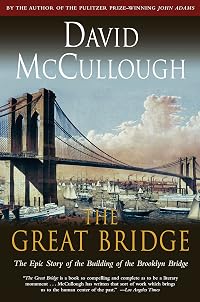
The Great Bridge: The Epic Story of the Building of the Brooklyn Bridge
by David McCullough
Great Achievements in American History
On This Page
Description
The dramatic and enthralling story of the building of the Brooklyn Bridge, the world's longest suspension bridge at the time, a tale of greed, corruption, and obstruction but also of optimism, heroism, and determination, told by master historian David McCullough.This monumental book is the enthralling story of one of the greatest events in our nation's history, during the Age of Optimism—a period when Americans were convinced in their hearts that all things were possible.
In the years show more around 1870, when the project was first undertaken, the concept of building an unprecedented bridge to span the East River between the great cities of Manhattan and Brooklyn required a vision and determination comparable to that which went into the building of the great cathedrals. Throughout the fourteen years of its construction, the odds against the successful completion of the bridge seemed staggering. Bodies were crushed and broken, lives lost, political empires fell, and surges of public emotion constantly threatened the project. But this is not merely the saga of an engineering miracle; it is a sweeping narrative of the social climate of the time and of the heroes and rascals who had a hand in either constructing or exploiting the surpassing enterprise. show less
Tags
Recommendations



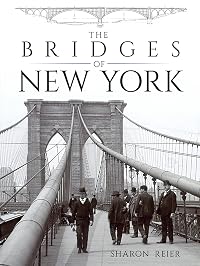
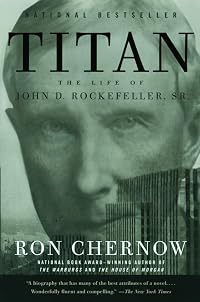
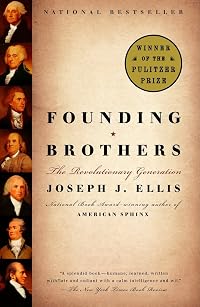
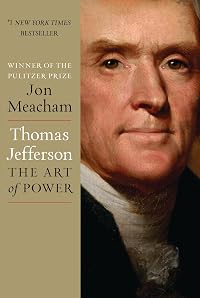
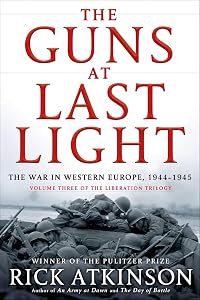
Member Recommendations

Conquering Gotham : a Gilded Age epic : the construction of Penn Station and its tunnels by Jill Jonnes
rakerman Conquering Gotham tells the story of the PRR tunnels under the North River and (to a lesser extent) the LIRR tunnels under the East River. The Great Bridge tells the story of the bridge over the East River. Although the bridge is finished before the tunnels begin, they touch on similar industrial history and a similar period in New York's history. The Great Bridge goes into more detail about the underwater work (the Brooklyn Bridge caissons) than Conquering Gotham does.
Member Reviews
Through his long line of books on some of America's greatest figures (Truman, John Adams, Theodore Roosevelt) and historical events (Johnstown Flood, Panama Canal, Brooklyn Bridge), David McCollough has earned the title of America's greatest historian.
As in his previous works, McCollough masterfully crafts his prose around one of the most historically significant and interesting events of 19th century America, the design and construction of the Brookly Bridge. Prior to reading this book, I must admit to an almost complete lack of appreciation for this feat. Suffice it to say that in the mid to late 19th century, construction of a suspension bridge on the scale of the Brooklyn Bridge was almost a leap of faith during a time when many if show more not most bridges failed soon after construction.
This is largely a story about John A. Roebling and his son Washington Roebling, the former having initially designed and "sold" the bridge, the latter being left with the task of constructing the bridge following the gruesome death of his father from tetanus. Also a key player in the story is Washington Roebling's wife Emily, who many allege was actually in charge of the bridge project during the frequent periods of incapacity suffered by her husband.
The background on both Roeblings was very interesting and key to an understanding of the personal dynamics involved in the politics and administration of the bridge project, and some of the most enlightening segments of the work deal with the politics of the era and region (this period spanning the reign of "Boss" Tweed over Tammany Hall).
McCollough's best work, however, is taking the very complicated and cutting edge engineering principles of the time and explaining them through well crafted language and numerous sketches in such a way that most can be followed and understood (maybe not completely) by the reader. The novel concept of the caissons, by which the monstrous bridge piers were embedded into bedrock, and the resulting discovery of "the bends", was riveting reading.
All in all, a typical McCollough tour de force. As in many of his previous works, most similar in style to Panama Canal, McCollough takes a historically significant event, explains why it was so significant, points out the extreme difficulties faced by the participants and puts a human face on the travails and suffering endured by the key players. As in Panama Canal, politics plays a key role in this story.
If you're like me, most of the background to this story will be almost entirely new to you. Did you know that in 1880, Brooklyn was the third largest city in the United States (prior to its merger into New York City). I highly recommend this book, not just for its entertainment value, but for its great history lessons. show less
As in his previous works, McCollough masterfully crafts his prose around one of the most historically significant and interesting events of 19th century America, the design and construction of the Brookly Bridge. Prior to reading this book, I must admit to an almost complete lack of appreciation for this feat. Suffice it to say that in the mid to late 19th century, construction of a suspension bridge on the scale of the Brooklyn Bridge was almost a leap of faith during a time when many if show more not most bridges failed soon after construction.
This is largely a story about John A. Roebling and his son Washington Roebling, the former having initially designed and "sold" the bridge, the latter being left with the task of constructing the bridge following the gruesome death of his father from tetanus. Also a key player in the story is Washington Roebling's wife Emily, who many allege was actually in charge of the bridge project during the frequent periods of incapacity suffered by her husband.
The background on both Roeblings was very interesting and key to an understanding of the personal dynamics involved in the politics and administration of the bridge project, and some of the most enlightening segments of the work deal with the politics of the era and region (this period spanning the reign of "Boss" Tweed over Tammany Hall).
McCollough's best work, however, is taking the very complicated and cutting edge engineering principles of the time and explaining them through well crafted language and numerous sketches in such a way that most can be followed and understood (maybe not completely) by the reader. The novel concept of the caissons, by which the monstrous bridge piers were embedded into bedrock, and the resulting discovery of "the bends", was riveting reading.
All in all, a typical McCollough tour de force. As in many of his previous works, most similar in style to Panama Canal, McCollough takes a historically significant event, explains why it was so significant, points out the extreme difficulties faced by the participants and puts a human face on the travails and suffering endured by the key players. As in Panama Canal, politics plays a key role in this story.
If you're like me, most of the background to this story will be almost entirely new to you. Did you know that in 1880, Brooklyn was the third largest city in the United States (prior to its merger into New York City). I highly recommend this book, not just for its entertainment value, but for its great history lessons. show less
David McCullough is a writer with the rare ability to propel me through heavy tomes on subjects I know little about. I have never been to Brooklyn, but McCullough engaged me in the drama of the construction of the iconic bridge across the East River. The Great Bridge is his second book. It solidified his reputation as a writer and researcher after his impressive start writing about the Johnstown flood.
McCullough has often said that history is about people, in this case, John Roebling and his son Washington, the designer and chief engineer who got the bridge built. John Roebling had built suspension aqueducts and a railroad suspension bridge across the Niagara, and his family owned a company that produced high-quality wire. He was a show more hard-headed, meticulous man absolutely committed to his work. Just before construction on the Brooklyn project was about to begin, his toes were crushed at a ferryboat landing. He ignored the advice of his doctors and died from the resulting infection.
His son Washington was a civil engineer with a degree from a rigorous program at Rensselaer Polytechnic Institute. He built several bridges for the Union Army and commanded forces at the Battle of Gettysburg. When his father died in 1869, he took over the job of chief engineer and saw the bridge through to completion in 1883. Working in the underwater caissons building the foundations for the bridge’s towers, he suffered from the bends, a disease little understood at the time. He was invalided for the last several years of the project and saw the bridge only through a telescope at his home. He hired a doctor for the project who did groundbreaking work on decompression, but like his father, he ignored good medical advice. His wife, who shared his intelligence and character traits, acted for him when he was ill. She said, and he agreed, that she had more common sense than most engineers. Getting the bridge project through the corrupt, rough-and-tumble politics of Tweed-era New York was a major achievement for a man too ill to attend meetings and twist arms. show less
McCullough has often said that history is about people, in this case, John Roebling and his son Washington, the designer and chief engineer who got the bridge built. John Roebling had built suspension aqueducts and a railroad suspension bridge across the Niagara, and his family owned a company that produced high-quality wire. He was a show more hard-headed, meticulous man absolutely committed to his work. Just before construction on the Brooklyn project was about to begin, his toes were crushed at a ferryboat landing. He ignored the advice of his doctors and died from the resulting infection.
His son Washington was a civil engineer with a degree from a rigorous program at Rensselaer Polytechnic Institute. He built several bridges for the Union Army and commanded forces at the Battle of Gettysburg. When his father died in 1869, he took over the job of chief engineer and saw the bridge through to completion in 1883. Working in the underwater caissons building the foundations for the bridge’s towers, he suffered from the bends, a disease little understood at the time. He was invalided for the last several years of the project and saw the bridge only through a telescope at his home. He hired a doctor for the project who did groundbreaking work on decompression, but like his father, he ignored good medical advice. His wife, who shared his intelligence and character traits, acted for him when he was ill. She said, and he agreed, that she had more common sense than most engineers. Getting the bridge project through the corrupt, rough-and-tumble politics of Tweed-era New York was a major achievement for a man too ill to attend meetings and twist arms. show less
David McCullough’s The Great Bridge: The Epic Story of the Building of the Brooklyn Bridge chronicles the herculean efforts to bridge the East River between Manhattan and Brooklyn. McCullough describes the lives of John A. Roebling, designer of the bridge, and his son, Washington Roebling, who constructed the bridge at great cost to his own health. Emily Warren Roebling, Washington’s wife, emerges as an architectural force in her own right particularly after Washington was struck with caisson disease. McCullough uses the bridge to examine a time and place, detailing other suspension works, the Tweed ring, the intricacies of New York and Brooklyn politics as well as state-level politics, and even the Franco-Prussian War. What emerges show more is a detailed look at the Gilded Age that challenges the standard narrative, showcasing heroes and progress alongside scandals, though even the historically villainized Tweed emerges as a sad, sympathetic character in the end. Fans of McCullough will find all that they love in his writing while newcomers will be challenged to rethink their preconceived notions of the bridge and history. Nelson Runger perfectly narrates this audiobook and the anniversary edition includes a new introduction read by McCullough himself in which he muses on the bridge’s sense of solidity in light of the events of 9/11 dramatically changing the New York skyline. show less
Detailed story of the building of the Brooklyn Bridge is one part engineering (exhilarating) and one part politics (exasperating). Washington Roebling emerges as a true genius, with a photographic memory and the ability to write instructions for his loyal band of engineers that are so detailed the work can proceed without his presence after he is crippled by the bends. Aided by his wife, who soon amazes everyone with her own capabilities, he struggles against the politicians from Brooklyn and New York who are looking to use the bridge for their own self-aggrandizement, by either supporting it or condemning it. The political intrigue is a necessary part of the book and McCullough does a good job of sorting fact from fiction from rumor, show more drawing upon papers only available long after the events in question, including Washington Roebling's own private notes. You'll hold your breath during these intrigues hoping things turn out okay--but the real joy of the book is the story of how the bridge was conceived and built and its monstrous scale (for its time) and enormous amount of material - stone, steel - and incredibly brave (or desperate for work) men who risked death in the caissons to sink the foundations for the Brooklyn and New York towers. McCullough does a good job of explaining the science, and the book's pictures help, but even more diagrams would have made it better. As the cover says, there is a cast of thousands, and some are familiar villains (Boss Tweed) while others are obscure heroes such as Ludwig Semler, the Brooklyn Comptroller, who spoke up on Roebling's behalf when the mayor of Brooklyn, Seth Low, was trying to have him removed.
This book took a long time to read--not because it was difficult to read, but because every time another bridge or feat of engineering was mentioned, I had to look it up on the Internet and read all about it. If you have an interest in bridges, you definitely won't want to miss this book. But it will also demonstrate the individual genius of certain men, such as Washington Roebling and his father John, that drive the world forward even while so many can only think about what's in it for themselves. show less
This book took a long time to read--not because it was difficult to read, but because every time another bridge or feat of engineering was mentioned, I had to look it up on the Internet and read all about it. If you have an interest in bridges, you definitely won't want to miss this book. But it will also demonstrate the individual genius of certain men, such as Washington Roebling and his father John, that drive the world forward even while so many can only think about what's in it for themselves. show less
Since I know nothing about engineering and have around a five percent interest in the topic, I wasn’t sure I would enjoy this book. But I should have known better. It’s written by David McCullough.
I’ve only seen the Brooklyn Bridge once in my life. I was on a tour boat putting around the East River. I thought it was impressive, even though the Manhattan skyline beyond it dwarfs the towers. But in my wildest dreams, I never imagined constructing it was such a feat.
As with most of McCullough’s books, this is about much more than the ostensible subject. Sure, the bridge is the hinge the story hangs upon, but the book is about determination and the extraordinary individuals who made it all happen.
Most of the book focuses on the show more chief engineer, Washington Roebling, and the intelligence and effort demanded of him despite formidable obstacles placed in his path, beginning with the unfortunate death of his father, the bridge designer John Roebling. I was impressed and humbled to read of the younger Washington’s trials and perseverance.
That’s the thing about the books I’ve read by McCullough. If I had to put my finger on one thing that makes me admire his books, they make me wish to stand a little straighter and try a little harder. Parts of the book describe technical details. I skimmed past those. This book is great for history lovers, engineering fans, and anyone who loves a great story show less
I’ve only seen the Brooklyn Bridge once in my life. I was on a tour boat putting around the East River. I thought it was impressive, even though the Manhattan skyline beyond it dwarfs the towers. But in my wildest dreams, I never imagined constructing it was such a feat.
As with most of McCullough’s books, this is about much more than the ostensible subject. Sure, the bridge is the hinge the story hangs upon, but the book is about determination and the extraordinary individuals who made it all happen.
Most of the book focuses on the show more chief engineer, Washington Roebling, and the intelligence and effort demanded of him despite formidable obstacles placed in his path, beginning with the unfortunate death of his father, the bridge designer John Roebling. I was impressed and humbled to read of the younger Washington’s trials and perseverance.
That’s the thing about the books I’ve read by McCullough. If I had to put my finger on one thing that makes me admire his books, they make me wish to stand a little straighter and try a little harder. Parts of the book describe technical details. I skimmed past those. This book is great for history lovers, engineering fans, and anyone who loves a great story show less
Read this during the fall of 2024 in Fort Worth. Only David McCullough could make the historical retelling of the building of a bridge so interesting, exciting, and at times humorous. Just like his other works, it is intimidating to pick up because of its size. I often wondered what I would gain by reading a 600 page book about a bridge instead of just googling fun trivia about the bridge. Once I was within its pages, I found myself enjoying all the small details that did a lot more than just tell the story of the building of this incredible bridge (that I have fortunately, and recently, finally been on). This work provides exceptional details on life in NYC, Brooklyn, and America during the mid-late 1800s. It connect numerous political show more issues of the time and weaves the story of the bridge throughout it all. Highly recommended for someone interested in this period of history, fans of McCullough, or fans of the bridge. I imagine engineers would find it quite enjoyable as well, learning the intricate details of the building of this bridge and the Roeblings. show less
The Great Bridge was David McCullough’s second. It is throughly researched, and is not only a history of the building of the Brooklyn Bridge, but also the politics that enabled and hindered that accomplishment and a history of the times. What makes this history very readable, though, are the personal stories revealed. John Augustus Roebling, the architect, Washington Roebling, son and chief engineer, and Emily Roebling, wife of Washington and true partner to both Washington and the project, are the characters around which the story revolves. The price that Washington and Emily paid to see the project through is quite remarkable. Washington’s intellectual powers, the knowledge he had acquired by such a relatively early age and the show more attention to detail and level of commitment he brought to his responsibilities are truly amazing.
In school I learned about Boss Tweed, Tammany Hall and corruption in New York City politics during that period in history, but I can’t say the topic and events ever really grabbed my attention. In McCullough’s book they are provided in the context of a specific story and therefore much more interesting. The book also reveals though that there were worse villains in the building of the Brooklyn Bridge than Boss Tweed. The Great Bridge also does a great job of uncovering the individual motivations of different players that generated the various swings in public opinion and efforts to control the project.
While I enjoyed understanding the challenges such a construction project posed given the knowledge and technology of the time, I did feel there was too much of this detail in places. Part of this is due to my difficulty in visualizing some of the efforts and physical constructs described. As a reader I also couldn’t help but want more insight into some of the personal details of the characters: the relationship between Washington and Emily, the intricacies of the politics and relationships within the Roebling family and the true causes of some of Washington’s health issues. Despite the enormous amount of detail that McCullough apparently had available to him, some of those details are lost in the past and some of the detail provided comes across as a bit dry. Ultimately, though, I am today a great admirer of the Brooklyn Bridge, the architectural feat it is and what it took to make it happen. show less
In school I learned about Boss Tweed, Tammany Hall and corruption in New York City politics during that period in history, but I can’t say the topic and events ever really grabbed my attention. In McCullough’s book they are provided in the context of a specific story and therefore much more interesting. The book also reveals though that there were worse villains in the building of the Brooklyn Bridge than Boss Tweed. The Great Bridge also does a great job of uncovering the individual motivations of different players that generated the various swings in public opinion and efforts to control the project.
While I enjoyed understanding the challenges such a construction project posed given the knowledge and technology of the time, I did feel there was too much of this detail in places. Part of this is due to my difficulty in visualizing some of the efforts and physical constructs described. As a reader I also couldn’t help but want more insight into some of the personal details of the characters: the relationship between Washington and Emily, the intricacies of the politics and relationships within the Roebling family and the true causes of some of Washington’s health issues. Despite the enormous amount of detail that McCullough apparently had available to him, some of those details are lost in the past and some of the detail provided comes across as a bit dry. Ultimately, though, I am today a great admirer of the Brooklyn Bridge, the architectural feat it is and what it took to make it happen. show less
Members
- Recently Added By
Lists

Best Architecture Books
87 works; 13 members

Top Five Books of 2013
5 works; 1 member

Recommend the 20 best books you've read in the last five years
2,168 works; 608 members

Non-Fiction Worth Reading
1,025 works; 264 members

Modern Library 100 Best Nonfiction Books
100 works; 8 members

KayStJ's to-read list
1,616 works; 11 members

Books recommended in the history category on FiveBooks.com
329 works; 4 members
Author Information

57+ Works 64,531 Members
David McCullough was born in Pittsburgh, Pennsylvania on July 7, 1933. He received a bachelor's degree in English literature from Yale University in 1955. After graduation, he moved to New York City and worked as a trainee at Sports Illustrated. He later worked as a writer and editor for the United States Information Agency, in Washington, D.C., show more including a position at American Heritage. His first book, The Johnstown Flood, was published in 1968. His other books include 1776, Brave Companions, The Great Bridge, and The Greater Journey: Americans in Paris. He received the Pulitzer Prize twice for Truman and John Adams and the National Book Award twice for The Path Between the Seas: The Creation of the Panama Canal and Mornings on Horseback. He also won two Francis Parkman Prizes, the Los Angeles Times Book Award, and New York Public Library's Literary Lion Award. Two of his books, Truman and John Adams, have been adapted into a television movie and mini-series, respectively, by HBO. In December 2006, he received the Presidential Medal of Freedom. He also made the New York Times Best Seller List in 2015 with his book The Wright Brothers, and in 2017 with The American Spirit: Who We Are and What We Stand For. (Bowker Author Biography) David McCullough is a writer, historian, lecturer, & teacher. He has received the Pulitzer Prize for "Truman", as well as the Francis Parkman Prize, & the "Los Angeles Times" Book Award. He is also a two-time winner of the National Book Award, for history & for biography. He lives in Massachusetts. (Publisher Provided) show less
Awards and Honors
Series

Work Relationships
Common Knowledge
- Canonical title
- The Great Bridge: The Epic Story of the Building of the Brooklyn Bridge
- Original publication date
- 1972
- People/Characters
- John Roebling; Washington Roebling; Emily Warren Roebling; James Buchanan Eads; Boss Tweed (William M. Tweed); William Marcy Tweed (show all 18); C. C. Martin; Horatio Allen; Julius Adams; Walt Whitman; A. A. Humphries; John Newton; Josephine Roebling; Andrew Jackson Davis; Mark Twain; Robert Stephenson; Jimmy O'Brien; Dr. Brinkman
- Important places
- New York, New York, USA; Brooklyn, New York, New York, USA; Allegheny River Bridge (Pittsburgh, Pennsylvania, USA); Cincinnati Bridge (Cincinnati, Ohio, USA); Niagara Bridge (Buffalo, New York, USA); Trenton, New Jersey, USA (show all 9); Brooklyn Bridge, New York, New York, USA; East River, New York, New York, USA; Niagara Falls, New York, USA
- Important events
- Building of the Brooklyn Bridge
- Related movies
- Brooklyn Bridge (1981 | IMDb)
- Epigraph
- It so happens that the work which is likely to be our most durable monument, and to convey some knowledge of us to the most remote posterity, is a work of bare utility; not a shrine, not a fortress, not a palace, but a bridge... (show all).- Montgomery Schuyler in Harper's Weekly, May 24, 1883
- Dedication
- For my mother and father
- First words
- They met at his request on at least six different occasions, beginning in February 1869.
- Last words
- (Click to show. Warning: May contain spoilers.)In another time and in what would seem another world, on a day when two young men were walking on the moon, a very old woman on Long Island would tell reporters that the public excitement over the feat was not so much compared to what she had seen "on the day they opened the Brooklyn Bridge."
(Click to show. Warning: May contain spoilers.)Epilogue: If parts are replaced from time to time - even entire cables if necessary, which would be perfectly possible - then, "As far as we are concerned, it will last forever." Perhaps it will. - Blurbers
- Mumford, Lewis; Catton, Bruce
- Disambiguation notice
- 1972 edition: The Great Bridge [by] David McCullough; 2001 reprint has title: The g... (show all)reat bridge : the epic story of the building of the Brooklyn Bridge / David McCullough
Classifications
Statistics
- Members
- 3,130
- Popularity
- 5,634
- Reviews
- 65
- Rating
- (4.26)
- Languages
- English, French
- Media
- Paper, Audiobook, Ebook
- ISBNs
- 24
- UPCs
- 2
- ASINs
- 27