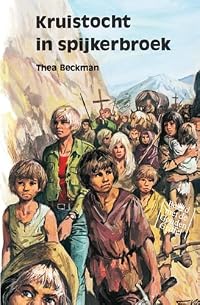
Crusade in Jeans
by Thea Beckman
On This Page
Description
A young boy who volunteers to travel through time to the Middle Ages arrives during the Children's Crusade and is caught in its momentum.Tags
Recommendations











Member Recommendations
Member Reviews
Originally published in 1973, as Kruistocht in spijkerbroek, this classic Dutch children's novel follows the story of Rudolph Hefting, a twentieth-century boy who finds himself transported back in time to the year 1212, and caught up in the events of the fabled Children's Crusade. Not sure that he can ever return to his own time, Dolf, together with Leonardo Fibonacci of Pisa - the young mathematics student he meets upon the road - decides to accompany the poorly organized crusade, hoping to help the children survive. So begins a monumental journey south, across the Karwendel range of the Alps, toward Genoa, and the sea.
The children believe that their nominal leader, Nicholas the shepherd boy, has had a vision from God, and (when they show more come to Genoa) will divide the sea, and lead them to the White City of Jerusalem, there to put to flight the Saracens. Dolf, with his twentieth-century skepticism, believes otherwise, but finds that he must accommodate himself - in public, anyway - to the customs and beliefs of the times. When treachery is revealed, and the true purpose of the crusade becomes clear, will Dolf, Leonardo, and their group of dedicated friends, be able to save the children from a terrible fate? And even if they do... what then?
Crusade in Jeans is not a book without flaw. To begin with, I sometimes found the language a little awkward, although I understand, from reading reviews by Dutch-speakers, that this is owing to the poor translation. It irked me, moreover, to see that the translator is not listed anywhere on (or in) the book! I also found some of the "history" questionable. Leonardo Fibonacci, for instance, would have been forty-two years old, in 1212, rather than a young student, and would already have published his famous Liber Abaci (in 1202), which did so much to bring Arabic numerals (to which Dolph supposedly exposes him, in the novel) to Europe. Then, of course, there is the question of the Children's Crusade itself - an apocryphal event (events?), now largely discredited by historians.
Still, Beckman's theory of how reports of such an event may have been started, made for fascinating reading. More importantly, her general grasp for the times - the importance attached to social class and position, the omnipresence of faith, both in internal decision-making, and overt practice, the appalling ignorance of geography, but surprisingly good hygiene (Dolf had always been taught that all people in the Middle Ages were dirty) - was top notch, and I came away from the story with the feeling that, like Dolf, I had truly stepped back in time. I also came away with a true attachment to the characters, and a desire to know more. I wanted to know what happened with Leonardo and Maria, later on - did they ever figure out where Dolf came from? I wanted to learn more about the boy who took Dolph's place, in the (then) present, and what happened to both of them, when they returned to their "correct" times.
This attachment points to another great strength, in Beckman's narrative: her character-building, and engaging storytelling style. This wasn't just historical fiction, or time-slip novel, but an exciting adventure, peopled with characters I had come to love. I had no idea how it would all be resolved - or if it would be resolved, in terms of Dolf returning to his own time - but was completely engrossed in the here and now: how would the children get across the Alps? How would Dolph rescue the fifty little crusaders kidnapped by the knights of Count Romhild of Scharnitz? What would happen, once the sea refused to part?
I was riveted! It's a shame that this is the only one of Thea Beckman's many children's books to be translated, thus far! I would definitely read more, if I had the chance! show less
The children believe that their nominal leader, Nicholas the shepherd boy, has had a vision from God, and (when they show more come to Genoa) will divide the sea, and lead them to the White City of Jerusalem, there to put to flight the Saracens. Dolf, with his twentieth-century skepticism, believes otherwise, but finds that he must accommodate himself - in public, anyway - to the customs and beliefs of the times. When treachery is revealed, and the true purpose of the crusade becomes clear, will Dolf, Leonardo, and their group of dedicated friends, be able to save the children from a terrible fate? And even if they do... what then?
Crusade in Jeans is not a book without flaw. To begin with, I sometimes found the language a little awkward, although I understand, from reading reviews by Dutch-speakers, that this is owing to the poor translation. It irked me, moreover, to see that the translator is not listed anywhere on (or in) the book! I also found some of the "history" questionable. Leonardo Fibonacci, for instance, would have been forty-two years old, in 1212, rather than a young student, and would already have published his famous Liber Abaci (in 1202), which did so much to bring Arabic numerals (to which Dolph supposedly exposes him, in the novel) to Europe. Then, of course, there is the question of the Children's Crusade itself - an apocryphal event (events?), now largely discredited by historians.
Still, Beckman's theory of how reports of such an event may have been started, made for fascinating reading. More importantly, her general grasp for the times - the importance attached to social class and position, the omnipresence of faith, both in internal decision-making, and overt practice, the appalling ignorance of geography, but surprisingly good hygiene (Dolf had always been taught that all people in the Middle Ages were dirty) - was top notch, and I came away from the story with the feeling that, like Dolf, I had truly stepped back in time. I also came away with a true attachment to the characters, and a desire to know more. I wanted to know what happened with Leonardo and Maria, later on - did they ever figure out where Dolf came from? I wanted to learn more about the boy who took Dolph's place, in the (then) present, and what happened to both of them, when they returned to their "correct" times.
This attachment points to another great strength, in Beckman's narrative: her character-building, and engaging storytelling style. This wasn't just historical fiction, or time-slip novel, but an exciting adventure, peopled with characters I had come to love. I had no idea how it would all be resolved - or if it would be resolved, in terms of Dolf returning to his own time - but was completely engrossed in the here and now: how would the children get across the Alps? How would Dolph rescue the fifty little crusaders kidnapped by the knights of Count Romhild of Scharnitz? What would happen, once the sea refused to part?
I was riveted! It's a shame that this is the only one of Thea Beckman's many children's books to be translated, thus far! I would definitely read more, if I had the chance! show less
A teenage boy travels back in time and finds himself in the middle of the Children's Crusade in 1212. He quickly becomes an advocate for the children and an important member of the group, helping them through famine, disease, and battles with local peasants and townspeople. He never believes in the mission, really, and from the beginning something doesn't feel right to him about the entire business, so he works to discover what the wrongness is and then fights for the safety of the children.
It was rough at the beginning (the book jumps right into the story without any sort of lead-up or introduction to the characters or situation, and not in a way that seems well thought-out), but once the story gets going, it's a decent one.
It was rough at the beginning (the book jumps right into the story without any sort of lead-up or introduction to the characters or situation, and not in a way that seems well thought-out), but once the story gets going, it's a decent one.
Dit boek heb ik als kind al gelezen en ik vond het verhaal heel interessant. Ik zat toen al helemaal in het verhaal doordat het ging over een jongen (Dolf) die met een tijdmachine terugging in de tijd van de middeleeuwen. Dit zorgt er meteen voor dat je nieuwsgierig wordt en dat je verder wilt lezen. Het is op zo'n bijzondere manier geschreven en laat echt goed zien hoe het er aan toe ging in de tijd waarin de kruistochten plaatsvonden. Hierdoor is het ook een leerzaam boek. Veel kinderen vinden de geschiedenis heel interessant, dus dan is dit boek perfect. Het boek bevat veel avontuur en spanning.
I knew nothing about this book other than it was award-winning, and never having come across a historical children’s book before, I couldn’t resist having a look. I’ve seen some say the book suffers because of the translation, and I can easily believe this is true, as some stories don’t translate terribly well. Still, this based on fact fiction — an event in history I had only a vague concept of — is extremely readable and adventurous enough to entertain many children and some adults alike. It’s certainly memorable, and it’s an interesting concept — a fifteen-year-old stuck in the wrong time viewing the events with a modern mindset. In reality, early on, people would likely have killed such a visitor, but Dolf’s show more persistence in trying to save almost ten thousand children will capture the imagination of many. Having read this, I was ready to give up my copy, but I see it’s rare and selling for exorbitant sums. show less
Schitterend boek.
Dolf komt terecht in de 1212 door een experiment van 2 professors.
Op het moment dat hij zou moeten terug keren gaat het mis.
Hij ziet duizenden kinderen aan hem voorbijgaan op de plaats waar hij terug gezonden zou worden naar de 20ste eeuw. Een ander kind wordt terug gezonden en Dolf zit dus vast in 1212.
Hij besluit om verder mee te trekken met de kinderen die op kinderkruistocht zijn.
Hij ziet de slechte toestand waarin de kinderen verkeren en hoe slecht de kruistocht is georganiseerd en probeert hen zoveel mogelijk te helpen.
Al snel blijkt dat er iets mis is met de kruistocht, Dolf zoekt het uit en ontdekt een verschrikkelijk geheim.
Na een lange tocht, vele avonturen waarbij veel kinderen verloren gaan, bereikt de show more kruistocht zijn bestemming.
De geheimen worden blootgelegd en de kinderen kiezen hoe het nu verder moet.
Velen gaan terug, sommigen blijven waar ze zijn terecht gekomen en nog andere trekken verder.
Dolf trekt met de grootste groep verder een meer avonturen komen op hun weg.
Steeds gaan er kinderen verloren en bij elke stad die zie passeren blijven kinderen achter.
Zo komen ze met een duizend kinderen aan op een plek waar zie niet verder kunnen.
Dan bereikt een boodschap uit de toekomst Dolf.
Nu alle kinderen veilig zijn besluit Dolf dat hij terug kan naar het heden.
Op het einde van het boek lees je hoe Dolf terug wordt gebracht naar de 20ste eeuw.
Thea Beckman heeft een vlotte schrijfstijl en weet als altijd de spanning in het boek te houden zodat je niet kan stoppen met lezen. Een echte aanrader dus. show less
Dolf komt terecht in de 1212 door een experiment van 2 professors.
Op het moment dat hij zou moeten terug keren gaat het mis.
Hij ziet duizenden kinderen aan hem voorbijgaan op de plaats waar hij terug gezonden zou worden naar de 20ste eeuw. Een ander kind wordt terug gezonden en Dolf zit dus vast in 1212.
Hij besluit om verder mee te trekken met de kinderen die op kinderkruistocht zijn.
Hij ziet de slechte toestand waarin de kinderen verkeren en hoe slecht de kruistocht is georganiseerd en probeert hen zoveel mogelijk te helpen.
Al snel blijkt dat er iets mis is met de kruistocht, Dolf zoekt het uit en ontdekt een verschrikkelijk geheim.
Na een lange tocht, vele avonturen waarbij veel kinderen verloren gaan, bereikt de show more kruistocht zijn bestemming.
De geheimen worden blootgelegd en de kinderen kiezen hoe het nu verder moet.
Velen gaan terug, sommigen blijven waar ze zijn terecht gekomen en nog andere trekken verder.
Dolf trekt met de grootste groep verder een meer avonturen komen op hun weg.
Steeds gaan er kinderen verloren en bij elke stad die zie passeren blijven kinderen achter.
Zo komen ze met een duizend kinderen aan op een plek waar zie niet verder kunnen.
Dan bereikt een boodschap uit de toekomst Dolf.
Nu alle kinderen veilig zijn besluit Dolf dat hij terug kan naar het heden.
Op het einde van het boek lees je hoe Dolf terug wordt gebracht naar de 20ste eeuw.
Thea Beckman heeft een vlotte schrijfstijl en weet als altijd de spanning in het boek te houden zodat je niet kan stoppen met lezen. Een echte aanrader dus. show less
I read this book in Dutch in the1970's when I studied to be a children's librarian. Recently, almost 40 years later (of which 30 years spent in the USA), I decided to read the English translation, called "Crusade in Jeans". I even vaguely remember attending reading by Thea Beckman, but I don't know which book. One of the main reasons the book gained so much acclaim 40 years ago, was Beckman's use of the Dutch language. Her writing was crisp, clear and simple. The story was told in a very direct way. Despite the fact that this translation was not bad, I missed some of the mood Beckman created with her use of language.
Over the years I have become a skeptic of time travel in children's books. I have become sensitive to the mode of show more "teleportation" and the logic behind it. I have to remember that in 1973 we stood at the beginning of writing specifically for young adults, and also that technology was much less advanced. In 1973 no cell phones could time travel to the Middle Ages. I discovered that in this book, the way the journey to the past happens is irrelevant. What is relevant is how a modern teenager thinks, feels and acts when he lands in the middle of a medieval children's crusade. This Beckman describes very clearly without getting into too much psychological detail, especially when Dolf is accused of being a heretic.
There was one loose end that did not get tied up: what happen to the 13th century boy, who got sent to the twentieth century? Was he sent back in time? Did he decided to stay in the 20th century? I wish Beckman was still alive. She could have told us.
Do not watch the movie of this book which came out about a year ago, it disgusting and does not do the book justice. show less
Over the years I have become a skeptic of time travel in children's books. I have become sensitive to the mode of show more "teleportation" and the logic behind it. I have to remember that in 1973 we stood at the beginning of writing specifically for young adults, and also that technology was much less advanced. In 1973 no cell phones could time travel to the Middle Ages. I discovered that in this book, the way the journey to the past happens is irrelevant. What is relevant is how a modern teenager thinks, feels and acts when he lands in the middle of a medieval children's crusade. This Beckman describes very clearly without getting into too much psychological detail, especially when Dolf is accused of being a heretic.
There was one loose end that did not get tied up: what happen to the 13th century boy, who got sent to the twentieth century? Was he sent back in time? Did he decided to stay in the 20th century? I wish Beckman was still alive. She could have told us.
Do not watch the movie of this book which came out about a year ago, it disgusting and does not do the book justice. show less
Ik had veel verhalen gehoord over Kruistocht in spijkerbroek, maar ik had het boek nog nooit gelezen toen ik klein was, ik denk door de dikte van het boek. Nu liep ik in de bibliotheek van de hogeschool en zag ik het boek staan en wilde ik het toch proberen. Het is een erg interessant boek om meer over de middeleeuwen te weten te komen en hoe het er in die tijd aan toe ging. Wel vond ik het erg lastig lezen en heb ik "lang" over het boek gedaan, maar wat is de definitie van lang. Wel vond ik het mooi om de verschillende verhalen te lezen wat er dan in zo'n kruistocht gebeurd, hoe het er aan toe ging. Dus dat er verschillende ziektes rond gingen, wat je nu ook terug ziet in de coronacrisis. Maar ook wat de groep met zoveel kinderen show more allemaal tegen komt onderweg. De wilde dieren, maar ook de verschillende dorpen, waarin het ene dorp vrijgevender was dan het andere dorp. En tot slot hoe belangrijk het geloof in die tijd nog wat, en wat een enorm verschil dat is met nu en dat een groot deel van de bevolking niet of nauwelijks meer gelooft in een godsdienst. show less
Members
- Recently Added By
Lists

Favorite Childhood Books
1,646 works; 517 members
1001 Children's Books You Must Read Before You Grow Up
774 works; 100 members

Time travel -- children's/young adult fiction
231 works; 11 members

Elevenses
316 works; 88 members

Books Read in 2016
4,666 works; 197 members

Five star books
1,755 works; 108 members

Best Books About Journeys and Quests
117 works; 30 members

Young Adult
18 works; 1 member
Author Information

45+ Works 4,083 Members
Some Editions
Awards and Honors
Series
Belongs to Publisher Series
Work Relationships
Has the adaptation
Common Knowledge
- Canonical title
- Crusade in Jeans
- Original title
- Kruistocht in spijkerbroek
- Alternate titles*
- Kreuzzug in Jeans
- Original publication date
- 1973
- People/Characters
- Dolf Wega
- Important places
- Cologne, North Rhine-Westphalia, Germany
- Important events
- Children's Crusade (1212)
- Related movies
- Kruistocht in spijkerbroek (2006 | IMDb)
- First words*
- '... en dit', zei dr. Simiak, 'is dan de materie-transmitter.'
- Last words*
- (Click to show. Warning: May contain spoilers.)Rudolf van Amstelveen was teruggekeerd in zijn eigen eeuw.
- Publisher's editor*
- Ágai, Ágnes
- Original language
- Dutch
- Canonical DDC/MDS
- 839.31364
*Some information comes from Common Knowledge in other languages. Click "Edit" for more information.
Classifications
- Genre
- Fiction and Literature
- DDC/MDS
- 839.31364 — Literature & rhetoric German & related literatures Other Germanic literatures Netherlandish literatures Dutch Dutch fiction 20th Century 1945-1999
- LCC
- PT5881.12 .E26 .K7 — Language and Literature German, Dutch and Scandinavian literatures Dutch literature Individual authors or works 1961-2000
- BISAC
Statistics
- Members
- 1,127
- Popularity
- 22,333
- Reviews
- 39
- Rating
- (4.08)
- Languages
- 10 — Catalan, Dutch, English, Finnish, German, Galician, Hungarian, Icelandic, Japanese, Spanish
- Media
- Paper, Audiobook
- ISBNs
- 38
- ASINs
- 4