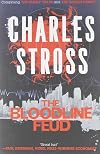
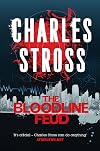
The Bloodline Feud: A Merchant Princes Omnibus
by Charles Stross
Merchant Princes (Collections and Selections — Omnibus 1-2)
On This Page
Description
Book Components1x 9781447228981, The Hidden Family, Paperback1x 9781447238140, The Family Trade, PaperbackMiriam knows there's no smoke without fire. And she's about to get burnt... The Family Trade and The Hidden Family - The first two installments of the Merchant Princes series combined in one volume. Miriam Beckstein is a successful reporter for a hi-tech magazine. So when she discovers a huge money-laundering scam, she thinks she's hit the big time. But when she takes it to her editor, show more she's not only fired, but receives death threats. That's just the beginning. To distract her furious daughter, Miriam's adopted mother unearths mementos from her real mother, murdered when she was an infant. But these reveal a secret that will ultimately throw governments into disarray. For what Miriam thinks is a simple locket has the power to fling her into an alternate timeline. In this less-developed world, knights on horseback wield automatic weapons, and world-skipping assassins lurk on the other side of our reality. Here, her true family runs a criminal empire - and they want her back. But Miriam has other plans. show lessTags
Recommendations








Member Recommendations
by anonymous user
Member Reviews
Miriam is a journalist who’s just been fired for investigating the wrong tech bubble story. She discovers, in the belongings of her murdered birth mother, a mysterious locket that has the power to take her into another world, where the economics and culture are still basically medieval, and it turns out her family uses worldwalking to smuggle goods/get power. Because her talent is too valuable to the family, but also internal quarrels mean that there are people out to kill her no matter what, she decides that her best strategy is to use her knowledge of economics to change the business model from mercantilist to industrialist. It’s fun to see economics and patent law in fantasy, though Miriam is a bit of a nice white lady (pace her show more thoughts on the absence of police states in the modern US, which are period-appropriate for the character but probably not what Stross would say now). show less
The 'Bloodline Feud' pulls together the first two of nine books of fantasy-science fiction in Stross' successful 'The Merchant Princes' series which he re-edited for style but not for content. The original novels were published in 2004/2005 and the redraft and compilation in 2014.
The premise is simple and the tale readable and effective even if the exposition is highly complex. It is alternate history with a 'bloodline' capable (variously) of travelling between three worlds: immediately contemporary, one that is semi-feudal and one that is effectively steam punk.
Travelling between the worlds is not time-travelling but between worlds that developed at different speeds in real time. Ours is the most advanced. The intermediate in show more development and last to appear postulates a much-delayed industrial revolution: America is still British.
The series has become (rightfully in my opinion) praised as an unusual genre fiction exploration of development economics. Stross seems to have made a real effort to understand how capital accumulation and politics interact and then apply this to a wholly non-didactic story line.
Indeed, this is the skill of the author. It is fundamentally a rollicking adventure romp with lots of shoot ups, double-dealing and attractive (mostly female) characters even if, at times, it can seem like a girlie version of the Famous Five with serious armament.
The cleverness of the plotting lies in how technology transfer is managed under severe transfer constraints. The bloodline that emerged as travellers out of the feudal world is effectively a sophisticated crime family exploiting supply and demand.
It is a parallel elite group that can pacify the sleepy and arrogant landholding class at home with goodies and supply themselves with the creature comforts of our world including advanced weapons as well as highly rare and expensive 'M&Ms'.
Naturally control of this lucrative trade and resentments amongst those who cannot travel within the family (the non-bloodline) is at the centre of the plot with the accidental uncovering by a neglected cadet branch of the line to the 'steam punk' America creating new and interesting complexities.
That the feudals are a merchant family in one world and a crime family in another naturally brings in the possibility of a future story line that involves US law enforcement and homeland security while our heroine Miriam's opening up of New Britain is also industrialising a Castlereaghan police state.
We have a 'liberal' faction trying to modernise the feudal world against conservative fears of disruption and that same faction seeking to industrialise more effectively for billionaire profit a third world in effective informal alliance with radicals who take their position from a kindly Marx.
Meanwhile the world that the liberals are ultimately trying to emulate is having to deal (though this is not a major factor in these first two books) with the sort of entrepreneurialism, criminal and robber baron, that it has long grown out of and is trying to ensure is kept in its box or eliminated.
The mention of Karl (apparently a martyr to radicals who are closer to Chartists than Communists) gives us a clue to the origins of some of Stross' implicit analysis. He is playing an entertaining mind game here, taking depressingly over-serious historical economics and giving us a romp.
Something that is entertaining, creative and yet appeals intellectually as to its underlying attempt to open up the 'laws of history' to scrutiny has to get reasonably high marks and Stross writes well, rarely faltering in either style or momentum.
Of course, occasionally the flipping between worlds can get a little confusing but that rather goes with the territory and is quickly rectified. The twists and turns of the plot are well within the confines of the popular thriller. There is nothing offered to us that is intrinsically stupid.
Our female hero may seem a fantasy figure in her command of her situation but she is not implausible and nor are her sidekicks from the world of feudalism - Lady Olga and Brill. Above all, they are all likeable, outclassing the blokes without fashionable wokery. Why it is not a Netflix series beats me.
Would I read the rest of the series? To be honest, probably not. I have the gist of the situation and the rest of the exposition will no doubt be creative and entertaining but time is short. However, I would recommend it to anyone younger and with more time - perfectly suitable for young adults in my view. show less
The premise is simple and the tale readable and effective even if the exposition is highly complex. It is alternate history with a 'bloodline' capable (variously) of travelling between three worlds: immediately contemporary, one that is semi-feudal and one that is effectively steam punk.
Travelling between the worlds is not time-travelling but between worlds that developed at different speeds in real time. Ours is the most advanced. The intermediate in show more development and last to appear postulates a much-delayed industrial revolution: America is still British.
The series has become (rightfully in my opinion) praised as an unusual genre fiction exploration of development economics. Stross seems to have made a real effort to understand how capital accumulation and politics interact and then apply this to a wholly non-didactic story line.
Indeed, this is the skill of the author. It is fundamentally a rollicking adventure romp with lots of shoot ups, double-dealing and attractive (mostly female) characters even if, at times, it can seem like a girlie version of the Famous Five with serious armament.
The cleverness of the plotting lies in how technology transfer is managed under severe transfer constraints. The bloodline that emerged as travellers out of the feudal world is effectively a sophisticated crime family exploiting supply and demand.
It is a parallel elite group that can pacify the sleepy and arrogant landholding class at home with goodies and supply themselves with the creature comforts of our world including advanced weapons as well as highly rare and expensive 'M&Ms'.
Naturally control of this lucrative trade and resentments amongst those who cannot travel within the family (the non-bloodline) is at the centre of the plot with the accidental uncovering by a neglected cadet branch of the line to the 'steam punk' America creating new and interesting complexities.
That the feudals are a merchant family in one world and a crime family in another naturally brings in the possibility of a future story line that involves US law enforcement and homeland security while our heroine Miriam's opening up of New Britain is also industrialising a Castlereaghan police state.
We have a 'liberal' faction trying to modernise the feudal world against conservative fears of disruption and that same faction seeking to industrialise more effectively for billionaire profit a third world in effective informal alliance with radicals who take their position from a kindly Marx.
Meanwhile the world that the liberals are ultimately trying to emulate is having to deal (though this is not a major factor in these first two books) with the sort of entrepreneurialism, criminal and robber baron, that it has long grown out of and is trying to ensure is kept in its box or eliminated.
The mention of Karl (apparently a martyr to radicals who are closer to Chartists than Communists) gives us a clue to the origins of some of Stross' implicit analysis. He is playing an entertaining mind game here, taking depressingly over-serious historical economics and giving us a romp.
Something that is entertaining, creative and yet appeals intellectually as to its underlying attempt to open up the 'laws of history' to scrutiny has to get reasonably high marks and Stross writes well, rarely faltering in either style or momentum.
Of course, occasionally the flipping between worlds can get a little confusing but that rather goes with the territory and is quickly rectified. The twists and turns of the plot are well within the confines of the popular thriller. There is nothing offered to us that is intrinsically stupid.
Our female hero may seem a fantasy figure in her command of her situation but she is not implausible and nor are her sidekicks from the world of feudalism - Lady Olga and Brill. Above all, they are all likeable, outclassing the blokes without fashionable wokery. Why it is not a Netflix series beats me.
Would I read the rest of the series? To be honest, probably not. I have the gist of the situation and the rest of the exposition will no doubt be creative and entertaining but time is short. However, I would recommend it to anyone younger and with more time - perfectly suitable for young adults in my view. show less
A tech journalist finds herself with a new family and a new world, and the family are rich because they can use their special wolrdwalking abilities to move illegal drugs around while their world is stuck in a quasi-medieval state. Multiple attempts on her life send our heroine on the run, doing the only thing she can to defend herself, reveal her enemies and turn the tables on them: a tech start-up. If your bloody fantasy/scifi/steampunk epics have been lacking in the worldbuilding area of economics, these are the books for you. Even if you haven't these are a lot of fun.
https://nwhyte.livejournal.com/3776157.html
This is a compilation and revision of the first two books in Stross's Merchant Princes series (originally intended to be one book rather than two). When I read the first, The Family Trade, in 2005, I wrote:
"I had been looking forward to reading this for some time. Reviews that I had skimmed (and indeed hints dropped by the author) led me to understand that it borrows the feudal and feuding families who can walk between the worlds of Roger Zelazny's Amber series, a firm favourite of mine from an early age. But my anticipation was mixed with a little trepidation: even Zelazny was unable to really pull it off in the end - while the Amber books contain some of his most lyrical prose, the plot has show more holes you can drive an army of dark, clawed, fanged, furry man-like creatures through, and his own interest and energy had very obviously faded by the middle of the second series. And as for the Betancourt prequels - critical reaction has been pretty unanimous, so I don't think I'll bother.
Well, I think Charlie has pulled it off. He's taken Zelazny's idea and wondered what people with that ability would actually do with it in today's world; applied an economic model to it, if you like. Amber was always supposedly a great trading nexus (Corwin had written its anthem, the Ballad of the Water Crossers), but the evidence of this was pretty minimal - rather than wealth, its children seemed to be more attracted to power, and went off to find kingdoms and wars of their own. In the Stross version, there is a convincing business model using the fact that those with the gift can shift between our world and one where the Vikings settled North America and Europe never developed (and, we suspect, at least one other such parallel universe). Also in the Stross version, we have a plot that makes sense and is compelling reading; and some very interesting and complex characters. The Family Trade doesn't have the vivid imagery of some of his other work, but I sat up much later than I should have last night to finish it, and now can't wait for the sequel, The Hidden Family."
A few weeks later, I wrote of the second part, The Hidden Family:
"I once again sat up far too late reading this, the sequel to The Family Trade. And enjoyed it too. Our heroine from the first book has a business plan, an economic model, three parallel universes to trade between, and a bunch of enemies out to kill her. Some vivid scene-setting, including of the weather; one nice little touch which reminded me of my debate with Ken MacLeod back in August:
I don't know much about English history, but it's got this civil war in the sixteen forties, goes on and on about some dude called the Lord Protector, Oliver Cromwell. I looked him up in Encarta and yes, he's there, too. I didn't know the English had a civil war, and it gets better: they had a revolution in 1688, too! Did you know that? I sure didn't, and it's not in Encarta -- but I didn't trust it, so I checked Britannica and it's kosher. Okay, so England has a lot of history, and it's all in the wrong order.
As the climax loomed and the number of pages left to read dwindled rapidly, I began to wonder if the book would end on a genuine cliff-hanger to encourage us to look out for The Clan Corporate. But in fact enough was resolved - if in a bit of a rush - for the story to come to a satisfactory halt for now.
Charlie does like his feisty women heroes! And does them well."
Sixteen years on, I had forgotten enough of the plot to enjoy it all over again, and also to note that some of the rough edges have been filed off. Perhaps I know the northeast of the US a bit better now than I did, after various visits to my brother in Boston and my former employers in New York, and also a bit more historical background reading, so it all cohered a bit better in my mind. I still love Zelazny and Amber, but I also really like the economic/business mindset that Stross's heroine brings to a similar situation, and the desperate attempts of surveillance states in each of the parallel worlds to keep track of people who can move between them. show less
This is a compilation and revision of the first two books in Stross's Merchant Princes series (originally intended to be one book rather than two). When I read the first, The Family Trade, in 2005, I wrote:
"I had been looking forward to reading this for some time. Reviews that I had skimmed (and indeed hints dropped by the author) led me to understand that it borrows the feudal and feuding families who can walk between the worlds of Roger Zelazny's Amber series, a firm favourite of mine from an early age. But my anticipation was mixed with a little trepidation: even Zelazny was unable to really pull it off in the end - while the Amber books contain some of his most lyrical prose, the plot has show more holes you can drive an army of dark, clawed, fanged, furry man-like creatures through, and his own interest and energy had very obviously faded by the middle of the second series. And as for the Betancourt prequels - critical reaction has been pretty unanimous, so I don't think I'll bother.
Well, I think Charlie has pulled it off. He's taken Zelazny's idea and wondered what people with that ability would actually do with it in today's world; applied an economic model to it, if you like. Amber was always supposedly a great trading nexus (Corwin had written its anthem, the Ballad of the Water Crossers), but the evidence of this was pretty minimal - rather than wealth, its children seemed to be more attracted to power, and went off to find kingdoms and wars of their own. In the Stross version, there is a convincing business model using the fact that those with the gift can shift between our world and one where the Vikings settled North America and Europe never developed (and, we suspect, at least one other such parallel universe). Also in the Stross version, we have a plot that makes sense and is compelling reading; and some very interesting and complex characters. The Family Trade doesn't have the vivid imagery of some of his other work, but I sat up much later than I should have last night to finish it, and now can't wait for the sequel, The Hidden Family."
A few weeks later, I wrote of the second part, The Hidden Family:
"I once again sat up far too late reading this, the sequel to The Family Trade. And enjoyed it too. Our heroine from the first book has a business plan, an economic model, three parallel universes to trade between, and a bunch of enemies out to kill her. Some vivid scene-setting, including of the weather; one nice little touch which reminded me of my debate with Ken MacLeod back in August:
I don't know much about English history, but it's got this civil war in the sixteen forties, goes on and on about some dude called the Lord Protector, Oliver Cromwell. I looked him up in Encarta and yes, he's there, too. I didn't know the English had a civil war, and it gets better: they had a revolution in 1688, too! Did you know that? I sure didn't, and it's not in Encarta -- but I didn't trust it, so I checked Britannica and it's kosher. Okay, so England has a lot of history, and it's all in the wrong order.
As the climax loomed and the number of pages left to read dwindled rapidly, I began to wonder if the book would end on a genuine cliff-hanger to encourage us to look out for The Clan Corporate. But in fact enough was resolved - if in a bit of a rush - for the story to come to a satisfactory halt for now.
Charlie does like his feisty women heroes! And does them well."
Sixteen years on, I had forgotten enough of the plot to enjoy it all over again, and also to note that some of the rough edges have been filed off. Perhaps I know the northeast of the US a bit better now than I did, after various visits to my brother in Boston and my former employers in New York, and also a bit more historical background reading, so it all cohered a bit better in my mind. I still love Zelazny and Amber, but I also really like the economic/business mindset that Stross's heroine brings to a similar situation, and the desperate attempts of surveillance states in each of the parallel worlds to keep track of people who can move between them. show less
Bloodline Feud is a reworking of the first two books in the Merchant Princes series. Charlie Stross explained why he'd rewritten them on his blog. Basically he'd written them this way and was asked by the publisher to split them into smaller books because the fantasy doorstop wasn't in fashion.
I'd already read the entire series so I was wary of buying the Bloodline Feud. The only reason I did was because it was on special offer from Amazon for 99p. At that price almost anything is worth trying. Bloodline Feud is mostly the same story, but it is better than I remember either of the two books being. Also the combining them into one volume works very well. The story has a better pace and feels like a single story rather than two smashed show more together.
That said, these aren't pure fantasy books. They're a modern thriller with a fantasy element. The premise is that parallel worlds exist. A recessive gene allows those with two copies to walk between worlds. Set around 2002, when the books were first published, they take a female business journalist and give her access to a parallel world.
Miriam is a classic unreliable narrator, almost the entire story is told from her point of view. There are other points of view so that the reader knows the bigger picture, but these form interludes to foreshadow later things or to explain other sides.
The Bloodline Feud of the title is related to the world walking ability. The family having realised how it works tries to keep control over itself. However, power struggles caused an internecine war. Miriam brings that back when she world walks, she's the surviving daughter of a marriage intended to stop the war. Her parents were ambushed and she was taken to the US by her world walking mother. Adopted as a child she knows nothing of her heritage.
Miriam is given a locket, which contains the world walking sigil. This leads to her switching worlds and coming to the attention of her estranged family, the Clan. Her return triggers more activity around the Bloodline Feud. There are assassination attempts on Miriam. This leads to her going with her journalistic leaning to uncover the background to the Bloodline Feud. This leads to her discovering a third world.
Worth a note on the worlds. We start in the modern US about 2002. This is the most advanced technologically of the three. Miriam then visits the home world of the walkers. This is topographically identical but much more sparsely populated. It appears to have been settled by vikings and history diverged hundreds of years before. This world is feudal and has a c16 level of technology, apart from what the clan has brought over.
The feudal nature of this world limits the viewpoint and nature of clan operations. They are intrinsically conservative. This makes them less interested in social and economic development than in trade. They use their ability to move information rapidly between places in their world. In the other direction they use their wealth and power to move drugs.
The Clan are largely ignorant of world three. Miriam stumbles into it when tracking the Bloodline Feud. Its history diverged from the modern US about 1745. The Hanoverian Kings ended up ruling the American colonies after a successful Jacobite rebellion backed by a full scale French invasion. This world is around late 19th or very early 20th century in terms of technology. It's also a police state.
Overall it is a very good take on parallel worlds with some really good female characters. Worth a read. show less
I'd already read the entire series so I was wary of buying the Bloodline Feud. The only reason I did was because it was on special offer from Amazon for 99p. At that price almost anything is worth trying. Bloodline Feud is mostly the same story, but it is better than I remember either of the two books being. Also the combining them into one volume works very well. The story has a better pace and feels like a single story rather than two smashed show more together.
That said, these aren't pure fantasy books. They're a modern thriller with a fantasy element. The premise is that parallel worlds exist. A recessive gene allows those with two copies to walk between worlds. Set around 2002, when the books were first published, they take a female business journalist and give her access to a parallel world.
Miriam is a classic unreliable narrator, almost the entire story is told from her point of view. There are other points of view so that the reader knows the bigger picture, but these form interludes to foreshadow later things or to explain other sides.
The Bloodline Feud of the title is related to the world walking ability. The family having realised how it works tries to keep control over itself. However, power struggles caused an internecine war. Miriam brings that back when she world walks, she's the surviving daughter of a marriage intended to stop the war. Her parents were ambushed and she was taken to the US by her world walking mother. Adopted as a child she knows nothing of her heritage.
Miriam is given a locket, which contains the world walking sigil. This leads to her switching worlds and coming to the attention of her estranged family, the Clan. Her return triggers more activity around the Bloodline Feud. There are assassination attempts on Miriam. This leads to her going with her journalistic leaning to uncover the background to the Bloodline Feud. This leads to her discovering a third world.
Worth a note on the worlds. We start in the modern US about 2002. This is the most advanced technologically of the three. Miriam then visits the home world of the walkers. This is topographically identical but much more sparsely populated. It appears to have been settled by vikings and history diverged hundreds of years before. This world is feudal and has a c16 level of technology, apart from what the clan has brought over.
The feudal nature of this world limits the viewpoint and nature of clan operations. They are intrinsically conservative. This makes them less interested in social and economic development than in trade. They use their ability to move information rapidly between places in their world. In the other direction they use their wealth and power to move drugs.
The Clan are largely ignorant of world three. Miriam stumbles into it when tracking the Bloodline Feud. Its history diverged from the modern US about 1745. The Hanoverian Kings ended up ruling the American colonies after a successful Jacobite rebellion backed by a full scale French invasion. This world is around late 19th or very early 20th century in terms of technology. It's also a police state.
Overall it is a very good take on parallel worlds with some really good female characters. Worth a read. show less
I got more out of this than when I originally read the individual books.
Dimension hopping drug dealers, good stuff
Members
- Recently Added By
Lists

Books Read in 2022
5,226 works; 115 members
Author Information

119+ Works 45,561 Members
Born in Leeds, England, Charles Stross knew he wanted to be a science fiction writer from the age of six. Despite this, he went to university in London and qualified as a Pharmacist. He made his first writing sale to Interzone in 1986, and sold about a dozen stories elsewhere throughout the late 1980s and early 1990s. He now writes fiction show more full-time, has sold about 16 novels, has won one Hugo award and been nominated nearly a dozen times, and has been translated into about a dozen languages. He is the author of the Merchant Princes series. His latest book, The Revolution Business, is the fifth in this series. He lives in Edinburgh, Scotland, with his wife Feorag. (Bowker Author Biography) show less
Series

Work Relationships
Contains
Common Knowledge
- Original publication date
- 2013-04-11
- People/Characters
- Miriam Beckstein; Olga Thorold; Brilliana van Ost; Paulette Milan; Roland, Earl Lofstrom; Duke Angbard of House Lofstrom (show all 7); Matthias
- Important places
- Gruinmarkt; Boston, Massachusetts, USA
- Dedication
- For Steve and Jenny Glover
- First words
- Ten and a half hours before a mounted knight with a machine gun tried to kill her, tech journalist Miriam Beckstein lost her job.
- Last words
- (Click to show. Warning: May contain spoilers.)Miriam followed behind, arm in arm with her mother, and for the first time in months she dared to hope that the worst was behind her.
- Blurbers
- Schroeder, Karl
- Original language
- English
Classifications
Statistics
- Members
- 339
- Popularity
- 93,414
- Reviews
- 9
- Rating
- (3.75)
- Languages
- English
- Media
- Paper, Audiobook, Ebook
- ISBNs
- 8
- ASINs
- 4