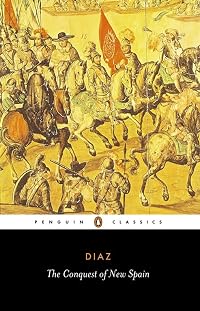
The Conquest of New Spain
by Bernal Díaz del Castillo
On This Page
Description
Bernal Díaz del Castillo (1492-1584) was a foot soldier in the army of Mexico's conqueror Hernan Cortés. The first edition of his True History of the Conquest of New Spain (as it was entitled in a later English translation) was published in Madrid in 1632 from a manuscript copy sent to Spain shortly after the author's death. Written in a highly accessible style, and describing the experiences of the troops themselves, the work became even more successful than the official accounts and show more went through many editions and translations. The two-volume edition reissued here was first published in 1904 and is considered a more reliable text, as it was based on the original manuscript preserved in Guatemala City. Volume 1 contains an introduction by the editor, the influential Mexican historian and book-collector Genaro García (1867-1920), a table of variant readings, and chapters 1-39 of the text. show lessTags
Recommendations

















Member Recommendations
Member Reviews
You’ll never read another book like this. Only once would a European empire and a Mesoamerican empire meet for the first and final time in a clash of arms that would destroy one and vault the other to global dominance. Conquistador Bernal Díaz del Castillo was there, and he has a lot to say.
This is the memoir of an old soldier stung by historians and opportunists who weren’t there and don’t know. This is the war of Hernán Cortés against the Mexican Empire through the eyes of a veteran who, in his old age, still sleeps on a hard floor because the war left him unable to endure a soft bed.
For this reason, you shouldn’t swallow this whole. It’s one man’s memory of a pivot in world history, and yet it has the ring of truth. show more More accurately, it has the ring of Díaz del Castillo’s truth. He doubts none of the justice of this holy war, or of the benefits conferred on the Mesoamericans by their incorporation into the Christian empire of Charles V.
This is what makes Díaz del Castillo’s memoir both terrible and transfixing. On the one hand, in our post-Enlightenment West, we recoil from the specter of an unprovoked war of aggression under the banner of the cross, a violent crusade in which blood, gold, and faith mingle without distinction.
On the other hand, the Mexican Empire itself is an affront to Enlightenment sensibilities. Even making traditional allowances for Spanish exaggeration, there’s no doubt this empire was an expansionist war machine in its own right, animated by its own religious fervor to pour the blood of human sacrifice and ritual cannibalism into the maw of gods on whom the stability of the cosmos rested.
Neither the Castilians nor the Mexicans fit comfortably into contemporary fables of good versus evil. Díaz del Castillo himself is alternately sickened by the flayed skins of sacrificial victims and captivated by the kindness and nobility of local chiefs. He admires the priests and monks who minister to the Mesoamericans in the name of Christ, and contemns Spanish brutes who abuse the men and women stripped from vassalage to Tenochtitlan and made vassals of Spain.
Beneath the weight of this memoir, the easy moralities of Internet memes and pop history buckle. This is a portal into a past both familiar and alien, and a subversion of expectations for anyone who thinks they know what happens when worlds collide. Díaz del Castillo expresses amusement throughout at soldiers fresh from Italian battlefields who had no idea what they were in for, because this is not Europe. Welcome to Mexico. show less
This is the memoir of an old soldier stung by historians and opportunists who weren’t there and don’t know. This is the war of Hernán Cortés against the Mexican Empire through the eyes of a veteran who, in his old age, still sleeps on a hard floor because the war left him unable to endure a soft bed.
For this reason, you shouldn’t swallow this whole. It’s one man’s memory of a pivot in world history, and yet it has the ring of truth. show more More accurately, it has the ring of Díaz del Castillo’s truth. He doubts none of the justice of this holy war, or of the benefits conferred on the Mesoamericans by their incorporation into the Christian empire of Charles V.
This is what makes Díaz del Castillo’s memoir both terrible and transfixing. On the one hand, in our post-Enlightenment West, we recoil from the specter of an unprovoked war of aggression under the banner of the cross, a violent crusade in which blood, gold, and faith mingle without distinction.
On the other hand, the Mexican Empire itself is an affront to Enlightenment sensibilities. Even making traditional allowances for Spanish exaggeration, there’s no doubt this empire was an expansionist war machine in its own right, animated by its own religious fervor to pour the blood of human sacrifice and ritual cannibalism into the maw of gods on whom the stability of the cosmos rested.
Neither the Castilians nor the Mexicans fit comfortably into contemporary fables of good versus evil. Díaz del Castillo himself is alternately sickened by the flayed skins of sacrificial victims and captivated by the kindness and nobility of local chiefs. He admires the priests and monks who minister to the Mesoamericans in the name of Christ, and contemns Spanish brutes who abuse the men and women stripped from vassalage to Tenochtitlan and made vassals of Spain.
Beneath the weight of this memoir, the easy moralities of Internet memes and pop history buckle. This is a portal into a past both familiar and alien, and a subversion of expectations for anyone who thinks they know what happens when worlds collide. Díaz del Castillo expresses amusement throughout at soldiers fresh from Italian battlefields who had no idea what they were in for, because this is not Europe. Welcome to Mexico. show less
I just finished the 376 page abridgment of Bernal Diaz del Castillo's "true" History of the Conquest of New Spain selected, edited and translated by David Carrasco. I stumbled across this book in a reference, an extended quote, from another book I was reading on the history of the feather (Feathers by Thor Hanson). A vivid description of the splendor of the aviaries in Tenochitlan, and their subsequent targeted destruction by burning by Cortés.
Though I didn't find either of the quotes in this selection, it did provide an extremely thoughtfully contextualized overview of the Spanish perspective of the conquest of Latin America. Abridged from a much longer document, the sections included describe in (sometimes excruciating, sometimes show more tedious) detail the progression of the Spanish invasion, their relationships with native city-states, their duplicities in negotiating, the extreme cruelty on both sides of the wars, and the fascinating religious and political justifications for the two infamous massacres perpetrated by the Spanish in cities that were not warring. Woah, that was a long sentence, sorry about that.
The essays following address women's roles in the conquest as property, anchors, and interpreters; the exaggeration and distortion of the practices of human sacrifice and cannibalism; and the political motivations for the composition of this text in the first place. A really accessible, fascinating collection of scholarly essays.
A great engaging text, and a wonderful translation. The translation renders the language simultaneously accessible (the tone is clear, crisp, the usage mostly standard) and poetic. Diaz del Castillo was a skilled storyteller, and was using his skills for gain. The motivations behind the composition are exquisitely evoked throughout the translation. Carrasco leaves in gestures that continuously remind readers of their distance from the text in space, time, and language, while making sure that it remains engaging. A perfect balance for a text like this.
[Originally posted on Alluringly Short, http://alluringlyshort.com/2013/08/18/the-history-of-the-conquest-of-new-spain-b.... ] show less
Though I didn't find either of the quotes in this selection, it did provide an extremely thoughtfully contextualized overview of the Spanish perspective of the conquest of Latin America. Abridged from a much longer document, the sections included describe in (sometimes excruciating, sometimes show more tedious) detail the progression of the Spanish invasion, their relationships with native city-states, their duplicities in negotiating, the extreme cruelty on both sides of the wars, and the fascinating religious and political justifications for the two infamous massacres perpetrated by the Spanish in cities that were not warring. Woah, that was a long sentence, sorry about that.
The essays following address women's roles in the conquest as property, anchors, and interpreters; the exaggeration and distortion of the practices of human sacrifice and cannibalism; and the political motivations for the composition of this text in the first place. A really accessible, fascinating collection of scholarly essays.
A great engaging text, and a wonderful translation. The translation renders the language simultaneously accessible (the tone is clear, crisp, the usage mostly standard) and poetic. Diaz del Castillo was a skilled storyteller, and was using his skills for gain. The motivations behind the composition are exquisitely evoked throughout the translation. Carrasco leaves in gestures that continuously remind readers of their distance from the text in space, time, and language, while making sure that it remains engaging. A perfect balance for a text like this.
[Originally posted on Alluringly Short, http://alluringlyshort.com/2013/08/18/the-history-of-the-conquest-of-new-spain-b.... ] show less
Sometimes extraordinary events are fortuitously recorded by a well placed participant. In this case, Bernal Diaz del Castillo, describes the 16th century Spanish discovery and defeat of the Mexican empire in an account that is so compelling that it is difficult to put down.
The basic facts are not disputed, and reveal the extraordinary military valour of Cortez and most of his men. He gives weight to existing tribal conflicts, the role of religious beliefs and also illustrates Cortez's manipulative cunning and great love of love of gold, even going as far as cheating his own men.
The basic facts are not disputed, and reveal the extraordinary military valour of Cortez and most of his men. He gives weight to existing tribal conflicts, the role of religious beliefs and also illustrates Cortez's manipulative cunning and great love of love of gold, even going as far as cheating his own men.
The history of the Spanish Conquest of the Mexica (Aztec) state is enlivened by this edition and translation of the sixteenth Century memoir by a participant. Bernal Diaz de Castillo was a medium rank officer in that epic struggle, and was driven by his ego and by some legal grudges to add his account to the other books covering the period. J.M. Cohen produced a very readable translation, and assures the reader that he has excised a considerable amount of the original text which directly attacks several other historians and which describes the legal maneuvers that some of the original members of Cortes' army were driven to while trying to get their fair share of the booty of the conquest. Bernal Diaz's book provides a great deal of the show more colour that later historians have relied on. It is a book which a researcher in the field should pay respect to for its coverage. Cohen's introduction and notes are very high quality. Sadly, my Penguin copy does not rise to the luxury of an index, though the mapping is adequate. show less
Intriguing novel (although it shouldn't be considered fiction), by one of Hernan Cortés' soldiers who tells the tale of the conquest of New-Spain (read: Mexico). If gives an image of the lifes of those conquistadores, and the quest for glory (and gold) by the soldiers and their superiors. Although the outcome is quite clear from the beginning it is a good read (albeit with a lot of repetitions in the text). That outcome is achieved partly because the Mexicans believed a people would come from where the sun rises and they would later rule them, but also because of the military strength of the Spaniards. It also shows the minds of those early conquistadores, they really thought what they did was good, they didn't think about the show more consequences... Enslaving indians, no problem, forcing catholicism upon them, no problem... show less
"And so we had morning Mass and headed out to conquer the savages for God and relieve them of their idolic gold." It's a great chronicle, written by a soldier and participant in Cortez's compaign to conquer Mexico. Bernal Diaz lived from 1492 to about 1580. His is the only chronicle written by a participant and arguably the most reliable, the others heavily criticized by him and others as modified for political purposes.
8/13/1521 was the day of the capture of Cuatemoc and the fall of Tenochtitlan.
Bernal del Castillo was a soldier who accompanied Cortes to the land they called new spain. He wrote this book 20 years after he got back from mexico. He, as others have said, must have had an eidetic memory. This book is a Marvel of a memoir.
As Bernal del Castillo said himself in his writings, the reader must tire of reading about day after day of endless strife and warfare. This war, Cortes taking Mexico for the king of Spain, Carlos V, he was not going to give up. Because he knew the land was full of silver and gold, and because he wanted to convert all of the Indians to christianity, he refused to give in, though many thousands of his men, and the Indian show more allies, were wounded and died. Many, many Spaniards were sacrificed to the idols of the indians.
I have a very low opinion of Spain and the conquerors who went to mexico, impoverished the country, stole the culture, forced their cult on the inhabitants, but when I read this part from when they first landed by modern-day Veracruz, it really pissed me off:
"... when we perceived their intentions we were on the point of firing at them, but it pleased God that we agreed to call out to them, and through Julianillo and Melchorejo, who spoke their language very well, we told them that they need have no fear, that we wished to talk to them, for we had things to tell them which when they understood them they would be glad that we had come to their country and their homes. Moreover, we wished to give them some of the things we had brought with us. As they understood what was said to them, four of the canoes came near with about 30 Indians in them, and we showed them strings of green beads and small mirrors and blue cut glass beads, and as soon as they saw them they assumed a more friendly manner, for they thought that they were Chalchihuites [jadeite] which they value greatly."
One part I liked the, is when the conquerors found out that some previously landed Spaniards have been taken prisoners, and were being used as slaves for the Chiefs of some tribes. Cortes used a bunch of those beads for a ransom to try to get them back. They did get one of them back, his name was Jerónimo de Aguilar, and they kept this Guy as a translator throughout the war With Tenochtitlán. As for the other one, his name was Gonzalo Guerrero, and he had married an Indian woman, and had three boys with her. The wife told off Aguilar saying,
" 'what is this slave coming here for talking to my husband - go off with you, and don't trouble us with any more words.' "
The way that Indians observed the Spaniards kneeling before trees they had cut into a cross made me laugh.
"Let us now leave this question of visits and relate that it was now the time of the Ave maria, and at the sound of a bell which we had in the camp we all fell on our knees before a cross placed on a sandhill and said our prayers of the Ave Maria before the cross. When Tendile and Pitalpotoque saw us kneeling as they were very intelligent, they asked what was the reason that we humbled ourselves before a tree cut in that particular way." show less
Bernal del Castillo was a soldier who accompanied Cortes to the land they called new spain. He wrote this book 20 years after he got back from mexico. He, as others have said, must have had an eidetic memory. This book is a Marvel of a memoir.
As Bernal del Castillo said himself in his writings, the reader must tire of reading about day after day of endless strife and warfare. This war, Cortes taking Mexico for the king of Spain, Carlos V, he was not going to give up. Because he knew the land was full of silver and gold, and because he wanted to convert all of the Indians to christianity, he refused to give in, though many thousands of his men, and the Indian show more allies, were wounded and died. Many, many Spaniards were sacrificed to the idols of the indians.
I have a very low opinion of Spain and the conquerors who went to mexico, impoverished the country, stole the culture, forced their cult on the inhabitants, but when I read this part from when they first landed by modern-day Veracruz, it really pissed me off:
"... when we perceived their intentions we were on the point of firing at them, but it pleased God that we agreed to call out to them, and through Julianillo and Melchorejo, who spoke their language very well, we told them that they need have no fear, that we wished to talk to them, for we had things to tell them which when they understood them they would be glad that we had come to their country and their homes. Moreover, we wished to give them some of the things we had brought with us. As they understood what was said to them, four of the canoes came near with about 30 Indians in them, and we showed them strings of green beads and small mirrors and blue cut glass beads, and as soon as they saw them they assumed a more friendly manner, for they thought that they were Chalchihuites [jadeite] which they value greatly."
One part I liked the, is when the conquerors found out that some previously landed Spaniards have been taken prisoners, and were being used as slaves for the Chiefs of some tribes. Cortes used a bunch of those beads for a ransom to try to get them back. They did get one of them back, his name was Jerónimo de Aguilar, and they kept this Guy as a translator throughout the war With Tenochtitlán. As for the other one, his name was Gonzalo Guerrero, and he had married an Indian woman, and had three boys with her. The wife told off Aguilar saying,
" 'what is this slave coming here for talking to my husband - go off with you, and don't trouble us with any more words.' "
The way that Indians observed the Spaniards kneeling before trees they had cut into a cross made me laugh.
"Let us now leave this question of visits and relate that it was now the time of the Ave maria, and at the sound of a bell which we had in the camp we all fell on our knees before a cross placed on a sandhill and said our prayers of the Ave Maria before the cross. When Tendile and Pitalpotoque saw us kneeling as they were very intelligent, they asked what was the reason that we humbled ourselves before a tree cut in that particular way." show less
Members
- Recently Added By
Lists

100 Books to Read in a Lifetime (That Are Older Than 200 Years)
415 works; 176 members

Best Autobiographies and Memoirs
370 works; 67 members

r/AskHistorians' Recommended Books
1,068 works; 19 members

My TBR
371 works; 3 members

Book Titles Mentioned In Newberry Medal And Honor Books
884 works; 3 members
Author Information

Díaz del Castillo was a soldier in the army of Hernán Cortés. He is best known for writing a classic memoir of the conquest of Mexico.
Some Editions
Awards and Honors
Series
Belongs to Publisher Series
Work Relationships
Common Knowledge
- Canonical title
- The Conquest of New Spain
- Original title
- Historia verdadera de la conquista de la Nueva España
- Alternate titles
- The Discovery and Conquest of Mexico 1517-1521
- Original publication date
- 1568
- People/Characters
- Moctezuma II; Hernán Cortés (Hernando Cortes); Bernal Diaz del Castillo; Pedro de Alvarado; Malinche
- Important places
- Mexico
- Important events
- Conquest of Latin America; Conquest of Mexico
- First words
- I, Bernal Díaz del Castillo, citizen and governor of the most loyal city of Santiago de Guatemala, one of the first discoverers and conquerors of New Spain and its provinces, and of the Cape of Honduras and Higueras, native... (show all) of the most noble and famous city of Medina del Campo, and son of its former governor Francisco Díaz del Castillo, known as the Courteous - and his legal wife Maria Diez Rejon - may their souls rest in glory! - tell you the story of myself and my comrades; all true conquerors, who served His Majesty in the discovery, conquest, pacification, and the settlement of new Spain; one of the finest regions of the New World yet discovered, this expedition being undertaken by our own efforts, and without his Majesty's knowledge.
Penguin Classics translation by J. M. Cohen, 1963.
Bernal Díaz del Castillo, the last survivor of the Conquerors of Mexico, died on his estates in Guatamala at the age of eighty-nine, as poor as he had lived.
Penguin Classics introduction by J. M. Cohen, 1963. - Last words
- (Click to show. Warning: May contain spoilers.)I remember that when I went to ask Cortes for leave to go with Sandoval he said to me: 'On my conscience, Señor Bernal Díaz del Castillo, you are making a mistake. I wish you would stay here with me. But as you want to go with your friend Sandoval, go and good luck to you. I will always consider your wishes, but I know very well that you will be sorry you left.'
Penguin Classics translation by J. M. Cohen, 1963. - Publisher's editor
- Rieu, E. V.; Baldick, Robert; Radice, Betty; Jones, C. A.
- Original language*
- Spaans
*Some information comes from Common Knowledge in other languages. Click "Edit" for more information.
Classifications
- Genres
- History, Nonfiction, General Nonfiction, Biography & Memoir
- DDC/MDS
- 972.02 — History & geography History of North America Mexico, Central America, West Indies, Bermuda Mexico, Central America, West Indies, Bermuda Discovery and Spanish rule (1516-1810)
- LCC
- F1230 .D5442 — Local History of the United States, Canada and Latin America Latin America. Spanish America Mexico
- BISAC
Statistics
- Members
- 2,365
- Popularity
- 8,342
- Reviews
- 36
- Rating
- (4.06)
- Languages
- 7 — Dutch, English, French, German, Italian, Spanish, Swedish
- Media
- Paper, Audiobook, Ebook
- ISBNs
- 136
- UPCs
- 1
- ASINs
- 75