The Frontier in American History
by Frederick Jackson Turner
On This Page
Description
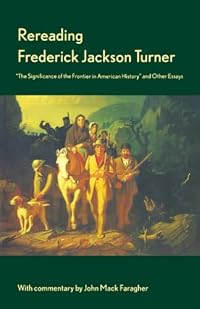
The frontier has always been a quintessential part of what makes America unique, and according to renowned historian Frederick Jackson Turner, it did more than stoke the imaginations of early pioneers—it actually helped to shape American democracy and institutions. This engaging volume explains and expands on Turner's Frontier Thesis, one of the most significant concepts in the study of American history..
Tags
Recommendations








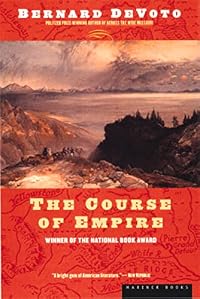

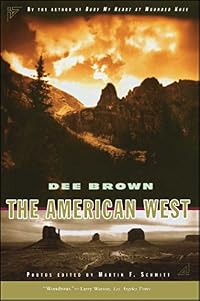
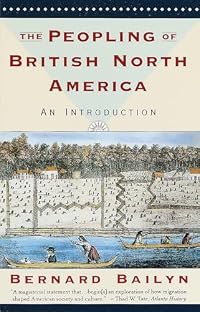

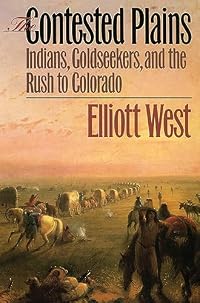
















Member Recommendations

CurrerBell A good corrective for Turner's boosterism for Manifest Destiny and pax Americana.

CurrerBell A good corrective for Turner's boosterism for Manifest Destiny and pax Americana.
Member Reviews
Turner's "frontier hypothesis" is a vital part of American historiography, and it's well set forth in the first few chapters of this book. Too many of the later chapters, though, are simply padding consisting of university commencement speeches and other "popular" writing. And as far as Turner's subscribing to the idea of pax Americana in the concluding chapter, which is partly boosterism for America's intervention into the then-ongoing First World War – well, a couple good correctives would be Frederick Merk's Manifest Destiny and Mission in American History and William Appleman Williams's The Tragedy of American Diplomacy.
A seminal work in American historical research, Turner's view is controversial today. It certainly was affirmed by the vast majority of Americans when initially published - but we're in the "America has problems" era where all that has passed is subject to second-guessing. Turner's view is easily defended by one's own experience and the experience of the country. We Americans have always maintained the attitude that space is available somewhere for us to expand or to begin again or to start our lives over. It's a fact. Turner only verifies this feeling through research. Those who denigrate Turner's thesis see nothing special in America from any other country - the frontier has had no effect on it. Bull.
This book is an essay by the author whose main controversial thesis is that the American western frontier is really the only truly American contribution to American history. This book has 12 other essays, either supporting or arguing against Turner's thesis. A minor thesis of Turner is that frontiers, in all countries, are settled by the common people, the discontents. He cites examples of Greece, Rome, and Germany, among others. To me, these essays are really more historiography than history. I purchased this book on Kindle after unearthing the original essay dated 1974 that was too faded to read
This book is one of those classics that are much cited but less often read. The book seems to me to have been too little edited, since it consists of a series of essays and reprinted speeches which overlap a great deal in subject matter. The presentation would have been much improved by the inclusion of at least one map of the territories mentioned, perhaps with the line of the advancing frontier marked by decade. The premise of the work, that the availability of cheap or free land on the frontier, and the character traits formed by its exploitation, were essential in forming the type of democracy enjoyed by America, is so generally cited and accepted that it has become part of the mental furniture of many educated Americans, even if show more they have never read a word of the original. show less
Most, if not all, of the reviews I have found (including the introduction by Andrew Trees) lament how Frederick Turner is an incomplete - bordering on lazy - historian. Dr. Turner does, on numerous occasions, especially in the first two essays, denote in his writing certain topics he refers to would be digressions from his generalized history of the American pioneer experience. As Dr. Turner does broadly discuss colonial and post-Revolutionary city, county, state and national politics, he does so in a way which relates to "frontier" mentality and the schism between pioneers and aristocracy as opposed to politicking and internecine party fighting. Another example of this supposed skimping on his historian duties was avoiding military show more strategy; he does explore how military protection was afforded to pre-Revolutionary pioneers but rightly does not elaborate on military specifics.
I read the Barnes & Noble version of the collection, which unfortunately does not provide reference to when to essay was written or when a speech was delivered; although I am not sure other editions do include such information. I do know this book is a collection of his doctoral dissertation, essays (presumably for the American Historical Association) and at least one speech.
At a few points in book, Dr. Turner delves into Census Bureau numbers of population and statistics which may be uninteresting to the non-historian. In addition, The Frontier in American History is a collection of decades of scholarly work; to this effect he repeats some of the same themes as well as information. While this may lend some credence to critics accusation that he was an incomplete academic, it more so shows how knowledgeable he was in his subject.
Looking back at history, from a time of history we find tumultuous today, Dr. Turner's writing shows not much changes. While there were some legislative changes in terms of comparison between British colonial times to post-Revolutionary decades, the urge to explore, be independent and free is a human condition. Even in Andrew Jackson's time, money was despised within the realm of politics. In his later offerings, Dr. Turner begins in-depth contrasting between capitalism and Socialism. Once all the "free" land was obtained or under control of the government, the pioneering spirit saw a change in frontier. Americans were forced to change direction; no longer able to occupy the untamed wilderness, we spent our time and energy into conquering the sciences. There appeared to be a sense in the early Twentieth Century that without land to transcend, our natural resources were diminishing, a prevailing sentiment which continues with fears of over-population and peak oil.
I really enjoyed this book, as it was a excellent transition between my reading of Revolutionary America to more modern times. show less
I read the Barnes & Noble version of the collection, which unfortunately does not provide reference to when to essay was written or when a speech was delivered; although I am not sure other editions do include such information. I do know this book is a collection of his doctoral dissertation, essays (presumably for the American Historical Association) and at least one speech.
At a few points in book, Dr. Turner delves into Census Bureau numbers of population and statistics which may be uninteresting to the non-historian. In addition, The Frontier in American History is a collection of decades of scholarly work; to this effect he repeats some of the same themes as well as information. While this may lend some credence to critics accusation that he was an incomplete academic, it more so shows how knowledgeable he was in his subject.
Looking back at history, from a time of history we find tumultuous today, Dr. Turner's writing shows not much changes. While there were some legislative changes in terms of comparison between British colonial times to post-Revolutionary decades, the urge to explore, be independent and free is a human condition. Even in Andrew Jackson's time, money was despised within the realm of politics. In his later offerings, Dr. Turner begins in-depth contrasting between capitalism and Socialism. Once all the "free" land was obtained or under control of the government, the pioneering spirit saw a change in frontier. Americans were forced to change direction; no longer able to occupy the untamed wilderness, we spent our time and energy into conquering the sciences. There appeared to be a sense in the early Twentieth Century that without land to transcend, our natural resources were diminishing, a prevailing sentiment which continues with fears of over-population and peak oil.
I really enjoyed this book, as it was a excellent transition between my reading of Revolutionary America to more modern times. show less
2960 The Frontier in American History, by Frederick Jackson Turner (read 22 Feb 1997) This book, published in 1920, is made up of 13 essays or lectures of Turner, ranging from his most famous one "The Significance of the Frontier in American History" (delivered June 12, 1893, at an American Historical Association meeting in Chicago) by which he is said to have achieved almost immediate fame. I thought some of the other pieces in the book were more fun to read. I liked his commencement address at Indiana U. in 1910 entitled "Pioneer Ideals and the State University" not so much for what it says but for the eloquent way he said what he said. All in all, this was a good book to read, even though Turner is not a very meticulous historian and show more his historical vision seems quite old-fashioned. show less
I picked this up for a conventional history book. Not looking for anything crazy, just to fill in some of the gaps between the colonies and the wild west. Fairly white-washed, but not unusual for the time it was written. good for what it is.
Members
- Recently Added By
Lists

Modern Library 100 Best Nonfiction Books
100 works; 8 members

Environmental History
46 works; 8 members

Trinity College Booklist (1951): Class Four, History
120 works; 2 members
Author Information

17+ Works 1,021 Members
Born in Portage, Wisconsin, Frederick Jackson Turner graduated from the University of Wisconsin and in 1890 received his Ph.D. from The Johns Hopkins University. From 1889 to 1910, he taught at Wisconsin University, where he helped build an excellent graduate history program. In 1910 he accepted a chair at Harvard University, where he remained for show more the next 14 years. In 1927 he became a senior research associate at the Henry E. Huntington Library in San Marino, California. Turner wrote relatively little, but his 1893 paper on the link between the land and democracy---"The Significance of the Frontier in American History"---affected the course of American scholarship and marked him as one of the most influential and renowned scholars in the profession. The year after his death, his study in sectionalism, The Significance of Sections in American History, was awarded the Pulitzer Prize in history. Turner once described U.S. history as "a series of social evolutions recurring in differing geographic basins across a raw continent." He claimed to derive his hypothesis from his early training in medieval history, where he learned about the relationships between people and their environment and saw "the interplay of economic, social and geographic factors in the politics, institutions, ideals and life of a nation and its relations with its neighbors." Turner's views have always been subject to intense scrutiny and criticism, not least among historians of the American West today. Yet the fact that his hypothesis continues to be tested is testimony to its penetrating influence. (Bowker Author Biography) show less
Awards and Honors
Series
Belongs to Publisher Series
Common Knowledge
- Canonical title
- The Frontier in American History
- Original publication date
- 1920
- Important places
- Appalachian Region; Ohio River Valley, USA; Mississippi River Valley, USA; Great Plains, USA
- Important events
- Colonial Era; Erie Canal; Homestead Exemption; Manifest Destiny
Classifications
Statistics
- Members
- 556
- Popularity
- 52,828
- Reviews
- 8
- Rating
- (3.95)
- Languages
- English, German
- Media
- Paper, Audiobook, Ebook
- ISBNs
- 52
- UPCs
- 2
- ASINs
- 24