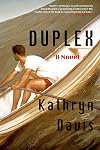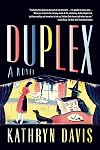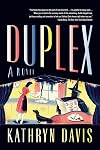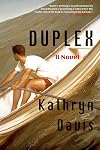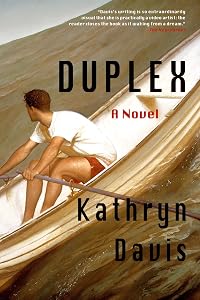
Duplex: A Novel
by Kathryn Davis
On This Page
Description
"Mary and Eddie are meant for each other-- but love is no guarantee, not in these suburbs. Like all children, they exist in an eternal present; time is imminent, and the adults of the street live in their assorted houses like numbers on a clock. Meanwhile ominous rumors circulate, and the increasing agitation of the neighbors points to a future in which all will be lost. Soon, a sorcerer's car will speed down Mary's street, and as past and future fold into each other, the resonant show more parenthesis of her girlhood will close forever. Beyond is adulthood, a world of robots and sorcerers, slaves and masters, bodies without souls. Once you enter the duplex-- that magical hinge between past and future, human and robot, space and time-- there's no telling where you might come out" -- from publisher's web site. show lessTags
Recommendations


















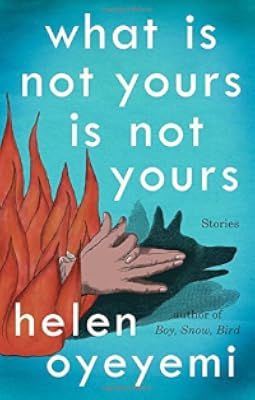



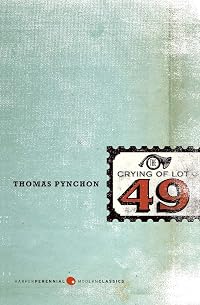

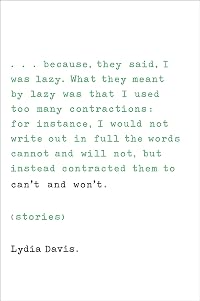
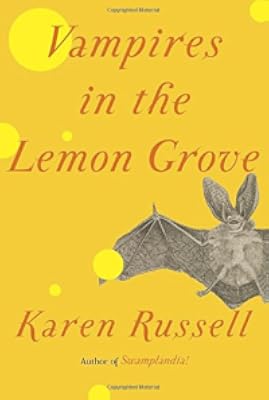

Member Recommendations
KatyBee Unnerving and strange, great creation of mood.
Member Reviews
By all appearances, the setting of Duplex seems familiar: a suburban street where middle aged teacher Miss Vicks lives alongside her students, school sweethearts Mary and Eddie, with her childlike dachshund. But this suburb is folded in time and place, dominated by a sorcerer and populated by both humans and robots. In the blurred lines where fantasy and reality meet, Kathryn Davis has found her space.
My first inclination after finishing Duplex’s slim 208 pages was to turn the book over and start again, a luxury I’ve not often had with books that toy with my mind because of their length. Even on a first read, what becomes clear is that, despite its small size, there are endless pieces to pull apart and examine within the pages of show more this novel. The figures Davis creates appear more as vignettes than directly connected characters, many with just the slightest threads binding them together. Combined with the overall dreamlike feel of the book, there seems to be a single unifying piece missing – though, that may be the intention.
What cannot be overlooked is Davis’s incredible ability to spin together a sentence and bring her world to life in such a small space. Duplex is an ambitious novel, best for readers who don't mind an eccentric mix of characters or working out puzzling bits of ambiguity.
Blog: www.rivercityreading.com show less
My first inclination after finishing Duplex’s slim 208 pages was to turn the book over and start again, a luxury I’ve not often had with books that toy with my mind because of their length. Even on a first read, what becomes clear is that, despite its small size, there are endless pieces to pull apart and examine within the pages of show more this novel. The figures Davis creates appear more as vignettes than directly connected characters, many with just the slightest threads binding them together. Combined with the overall dreamlike feel of the book, there seems to be a single unifying piece missing – though, that may be the intention.
What cannot be overlooked is Davis’s incredible ability to spin together a sentence and bring her world to life in such a small space. Duplex is an ambitious novel, best for readers who don't mind an eccentric mix of characters or working out puzzling bits of ambiguity.
Blog: www.rivercityreading.com show less
I agree with all the reviews of this book, good and bad. The phrase-making is magical and haunting. The story is meagre and dull beneath its cloak of wonder. It is a luminous and timeless evocation of life in an American suburb. It does read like short stories or, worse, prose-poems stitched together. But this is an unusual and daring novel whose flaws only emphasise its achievement. It reminded me a little bit of Ben Marcus (suburbia, paranoia, humans/robots) and a little of "The Yellow Wallpaper" and its descendants in its portrayal of deranged/drugged femininity. The whole book is frustrating by its nature, which is fine, but I was left with the sense that if Davis had only mediated her dreams a little more through waking eyes then show more we'd have a novel here in the transcendent tradition of Gogol and Kafka. show less
Kathryn Davis wrote the multilevel and arresting Duplex in a feminine palette, by which I mean the chief characters, the main driving focus, and the lens through which life is viewed, are all female. And on this palette she has loosed an array of forces and fictional effects, which readers (like me) will struggle to come to grips with. She tells a story of shifts in the fabric of space and time, of robot guides to eternity, which features a sorcerer who takes souls. I find it quite the challenge to pin down and evaluate.
The main plot, if there is one, concerns a woman who, as a young girl, falls in love with a neighbor boy. A sorcerer in a metallic gray car steals the boy’s soul, however, and in a Faustian transaction the boy becomes show more a famous baseball player. This girl, Mary, later marries the sorcerer, perhaps while hypnotized (so little of this episode is rendered in the story). Mary then becomes the mother of Blue-Eyes, a machine-daughter who started life as a yellow Teddy Bear. Mary leaves the sorcerer late in life, is transported through a wormhole, and performs admirably with poorly identified but heavy cosmic stakes on the line.
Obviously I’m having a hard time prioritizing plot elements. I only want to give the potential reader a flavor of what’s on offer.
Most clearly, however, this book contains a series of lovely chapters each of which stands as a memorable short piece, particularly “The Four Horsewomen,” “The Rain of Beads,” and “Descent of the Aquanauts.” The clear theme carried by these pieces is the murderous mistreatment of girls and women, and the need such mistreatment engenders for escape. But girls and women own these themes; Ms. Davis expresses them through their voices and points of view. An oracle of dubious trustworthiness enraptures the girls as they reach puberty, and continues to lecture them through their lives into advanced middle age. We learn a substantial amount from this irascible know-it-all, much of it told in dreamy monologue, as though she were talking to herself.
One striking element: grade-school girls experience a large portion of the angst and express many of the opinions and instruct a considerable number of the lessons here. Time shifts backward and forward with startling ease, so this is readily possible in Ms. Davis’s plot. However delightful the author’s skill in rendering the shifting universe in vivid visuals, there are so many elements that no single one dominates. Robots inhabit homes and look like people and can see infinitely forward and back in time. The sorcerer steals souls, but getting rich from shady real estate deals can’t be the reason he does it, can it? Who is Downie, and how does he know the robots so well? Why does the grade school teacher figure so prominently before utterly disappearing? How come there are overgrown rabbits in the countryside?
I ask too many questions, I know, and perhaps it proves I’m missing the point. This is a highly diverting read from a very inventive author. It takes an unorthodox (to say the least) approach to explore essential human themes, and recondite cosmic themes as well. Unfortunately I find myself nonplussed. If these treatments and tropes interest you, by all means take it up. Ms. Davis’s talent for invention speaks for itself. show less
The main plot, if there is one, concerns a woman who, as a young girl, falls in love with a neighbor boy. A sorcerer in a metallic gray car steals the boy’s soul, however, and in a Faustian transaction the boy becomes show more a famous baseball player. This girl, Mary, later marries the sorcerer, perhaps while hypnotized (so little of this episode is rendered in the story). Mary then becomes the mother of Blue-Eyes, a machine-daughter who started life as a yellow Teddy Bear. Mary leaves the sorcerer late in life, is transported through a wormhole, and performs admirably with poorly identified but heavy cosmic stakes on the line.
Obviously I’m having a hard time prioritizing plot elements. I only want to give the potential reader a flavor of what’s on offer.
Most clearly, however, this book contains a series of lovely chapters each of which stands as a memorable short piece, particularly “The Four Horsewomen,” “The Rain of Beads,” and “Descent of the Aquanauts.” The clear theme carried by these pieces is the murderous mistreatment of girls and women, and the need such mistreatment engenders for escape. But girls and women own these themes; Ms. Davis expresses them through their voices and points of view. An oracle of dubious trustworthiness enraptures the girls as they reach puberty, and continues to lecture them through their lives into advanced middle age. We learn a substantial amount from this irascible know-it-all, much of it told in dreamy monologue, as though she were talking to herself.
One striking element: grade-school girls experience a large portion of the angst and express many of the opinions and instruct a considerable number of the lessons here. Time shifts backward and forward with startling ease, so this is readily possible in Ms. Davis’s plot. However delightful the author’s skill in rendering the shifting universe in vivid visuals, there are so many elements that no single one dominates. Robots inhabit homes and look like people and can see infinitely forward and back in time. The sorcerer steals souls, but getting rich from shady real estate deals can’t be the reason he does it, can it? Who is Downie, and how does he know the robots so well? Why does the grade school teacher figure so prominently before utterly disappearing? How come there are overgrown rabbits in the countryside?
I ask too many questions, I know, and perhaps it proves I’m missing the point. This is a highly diverting read from a very inventive author. It takes an unorthodox (to say the least) approach to explore essential human themes, and recondite cosmic themes as well. Unfortunately I find myself nonplussed. If these treatments and tropes interest you, by all means take it up. Ms. Davis’s talent for invention speaks for itself. show less
It feels as if the reader is dropped down into the middle of this story and has to open her mind very wide to take it all in. There's a street of duplexes, the story revolves around some of its inhabitants, including a family of robots. We go through the entire life of these people, even one of the robots pretends to age so that she can seem to fit in with her friends. There are scows in the sky which are referred to casually as if they are birds, no origin given. There's a parallel world that some of the characters wander into, again rather casually. Terms are given, then later in the book the story behind them. I could get with all that. But what threw me off was the language. It felt like the author was just throwing in sentences show more from random stories and connecting them at will. Last night I dreamed I was searching for a map. I'm thinking today that it was the map to the novel, without which I was completely lost. show less
This is what reading is all about - confusing one into another reality that says something about our own. If you don’t mind being in the midst of a wild, poetic world - it’s worth the effort once you relax and let it just waft over you. "Everyone knew the meaning of a thing didn't emerge until there'd been an ending and you could finally see how all the parts worked together."
"Magical realism" as a genre descriptor seems to be reserved almost exclusively for Latin American novels; exactly why that is, I'm not sure, since Duplex fits squarely within the category of "naturalistic novels with fantastical/supernatural elements" and looks to be targeted at fans of that subgenre.
One way this short novel differs from the famous magical realist works like One Hundred Years of Solitude is that the plot is deeply buried in this work, to the point where it seems almost like a Ray Bradbury-ish collection of short stories instead of one continuous narrative. Hallucinatory elements like flights of robots, sorcerers, and airships coexist neatly with 1950-ish suburbs and sexually adventurous students, while the actual show more characters floating through these settings seem to only be connected by dream logic. On a sentence-by-sentence level Davis is occasionally impressive, but aside from the oddly febrile sexual escapades there's not much to hold the reader's attention. I realize that, in general, if you find yourself asking "What was the point of this?" after reading a book it probably means you missed something important, but I confess that this was one of the emptiest novels I've read in a while. show less
One way this short novel differs from the famous magical realist works like One Hundred Years of Solitude is that the plot is deeply buried in this work, to the point where it seems almost like a Ray Bradbury-ish collection of short stories instead of one continuous narrative. Hallucinatory elements like flights of robots, sorcerers, and airships coexist neatly with 1950-ish suburbs and sexually adventurous students, while the actual show more characters floating through these settings seem to only be connected by dream logic. On a sentence-by-sentence level Davis is occasionally impressive, but aside from the oddly febrile sexual escapades there's not much to hold the reader's attention. I realize that, in general, if you find yourself asking "What was the point of this?" after reading a book it probably means you missed something important, but I confess that this was one of the emptiest novels I've read in a while. show less
I've never been so curious about reading reviews about a book. This is really unlike any other. It is a surrealist painting brought to life. It is rooted in ordinary life - little girls play at a card collecting game, couples marry, there's baseball, but there are also robots, aerial garbage collecting scows, a sorcerer named Body-Without-Soul and the characters wander a dreamscape where doors mysteriously appear and corridors disappear. Some of the sections were haunting and some tedious. Nothing is comprehensible and nothing is explained, by intention. This is not a book for everyone.
Members
- Recently Added By
Lists

Recommend the 20 best books you've read in the last five years
2,168 works; 606 members

Franklit
95 works; 1 member

LitHub's Best Novels of the Decade 2010-2019
39 works; 1 member
Author Information

10+ Works 1,977 Members
Kathryn Davis is also the author of novels, "The Girl Who Trod on a Loaf" & "Hell." The recipient of a Kafka Prize, she teaches at Skidmore College & lives with her husband & their daughter in Vermont. (Publisher Provided)
Some Editions
Classifications
Statistics
- Members
- 311
- Popularity
- 102,677
- Reviews
- 16
- Rating
- (3.58)
- Languages
- English
- Media
- Paper, Audiobook, Ebook
- ISBNs
- 6
- ASINs
- 3