Wilson
by A. Scott Berg
On This Page
Description
A personal and penetrating biography of our 28th president by Pulitzer Prize-winning author A. Scott Berg. One hundred years after his inauguration, Woodrow Wilson still stands as one of the most influential figures of the twentieth century, and one of the most enigmatic. And now, after more than a decade of research and writing, the author has completed a personal and penetrating biography about the 28th President. In addition to the hundreds of thousands of documents in the Wilson show more Archives, the author was the first biographer to gain access to two recently discovered caches of papers belonging to those close to Wilson. From this material, he was able to add countless details, even several unknown events, that fill in missing pieces of Wilson's character and cast new light on his entire life. From the scholar-President who ushered the country through its first great world war to the man of intense passion and turbulence, from the idealist determined to make the world safe for democracy to the stroke-crippled leader whose incapacity and the subterfuges around it were among the century's greatest secrets, the result is an intimate portrait written with a particularly contemporary point of view. A book at once magisterial and deeply emotional about the whole of Wilson's life, accomplishments, and failings. This is not just Wilson the icon but Wilson the man. -- From publisher's web site. show lessTags
Recommendations









Member Reviews
When a world history professor asked us about what prompted students to sign up for her class, I said I wanted to know about how World War II started. She said that the Second World War was really World War One, Part 2. That the punishments levied on Germany in the Treaty of Versailles were so onerous that they almost guaranteed another war. Of course Woodrow Wilson was a key player in the Treaty of Versailles. That alone piqued my interest in Wilson.
But A. Scott Berg’s portrait of President Wilson paints a portrait of a multi-faceted man. A preacher’s son who didn’t want to preach. A lawyer who didn’t care for the practice of law. A professor who was “most popular” wherever he taught. A college president who turned show more Princeton from a party campus to a highly regarded academic institution. A governor who turned his back on the corrupt politicians who brought him to power. A United States president who got things done and was hated by his Republican opponents so much that they sabotaged the League of Nations he had single-handedly fought for among the allied powers. A “rock star” among world leaders. And a writer of passionate love letters to both of his wives.
Wilson, the biography, will be appreciated by non-academic readers for its breezy style – and, yes, a 700-plus-page tome can be breezy – and for its even-handed treatment of its subject. I found myself wanting to pick the book up at odd hours and I never tired of the story. And Wilson, the man, will be appreciated for his many fine qualities -- and even his not-so-fine moments are put into context and made understandable.
I particularly enjoyed the chapter that outlined how the Wilson administration changed the country after its entry into World War I -- what a massive job they had! Just feeding the military recruits was a logistical accomplishment. I had no idea a president could be so “hands-on.”
If only every biography could be as well-written and as interesting as Wilson! show less
But A. Scott Berg’s portrait of President Wilson paints a portrait of a multi-faceted man. A preacher’s son who didn’t want to preach. A lawyer who didn’t care for the practice of law. A professor who was “most popular” wherever he taught. A college president who turned show more Princeton from a party campus to a highly regarded academic institution. A governor who turned his back on the corrupt politicians who brought him to power. A United States president who got things done and was hated by his Republican opponents so much that they sabotaged the League of Nations he had single-handedly fought for among the allied powers. A “rock star” among world leaders. And a writer of passionate love letters to both of his wives.
Wilson, the biography, will be appreciated by non-academic readers for its breezy style – and, yes, a 700-plus-page tome can be breezy – and for its even-handed treatment of its subject. I found myself wanting to pick the book up at odd hours and I never tired of the story. And Wilson, the man, will be appreciated for his many fine qualities -- and even his not-so-fine moments are put into context and made understandable.
I particularly enjoyed the chapter that outlined how the Wilson administration changed the country after its entry into World War I -- what a massive job they had! Just feeding the military recruits was a logistical accomplishment. I had no idea a president could be so “hands-on.”
If only every biography could be as well-written and as interesting as Wilson! show less
 This review was written for LibraryThing Early Reviewers.
3.5 stars.
A very readable and enjoyable narrative account of Woodrow Wilson's life, though it is a bit hagiographic. I learned many new things about Wilson (this is the first long bio of him I've read) and found the insights into his character and decisions mostly spot on. But Berg, like most biographers, likes his subject, and his attempts to make him the greatest man ever fall flat.
First, as many reviewers have noted, the chapter titles and chapter epigraphs from the KJV Bible are off-putting. Wilson is a biblical figure? Take the chapter on Wilson's first days as president, titled "Baptism." The epigraph is Matthew 3:16: "And Jesus, when he was baptized, went up straightway out of the water: and, lo, the heavens were opened unto him, show more and he saw the Spirit of God descending like a dove, and lighting upon him." What? Is Berg equating Wilson to Jesus? (Read Paris, 1919, wherein it is revealed Wilson equated Wilson to Jesus.) The chapter on the non-ratification of the Treaty of Versailles is titled "Passion," the epigraph from Matthew 27:30-31: "And they spit upon him, and took the reed, and smote him on the head. And after that they had mocked him, they took the robe off from him, and put his own raiment on him, and led him away to crucify him." Really? Berg is equating honest, scrupulous, objections to the Treaty of Versailles and the League of Nations charter to the whipping, scourging, mocking, and crucifixion of Jesus! If you're religiously-inclined this is sacrilegious, if you're secularly-inclined, it just doesn't make sense.
Second, Berg takes Wilson's side on the Treaty of Versailles/League of Nations. It's good to give Wilson's side of the debate, but to then take that side of the debate is another thing altogether. Henry Cabot Lodge is portrayed as a snake, his reservations puerile, his attempt at compromise insincere. Warren G. Harding is presented as (his Left-inspired caricature) a loutish, stupid dandy. (Which he was not.) Republicans against the League are political, insular, provincial, ignorant. Wilson's League is bright, humane, intelligent. The efficacy of the League is never questioned (as if US participation in the UN has kept the world safe from war since 1945). The truth is that Britain and France walked all over an inept and idealistic Wilson in Paris, creating the punitive Treaty of Versailles he claimed to not want. And Wilson, for all of that, could have had his League of Nations if he had only been willing to compromise in minor ways. Berg can't rewrite that, and his advisors, his cabinet, his wife (at one point), and his political party urged him to adopt what were, in truth, quite reasonable reservations to the League. But Wilson was mule-headed, believing more in his own rhetoric and ivory-tower idealism than in logic and reality.
Third, Berg (who obviously likes his subject) tries to whitewash his main character flaw according to twenty-first-century standards: his virulent anti-black racism. Every instance race enters the picture, Berg tries to say that Wilson wasn't as bad as others and it was a product of the times. True, there was a lot of racism in his time and others more racist than he, but when is this never the case with anybody? In matter of fact, there were many politicians (mostly Republican) who believed in racial equality, who wanted to ensure blacks had civil rights, and were against segregation. Berg's attempt to blame Southerners in Wilson's cabinet for the instigation of segregation in the federal government is just silly. Wilson allowed it to happen, it had his imprimatur, he defended it, and he supported it. Berg barely mentions the rise in brutal lynchings during his tenure in office, and his general ignoring of the issue. Wilson decried lynchings, but did nothing to stop them, as his political party, the Democrats, blocked any attempt at redress or making them federal crimes. Let me give you a typical example of the Berg whitewash of Wilson's racism, from p. 245: "Such jokes ['darkey' jokes] remained part of Wilson's repertoire as well. They were never malicious, though the humor was based on the Negro being slow in body and mind." Did you catch that? Calling a black man stupid and lazy is NOT malicious. I guess because the paragon of progressivism said it. (And, it's okay, also p. 245, because Eugene V. Debs, an everybody-loving Socialist, told racist jokes too.) What tendentious crap! Mr. Berg, your hero was a racist. Deal with it, don't try to make it okay. Wilson and the progressive Democrats set race relations and the civil rights movement back by decades. They made it worse. Wilson was not a passive bystander, he was a supportive promoter of segregation and racism.
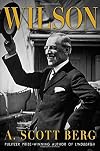
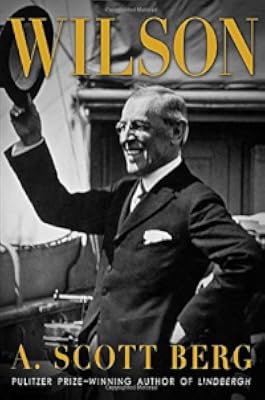
Last, to cosmetic issues. The cover photo is bad. Wilson's face is half in shadow and it is blurry. It looks as if it was a bad screen-grab from a 1919 newsreel. (And I suspect that is what it is.) The note system is horrid. I never thought anything could be worse than the system used in, say, Morris's Theodore Rex, but I was wrong. The system here is unwieldy, abbreviation laden, onerous, disorganized, and does not aid anyone in finding what sources Berg used. Sure, they could be decrypted, but what is wrong with proper endnotes? The chapter titles and epigraphs are, as mentioned above, just plain stupid. And blasphemous.
To sum up. I am disinclined to like Wilson, in fact, I dislike his politics intensely. By reading this book I have gained more respect for him as a professor and even as a private man, but I still, despite the attempt at hagiography, find him a blundering idealist on the foreign policy stage and a socialistic-statist on the domestic front. Wilson's policies, even more than the progressive TR or the quietly progressive WHT, set the US on the road to serfdom. And the original sins of progressivism, (a) thinking mankind is perfectible (instead of innately depraved) and (b) that intellect paired to government power can create a more perfect society, are fully demonstrated in Wilson's thoughts and deeds. And for that I will never like the man. The book? It is a fine read, a fine chronicle of the times, and a fine bio of Wilson, if tempered by the reader's outside knowledge. I worry that people not conversant in more history and the other side of the issues will lap up and believe the pap that Berg tries to pass off in his rose-colored-glasses portrayal of Woodrow Wilson.
I will have to buy John Milton Cooper's biography of Wilson to see if it is any better. show less
A very readable and enjoyable narrative account of Woodrow Wilson's life, though it is a bit hagiographic. I learned many new things about Wilson (this is the first long bio of him I've read) and found the insights into his character and decisions mostly spot on. But Berg, like most biographers, likes his subject, and his attempts to make him the greatest man ever fall flat.
First, as many reviewers have noted, the chapter titles and chapter epigraphs from the KJV Bible are off-putting. Wilson is a biblical figure? Take the chapter on Wilson's first days as president, titled "Baptism." The epigraph is Matthew 3:16: "And Jesus, when he was baptized, went up straightway out of the water: and, lo, the heavens were opened unto him, show more and he saw the Spirit of God descending like a dove, and lighting upon him." What? Is Berg equating Wilson to Jesus? (Read Paris, 1919, wherein it is revealed Wilson equated Wilson to Jesus.) The chapter on the non-ratification of the Treaty of Versailles is titled "Passion," the epigraph from Matthew 27:30-31: "And they spit upon him, and took the reed, and smote him on the head. And after that they had mocked him, they took the robe off from him, and put his own raiment on him, and led him away to crucify him." Really? Berg is equating honest, scrupulous, objections to the Treaty of Versailles and the League of Nations charter to the whipping, scourging, mocking, and crucifixion of Jesus! If you're religiously-inclined this is sacrilegious, if you're secularly-inclined, it just doesn't make sense.
Second, Berg takes Wilson's side on the Treaty of Versailles/League of Nations. It's good to give Wilson's side of the debate, but to then take that side of the debate is another thing altogether. Henry Cabot Lodge is portrayed as a snake, his reservations puerile, his attempt at compromise insincere. Warren G. Harding is presented as (his Left-inspired caricature) a loutish, stupid dandy. (Which he was not.) Republicans against the League are political, insular, provincial, ignorant. Wilson's League is bright, humane, intelligent. The efficacy of the League is never questioned (as if US participation in the UN has kept the world safe from war since 1945). The truth is that Britain and France walked all over an inept and idealistic Wilson in Paris, creating the punitive Treaty of Versailles he claimed to not want. And Wilson, for all of that, could have had his League of Nations if he had only been willing to compromise in minor ways. Berg can't rewrite that, and his advisors, his cabinet, his wife (at one point), and his political party urged him to adopt what were, in truth, quite reasonable reservations to the League. But Wilson was mule-headed, believing more in his own rhetoric and ivory-tower idealism than in logic and reality.
Third, Berg (who obviously likes his subject) tries to whitewash his main character flaw according to twenty-first-century standards: his virulent anti-black racism. Every instance race enters the picture, Berg tries to say that Wilson wasn't as bad as others and it was a product of the times. True, there was a lot of racism in his time and others more racist than he, but when is this never the case with anybody? In matter of fact, there were many politicians (mostly Republican) who believed in racial equality, who wanted to ensure blacks had civil rights, and were against segregation. Berg's attempt to blame Southerners in Wilson's cabinet for the instigation of segregation in the federal government is just silly. Wilson allowed it to happen, it had his imprimatur, he defended it, and he supported it. Berg barely mentions the rise in brutal lynchings during his tenure in office, and his general ignoring of the issue. Wilson decried lynchings, but did nothing to stop them, as his political party, the Democrats, blocked any attempt at redress or making them federal crimes. Let me give you a typical example of the Berg whitewash of Wilson's racism, from p. 245: "Such jokes ['darkey' jokes] remained part of Wilson's repertoire as well. They were never malicious, though the humor was based on the Negro being slow in body and mind." Did you catch that? Calling a black man stupid and lazy is NOT malicious. I guess because the paragon of progressivism said it. (And, it's okay, also p. 245, because Eugene V. Debs, an everybody-loving Socialist, told racist jokes too.) What tendentious crap! Mr. Berg, your hero was a racist. Deal with it, don't try to make it okay. Wilson and the progressive Democrats set race relations and the civil rights movement back by decades. They made it worse. Wilson was not a passive bystander, he was a supportive promoter of segregation and racism.
Last, to cosmetic issues. The cover photo is bad. Wilson's face is half in shadow and it is blurry. It looks as if it was a bad screen-grab from a 1919 newsreel. (And I suspect that is what it is.) The note system is horrid. I never thought anything could be worse than the system used in, say, Morris's Theodore Rex, but I was wrong. The system here is unwieldy, abbreviation laden, onerous, disorganized, and does not aid anyone in finding what sources Berg used. Sure, they could be decrypted, but what is wrong with proper endnotes? The chapter titles and epigraphs are, as mentioned above, just plain stupid. And blasphemous.
To sum up. I am disinclined to like Wilson, in fact, I dislike his politics intensely. By reading this book I have gained more respect for him as a professor and even as a private man, but I still, despite the attempt at hagiography, find him a blundering idealist on the foreign policy stage and a socialistic-statist on the domestic front. Wilson's policies, even more than the progressive TR or the quietly progressive WHT, set the US on the road to serfdom. And the original sins of progressivism, (a) thinking mankind is perfectible (instead of innately depraved) and (b) that intellect paired to government power can create a more perfect society, are fully demonstrated in Wilson's thoughts and deeds. And for that I will never like the man. The book? It is a fine read, a fine chronicle of the times, and a fine bio of Wilson, if tempered by the reader's outside knowledge. I worry that people not conversant in more history and the other side of the issues will lap up and believe the pap that Berg tries to pass off in his rose-colored-glasses portrayal of Woodrow Wilson.
I will have to buy John Milton Cooper's biography of Wilson to see if it is any better. show less
Summary: A definitive biography of Woodrow Wilson, that traces the arc of his life from boyhood to professor to college president to U.S. president in biblical terms fitting for this deeply religious man.
For many of us, Woodrow Wilson is the somewhat tragic figure associated with the cruel peace of Versailles that sowed the seeds of World War II, the unwillingness of Congress to embrace U.S. entry into the League of Nations, and the secrets of his final year as president, severely impaired by a stroke, protected by his wife and doctor. That is only a small part of the story of this deeply religious man who combined a progressive vision for the nation with great integrity, and, for over six years of his presidency, masterful leadership. show more It is this fuller story that A. Scott Berg renders in what may be, for our generation, the definitive biography of Wilson.
As befits the staunchly Presbyterian Thomas Woodrow Wilson (he dropped the Thomas in college), Berg uses a biblical narrative arc to trace his life. Berg's opening chapters capture the pinnacle of Wilson's "Ascension" as he arrives to acclaim in Europe for peace talks after the Armistice and the "Providence" of his boyhood as a Presbyterian minister's son.
We then begin with the Eden of college years at Princeton, where he would spend much of his life. There were the Sinai years of wilderness wandering in law school and then graduate studies at Johns Hopkins, followed by several professorship, culminating in his appointment at Princeton, where he and first wife Ellen would spend much of adult life, first as a remarkably popular professor and scholar, and later as an ambitious reforming president. "Advent" covers the politics of the latter part of his presidency, the first signs of arteriosclerosis that would play a significant role latter, and his (likely non-sexual) dalliance with Mrs. Peck.
"Paul" covers his brief tenure as New Jersey governor and presidential campaign. It was striking to me that one of the things that won people to Wilson was that he never "talked down" to people but rather his elevated speech lifted them up. "Disciples" discusses the people Wilson surrounded himself as he prepared for his first term and the reforms he hoped to introduce. We meet Colonel House, who holds no office but was perhaps his most intimate adviser and emissary until their falling out after the peace talks at the end of the war. There is William McAdoo, who will later become his son-in-law. We are also introduced to Dr. Cary Grayson, the military doctor who oversaw the president's health. "Baptism" covers the beginning of the first term and "Ecclesiastes" the death of Ellen from Bright's disease and the subsequent courtship and marriage to Edith, who would play such a critical role at the end of his presidency.
"Deliverance" describes his election to a second term on the slogan "he kept us out of the war" and the increasing awareness that it would not be possible for the U.S. to remain neutral. "Armageddon" chronicles the entrance into the war, and how Wilson masterfully mobilizes the nation to move onto a war footing. "Isaiah"and "Gethsemane" give an account of the peace talks and the maneuvering of Clemenceau, Lloyd George, and others to undermine Wilson's lofty ideals about both the League of Nations and the terms imposed upon Germany. "Passion" tells the tale of Congress's rejection of his treaty efforts, and the punishing cross-country journey to try to sell the treaty to the people that led to a series of small strokes, culminating into a major one that left Wilson paralyzed on his left side. "Pieta" describes the efforts of Edith, Grayson, and others close to Wilson to sustain his presidency when he was greatly disabled, and the passing of the presidency to the antithesis of Wilson, Warren Harding. The final chapter, "Resurrection" tells the story of his final years, the rise of his reputation in the nation including outliving Harding, and his passing and burial in the National Cathedral.
We have a portrait of a great and tragic figure. He wasn't perfect. He was a man of integrity who could be unforgiving when trust was betrayed, as he was with some of his closest advisers at the end of his presidency. He was that rare occurrence, an effective scholar-politician. His record on race was spotty, but he advocated for women's suffrage. He fought big business and pressed tariff reforms that helped many in the country. He resisted the drumbeat of war, and when it could be resisted no longer, led the nation into a disinterested effort to fight a "war to end all wars." He saw further than others, and fought in vain for the settlement and the institutions that would forestall a renewal of war. His sense of duty, and obligation to the fighting men, led him to efforts that nearly killed him, and did break his health irreparably.
Reading the biography reminded me that the struggle between American self-interest and an expansive view of our role in the world has run throughout our history. It portrayed how much we ask of our presidents, and the wonder that any of them survive their terms in office. A. Scott Berg's biography of Wilson is a fascinating exploration of what makes for presidential greatness, the shaping of presidential leadership and the perennial conflicts that seem inherent in the American experiment. show less
For many of us, Woodrow Wilson is the somewhat tragic figure associated with the cruel peace of Versailles that sowed the seeds of World War II, the unwillingness of Congress to embrace U.S. entry into the League of Nations, and the secrets of his final year as president, severely impaired by a stroke, protected by his wife and doctor. That is only a small part of the story of this deeply religious man who combined a progressive vision for the nation with great integrity, and, for over six years of his presidency, masterful leadership. show more It is this fuller story that A. Scott Berg renders in what may be, for our generation, the definitive biography of Wilson.
As befits the staunchly Presbyterian Thomas Woodrow Wilson (he dropped the Thomas in college), Berg uses a biblical narrative arc to trace his life. Berg's opening chapters capture the pinnacle of Wilson's "Ascension" as he arrives to acclaim in Europe for peace talks after the Armistice and the "Providence" of his boyhood as a Presbyterian minister's son.
We then begin with the Eden of college years at Princeton, where he would spend much of his life. There were the Sinai years of wilderness wandering in law school and then graduate studies at Johns Hopkins, followed by several professorship, culminating in his appointment at Princeton, where he and first wife Ellen would spend much of adult life, first as a remarkably popular professor and scholar, and later as an ambitious reforming president. "Advent" covers the politics of the latter part of his presidency, the first signs of arteriosclerosis that would play a significant role latter, and his (likely non-sexual) dalliance with Mrs. Peck.
"Paul" covers his brief tenure as New Jersey governor and presidential campaign. It was striking to me that one of the things that won people to Wilson was that he never "talked down" to people but rather his elevated speech lifted them up. "Disciples" discusses the people Wilson surrounded himself as he prepared for his first term and the reforms he hoped to introduce. We meet Colonel House, who holds no office but was perhaps his most intimate adviser and emissary until their falling out after the peace talks at the end of the war. There is William McAdoo, who will later become his son-in-law. We are also introduced to Dr. Cary Grayson, the military doctor who oversaw the president's health. "Baptism" covers the beginning of the first term and "Ecclesiastes" the death of Ellen from Bright's disease and the subsequent courtship and marriage to Edith, who would play such a critical role at the end of his presidency.
"Deliverance" describes his election to a second term on the slogan "he kept us out of the war" and the increasing awareness that it would not be possible for the U.S. to remain neutral. "Armageddon" chronicles the entrance into the war, and how Wilson masterfully mobilizes the nation to move onto a war footing. "Isaiah"and "Gethsemane" give an account of the peace talks and the maneuvering of Clemenceau, Lloyd George, and others to undermine Wilson's lofty ideals about both the League of Nations and the terms imposed upon Germany. "Passion" tells the tale of Congress's rejection of his treaty efforts, and the punishing cross-country journey to try to sell the treaty to the people that led to a series of small strokes, culminating into a major one that left Wilson paralyzed on his left side. "Pieta" describes the efforts of Edith, Grayson, and others close to Wilson to sustain his presidency when he was greatly disabled, and the passing of the presidency to the antithesis of Wilson, Warren Harding. The final chapter, "Resurrection" tells the story of his final years, the rise of his reputation in the nation including outliving Harding, and his passing and burial in the National Cathedral.
We have a portrait of a great and tragic figure. He wasn't perfect. He was a man of integrity who could be unforgiving when trust was betrayed, as he was with some of his closest advisers at the end of his presidency. He was that rare occurrence, an effective scholar-politician. His record on race was spotty, but he advocated for women's suffrage. He fought big business and pressed tariff reforms that helped many in the country. He resisted the drumbeat of war, and when it could be resisted no longer, led the nation into a disinterested effort to fight a "war to end all wars." He saw further than others, and fought in vain for the settlement and the institutions that would forestall a renewal of war. His sense of duty, and obligation to the fighting men, led him to efforts that nearly killed him, and did break his health irreparably.
Reading the biography reminded me that the struggle between American self-interest and an expansive view of our role in the world has run throughout our history. It portrayed how much we ask of our presidents, and the wonder that any of them survive their terms in office. A. Scott Berg's biography of Wilson is a fascinating exploration of what makes for presidential greatness, the shaping of presidential leadership and the perennial conflicts that seem inherent in the American experiment. show less
A. Scott Berg has already proven himself a capable, thorough and unbiased biographer, with earlier volumes on as such figures as Charles Lindbergh and Katherine Hepburn.
Woodrow Wilson, though, must have presented a particular challenge, as here was a subject who had published many books and essays himself, some with contradictory information.
Berg's biography of Wilson is particularly strong in demonstrating the ambition, and at times the ruthlessness of the man who most of us only know as the tall, bespectacled man waving a black top hat in grainy, black and white silent movies.
Wilson would cut off long-term friends without a word when he felt wronged -- and that seemed to happen a lot. He remarried soon after his beloved first wife show more died, ran on a platform of "He Kept Us Out of War and then promptly got the US into World War I. During that year of war, Wilson pushed through a law so intrusive into personal privacy that it makes the 2002 Patriot Act seem impotent.
Sickly all of his life, Wilson tended to suffer severe headaches and even small strokes whenever the stress got to be too much, and in his last month's in office, devastated by the failure of the US to join the League of Nations he faded from view.
Berg's achievement here is to show Wilson in all his complexity. show less
Woodrow Wilson, though, must have presented a particular challenge, as here was a subject who had published many books and essays himself, some with contradictory information.
Berg's biography of Wilson is particularly strong in demonstrating the ambition, and at times the ruthlessness of the man who most of us only know as the tall, bespectacled man waving a black top hat in grainy, black and white silent movies.
Wilson would cut off long-term friends without a word when he felt wronged -- and that seemed to happen a lot. He remarried soon after his beloved first wife show more died, ran on a platform of "He Kept Us Out of War and then promptly got the US into World War I. During that year of war, Wilson pushed through a law so intrusive into personal privacy that it makes the 2002 Patriot Act seem impotent.
Sickly all of his life, Wilson tended to suffer severe headaches and even small strokes whenever the stress got to be too much, and in his last month's in office, devastated by the failure of the US to join the League of Nations he faded from view.
Berg's achievement here is to show Wilson in all his complexity. show less
I read an excerpt of this biography in Vanity Fair and when I saw it listed in Library Things’ Early Reviewer program, which provides pre-release versions of soon to be published work, I snapped it up. I agreed to provide this review in exchange for receiving a copy free of charge.
When you think about it, it is somewhat surprising that more focus has not been directed at Woodrow Wilson, or the period surrounding the First World War, because the topic is rich with history and import for the United States and its role in world politics. Woodrow Wilson was a fascinating individual and his rise to the Presidency was very unlikely, to say the least. Wilson went from admittedly highly regarded President of Princeton University, to Governor show more of New Jersey, to President of the United States in very short order. He benefited from the schism in the Republican Party which saw the popular Theodore Roosevelt split and form a third party, allowing Wilson to win the Presidency with only 40% of the popular vote.
In this biography, the author engages in the time honored practice of hagiography when presenting his subject, but perhaps not to the extremes seen in other political biographies. While Berg minimizes many of Wilson’s flaws and weaknesses, he does at least mention them and give them some airing, most particularly relating to his scandalously weak record on race relations. It is a frequently made mistake to judge historical personages by current mores and practices (for example, condemning the Founding Fathers for owning slaves), however, Wilson was lacking, even when judged by existing standards. Not only did he not advance race relations during his two terms, he actually rolled back advances initiated by his Republican predecessors, resegregating the Civil Service and allowing his Cabinet Secretaries (some of whom were rabid race baiters) to initiate egregiously discriminatory practices. Wilson was a son of the South, raised during the Civil War, and had the kind of views on race relations you might therefore expect. Had he been around in the 1950s, he would have been a Jim Crow Democrat.
More importantly, however, Wilson does not come across as a very good politician. He was an exemplary public speaker and debater, and an unquestionably highly intelligent person, but his people skills were certainly lacking; a colder more vindictive person you will hopefully never encounter. You could be the closest of friends and supporters for years and years, then have one disagreement on principle and you were dead to him. He won his first election due to the split in the Republican Party that swept his party to control of both Houses of Congress and barely squeaked by in his second. While in office, the Democratic Party steadily lost ground in Congress, leaving him with a Republican House and Senate that he was powerless to control. His political adversaries hated him with vehemence far in excess of that explained by mere partisan differences. His poor people skills and his condescending attitude prevented him from accomplishing much that could otherwise have been attained, including his beloved League of Nations.
In a controversial analysis, performed by virtue of interviewing one of his contemporaries, Sigmund Freud diagnosed Wilson as suffering from a “Messiah Complex”, a diagnosis that Berg ridicules, however it should be noted that Berg himself has labeled each chapter in this biography with a reference to events in the life of Christ, with scriptural quotes that equate the life of Wilson with that of Jesus Christ; a little bit over the top in my opinion.
In this biography, Berg has done an outstanding job of researching and setting out the events and historical landscape that formed and shaped Wilson’s life, from birth through the sad end of his Presidency. The period from turn of the 20th century to the beginning of the Great Depression has been one largely ignored (with the exception of the life of Theodore Roosevelt). This important work largely remedies that deficiency by focusing on the life and seminal Presidency of the period. I can highly recommend this biography for that fact, and the happy coincidence that it is well written and easily enjoyed. show less
When you think about it, it is somewhat surprising that more focus has not been directed at Woodrow Wilson, or the period surrounding the First World War, because the topic is rich with history and import for the United States and its role in world politics. Woodrow Wilson was a fascinating individual and his rise to the Presidency was very unlikely, to say the least. Wilson went from admittedly highly regarded President of Princeton University, to Governor show more of New Jersey, to President of the United States in very short order. He benefited from the schism in the Republican Party which saw the popular Theodore Roosevelt split and form a third party, allowing Wilson to win the Presidency with only 40% of the popular vote.
In this biography, the author engages in the time honored practice of hagiography when presenting his subject, but perhaps not to the extremes seen in other political biographies. While Berg minimizes many of Wilson’s flaws and weaknesses, he does at least mention them and give them some airing, most particularly relating to his scandalously weak record on race relations. It is a frequently made mistake to judge historical personages by current mores and practices (for example, condemning the Founding Fathers for owning slaves), however, Wilson was lacking, even when judged by existing standards. Not only did he not advance race relations during his two terms, he actually rolled back advances initiated by his Republican predecessors, resegregating the Civil Service and allowing his Cabinet Secretaries (some of whom were rabid race baiters) to initiate egregiously discriminatory practices. Wilson was a son of the South, raised during the Civil War, and had the kind of views on race relations you might therefore expect. Had he been around in the 1950s, he would have been a Jim Crow Democrat.
More importantly, however, Wilson does not come across as a very good politician. He was an exemplary public speaker and debater, and an unquestionably highly intelligent person, but his people skills were certainly lacking; a colder more vindictive person you will hopefully never encounter. You could be the closest of friends and supporters for years and years, then have one disagreement on principle and you were dead to him. He won his first election due to the split in the Republican Party that swept his party to control of both Houses of Congress and barely squeaked by in his second. While in office, the Democratic Party steadily lost ground in Congress, leaving him with a Republican House and Senate that he was powerless to control. His political adversaries hated him with vehemence far in excess of that explained by mere partisan differences. His poor people skills and his condescending attitude prevented him from accomplishing much that could otherwise have been attained, including his beloved League of Nations.
In a controversial analysis, performed by virtue of interviewing one of his contemporaries, Sigmund Freud diagnosed Wilson as suffering from a “Messiah Complex”, a diagnosis that Berg ridicules, however it should be noted that Berg himself has labeled each chapter in this biography with a reference to events in the life of Christ, with scriptural quotes that equate the life of Wilson with that of Jesus Christ; a little bit over the top in my opinion.
In this biography, Berg has done an outstanding job of researching and setting out the events and historical landscape that formed and shaped Wilson’s life, from birth through the sad end of his Presidency. The period from turn of the 20th century to the beginning of the Great Depression has been one largely ignored (with the exception of the life of Theodore Roosevelt). This important work largely remedies that deficiency by focusing on the life and seminal Presidency of the period. I can highly recommend this biography for that fact, and the happy coincidence that it is well written and easily enjoyed. show less
This review was written for LibraryThing Early Reviewers.Simply put, this is a stunning achievement of a biography. A. Scott Berg has done a remarkable amount of research to compile this 700+ page tome yet the writing is never dull. Many bios/histories of this scope read like a tech manual for a washing machine, that is to say, boring as hell. I have to admit I was leery of this book for that very reason. Berg however, manages to not only write in a fine narrative style that smartly incorporates many quotes from original letters/documents that keep this fascinating account flowing but also analyzes the facts and historical situations that give great insight to Wilson and his times.
From his upbringing in the South during and after the Civil War as a pastors son, to his visionary leadership show more at Princeton to his eventual rise to NJ Governor and finally US President Woodrow Wilson was an orator of unequaled skill. He wasn't always able to convert his detractors with these skills but they most certainly led him on his political ascension.
It is fascinating (and ultimately sad) to see the parallels of Wilson's fight against the class inequalities of his day in comparison to today's. There are many instances of moneyed interests, patronage an corruption at all levels of government that so closely resemble what the US is going through today. If I took anything away from this great biography it was that not only does history repeat itself, but you have to constantly monitor and fight these same forces again and again. show less
From his upbringing in the South during and after the Civil War as a pastors son, to his visionary leadership show more at Princeton to his eventual rise to NJ Governor and finally US President Woodrow Wilson was an orator of unequaled skill. He wasn't always able to convert his detractors with these skills but they most certainly led him on his political ascension.
It is fascinating (and ultimately sad) to see the parallels of Wilson's fight against the class inequalities of his day in comparison to today's. There are many instances of moneyed interests, patronage an corruption at all levels of government that so closely resemble what the US is going through today. If I took anything away from this great biography it was that not only does history repeat itself, but you have to constantly monitor and fight these same forces again and again. show less
This review was written for LibraryThing Early Reviewers.Man, this book is a monster and took me a month to get through (although, to be fair, for two of those weeks I was on vacation and didn't bring the book with me). It's a very dense book, packed with seemingly every detail of Woodrow Wilson's life. I suspect that most readers could find a slightly less comprehensive biography of Wilson and be just fine, although to be fair, Wilson was an interesting man. He was both an incredible idealist who believed in the betterment of mankind, and a racist who segregated federal offices that had not been segregated previously. He was both a devout man who believed in the teachings of Jesus Christ, and someone who could hold a grudge for the rest of his life. If I have one big complaint about the show more book, besides being occasionally dry, it's that I feel the author tries to excuse some of Wilson's biggest character flaws. But, overall, if you want an incredibly thorough look at one of our more interesting presidents, this book may be your best bet. show less
Members
- Recently Added By
Lists

The Presidents
42 works; 2 members
Biographies of American Presidents
39 works; 4 members
Talk Discussions
Past Discussions
Reevaluating Woodrow Wilson... in Pro and Con (October 2013)
Author Information

10+ Works 4,683 Members
A. Scott Berg was born in Norwalk, Connecticut on December 4, 1949. He became fascinated with novelist F. Scott Fitzgerald while he was in high school. Berg even went so far as to attend Princeton University, from which he graduated in 1971, mainly because it was Fitzgerald's alma mater. While studying 20th-century literature at Princeton, Berg show more noticed that one name - that of editor Max Perkins - kept coming up in connection with authors such as Fitzgerald, Hemingway, and Wolfe. He decided to base his senior thesis on Max Perkins. Berg's research on Perkins continued for several years after graduation, eventually culminating in the 1978 publication of Max Perkins: Editor of Genius, which received the American Book Award. His other works include Goldwyn: A Biography and Kate Remembered, He also made The New York Times Best Seller List in 2013 for his title Wilson. Lindbergh won the Pulitzer Prize for Biography or Autobiography in 1998. He also wrote the story for a film entitled Making Love (1982). (Bowker Author Biography) show less
Awards and Honors
Awards
Distinctions
Common Knowledge
- Original publication date
- 2013-09-10
- People/Characters
- Thomas Woodrow Wilson (28th U.S. President)
- Important events
- World War I; Treaty of Versailles
- Epigraph
- Who is the happy Warrior? Who is he
That every man in arms should wish to be?
--It is the generous Spirit, who, when brought
Among the tasks of real life, hath wrought
Upon the plan that pleased his boyish tho... (show all)ught:
. . . . . . . . . . . . . . . . . . . .
Who, whether praise of him must walk the earth
For ever, and to noble deeds give birth,
Or he must fall, to sleep without his fame,
And leave a dead unprofitable name--
Finds comfort in himself and in his cause;
And, while the mortal mist is gathering, draws
His breath in confidence of Heaven's applause . . .
- William Wordsworth, "Character of the Happy Warrior" - Dedication
- To Barbara Berg, Phyllis Grann, and Kevin McCormick
- First words
- Dawn broke that day on a new epoch, one that would carry the name of a man whose ideas and ideals would extend well into the next century.
- Last words
- (Click to show. Warning: May contain spoilers.)It is the lengthening shadow of Wilson.
Classifications
- Genres
- Biography & Memoir, History, Nonfiction, General Nonfiction
- DDC/MDS
- 973.91 — History & geography History of North America United States 1901- World Wars and Depression Era (1901-1953)
- LCC
- E767 .B47 — History of the United States United States Twentieth century Wilson's administrations, 1913-1921
- BISAC
Statistics
- Members
- 829
- Popularity
- 33,221
- Reviews
- 30
- Rating
- (4.10)
- Languages
- English
- Media
- Paper, Audiobook, Ebook
- ISBNs
- 17
- ASINs
- 8