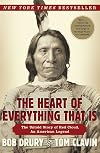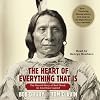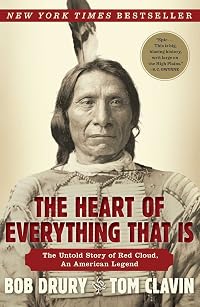
The Heart of Everything That Is: The Untold Story of Red Cloud, An American Legend
by Bob Drury, Tom Clavin
On This Page
Description
The untold story of the great Oglala Sioux chief Red Cloud, the most powerful Indian commander of the Plains who witnessed the opening of the West and forced the American government to sue for peace in a conflict named for him.Tags
Recommendations
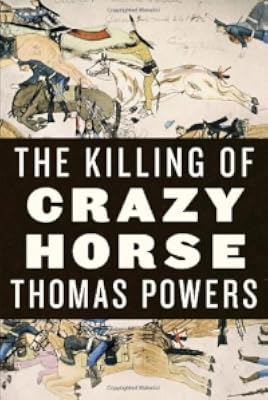
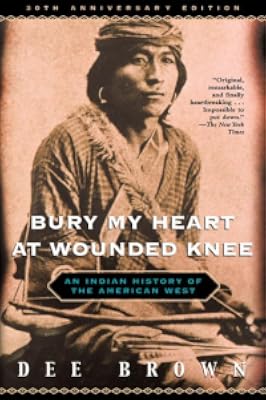

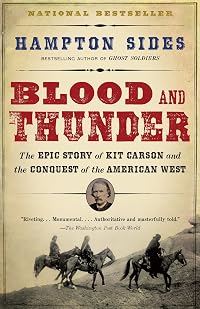

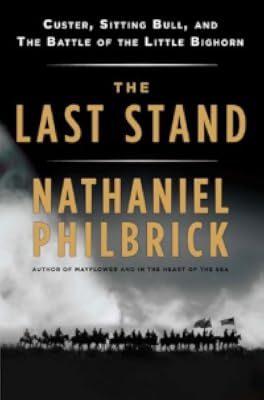
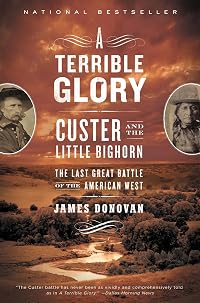
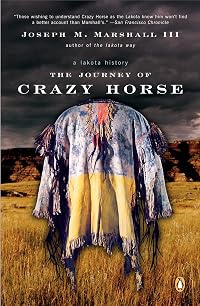
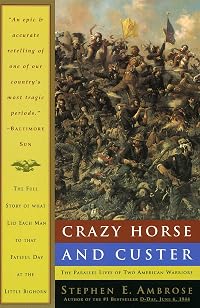
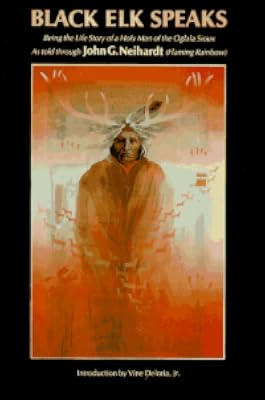

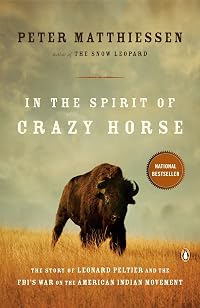

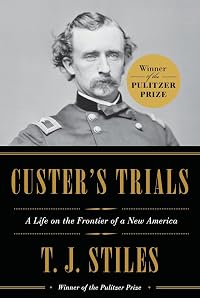
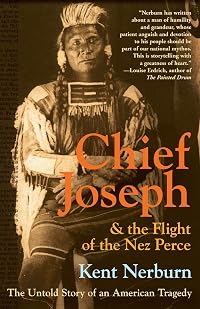
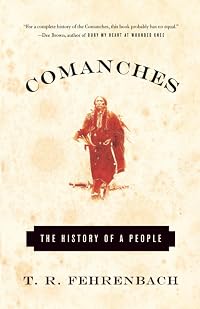

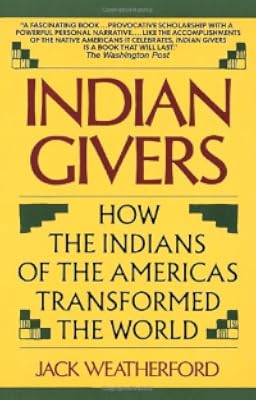





Member Recommendations

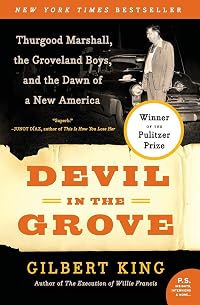
Black Hills/White Justice: The Sioux Nation Versus the United States : 1775 to the Present by Edward Lazarus
dkohler52 It's been awhile since I read this book and in light of reading The Heart of Everything That Is, I intend to go back a reread portions of this one. What was interesting in Black Hills/White Justice is the attempt to obtain retribution in the U.S. Courts for taking the Black Hills illegally from the Lakota Sioux. Interesting results.
20
Member Reviews
The Heart of Everything That Is is at once a biography of the great Dakota chief Red Cloud, the only Native American chief to defeat the United States in a war, but a history of the Sioux and of end of a way of life on the Great Plains. The title is a translation of the Sioux name for what in English are called the Black Hills, "Pahá Sápa". Red Cloud was a military strategist without parallel at a time when his tribe was increasingly encroached upon by Americans heading west. But even his mind was not enough to save them.
Life on the prairie was no walk in the park for a Native American, either before or after their suppression by the United States government. The authors do a masterful job of capturing the characters involved and show more creating a compulsive narrative of destiny tinged with doom. Highly recommended for anyone with an interest in Native cultures, Western expansion, or good narratives histories. show less
Life on the prairie was no walk in the park for a Native American, either before or after their suppression by the United States government. The authors do a masterful job of capturing the characters involved and show more creating a compulsive narrative of destiny tinged with doom. Highly recommended for anyone with an interest in Native cultures, Western expansion, or good narratives histories. show less
Bob Drury and Tom Clavin come together in The Heart of Everything That Is to tell the tale of a forgotten man. Red Cloud, a member of the Oglala Lakota peoples, was born near the Platte River in 1821. In the beginning, he was trained as a superb warrior, fighting against other nations, namely the Pawnee and the Crow. But then gunfire came across the Great Plains. Gold rushers, homesteaders, and the US military blazed trails into the newly created states of Missouri, Arkansas, and Iowa. But, when settlers threatened to rob the Powder River Country in Wyoming and Montana of its resources and new forts emerged with new enemies, Red Cloud, with the help of the Cheyenne and Arapaho nations, fought back. The nation had just ended the Civil show more War the previous year, but was again at odds with people in its own borders.
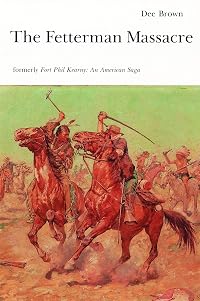
The authors’ telling of Red Cloud’s War, including the Fetterman massacre, and the Great Sioux War after that is rich and thoroughly engaging. You can’t help but be drawn in by a history of the American West. Many of the events recounted here inspired great tales like Larry McMurtry’s Lonesome Dove. It’s very hard to believe that few full biographies have been written about Red Cloud. At his height, he controlled territory stretching from Iowa to Idaho and from Southern Canada to Oklahoma. Drury and Clavin are unflinching in their depictions of military engagements, tactics, and outcomes. Both sides fought their hardest for their cause, but in the end, nation-building triumphed over nation-saving. The legacy of the American Indian is limited to a few great figures, but it’s nice to see one of them get their day in the sun. A sweeping and magnificent read. show less
The authors’ telling of Red Cloud’s War, including the Fetterman massacre, and the Great Sioux War after that is rich and thoroughly engaging. You can’t help but be drawn in by a history of the American West. Many of the events recounted here inspired great tales like Larry McMurtry’s Lonesome Dove. It’s very hard to believe that few full biographies have been written about Red Cloud. At his height, he controlled territory stretching from Iowa to Idaho and from Southern Canada to Oklahoma. Drury and Clavin are unflinching in their depictions of military engagements, tactics, and outcomes. Both sides fought their hardest for their cause, but in the end, nation-building triumphed over nation-saving. The legacy of the American Indian is limited to a few great figures, but it’s nice to see one of them get their day in the sun. A sweeping and magnificent read. show less
ARC provided by NetGalley
Sitting Bully, Crazy Horse, Geronimo...their stories have all been told. But Red Cloud, the most powerful Indian commander of the Oglala Sioux, has been lost to the times of history. Until now. In this well researched and well written book, Bob Drury and Tom Calvin have lifted the veils of time to bring Red Cloud's story to light.
So often when we read the history textbooks or hear about the history of the west, we're told how savage the Indians were. But as you dig deeper into it you discover there's a greater truth that we try to bury, that they just wanted to be free. In this book we learn about the history of Red Cloud, the only Plains Indian to defeat the US Army and one who could lay claim to 1/5 of the US. show more These two authors weave together a powerful story, one that's been waiting years to be told.
Native American history is one of my passions. In one way it's depressing that we've lost this culture, these lives and histories due to our own arrogance believing that we were the better and less savage group. But it gives me hope that books like this one on Red Cloud are being researched and are being published by major publishers, because people have an interest in learning the truth and that perhaps it isn't too late.
I'd highly recommend this book, whether they have an interest in history, culture, or just want to know more about this story of this great Sioux Chief. I give the book 4 out of 5 stars show less
Sitting Bully, Crazy Horse, Geronimo...their stories have all been told. But Red Cloud, the most powerful Indian commander of the Oglala Sioux, has been lost to the times of history. Until now. In this well researched and well written book, Bob Drury and Tom Calvin have lifted the veils of time to bring Red Cloud's story to light.
So often when we read the history textbooks or hear about the history of the west, we're told how savage the Indians were. But as you dig deeper into it you discover there's a greater truth that we try to bury, that they just wanted to be free. In this book we learn about the history of Red Cloud, the only Plains Indian to defeat the US Army and one who could lay claim to 1/5 of the US. show more These two authors weave together a powerful story, one that's been waiting years to be told.
Native American history is one of my passions. In one way it's depressing that we've lost this culture, these lives and histories due to our own arrogance believing that we were the better and less savage group. But it gives me hope that books like this one on Red Cloud are being researched and are being published by major publishers, because people have an interest in learning the truth and that perhaps it isn't too late.
I'd highly recommend this book, whether they have an interest in history, culture, or just want to know more about this story of this great Sioux Chief. I give the book 4 out of 5 stars show less
The life of Red Cloud, let alone his name or accomplishments, were unknown to myself until seeing this book. I did not know what to expect about how the authors would treat both the Native and Settler sides of history nor did I know if it would be a readable narrative. After finishing the book, I found that Bob Drury and Tom Clavin did a wonderful job in producing an engaging life story of Red Cloud along with describing the context of the times he lived in.
I feel it important early in my review to note that I don’t believe that Drury and Clavin were 100% accurate in everything, in particular with Lakota society, though without that knowledge myself I cannot critique it. Another important thing is often cited Red Cloud autobiography, show more which turns out to be more a second-hand oral history than an actual autobiography as explained in the “Notes and Bibliography” section. While these issues do take away something from the book, they don’t undermine it.
Drury and Clavin recount Red Cloud’s life in a very engaging way first by setting the stage for the events leading to the conflict between the Lakota-Cheyenne-Arapaho coalition and the United States Army, then piecing together Red Cloud’s early life as well as a history of the Lakota and “Sioux” nation. Then the text details the events beginning in 1851 that led to the conflict known as “Red Cloud’s War” with particular attention paid to the military events during 1866 in the Powder River region. Although they are chronicling the life and achievements of one man, they don’t make him out to be a flawless human being they make it out to be a man of his culture, society, and time.
The authors are not shy about showing the very cringe worthy cultural clashes of Natives and Settlers during the time frame, there are no purely good or purely evil individuals characterized in the text there are just normal humans. The atrocities committed by both sides are told in detail as well as how the popular press at the time either sensationalized the events or barely noted it, depending on who the victims were. The authors also noted that when a victory was won by a Native tribe it was described as a “massacre” when Whites won a victory it was called a “battle,” in reality the two terms could be reversed the vast majority of the time. This is not a 21st-century politically correct whitewash of history; this is a full color slap in the face history.
The Heart of Everything That Is might not be absolutely perfect and accurate; however Drury and Clavin do a justice service to the life and times of Red Cloud along with numerous other individuals both Native and Settler who interacted with him. The authors show that the settling of the American West wasn’t the clear-cut Hollywood version of history, but a bloody clash of two utterly different cultures. In the end nothing could stop American expansion across the Great Plains, but the authors showed that for a time it was stymied because of the actions by one man.
Disclaimer: Received copy through Goodreads First Reads program. show less
I feel it important early in my review to note that I don’t believe that Drury and Clavin were 100% accurate in everything, in particular with Lakota society, though without that knowledge myself I cannot critique it. Another important thing is often cited Red Cloud autobiography, show more which turns out to be more a second-hand oral history than an actual autobiography as explained in the “Notes and Bibliography” section. While these issues do take away something from the book, they don’t undermine it.
Drury and Clavin recount Red Cloud’s life in a very engaging way first by setting the stage for the events leading to the conflict between the Lakota-Cheyenne-Arapaho coalition and the United States Army, then piecing together Red Cloud’s early life as well as a history of the Lakota and “Sioux” nation. Then the text details the events beginning in 1851 that led to the conflict known as “Red Cloud’s War” with particular attention paid to the military events during 1866 in the Powder River region. Although they are chronicling the life and achievements of one man, they don’t make him out to be a flawless human being they make it out to be a man of his culture, society, and time.
The authors are not shy about showing the very cringe worthy cultural clashes of Natives and Settlers during the time frame, there are no purely good or purely evil individuals characterized in the text there are just normal humans. The atrocities committed by both sides are told in detail as well as how the popular press at the time either sensationalized the events or barely noted it, depending on who the victims were. The authors also noted that when a victory was won by a Native tribe it was described as a “massacre” when Whites won a victory it was called a “battle,” in reality the two terms could be reversed the vast majority of the time. This is not a 21st-century politically correct whitewash of history; this is a full color slap in the face history.
The Heart of Everything That Is might not be absolutely perfect and accurate; however Drury and Clavin do a justice service to the life and times of Red Cloud along with numerous other individuals both Native and Settler who interacted with him. The authors show that the settling of the American West wasn’t the clear-cut Hollywood version of history, but a bloody clash of two utterly different cultures. In the end nothing could stop American expansion across the Great Plains, but the authors showed that for a time it was stymied because of the actions by one man.
Disclaimer: Received copy through Goodreads First Reads program. show less
I liked this book extremely well. Being born and raised in Montana, many of the names and places were familiar. Besides that, the story and its narration were compelling and well researched.
One reservation I have (no pun intended), is the authors' use of "holy roller" and "Bible thumper" to describe some whites. These expose some suspected underlying historical prejudices against the white man. As I read more history of western expansion and Native American-American conflict that is based on unimpeachable research, I am less likely to automatically decry the transgressions of the white man that is so en-vogue in modern times.
It is inevitable for modern historians to put past events into contemporary mores and disdain foments for a show more particular group. Yet critical evaluation can expose human nature as universal and embracing the past for what it is, is helpful in prevention of self-loathing.
Kernels of this human universality are found throughout The Heart of Everything That Is. Too often the life-and-death animosity between white emigrants and natives is set in the context of white man's land greed. However, much like land grabs by Americans, American Indians spent hundreds of years taking land of other nations and pushing losers west. The Lakota, Red Clouds nation, is noted as liking the central plains, and "[w]hen the Lakotas like what they saw of a country, it was not a good omen for the inhabitants" (p. 60).
In several places Drury and Clavin mention the illiterate "Head Men" simply touched an ink pen to signify agreement with a treaty. It is a common perception that Indians didn't always know what was agreed upon in these treaties and the pacts were only broken by white man. This may not be so true, given that chieftains "signing" didn't always intend on keeping their promise or couldn't given that they fully didn't understand the idea of a legal document and all it encompassed. "No Head Man could as yet 'order' any braves to obey his commands. (Nor would he ever be able to.)" (p. 64) could possibly explain why continuous wagon train attacks occurred despite "peace treaties."
Conversely, Washington had little control over the actions of private citizens in the frontier west so remote it could have been on another planet. Given the low priority and undesirable deployments to the western frontier, military command was somewhat of a problem. Later, the need for trained troops diverted soldiers to the Civil War battlefields, resulting in lesser trained commanders and subordinates to populate outpost forts. Aside from the different fighting tactics, modern terminology would be guerrilla, all of these components led to "the few officers stationed at Fort Laramie were young and inexperienced, unable to control their enlisted men, most of whom considered the Indians subhuman" (p. 124).
Consider another point of contention and what the authors offer as either a justification or simply an explanation: the differing views of animals between the two cultures. In religious terms, animals were seen as "nearly equal, sentient beings" (p. 66) and divulge that a single buffalo escaping a herd was seen as a message capable of alerting other buffalo to the danger of predators. This was reason enough for a hunter to kill it out of "not greed but of necessity." While the authors don't elaborate upon it, perhaps this is one reason why Native Americans would strike down fleeing women and children from wagon trains or forts.
There are several other passages which dispel modern reflection upon Indian culture as utopian and equitable, but I digress. I must give credit to Messrs. Drury's and Clavin's lamentation over past events is at a minimum but still present.
One interesting aspect of this chapter in history is acceptance of military losses and murder of citizens. Again, I am not expressing anger at Natives or calling for retribution. Yet it is remarkable how the military has honored some of the most violent warriors responsible for killing "bluecoats." During the time I was reading The Heart of Everything That Is, I happened to see a 2011 troop photo of a cavalry group subtitled "Crazy Horse". This lead to wonderment of why and the realization that many vehicles, ordinance and other value is paid to the Native American, such as the Code Talkers of World War II. After all, as far as I know, the army doesn't name division after other "enemies."
There is a valued history of the 19th century western frontier; there is reason to reflect and ensure transgressions aren't perpetrated once again. However, these dreadful acts happened over a century ago and we can move past disciplining our collective selves over, especially since no one alive today was a part of any ill-conceived act of yesteryear. This book is instrumental in understanding the barbarism on both sides and place it in historical context. show less
One reservation I have (no pun intended), is the authors' use of "holy roller" and "Bible thumper" to describe some whites. These expose some suspected underlying historical prejudices against the white man. As I read more history of western expansion and Native American-American conflict that is based on unimpeachable research, I am less likely to automatically decry the transgressions of the white man that is so en-vogue in modern times.
It is inevitable for modern historians to put past events into contemporary mores and disdain foments for a show more particular group. Yet critical evaluation can expose human nature as universal and embracing the past for what it is, is helpful in prevention of self-loathing.
Kernels of this human universality are found throughout The Heart of Everything That Is. Too often the life-and-death animosity between white emigrants and natives is set in the context of white man's land greed. However, much like land grabs by Americans, American Indians spent hundreds of years taking land of other nations and pushing losers west. The Lakota, Red Clouds nation, is noted as liking the central plains, and "[w]hen the Lakotas like what they saw of a country, it was not a good omen for the inhabitants" (p. 60).
In several places Drury and Clavin mention the illiterate "Head Men" simply touched an ink pen to signify agreement with a treaty. It is a common perception that Indians didn't always know what was agreed upon in these treaties and the pacts were only broken by white man. This may not be so true, given that chieftains "signing" didn't always intend on keeping their promise or couldn't given that they fully didn't understand the idea of a legal document and all it encompassed. "No Head Man could as yet 'order' any braves to obey his commands. (Nor would he ever be able to.)" (p. 64) could possibly explain why continuous wagon train attacks occurred despite "peace treaties."
Conversely, Washington had little control over the actions of private citizens in the frontier west so remote it could have been on another planet. Given the low priority and undesirable deployments to the western frontier, military command was somewhat of a problem. Later, the need for trained troops diverted soldiers to the Civil War battlefields, resulting in lesser trained commanders and subordinates to populate outpost forts. Aside from the different fighting tactics, modern terminology would be guerrilla, all of these components led to "the few officers stationed at Fort Laramie were young and inexperienced, unable to control their enlisted men, most of whom considered the Indians subhuman" (p. 124).
Consider another point of contention and what the authors offer as either a justification or simply an explanation: the differing views of animals between the two cultures. In religious terms, animals were seen as "nearly equal, sentient beings" (p. 66) and divulge that a single buffalo escaping a herd was seen as a message capable of alerting other buffalo to the danger of predators. This was reason enough for a hunter to kill it out of "not greed but of necessity." While the authors don't elaborate upon it, perhaps this is one reason why Native Americans would strike down fleeing women and children from wagon trains or forts.
There are several other passages which dispel modern reflection upon Indian culture as utopian and equitable, but I digress. I must give credit to Messrs. Drury's and Clavin's lamentation over past events is at a minimum but still present.
One interesting aspect of this chapter in history is acceptance of military losses and murder of citizens. Again, I am not expressing anger at Natives or calling for retribution. Yet it is remarkable how the military has honored some of the most violent warriors responsible for killing "bluecoats." During the time I was reading The Heart of Everything That Is, I happened to see a 2011 troop photo of a cavalry group subtitled "Crazy Horse". This lead to wonderment of why and the realization that many vehicles, ordinance and other value is paid to the Native American, such as the Code Talkers of World War II. After all, as far as I know, the army doesn't name division after other "enemies."
There is a valued history of the 19th century western frontier; there is reason to reflect and ensure transgressions aren't perpetrated once again. However, these dreadful acts happened over a century ago and we can move past disciplining our collective selves over, especially since no one alive today was a part of any ill-conceived act of yesteryear. This book is instrumental in understanding the barbarism on both sides and place it in historical context. show less
As a student of history, I have found that biographies, many times, are the best way to assess historical events. I am in the midst of reading a string of biographies, some of which are too scholarly for my taste while others read a little too simple. This book on the life of Sioux warrior Red Cloud probably suffers from having followed Rebel Yell, a biography on the life of Thomas “Stonewall” Jackson, which I found to be outstanding. While this book did not measure up to that biography, it was nevertheless a well written and educational piece of work.
I must confess that my knowledge of the mid-late 19th century Indian Wars on the American Plains was, and is extremely limited. In fact, while I am passingly familiar with Sitting show more Bull and Crazy Horse, the Battle of the Little Bighorn is about the extent of my knowledge. In fact, until reading this work, I had never heard of Red Cloud, who the author proclaims was the greatest Native American warrior of the 19th century. According to the author, his relative obscurity is explained by the fact that much of his prowess was achieved at the expense of other tribes in the area of the Black Hills.
This book outlines the early life of Red Cloud and his ascendance to the pinnacle of Sioux leadership, despite a number of handicaps. It follows him through the Civil War years and those immediately following, in which Red Cloud was successful in uniting the various Plains tribes (his most impressive feat) to wage war on the encroaching American settlers and United States army troops along the Bozeman trail. It culminates in the Fetterman massacre, in which Red Cloud virtually wiped out an Army regiment at Fort Phil Kearney in present day Wyoming.
The battle itself was not impressive in itself, as Red Cloud outnumbered the American soldiers fifty to one, but the leadership required to unite the competing tribes and the strategy employed led to a success that rocked the Army establishment and led to a temporary withdrawal from the area. Red Cloud knew that the long term prospects of his people were poor and soon thereafter ceded leadership of the Sioux warrior class to his understudy Crazy Horse.
As I said, this biography does not rise to the level of some I have read, but it served its purpose well, giving me a better understanding of how the Sioux nation was organized and describing well some of the initial clashes between the Sioux and the immediate post-Civil War American Army. show less
I must confess that my knowledge of the mid-late 19th century Indian Wars on the American Plains was, and is extremely limited. In fact, while I am passingly familiar with Sitting show more Bull and Crazy Horse, the Battle of the Little Bighorn is about the extent of my knowledge. In fact, until reading this work, I had never heard of Red Cloud, who the author proclaims was the greatest Native American warrior of the 19th century. According to the author, his relative obscurity is explained by the fact that much of his prowess was achieved at the expense of other tribes in the area of the Black Hills.
This book outlines the early life of Red Cloud and his ascendance to the pinnacle of Sioux leadership, despite a number of handicaps. It follows him through the Civil War years and those immediately following, in which Red Cloud was successful in uniting the various Plains tribes (his most impressive feat) to wage war on the encroaching American settlers and United States army troops along the Bozeman trail. It culminates in the Fetterman massacre, in which Red Cloud virtually wiped out an Army regiment at Fort Phil Kearney in present day Wyoming.
The battle itself was not impressive in itself, as Red Cloud outnumbered the American soldiers fifty to one, but the leadership required to unite the competing tribes and the strategy employed led to a success that rocked the Army establishment and led to a temporary withdrawal from the area. Red Cloud knew that the long term prospects of his people were poor and soon thereafter ceded leadership of the Sioux warrior class to his understudy Crazy Horse.
As I said, this biography does not rise to the level of some I have read, but it served its purpose well, giving me a better understanding of how the Sioux nation was organized and describing well some of the initial clashes between the Sioux and the immediate post-Civil War American Army. show less
I tried this as an audiobook, and couldn't tolerate the read-aloud footnotes. I've put it on my wishlist to try in print.
What I did gather, from the first several hours, is that this book is solidly de-romanticizing the Lakota warriors by presenting some gory details about how they treated their enemy (whites) including women and children.
What I did gather, from the first several hours, is that this book is solidly de-romanticizing the Lakota warriors by presenting some gory details about how they treated their enemy (whites) including women and children.
Members
- Recently Added By
Lists

Top Five Books of 2013
1,562 works; 721 members

Non-Fiction Worth Reading
1,016 works; 262 members

Books I want to read
8 works; 1 member

historical biographies : great lives, well told
64 works; 4 members

Favorite Books Published in 2013
32 works; 10 members
Author Information

16+ Works 2,945 Members
Bob Drury is an American journalist and author who has been nominated for three National Magazine Awards and a Pulitzer Prize. He has reported from Iraq, Afghanistan, Liberia, Bosnia, Northern Ireland, and Darfur. He is also the author, co-author, or editor of nine nonfiction books, including the New York Times bestselling Halsey's Typhoon and show more Last Men Out. In 2015, his nonfiction book, The Heart of Everything That Is: The Untold Story of Red Cloud, An American Legend, also became a bestseller. (Bowker Author Biography) show less

27+ Works 4,697 Members
Tom Clavin was born in the Bronx, New York. He is a bestselling author and has worked as a newspaper and web site editor, magazine writer, TV and radio commentator, and a reporter for The New York Times. Two of his books have been New York Times best sellers, The Heart of Everything That Is and Halsey's Typhoon. Other books that have received show more popular and critical acclaim include The DiMaggios, Last Men Out, Gil Hodges, Roger Maris, The Last Stand of Fox Company, and his most recent book, Reckless: The Racehorse Who Became a Marine Corps Hero.Two of his books were nominated for the Pulitzer Prize. (Bowker Author Biography) show less
Awards and Honors
Awards
Common Knowledge
- Original publication date
- 2013-11-05
- People/Characters
- Red Cloud; General William Tecumseh Sherman; John Bozeman; Jim Bridger; Crazy Horse
- Important places
- Nebraska, USA; Fort Phil Kearny, Wyoming, USA; Reno station; Montana, USA; Wyoming, USA
- Important events
- Red Cloud's War; Oregon Trail; Bozeman Trail
- Dedication
- For Rita Olsen McDonald - rfxd
For the Red Cloud family and residents of the Pine Ridge Reservation - T.C. - First words
- Prologue: The Bluecoats, many of them veterans of the Civil War, had survived the most brutal deprivations - the "Hornet's Nest" at Shiloh, Stonewall Jackson's "River of Death" on the banks of the Chickahominy, the bloody Sun... (show all)ken Road at Antietam.
It was a pageant unlike anything seen before in the West. - Last words
- (Click to show. Warning: May contain spoilers.)"My only answer could be," General Bisbee wrote, "we did it for Civilization."
- Blurbers
- Frazier, Charles; Gwynne, S. C.; Burns, Ken; Buck, Rinker
Classifications
Statistics
- Members
- 824
- Popularity
- 33,425
- Reviews
- 16
- Rating
- (4.01)
- Languages
- English, French, Polish, Spanish
- Media
- Paper, Audiobook, Ebook
- ISBNs
- 13
- ASINs
- 5