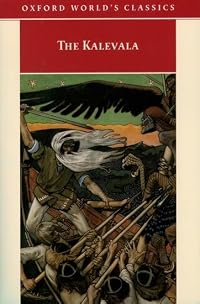
Kalevala
by Elias Lönnrot
On This Page
Description
A compelling insight into the myths and folklore of Finland, The Kalevala is often compared to such epic poems as Homer's Odyssey. Drawing from oral storytelling traditions, Elias Lonnrot made this collection in the 19th-century, and it helped to cement Finnish identity in the turmoil of the 20th-century.Tags
Recommendations
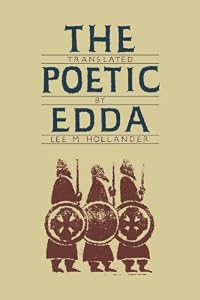
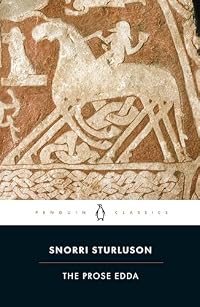
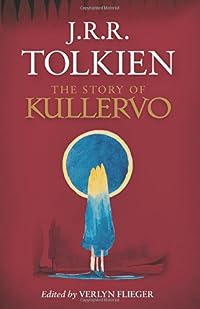



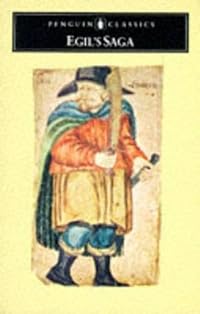


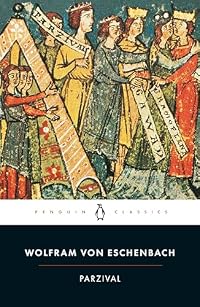
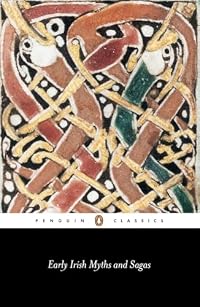

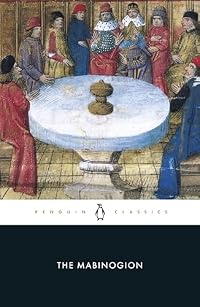









Member Recommendations

Bookwomble Longfellow used the Kalevala metre for The Song of Hiawatha. Both works in the epic tradition.
21
CGlanovsky national epics containing multiple tales more or less tangentially connected through a minstrel-figure


Member Reviews
Oh my goodness, this is a real treasure!
I was expecting this classic Finnish mythos, this fantasy epic, to be kinda dense and worldly and weighty, but I didn't expect it to be totally readable, droll, classy, and exciting. I also didn't expect to see it as the source material for so many classics I adore, including most of the stories behind Tolkien's [b:The Silmarillion|7332|The Silmarillion (Middle-Earth Universe)|J.R.R. Tolkien|https://d2arxad8u2l0g7.cloudfront.net/books/1336502583s/7332.jpg|4733799] and a good portion of his LoTR.
It reads like a fantastically mythical adventure from start to Finnish and it's no wonder, even in the English translation and the narrator I got for this audiobook, a ton of love was put into it. I see show more now exactly how well-beloved it is and why it is so. :) :) :)
I'm blown away. By epic poetry. Hmmmm Maybe this means I need to do a poetry kick, next. :)
And no, I didn't do a line by line analysis of this text, but I did pick up some really awesome beauties in it, such as procession of the equinoxes, Rosy-Cross alchemical transformations, World-Tree as Sampo, and the most huge current of the mythical Singer and Smith.
Orpheus? Hell yeah. And the Master Forger? Another hell yeah. The later adventure actually just brought tears to my eyes. :) Totally had me dancing in my seat with joy. :)
My only complaint was the Guides For New Brides and Guides For New Husbands. lol, that stuff was a riot of wtf. Maybe it would have gone down better if I was a brawny anachronism. :) But no, I'm a modern man and none of that shit flew. :)
Everything else, though? I was really impressed that women still refused to lay down and take it, but still a lot of that still happened in the text. And no matter my personal opinions on a lot of what happened, I cannot help but see this epic as totally brilliant. I could see myself memorizing it and doing a cant and impressing all the drunks. :) show less
I was expecting this classic Finnish mythos, this fantasy epic, to be kinda dense and worldly and weighty, but I didn't expect it to be totally readable, droll, classy, and exciting. I also didn't expect to see it as the source material for so many classics I adore, including most of the stories behind Tolkien's [b:The Silmarillion|7332|The Silmarillion (Middle-Earth Universe)|J.R.R. Tolkien|https://d2arxad8u2l0g7.cloudfront.net/books/1336502583s/7332.jpg|4733799] and a good portion of his LoTR.
It reads like a fantastically mythical adventure from start to Finnish and it's no wonder, even in the English translation and the narrator I got for this audiobook, a ton of love was put into it. I see show more now exactly how well-beloved it is and why it is so. :) :) :)
I'm blown away. By epic poetry. Hmmmm Maybe this means I need to do a poetry kick, next. :)
And no, I didn't do a line by line analysis of this text, but I did pick up some really awesome beauties in it, such as procession of the equinoxes, Rosy-Cross alchemical transformations, World-Tree as Sampo, and the most huge current of the mythical Singer and Smith.
Orpheus? Hell yeah. And the Master Forger? Another hell yeah. The later adventure actually just brought tears to my eyes. :) Totally had me dancing in my seat with joy. :)
My only complaint was the Guides For New Brides and Guides For New Husbands. lol, that stuff was a riot of wtf. Maybe it would have gone down better if I was a brawny anachronism. :) But no, I'm a modern man and none of that shit flew. :)
Everything else, though? I was really impressed that women still refused to lay down and take it, but still a lot of that still happened in the text. And no matter my personal opinions on a lot of what happened, I cannot help but see this epic as totally brilliant. I could see myself memorizing it and doing a cant and impressing all the drunks. :) show less
One of the most recent rendering of oral folkore and myth into an epic cycle is Elias Lönnrot’s The Kalevala, shaped as a literary creation in the nineteenth century out of the author’s research collecting oral lore in stories and songs in Finland and rendering them into a continuous narrative in verse. As such it compares with earlier renderings of traditional lore such as Snorri Sturlsson’s Edda and also provides some insights into how oral sources can be shaped into literature as they are, for instance, in some of the medieval Welsh tales collected as ‘The Mabinogion’. I have dipped into The Kalevala before in a prose translation but have only recently fully engaged with it in Keith Bosley’s vivid and highly readable show more verse translation. It is the work of a poet, it is also a work where things happen by the right words being found and spoken to make them happen: “Steady old Väinämöinen. put this into words, spoke thus” and because his words are better than his opponent’s words, the battle is won.
What is striking is the way that the chief characters simultaneously inhabit the personas of gods, shamans, bards and ordinary human beings. This too is reminiscent of, for instance, Rhiannon in the medieval Welsh tales riding magically across the landscape from the Otherworld and then continuing to live here as if she were a human character while also appearing in another tale in the cycle with magical birds that can sing people into an enchanted state. The main character in The Kalevala is Väinämöinen who is first met as an agent of the Creation, helping to put the sky in place and shape the world as we know it. But he continues to inhabit that creation as a human being, sometimes with enhanced powers but at other times as a vulnerable person with all-too-human weaknesses. He is a bard who can use his songs as powerful spells, turning aside the songs of a young rival and consigning him into a swamp with his own songs. He is a shaman who journeys to Tuonela, the Land of the Dead, to gather spells from another powerful shaman who has died. He also travels there to get the words he needs to create a boat to go to woo the daughter of The Mistress of Northland, though when he goes to her his friend, the younger Smith God Ilmarinen, is the preferred suitor and he must stand meekly aside.
When the focus then turns to Ilmarinen, the Smith is given apparently impossible tasks to fulfil, reminiscent of those given in other such wooing stories in the international folklore canon identified as the motif of ‘The Giant’s or Magician’s Daughter’. But it is not a giant or magician who sets the tasks but The Mistress of Northland, and it is now Ilmarinen who must travel to Tuonela to fulfil one of them. Having done so the narrative continues to treat the wedding and subsequent events as if they are the domestic arrangements of ordinary humans, incorporating elements of the folklore wisdom of rural life in Finland. This shifting of the signifier backwards and forwards from mundane through heroic to divine activities occurs quite naturally as the narrative progresses and Bosley’s verse translation (using a short seven-syllable line as a base, but varying from five to nine syllables where required) is always fully engaged with these shifts of significance and evocative in its expression of them at all levels.
In Väinämöinen’s bardic prowess and his claims to having been present at the Creation, there are echoes of the bardic boasts contained in the medieval Welsh Book of Taliesin. Similarly, in his journeys to the Netherwold to get what he wants, in particular to regain words and songs that “should not be hidden” we might also think of the claims of Taliesin or other bards for the source of poetic inspiration or ‘Awen’. Just as The Book of Taliesin has a raid on the Otherworld to capture a magical cauldron, The Kalevala has a raid on what appears to be Lapland in the North to capture a mysterious object called the Sampo which The Mistress of Northland has hidden in a mountain. The North, or Lapland, seems to function here both as a rival territory and as an Otherworld location, but separate from Tuonela, the Netherworld. This parallels the way that ‘Lochlann’ in Irish stories can variously function as a name for Orkney, Scandinavia or as an Otherworld place, or as the ‘Old North’ in Welsh tales is often a location for Otherworld encounters. But The Kalevala raid is not entirely an attempt to loot someone else’s treasure as one of the raiders is Ilmarinen who, earlier in the cycle, had created the Sampo in exchange for being able to woo the daughter of The Mistress of Northland, though she at that time rejected his advances. Here, again, Väinämöinen and Ilmarinen seek to free what has been hidden, regaining an object removed from the world that should have a use in the world.
Looking for parallels across different mythologies we should not ignore the differences that make each set of stories culturally specific. The fact that we can identify international folklore motifs in stories from different cultures is certainly significant, and when we encounter them they often resonate both because they are essentially the same story and because of their distinct differences. We recognise the characters in The Kalevala as gods not so much because of who they are but by what they do. Falling into mythological patterns of behaviour which are recognisable across cultures is one of the clues. But characters in folk tales often also do this without obvious signs of divinity. What makes the characters in Bosley’s translation so obviously divine and yet so characteristically human is a mode of presentation that unselfconsciously allows them to be themselves in a particular landscape and yet transcend that particularity by their enactment of divine themes.
These gods are not remote. They can be lived with, admired, disapproved of, sympathised with, just as people we know in our own lives. Yet they remain larger than life and so can speak to us from another culture and also illuminate our own. At the end of The Kalevala there is an account of the coming of a new god, announcing the arrival of christianity (though churches are mentioned in the preceding chapters) as if to say ‘the time of these gods it at an end’. Väinämöinen bows out after the son of a virgin who had become pregnant by eating a cowberry banishes him, declaring as he goes:
Just let the time pass
one day go, another come
and again I’ll be needed
looked for and longed for
to fix a new Sampo, to
make new music
He leaves behind him the Kantele, the source of music which he had created. But he leaves the world he had helped to create. The folklore sources suggest that acknowledgment of the old gods had run concurrently with christianity for some time before this. There are several references to “The Great Bear”, the constellation that dominates the northern skies, as if it were of cultic significance. ‘God, keeper of heaven’ is often invoked as the source of storm clouds as when the trickster figure Lemminkäinen asks him to whip up a storm so he can escape his pursuers after killing The Master of Northland. One of the set formulas of this epic is that things can be tried three times and the attempt to effect things by spells - spoken words of power - generally proceed by first addressing a local spirit, then a demon and finally ‘The Thunderer, the Old Man, the One in the Sky’. The implication is that there is a final resort to an ultimate God figure, but one who can told what to do if the right words are used. He seems to function as one of the multiple identitities and levels of existence that are encompassed in these stories. But when he baptizes the son of the virgin who had eaten the cowberry everything changes, things become set and the old world passes. Yet still lives in this epic.
☼ show less
What is striking is the way that the chief characters simultaneously inhabit the personas of gods, shamans, bards and ordinary human beings. This too is reminiscent of, for instance, Rhiannon in the medieval Welsh tales riding magically across the landscape from the Otherworld and then continuing to live here as if she were a human character while also appearing in another tale in the cycle with magical birds that can sing people into an enchanted state. The main character in The Kalevala is Väinämöinen who is first met as an agent of the Creation, helping to put the sky in place and shape the world as we know it. But he continues to inhabit that creation as a human being, sometimes with enhanced powers but at other times as a vulnerable person with all-too-human weaknesses. He is a bard who can use his songs as powerful spells, turning aside the songs of a young rival and consigning him into a swamp with his own songs. He is a shaman who journeys to Tuonela, the Land of the Dead, to gather spells from another powerful shaman who has died. He also travels there to get the words he needs to create a boat to go to woo the daughter of The Mistress of Northland, though when he goes to her his friend, the younger Smith God Ilmarinen, is the preferred suitor and he must stand meekly aside.
When the focus then turns to Ilmarinen, the Smith is given apparently impossible tasks to fulfil, reminiscent of those given in other such wooing stories in the international folklore canon identified as the motif of ‘The Giant’s or Magician’s Daughter’. But it is not a giant or magician who sets the tasks but The Mistress of Northland, and it is now Ilmarinen who must travel to Tuonela to fulfil one of them. Having done so the narrative continues to treat the wedding and subsequent events as if they are the domestic arrangements of ordinary humans, incorporating elements of the folklore wisdom of rural life in Finland. This shifting of the signifier backwards and forwards from mundane through heroic to divine activities occurs quite naturally as the narrative progresses and Bosley’s verse translation (using a short seven-syllable line as a base, but varying from five to nine syllables where required) is always fully engaged with these shifts of significance and evocative in its expression of them at all levels.
In Väinämöinen’s bardic prowess and his claims to having been present at the Creation, there are echoes of the bardic boasts contained in the medieval Welsh Book of Taliesin. Similarly, in his journeys to the Netherwold to get what he wants, in particular to regain words and songs that “should not be hidden” we might also think of the claims of Taliesin or other bards for the source of poetic inspiration or ‘Awen’. Just as The Book of Taliesin has a raid on the Otherworld to capture a magical cauldron, The Kalevala has a raid on what appears to be Lapland in the North to capture a mysterious object called the Sampo which The Mistress of Northland has hidden in a mountain. The North, or Lapland, seems to function here both as a rival territory and as an Otherworld location, but separate from Tuonela, the Netherworld. This parallels the way that ‘Lochlann’ in Irish stories can variously function as a name for Orkney, Scandinavia or as an Otherworld place, or as the ‘Old North’ in Welsh tales is often a location for Otherworld encounters. But The Kalevala raid is not entirely an attempt to loot someone else’s treasure as one of the raiders is Ilmarinen who, earlier in the cycle, had created the Sampo in exchange for being able to woo the daughter of The Mistress of Northland, though she at that time rejected his advances. Here, again, Väinämöinen and Ilmarinen seek to free what has been hidden, regaining an object removed from the world that should have a use in the world.
Looking for parallels across different mythologies we should not ignore the differences that make each set of stories culturally specific. The fact that we can identify international folklore motifs in stories from different cultures is certainly significant, and when we encounter them they often resonate both because they are essentially the same story and because of their distinct differences. We recognise the characters in The Kalevala as gods not so much because of who they are but by what they do. Falling into mythological patterns of behaviour which are recognisable across cultures is one of the clues. But characters in folk tales often also do this without obvious signs of divinity. What makes the characters in Bosley’s translation so obviously divine and yet so characteristically human is a mode of presentation that unselfconsciously allows them to be themselves in a particular landscape and yet transcend that particularity by their enactment of divine themes.
These gods are not remote. They can be lived with, admired, disapproved of, sympathised with, just as people we know in our own lives. Yet they remain larger than life and so can speak to us from another culture and also illuminate our own. At the end of The Kalevala there is an account of the coming of a new god, announcing the arrival of christianity (though churches are mentioned in the preceding chapters) as if to say ‘the time of these gods it at an end’. Väinämöinen bows out after the son of a virgin who had become pregnant by eating a cowberry banishes him, declaring as he goes:
Just let the time pass
one day go, another come
and again I’ll be needed
looked for and longed for
to fix a new Sampo, to
make new music
He leaves behind him the Kantele, the source of music which he had created. But he leaves the world he had helped to create. The folklore sources suggest that acknowledgment of the old gods had run concurrently with christianity for some time before this. There are several references to “The Great Bear”, the constellation that dominates the northern skies, as if it were of cultic significance. ‘God, keeper of heaven’ is often invoked as the source of storm clouds as when the trickster figure Lemminkäinen asks him to whip up a storm so he can escape his pursuers after killing The Master of Northland. One of the set formulas of this epic is that things can be tried three times and the attempt to effect things by spells - spoken words of power - generally proceed by first addressing a local spirit, then a demon and finally ‘The Thunderer, the Old Man, the One in the Sky’. The implication is that there is a final resort to an ultimate God figure, but one who can told what to do if the right words are used. He seems to function as one of the multiple identitities and levels of existence that are encompassed in these stories. But when he baptizes the son of the virgin who had eaten the cowberry everything changes, things become set and the old world passes. Yet still lives in this epic.
☼ show less
This is a classic for a reason, with many fascinating story arcs, and some great writing. This English translation did pretty well in my opinion (not being a native Finnish speaker, I can't speak of the accuracy, but I found it very readable)
My one caveat here is that the heroes of these myths are deeply flawed. Heroes aren't always meant to be perfect, but the heroes do some really dumbassed things here. Vainamoinen makes himself so repulsive to the maid Aino that she decides that offing herself is better than being married to him. And women... well, don't get me started on the advice given to brides here, or what was expected of women. DON'T look to the Kalevala for marriage/relationship advice!
Ilmarinen is all right but not without show more issues. Lemminkainen dies because of his own dumbassery so his mommy has to stitch him back together, and Kullervo's an abused kid who goes crazy and does a lot of fucked up shit, partly because of his PTSD and shit.
While the Kalevala doesn't have the best role models, the storytelling itself is epic, with a lot of great lines, so this epic is worth reading for that, if you're a literary buff. 4.5/5 stars. show less
My one caveat here is that the heroes of these myths are deeply flawed. Heroes aren't always meant to be perfect, but the heroes do some really dumbassed things here. Vainamoinen makes himself so repulsive to the maid Aino that she decides that offing herself is better than being married to him. And women... well, don't get me started on the advice given to brides here, or what was expected of women. DON'T look to the Kalevala for marriage/relationship advice!
Ilmarinen is all right but not without show more issues. Lemminkainen dies because of his own dumbassery so his mommy has to stitch him back together, and Kullervo's an abused kid who goes crazy and does a lot of fucked up shit, partly because of his PTSD and shit.
While the Kalevala doesn't have the best role models, the storytelling itself is epic, with a lot of great lines, so this epic is worth reading for that, if you're a literary buff. 4.5/5 stars. show less
Chances are that if you've heard of this work at all it's because it was the inspiration for Longfellow's Hiawatha, you've just heard about the publication of Tolkien's Story of Kullervo or you're some kind of expert in Epic Poetry. Which is to say it's fairly obscure outside it's native Finnland, where, by contrast everybody knows it because it's the National Epic, heavily influencing the development of a Finnish national consciousness.
(A brief aside on Tolkien: he used the Finnish language as inspiration for Quenya, the language of the High Elves, as can be seen, for example, in his use of "ilma" , "air" in the name Iluvatar, the creator the world, also seen in the Kalevala's magical smith, Ilmarinen who forged the sky.)
Now, I think show more this is a crying shame because one doesn't have to get very far (say 3 Cantos out of 50) into the Kalevala, which was constructed by Lonrott from Finnish folk songs he collected, before realising that Hiawatha is a trite, juvenile pastiche that is fairly patronising to both the Native American and Finnish cultures Longfellow stole from in order to create his most famous and hugely popular work. The parallels are obvious but reading the Kalevala will connect you to a mythic time past and a culture evolved but still alive now in a way that cutesy Hiawatha, Minnehaha and co. never can. The heroes of this epic, Vainamoinen, Ilmarinen and others have greater stature, more complex character and more visceral connection to their Scandinavian landscape and lifestyle than Longfellow's pale imitations can even imagine. They also have more interesting, exciting and just plain weird adventures - magical duels by song, I don't know how many visits to the land of the dead, the forging of magical and mysterious artifacts, quests, conflicts and more. It's great stuff.
It's also surprisingly easy to read, especially if you take it at just a Canto at a time, like I did. Being immersed in such a vivid, magical, strange world for a long time is a delight anyway. The verse (of this translation, at least) is not stuck in a nightmare of endless iambic meter that swiftly lulls one to sleep, either. Instead lines of variable length maintain a swift narrative (for the most part see below) and I found it pretty easy to read about 10-15 p (a typical Canto length) without losing focus.
The Finnish folk tradition divides up into men's and women's songs. Lonrott didn't discriminate and collected both. When he came to assemble his epic tale from all the song fragments, he incorporated elements from both traditions. The contrast is strong and remarkable; men's songs focus on adventure, magic, conflict, hunting and history. Women's songs focus on the domestic, weddings, marriage, farming, which are comparatively dull and slow. The revelation of an outrageously sexist society is unavoidable; it sucked to be a woman or girl back then.
Bards and song feature heavily in Epic but never so much, in my experience, as in the Kalevala. The most prominent hero is a bard, magic is primarily performed by song and no opportunity is missed to demonstrate how important music, song and story telling were in that mythic land of legend. And the myths presented here are great; fantastical, preposterous, adventurous and most of all tremendous fun: I shall miss hearing about the exploits of the oldest bard, Vainamoinen, forger of the mysterious Sampo, Ilmarinen, and their cohorts and enemies, such as Louhi, hag of the North who stole the sun and the moon. show less
(A brief aside on Tolkien: he used the Finnish language as inspiration for Quenya, the language of the High Elves, as can be seen, for example, in his use of "ilma" , "air" in the name Iluvatar, the creator the world, also seen in the Kalevala's magical smith, Ilmarinen who forged the sky.)
Now, I think show more this is a crying shame because one doesn't have to get very far (say 3 Cantos out of 50) into the Kalevala, which was constructed by Lonrott from Finnish folk songs he collected, before realising that Hiawatha is a trite, juvenile pastiche that is fairly patronising to both the Native American and Finnish cultures Longfellow stole from in order to create his most famous and hugely popular work. The parallels are obvious but reading the Kalevala will connect you to a mythic time past and a culture evolved but still alive now in a way that cutesy Hiawatha, Minnehaha and co. never can. The heroes of this epic, Vainamoinen, Ilmarinen and others have greater stature, more complex character and more visceral connection to their Scandinavian landscape and lifestyle than Longfellow's pale imitations can even imagine. They also have more interesting, exciting and just plain weird adventures - magical duels by song, I don't know how many visits to the land of the dead, the forging of magical and mysterious artifacts, quests, conflicts and more. It's great stuff.
It's also surprisingly easy to read, especially if you take it at just a Canto at a time, like I did. Being immersed in such a vivid, magical, strange world for a long time is a delight anyway. The verse (of this translation, at least) is not stuck in a nightmare of endless iambic meter that swiftly lulls one to sleep, either. Instead lines of variable length maintain a swift narrative (for the most part see below) and I found it pretty easy to read about 10-15 p (a typical Canto length) without losing focus.
The Finnish folk tradition divides up into men's and women's songs. Lonrott didn't discriminate and collected both. When he came to assemble his epic tale from all the song fragments, he incorporated elements from both traditions. The contrast is strong and remarkable; men's songs focus on adventure, magic, conflict, hunting and history. Women's songs focus on the domestic, weddings, marriage, farming, which are comparatively dull and slow. The revelation of an outrageously sexist society is unavoidable; it sucked to be a woman or girl back then.
Bards and song feature heavily in Epic but never so much, in my experience, as in the Kalevala. The most prominent hero is a bard, magic is primarily performed by song and no opportunity is missed to demonstrate how important music, song and story telling were in that mythic land of legend. And the myths presented here are great; fantastical, preposterous, adventurous and most of all tremendous fun: I shall miss hearing about the exploits of the oldest bard, Vainamoinen, forger of the mysterious Sampo, Ilmarinen, and their cohorts and enemies, such as Louhi, hag of the North who stole the sun and the moon. show less
When Elias Lönnrot was born in 1802, Finland was a province of Sweden; by the time he came to compile the Kalevala in the 1830s and 1840s, it was part of the Russian Empire. ‘Finnishness’ was (and had been since the twelfth century) little more than a shared idea, and sometimes a dangerous one at that. So this epic is a part of that nineteenth-century fashion for literary and linguistic nationalism that also gave us curiosities like Pan Tadeusz in Poland or The Mountain Wreath in Serbia-Montenegro – albeit dealing less with history, here, than with mythic prehistory.
I said this was ‘compiled’, and indeed in that sense the Kalevala is a nineteenth-century book, despite the ancientness of much of its material; it is not like show more the Edda, or Beowulf. In most cases we have examples of the old Finnish myths and legends that Lönnrot used, but the finished product is its own animal; characters have been conflated, and legends have been expertly arranged into a framework that seeks to tell a composite story of Finland's magical past.
It's a past absolutely different in its sensibilities from Anglo-Saxon or Nordic equivalents, let alone those from the Classical world. I suppose I was expecting tales of heroic warriors and epic battles, but there is very little of that. The heroes of the Kalevala are singers and shamans, not soldiers, and when they face off against each other, instead of reaching for their weapons they break into song:
The old Väinämöinen sang:
the lakes rippled, the earth shook
the copper mountains trembled
the sturdy boulders rumbled
the cliffs flew in two
the rocks cracked upon the shores.
Väinämöinen, indeed, goes on a quest not unlike those of more familiar epics; but instead of seeking a magical weapon, he is simply seeking ‘words’ – spells and tales that have been lost. (He is repeatedly described in formulaic epithets as ‘the singer’ and ‘the everlasting wise man’ – just compare this with Homer's ‘man-killing’ Hector, ‘spear-famed’ Menelaus!) One on occasion when two heroes do set out on the war-path, they just end up getting lost in the woods somewhere in Lapland, and decide to turn around and go home for a restorative sauna.
The inhabitants of this poem are not fighters: they're farmers, hunters, fishermen, metalsmiths. The world is full of mystery but it revolves around cattle, populations of fish, the threat of wolves and bears outside the village, occasional ritualised celebrations like a birth or a wedding. Despite the supernature, it is refreshingly down-to-earth.
Some of my favourite parts in this are in fact the most domestic – narratives that Lönnrot wove in from the rich Finnish tradition of women's songs, which tend to be more concerned with practical matters. The advice given to a bride at her wedding is typical, and it brought home to me more forcefully than anything I can remember how nerve-racking it must have been for a girl to leave her parents' home and head off to run the household of her new husband, perhaps miles away:
What a life was yours
on these farms of your father's!
You grew in the lanes a flower
a strawberry in the glades;
you rose from bed to butter
and from lying down to milk […].
You'll not be able to go
through the doors, stroll through the gates
like a daughter of the house;
you will not know how to blow
the fire, to heat the fireplace
as the man of the house likes.
Did you really, young maid
did you really know or think
you'd be going for a night
coming back the next day? Look—
you'll not be gone for a night
not for one night nor for two:
you'll have slipped off for longer
for always you'll have vanished
for ever from father's rooms
and for life from your mother's.
This translation was published in 1989 by Keith Bosley, a poet and fluent Finnish-speaker who set about to improve what he sees as the defects of previous versions. To judge how successful he is, let's look at some of the original – it has a very particular rhythm. The metre is trochaic tetrameter, but with vowel length instead of stress – in other words, every line has four feet, each of which contains a long syllable followed by a short one. Here's the opening six lines:
Mieleni minun tekevi
aivoni ajattelevi
lähteäni laulamahan,
saa'ani sanelemahan,
sukuvirttä suoltamahan,
lajivirttä laulamahan.
The first English translator, John Martin Crawford in 1888, worked from a German version rather than from the original; he tried to simulate the rhythms of the Finnish by using stress-trochees. The effect is quite unusual, and you may recognise it:
MASTERED by desire impulsive,
By a mighty inward urging,
I am ready now for singing,
Ready to begin the chanting
Of our nation's ancient folk-song
Handed down from by-gone ages.
If it sounds familiar, it's because the German source also caught the fancy of Longfellow, who borrowed it for his Song of Hiawatha, still almost the only example of true trochaic poetry in English (‘Downward through the evening twilight, / In the days that are forgotten, / In the unremembered ages’ etc.). WF Kirby in 1907, working from the original Finnish, took the same approach:
I am driven by my longing,
And my understanding urges
That I should commence my singing;
And begin my recitation.
I will sing the people's legends,
And the ballads of the nation.
Which doesn't seem a big improvement. Bosley, for his part, dismisses trochaic metre in English as ‘monotonous’ and restrictive ‘to the point of triviality’ – this ‘matters little in a romance of Indians without cowboys,’ he breezes, ‘but it matters a great deal in an epic of world stature’. His solution is to construct his own version around lines of five, seven or nine syllables in length, disregarding stress altogether. The result is very different from previous incarnations:
I have a good mind
take into my head
to start off singing
begin reciting
reeling off a tale of kin
and singing a tale of kind.
The advantages of this solution grew on me, but I wouldn't say I view it with undiluted approbation. It allows for much greater fidelity to the original sense of the lines, but at the cost of sacrificing its power as oral poetry. The driving rhythms of the original (listen, for instance, to this) are simply not there. Nevertheless, and despite a few odd-sounding lines, it can work very well. Little laments such as this:
This is how the luckless feel
how the calloos think—
like hard snow under a ridge
like water in a deep well.
…have an appealing straightforwardness that is not available to more restrictive metres (e.g. Kirby: Such may mournful thoughts resemble, / Thus the long-tailed duck may ponder,/ As 'neath frozen snow embedded, / Water deep in well imprisoned).
Quite apart from the many pleasures to be found here, I am grateful for the fact that the Kalevala introduced me to artists in two other fields: the composer Sibelius, whose work I knew very little of, and the painter Akseli Gallen-Kallela, whom I'm not sure I'd even heard of. Many of Sibelius's works are set to lyrics from the Kalevala (one example I've been listening to a lot); and Gallen-Kallela illustrated several scenes from the epic in the sort of bold, almost cartoonish style that I have always found very appealing.. All contributing to the sense that the Kalevala is Finland's most essential cultural touchstone, a shared reference of wonderful richness….
Out of this a seed will spring
constant good luck will begin;
from this, ploughing and sowing
from this, every kind of growth
out of this the moon to gleam
the sun of good luck to shine
on Finland's great farms
on Finland's sweet lands! show less
I said this was ‘compiled’, and indeed in that sense the Kalevala is a nineteenth-century book, despite the ancientness of much of its material; it is not like show more the Edda, or Beowulf. In most cases we have examples of the old Finnish myths and legends that Lönnrot used, but the finished product is its own animal; characters have been conflated, and legends have been expertly arranged into a framework that seeks to tell a composite story of Finland's magical past.
It's a past absolutely different in its sensibilities from Anglo-Saxon or Nordic equivalents, let alone those from the Classical world. I suppose I was expecting tales of heroic warriors and epic battles, but there is very little of that. The heroes of the Kalevala are singers and shamans, not soldiers, and when they face off against each other, instead of reaching for their weapons they break into song:
The old Väinämöinen sang:
the lakes rippled, the earth shook
the copper mountains trembled
the sturdy boulders rumbled
the cliffs flew in two
the rocks cracked upon the shores.
Väinämöinen, indeed, goes on a quest not unlike those of more familiar epics; but instead of seeking a magical weapon, he is simply seeking ‘words’ – spells and tales that have been lost. (He is repeatedly described in formulaic epithets as ‘the singer’ and ‘the everlasting wise man’ – just compare this with Homer's ‘man-killing’ Hector, ‘spear-famed’ Menelaus!) One on occasion when two heroes do set out on the war-path, they just end up getting lost in the woods somewhere in Lapland, and decide to turn around and go home for a restorative sauna.
The inhabitants of this poem are not fighters: they're farmers, hunters, fishermen, metalsmiths. The world is full of mystery but it revolves around cattle, populations of fish, the threat of wolves and bears outside the village, occasional ritualised celebrations like a birth or a wedding. Despite the supernature, it is refreshingly down-to-earth.
Some of my favourite parts in this are in fact the most domestic – narratives that Lönnrot wove in from the rich Finnish tradition of women's songs, which tend to be more concerned with practical matters. The advice given to a bride at her wedding is typical, and it brought home to me more forcefully than anything I can remember how nerve-racking it must have been for a girl to leave her parents' home and head off to run the household of her new husband, perhaps miles away:
What a life was yours
on these farms of your father's!
You grew in the lanes a flower
a strawberry in the glades;
you rose from bed to butter
and from lying down to milk […].
You'll not be able to go
through the doors, stroll through the gates
like a daughter of the house;
you will not know how to blow
the fire, to heat the fireplace
as the man of the house likes.
Did you really, young maid
did you really know or think
you'd be going for a night
coming back the next day? Look—
you'll not be gone for a night
not for one night nor for two:
you'll have slipped off for longer
for always you'll have vanished
for ever from father's rooms
and for life from your mother's.
This translation was published in 1989 by Keith Bosley, a poet and fluent Finnish-speaker who set about to improve what he sees as the defects of previous versions. To judge how successful he is, let's look at some of the original – it has a very particular rhythm. The metre is trochaic tetrameter, but with vowel length instead of stress – in other words, every line has four feet, each of which contains a long syllable followed by a short one. Here's the opening six lines:
Mieleni minun tekevi
aivoni ajattelevi
lähteäni laulamahan,
saa'ani sanelemahan,
sukuvirttä suoltamahan,
lajivirttä laulamahan.
The first English translator, John Martin Crawford in 1888, worked from a German version rather than from the original; he tried to simulate the rhythms of the Finnish by using stress-trochees. The effect is quite unusual, and you may recognise it:
MASTERED by desire impulsive,
By a mighty inward urging,
I am ready now for singing,
Ready to begin the chanting
Of our nation's ancient folk-song
Handed down from by-gone ages.
If it sounds familiar, it's because the German source also caught the fancy of Longfellow, who borrowed it for his Song of Hiawatha, still almost the only example of true trochaic poetry in English (‘Downward through the evening twilight, / In the days that are forgotten, / In the unremembered ages’ etc.). WF Kirby in 1907, working from the original Finnish, took the same approach:
I am driven by my longing,
And my understanding urges
That I should commence my singing;
And begin my recitation.
I will sing the people's legends,
And the ballads of the nation.
Which doesn't seem a big improvement. Bosley, for his part, dismisses trochaic metre in English as ‘monotonous’ and restrictive ‘to the point of triviality’ – this ‘matters little in a romance of Indians without cowboys,’ he breezes, ‘but it matters a great deal in an epic of world stature’. His solution is to construct his own version around lines of five, seven or nine syllables in length, disregarding stress altogether. The result is very different from previous incarnations:
I have a good mind
take into my head
to start off singing
begin reciting
reeling off a tale of kin
and singing a tale of kind.
The advantages of this solution grew on me, but I wouldn't say I view it with undiluted approbation. It allows for much greater fidelity to the original sense of the lines, but at the cost of sacrificing its power as oral poetry. The driving rhythms of the original (listen, for instance, to this) are simply not there. Nevertheless, and despite a few odd-sounding lines, it can work very well. Little laments such as this:
This is how the luckless feel
how the calloos think—
like hard snow under a ridge
like water in a deep well.
…have an appealing straightforwardness that is not available to more restrictive metres (e.g. Kirby: Such may mournful thoughts resemble, / Thus the long-tailed duck may ponder,/ As 'neath frozen snow embedded, / Water deep in well imprisoned).
Quite apart from the many pleasures to be found here, I am grateful for the fact that the Kalevala introduced me to artists in two other fields: the composer Sibelius, whose work I knew very little of, and the painter Akseli Gallen-Kallela, whom I'm not sure I'd even heard of. Many of Sibelius's works are set to lyrics from the Kalevala (one example I've been listening to a lot); and Gallen-Kallela illustrated several scenes from the epic in the sort of bold, almost cartoonish style that I have always found very appealing.. All contributing to the sense that the Kalevala is Finland's most essential cultural touchstone, a shared reference of wonderful richness….
Out of this a seed will spring
constant good luck will begin;
from this, ploughing and sowing
from this, every kind of growth
out of this the moon to gleam
the sun of good luck to shine
on Finland's great farms
on Finland's sweet lands! show less
Disclaimer, I love the Kalevala.
While most [Atlantic] people know of the Kalevala as "that thing that Tolkien liked," and subsequently have their expectations missed for lack of "epicness," I find that the Kalevala is more to the heart of what makes a good story. Even translated into English, the prose is beautiful and not without grandeur ("___ uttered a word, spoke thus:"), and I found myself reading it aloud even when needing to complete whole cycles in a short amount of time. The Kalevala isn't a story about the same sort of heroes and villains westerners like I are accustomed to, rather it reads to be something more human, more mystical, and more real.
While most [Atlantic] people know of the Kalevala as "that thing that Tolkien liked," and subsequently have their expectations missed for lack of "epicness," I find that the Kalevala is more to the heart of what makes a good story. Even translated into English, the prose is beautiful and not without grandeur ("___ uttered a word, spoke thus:"), and I found myself reading it aloud even when needing to complete whole cycles in a short amount of time. The Kalevala isn't a story about the same sort of heroes and villains westerners like I are accustomed to, rather it reads to be something more human, more mystical, and more real.
I think this is one of those books that needs a few reads with a few years between them. It reminds me of the Odyssey quite a bit, and there are some obvious parallels in the story. It's wrong to think of this as a derivative work, though. It may share some style and elements with it, but the Kalevala is uniquely Finnish. If you are the type of person who enjoys this type of work then don't miss out. There's more than enough unique material to keep your attention.
I can't say much with confidence after this first reading, but I will make note of the really interesting spirituality of the book. While there are many vaguely Christian notions (and a few overt ones), there is still an incredibly strong sense of the earlier pagan animism that show more is beautifully tied up in it. For that aspect alone I think this book is worthy of a lot of attention from those of you who are interested in comparative religion. show less
I can't say much with confidence after this first reading, but I will make note of the really interesting spirituality of the book. While there are many vaguely Christian notions (and a few overt ones), there is still an incredibly strong sense of the earlier pagan animism that show more is beautifully tied up in it. For that aspect alone I think this book is worthy of a lot of attention from those of you who are interested in comparative religion. show less
Members
- Recently Added By
Lists

Narrative verse for pleasure
75 works; 8 members

Epic Fiction
42 works; 11 members

Works cited in Palimpsest: A History of the Written Word by Matthew Battles
79 works; 2 members
r/History Recommended Reading List
603 works; 12 members

Books Read in 2023
5,547 works; 144 members

Philip Ward's Lifetime Reading Plan
592 works; 22 members

Book Titles Mentioned In Newberry Medal And Honor Books
884 works; 3 members

Reading LIst
648 works; 1 member

In Our Time books
4,934 works; 2 members
Author Information

Some Editions
Awards and Honors
Series
Belongs to Publisher Series
Work Relationships
Is retold in
Has the adaptation
Is an expanded version of
Inspired
Has as a reference guide/companion
Has as a student's study guide
Common Knowledge
- Canonical title
- Kalevala
- Original title
- Kalewala, taikka Wanhoja Karjalan Runoja Suomen Kansan muinoisista ajoista
- Alternate titles
- The Kalevala: Epic of the Finnish People
- Original publication date
- 1849
- People/Characters
- Väinämöinen; Ilmarinen; Lemminkäinen; Louhi; Kullervo; Kalervo (show all 10); Untamo; Kullervo's sister; Ilmarinen's wife; Musti (dog)
- Important places
- Kaleva; Pohjala; Finland
- Important events
- Creation of the universe
- First words*
- Mieleni minun tekevi,
aivoni ajattelevi
lähteäni laulamahan,
saa'ani sanelemahan,
sukuvirttä suoltamahan,
lajivirttä laulamahan. - Last words
- (Click to show. Warning: May contain spoilers.)Be that as it may
I've skied a trail for singers
skied a trail, snapped a treetop
lopped off boughs and shown the way:
that is where the way goes now
for a new track leads
for more versatile singers
more abundant bards
among the youngsters rising
among the people growing. - Original language
- Finnish
- Canonical DDC/MDS
- 894.54112
- Disambiguation notice
- This is the extended second edition first published in 1849 and now commonly known as the "New Kalevala". Nearly all translations into foreign languages are based on this edition.
*Some information comes from Common Knowledge in other languages. Click "Edit" for more information.
Classifications
- Genres
- Poetry, Fiction and Literature
- DDC/MDS
- 894.54112 — Literature & rhetoric Asian Literature Literatures of Altaic, Uralic, Hyperborean, Dravidian languages; literatures of miscellaneous languages of south Asia Finno-Ugric languages Finnic languages Finnish Finnish poetry 1800–1900
- LCC
- PH324 .E5 .B6313 — Language and Literature Uralic languages. Basque language Uralic. Basque Finnish
- BISAC
Statistics
- Members
- 2,699
- Popularity
- 6,838
- Reviews
- 32
- Rating
- (4.17)
- Languages
- 44 — Afrikaans, Arabic, Belarusian, Bulgarian, Catalan, Czech, Danish, Dutch, English, Esperanto, Estonian, Finnish, French, Georgian, German, Greek, Hebrew, Hindi, Hungarian, Icelandic, Italian, Japanese, Latin, Latvian, Lithuanian, Norwegian (Nynorsk), Norwegian, Farsi/Persian, Polish, Romanian, Russian, Serbian, Croatian, Slovak, Slovenian, Spanish, Swahili, Swedish, Tamil, Turkish, Ukrainian, Yiddish, Portuguese (Portugal), Chinese, simplified
- Media
- Paper, Audiobook, Ebook
- ISBNs
- 152
- ASINs
- 29