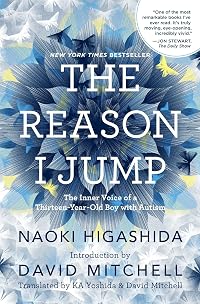
The Reason I Jump
by Naoki Higashida
On This Page
Description
“One of the most remarkable books I’ve ever read. It’s truly moving, eye-opening, incredibly vivid.”—Jon Stewart, The Daily ShowNAMED ONE OF THE BEST BOOKS OF THE YEAR BY
NPR • The Wall Street Journal • Bloomberg Business • Bookish
FINALIST FOR THE BOOKS FOR A BETTER LIFE FIRST BOOK AWARD • NEW YORK TIMES BESTSELLER
You’ve never read a book like The Reason I Jump. Written by Naoki Higashida, a very smart, very self-aware, and very charming thirteen-year-old boy with show more autism, it is a one-of-a-kind memoir that demonstrates how an autistic mind thinks, feels, perceives, and responds in ways few of us can imagine. Parents and family members who never thought they could get inside the head of their autistic loved one at last have a way to break through to the curious, subtle, and complex life within.
Using an alphabet grid to painstakingly construct words, sentences, and thoughts that he is unable to speak out loud, Naoki answers even the most delicate questions that people want to know. Questions such as: “Why do people with autism talk so loudly and weirdly?” “Why do you line up your toy cars and blocks?” “Why don’t you make eye contact when you’re talking?” and “What’s the reason you jump?” (Naoki’s answer: “When I’m jumping, it’s as if my feelings are going upward to the sky.”) With disarming honesty and a generous heart, Naoki shares his unique point of view on not only autism but life itself. His insights—into the mystery of words, the wonders of laughter, and the elusiveness of memory—are so startling, so strange, and so powerful that you will never look at the world the same way again.
In his introduction, bestselling novelist David Mitchell writes that Naoki’s words allowed him to feel, for the first time, as if his own autistic child was explaining what was happening in his mind. “It is no exaggeration to say that The Reason I Jump allowed me to round a corner in our relationship.” This translation was a labor of love by David and his wife, KA Yoshida, so they’d be able to share that feeling with friends, the wider autism community, and beyond. Naoki’s book, in its beauty, truthfulness, and simplicity, is a gift to be shared.
Praise for The Reason I Jump
“This is an intimate book, one that brings readers right into an autistic mind.”—Chicago Tribune (Editor’s Choice)
“Amazing times a million.”—Whoopi Goldberg, People
“The Reason I Jump is a Rosetta stone. . . . This book takes about ninety minutes to read, and it will stretch your vision of what it is to be human.”—Andrew Solomon, The Times (U.K.)
“Extraordinary, moving, and jeweled with epiphanies.”—The Boston Globe
“Small but profound . . . [Higashida’s] startling, moving insights offer a rare look inside the autistic mind.”—Parade. show less
Tags
Recommendations
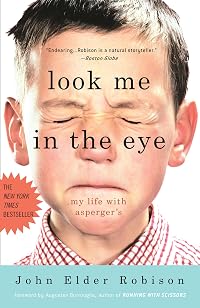
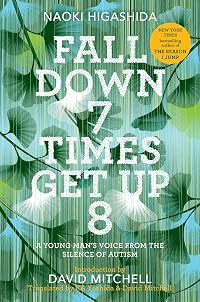
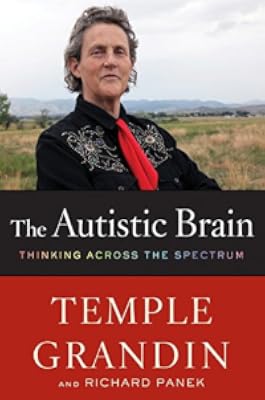




















Member Recommendations
Member Reviews
It's always great to get new perspectives and open your mind a little. This book was written by a 13 year old boy with autism and it has some of my favorite quotes I've ever read.
"Every single thing has its own unique beauty. People with autism get to cherish this beauty, as if it's a kind of blessing given to us. Wherever we go, whatever we do, we can never be completely lonely. We may look like we're not with anyone, but we're always in the company of friends." - reading these words opened my mind to a different world and it was really cemented with the short story Naoki Higashida wrote that was included at the end of his Q&A session throughout the entire book.
What I got out of this book is that people with autism have a mind that show more feels like it's on a different reality than ours. We think we see things clearly and vividly when the reality is that they have a much more heightened perception around them. Sometimes what we see as a struggle is just them being overwhelmed by every detail we overlook.
We all have different ways of coping with our emotions and so do they: "Everybody has a heart that can be touched by something. Crying isn't necessarily about sadness or meltdowns or being upset. I'd like you to bear that in mind, if you would" ---I mean how relatable is that? This boy that had struggled with communicating in general being able to really break down feelings and emotions much better than most people I know absolutely blew my mind. I highly recommend this.
The only thing that stops me from giving this a perfect review is that I feel like something was lost in translation but I know how hard it can be giving the same feeling and meaning to a different language. It just makes me wish I knew Japanese and just read it in its original text. show less
"Every single thing has its own unique beauty. People with autism get to cherish this beauty, as if it's a kind of blessing given to us. Wherever we go, whatever we do, we can never be completely lonely. We may look like we're not with anyone, but we're always in the company of friends." - reading these words opened my mind to a different world and it was really cemented with the short story Naoki Higashida wrote that was included at the end of his Q&A session throughout the entire book.
What I got out of this book is that people with autism have a mind that show more feels like it's on a different reality than ours. We think we see things clearly and vividly when the reality is that they have a much more heightened perception around them. Sometimes what we see as a struggle is just them being overwhelmed by every detail we overlook.
We all have different ways of coping with our emotions and so do they: "Everybody has a heart that can be touched by something. Crying isn't necessarily about sadness or meltdowns or being upset. I'd like you to bear that in mind, if you would" ---I mean how relatable is that? This boy that had struggled with communicating in general being able to really break down feelings and emotions much better than most people I know absolutely blew my mind. I highly recommend this.
The only thing that stops me from giving this a perfect review is that I feel like something was lost in translation but I know how hard it can be giving the same feeling and meaning to a different language. It just makes me wish I knew Japanese and just read it in its original text. show less
At the age of 13, in 2007, a Japanese boy named Naoki Higashida was asked to answer a series of questions about autism based on his own experience of the condition. Naoki's austim is sufficiently severe that he communicates by pointing to letters on an alphabet grid, rather than verbally. The answers that he gave were combined with a handful of his original short stories into this short, insightful book which has recently been issued in English translation.
As a parent to an autistic boy who will also turn 13 this year, I can say that most of this book rings very true and helps illuminate our own family's experiences. But what impresses me most about this text is the way that this young writer was able to put words to situations and show more struggles that often seem ineffable from the outside. A brief but memorable read and an easy recommendation. show less
As a parent to an autistic boy who will also turn 13 this year, I can say that most of this book rings very true and helps illuminate our own family's experiences. But what impresses me most about this text is the way that this young writer was able to put words to situations and show more struggles that often seem ineffable from the outside. A brief but memorable read and an easy recommendation. show less
The Reason I Jump: The Inner Voice of a Thirteen-Year-Old Boy with Autism by Naoki Higashida is an interesting glimpse inside the mind and life of this young child. While I cannot say that the book itself is insightful; it is in other ways a touch of the simplicity that offers instead a sense of wonder at the world so many of us cannot comprehend.
"...The thirteen-year-old author of this book invites you, his reader, to imagine a daily life in which your faculty of speech is taken away. Explaining that you're hungry, or tired, or in pain, is now as beyond your powers as a chat with a friend..."
I read this book hoping for some great insight into the world of an autistic child. Into the world a family with such a child must live in. In show more this, the book does fail. There really is not a-ha moment for those of us outside this world. Instead the book is written in a series of questions to Naoki that he answers. His replies to such questions as; Why do you speak in that peculiar way? Or; Do you have a sense of time? Are basic and simplistic. Much as should be expected from a young boy of thirteen.
"...When I was small, I didn't even know that I was a kid with special needs. How did I find out? By other people telling me that I was different from everyone else, and that this was a problem..."
This statement in the early part of the book is very revealing. Naoki struggled to adapt to our world and his failings in doing so are acutely felt. In reading the book I found the questions themselves, asked of Naoki to be disturbing. They were less about his struggles with being an autistic child and so much more about how his autism inconveniences the rest of us.
Why can't you have a proper conversation?
Why do you do things the rest of us don't?
Why do you ask the same questions over and over?
Why do you make a huge fuss over tiny mistakes?
Consider for a moment, if these questions were asked of any child, let alone a child with autism. We would consider them cruel. Yet to ask these of a autistic child is somehow okay. Because these are the things about the child that bother the rest of us.
I began this book hoping to find an insight into the world of an autistic but came away instead with an insight into the rest of us. A picture that is not becoming.
Read this book and perhaps it will change how you look at a child with autism the next time they start to make a fuss in your presence. show less
"...The thirteen-year-old author of this book invites you, his reader, to imagine a daily life in which your faculty of speech is taken away. Explaining that you're hungry, or tired, or in pain, is now as beyond your powers as a chat with a friend..."
I read this book hoping for some great insight into the world of an autistic child. Into the world a family with such a child must live in. In show more this, the book does fail. There really is not a-ha moment for those of us outside this world. Instead the book is written in a series of questions to Naoki that he answers. His replies to such questions as; Why do you speak in that peculiar way? Or; Do you have a sense of time? Are basic and simplistic. Much as should be expected from a young boy of thirteen.
"...When I was small, I didn't even know that I was a kid with special needs. How did I find out? By other people telling me that I was different from everyone else, and that this was a problem..."
This statement in the early part of the book is very revealing. Naoki struggled to adapt to our world and his failings in doing so are acutely felt. In reading the book I found the questions themselves, asked of Naoki to be disturbing. They were less about his struggles with being an autistic child and so much more about how his autism inconveniences the rest of us.
Why can't you have a proper conversation?
Why do you do things the rest of us don't?
Why do you ask the same questions over and over?
Why do you make a huge fuss over tiny mistakes?
Consider for a moment, if these questions were asked of any child, let alone a child with autism. We would consider them cruel. Yet to ask these of a autistic child is somehow okay. Because these are the things about the child that bother the rest of us.
I began this book hoping to find an insight into the world of an autistic but came away instead with an insight into the rest of us. A picture that is not becoming.
Read this book and perhaps it will change how you look at a child with autism the next time they start to make a fuss in your presence. show less
This is an autobiographical book by a 13-year-old Japanese autist. Naoki has quite severe autism but has learnt to spell out words directly onto an alphabet grid. He points to the letters on the grid to spell out whole words which a helper then transcribes.
The book explains why children with autism do what they do. It is informative and illuminating. Being on the spectrum myself, I found the book particularly interesting.
Naoki dispels our mistaken notions about those with autism, telling us that he values the company of other people. He shows us that he is in fact empathic.
The book is composed of ultra-short chapters answering specific questions about people with autism, e.g. “Why do you ask the same questions over and over?”, show more “Why do you echo questions back at the other?, “Why do you do things you shouldn’t, even when you’ve been told a million times not to?” and “Why do you speak in that peculiar way?”.
Naoki informs us “it’s not that we won’t talk – it’s that we can’t talk and we’re suffering because of it”. He says they don’t prefer to be on their own and sometimes it makes him feel desperately lonely to be on his own.
One of the questions is “Why are your facial expressions so limited?” I remember long ago being berated by someone for this, as if it were something I could do anything about. Those with autism have a different sense of humour from others, says Naoki – they aren’t made to laugh at “criticizing people, winding them up, making idiots of them or fooling them”. This is so true.
Naoki explains that making even a tiny mistake is a massive deal for him “as if Heaven and Earth have been turned upside down”.
He says there are times when he can’t act even though he really, really wants to. His body is beyond his control. Autists never really feel that their bodies are their own. “Stuck inside them, we’re struggling so hard to make them do what we tell them.” So true!
“When I’m jumping, it’s as if my feelings are going upwards to the sky --- I can feel my body parts really well, too --- and that makes me feel so, so good”.
And autists react physically to feelings of happiness and sadness.
He tells us that there are certain noises “you don’t notice, but that really get to us”. If you have seen the tv-series “The good doctor”, you may have seen an example of this when the autistic surgeon Shaun Murphy reacts extremely to a buzzing lamp that apparently no-one else can hear.
“In my gym class, the teacher tells us to do things like ‘Stretch your arms!’ and ‘Bend at the knees!’ But I don’t always know what my arms and legs are up to, not exactly.”
This chapter was illuminating to me. I myself go to the gym twice a week and my physiotherapist tells me to do this and that with my body. I’m fed up telling him that I don’t understand what he means, and that I can’t remember or don’t know how to do simple body movements he asks or shows me how to do. But before now I had no idea my problem was related to having autism.
A question he is often asked is “Why will you only wear half-length sleeves?”! Ha, ha! I too prefer just to wear clothes with half-length sleeves. I remember when I was a little child I hid a woollen, scratchy vest behind an old boiler in the bathroom. My Mum never found it, and it is probably still there unless the old house has been demolished, as it probably has.
Another statement I can relate to is “We feel obliged to do everything we can to protect ourselves against uncertainty, and wearing comfy clothes we like is one way of doing this.”
“For people with autism, living itself is a battle.” So true!
The book is simple and clear. It explains clearly how the 13-year-old feels about things, and presumably how many autists feel.
It is a unique book, and if you have the slightest interest in autism, I would highly recommend that you read it. It is short and sweet. show less
The book explains why children with autism do what they do. It is informative and illuminating. Being on the spectrum myself, I found the book particularly interesting.
Naoki dispels our mistaken notions about those with autism, telling us that he values the company of other people. He shows us that he is in fact empathic.
The book is composed of ultra-short chapters answering specific questions about people with autism, e.g. “Why do you ask the same questions over and over?”, show more “Why do you echo questions back at the other?, “Why do you do things you shouldn’t, even when you’ve been told a million times not to?” and “Why do you speak in that peculiar way?”.
Naoki informs us “it’s not that we won’t talk – it’s that we can’t talk and we’re suffering because of it”. He says they don’t prefer to be on their own and sometimes it makes him feel desperately lonely to be on his own.
One of the questions is “Why are your facial expressions so limited?” I remember long ago being berated by someone for this, as if it were something I could do anything about. Those with autism have a different sense of humour from others, says Naoki – they aren’t made to laugh at “criticizing people, winding them up, making idiots of them or fooling them”. This is so true.
Naoki explains that making even a tiny mistake is a massive deal for him “as if Heaven and Earth have been turned upside down”.
He says there are times when he can’t act even though he really, really wants to. His body is beyond his control. Autists never really feel that their bodies are their own. “Stuck inside them, we’re struggling so hard to make them do what we tell them.” So true!
“When I’m jumping, it’s as if my feelings are going upwards to the sky --- I can feel my body parts really well, too --- and that makes me feel so, so good”.
And autists react physically to feelings of happiness and sadness.
He tells us that there are certain noises “you don’t notice, but that really get to us”. If you have seen the tv-series “The good doctor”, you may have seen an example of this when the autistic surgeon Shaun Murphy reacts extremely to a buzzing lamp that apparently no-one else can hear.
“In my gym class, the teacher tells us to do things like ‘Stretch your arms!’ and ‘Bend at the knees!’ But I don’t always know what my arms and legs are up to, not exactly.”
This chapter was illuminating to me. I myself go to the gym twice a week and my physiotherapist tells me to do this and that with my body. I’m fed up telling him that I don’t understand what he means, and that I can’t remember or don’t know how to do simple body movements he asks or shows me how to do. But before now I had no idea my problem was related to having autism.
A question he is often asked is “Why will you only wear half-length sleeves?”! Ha, ha! I too prefer just to wear clothes with half-length sleeves. I remember when I was a little child I hid a woollen, scratchy vest behind an old boiler in the bathroom. My Mum never found it, and it is probably still there unless the old house has been demolished, as it probably has.
Another statement I can relate to is “We feel obliged to do everything we can to protect ourselves against uncertainty, and wearing comfy clothes we like is one way of doing this.”
“For people with autism, living itself is a battle.” So true!
The book is simple and clear. It explains clearly how the 13-year-old feels about things, and presumably how many autists feel.
It is a unique book, and if you have the slightest interest in autism, I would highly recommend that you read it. It is short and sweet. show less
David Mitchell (Cloud Atlas, The Thousand Autumns of Jacob de Zoet) and his wife translated this work from the original Japanese. His introduction is brilliant in first describing to someone who is NOT autistic, what the experience must be like for someone who is. He then tells of the types of books available on autism and how this one is completely different and fills a void. He and his wife found it very, very helpful in raising their autistic son, giving them patience, understanding, and hope.
I saw Jon Stewart interview Mitchell on The Daily Show and say, 'I NEVER say get the book, but you've GOT to get this book!" I got the book.
Both men were right.
It's written in Q&A format, where the then 13-yr old author answers questions he show more thinks others would have about autistic behaviors, such as, "Why do people with autism speak so loudly and weirdly?" -or- "Why don't you make eye contact when you're talking?" He also speaks heartrendingly about the sorrow he experiences from not being able to communicate or fit in and how his family and teachers have worked so hard on his behalf.
There are shades of Helen Keller here--he can see and hear, yet he cannot speak. This book (and others) was written with an alphabet board. He points to each letter, an assistant writes it down. He's since learned to use a computer.
I found the following words writteb by Naoki at: http://wretchesandjabberers.org/writing-naoki.php
"...in the world of autism, there are sensory perceptions and ways of thinking that only people with autism can explain.
Now I wonder whether everything about autism is bad. This is me – a person with autism. I dearly love people who love me. And I think there are great things too in the world of autism that only we know. Just as lives of each person has a meaning, I believe that my being born autistic should have a meaning.
Being understood with empathy by others greatly relieves our distressed hearts. So this is of particular value for me to be able to tell you about my thoughts here today. I think that mutual understanding is the first step toward tomorrow’s hope. I want to believe that we – you and us, the people with autism – share the same future and share this world together."
You have GOT to get this book. If for no other reason than it proves they're in there... show less
I saw Jon Stewart interview Mitchell on The Daily Show and say, 'I NEVER say get the book, but you've GOT to get this book!" I got the book.
Both men were right.
It's written in Q&A format, where the then 13-yr old author answers questions he show more thinks others would have about autistic behaviors, such as, "Why do people with autism speak so loudly and weirdly?" -or- "Why don't you make eye contact when you're talking?" He also speaks heartrendingly about the sorrow he experiences from not being able to communicate or fit in and how his family and teachers have worked so hard on his behalf.
There are shades of Helen Keller here--he can see and hear, yet he cannot speak. This book (and others) was written with an alphabet board. He points to each letter, an assistant writes it down. He's since learned to use a computer.
I found the following words writteb by Naoki at: http://wretchesandjabberers.org/writing-naoki.php
"...in the world of autism, there are sensory perceptions and ways of thinking that only people with autism can explain.
Now I wonder whether everything about autism is bad. This is me – a person with autism. I dearly love people who love me. And I think there are great things too in the world of autism that only we know. Just as lives of each person has a meaning, I believe that my being born autistic should have a meaning.
Being understood with empathy by others greatly relieves our distressed hearts. So this is of particular value for me to be able to tell you about my thoughts here today. I think that mutual understanding is the first step toward tomorrow’s hope. I want to believe that we – you and us, the people with autism – share the same future and share this world together."
You have GOT to get this book. If for no other reason than it proves they're in there... show less
The Reason I Jump is fascinating, and well worth the read. It's very fast, too - you'll be done before you know it.
It's structured in a question and answer format, with behaviors we've all wondered about featured. Naoki is able to articulate, by picking letters from an "alphabet grid" via computer, how different the experience of those with severe autism is from ours, and also how similar their feelings are, even though it is so hard for them to articulate those feelings. He explains why eye contact is a problem, how their memory operates differently, why they behave in certain ways, and how easily their senses can get overwhelmed. And, yes, the reason he jumps. I don't know enough to know whether the way he experiences autism is as show more widely shared as he believes, but he certainly is explaining common behaviors in a way that makes sense. The differences in processing sensory input, and behaving physically in our world, are striking. Much of his message is for us all to be patient with them, very patient, and to stick with it when they seem to push us away. He comes across as very bright, humble, and engaging. He even includes a couple of stories he has written, one of which is particularly thought-provoking - "I wrote this story in the hope that it will help you to understand how painful it is when you can't express yourself to the people you love."
An example of what he does here: in explaining their propensity for repeating questions: "We aren't good at conversation, and however hard we try, we'll never speak as effortlessly as you. The big exception, however, is words or phrases we're very familiar with. Repeating these is great fun. It's like a game of catch with a ball. Unlike the words we're ordered to say, repeating questions we already know the answers to can be a pleasure - it's playing with sound and rhythm." He addresses all the difficulties in controlling physical motion and emotions, and his own remorse in the aftermath of a meltdown: "I'll calm down and . . . see no sign of the tsunami attack - only the wreckage I've made. And when I see that, I hate myself. I just hate myself." One reviewer called this a "Rosetta Stone", and it has that feeling of revelation, a way into a world we have never understood. I can't say enough good things about it. Definitely dig into it - you'll zip through, I promise. show less
It's structured in a question and answer format, with behaviors we've all wondered about featured. Naoki is able to articulate, by picking letters from an "alphabet grid" via computer, how different the experience of those with severe autism is from ours, and also how similar their feelings are, even though it is so hard for them to articulate those feelings. He explains why eye contact is a problem, how their memory operates differently, why they behave in certain ways, and how easily their senses can get overwhelmed. And, yes, the reason he jumps. I don't know enough to know whether the way he experiences autism is as show more widely shared as he believes, but he certainly is explaining common behaviors in a way that makes sense. The differences in processing sensory input, and behaving physically in our world, are striking. Much of his message is for us all to be patient with them, very patient, and to stick with it when they seem to push us away. He comes across as very bright, humble, and engaging. He even includes a couple of stories he has written, one of which is particularly thought-provoking - "I wrote this story in the hope that it will help you to understand how painful it is when you can't express yourself to the people you love."
An example of what he does here: in explaining their propensity for repeating questions: "We aren't good at conversation, and however hard we try, we'll never speak as effortlessly as you. The big exception, however, is words or phrases we're very familiar with. Repeating these is great fun. It's like a game of catch with a ball. Unlike the words we're ordered to say, repeating questions we already know the answers to can be a pleasure - it's playing with sound and rhythm." He addresses all the difficulties in controlling physical motion and emotions, and his own remorse in the aftermath of a meltdown: "I'll calm down and . . . see no sign of the tsunami attack - only the wreckage I've made. And when I see that, I hate myself. I just hate myself." One reviewer called this a "Rosetta Stone", and it has that feeling of revelation, a way into a world we have never understood. I can't say enough good things about it. Definitely dig into it - you'll zip through, I promise. show less
I don't know what I was expecting when I picked this book up off the shelf, but I was surprised by the level of anguish expressed by this young writer. We are often led to believe that the emotional experiences of individuals on the non-verbal portion of the spectrum, are muted, or dulled, by the fact that they have autism. Rather, their emotions are experienced in much the same way as anyone else's. As a matter of fact, their emotional life can be heightened by the fact that individuals with autism are not always able to express themselves in a way that truly conveys how they are feeling.
I can't say I enjoyed this book, because it hurt my heart, but I do appreciate the perspective, and hope that I am able to put this new information to show more good use in the future. show less
I can't say I enjoyed this book, because it hurt my heart, but I do appreciate the perspective, and hope that I am able to put this new information to show more good use in the future. show less
Members
- Recently Added By
Lists

Best Biographies, Autobiographies and Memoirs
465 works; 160 members

BingoDOG - Books About Autism: Nonfiction
14 works; 6 members

Favorite Memoirs and Biographies
4 works; 1 member

Books Read in 2017
4,249 works; 129 members

Favorite Books from the 2000s
35 works; 3 members

Neuro Pride Ireland Recommendations
101 works; 1 member

Books by AAC Users
14 works; 1 member

Reading Glasses Podcast
410 works; 3 members
Author Information

4 Works 2,474 Members
Naoki Higashida was born in 1992 and was diagnosed with autism at the age of five. He graduated from high school in 2011. He is an advocate, motivational speaker, and the author of The Reason I Jump. (Bowker Author Biography)
Some Editions
Awards and Honors
Awards
Distinctions
Work Relationships
Has the adaptation
Has as a student's study guide
Common Knowledge
- Canonical title
- The Reason I Jump
- Original title
- 自閉症の僕が跳びはねる理由
- Alternate titles
- The Reason I Jump: The Inner Voice of a Thirteen-Year-Old Boy With Autism
- Original publication date
- 2007 (Japanese) (Japanese); 2013 (English translation) (English translation)
- First words
- When I was small, I didn't even know I was a kid with special needs.
Introduction: The thirteen-year-old author of this book invites you, his reader, too imagine a daily life in which your faculty of speech is taken away. - Last words
- (Click to show. Warning: May contain spoilers.)That's what I want, above all.
- Blurbers
- Page, Tim; Solomon, Andrew
- Original language
- Japanese
Classifications
- Genres
- General Nonfiction, Biography & Memoir, Nonfiction
- DDC/MDS
- 616.85 — Applied science & technology Medicine & health Diseases, Allergies, Skin Conditions Nervous Disorders: Autism, Anorexia, OCD Miscellaneous
- LCC
- RC553 .A88 .H5313 — Medicine Internal medicine Internal medicine Neurosciences. Biological psychiatry. Neuropsychiatry Psychiatry Psychopathology
- BISAC
Statistics
- Members
- 2,268
- Popularity
- 8,883
- Reviews
- 142
- Rating
- (3.74)
- Languages
- 14 — Chinese, Czech, Danish, Dutch, English, Finnish, French, German, Hungarian, Japanese, Norwegian (Bokmål), Spanish, Swedish, Portuguese (Portugal)
- Media
- Paper, Audiobook, Ebook
- ISBNs
- 48
- UPCs
- 2
- ASINs
- 17
