On This Page
Description
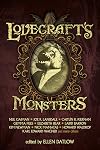
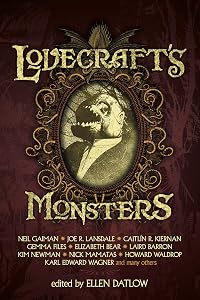
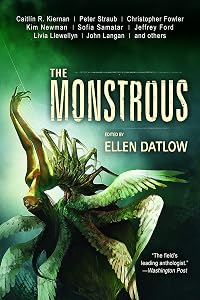
"This deliriously affectionate tribute to the master of horror features riveting stories paired with incomparable illustrations of his wicked progeny. Celebrating Lovecraft's most famous beasts in all their grotesque glory, each story is a gripping new take on a classic mythos creature"--Publisher.Tags
Recommendations










Member Reviews
Lovecraft's creatures and worlds have no copyright upon them. Because of that, authors, both good and bad, have created and expanded those worlds, making them richer. The best rise to the top. This collection is one of the best. I thrilled to every story in the anthology. Not every story contained a specific Lovecraft monster, but all contained some aspect of Cosmic Horror. The genre owes its continued existence to Lovecraft.
Caitlín Kiernan's “Love is Forbidden, We Croak & Howl” is short, but gives a much-needed laugh during the drama of horror. It reminded me of something Edward Gorey might come up with, only illustrated. I would love to see the story illustrated. It's a memorable story.
Lansdale's “The Bleeding Shadow” travels show more deep into the south for his tale of cosmic, otherworldly terror. I love Lansdale's horror. This story contained one of the best, most lyrical descriptions of a terrifying sound I have ever read.
The novella length story of Frankenstein's monster after killing his creator, “Black as the Pit, from Pole to Pole” is terribly literary, and I know I missed a ton of references. Some of which because I have given up on trying to get through Moby-Dick or, The Whale in this life. There are few references to Lovecraftian monsters, so it's got a bit of cheating. But, the story is blood-soaked and stellar.
John Langan’s “Children of the Fang” is a slower creep. It's not hard to see the end coming and hide your face in disgust. It's great Lovecraftian horror and fully expected from Langan.
The stories are only a shade uneven, which is a surprise from an anthology. I can't recommend this book enough for fans of Lovecraft's Monsters. show less
Caitlín Kiernan's “Love is Forbidden, We Croak & Howl” is short, but gives a much-needed laugh during the drama of horror. It reminded me of something Edward Gorey might come up with, only illustrated. I would love to see the story illustrated. It's a memorable story.
Lansdale's “The Bleeding Shadow” travels show more deep into the south for his tale of cosmic, otherworldly terror. I love Lansdale's horror. This story contained one of the best, most lyrical descriptions of a terrifying sound I have ever read.
The novella length story of Frankenstein's monster after killing his creator, “Black as the Pit, from Pole to Pole” is terribly literary, and I know I missed a ton of references. Some of which because I have given up on trying to get through Moby-Dick or, The Whale in this life. There are few references to Lovecraftian monsters, so it's got a bit of cheating. But, the story is blood-soaked and stellar.
John Langan’s “Children of the Fang” is a slower creep. It's not hard to see the end coming and hide your face in disgust. It's great Lovecraftian horror and fully expected from Langan.
The stories are only a shade uneven, which is a surprise from an anthology. I can't recommend this book enough for fans of Lovecraft's Monsters. show less
‘Lovecraft‘s Monsters’ is a big anthology and this much gloom is probably best taken in small doses unless you‘re from Innsmouth. The very famous Neil Gaiman opens the billing but I’m heading up the review with ‘Remnants’, a short story by Fred Chappell. Fred Chappell! I mean no disrespect to the other great talents on display here but for me, a Fred Chappell story is a thing of glory. He writes beautifully, perhaps even more beautifully than Peter S. Beagle. He is a poet and has a poet’s ear for language and the rhythm of a sentence. I was mad for his ‘Shadow’ stories in ‘The Magazine Of Fantasy And Science-Fiction’ and intrigued to know what he would do with Lovecraft’s monsters. He doesn’t disappoint.
In show more the near future, Lovecraft’s Old Ones have invaded Earth, destroying most of the population with contemptuous ease, reshaping the Moon and setting about building monstrous machines for unknown cosmic purposes of their own. Remnants of humanity, small groups, hide out here and there. Vern, his mother and his autistic sister, Echo, scrape a bare living as hunter-gatherers in a wilderness area. Then Echo gets a telepathic message from somewhere but making sense of it with her limitations is difficult. She thinks in pictures, not words.
The best thing in this was the language used by the aliens, other remnants discarded by the Old Ones, who have picked up English from the libraries of relic human spaceships and don’t quite have it right. The first person narration by the alien captain, which alternates with a third person one from Vern, shows a masterful twisting of the lingo. You know what he means but he doesn’t say it how we would. Chappell is also proficient as describing the disorientating effect of the Old Ones’ machines on human senses. It’s a 45-page tale that deserves to be read in one sitting, as recommended by Poe. Wonderful.
‘That of Which We Speak When We Speak Of The Unspeakable’ by Nick Mamatas could be a prequel to Fred Chappell’s ‘Remnants’. Two men and a woman wait in a cave as the Elder Gods take over our Earth. China is already gone. I think it was Neil Gaiman who said that if Cthulhu showed up today we would nuke the bastard. Well, they tried that and it just made him glow. (Men and horses sweat, women and Cthulhu glow.) The conversation of the doomed is interesting, them being an odd trio.
Speaking of Neil Gaiman, his contribution is ‘Only The End Of The World Again’, set in Innsmouth, as are a few in this book. It seems to be a favourite venue for Lovecraft homages. Lawrence Talbot is an Adjustor and a werewolf who is trying to prevent the end of the world. The fishy folk of Innsmouth are determined to bring it on, Elder Gods swallowing the Moon and that type of thing. Gaiman writes beautifully and the atmosphere of dark menace is nicely undercut with a bit of wry humour from the protagonist.
Quite similar in style is ‘The Bleeding Shadow’ by Joe R. Lansdale, another good piece with a pervading atmosphere of menace and dark deeds that Lovecraft would have liked. Lansdale is much better at snappy dialogue and smart similes than the old master and, as with so many stories from the man who gave us ‘Bubba Ho-Tep’, there’s a strong sense of place – Texas! Both these tales could have been written by H.P. Chandler or Raymond Lovecraft. Not as far out an idea as it seems because Chandler would have preferred to write fantasy stories but thought they wouldn’t make a ’thin worn dime.’
The purest homage to Lovecraft, with not a taint of any other author detectable, is delivered by Thomas Ligotti. The first person narrator of ‘The Sect Of The Idiot’ won’t give his name or the name of the old town in which he sits in a high room looking through diamond-paned windows at its seemingly unending strangeness. Solitary, he enters into fantastic states of mind and has dreams that may be more than dreams. This is the most Lovecraftian piece in prose, tone and mood in the book and could have been written by the old master himself as part of his dream cycle. A masterpiece of homage and quite different from the other stories herein.
In ‘The Same Deep Waters As You’, Kerry Larimer, an animal whisperer, is recruited by Homeland Security and taken to a remote island prison. There are sixty-three prisoners who have been held there since 1928, a fact unknown to most of the last fifteen presidents, she is told, because ‘There are security levels above the office of President. Politicians come and go. Career military and intelligence, we stick around.’ That certainly has the ring of truth. Larimer’s task is to communicate with the prisoners, a fishy bunch who like it damp. This is one of the best stories in the book thanks to Brian Hodge’s clear writing and a good plot with a great ending.
‘The Dappled Thing’ by William Browning Spencer has a team of adventurers searching the African jungles for Lord Addison’s missing daughter in Her Glory of Empire, a spherical kind of steampunk tank with tentacles. The author pastiches Victorian prose beautifully and the Lovecraftian theme comes in near the end. I was a bit dubious about this at first but liked it a lot by the time the last page was reached.
A similar Victorian style adventure is ‘Black As The Pit, From Pole To Pole’ by Howard Waldrop and Steven Utley, a long story about Frankenstein’s monster journeying to the centre of the Earth. It opens with information about John Cleves Symmes and his hollow Earth theories and is interspersed with paragraphs about Mary Shelley and the writing of Frankenstein. So its metafiction, playing with the fact that we know this is a story. Usually, this kind of thing is not to my liking and, in the beginning, I thought it was a bit boring. By the end, I was fond of the piece. It’s well written and, as far as I can tell, the authors have a good knowledge of the background material. I read ‘Frankenstein’ once because a friend told me it was impossible. It wasn’t easy, but neither is Lovecraft.
‘Bulldozer’ by Laird Barron is about a Pinkerton man on the trail of a bad guy called Hicks who was a circus strongman. I would like to quote a whole chapter: ‘Chapter 19. Maggots.’ ’Bulldozer’ is not quite ruined by having twenty-six chapters in twenty-eight pages because it’s a good yarn. To be fair, short stories are the place for stylistic experiments but this one didn’t really work for me. On the other hand, what’s good for an author might work for a reviewer, too.
The following brief paragraphs cover the shorter stories in Lovecraft’s Monsters.
‘I’ve Come To Talk With You Again’ by Karl Edward Wagner features a horror writer meeting some fans in an English pub. All is not what it seems.
‘Red Goat, Black Goat’ is that rare thing, a horror story about goats. Aided by the exotic setting, Nadia Bulkin manages to make it scary.
‘Inelastic Collisions’ by Elizabeth Bear is about creatures from a different plane trapped in human form. Bear writes stylishly but often leaves me puzzled, as here. I don’t know what actually happened at the end but getting there was okay, I guess.
‘A Quarter To Three’ by Kim Newman is just one scene really, about a young man working the graveyard shift at a 24-hour diner in Innsmouth when a heavily pregnant woman comes in. No real surprises but an excellent sense of atmosphere, lively writing (It’s H.P. Chandler again) and a jukebox that’s almost a character in itself. Very good.
‘Love Is Forbidden, We Croak And Howl’ by Caitlín R. Kiernan is an amusing tale about a ghoul who falls for one of the fishy daughters of Innsmouth. Not quite ‘Romeo And Juliet’ but the narrator admits that. Nice descriptions of the daily life of monsters and enjoyable dark humour.
‘Waiting At The Crossroads Motel’ by Steve Rasnic Tem has Walker doing what it says in the title. His wife and two kids are waiting with him but he doesn’t have the usual feelings about them. In fact, he’s a very unusual man. An air of real menace makes this uncomfortable reading, which is the point, I guess.
‘Jar Of Salts’ And ‘Haruspicy’ are poems by Gemma Files that are successfully Lovecraftian in mood.
The last tale in the book is a novelette, ‘Children Of The Fang’ by John Langan about Rachel and Josh and their family. Grandad lives on the top floor of the house and keeps something locked in a freezer in the basement. Rachel and Josh find tape recordings of Grandad telling their Uncle Jim, now vanished, about a lost cave city in the deserts of the Middle East with strange writings on the walls. This has all the classic ingredients of pulp horror fiction (The thing in the basement! The lost city!) so a brief description makes it sound like corny old rubbish. It certainly is not. The family saga is rich with realistic details and there’s a neat twist at the end. A fitting conclusion to a quality collection.
Eamonn Murphy
This review first appeared at https://www.sfcrowsnest.info/ show less
In show more the near future, Lovecraft’s Old Ones have invaded Earth, destroying most of the population with contemptuous ease, reshaping the Moon and setting about building monstrous machines for unknown cosmic purposes of their own. Remnants of humanity, small groups, hide out here and there. Vern, his mother and his autistic sister, Echo, scrape a bare living as hunter-gatherers in a wilderness area. Then Echo gets a telepathic message from somewhere but making sense of it with her limitations is difficult. She thinks in pictures, not words.
The best thing in this was the language used by the aliens, other remnants discarded by the Old Ones, who have picked up English from the libraries of relic human spaceships and don’t quite have it right. The first person narration by the alien captain, which alternates with a third person one from Vern, shows a masterful twisting of the lingo. You know what he means but he doesn’t say it how we would. Chappell is also proficient as describing the disorientating effect of the Old Ones’ machines on human senses. It’s a 45-page tale that deserves to be read in one sitting, as recommended by Poe. Wonderful.
‘That of Which We Speak When We Speak Of The Unspeakable’ by Nick Mamatas could be a prequel to Fred Chappell’s ‘Remnants’. Two men and a woman wait in a cave as the Elder Gods take over our Earth. China is already gone. I think it was Neil Gaiman who said that if Cthulhu showed up today we would nuke the bastard. Well, they tried that and it just made him glow. (Men and horses sweat, women and Cthulhu glow.) The conversation of the doomed is interesting, them being an odd trio.
Speaking of Neil Gaiman, his contribution is ‘Only The End Of The World Again’, set in Innsmouth, as are a few in this book. It seems to be a favourite venue for Lovecraft homages. Lawrence Talbot is an Adjustor and a werewolf who is trying to prevent the end of the world. The fishy folk of Innsmouth are determined to bring it on, Elder Gods swallowing the Moon and that type of thing. Gaiman writes beautifully and the atmosphere of dark menace is nicely undercut with a bit of wry humour from the protagonist.
Quite similar in style is ‘The Bleeding Shadow’ by Joe R. Lansdale, another good piece with a pervading atmosphere of menace and dark deeds that Lovecraft would have liked. Lansdale is much better at snappy dialogue and smart similes than the old master and, as with so many stories from the man who gave us ‘Bubba Ho-Tep’, there’s a strong sense of place – Texas! Both these tales could have been written by H.P. Chandler or Raymond Lovecraft. Not as far out an idea as it seems because Chandler would have preferred to write fantasy stories but thought they wouldn’t make a ’thin worn dime.’
The purest homage to Lovecraft, with not a taint of any other author detectable, is delivered by Thomas Ligotti. The first person narrator of ‘The Sect Of The Idiot’ won’t give his name or the name of the old town in which he sits in a high room looking through diamond-paned windows at its seemingly unending strangeness. Solitary, he enters into fantastic states of mind and has dreams that may be more than dreams. This is the most Lovecraftian piece in prose, tone and mood in the book and could have been written by the old master himself as part of his dream cycle. A masterpiece of homage and quite different from the other stories herein.
In ‘The Same Deep Waters As You’, Kerry Larimer, an animal whisperer, is recruited by Homeland Security and taken to a remote island prison. There are sixty-three prisoners who have been held there since 1928, a fact unknown to most of the last fifteen presidents, she is told, because ‘There are security levels above the office of President. Politicians come and go. Career military and intelligence, we stick around.’ That certainly has the ring of truth. Larimer’s task is to communicate with the prisoners, a fishy bunch who like it damp. This is one of the best stories in the book thanks to Brian Hodge’s clear writing and a good plot with a great ending.
‘The Dappled Thing’ by William Browning Spencer has a team of adventurers searching the African jungles for Lord Addison’s missing daughter in Her Glory of Empire, a spherical kind of steampunk tank with tentacles. The author pastiches Victorian prose beautifully and the Lovecraftian theme comes in near the end. I was a bit dubious about this at first but liked it a lot by the time the last page was reached.
A similar Victorian style adventure is ‘Black As The Pit, From Pole To Pole’ by Howard Waldrop and Steven Utley, a long story about Frankenstein’s monster journeying to the centre of the Earth. It opens with information about John Cleves Symmes and his hollow Earth theories and is interspersed with paragraphs about Mary Shelley and the writing of Frankenstein. So its metafiction, playing with the fact that we know this is a story. Usually, this kind of thing is not to my liking and, in the beginning, I thought it was a bit boring. By the end, I was fond of the piece. It’s well written and, as far as I can tell, the authors have a good knowledge of the background material. I read ‘Frankenstein’ once because a friend told me it was impossible. It wasn’t easy, but neither is Lovecraft.
‘Bulldozer’ by Laird Barron is about a Pinkerton man on the trail of a bad guy called Hicks who was a circus strongman. I would like to quote a whole chapter: ‘Chapter 19. Maggots.’ ’Bulldozer’ is not quite ruined by having twenty-six chapters in twenty-eight pages because it’s a good yarn. To be fair, short stories are the place for stylistic experiments but this one didn’t really work for me. On the other hand, what’s good for an author might work for a reviewer, too.
The following brief paragraphs cover the shorter stories in Lovecraft’s Monsters.
‘I’ve Come To Talk With You Again’ by Karl Edward Wagner features a horror writer meeting some fans in an English pub. All is not what it seems.
‘Red Goat, Black Goat’ is that rare thing, a horror story about goats. Aided by the exotic setting, Nadia Bulkin manages to make it scary.
‘Inelastic Collisions’ by Elizabeth Bear is about creatures from a different plane trapped in human form. Bear writes stylishly but often leaves me puzzled, as here. I don’t know what actually happened at the end but getting there was okay, I guess.
‘A Quarter To Three’ by Kim Newman is just one scene really, about a young man working the graveyard shift at a 24-hour diner in Innsmouth when a heavily pregnant woman comes in. No real surprises but an excellent sense of atmosphere, lively writing (It’s H.P. Chandler again) and a jukebox that’s almost a character in itself. Very good.
‘Love Is Forbidden, We Croak And Howl’ by Caitlín R. Kiernan is an amusing tale about a ghoul who falls for one of the fishy daughters of Innsmouth. Not quite ‘Romeo And Juliet’ but the narrator admits that. Nice descriptions of the daily life of monsters and enjoyable dark humour.
‘Waiting At The Crossroads Motel’ by Steve Rasnic Tem has Walker doing what it says in the title. His wife and two kids are waiting with him but he doesn’t have the usual feelings about them. In fact, he’s a very unusual man. An air of real menace makes this uncomfortable reading, which is the point, I guess.
‘Jar Of Salts’ And ‘Haruspicy’ are poems by Gemma Files that are successfully Lovecraftian in mood.
The last tale in the book is a novelette, ‘Children Of The Fang’ by John Langan about Rachel and Josh and their family. Grandad lives on the top floor of the house and keeps something locked in a freezer in the basement. Rachel and Josh find tape recordings of Grandad telling their Uncle Jim, now vanished, about a lost cave city in the deserts of the Middle East with strange writings on the walls. This has all the classic ingredients of pulp horror fiction (The thing in the basement! The lost city!) so a brief description makes it sound like corny old rubbish. It certainly is not. The family saga is rich with realistic details and there’s a neat twist at the end. A fitting conclusion to a quality collection.
Eamonn Murphy
This review first appeared at https://www.sfcrowsnest.info/ show less
Somehow I was expecting "more of the same" Lovecraft, and this collection surprised me positively. The variety of time, places and references gives the tropes a new life.
It is still Lovecraft, with the cosmic horror and helpless humanity, but putting those ingredients in Indonesia, in California's Gold Rush or in the future with only few human survivors on earth, produces refreshing stories, with the right combination of familiarity and novelty.
I read in other reviews that the quality of stories was uneven, but actually I would mark all of them between very good and excellent.
It is still Lovecraft, with the cosmic horror and helpless humanity, but putting those ingredients in Indonesia, in California's Gold Rush or in the future with only few human survivors on earth, produces refreshing stories, with the right combination of familiarity and novelty.
I read in other reviews that the quality of stories was uneven, but actually I would mark all of them between very good and excellent.
I enjoyed most of these - even the ones I'd read before, no harm revisiting favourites. HP Lovecraft's greatest gift to culture is all the writing here inspired by authors who aren't HP Lovecraft. Two stories were a bit boring - Nick Mamatas mashes up Carver and Lovecraft, sparing both authors the indignity of ever trying it themselves, and as usual John Langan... leaves me cold. On the positive side, discovered Robert Browning Spencer! Even though I'm sure I've read him before... and Nadia Bulkin, whose story had the greatest emotional resonance and by emotional resonance, I mean crushing moan of despair.
Above average anthology from the usually outstanding Datlow (the hardest working editor in horror). Avoids some traps by excluding some of the usual suspects you would expect in an anthology like this (I won't name them) and substituting others who I bet this was their first foray into Lovecraftiana. It mostly works. Some of the usuals are still here (Barron, Kiernan), but these are the ones that almost never deliver a substandard product.
There be monsters here. All these stories are themed around tangible (or at least sort of visible) monsters, not just eerie goings on. These things want to eat you, or at least be mean to you, in more ways than one. So most likely the thing you see coming out of the wall is really a thing coming out of show more the wall, and it doesn't intend to thank you for inadvertently calling it up. Even the more upbeat stories leave you with a final cosmic chill. There isn't much outright comedy here besides irony, which is a good thing since I hate Lovecraftian humor. It NEVER works for me.
All in all something worth reading even if you aren't into Lovecraft but are into monsters. show less
There be monsters here. All these stories are themed around tangible (or at least sort of visible) monsters, not just eerie goings on. These things want to eat you, or at least be mean to you, in more ways than one. So most likely the thing you see coming out of the wall is really a thing coming out of show more the wall, and it doesn't intend to thank you for inadvertently calling it up. Even the more upbeat stories leave you with a final cosmic chill. There isn't much outright comedy here besides irony, which is a good thing since I hate Lovecraftian humor. It NEVER works for me.
All in all something worth reading even if you aren't into Lovecraft but are into monsters. show less
the queen of anthologies, Ellen Datlow, has brought together the usual outstanding group of writers with stories that either portray or invoke in tone the monstrous things that inhabited the work of H.P. Lovecraft. For some reason, Lovecraftian monsters have always been the most disturbing for this reader, and these tales don’t disappoint.
The only complaint is that kicking off with Neil Gaiman’s “Only the End of the World Again” and Laird Barron’s (he’s the king of Cthulu in the Northwest) “Bulldozer” is setting a pretty high bar. The other stories—including one by Elizabeth Bear—are mostly up to the task, but still.
The overall verdict? This is a must-have anthology for fans of things that go squick in the show more night.
Reviewed on Lit/Rant: www.litrant.tumblr.com. show less
The only complaint is that kicking off with Neil Gaiman’s “Only the End of the World Again” and Laird Barron’s (he’s the king of Cthulu in the Northwest) “Bulldozer” is setting a pretty high bar. The other stories—including one by Elizabeth Bear—are mostly up to the task, but still.
The overall verdict? This is a must-have anthology for fans of things that go squick in the show more night.
Reviewed on Lit/Rant: www.litrant.tumblr.com. show less
Lovecraft’s Monsters is an anthology of short stories, poems, and novellas inspired by that early master of horror, HP Lovecraft edited by Ellen Datlow and written by some of the best in the genre including Neil Gaiman, Elizabeth Bear, and Nick Mamatas. As in any group of stories, there are stories I liked a lot and some not quite as much but, putting aside personal preference, I have to say they’re all pretty damn good.
I will admit as a huge Gaiman fan, my favourite story was ‘Only the End of the World Again’ where a man with a problem meets someone or perhaps ‘thing’ with a solution. But there were lots of others that kept me up and reading into the wee hours. There’s the terrifying ‘Red Goat Black Goat’ by Nadia show more Bulkin, the creepy ‘The Same Water as You’ by Brian Hodges and the oddly sweet ‘Love is Forbidden, We Croak and Howl’ by Caitlin R Kieran. There’s plenty more, in fact too many to name, that run the gamut from a little creepy to full-on hide-under-the-covers-with-all-the-lights-on horror. In other words, a little something something for every Lovecraft or just all-round horror fan. And, if that’s not enough to entice your inner monster lover, each story is beautifully illustrated by artist John Coulthart. show less
I will admit as a huge Gaiman fan, my favourite story was ‘Only the End of the World Again’ where a man with a problem meets someone or perhaps ‘thing’ with a solution. But there were lots of others that kept me up and reading into the wee hours. There’s the terrifying ‘Red Goat Black Goat’ by Nadia show more Bulkin, the creepy ‘The Same Water as You’ by Brian Hodges and the oddly sweet ‘Love is Forbidden, We Croak and Howl’ by Caitlin R Kieran. There’s plenty more, in fact too many to name, that run the gamut from a little creepy to full-on hide-under-the-covers-with-all-the-lights-on horror. In other words, a little something something for every Lovecraft or just all-round horror fan. And, if that’s not enough to entice your inner monster lover, each story is beautifully illustrated by artist John Coulthart. show less
Members
- Recently Added By
Lists

Lovecraftian anthologies
137 works; 4 members

Books Read in 2019
4,052 works; 110 members
Author Information

Ellen Datlow is the editor of science fiction, fantasy, and horror anthologies. She was the fiction editor of Omni magazine and Omni Online from 1981-1998. Then she was the editor of the webzine Event Horizon: Science Fiction, Fantasy, and Horror from September 1998-December 1999. She has won the World Fantasy Award seven times, the Bram Stoker show more Award twice with her co-editors and the Hugo Award for Best Editor in 2002 and 2005. She currently lives in New York City and edits fiction for Scifi.com. In 2011 she was given the Life Achievement Award by the Horror Writers Association.She is a long time trustee of the Horror Writers Association. She has been the co-host of the Fantastic Fiction reading series at the KGB Bar since 2000, a series which features luminaries and up-and-comers in speculative fiction. (Bowker Author Biography) show less
All Editions
Some Editions
Series

Work Relationships
Contains
Common Knowledge
- Canonical title
- Lovecraft's Monsters
- Original publication date
- 2014
- Original language
- English
Classifications
- Genres
- Fiction and Literature, Horror, Fantasy
- DDC/MDS
- 808.83 — Literature & rhetoric Literature, rhetoric & criticism Rhetoric and collections of literary texts from more than two literatures Literature Collections Collections of fiction
- LCC
- PS648 .H6 — Language and Literature American literature American literature Collections of American literature Prose (General)
- BISAC
Statistics
- Members
- 397
- Popularity
- 78,529
- Reviews
- 12
- Rating
- (3.57)
- Languages
- English, German
- Media
- Paper, Audiobook, Ebook
- ISBNs
- 9
- UPCs
- 1
- ASINs
- 5