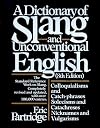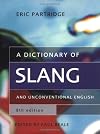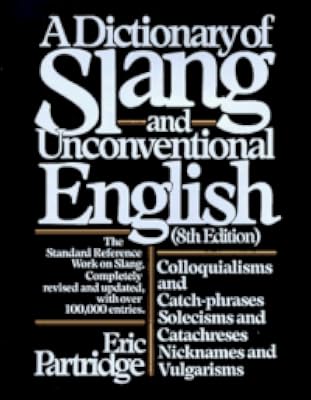
A Dictionary of Slang and Unconventional English
by Eric Partridge, Paul Beale (Editor)
On This Page
Description
On t.p.: Colloquialisms and catchphrases, solecisms and catachreses, nicknames, and vulgarisms.Tags
Recommendations





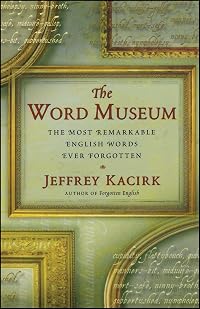


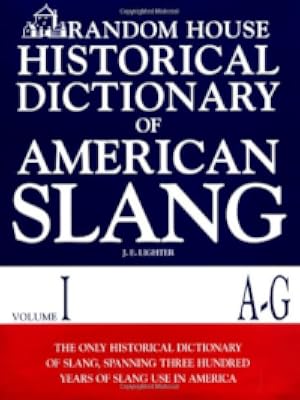
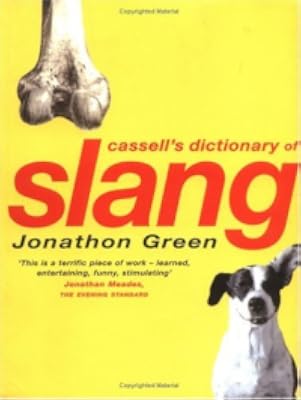

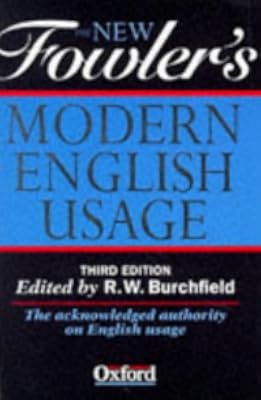













Member Recommendations

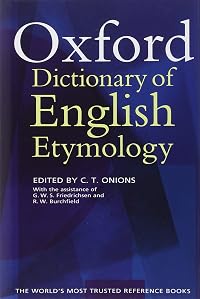
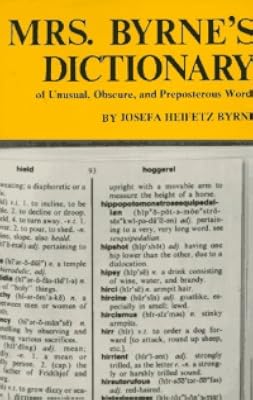
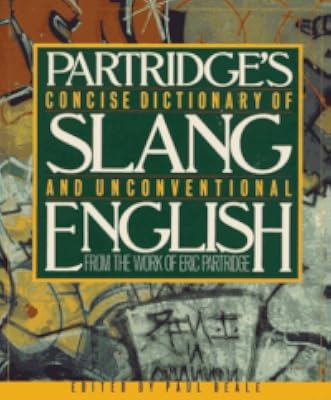
waltzmn Francis Grose's work was the first serious attempt to study the English of the ordinary, even gutter, folk. It was important enough that Eric Partridge would edit it in the twentieth century -- and then produce an equivalent dictionary of his own. Partridge's is far more important and useful -- but Grose's work is historically important as the first step down the road.
Member Reviews
Indispensable and hugely entertaining. Every page a source of delight.
Ratings
Members
- Recently Added By
Published Reviews
At £45 this volume will be beyond the budget of most individuals and probably many libraries as well, even though it is an ideal coffee-table and comprehensive reference book. The 8th edition heralds the amalgamation of the original edition and its subsequent addenda, the last of which appeared in 1970. Unlike most dictionaries, no mention is made of the number of entries, but both the show more coverage and currency of terms is excellent, with 7,500 more entries than the 7th edition. A major difficulty for any user is to determine whether a particular word or phrase will qualify for inclusion here or in one of the many other related dictionaries—of catch phrases, the underworld, rhyming slang, cliches, idiomatic English, jargon, etc. Such distinctions are the province of scholars, but for the reference librarian this work will be a good place to check first by virtue of its size and scope. Apart from the price, the book is unlikely to appeal to the individual buyer because most slang is either in common usage or relatively self-explanatory, removing much of the need for dictionary definitions.
The work retains most of its original entries and includes much Australian and military slang, culled from Partridge's own experience. It is commendably up-to-date, including 'yomping' and 'the Argies', terms coined during the Falklands War. The arrangement of entries is easily understood, phrases being entered directly under the first word rather than inverted, and cross-references are supplied where necessary. show less
The work retains most of its original entries and includes much Australian and military slang, culled from Partridge's own experience. It is commendably up-to-date, including 'yomping' and 'the Argies', terms coined during the Falklands War. The arrangement of entries is easily understood, phrases being entered directly under the first word rather than inverted, and cross-references are supplied where necessary. show less
added by KayCliff — edited by a.book.collector
Author Information

81+ Works 3,605 Members
Common Knowledge
- Original publication date
- 1937
Classifications
- Genres
- Reference, Nonfiction, General Nonfiction
- DDC/MDS
- 427.09 — Language English & Old English languages Historical and geographic variations, modern nongeographic variations of English standard subdivisions, and by time period [formerly: Modern slang]
- LCC
- PE3721 .P3 — Language and Literature English language English Slang. Argot, etc.
- BISAC
Statistics
- Members
- 319
- Popularity
- 99,854
- Reviews
- 1
- Rating
- (4.50)
- Languages
- English
- Media
- Paper, Ebook
- ISBNs
- 12
- ASINs
- 14