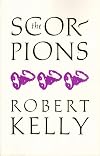
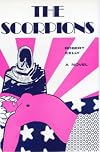
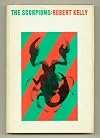
The Scorpions
by Robert Kelly
On This Page
Description
"This classic hallucinatory thriller of the 1960s, newly available, is a book charged with sexual obsession and haunted by the sense that all narrative is itself obsessive and violent. THE SCORPIONS is Robert Kelly's early novel about a psychiatrist who begins to believe one of his patient's paranoid inventions and searches for hard evidence in a funny, crazy, sometimes dark, even spooky American world that cooperates with what he wants to find in it." -- Publisher.Tags
Recommendations












Member Recommendations
Member Reviews
Ordinarily, when a book is full of unresolved puzzles and loose ends, when its narrator is sexually insinuating without detail or description and when a book fails to end in a conventional way, I hate the book. Much of the OuLiPo literature and the hyper-saturated symbolist literature that “The Scorpions” sometimes resembles is also, as far as I’m concerned, supremely irritating. But I’m a sucker for unconventional detective fiction and lethal, arrogant, philandering eccentrics.
Kelly is also a talented, deliberate and sensitive prose stylist. I enjoyed, “Now no memorial of her act was left besides my own rapidly blurring memory of the open-lipped tension of triumph in her face as she’d taken the steaks under her wing, her show more quick stiff-kneed sumptuous walk away.” & “Cat fanciers, dog breeders, parakeet tenders, goldfish feeders, little they knew or cared how much of themselves they alienated to the animals in their charge. Beasts crave souls from men, suck those souls.” Kelly’s solid physical humor is a perfect antidote to the potentially eye-glazing details about astrology and numerology, just as the narrator’s libido is an ideal counterbalance to his ritual, cerebralized paganism.
I’m still incredulous that I judge Kelly to be successful in attempting exactly the sort of closure that he describes in the afterword, which is an especially helpful lubricant and apology for the book’s uncompromising end. The shrug of a conclusion is a smashing commentary on all of the novel’s ploys and titillations. It could be taken as a fond dismissal of recently popular forms of over-precious and over-wrought American experimental fiction.
Worth mentioning: it feels, in its oddness and pace, like a Murakami novel with a toxic protagonist. show less
Kelly is also a talented, deliberate and sensitive prose stylist. I enjoyed, “Now no memorial of her act was left besides my own rapidly blurring memory of the open-lipped tension of triumph in her face as she’d taken the steaks under her wing, her show more quick stiff-kneed sumptuous walk away.” & “Cat fanciers, dog breeders, parakeet tenders, goldfish feeders, little they knew or cared how much of themselves they alienated to the animals in their charge. Beasts crave souls from men, suck those souls.” Kelly’s solid physical humor is a perfect antidote to the potentially eye-glazing details about astrology and numerology, just as the narrator’s libido is an ideal counterbalance to his ritual, cerebralized paganism.
I’m still incredulous that I judge Kelly to be successful in attempting exactly the sort of closure that he describes in the afterword, which is an especially helpful lubricant and apology for the book’s uncompromising end. The shrug of a conclusion is a smashing commentary on all of the novel’s ploys and titillations. It could be taken as a fond dismissal of recently popular forms of over-precious and over-wrought American experimental fiction.
Worth mentioning: it feels, in its oddness and pace, like a Murakami novel with a toxic protagonist. show less
An exuberant, lyrical and highly-literate first novel featuring a larger-than-life book-collecting occult psychoanalyst and his Nautilus-like Rolls Royce on the track of The Scorpions, an occult group of conspirators that may or may not exist. The book is one-of-a-kind but contains elements that are also successfully carried off in The Crying of Lot 49, A Confederacy of Dunces, early DeLillo novels, Mike Hammer novels and Pale Fire. Amazing and all too brief.
Ratings
Members
- Recently Added By
Author Information

71+ Works 631 Members
Robert Kelly is a director of the Writing Program in poetry at Bard College.
Common Knowledge
- Original publication date
- 1967
- Dedication
- FOR GERRIT LANSING - et mansimus in tenebris undarum
- Last words
- (Click to show. Warning: May contain spoilers.)We entered it and the boat
Classifications
Statistics
- Members
- 47
- Popularity
- 638,503
- Reviews
- 2
- Rating
- (4.50)
- Languages
- English
- Media
- Paper
- ISBNs
- 3
- ASINs
- 2