On This Page
Description
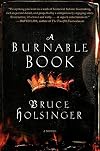
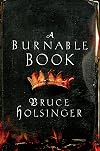
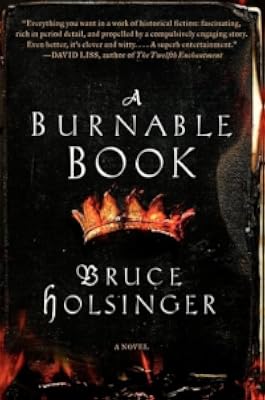
In Chaucer's London, betrayal, murder, royal intrigue, mystery, and dangerous politics swirl around the existence of a prophetic book that foretells the deaths of England's kings. Bruce Holsinger's A Burnable Book is an irresistible historical thriller reminiscent of the classics An Instance of the Fingerpost, The Name of the Rose, and The Crimson Petal and the White.London, 1385. Surrounded by ruthless courtiers—including his powerful uncle, John of Gaunt, and Gaunt's artful mistress, show more Katherine Swynford—England's young, still untested king, Richard II, is in mortal peril, and the danger is only beginning. Songs are heard across London—catchy verses said to originate from an ancient book that prophesies the end of England's kings—and among the book's predictions is Richard's assassination.
Only a few powerful men know that the cryptic lines derive from a "burnable book," a seditious work that threatens the stability of the realm. To find the manuscript, wily bureaucrat Geoffrey Chaucer turns to fellow poet John Gower, a professional trader in information with connections high and low. Gower discovers that the book and incriminating evidence about its author have fallen into the unwitting hands of innocents, who will be drawn into a labyrinthine conspiracy that reaches from the king's court to London's slums and stews—and potentially implicates his own son. As the intrigue deepens, it becomes clear that Gower, a man with secrets of his own, may be the last hope to save a king from a terrible fate.
Medieval scholar Bruce Holsinger draws on his vast knowledge of the period to add colorful, authentic detail—on everything from poetry and bookbinding to court intrigues and brothels—to this highly entertaining and brilliantly constructed epic literary mystery that brings medieval England gloriously to life.
. show less
Tags
Recommendations
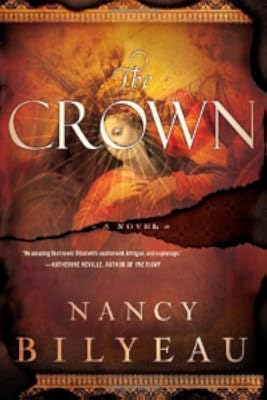
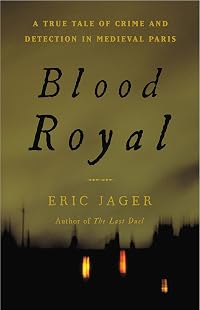
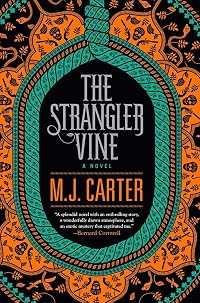
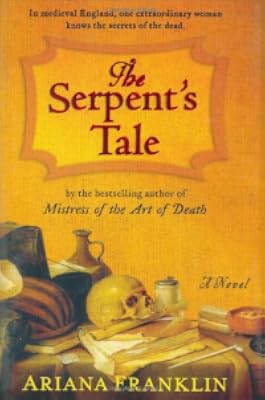




Member Recommendations
Member Reviews
It is 1385, and a young woman is brutally murdered on the Moorfields outside the London walls. A young prostitute hears the victim's last words and carries a book filled with mysterious prophecies, thrust into her arms by the unfortunate young lady shortly before her encounter with her murderer, to safety. Meanwhile, Geoffrey Chaucer asks his friend, fellow poet and trader in secrets John Gower to track down a book - the selfsame tome the prostitute has in her possession, it later transpires - which might endanger him. Gower's quest takes him from his home next to the priory of St Mary Overey in Southwark to London's Guildhall, Aldgate, the custom house, Oxford and Westminster, and full circle back to the stews in Southwark, and it is show more about to become very personal ...
Written by a medieval historian, this historical crime fiction novel was a surprising delight and page-turner, and a joy to read. The author's familiarity with the period is obvious, recreating the filth, grime, noise, smells and way of life of the common people, as well as the contrasting splendour of the aristocracy and the king and the various political factions surrounding the sovereign, in rich detail. By using just a few unfamiliar, archaic words and infrequent alterations in sentence structure, along with a mix of historical and fictional characters, Bruce Holsinger manages to create the illusion that we are indeed witnessing life during Richard II's turbulent reign. The plot is complex without being complicated, and the narrative switches from John Gower's first-person narrator to third-person omniscient storyteller (in fact John Gower committing events to paper after the truth has come to light), so that the reader is required to concentrate and pay attention; a cast of characters in the prelims is enormously helpful here at the beginning of the novel. All the characters are very well drawn, but I found myself particularly warming to the transvestite prostitute, Edgar/Eleanor Rykener. Several pages of historical notes in the appendix shed more light on this more unfamiliar period in history, and I welcomed a change from the dominant Tudor setting for this novel of murder and conspiracy.
This was a very promising start to the literary year, and I wouldn't be surprised if, at the end, this book still featured in the top 5 reads for me. Bruce Holsinger is a name to watch in the historical crime fiction genre and I look forward to his next offering. Highly recommended.
(This review was originally written as part of Amazon's Vine programme.) show less
Written by a medieval historian, this historical crime fiction novel was a surprising delight and page-turner, and a joy to read. The author's familiarity with the period is obvious, recreating the filth, grime, noise, smells and way of life of the common people, as well as the contrasting splendour of the aristocracy and the king and the various political factions surrounding the sovereign, in rich detail. By using just a few unfamiliar, archaic words and infrequent alterations in sentence structure, along with a mix of historical and fictional characters, Bruce Holsinger manages to create the illusion that we are indeed witnessing life during Richard II's turbulent reign. The plot is complex without being complicated, and the narrative switches from John Gower's first-person narrator to third-person omniscient storyteller (in fact John Gower committing events to paper after the truth has come to light), so that the reader is required to concentrate and pay attention; a cast of characters in the prelims is enormously helpful here at the beginning of the novel. All the characters are very well drawn, but I found myself particularly warming to the transvestite prostitute, Edgar/Eleanor Rykener. Several pages of historical notes in the appendix shed more light on this more unfamiliar period in history, and I welcomed a change from the dominant Tudor setting for this novel of murder and conspiracy.
This was a very promising start to the literary year, and I wouldn't be surprised if, at the end, this book still featured in the top 5 reads for me. Bruce Holsinger is a name to watch in the historical crime fiction genre and I look forward to his next offering. Highly recommended.
(This review was originally written as part of Amazon's Vine programme.) show less
This book was both everything I love and everything I loathe about historical fiction.
Everything I love includes characters pulled straight out of history: Chaucer, Gower, Richard the II, Hawkswood, and plots that involve books and codes and secret symbols.
Everything I loathe is, ironically, everything that makes this a more or less accurate work of historical fiction. Told from different points of view throughout the book, two of the perspectives are those of prostitutes and there's no sugar coating the language or the profession. It's raw and graphic and just not what I enjoy reading no matter the setting or the time period. There are also POVs from mercenaries and the acts they threaten to carry out and ultimately do carry out show more are disgustingly graphic and inhumane. Verisimilitude can go too far for my tastes and does so here.
But, by far, the things I loved kept me glued to this book, even when the things I loathed would have me DNF it. It was so well written, I wanted to know what was going to happen to John Gower, and Simon, and Millicent. And of course, I wanted to know more about the Burnable Book.
So, if your tastes are more tolerant than mine, I highly recommend this book. I'm not at all sorry I read it - it was a great story, I couldn't put down - even when it offended my delicate sensibilities. show less
Everything I love includes characters pulled straight out of history: Chaucer, Gower, Richard the II, Hawkswood, and plots that involve books and codes and secret symbols.
Everything I loathe is, ironically, everything that makes this a more or less accurate work of historical fiction. Told from different points of view throughout the book, two of the perspectives are those of prostitutes and there's no sugar coating the language or the profession. It's raw and graphic and just not what I enjoy reading no matter the setting or the time period. There are also POVs from mercenaries and the acts they threaten to carry out and ultimately do carry out show more are disgustingly graphic and inhumane. Verisimilitude can go too far for my tastes and does so here.
But, by far, the things I loved kept me glued to this book, even when the things I loathed would have me DNF it. It was so well written, I wanted to know what was going to happen to John Gower, and Simon, and Millicent. And of course, I wanted to know more about the Burnable Book.
So, if your tastes are more tolerant than mine, I highly recommend this book. I'm not at all sorry I read it - it was a great story, I couldn't put down - even when it offended my delicate sensibilities. show less
It's been a long time since I enjoyed a book so much. I could hardly put it down and was sad when I finished--always a high compliment for a book.
I was initially attracted to this book shortly after reading Richard II. A traitorous book that supposedly prophesys the king's assassination is making the rounds in medieval London. Many are skeptical, but some may be inspired to act, and that means that just about everyone of every political persuasion wants it. There's just one problem: the book is missing.
This isn't a story of the royal and titled as most historical fiction about this time period is. Our protagonist, based on the real-life poet John Gower, is not nobility, and most of our other protagonists are maudlyns--prostitutes. show more One, Eleanor/Edgar Rykener, is even inspired by a historical account of someone trans/gender fluid (these terms are concepts not being around at the time, we don't know for sure, but Eleanor seems to prefer being a woman).
Sadly, I probably won't get around to a longer review. show less
I was initially attracted to this book shortly after reading Richard II. A traitorous book that supposedly prophesys the king's assassination is making the rounds in medieval London. Many are skeptical, but some may be inspired to act, and that means that just about everyone of every political persuasion wants it. There's just one problem: the book is missing.
This isn't a story of the royal and titled as most historical fiction about this time period is. Our protagonist, based on the real-life poet John Gower, is not nobility, and most of our other protagonists are maudlyns--prostitutes. show more One, Eleanor/Edgar Rykener, is even inspired by a historical account of someone trans/gender fluid (these terms are concepts not being around at the time, we don't know for sure, but Eleanor seems to prefer being a woman).
Sadly, I probably won't get around to a longer review. show less
I spotted A Burnable Book early on Goodreads and was absolutely itching to get a review copy. A story set in the 14th Century with a plot that features heretical literature and Geoffrey Chaucer—what reader in her right mind could resist that?
The publicity likens A Burnable Book to An Instance of the Fingerpost and The Name of the Rose. I’m not sure I’d go that far, but it’s certainly no insult to the latter two to put them in the company of the first. Like those books, A Burnable Book is a delightfully “chewy” read: generous in length and filled with period detail.
Bruce Holsinger is a scholar specializing in medieval literature, and I trust him to get the details right. He ends the book with a long letter to the reader show more discussing his research and sources. The transsexual (my label here, the term didn’t exist in her own time) prostitute is based on 14th Century legal records of an interrogation of just such an individual. And I expect that the novel’s Gropecunt Lane had its real-world counterpart, likely with the same, rather arresting name.
Driven by political manouvering, the novel follows multiple paths of betrayal, abuse of power—even attempted regicide—all of which seem to result from the burnable book of the title, a prophecy of the deaths of England’s first thirteen kings.
A Burnable Book is the sort of piece you want to pick up when you have plenty of time for reading and the mental energy to follow a complex plot with a large cast of characters. It needs to be read, if not in one sitting, then over the course of a few days. That’s partly so one can keep the many details fresh in one’s mind—but even more an acknowledgement of what a compelling reading it is. Regardless of what one’s intentions are, this is the sort of book that can’t be easily put down. show less
The publicity likens A Burnable Book to An Instance of the Fingerpost and The Name of the Rose. I’m not sure I’d go that far, but it’s certainly no insult to the latter two to put them in the company of the first. Like those books, A Burnable Book is a delightfully “chewy” read: generous in length and filled with period detail.
Bruce Holsinger is a scholar specializing in medieval literature, and I trust him to get the details right. He ends the book with a long letter to the reader show more discussing his research and sources. The transsexual (my label here, the term didn’t exist in her own time) prostitute is based on 14th Century legal records of an interrogation of just such an individual. And I expect that the novel’s Gropecunt Lane had its real-world counterpart, likely with the same, rather arresting name.
Driven by political manouvering, the novel follows multiple paths of betrayal, abuse of power—even attempted regicide—all of which seem to result from the burnable book of the title, a prophecy of the deaths of England’s first thirteen kings.
A Burnable Book is the sort of piece you want to pick up when you have plenty of time for reading and the mental energy to follow a complex plot with a large cast of characters. It needs to be read, if not in one sitting, then over the course of a few days. That’s partly so one can keep the many details fresh in one’s mind—but even more an acknowledgement of what a compelling reading it is. Regardless of what one’s intentions are, this is the sort of book that can’t be easily put down. show less
 This review was written for LibraryThing Early Reviewers.
Let me preface this review by saying that I am either the best or worst type of reviewer for this book. I went to graduate school for medieval history, and wrote my dissertation about prophecies in late medieval Britain, so I know a lot about the period and subject matter of this novel. I generally don't like historical fiction: I find that very few authors actually do a good job of portraying the mindset and habits of thought of medieval characters, for the very good reason that even historians often find the actions of medieval people to be inexplicable, and it often takes entire academic books to describe small details of medieval behavior.
I also wish more academics would write historical fiction, because I think historical fiction show more often does a disservice to its readers by misrepresenting the period, and as someone who has taught college-level medieval history, I found myself spending a lot of class time helping students unlearn the things they think they know about the middle ages from reading historical fiction and watching movies. I don't like the fact that modern culture puts a huge rift between academic history and popular history, and I think academics should be reaching out to the general public more. I would not have read this book if it had not been written by someone with an academic background.
So with that manifesto out of the way, I can tell you what I thought of the book.
Meh.
It was okay. The story was suspenseful, I suppose, but for the first half of the book there were too many different storylines, and it was absolutely impossible to understand how they fit together, so that made things confusing and decreased the suspense. The characters weren't terribly interesting - they were all pretty one-dimensional. I found it jarring that Gower's storyline was in the first person, while the other storylines were in the third person. There didn't seem to be any good reason to do it that way.
I was really annoyed that almost all of the female characters were prostitutes (or mistresses, which amounts to the same thing). Late medieval London was actually a really interesting time and place for women, and there are so many more vivid and surprising occupations that Holsinger could have chosen (young girls from the country moved to London to work as household servants to raise money for marriage; women worked as brewsters and hucksters; a single woman could have a lot of independence). I suppose it is nice that women played a big role in the story - and even influenced history - but Holsinger really missed a great opportunity to dispel some myths about medieval women.
I also think Holsinger goes too far with ideas of encryption, spying, and trained assassins. Those are all very modern concepts, and although there were some analogues in medieval society, Holsinger's portrayal of them in this book is way too modern, and felt like a bit of a cop-out at the end - it feels like he wrote himself into a hole, and couldn't find a good medieval way to get himself out of it.
Finally, the prophecies... this is my area of expertise, and I thought it was really fun that the ludicrously obscure subject of my dissertation should play such a major role in a novel. But Holsinger doesn't represent medieval prophecies very well. The prophecy that plays such a major role in this book makes way too much sense. Late medieval prophecies in Britain were utter, incomprehensible doggerel. They were intentionally written to be as obscure, vague, and open to interpretation as possible. The prophecy in A Burnable Book doesn't really resemble the prophecies that were actually being written at the time. Another aspect of prophecies that Holsinger didn't use in the novel is that they were usually written by, and read by, the lower classes. Class warfare definitely plays a part in the novel, but all of the classes seem equally concerned with this prophecy. Holsinger doesn't devote much attention to the power structures at work with prophecies: they were a way for lower classes to express their opinions about politics, and although the upper classes took them seriously, they weren't concerned with specifics as much as they were concerned with the dissemination of prophecies. I'm definitely nit-picking here.
So all in all.... the book was fine, I don't regret reading it, but I was disappointed with it as a means of merging academic and popular culture, and didn't find the story itself to be all that great.
I listened to the audiobook, and Simon Vance is as impeccable as ever. show less
I also wish more academics would write historical fiction, because I think historical fiction show more often does a disservice to its readers by misrepresenting the period, and as someone who has taught college-level medieval history, I found myself spending a lot of class time helping students unlearn the things they think they know about the middle ages from reading historical fiction and watching movies. I don't like the fact that modern culture puts a huge rift between academic history and popular history, and I think academics should be reaching out to the general public more. I would not have read this book if it had not been written by someone with an academic background.
So with that manifesto out of the way, I can tell you what I thought of the book.
Meh.
It was okay. The story was suspenseful, I suppose, but for the first half of the book there were too many different storylines, and it was absolutely impossible to understand how they fit together, so that made things confusing and decreased the suspense. The characters weren't terribly interesting - they were all pretty one-dimensional. I found it jarring that Gower's storyline was in the first person, while the other storylines were in the third person. There didn't seem to be any good reason to do it that way.
I was really annoyed that almost all of the female characters were prostitutes (or mistresses, which amounts to the same thing). Late medieval London was actually a really interesting time and place for women, and there are so many more vivid and surprising occupations that Holsinger could have chosen (young girls from the country moved to London to work as household servants to raise money for marriage; women worked as brewsters and hucksters; a single woman could have a lot of independence). I suppose it is nice that women played a big role in the story - and even influenced history - but Holsinger really missed a great opportunity to dispel some myths about medieval women.
I also think Holsinger goes too far with ideas of encryption, spying, and trained assassins. Those are all very modern concepts, and although there were some analogues in medieval society, Holsinger's portrayal of them in this book is way too modern, and felt like a bit of a cop-out at the end - it feels like he wrote himself into a hole, and couldn't find a good medieval way to get himself out of it.
Finally, the prophecies... this is my area of expertise, and I thought it was really fun that the ludicrously obscure subject of my dissertation should play such a major role in a novel. But Holsinger doesn't represent medieval prophecies very well. The prophecy that plays such a major role in this book makes way too much sense. Late medieval prophecies in Britain were utter, incomprehensible doggerel. They were intentionally written to be as obscure, vague, and open to interpretation as possible. The prophecy in A Burnable Book doesn't really resemble the prophecies that were actually being written at the time. Another aspect of prophecies that Holsinger didn't use in the novel is that they were usually written by, and read by, the lower classes. Class warfare definitely plays a part in the novel, but all of the classes seem equally concerned with this prophecy. Holsinger doesn't devote much attention to the power structures at work with prophecies: they were a way for lower classes to express their opinions about politics, and although the upper classes took them seriously, they weren't concerned with specifics as much as they were concerned with the dissemination of prophecies. I'm definitely nit-picking here.
So all in all.... the book was fine, I don't regret reading it, but I was disappointed with it as a means of merging academic and popular culture, and didn't find the story itself to be all that great.
I listened to the audiobook, and Simon Vance is as impeccable as ever. show less
Combining fact with fiction, A Burnable Book is a well paced, absorbing and exciting historical thriller set in 14th century London about a treasonous book of prophecies and those who are desperate to get their hands on it.
The story itself has many twists and turns and is cleverly plotted. It is also quite a rollercoaster of an adventure and although it's a little confusing at times, I just sat back and enjoyed the ride. There is a lot of attention to detail. It is well researched and London is vividly depicted. I almost felt I was there - it gave such a great sense of the time and place.
There are many varied and interesting characters, real and fictional, and I found them well drawn and easy to visualise. I will just mention that the show more 'Cast of Characters' at the front of the book was extremely helpful in jogging the memory!
A Burnable Book is something of a page turner and I was eager to know what would happen next. I found it an evocatively written, gripping and thoroughly enjoyable read. I would have no hesitation in recommending it to historical fiction and/or thriller fans.
Read and reviewed for www.lovereading.co.uk. show less
The story itself has many twists and turns and is cleverly plotted. It is also quite a rollercoaster of an adventure and although it's a little confusing at times, I just sat back and enjoyed the ride. There is a lot of attention to detail. It is well researched and London is vividly depicted. I almost felt I was there - it gave such a great sense of the time and place.
There are many varied and interesting characters, real and fictional, and I found them well drawn and easy to visualise. I will just mention that the show more 'Cast of Characters' at the front of the book was extremely helpful in jogging the memory!
A Burnable Book is something of a page turner and I was eager to know what would happen next. I found it an evocatively written, gripping and thoroughly enjoyable read. I would have no hesitation in recommending it to historical fiction and/or thriller fans.
Read and reviewed for www.lovereading.co.uk. show less
[Originally published on my blog]
A Burnable Book*, the first novel from noted medieval scholar Bruce Holsinger, is enjoyable on so many levels that it’s difficult to decide where to begin. It’s historical fiction, a mystery, a book about books, and a character study, all rolled into one.
London in 1385 is dangerous and dirty, still reeling after a revolt by the commons several years earlier. Nobles jostle each other for favor at court, bishops visit the stews without charity in mind, and everyone from the butcher’s boy to a duke’s mistress tries to navigate through precarious games and ploys.
John Gower, the English poet now better known primarily for his appearance in Shakespeare’s Pericles than for his writing (Mirroir de show more l’Omme, Vox Clamantis, and Confessio Amantis are his major works) is in Professor Holsinger’s novel a man of secrets, a dealer in information with his own shadows that he’d prefer stay hidden. When his friend Chaucer comes to him for help finding a missing book whose cryptic verses are already spreading through London, Gower, the “subterranean man,” is drawn into a web of conspiracy, murder, and lies that reaches from England’s highest nobles to the maudlyns (prostitutes) in London’s stews. The book is a “burnable book” — treasonous — and those who possess it are hunted by forces that even Gower can’t identify. As the novel approaches its climax, unraveling metaphor and mystery begin to amount to the same thing.
The cast of characters in A Burnable Book is so long that Professor Holsinger includes a listing before the action begins. Gower and Chaucer are delightful to watch from this distance, especially in terms of their combative friendship. Katherine Swynford, John of Gaunt’s mistress, and Isabel Syward, prioress of St. Leonard’s Bromely are drawn with a fine brush, calculating and calm, working for their own ends. And then there are the maudlyns — so very many of them! By far the most interesting of these is Eleanor/Edgar Rykener, who switches gender presentation depending on clients’ preferences and the relative safety of different parts of London and its environs. Eleanor/Edgar is deeply caring and mightily resourceful, easily my favorite of all the author’s inventions.
A Burnable Book’s meticulous attention to period detail reminded me of Hilary Mantel’s Wolf Hall and Bring Up the Bodies, while King Richard’s cameo appearances are notable for the combination of political non-acumen and lyrical speech that characterize Shakespeare’s own Richard II. The narrative is just as earthy as Chaucer’s Wife of Bath’s speech, though considerably (and understandably) less funny. And for its literary/action combination, The Name of the Rose comes to mind. In other words, there’s a little something for all kinds of readers to be found in A Burnable Book, and I hope Professor Holsinger will sally forth into the fictional fourteenth century again soon.
*My thanks to the publisher for sending a copy of this book in exchange for an honest review. show less
A Burnable Book*, the first novel from noted medieval scholar Bruce Holsinger, is enjoyable on so many levels that it’s difficult to decide where to begin. It’s historical fiction, a mystery, a book about books, and a character study, all rolled into one.
London in 1385 is dangerous and dirty, still reeling after a revolt by the commons several years earlier. Nobles jostle each other for favor at court, bishops visit the stews without charity in mind, and everyone from the butcher’s boy to a duke’s mistress tries to navigate through precarious games and ploys.
John Gower, the English poet now better known primarily for his appearance in Shakespeare’s Pericles than for his writing (Mirroir de show more l’Omme, Vox Clamantis, and Confessio Amantis are his major works) is in Professor Holsinger’s novel a man of secrets, a dealer in information with his own shadows that he’d prefer stay hidden. When his friend Chaucer comes to him for help finding a missing book whose cryptic verses are already spreading through London, Gower, the “subterranean man,” is drawn into a web of conspiracy, murder, and lies that reaches from England’s highest nobles to the maudlyns (prostitutes) in London’s stews. The book is a “burnable book” — treasonous — and those who possess it are hunted by forces that even Gower can’t identify. As the novel approaches its climax, unraveling metaphor and mystery begin to amount to the same thing.
The cast of characters in A Burnable Book is so long that Professor Holsinger includes a listing before the action begins. Gower and Chaucer are delightful to watch from this distance, especially in terms of their combative friendship. Katherine Swynford, John of Gaunt’s mistress, and Isabel Syward, prioress of St. Leonard’s Bromely are drawn with a fine brush, calculating and calm, working for their own ends. And then there are the maudlyns — so very many of them! By far the most interesting of these is Eleanor/Edgar Rykener, who switches gender presentation depending on clients’ preferences and the relative safety of different parts of London and its environs. Eleanor/Edgar is deeply caring and mightily resourceful, easily my favorite of all the author’s inventions.
A Burnable Book’s meticulous attention to period detail reminded me of Hilary Mantel’s Wolf Hall and Bring Up the Bodies, while King Richard’s cameo appearances are notable for the combination of political non-acumen and lyrical speech that characterize Shakespeare’s own Richard II. The narrative is just as earthy as Chaucer’s Wife of Bath’s speech, though considerably (and understandably) less funny. And for its literary/action combination, The Name of the Rose comes to mind. In other words, there’s a little something for all kinds of readers to be found in A Burnable Book, and I hope Professor Holsinger will sally forth into the fictional fourteenth century again soon.
*My thanks to the publisher for sending a copy of this book in exchange for an honest review. show less
Members
- Recently Added By
Lists

ALA The Reading List
490 works; 28 members

mom
729 works; 1 member
Author Information

12+ Works 2,583 Members
Bruce W. Holsinger is Assistant Professor of English at the University of Colorado
Awards and Honors
Awards
Series

Work Relationships
Is abridged in
Common Knowledge
- Canonical title
- A Burnable Book
- Original publication date
- 2014
- People/Characters
- Geoffrey Chaucer; John Gower
Classifications
Statistics
- Members
- 776
- Popularity
- 36,227
- Reviews
- 64
- Rating
- (3.51)
- Languages
- English
- Media
- Paper, Audiobook, Ebook
- ISBNs
- 15
- ASINs
- 8