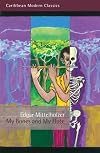
My Bones and My Flute
by Edgar Mittelholzer
On This Page
Description
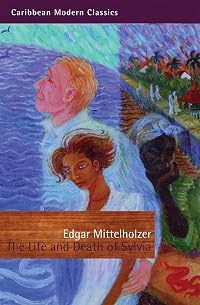
A haunting ghost story by the 'first West Indian novelist', Edgar Mittelholzer.Only when he is on board the steamer halfway to their remote destination up river in Guyana does Milton Woodsley realise that there is more to Henry Nevinson's invitation to spend time with his family in their jungle cottage.Tags
Recommendations




























Member Reviews
I was really disappointed by this. From early on I was put off but I kept reading because I was interested in the setting and because other reviews suggested that the book was genuinely scary at some point, had an interesting ending, and there were deeper things going on. I didn't really find the story creepy, the ending was incredibly dumb, and despite the occasional mention of something that would be interesting to go deeper on (eg the ghost was killed in a slave rebellion) the book absolutely refuses to even gesture at any significance.
The characters are irritating, stupid and shallow. To the extent their personalities exist, they're simply reflective of class, gender and race prejudices with no details and no hint of complication. show more Apart from the caretaker character Rayburn - who's depicted as a racist stereotype - the other 4 characters are all from the Guyanese elite. The 2 men are smart, brave and strong, the 2 women are stupid, weak and whiny. It's unpleasant to read.
Despite being a relatively short book, it feels extremely padded. Pages are filled with basically the same sort of thing happening over and over, with no new description, no interest. From early on escalation is threatenedsoon the ghost will take them away!! but for a couple of weeks they just sort of get away with ignoring it. The worst thing is that they don't do anything! Everything in the book happens to them and despite instructions on laying the ghost to rest in the face of otherwise certain death they just do nothing. They're unbearably passive despite the narrator grunting on about how scary it is but also how smart and strong he is. There's even one moment where the narrator admits the reader is probably thinking "why didn't you go out and try and put the ghost to rest" and just sort of waves it off as them being scared. But otherwise you're all thinking you're going to die??? It's unbearably dumb.
And then in the end, suddenly resolution is thrust upon them in a way which involves very minimal contribution from themselves (and the logic of the ghost by the end of the book is basically completely different from at the start). And it involves one of the stupidest ghost origin stories I've ever heard - this guy invoked dark evil forces toinvent a better flute. Seriously. On this plantation he was working as a flute inventor as well as plantation owner. His wife was mad at him. He was frustrated. So he invoked demons to make a better flute. It worked! Except then he was in the clutches of demons It was funny but just made the whole thing feel even dumber retrospectively.
The book is full of misogyny and to a lesser extent racism, but the racism is even more shocking (one character just casually uses the n word). Again, I only carried on reading because I was led to believe there was something deeper here. There really isn't. The setting is unusual but the creepiness potential is squandered in a daft story that doesn't develop any tension and ends stupidly. Bad book. show less
The characters are irritating, stupid and shallow. To the extent their personalities exist, they're simply reflective of class, gender and race prejudices with no details and no hint of complication. show more Apart from the caretaker character Rayburn - who's depicted as a racist stereotype - the other 4 characters are all from the Guyanese elite. The 2 men are smart, brave and strong, the 2 women are stupid, weak and whiny. It's unpleasant to read.
Despite being a relatively short book, it feels extremely padded. Pages are filled with basically the same sort of thing happening over and over, with no new description, no interest. From early on escalation is threatened
And then in the end, suddenly resolution is thrust upon them in a way which involves very minimal contribution from themselves (and the logic of the ghost by the end of the book is basically completely different from at the start). And it involves one of the stupidest ghost origin stories I've ever heard - this guy invoked dark evil forces to
The book is full of misogyny and to a lesser extent racism, but the racism is even more shocking (one character just casually uses the n word). Again, I only carried on reading because I was led to believe there was something deeper here. There really isn't. The setting is unusual but the creepiness potential is squandered in a daft story that doesn't develop any tension and ends stupidly. Bad book. show less
Another one that hits the high notes of my own shrieks of delight, My Bones and My Flute follows the story of the Nevinson family in 1930s British Guyana. Along with the chronicler of this story, Milton Woodsley, one by one the Nevinsons fall victim to an old curse that threatens to lead them to their doom. The first symptom they notice is eerie flute music that no one else can hear, but this is only a prelude to the horrors of what's coming next.
I've posted about this book here at my reading journal, but I'll just say this:
Like most of the books I read, My Bones and My Flute can be read strictly for its surface value -- in this case, a creepy, mysterious ghost story where the tension ratchets over the course of the book -- or for show more people like me who want to dive deeper, there's certainly plenty of food for thought lurking beneath: race, the immense power of the jungle landscape, Guyana's troubled slave past, and much, much more. If you decide to check out this book, do not under any circumstances read the introduction, since it pretty much reveals everything and would kill the suspense and the tension.
No matter how you choose to read it, My Bones and My Flute is a fine ghost story that had me flipping pages until I'd finished, and it is so very well done that without hesitating for a second, I immediately picked up another of Mittelholzer's Caribbean novels. My only issues: there are some pretty overwrought, overwritten sections in this book that are almost laughable and the ending sort of left me with a few more questions, but on the whole, it is one that serious readers of older supernatural stories will not want to miss. Quite frankly, I feel like I hit paydirt when I discovered this novel, and I can't wait to read the next one, Shadows Move Among Them. If you're into rare and obscure finds, this one should most definitely be a part of your library. show less
I've posted about this book here at my reading journal, but I'll just say this:
Like most of the books I read, My Bones and My Flute can be read strictly for its surface value -- in this case, a creepy, mysterious ghost story where the tension ratchets over the course of the book -- or for show more people like me who want to dive deeper, there's certainly plenty of food for thought lurking beneath: race, the immense power of the jungle landscape, Guyana's troubled slave past, and much, much more. If you decide to check out this book, do not under any circumstances read the introduction, since it pretty much reveals everything and would kill the suspense and the tension.
No matter how you choose to read it, My Bones and My Flute is a fine ghost story that had me flipping pages until I'd finished, and it is so very well done that without hesitating for a second, I immediately picked up another of Mittelholzer's Caribbean novels. My only issues: there are some pretty overwrought, overwritten sections in this book that are almost laughable and the ending sort of left me with a few more questions, but on the whole, it is one that serious readers of older supernatural stories will not want to miss. Quite frankly, I feel like I hit paydirt when I discovered this novel, and I can't wait to read the next one, Shadows Move Among Them. If you're into rare and obscure finds, this one should most definitely be a part of your library. show less
"The air began to thump", 16 October 2015
This review is from: My Bones and My Flute: A Ghost Story in the Old-Fashioned Manner (Caribbean Modern Classics) (Paperback)
This review is from: My Bones and My Flute: A Ghost Story in the Old-Fashioned Manner (Caribbean Modern Classics) (Paperback)
When Milton Woodsley, a young artist and enthusiast for old Guyana, is invited on a trip by businessman friend Mr Nevinson, he thinks it's to do a commissioned painting. But as they travel into the Berbice Jungle, to the Nevinson's sawmill - accompanied by the latter's cynical wife, and lovely 19 yr old daughter - he starts to learn the creepy truth.
Nevinson has come into possession of an ancient manuscript. Written in Dutch by a Berbice plantation show more owner at the time of the 1763 slave uprising, it tells of the massacre of his wife and children, and swears to curse all those who touch the parchment until his bones and flute are found and interred with Christian rites. Already Nevinson is hearing a ghostly flute which no one else can.
And in the forest, a lot more is about to happen:
"The air was heavy with water-vapour - and the scent of vegetation and river water; a musty, sweetish rankness that at one instant would seem very refreshing and make you want to breathe deeply, then would suddenly awaken distrust, for there would seem to enter it an earthy dankness as of centuries of rotting leaves and the bones of long-buried corpses."
I moderately enjoyed this book; but whereas I would expect the fear to rise to a crescendo in the last chapter, I found myself getting a little bored. show less
This review is from: My Bones and My Flute: A Ghost Story in the Old-Fashioned Manner (Caribbean Modern Classics) (Paperback)
This review is from: My Bones and My Flute: A Ghost Story in the Old-Fashioned Manner (Caribbean Modern Classics) (Paperback)
When Milton Woodsley, a young artist and enthusiast for old Guyana, is invited on a trip by businessman friend Mr Nevinson, he thinks it's to do a commissioned painting. But as they travel into the Berbice Jungle, to the Nevinson's sawmill - accompanied by the latter's cynical wife, and lovely 19 yr old daughter - he starts to learn the creepy truth.
Nevinson has come into possession of an ancient manuscript. Written in Dutch by a Berbice plantation show more owner at the time of the 1763 slave uprising, it tells of the massacre of his wife and children, and swears to curse all those who touch the parchment until his bones and flute are found and interred with Christian rites. Already Nevinson is hearing a ghostly flute which no one else can.
And in the forest, a lot more is about to happen:
"The air was heavy with water-vapour - and the scent of vegetation and river water; a musty, sweetish rankness that at one instant would seem very refreshing and make you want to breathe deeply, then would suddenly awaken distrust, for there would seem to enter it an earthy dankness as of centuries of rotting leaves and the bones of long-buried corpses."
I moderately enjoyed this book; but whereas I would expect the fear to rise to a crescendo in the last chapter, I found myself getting a little bored. show less
Ratings
Members
- Recently Added By
Lists

Big Jubilee List
70 works; 3 members
Author Information

39+ Works 314 Members
Of mixed Swiss and Creole heritage, Mittelholzer decided at an early age to become a writer. His works represent the personal struggle between a sense of identification with European culture and a sense of identity as a West Indian. He was the first writer of his generation to emigrate from the West Indies and attempt a career as a serious show more novelist in England. In his relatively short life, Mittelholzer published 22 novels, as well as other works. Corentyne Thunder (1941) is a traditionally written novel, but it deals with the spiritual schizophrenia of a protagonist torn between two conflicting loyalties. A Morning at the Office (1950) is a coldly objective view of the absurdities of a tightly organized hierarchical colonial society. His Kaywana trilogy---Children of Kaywana (1952), The Harrowing of Hubertus (1954), and Kaywana Blood (1958)---an imaginative account of a proud, violent family---is considered his finest work. Near the end of his life, his works were increasingly concerned with isolation, disintegration, and suicide. Mittelholzer was the first West Indian writer to be awarded the Guggenheim Fellowship for Creative Writing (1952). He burned himself to death in a field in Surrey, England, in 1965. (Bowker Author Biography) show less
Awards and Honors
Notable Lists
The Big Jubilee Read (1952-1961 – 1955)
Series
Belongs to Publisher Series
Common Knowledge
- Canonical title
- My Bones and My Flute
- Original title
- My Bones and My Flute
- Original publication date
- 1955
- People/Characters
- Milton Woodsley; Ralph Nevinson; Nell Nevinson; Jessie Nevinson; Rayburn; Jan Pieter Voorman
- Important places
- Berbice Forest, Guyana; New Amsterdam, East Berbice-Corentyne, Guyana
- First words
- We must have been well over half-way to our destination when I received the first hint that there miight be some other reason behind Mr Nevinson's invitation to me to spend time with him and his family up the Berbice.
- Last words
- (Click to show. Warning: May contain spoilers.)He was sitting on the kitchen steps.
(Click to show. Warning: May contain spoilers.)Postscript: To whom, to what, must I turn for salvation? - Original language*
- Englisch
*Some information comes from Common Knowledge in other languages. Click "Edit" for more information.
Classifications
Statistics
- Members
- 69
- Popularity
- 454,826
- Reviews
- 3
- Rating
- (2.93)
- Languages
- Dutch, English, German
- Media
- Paper, Ebook
- ISBNs
- 6
- ASINs
- 1