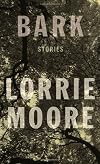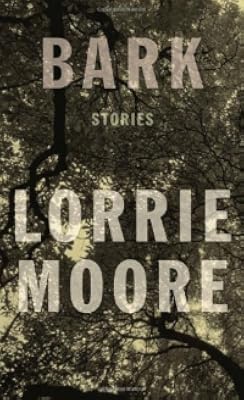
Bark: Stories
by Lorrie Moore
On This Page
Description
Fiction. Literature. Short Stories. Humor (Fiction.) HTML:A new collection of stories by one of America's most beloved and admired short-story writers, her first in fifteen years, since Birds of America ("Fluid, cracked, mordant, colloquial . . . Will stand by itself as one of our funniest, most telling anatomies of human love and vulnerability." --The New York Times Book Review, cover).These eight masterly stories reveal Lorrie Moore at her most mature and in a perfect configuration of show more craft, mind, and bewitched spirit, as she explores the passage of time and summons up its inevitable sorrows and hilarious pitfalls to reveal her own exquisite, singular wisdom.
In "Debarking," a newly divorced man tries to keep his wits about him as the United States prepares to invade Iraq, and against this ominous moment, we see--in all its irresistible wit and darkness--the perils of divorce and what can follow in its wake . . .
In "Foes," a political argument goes grotesquely awry as the events of 9/11 unexpectedly manifest themselves at a fund-raising dinner in Georgetown . . . In "The Juniper Tree," a teacher visited by the ghost of her recently deceased friend is forced to sing "The Star-Spangled Banner" in a kind of nightmare reunion . . . And in "Wings," we watch the inevitable unraveling of two once-hopeful musicians, neither of whom held fast to their dreams nor struck out along other paths, as Moore deftly depicts the intricacies of dead-ends-ville and the workings of regret . . .
Here are people beset, burdened, buoyed; protected by raising teenage children; dating after divorce; facing the serious illness of a longtime friend; setting forth on a romantic assignation abroad, having it interrupted mid-trip, and coming to understand the larger ramifications and the impossibility of the connection . . . stories that show people coping with large dislocation in their lives, with risking a new path to answer the desire to be in relation--to someone . . .
Gimlet-eyed social observation, the public and private absurdities of American life, dramatic irony, and enduring half-cracked love wend their way through each of these narratives in a heartrending mash-up of the tragic and the laugh-out-loud--the hallmark of life in Lorrie-Moore-land.
This eBook edition includes a Reading Group Guide. show less
Tags
Recommendations

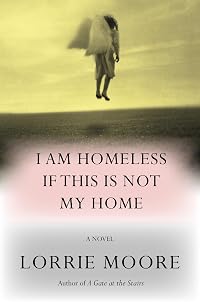

Member Recommendations

Member Reviews
There are reasons to feel lucky to be alive. One of them is that Lorrie Moore is writing short stories. Amongst the eight stories collected here are enough masterpieces to make you believe all over again that Moore may be the reason that the short story was invented. And the others — well, I don’t know. It’s very possible that in a year I might come round to thinking those other stories are the real masterpieces. I’ll admit that Moore is often ahead of the curve.
Some stories here have all the elements of classic Lorrie Moore. The long opening story, “Debarking”, is one of those. It is full of quirky observations, puns and half-puns and other word-play, excruciatingly poignant moments, and, well, exuberance, I guess. Even in show more the midst of what is really a sad or pathetic situation, there is exuberance. “Paper Losses” is another in this classic Lorrie Moore manner. Nearly priceless. Other stories, such as “Referential” show Moore in narrative dialogue with her peers, in this case Nabokov. In some stories, Moore seems frustrated, even angry, with the politics of America. There is a level of incredulousness that begins to creep in perhaps in stories such as “Foes” or “Subject to Search”. And there are yet other stories that don’t have any easy category. A story like “Wings” seems serious and anxious and possibly almost painful. It’s one of those ones that maybe, after a bit more thought, I’ll decide is actually a masterpiece. Moore’s writing is like that — it prompts more thought.
Warmly recommended. show less
Some stories here have all the elements of classic Lorrie Moore. The long opening story, “Debarking”, is one of those. It is full of quirky observations, puns and half-puns and other word-play, excruciatingly poignant moments, and, well, exuberance, I guess. Even in show more the midst of what is really a sad or pathetic situation, there is exuberance. “Paper Losses” is another in this classic Lorrie Moore manner. Nearly priceless. Other stories, such as “Referential” show Moore in narrative dialogue with her peers, in this case Nabokov. In some stories, Moore seems frustrated, even angry, with the politics of America. There is a level of incredulousness that begins to creep in perhaps in stories such as “Foes” or “Subject to Search”. And there are yet other stories that don’t have any easy category. A story like “Wings” seems serious and anxious and possibly almost painful. It’s one of those ones that maybe, after a bit more thought, I’ll decide is actually a masterpiece. Moore’s writing is like that — it prompts more thought.
Warmly recommended. show less
This collection of short stories is about all those messy, complicated real lives that happen after we are no longer young adults, when our lives have begun to crystallize into the much more limited range of real options we actually get to choose from, rather than the vast universe of possibilities life seemed to hold when we were younger. Happy endings in this collection are only happy within a narrow definition of happy, or with a few caveats and footnotes, but life does not just stop after one is no longer a young adult, and the characters in these stories are busy maintaining, remaking, and enjoying their adult lives to the extent that they can. Death happens, divorce happens, kids turn out to be mentally ill, and romantic show more encounters that younger lovers might imagine as destined and forever turn out to be just temporary or not nearly as idyllic as they 'ought' to be. But life goes on. show less
The stories have a dark tone, sometimes little more than a nagging sense that something’s not quite right, but Moore is genuinely funny, and her wit and humor keep them from descending into morbidity. I liked some more than others, notably Debarked, about a divorced middle aged man returning to the dating scene, and Juniper, about a woman and her friends visiting the home of a deceased girlfriend to say goodbye. I can’t help but compare Moore’s collection to another book of short stories that I recently finished, Vampires in the Lemon Grove by Karen Russell. While I loved Russells’ inventiveness, her stories lacked the depth of feeling I found in Moore’s. The characters from stories like Debarked and Juniper inspired a level show more of introspection that most of my fiction reading does not as they, often haplessly, wrestled with questions of the basic human condition like am I a good enough friend?, am I attracted to people for the right reasons?, am I seeing only what I want to see? Have not read Moore’s other books, but I will soon. show less
What a fantastic book. To use one of her own words, Lorrie Moore is the master of the wry short story. She manages a balance that seems masterful yet fully contemporary, between humor and sadness, the humor always easy and jokey, but the sadness deep and underlying everything.
Maybe one or two of these stories seems a little slight in comparison to the rest, but as a whole this is a marvelous book, and two or three of the stories are as good as I've ever read. This is wonderful work that is compulsively easy to read and yet rewards re-reading with marvels anew.
Maybe one or two of these stories seems a little slight in comparison to the rest, but as a whole this is a marvelous book, and two or three of the stories are as good as I've ever read. This is wonderful work that is compulsively easy to read and yet rewards re-reading with marvels anew.
If the Nobel Prize committee had been sensible enough to ask for my opinion, the 2013 literature prize would have gone to Lorrie Moore rather than Alice Munro. Not to knock Munro, but in my estimation Moore's short stories are more real, more full of honesty and life, and more of a pleasure to read than those of Munro or any other writer.
Moore has been criticized by some for being too jokey, for writing characters who are too smart-alecky. ("Do you ever think of Dad?" a girl asks her divorced mother. "Dad who?" the woman answers.) In the midst of all sorts of painful circumstances, her characters always seem to have a ready supply of witticisms and an entertainingly skewed perspective on their situation. To my mind, this is not a thing show more to be criticized, but rather is the very core of what makes Moore's stories both delightful and deeply moving. When life plays cruel jokes with us (as it inevitably does), some people fight back with jokes of their own. Humor is their way of standing up to life, their way of struggling on, even when the battle is unwinnable. And for me, these are the sorts of people whose travails and struggles and unhappinesses I want to read about. When I read a Lorrie Moore story, I feel that her characters -- even while they're making me laugh -- are teaching me how to live.
Having said this, I should probably point out that not all of the stories in this collection follow the format of characters facing hardship with wit and humor. "The Juniper Tree" is about a woman dealing with the death of a friend, but it's lacking in the usual dosage of Moore jokiness (and is quite a beautiful story nevertheless). And in a couple of other stories the characters aren't suffering through any great hardship -- rather they're simply going through the ragged stuff of life, reflecting on what has brought them to where they are and what lies ahead.
There are 8 short stories in this collection, and to my eye each one is a beautiful, flawless gem. Each one stands among the best short stories -- and the best fiction -- I've ever read. This book is Lorrie Moore's first new collection of short stories in fifteen years, and as such it is a thing to be treasured, to be handled with loving care and given a place of honor in your bookshelf. But most of all, it's a book that should be read. show less
Moore has been criticized by some for being too jokey, for writing characters who are too smart-alecky. ("Do you ever think of Dad?" a girl asks her divorced mother. "Dad who?" the woman answers.) In the midst of all sorts of painful circumstances, her characters always seem to have a ready supply of witticisms and an entertainingly skewed perspective on their situation. To my mind, this is not a thing show more to be criticized, but rather is the very core of what makes Moore's stories both delightful and deeply moving. When life plays cruel jokes with us (as it inevitably does), some people fight back with jokes of their own. Humor is their way of standing up to life, their way of struggling on, even when the battle is unwinnable. And for me, these are the sorts of people whose travails and struggles and unhappinesses I want to read about. When I read a Lorrie Moore story, I feel that her characters -- even while they're making me laugh -- are teaching me how to live.
Having said this, I should probably point out that not all of the stories in this collection follow the format of characters facing hardship with wit and humor. "The Juniper Tree" is about a woman dealing with the death of a friend, but it's lacking in the usual dosage of Moore jokiness (and is quite a beautiful story nevertheless). And in a couple of other stories the characters aren't suffering through any great hardship -- rather they're simply going through the ragged stuff of life, reflecting on what has brought them to where they are and what lies ahead.
There are 8 short stories in this collection, and to my eye each one is a beautiful, flawless gem. Each one stands among the best short stories -- and the best fiction -- I've ever read. This book is Lorrie Moore's first new collection of short stories in fifteen years, and as such it is a thing to be treasured, to be handled with loving care and given a place of honor in your bookshelf. But most of all, it's a book that should be read. show less
I loved Birds of America and had high hopes for Bark, yet I didn't feel that any of these stories touched me or impressed me the way that the stories in Elizabeth McCracken's Thunderstruck did. And yet, at the level of language (rather than the level of story), there were those sentences that made me laugh out loud, or appreciate the insightfulness in a concise turn of phrase.
Quotes
From "Debarking"
He did not like stressful moments in restaurants. They caused his mind to wander strangely to random thoughts like Why are these things callednapkins rather than lapkins? (Ira, 14)
"Every family is a family of alligators." (Zora, 15)
He had no idea why he said half the things he said. (Ira, 16)
He loved rhymes...They were harmonious and joyous in show more the face of total crap. (Ira, 28)
It wasn't the same as self-knowledge, but life was long and not that edifying, and one sometimes had to do with randomly seized tidbits. (Ira, 29)
From "The Juniper Tree"
I felt I was a person of my word, and by saying something I would make it so. It was less like integrity perhaps and more like magic. (49)
From "Paper Losses"
A woman had to choose her own particular unhappiness carefully. That was the only happiness in life: to choose the best unhappiness. An unwise move, good God, you could squander everything. (Kit, 68)
What second-rate poet had gotten hold of the divorce laws? (Kit, 70)
"If dolphins tasted good," he said, "we wouldn't even know about their language." That the intelligence of a thing could undermine your appetite for it....That deliciousness resulted in decapitation. That you could only understand something if you did not desire it. How did he know these things already? (Kit and Sam, 73)
From "Foes"
The passive voice could always be used to obscure blame. (83)
From "Wings"
The grumblings of their stomachs were intertwined and unassignable. (97)
From "Referential"
Mutilation was a language. (151)
Once her son had only wanted a distracting pain, but then soon he had wanted to tear a hole in himself and flee through it. (154)
From "Subject to Search"
"The Internet just reflects what's already in the human mind." (Tom, 166)
From "Thank You for Having Me"
If you were alone when you were born, alone when you were dying, really absolutely alone when you were dead, why "learn to be alone" in between? If you had forgotten, it would quickly come back to you. (182)
Every day there was something new to mourn and something old to celebrate: civilization had learned this long ago and continued to remind us. (190) show less
Quotes
From "Debarking"
He did not like stressful moments in restaurants. They caused his mind to wander strangely to random thoughts like Why are these things callednapkins rather than lapkins? (Ira, 14)
"Every family is a family of alligators." (Zora, 15)
He had no idea why he said half the things he said. (Ira, 16)
He loved rhymes...They were harmonious and joyous in show more the face of total crap. (Ira, 28)
It wasn't the same as self-knowledge, but life was long and not that edifying, and one sometimes had to do with randomly seized tidbits. (Ira, 29)
From "The Juniper Tree"
I felt I was a person of my word, and by saying something I would make it so. It was less like integrity perhaps and more like magic. (49)
From "Paper Losses"
A woman had to choose her own particular unhappiness carefully. That was the only happiness in life: to choose the best unhappiness. An unwise move, good God, you could squander everything. (Kit, 68)
What second-rate poet had gotten hold of the divorce laws? (Kit, 70)
"If dolphins tasted good," he said, "we wouldn't even know about their language." That the intelligence of a thing could undermine your appetite for it....That deliciousness resulted in decapitation. That you could only understand something if you did not desire it. How did he know these things already? (Kit and Sam, 73)
From "Foes"
The passive voice could always be used to obscure blame. (83)
From "Wings"
The grumblings of their stomachs were intertwined and unassignable. (97)
From "Referential"
Mutilation was a language. (151)
Once her son had only wanted a distracting pain, but then soon he had wanted to tear a hole in himself and flee through it. (154)
From "Subject to Search"
"The Internet just reflects what's already in the human mind." (Tom, 166)
From "Thank You for Having Me"
If you were alone when you were born, alone when you were dying, really absolutely alone when you were dead, why "learn to be alone" in between? If you had forgotten, it would quickly come back to you. (182)
Every day there was something new to mourn and something old to celebrate: civilization had learned this long ago and continued to remind us. (190) show less
Lorrie Moore is one of my favorite writers. No one captures the awkward things we wish we didn't say out loud quite like she does. There's plenty of every-day grotesque and doomed romance to please any fan. My only complaint was that the volume was short, and some of the stories forgettable or too rooted in current events of a year or two ago.
Members
- Recently Added By
Published Reviews
"As Coleridge famously remarked of Wordsworth that one might recognize his poetry anywhere, so readers of Lorrie Moore are likely to recognize her prose instantaneously: a unique combination of wit, caustic insight, sympathy for the pathos of her characters’ lives, and that peculiar sort of melancholy attributable to time too long spent in the northern Midwest where late-afternoon snow show more acquires a spectral blue tinge. " show less
added by Laura400
Lists

Folio Prize 2015 Longlist
79 works; 2 members

Maybe This Year? Books to Look Forward To
412 works; 9 members
Author Information

33+ Works 13,152 Members
Lorrie Moore was born Marie Lorena Moore on January 13, 1957 in Glen Falls, New York. She was nicknamed Lorrie by her parents. She attended St. Lawrence University and won Seventeen magazine's fiction contest. After graduation, she moved to Manhattan and worked as a paralegal for two years. In 1980 she enrolled in Cornell University's M.F.A. show more program. After graduation from Cornell she was encouraged by a teacher to contact an agent who sold her collection, Self-Help, which was composed of stories from her master's thesis. Lorrie Moore writes about failing relationships and terminal illness. She is the Delmore Schwartz Professor in the Humanities at the University of Wisconsin-Madison where she teaches creative writing. She has also taught at Cornell University. She has written a children's book entitled The Forgotten Helper. She won the 1998 O. Henry Award for her short story People Like That They Are the Only People Here. In 1999 she was given the Irish Times International Fiction Prize for Birds of America. She was elected to the American Academy of Arts and Letters in 2006 and in 2010 her novel A Gate at the stairs was a finalist for the Pen/Faulkner Award for fiction. (Bowker Author Biography) show less
Awards and Honors
Awards
Distinctions
Common Knowledge
- Canonical title
- Bark: Stories
- Alternate titles
- Bark
- Original publication date
- 2014
- Epigraph
- I shall still be here . . . growing my bark around the wire fence like a grin.
Caroline Squires, "An Apple Tree Spouts Philosophy in an Office Car Park"
In the splitting up dream we were fighting over who would kee... (show all)p the dog, Blizzard. You tell me what that name means. He was a cross between something big and fluffy and a dachshund. Does this have to be the male and female genitalia? Poor Blizzard, why was he a dog? He barely touched the hummus in his dogfood dish.
Louise Glück, from "Vita Nova"
Don't be gruff. Anything that falls on the floor is mine.
Amy Gerstler, :Interview with a Dog" - Dedication
- for Deborah Rogers and Deborah Treisman
Classifications
Statistics
- Members
- 722
- Popularity
- 39,361
- Reviews
- 35
- Rating
- (3.48)
- Languages
- 6 — English, French, German, Italian, Spanish, Turkish
- Media
- Paper, Audiobook, Ebook
- ISBNs
- 26
- ASINs
- 9