
Us
by David Nicholls
On This Page
Description
Douglas Petersen may be mild-mannered, but behind his reserve lies a sense of humor that, against all odds, seduces beautiful Connie into a second date. and eventually into marriage. Now, almost three decades after their relationship first blossomed in London, they live more or less happily in the suburbs with their moody seventeen year-old son, Albie. Then Connie tells him she thinks she wants a divorce. The timing couldn't be worse. Hoping to encourage her son's artistic interests, Connie show more has planned a month-long tour of European capitals, a chance to experience the world's greatest works of art as a family, and she can't bring herself to cancel. And maybe going ahead with the original plan is for the best anyway? Douglas is privately convinced that this landmark trip will rekindle the romance in the marriage, and might even help him to bond with Albie. Narrated from Douglas's endearingly honest, slyly witty, and at times achingly optimistic point of view, Us is the story of a man trying to rescue his relationship with the woman he loves, and learning how to get closer to a son who's always felt like a stranger. Us is a moving meditation on the demands of marriage and parenthood, the regrets of abandoning youth for middle age, and the intricate relationship between the heart and the head. And in David Nicholls's gifted hands, Douglas's odyssey brings Europe from the streets of Amsterdam to the famed museums of Paris, from the cafe's of Venice to the beaches of Barcelona to vivid life just as he experiences a powerful awakening of his own. Will this summer be his last as a husband, or the moment when he turns his marriage, and maybe even his whole life, around? show lessTags
Recommendations
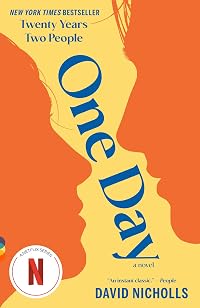


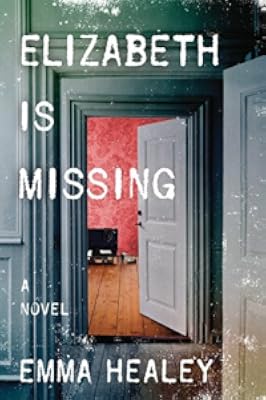
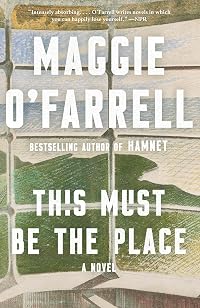
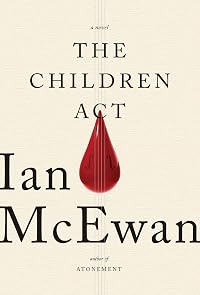



Member Recommendations
Member Reviews
Douglas and Connie, a British couple have planned a vacation through Europe, but it's nearly called off when Connie wakes up and says "I think I want to leave you."
Douglas forges ahead and cajoles his wife to enjoy one last hurrah with their teenage son, who is soon off to college. And thus begins a bittersweet and awkward journey through Europe.
The past and present are told in many short chapters. The family is in a forced march through Europe following Douglas's precise itinerary, carefully laid out in numerous spread sheets.
Douglas and Connie's past relationship is slowly revealed -- how they met and fell in love, despite being complete opposites. Connie is an uninhibited artist, while Douglas is an introverted biochemist - they show more marry, inhabit a bohemian London apartment, have a child. We see Douglas struggle with Connie's artistic and unconventional upbringing of their son, and watch as Connie gives up her art and they move out of London to a larger house with a garden. All seems to be going well - or is it?
These are real people -- Douglas, well-meaning but suffering from a lack of spontaneity; Connie, beautiful, charming, and artistic -- and their son, Albie, a typical teenager filled with scorn for adult conservatism.
The dynamic between Douglas and Connie is funny and genuinely touching.
’I was looking forward to us growing old together. Me and you, growing old and dying together.'
'Douglas, who in their right mind would look forward to that?’”
So they're off to Europe. There are painful scenes when Douglas is trying desperately to ensure everyone is having a good time, but these are contrasted with laugh out loud funny incidents, such as when it turns out Douglas has mistakenly booked the three of them into a questionable hotel in Amsterdam...
"Dad", asked Albie "have you booked us into a sex hotel?" and they began to laugh. It's not a sex hotel, it's boutique, I insisted. "Douglas", said Connie, "tapping the print of the bound Japanese lady, is that a half hitch or a bowline?" I did not answer, through it was a bowline.
What I most enjoyed about Us was the subtle, bittersweet, and unflinchingly honest writing.
I think our marriage has run its course. I think I want to leave you. It was like trying to go about my business with an axe embedded in my skull.
This is a cynical, bittersweet, yet loving portrait of a love -- of a relationship. A reminder that not every couple can be happy, no matter how much they love each other. These are real and familiar characters; especially the befuddled Douglas, certain he can fix something unfixable if only he applied enough logic, pragmatism, and unfailing optimism.
Mr. Nicholls does not give us a happily ever after ending, no perfect tying up of loose ends. This is a civilized yet loving portrait of the slipping away of a marriage. Like Nora Ephron's, "Heartburn", this a funny and touching novel about a situation which, I'm certain, living through would not be at all funny.
See more at http://www.bookbarmy.com show less
Douglas forges ahead and cajoles his wife to enjoy one last hurrah with their teenage son, who is soon off to college. And thus begins a bittersweet and awkward journey through Europe.
The past and present are told in many short chapters. The family is in a forced march through Europe following Douglas's precise itinerary, carefully laid out in numerous spread sheets.
Douglas and Connie's past relationship is slowly revealed -- how they met and fell in love, despite being complete opposites. Connie is an uninhibited artist, while Douglas is an introverted biochemist - they show more marry, inhabit a bohemian London apartment, have a child. We see Douglas struggle with Connie's artistic and unconventional upbringing of their son, and watch as Connie gives up her art and they move out of London to a larger house with a garden. All seems to be going well - or is it?
These are real people -- Douglas, well-meaning but suffering from a lack of spontaneity; Connie, beautiful, charming, and artistic -- and their son, Albie, a typical teenager filled with scorn for adult conservatism.
The dynamic between Douglas and Connie is funny and genuinely touching.
’I was looking forward to us growing old together. Me and you, growing old and dying together.'
'Douglas, who in their right mind would look forward to that?’”
So they're off to Europe. There are painful scenes when Douglas is trying desperately to ensure everyone is having a good time, but these are contrasted with laugh out loud funny incidents, such as when it turns out Douglas has mistakenly booked the three of them into a questionable hotel in Amsterdam...
"Dad", asked Albie "have you booked us into a sex hotel?" and they began to laugh. It's not a sex hotel, it's boutique, I insisted. "Douglas", said Connie, "tapping the print of the bound Japanese lady, is that a half hitch or a bowline?" I did not answer, through it was a bowline.
What I most enjoyed about Us was the subtle, bittersweet, and unflinchingly honest writing.
I think our marriage has run its course. I think I want to leave you. It was like trying to go about my business with an axe embedded in my skull.
This is a cynical, bittersweet, yet loving portrait of a love -- of a relationship. A reminder that not every couple can be happy, no matter how much they love each other. These are real and familiar characters; especially the befuddled Douglas, certain he can fix something unfixable if only he applied enough logic, pragmatism, and unfailing optimism.
Mr. Nicholls does not give us a happily ever after ending, no perfect tying up of loose ends. This is a civilized yet loving portrait of the slipping away of a marriage. Like Nora Ephron's, "Heartburn", this a funny and touching novel about a situation which, I'm certain, living through would not be at all funny.
See more at http://www.bookbarmy.com show less
I'm not sure there is any better author than David Nicholls when it comes to portraying real life and all its imperfections and disappointments while still making us laugh. This was a tremendously entertaining read, centring on a family on the brink of breakup - teenage son off to college and mum wanting a separation from dad. A final 'holiday of a lifetime' touring European art galleries with these characters could have been a bore-a-thon in the hands of a lesser author, but this sparkled from start to finish. I particularly liked the portrayal of Douglas; as a socially awkward person myself I sympathised with him a lot. The chapter about the quiz night was wonderfully cringe-making: I could see that he was in the wrong in a way, and show more yet I would have behaved exactly as he did. And as for the chapter about the future, and how we are all going to hell in a handcart - it was so well written I wanted to read it again and again, yet it was chilling too, albeit finished off with a line that gives the reader a good chuckle. Great book. show less
Story of a marriage told in first person by Douglas Petersen, a scientist, whose wife, Connie, tells him she “thinks she needs to end their relationship” after twenty-two years of marriage. Douglas tells of how they met and early years, alternating with their present-day trip around Europe with their seventeen-year-old son, Albie. Douglas is a biochemist who prefers a structured and practical life. Connie is free-spirited artist who now runs an educational program. Their son takes after his mother and has a turbulent relationship with his father.
I often complain that I cannot find a humorous book that appeals to me. Well, I’ve found one. There is lots of dry humor in this story, and I laughed out loud many times. The journey show more around European cities provides plenty of opportunities for situational comedy, as well as insight into the relationships between the family members. Of course, the book is not entirely comedic, since it about a marriage in crisis. It is wonderfully written. Even though we are only getting Douglas’s side of the story, the author is so skilled at portraying the family’s interactions that we get a good sense of the bigger picture. The reader can start to understand the dynamics that have led to marital difficulties. It is a story of life and its ups and downs. The characters are beautifully drawn. They are easy to envision and realistic. I felt totally engrossed in the story and am adding it to my list of favorites. show less
I often complain that I cannot find a humorous book that appeals to me. Well, I’ve found one. There is lots of dry humor in this story, and I laughed out loud many times. The journey show more around European cities provides plenty of opportunities for situational comedy, as well as insight into the relationships between the family members. Of course, the book is not entirely comedic, since it about a marriage in crisis. It is wonderfully written. Even though we are only getting Douglas’s side of the story, the author is so skilled at portraying the family’s interactions that we get a good sense of the bigger picture. The reader can start to understand the dynamics that have led to marital difficulties. It is a story of life and its ups and downs. The characters are beautifully drawn. They are easy to envision and realistic. I felt totally engrossed in the story and am adding it to my list of favorites. show less
Us is a book that, at first sight, has a very well used subject at its core – married couple, mid-life crisis, marriage breaking down once the kids have left home. It’s a tale that’s been told so many times you’d think there was nothing new to say about it. However, David Nicholls effortlessly bats away such concerns and envelops us instantly and entirely in the life and love, the thoughts and deep angst of his central character stuffy, uptight, nerdy scientist Douglas Petersen. Douglas’ wife Connie has told him she wants to leave him, just as their only son is about to leave for university but their proposed summer holiday, the Grand Tour of Europe, has already been booked and paid for and so all three of them embark on what show more is likely to be their last trip as a family. Douglas hopes to use the break to win back Connie and avoid the breakdown of everything he cherishes.
There’s much to love about this story, narrated by Douglas, as he unfurls for us in exquisitely wrought details the twists and turns of a life; the choices made and the consequences that follow, the joys and the tragedies that shape and mould personalities and relationships. There is so much to tell too, that we can’t help but feel we know these people personally; their penchants, their eccentricities. By the end of the book we certainly know Douglas inside and out; his self-confessed inadequacies, love of order, his logical mind that won’t let him feel the art, his earnest attempts at intimacy with an artistic and impenetrable son with whom he can’t seem to get to grips, all make him sweet and endearing, despite his tightness. The trip becomes overrun with his eager organisation, to make things better and fumbling attempts to hold onto the woman he has loved for twenty years.
Us is a book that really makes me think about individuality. How different our own children can be and not necessarily a cute combination of all the best qualities of each parent. How difficult some parent-child relationships end up and while we might want to plan for that child’s best interests, the choices ultimately have to lie with them if they are to be happy. Just because someone doesn’t follow our suggestions or advice doesn’t mean they don’t love us. The key to Douglas finding peace was in allowing people to be themselves without having to control and direct them.
There is an emotional roller coaster running through the book, Us is at once funny and heart wrenching, while having a slapstick quality in parts; the scrapes Douglas finds himself in at times made me laugh out loud. It is primarily a book about change and notably Douglas does change once he is off on his own and plays to his strengths in the midst of a very stressful (but at times very funny) sequence of events proves to be a turning point. When he forms a tentatively romantic connection with a Danish tourist called Freja, I began to see a definite glimmer of hope in the darkness for him and I relished the possibility that an improved and stronger Douglas might exist post-Connie.
A bonus feature of the book was The Grand Tour itself and Nicholls’ descriptions. The Grand Tour of the Victorian age harbours such overtones of wild poets and Gothic romance for someone like myself who lives on the other side of the world and can’t just hop on a ninety minute flight around Europe to any of its centres. So it was good to read Nicholls’ characters battling with the heat, stomping along the well trodden tourist paths, endless queues for all the high spots, and the blasé way the modern age takes travel for granted, while priceless Roman antiquities are just more things to be ticked off a list.
Many people will have read One Day, David Nicholls’ ultra-beloved best seller from 2009, and be wondering if this book will be able to live up to that legacy. I believe it has done so. Us is an emotional, funny, touching, revelatory look at relationships, at what makes us imperfectly human and the many different types of love of which we are capable. show less
There’s much to love about this story, narrated by Douglas, as he unfurls for us in exquisitely wrought details the twists and turns of a life; the choices made and the consequences that follow, the joys and the tragedies that shape and mould personalities and relationships. There is so much to tell too, that we can’t help but feel we know these people personally; their penchants, their eccentricities. By the end of the book we certainly know Douglas inside and out; his self-confessed inadequacies, love of order, his logical mind that won’t let him feel the art, his earnest attempts at intimacy with an artistic and impenetrable son with whom he can’t seem to get to grips, all make him sweet and endearing, despite his tightness. The trip becomes overrun with his eager organisation, to make things better and fumbling attempts to hold onto the woman he has loved for twenty years.
Us is a book that really makes me think about individuality. How different our own children can be and not necessarily a cute combination of all the best qualities of each parent. How difficult some parent-child relationships end up and while we might want to plan for that child’s best interests, the choices ultimately have to lie with them if they are to be happy. Just because someone doesn’t follow our suggestions or advice doesn’t mean they don’t love us. The key to Douglas finding peace was in allowing people to be themselves without having to control and direct them.
There is an emotional roller coaster running through the book, Us is at once funny and heart wrenching, while having a slapstick quality in parts; the scrapes Douglas finds himself in at times made me laugh out loud. It is primarily a book about change and notably Douglas does change once he is off on his own and plays to his strengths in the midst of a very stressful (but at times very funny) sequence of events proves to be a turning point. When he forms a tentatively romantic connection with a Danish tourist called Freja, I began to see a definite glimmer of hope in the darkness for him and I relished the possibility that an improved and stronger Douglas might exist post-Connie.
A bonus feature of the book was The Grand Tour itself and Nicholls’ descriptions. The Grand Tour of the Victorian age harbours such overtones of wild poets and Gothic romance for someone like myself who lives on the other side of the world and can’t just hop on a ninety minute flight around Europe to any of its centres. So it was good to read Nicholls’ characters battling with the heat, stomping along the well trodden tourist paths, endless queues for all the high spots, and the blasé way the modern age takes travel for granted, while priceless Roman antiquities are just more things to be ticked off a list.
Many people will have read One Day, David Nicholls’ ultra-beloved best seller from 2009, and be wondering if this book will be able to live up to that legacy. I believe it has done so. Us is an emotional, funny, touching, revelatory look at relationships, at what makes us imperfectly human and the many different types of love of which we are capable. show less
I haven’t fallen this in love with a work of fiction in a long time. The main character was particularly lovable. He’s sweet and smart, but shy and socially awkward. He’s also really funny and (bonus!) he’s a biochemist. I realize this might not appeal to every reader, but as a scientist myself, I enjoyed that a lot. The author had clearly done his research about biochemists. The main character describes what he does in a very believable way and spends a lot of time thinking about science in relation to his life.
Even more important than the details of the character was the way the author brought his emotions to life. The emotional scenes weren’t sappy. They weren’t big or demonstrative or flashy. The language wasn’t show more flowery or sentimental. Somehow, without any of that, the author just slowly, softly built up the main character’s everyday emotions until I ached for his heartaches and celebrated his happinesses. The ending was perfect for this beautiful, believable story. Although it was bit predictable, it wasn’t too neatly wrapped up but it did leave me with a hopeful feeling that made me happy. This book was blurbed by Jojo Moyes and I’d definitely recommend it to her fans, as well as anyone who just wants a book that will leave them smiling.
This review first published at Doing Dewey. show less
Even more important than the details of the character was the way the author brought his emotions to life. The emotional scenes weren’t sappy. They weren’t big or demonstrative or flashy. The language wasn’t show more flowery or sentimental. Somehow, without any of that, the author just slowly, softly built up the main character’s everyday emotions until I ached for his heartaches and celebrated his happinesses. The ending was perfect for this beautiful, believable story. Although it was bit predictable, it wasn’t too neatly wrapped up but it did leave me with a hopeful feeling that made me happy. This book was blurbed by Jojo Moyes and I’d definitely recommend it to her fans, as well as anyone who just wants a book that will leave them smiling.
This review first published at Doing Dewey. show less
Brilliiant! Unequivocally a 5-star book for me. It took me three months to get through it but I only listened to it when I was walking at night listening to classical music on the radio and some long boring piece came on that I couldn't bear. And I had a couple of weeks of surgery and time in hospital in which I did no reading. So the long reading time was a joy rather than being a burden.
I felt that Nicholls provided a very astute observation of a family in crisis - what led to the situation, how the different family members contributed to the problems or solutions, and how things end up. I listened to the audiobook version and I reckon the narrator, Justin Salinger, contributed a lot to my positive feelings about the book. He is show more perhaps the best book reader / narrator I have heard. Every character in the book behaved in a way and talked in a manner that really rang true with me - with one exception. In Chapter 112 the main character, Douglas, says "If I ever find a piece of music that is depressing beyond belief, I assume that it is Bach." How anyone can say that is just impossible for me to understand, and especially the Douglas character. I guess no book is perfect :-) show less
I felt that Nicholls provided a very astute observation of a family in crisis - what led to the situation, how the different family members contributed to the problems or solutions, and how things end up. I listened to the audiobook version and I reckon the narrator, Justin Salinger, contributed a lot to my positive feelings about the book. He is show more perhaps the best book reader / narrator I have heard. Every character in the book behaved in a way and talked in a manner that really rang true with me - with one exception. In Chapter 112 the main character, Douglas, says "If I ever find a piece of music that is depressing beyond belief, I assume that it is Bach." How anyone can say that is just impossible for me to understand, and especially the Douglas character. I guess no book is perfect :-) show less
Douglas Petersen is awoken in the middle of the night by his wife, Connie, telling him that she wants to leave him. Their son, Albie, is heading to college/university in the fall, and she feels that their job as a couple is done. Douglas is devastated: he considers himself by far the luckier half of the couple and would be bereft without her. But Connie says they don't need to separate right away; the three of them are planning a Grand Tour of Europe over the summer, so maybe Douglas can change Connie's mind and make her stay?
This is the story of that Grand Tour and the whole history of Douglas and Connie's relationship, including the story of Albie's upbringing. The three of them take it in turns to amuse, enchant, exasperate and stir show more the sympathy of the reader. Because Douglas is the narrator, we get more of his perspective, and there are some moments where you may want to roll your eyes at him or worse. (For example, his initial description of present-day Albie seems unnecessarily harsh.) But as a rather neurotic person myself, I could relate a lot to his perspective of the world -- especially about wanting to have everything planned out and being afraid of letting one's guard down. I must also confess to being on his level in terms of art appreciation: not really knowing what I'm supposed to think about the art or even really what I like.
This book covers a lot of topics: love, relationships, generation gaps, art, wanting to understand and be understood, grief, societal conventions, the wonders of modern Europe, amusing linguistic difficulties, and more. It made me chuckle on the bus and also nearly made me cry in public, those prickly would-be tears that you know won't end well if you indulge them.
Given the weight of expectations (after all, this is the follow-up to One Day, which was massively popular), there are bound to be people who are disappointed with this book. I am not one of them. I liked this book very much and am looking forward to rereading it. The only thing stopping me from giving it five stars is that it was perhaps a bit too long, with some things that could feasibly have been edited out (e.g.the throwaway remark about Albie revealing that he is gay, because it's literally one sentence and Douglas doesn't discuss it any further ).
Recommended if you liked Nicholls' other work, although maybe wait until the initial excitement has subsided if that's what you tend to do with highly popular/hyped books. show less
This is the story of that Grand Tour and the whole history of Douglas and Connie's relationship, including the story of Albie's upbringing. The three of them take it in turns to amuse, enchant, exasperate and stir show more the sympathy of the reader. Because Douglas is the narrator, we get more of his perspective, and there are some moments where you may want to roll your eyes at him or worse. (For example, his initial description of present-day Albie seems unnecessarily harsh.) But as a rather neurotic person myself, I could relate a lot to his perspective of the world -- especially about wanting to have everything planned out and being afraid of letting one's guard down. I must also confess to being on his level in terms of art appreciation: not really knowing what I'm supposed to think about the art or even really what I like.
This book covers a lot of topics: love, relationships, generation gaps, art, wanting to understand and be understood, grief, societal conventions, the wonders of modern Europe, amusing linguistic difficulties, and more. It made me chuckle on the bus and also nearly made me cry in public, those prickly would-be tears that you know won't end well if you indulge them.
Given the weight of expectations (after all, this is the follow-up to One Day, which was massively popular), there are bound to be people who are disappointed with this book. I am not one of them. I liked this book very much and am looking forward to rereading it. The only thing stopping me from giving it five stars is that it was perhaps a bit too long, with some things that could feasibly have been edited out (e.g.
Recommended if you liked Nicholls' other work, although maybe wait until the initial excitement has subsided if that's what you tend to do with highly popular/hyped books. show less
Members
- Recently Added By
Lists

Man Booker Prize Longlist 2014
13 works; 9 members

Booker Prize
491 works; 62 members
Favourite Booker Prize contenders
73 works; 21 members

Dublin Literary Award Longlist 2016
148 works; 4 members

Indie Next Picks
196 works; 4 members

Books Read in 2016
4,666 works; 197 members
Books Read in 2015
3,299 works; 129 members

Best books made into television
66 works; 4 members

BBC World Book Club
265 works; 5 members
Talk Discussions
Past Discussions
2014 Booker Prize longlist: Us in Booker Prize (September 2014)
Author Information

17+ Works 13,340 Members
David Nicholls was born in 1966 in Eastleigh, Hampshire, United Kingdom. He studied English literature and drama at the University of Bristol. When he graduated he won a scholarship to study at the American Musical and Dramatic Academy in New York. He appeared in plays at the Battersea Arts Centre, the Finborough, West Yorkshire Playhouse, show more Birmingham Rep, and had a three year stint at the Royal National Theatre, understudying and playing small parts. During this period he took a job at BBC Radio Drama as a script reader/researcher and he developed an adaptation of Sam Shepard's stage-play Simpatico with the director Matthew Warchus. He also wrote his first original script, Waiting, which was later optioned by the BBC. Simpatico was turned into a feature film in 1999 which allowed him to start writing full-time. I Saw You won best single play at the annual BANFF television festival. He has been twice nominated for BAFTA awards. His first novel, Starter for 10, was featured on the first Richard and Judy Book Club. His other novels include The Understudy, One Day, which won the Galaxy Book Award, and Us. (Bowker Author Biography) show less
All Editions
Some Editions
Awards and Honors
Awards
Distinctions
Notable Lists
Common Knowledge
- Canonical title*
- Wij
- Original title
- Us
- Original publication date
- 2014
- People/Characters*
- Connie Petersen-Moore; Douglas Petersen; Albie Petersen; Karen (zus Douglas); Steve (bewaker Lab); Jake (trapezekunstenaar in circus) (show all 24); Roger (collega Connie); Alan (collega Connie); Chris (collega Connie); Ryan (vriend Albie); Tom (vriend Albie); Steph (buurvrouw Connie en Douglas); Mark (buurman Connie en Douglas); Kemal (stiefvader Connie); Fran (huisgenote Connie); Angelo (ex vriend Connie); Liza Godwin (ex vriendin Douglas); Katherine Kilgour 'Kat' (vriendin Albie); Genevieve (vriendin Tyler, vrienden Connie en Douglas); Tyler (vriend Genevieve, vrienden Connie en Douglas); Shirley Moore (moeder Connie); Mette Christensen (kennis Douglas uit hotel); Ryan (vriend Albie); Mike (vader Ryan)
- Important places
- Venice, Veneto, Italy; Amsterdam, North Holland, Netherlands
- Related movies
- Us (2019 | IMDb)
- Epigraph
- Thou only has taught me that I have a heart — thou only hast thrown a light deep downward and upward into my soul. Thou only hast revealed me to myself; for without thy aid my best knowledge of myself would have been merely... (show all) to know my own shadow — to watch it flickering on the wall, and mistake its fantasies for my own real actions....
No, dearest, dost thou understand what thou hast done for me? And is it not a somewhat fearful thought, that a few slight circumstances might have prevented us from meeting?
Nathaniel Hawthorne, a letter to Sophia Peabody
4 October 1840 - Dedication
- In memory of my father, Alan Fred Nicholls
- First words
- Last summer, a short time before my son was due to leave home for college, my wife woke me in the middle of the night.
- Quotations*
- De liefdevolle omgang met elkaar was lijntjes rond haar mond gaan veroorzaken, lijntjes die eruitzagen als aanhalingstekens - alsof alles wat ze zei al eerder gezegd was.
Lorrie Moore, Agnes of Iowa
U hebt mij slechts bijgebracht dat ik een hart heb - u hebt slechts diep neerwaarts en opwaarts een licht in mijn ziel geworpen. U hebt mij slechts ontsluierd voor mezelf, want zonder uw hulp zou ik louter mijn eigen schaduw ... (show all)hebben gekend - die hebben zien flakkeren op de muur en de verbeelding daarvan hebben verward met mijn eigen reële daden...
Welnu liefste, begrijpt u wat u voor mij hebt gedaan? En is het niet een enigszins beangstigende gedachte dat enkele onbeduidende omstandigheden onze ontmoeting in de weg had den kunnen staan?
Nathaniel Hawthorne, een brief aan Sophia Peabody
4 oktober 1840 - Last words*
- (Click to show. Warning: May contain spoilers.)Ik ging achter mijn computer zitten, opende google en tikte...
- Original language*
- Engels UK
*Some information comes from Common Knowledge in other languages. Click "Edit" for more information.
Classifications
Statistics
- Members
- 1,693
- Popularity
- 13,130
- Reviews
- 88
- Rating
- (3.75)
- Languages
- 15 — Catalan, Czech, Danish, Dutch, English, Finnish, French, German, Italian, Norwegian (Bokmål), Portuguese, Russian, Serbian, Spanish, Swedish
- Media
- Paper, Audiobook, Ebook
- ISBNs
- 74
- UPCs
- 1
- ASINs
- 17