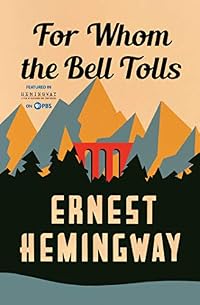
For Whom the Bell Tolls
by Ernest Hemingway 
On This Page
Description
Ernest Hemingway's masterpiece on war, love, loyalty, and honor tells the story of Robert Jordan, an antifascist American fighting in the Spanish Civil War.In 1937 Ernest Hemingway traveled to Spain to cover the civil war there for the North American Newspaper Alliance. Three years later he completed the greatest novel to emerge from "the good fight" and one of the foremost classics of war literature.
For Whom the Bell Tolls tells of loyalty and courage, love and defeat, and the tragic show more death of an ideal. Robert Jordan, a young American in the International Brigades, is attached to an antifascist guerilla unit in the mountains of Spain. In his portrayal of Jordan's love for the beautiful Maria and his superb account of a guerilla leader's last stand, Hemingway creates a work at once rare and beautiful, strong and brutal, compassionate, moving, and wise. Greater in power, broader in scope, and more intensely emotional than any of the author's previous works, For Whom the Bell Tolls stands as one of the best war novels ever written. show less
Tags
Recommendations



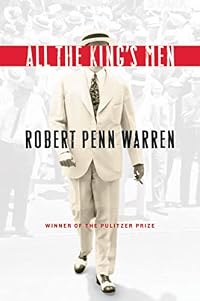
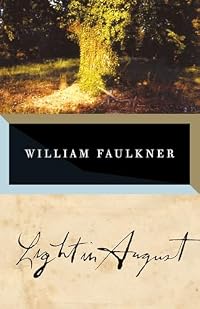
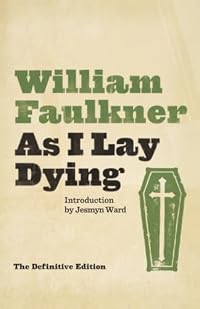
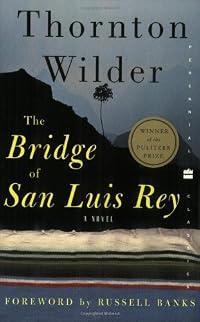


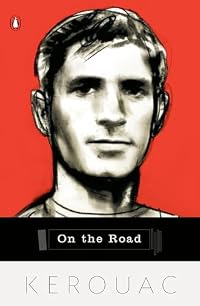
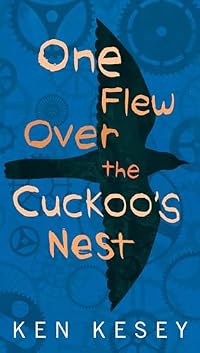
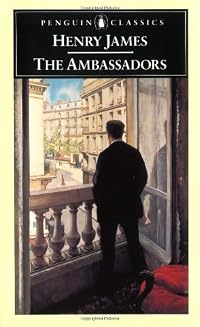
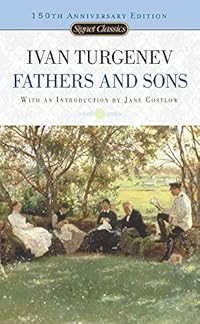
Member Recommendations

christiguc Dame Rose Macaulay's witty and brilliant novel on the Spanish Civil War.

Member Reviews
What struck me most in this novel was the language. Hemingway of course is known for his journalistic style, but there it was his willingness to mirror the Spanish language, making the distinction between the thou and the you to demonstrate familiarity and ultimately emotion.
The politics were well explained without being burdening; the cultural aspects and the horrors of the war are very moving and bring the readers into the story, especially at the end, where we are left alone with Jordan. Finally, I liked the flashback to the American Civil War - it made me better understand why Jordan was there in the first place, so all ties in well from a historical and psychological perspective. Definitely a tour de force.
The politics were well explained without being burdening; the cultural aspects and the horrors of the war are very moving and bring the readers into the story, especially at the end, where we are left alone with Jordan. Finally, I liked the flashback to the American Civil War - it made me better understand why Jordan was there in the first place, so all ties in well from a historical and psychological perspective. Definitely a tour de force.
Oh boy. The printer almost did me in with this one. I got to page 442 and the next page was 412. Only the fact that Jim had the text on Kindle saved me from self-explosion. And it's a library book! Didn't anyone tell the librarian about the defect?!?!
ok. got that said. Now, about the book.
I was somewhat surprised by how many people in my f2f reading group actively disliked this book. They objected to Hemingway's portrayal of women (gee, the younger one is pretty naive, and the older one isn't. right). They objected to his attempt to represent the difference between 'usted' and 'tu' in Spanish by using 'you' and 'thou', etc. in English. And I admit that some of the attempts to make the text sound like a translation from the Spanish were show more worse than awkward,and the editor did the story no favor in insisting that the naturally obscene language be masked so clumsily.
But what about the story? What about the naive volunteer trying his best to be a good soldier for a cause he thinks he believes in, in spite of what we know about the errors and excesses of that cause? The partisan band in the hills, trying to say alive so that they can go back to being farmers and vintners, each one delineated as a distinct person with frailties and honor in unique proportion? And the honesty of the brutality on both sides of this gruesome war, the ineptitude and cynicism of the commanders, the pain of both dying and killing, and the fatalism war can engender.
The intense writing made me see everything as if through a close-up lens. Although the language can seem moderately straightforward (and no, it's not all simple declarative sentences by any means), I had to slow down to capture the vivid detail, even when I wanted to story to move faster because the tension mounts even though the inevitability of the outcome seems clearer every step of the way.
Bad grammar, bad usage can pull me right out of a mediocre story, but nothing could pull me out of this one. show less
ok. got that said. Now, about the book.
I was somewhat surprised by how many people in my f2f reading group actively disliked this book. They objected to Hemingway's portrayal of women (gee, the younger one is pretty naive, and the older one isn't. right). They objected to his attempt to represent the difference between 'usted' and 'tu' in Spanish by using 'you' and 'thou', etc. in English. And I admit that some of the attempts to make the text sound like a translation from the Spanish were show more worse than awkward,and the editor did the story no favor in insisting that the naturally obscene language be masked so clumsily.
But what about the story? What about the naive volunteer trying his best to be a good soldier for a cause he thinks he believes in, in spite of what we know about the errors and excesses of that cause? The partisan band in the hills, trying to say alive so that they can go back to being farmers and vintners, each one delineated as a distinct person with frailties and honor in unique proportion? And the honesty of the brutality on both sides of this gruesome war, the ineptitude and cynicism of the commanders, the pain of both dying and killing, and the fatalism war can engender.
The intense writing made me see everything as if through a close-up lens. Although the language can seem moderately straightforward (and no, it's not all simple declarative sentences by any means), I had to slow down to capture the vivid detail, even when I wanted to story to move faster because the tension mounts even though the inevitability of the outcome seems clearer every step of the way.
Bad grammar, bad usage can pull me right out of a mediocre story, but nothing could pull me out of this one. show less
"Are there no pleasant things to speak of?...Do we have to talk always of horrors?" asks Maria at one point in For Whom the Bell Tolls.
Good question.
To be fair, For Whom the Bell Tolls isn't ALL about horrors. It even has some pleasant moments. But ultimately, it's about the selfless nature of war---which, though Hemingway clearly intends us to admire the acts of sacrifice to which the war incites his characters, I think is the greatest condemnation of war.
But Hemingway's portrayal of this theme is quite powerful. He isn't always consistent, but he is about as consistent as it is possible to be about such a theme and much more so than most, which is of great artistic value.
It's also generally very well written, much more so than (and show more something of a relief after reading) a lot of faux-Hemingway like John Steinbeck or Cormac McCarthy. And I thought this was much better than the only other Hemingway I've read, A Farewell to Arms. But there are a few passages that miss the mark, such as this almost comically bad sex scene: "...They were having now and before and always and now and now and now. Oh, now, now, now, the only now, and above all now, and there is no other now but thou now and now is thy prophet. Now and forever now. Come now, now, for there is no now but now. Yes, now. Now, please now, only now, not anything else only this now, and where are you and where am I and where is the other one, and not why, not ever why, only this now; and on and always please then always now, always now, for now always one now; one only one, there is no other one but one now, one, going now, rising now, sailing now, leaving now, wheeling now, soaring now, away now, all the way now, all of all the way now; one and one is one, is one, is one, is one, is still one, is still one, is one descendingly, is one softly, is one longingly, is one kindly, is one happily, is one in goodness, is one to cherish, is one now..." blah blah blah.
The mind-numbing repetitiousness of this "description" (if one can call it that) is especially unfortunate as it echoes another passage just a few pages earlier which is intended to have quite a different feel: "...muck this whole treacherous muckfaced mucking country and every mucking Spaniard in it on either side and to hell forever. Muck them to hell together, Largo, Prieto, Asensio, Miaja, Rojo, all of them. Muck every one of them to death to hell. Muck the whole treachery-ridden country. Muck their egotism and their selfishness and their selfishness and their egotism and their conceit and their treachery. Muck them to hell and always. Muck them before we die for them. Muck them after we die for them. Muck them to death and hell..." It goes on like this at some length.
But in the end, Hemingway affirms that there are "pleasant things to speak of": "That is in Madrid. Just over the hills there, and down across the plain. Down out of the gray rocks and the pines, the heather and the gorse, across the yellow high plateau you see it rising white and beautiful. That part is just as true as Pilar's old women drinking the blood down at the slaughterhouse. There's no one thing that's true. It's all true. The way the planes are beautiful whether they are ours or theirs." But the horrors win out in the end: "The hell they are, he thought." show less
Good question.
To be fair, For Whom the Bell Tolls isn't ALL about horrors. It even has some pleasant moments. But ultimately, it's about the selfless nature of war---which, though Hemingway clearly intends us to admire the acts of sacrifice to which the war incites his characters, I think is the greatest condemnation of war.
But Hemingway's portrayal of this theme is quite powerful. He isn't always consistent, but he is about as consistent as it is possible to be about such a theme and much more so than most, which is of great artistic value.
It's also generally very well written, much more so than (and show more something of a relief after reading) a lot of faux-Hemingway like John Steinbeck or Cormac McCarthy. And I thought this was much better than the only other Hemingway I've read, A Farewell to Arms. But there are a few passages that miss the mark, such as this almost comically bad sex scene: "...They were having now and before and always and now and now and now. Oh, now, now, now, the only now, and above all now, and there is no other now but thou now and now is thy prophet. Now and forever now. Come now, now, for there is no now but now. Yes, now. Now, please now, only now, not anything else only this now, and where are you and where am I and where is the other one, and not why, not ever why, only this now; and on and always please then always now, always now, for now always one now; one only one, there is no other one but one now, one, going now, rising now, sailing now, leaving now, wheeling now, soaring now, away now, all the way now, all of all the way now; one and one is one, is one, is one, is one, is still one, is still one, is one descendingly, is one softly, is one longingly, is one kindly, is one happily, is one in goodness, is one to cherish, is one now..." blah blah blah.
The mind-numbing repetitiousness of this "description" (if one can call it that) is especially unfortunate as it echoes another passage just a few pages earlier which is intended to have quite a different feel: "...muck this whole treacherous muckfaced mucking country and every mucking Spaniard in it on either side and to hell forever. Muck them to hell together, Largo, Prieto, Asensio, Miaja, Rojo, all of them. Muck every one of them to death to hell. Muck the whole treachery-ridden country. Muck their egotism and their selfishness and their selfishness and their egotism and their conceit and their treachery. Muck them to hell and always. Muck them before we die for them. Muck them after we die for them. Muck them to death and hell..." It goes on like this at some length.
But in the end, Hemingway affirms that there are "pleasant things to speak of": "That is in Madrid. Just over the hills there, and down across the plain. Down out of the gray rocks and the pines, the heather and the gorse, across the yellow high plateau you see it rising white and beautiful. That part is just as true as Pilar's old women drinking the blood down at the slaughterhouse. There's no one thing that's true. It's all true. The way the planes are beautiful whether they are ours or theirs." But the horrors win out in the end: "The hell they are, he thought." show less
Supposedly uncensored Estonian edition of "For Whom the Bell Tolls", but...
You'll probably wonder why an English speaker would read Ernest Hemingway in an Estonian translation. Aside from the simple answer of "because I can", the main answer is that "For Whom the Bell Tolls” has always been a problematic and awkward read in the original for me.
The reason for that is because Hemingway takes an affected stance as if he was writing in Spanish and the text was being simultaneously translated into English, which results in:
a. Awkward passages of broken English e.g.
"Do you come for us to do another train?" - Chapter 2
"Is the same to me. Better four good than much bad." - Chapter 11
b. Seemingly anachronistic Elizabethan English full of show more thous, thees and thys in an attempt to approximate the familiar form of address in Spanish e.g.
“... when thou wert wiping thy mother’s milk off thy chin.” - Chapter 11
“But did thee feel the earth move?” - Chapter 13
c. Hemingway’s self censorship with the use of the words “obscenity” & “unprintable” in place of rough language, resulting in passages such as
“Care well for thy unprintable explosive.” - Chapter 3
“I obscenity in the milk of thy tiredness.” - Chapter 9
d. The paradoxical use of those same curse words in the original Spanish, but left untranslated.
“But me cago en la leche, but I will be content when it starts.” - Chapter 39
All of those problems disappear in this supposedly uncensored 2014 edition of Enn Soosaar’s Estonian translation which was first published in 1970. (Unfortunately, I don’t own a copy of that original so I have to guess that the censorship was in the areas of both curse words and politics.) The speaking is translated normally, the Estonian familiar form is not anachronistic, logical choices of relatively minor curse words are used instead of “rõvedus” (obscenity) and the Spanish is translated in footnotes (with one exception that I noticed).
So the only catch is that they may have now printed all of Soosaar’s translation, but they don’t seem to have gone back to check whether he actually translated the entire thing in the first place. i.e. based on at least one example, I suspect Soosaar left untranslated some passages that he felt wouldn’t make it past the then Soviet censor in any case.
In chapter 27 aka "Sordo’s Last Stand" there is a paragraph:
"That they should aid us now," another man said. "That all the cruts* of Russian sucking swindlers should aid us now." He fired and said, “Me cago en tal, I missed.”
In the Estonian translation this reads as:
“Et nad aitaksid meid praegu,” ütles üks meestest. Ta tulistas ja ütles “Me cago en tal. Jälle lasksin mööda.”
You can probably tell that the middle sentence which curses the Russians has been left out in the Estonian. It would have read something like "Et kõik need sittad Vene imejad petturid peaksid aitama meid nüüd.”
Otherwise, this is a terrific translation which now made this work completely readable for me. It would be interesting to know how other international translators solve these sorts of issues.
*Hemingwayspeak for “shits” show less
You'll probably wonder why an English speaker would read Ernest Hemingway in an Estonian translation. Aside from the simple answer of "because I can", the main answer is that "For Whom the Bell Tolls” has always been a problematic and awkward read in the original for me.
The reason for that is because Hemingway takes an affected stance as if he was writing in Spanish and the text was being simultaneously translated into English, which results in:
a. Awkward passages of broken English e.g.
"Do you come for us to do another train?" - Chapter 2
"Is the same to me. Better four good than much bad." - Chapter 11
b. Seemingly anachronistic Elizabethan English full of show more thous, thees and thys in an attempt to approximate the familiar form of address in Spanish e.g.
“... when thou wert wiping thy mother’s milk off thy chin.” - Chapter 11
“But did thee feel the earth move?” - Chapter 13
c. Hemingway’s self censorship with the use of the words “obscenity” & “unprintable” in place of rough language, resulting in passages such as
“Care well for thy unprintable explosive.” - Chapter 3
“I obscenity in the milk of thy tiredness.” - Chapter 9
d. The paradoxical use of those same curse words in the original Spanish, but left untranslated.
“But me cago en la leche, but I will be content when it starts.” - Chapter 39
All of those problems disappear in this supposedly uncensored 2014 edition of Enn Soosaar’s Estonian translation which was first published in 1970. (Unfortunately, I don’t own a copy of that original so I have to guess that the censorship was in the areas of both curse words and politics.) The speaking is translated normally, the Estonian familiar form is not anachronistic, logical choices of relatively minor curse words are used instead of “rõvedus” (obscenity) and the Spanish is translated in footnotes (with one exception that I noticed).
So the only catch is that they may have now printed all of Soosaar’s translation, but they don’t seem to have gone back to check whether he actually translated the entire thing in the first place. i.e. based on at least one example, I suspect Soosaar left untranslated some passages that he felt wouldn’t make it past the then Soviet censor in any case.
In chapter 27 aka "Sordo’s Last Stand" there is a paragraph:
"That they should aid us now," another man said. "That all the cruts* of Russian sucking swindlers should aid us now." He fired and said, “Me cago en tal, I missed.”
In the Estonian translation this reads as:
“Et nad aitaksid meid praegu,” ütles üks meestest. Ta tulistas ja ütles “Me cago en tal. Jälle lasksin mööda.”
You can probably tell that the middle sentence which curses the Russians has been left out in the Estonian. It would have read something like "Et kõik need sittad Vene imejad petturid peaksid aitama meid nüüd.”
Otherwise, this is a terrific translation which now made this work completely readable for me. It would be interesting to know how other international translators solve these sorts of issues.
*Hemingwayspeak for “shits” show less
Maria was very hard on his bigotry. So far she had not affected his resolution but he would much prefer not to die. He would abandon a hero's or a martyr's end gladly. He did not want to make a Thermopylae, nor be Horatius at any bridge, nor be the Dutch boy with his finger in that dyke. No. He would like to spend some time with Maria. That was the simplest expression of it. He would like to spend a long, long time with her." (pp171-2).
There are a great many books that have a great reputation but fail to live up to them. Classic literature in particular can often have a reputation that those who slug through their weighty prose and dull characters find hard to fathom. In what must seem like heresy to many book lovers, I often personally show more prefer the notion of having read a book, rather than enjoying the act of reading it and immersing oneself in it. I anticipated a similar response from myself when I sat down to read my first Hemingway novel, For Whom the Bell Tolls. Thankfully, and somewhat to my surprise, it did not elicit such a response and touched something deeper and more joyful.
Set over three days, this nearly-500-page novel (in my paperback Arrow edition) is set in the Spanish Civil War of the 1930s, with Robert Jordan, an American volunteer for the Republican side, being ordered to meet up with a band of guerrilla fighters behind enemy lines and blow up a bridge for military reasons that one does not need to go into here (nor does one need to have a particular interest in history to enjoy the story). But it is more than just a war novel, as it is upon linking up with the guerrilla band that he meets Maria, and the story begins a romantic arc. Both the war and romance angles are well-developed and executed; indeed, so perfect is the balance between the two that, if pushed, one could not firmly place Hemingway's novel in either the war or the romance genre if it meant its unjust exclusion from the other.
It is a beautiful story expertly told; this is often called Hemingway's masterpiece and though, as I mentioned earlier, I have not (yet) read any of his other work, For Whom the Bell Tolls seems to show an author at the peak of his craft. The pacing is superb; one might reasonably assume that, given it stretches a three-day period over nearly 500 pages, it might stumble or digress or indulge on occasion - but it does not. Though it may seem strange to label it so for a book of this type, it is something of a page-turner from page one right through to its powerful ending. The strength of that ending is largely due to the impressive characterisation. With 500 pages to work with, Hemingway adds a depth and camaraderie to all the members of Jordan's diverse guerrilla band so that when the attack on the bridge does come, one is invested in each and every one of them.
True to its title, Hemingway lends a sense of inevitable doom to the novel. The spectre of the bridge looms large throughout the guerrilla camp for the three days that precede the battle, but it is not the only episode of tension. The story of the start of the 'movement' - the civil war - as told by Pilar to Robert Jordan and Maria in Chapter 10 is of a brooding, operatic brutality that, to my mind, would not be out of place as the opening set-piece of a Sergio Leone western. And the echoes of battle which torture Primitivo's ears in Chapter 25 also wear heavily on the reader as we share his anguish. As a journalist who covered the Spanish Civil War, Hemingway is also able to provide perceptive and wry commentary on the contemptuous nature of war, mostly from Robert Jordan's inner monologue but also from others. ('I hate these pistol brandishers,' one minor character states of his superior officer. 'They cannot give an order without jerking a gun out. They probably pull out their pistols when they go to the toilet and order the move they will make.' (pg. 329)).
It may seem churlish to propose any criticisms of the novel given my admiration for it, but some of the language of the novel seemed bizarre, to say the least, and these irregularities I found somewhat difficult to shake. All the characters speak with 'thou' and 'thee' (Understandest thou?' one character asks), which seems far too much of a formality for a mostly-peasant band of guerrillas ('Eatest thou always onions for breakfast?' goes another casual conversation). I understand Hemingway did this as a sort of transliteration from the Spanish 'tú', and employed other archaisms to suggest to the English-speaking reader that the characters are speaking a foreign language, but it does hinder one's immersion in the dialogue. It nagged at me persistently throughout the novel, and I found it hard to shake that I was not reading the Gospel According to Ernest ('guard well thy explosive' must be one of the lost commandments!). Furthermore, there is a lot of censoring of obscenities which borders on the absurd at times. Hemingway has a bit of fun with it ('go muck yourself' and 'we are mucked', for example) but it reaches such levels of unwieldy absurdity that at one point a character is asked, 'What are you doing now, you lazy drunken obscene unsayable son of an unnameable unmarried gypsy obscenity?' (pg. 32). Another guerrilla bemoans how they must 'blow up an obscene bridge and then have to obscenely well obscenity ourselves off out of these mountains', before instructing Jordan to 'go to the unprintable... and unprint thyself' (pg. 48). However, one does begin to become accustomed to these and some of the peculiar phrases I found rather enjoyable ('thou art rare' for when someone is acting strangely, or 'how art thou called?' instead of 'what is your name?', as two examples). Indeed, one might even have a bit of fun by replacing their own choice obscenities in place of the 'unspeakables' and 'unnameables'. But I still wouldn't drink the milk...
Overall, For Whom the Bell Tolls is a fantastic novel executed perfectly by a writer at his peak. Both the war and romance arcs of the story coalesce into a single ending that satisfies both arcs. Hemingway convincingly shows how a man and woman can meet and fall in love in just a few days ('What we do not have is time. Tomorrow we must fight. To me that is nothing. But for the Maria and me it means that we must live all of our life in this time.' (pg. 302)). Maria may seem rather timid and perhaps a bit of a doormat to modern readers (though she has suffered much from the war and can be excused her timidity and dutiful deference), but she is a nice tender foil for Robert Jordan's resoluteness. Similarly, the reader is never beaten over the head with an anti-war message; there are no glaringly obvious monologues about man's inhumanity to man, or clichéd political messages like 'why are we here?' shoehorned into the dialogue. Rather, Hemingway's impressive characterisation compels us to invest in the men and women of Jordan's guerrilla band as human beings, so that their loss is felt keenly, and the reader angrily condemns the war and violence that caused such losses. By painting such a rich tapestry of a civil war and allowing us to experience the loss it engenders ourselves, Hemingway creates a more powerful anti-war message than any novel that beats the reader over the head with a crude 'war is bad' cudgel ever could. When Hemingway does finally raise said cudgel ('War is a bitchery,' one character cries on pg. 484) it is brought down with grace and is well-placed in the context of an emotionally powerful ending. The ending of For Whom the Bell Tolls is perfect, satisfying both the war and romance arcs told within the novel. As Jordan says in something of an epiphany, 'If we win here we will win everywhere. The world is a fine place and worth the fighting for and I hate very much to leave it.' (pg. 485). This revelation captures the three main aspects of the story; in essence, it summarises the theme of the novel in two succinct sentences. In Maria, Robert Jordan found the perfect expression of all the finery and beauty the world had to offer. He believed this world, with all its finery, was why he was fighting the civil war there on that damnable bridge. And finally, as he is leaving it, when the bell tolls, he hates that he could not experience more of it with her. But he won anyway because he experienced the fullness of life in those three days. It is a truly breathtaking message well-articulated and a perfect end to a perfect novel." show less
There are a great many books that have a great reputation but fail to live up to them. Classic literature in particular can often have a reputation that those who slug through their weighty prose and dull characters find hard to fathom. In what must seem like heresy to many book lovers, I often personally show more prefer the notion of having read a book, rather than enjoying the act of reading it and immersing oneself in it. I anticipated a similar response from myself when I sat down to read my first Hemingway novel, For Whom the Bell Tolls. Thankfully, and somewhat to my surprise, it did not elicit such a response and touched something deeper and more joyful.
Set over three days, this nearly-500-page novel (in my paperback Arrow edition) is set in the Spanish Civil War of the 1930s, with Robert Jordan, an American volunteer for the Republican side, being ordered to meet up with a band of guerrilla fighters behind enemy lines and blow up a bridge for military reasons that one does not need to go into here (nor does one need to have a particular interest in history to enjoy the story). But it is more than just a war novel, as it is upon linking up with the guerrilla band that he meets Maria, and the story begins a romantic arc. Both the war and romance angles are well-developed and executed; indeed, so perfect is the balance between the two that, if pushed, one could not firmly place Hemingway's novel in either the war or the romance genre if it meant its unjust exclusion from the other.
It is a beautiful story expertly told; this is often called Hemingway's masterpiece and though, as I mentioned earlier, I have not (yet) read any of his other work, For Whom the Bell Tolls seems to show an author at the peak of his craft. The pacing is superb; one might reasonably assume that, given it stretches a three-day period over nearly 500 pages, it might stumble or digress or indulge on occasion - but it does not. Though it may seem strange to label it so for a book of this type, it is something of a page-turner from page one right through to its powerful ending. The strength of that ending is largely due to the impressive characterisation. With 500 pages to work with, Hemingway adds a depth and camaraderie to all the members of Jordan's diverse guerrilla band so that when the attack on the bridge does come, one is invested in each and every one of them.
True to its title, Hemingway lends a sense of inevitable doom to the novel. The spectre of the bridge looms large throughout the guerrilla camp for the three days that precede the battle, but it is not the only episode of tension. The story of the start of the 'movement' - the civil war - as told by Pilar to Robert Jordan and Maria in Chapter 10 is of a brooding, operatic brutality that, to my mind, would not be out of place as the opening set-piece of a Sergio Leone western. And the echoes of battle which torture Primitivo's ears in Chapter 25 also wear heavily on the reader as we share his anguish. As a journalist who covered the Spanish Civil War, Hemingway is also able to provide perceptive and wry commentary on the contemptuous nature of war, mostly from Robert Jordan's inner monologue but also from others. ('I hate these pistol brandishers,' one minor character states of his superior officer. 'They cannot give an order without jerking a gun out. They probably pull out their pistols when they go to the toilet and order the move they will make.' (pg. 329)).
It may seem churlish to propose any criticisms of the novel given my admiration for it, but some of the language of the novel seemed bizarre, to say the least, and these irregularities I found somewhat difficult to shake. All the characters speak with 'thou' and 'thee' (Understandest thou?' one character asks), which seems far too much of a formality for a mostly-peasant band of guerrillas ('Eatest thou always onions for breakfast?' goes another casual conversation). I understand Hemingway did this as a sort of transliteration from the Spanish 'tú', and employed other archaisms to suggest to the English-speaking reader that the characters are speaking a foreign language, but it does hinder one's immersion in the dialogue. It nagged at me persistently throughout the novel, and I found it hard to shake that I was not reading the Gospel According to Ernest ('guard well thy explosive' must be one of the lost commandments!). Furthermore, there is a lot of censoring of obscenities which borders on the absurd at times. Hemingway has a bit of fun with it ('go muck yourself' and 'we are mucked', for example) but it reaches such levels of unwieldy absurdity that at one point a character is asked, 'What are you doing now, you lazy drunken obscene unsayable son of an unnameable unmarried gypsy obscenity?' (pg. 32). Another guerrilla bemoans how they must 'blow up an obscene bridge and then have to obscenely well obscenity ourselves off out of these mountains', before instructing Jordan to 'go to the unprintable... and unprint thyself' (pg. 48). However, one does begin to become accustomed to these and some of the peculiar phrases I found rather enjoyable ('thou art rare' for when someone is acting strangely, or 'how art thou called?' instead of 'what is your name?', as two examples). Indeed, one might even have a bit of fun by replacing their own choice obscenities in place of the 'unspeakables' and 'unnameables'. But I still wouldn't drink the milk...
Overall, For Whom the Bell Tolls is a fantastic novel executed perfectly by a writer at his peak. Both the war and romance arcs of the story coalesce into a single ending that satisfies both arcs. Hemingway convincingly shows how a man and woman can meet and fall in love in just a few days ('What we do not have is time. Tomorrow we must fight. To me that is nothing. But for the Maria and me it means that we must live all of our life in this time.' (pg. 302)). Maria may seem rather timid and perhaps a bit of a doormat to modern readers (though she has suffered much from the war and can be excused her timidity and dutiful deference), but she is a nice tender foil for Robert Jordan's resoluteness. Similarly, the reader is never beaten over the head with an anti-war message; there are no glaringly obvious monologues about man's inhumanity to man, or clichéd political messages like 'why are we here?' shoehorned into the dialogue. Rather, Hemingway's impressive characterisation compels us to invest in the men and women of Jordan's guerrilla band as human beings, so that their loss is felt keenly, and the reader angrily condemns the war and violence that caused such losses. By painting such a rich tapestry of a civil war and allowing us to experience the loss it engenders ourselves, Hemingway creates a more powerful anti-war message than any novel that beats the reader over the head with a crude 'war is bad' cudgel ever could. When Hemingway does finally raise said cudgel ('War is a bitchery,' one character cries on pg. 484) it is brought down with grace and is well-placed in the context of an emotionally powerful ending. The ending of For Whom the Bell Tolls is perfect, satisfying both the war and romance arcs told within the novel. As Jordan says in something of an epiphany, 'If we win here we will win everywhere. The world is a fine place and worth the fighting for and I hate very much to leave it.' (pg. 485). This revelation captures the three main aspects of the story; in essence, it summarises the theme of the novel in two succinct sentences. In Maria, Robert Jordan found the perfect expression of all the finery and beauty the world had to offer. He believed this world, with all its finery, was why he was fighting the civil war there on that damnable bridge. And finally, as he is leaving it, when the bell tolls, he hates that he could not experience more of it with her. But he won anyway because he experienced the fullness of life in those three days. It is a truly breathtaking message well-articulated and a perfect end to a perfect novel." show less
A really good book - if you read it appropriately. I liked it, despite two very negative opinions I got before I read it, from people I respect. You just have to ignore the melodrama, even to the point of simply skipping over the multiple pages of ill-fated romance and teary-eyed drivel. And never, ever, go to see the film. So what's so good about it? Well, for one thing it's very evocative; even for someone with no experience of Spain or Latin culture, I found myself immersed in the peasant Spanish lifestyle, the diverse set of characters, each with their own coarse and earthy appeal. Secondly, it is a gripping plot. Although the protagonist says right at the beginning that it will all end badly, there's real tension in how events show more unfold and, even knowing the tragic outcome of the civil war as a whole, the reader is somewhat drawn into believing that everything might be OK. There are also a couple of lengthy excursions into flashbacks, detailing some of the atrocities committed by both sides, and, although irritating at points, it does round out the image of a small group of people, trying to keep their heads above water in a drowning country. Finally, it's a fairly bleak portrayal of war, as it was fought in the 1930s. I fear that it's a little too heroic for my taste - there's a lot of talk about self sacrifice and giving your life for others - which is a theme I find distasteful. But in the context of the brutal, callous, and ultimately futile war, I think this is a wrenching counterpoint. "Blowing up a bridge" has almost become a iconic symbol of military futility and wasted lives. show less
I continue to be amazed at the way with which Ernest Hemingway can paint such a powerful, profound work of art with so few words. I suspect that even when I have finished all of his novels, I still will not understand this. It isn't something that I would wish to copy--it is his own writing style, not mine, and besides, I could never pull it off as elegantly. But the fact that he has created for himself such a unique style is something that I wish to emulate in my own writing. For Whom the Bell Tolls is a novel of war without flowery language or sugarcoating. It does not glorify battle, not even in the case of success. Hemingway has laid out for his readers a strikingly blunt portrayal of the blurred line between duty and apathy, and show more the immoral strategies employed by both sides of a conflict. But in its own way, it arrives at the conclusion that all of humanity is connected through the inherent ability of all men to feel, and to love, and that because no side is morally superior to the other, no man is ever a real hero.
This is a difficult novel to read, and should only be attempted with significant knowledge of the Spanish-American War. But all of the research that I did alongside reading For Whom the Bell Tolls was worth it. It was much easier to understand the plot line of the book when I knew the history behind it. The story also contains the first truly strong woman that I have ever seen Hemingway write. Most of the time, his women seem to be rather two-dimensional; they seem to exist merely as symbols, simply to allow the main male character to fall in love with them and discover his emotional side. Maria was a prime example of this. However, as I read in Hemingway's autobiography A Moveable Feast this summer, his wife was a very profound influence in his life, and I have wondered since why he didn't write her more often. Pilar, the unspoken leader of the guerrilla force, has hopes, fears, strengths and weaknesses. She is well rounded, believable, and flawed. She is undoubtedly my favorite character in the story.
I would recommend this novel to anyone willing not only to do the research, but to really sit down and enjoy the novel. It really is worth the time, if you have it. show less
This is a difficult novel to read, and should only be attempted with significant knowledge of the Spanish-American War. But all of the research that I did alongside reading For Whom the Bell Tolls was worth it. It was much easier to understand the plot line of the book when I knew the history behind it. The story also contains the first truly strong woman that I have ever seen Hemingway write. Most of the time, his women seem to be rather two-dimensional; they seem to exist merely as symbols, simply to allow the main male character to fall in love with them and discover his emotional side. Maria was a prime example of this. However, as I read in Hemingway's autobiography A Moveable Feast this summer, his wife was a very profound influence in his life, and I have wondered since why he didn't write her more often. Pilar, the unspoken leader of the guerrilla force, has hopes, fears, strengths and weaknesses. She is well rounded, believable, and flawed. She is undoubtedly my favorite character in the story.
I would recommend this novel to anyone willing not only to do the research, but to really sit down and enjoy the novel. It really is worth the time, if you have it. show less
Members
- Recently Added By
Published Reviews
ThingScore 100
Hemingway the artist is with us again; and it is like having an old friend back. That he should thus go back to his art, after a period of artistic demoralization, and give it a larger scope, that, in an era of general perplexity and panic, he should dramatize the events of the immediate past in terms, not of partisan journalism, but of the common human instincts that make men both fraternal show more and combative, is a reassuring evidence of the soundness of our intellectual life. show less
added by danielx
The greatness of this book is the greatness of these people's triumph over their foreknowledge of death-to-come... For Whom the Bell Tolls, unlike other novels of the Spanish Civil War, is told not in terms of the heroics and dubious politics of the International Brigades, but as a simple human struggle of the Spanish people. The bell in this book tolls for all mankind.
added by jjlong
Lists

1001 Books You Must Read Before You Die
1,448 works; 1,132 members

The Guardian's 1000 Novels Everyone Must Read
1,005 works; 549 members

Radcliffe's 100 Best Novel of the 20th Century
100 works; 32 members
Le Monde - Les 100 livres du siècle
121 works; 25 members

Newsweek's Top 100 Books: The Meta-List
100 works; 18 members

The Telegraph's 110 Best Books: The Perfect Library
101 works; 18 members

The Top Ten: Writers Pick Their Favorite Books
240 works; 31 members
New York Public Library's Books of the Century
120 works; 19 members

Great American Novels
158 works; 42 members
Favourite Books
1,817 works; 316 members
1940s
221 works; 25 members
20th Century Literature
1,161 works; 55 members

Top Five Books of 2013
1,564 works; 722 members
BBC's 100 Novels That Shaped Our World
100 works; 22 members

New York Public Library's Books of the Century - All
170 works; 14 members

Best War Stories
87 works; 16 members
Banned Books Week 2014
268 works; 63 members

Unread books
1,063 works; 87 members
Banned or Challenged Books
400 works; 37 members

War Literature
101 works; 17 members

Love and Marriage
93 works; 10 members

Top Five Books of 2021
604 works; 181 members
Blue Pyramid 1,276 Best Books of All Time
1,248 works; 32 members

1964 College Preparatory Reading List
202 works; 8 members

Top Five Books of 2014
1,064 works; 397 members
1,001 BYMRBYD Concensus
723 works; 27 members

Anthony Burgess 99 Post War Novels
99 works; 7 members

A Novel Cure
742 works; 23 members
100 World Classics
99 works; 15 members
Jordan B. Peterson's Recommended Books
104 works; 5 members
My list of 100 books to read next
100 works; 4 members
Mensa for Kids Excellence in Reading Award Program (Grades 9-12)
116 works; 5 members

Publisher's Weekly Bestsellers - Part II - 1940 - 1979
355 works; 5 members
Best of American Literature
146 works; 9 members

Modernism
140 works; 8 members
Mensa for Kids Excellence in Reading Award Program (Grades 9-12)
116 works; 3 members

Europe
205 works; 6 members

Books Read in 2023
5,547 works; 145 members
Trinity College Booklist (1951): Class Ten, English Literature
358 works; 5 members

Literature which inspired Pop songs
85 works; 9 members
DELETE
48 works; 2 members

CCE 1000 Good Books List
1,033 works; 12 members

Plan to Read Books
75 works; 1 member

Books Read in 2017
4,248 works; 130 members

Tammen Keltainen kirjasto
81 works; 1 member

http://thegreatestbooks.org's Greatest Fiction Books
59 works; 1 member
American Lit for Eng 11 Research Project
368 works; 6 members
Books in Riverdale
123 works; 3 members

THE WAR ROOM
813 works; 24 members

DigitalDreamDoor top 300
300 works; 4 members

.
194 works; 2 members

Recommended Reading : 600 Classics Reviewed, Editors of Salem Press, 2015
634 works; 6 members

Check Library
169 works; 1 member

Books With the Most Memorable Titles
478 works; 158 members

AP Lit
363 works; 6 members
Best War Fiction Books
41 works; 4 members

Greatest Books, allegedly
484 works; 9 members

The Art of Manliness' 100+ Books Every Man Should Read
108 works; 2 members
Novels/Poems/Short Stories/Anything Storytelling Related
112 works; 2 members

Authors from the United States
245 works; 3 members

infjsarah's wishlist
408 works; 2 members

Books about the Spanish Civil War
57 works; 3 members

Sonlight Books
1,487 works; 25 members
.
396 works; 1 member
Historical Fiction
889 works; 91 members

Favorite Long Books
330 works; 42 members
Talk Discussions
Past Discussions
Group Read, January 2014: For Whom The Bell Tolls in 1001 Books to read before you die (January 2014)
Author Information

652+ Works 173,064 Members
Ernest Miller Hemingway was born in the family home in Oak Park, Ill., on July 21, 1899. In high school, Hemingway enjoyed working on The Trapeze, his school newspaper, where he wrote his first articles. Upon graduation in the spring of 1917, Hemingway took a job as a cub reporter for the Kansas City Star. After a short stint in the U.S. Army as a show more volunteer Red Cross ambulance driver in Italy, Hemingway moved to Paris, and it was here that Hemingway began his well-documented career as a novelist. Hemingway's first collection of short stories and vignettes, entitled In Our Time, was published in 1925. His first major novel, The Sun Also Rises, the story of American and English expatriates in Paris and on excursion to Pamplona, immediately established him as one of the great prose stylists and preeminent writers of his time. In this book, Hemingway quotes Gertrude Stein, "You are all a lost generation," thereby labeling himself and other expatriate writers, including F. Scott Fitzgerald, T.S. Eliot, and Ford Madox Ford. Other novels written by Hemingway include: A Farewell To Arms, the story, based in part on Hemingway's life, of an American ambulance driver on the Italian front and his passion for a beautiful English nurse; For Whom the Bell Tolls, the story of an American who fought, loved, and died with the guerrillas in the mountains of Spain; and To Have and Have Not, about an honest man forced into running contraband between Cuba and Key West. Non-fiction includes Green Hills of Africa, Hemingway's lyrical journal of a month on safari in East Africa; and A Moveable Feast, his recollections of Paris in the Roaring 20s. In 1954, Hemingway won the Nobel Prize in Literature for his novella, The Old Man and the Sea. A year after being hospitalized for uncontrolled high blood pressure, liver disease, diabetes, and depression, Hemingway committed suicide on July 2, 1961, in Ketchum, Idaho. (Bowker Author Biography) show less
Ernest Hemingway has a Legacy Library. Legacy libraries are the personal libraries of famous readers, entered by LibraryThing members from the Legacy Libraries group.
Some Editions
Awards and Honors
Distinctions
Notable Lists
Hungarian Big Read (53)
Series
Belongs to Publisher Series
The Scribner Library (SL 4)
Atlasreeks (36)
Fischer Taschenbuch (408)
Zephyr Books (26)
Nobelpreisträger Coron-Verlag (weiß) (1954 (USA))
Lanterne (L 73)
A tot vent (158)
Gallimard, Folio (455)
Work Relationships
Is contained in
A Farewell to Arms / For Whom The Bell Tolls / The Old Man and the Sea / The Sun Also Rises by Ernest Hemingway
The Sun Also Rises / A Farewell to Arms / To Have and Have Not / The Old Man and the Sea / For Whom the Bell Tolls by Ernest Hemingway
For Whom the Bell Tolls / The Snows of Kilimanjaro / Fiesta / The Short Happy Life of Francis Macomber / Across the River and into the Trees / The Old Man and the Sea by Ernest Hemingway
Ernest Hemingway Book-of-the-Month-Club Set of 6: A Farewell to Arms, A Moveable Feast, For Whom the Bell Tolls, The Sun Also Rises, The Old Man and the Sea, The Complete Short Stories by Ernest Hemingway
A Moveable Feast / For Whom the Bell Tolls / A Farewell to Arms / The Sun Also Rises by Ernest Hemingway
A Farewell to Arms / For Whom the Bell Tolls / The Sun Also Rises / Death in the Afternoon by Ernest Hemingway
Ernest Hemingway - Four Novels - Complete and Unabridged: The Sun Also Rises, A Farewell to Arms, For Whom the Bell Tolls, The Old Man and the Sea by Ernest Hemingway
The Sun Also Rises / A Farewell to Arms / To Have and Have Not / For Whom the Bell Tolls by Ernest Hemingway
6 Volume Set: Death in the Afternoon / A Farewell to Arms / The Fifth Column and the First 49 Stories / For Whom the Bell Tolls / The Sun Also Rises / To Have and to Have Not by Ernest Hemingway
The Sun Also Rises / A Farewell to Arms / For Whom the Bell Tolls / The Old Man and the Sea / The Complete Short Stories by Ernest Hemingway
Contains
Has the adaptation
Has as a study
Has as a commentary on the text
Has as a student's study guide
Common Knowledge
- Canonical title
- For Whom the Bell Tolls
- Original title
- For Whom the Bell Tolls
- Alternate titles*
- Klukkan kallar
- Original publication date
- 1940
- People/Characters
- Robert Jordan; Maria; Pablo; Pilar; Anselmo; Agustin (show all 13); Primitivo; Eladio; Fernando; Golz; Andres; Rafael; Dolores Ibárruri (La Pasionaria)
- Important places
- Spain
- Important events
- Spanish Civil War
- Related movies
- For Whom the Bell Tolls (1943 | IMDb); For Whom the Bell Tolls (1965 | IMDb)
- Epigraph
- No man is an Island, entire of it self; every man is a piece of the Continent, a part of the maine; if a clod be washed away by the Sea, Europe is the lesser, as well as if a Promontorie were, as well as if a Mannor of thy fr... (show all)iends or of thine own were; any man's death diminishes me, because I am involved in Mankind; And therefore never tend to know for whom the bell tolls; It tolls for thee. —John Dunne
- Dedication
- This book is for Martha Gellhorn
- First words
- He lay flat on the brown, pine-needled floor of the forest, his chin on his folded arms, and high overhead the wind blew in the tops of the pine trees.
- Quotations
- Your nationality and your politics did not show when you were dead.
- Last words
- (Click to show. Warning: May contain spoilers.)Robert Jordan could hear his heart pounding against the pine needle floor of the forest.
- Publisher's editor*
- Szilágyi N, Sándor
- Original language
- English
*Some information comes from Common Knowledge in other languages. Click "Edit" for more information.
Classifications
Statistics
- Members
- 21,502
- Popularity
- 256
- Reviews
- 221
- Rating
- (3.93)
- Languages
- 51 — Afrikaans, Albanian, Arabic, Armenian, Basque, Belarusian, Bulgarian, Catalan, Czech, Danish, Dutch, English, Esperanto, Estonian, Finnish, French, Georgian, German, Irish, Galician, Greek, Hebrew, Hindi, Hungarian, Icelandic, Indonesian, Italian, Japanese, Korean, Latvian, Lithuanian, Macedonian, Norwegian (Bokmål), Norwegian, Farsi/Persian, Polish, Romanian, Russian, Serbian, Croatian, Slovak, Slovenian, Spanish, Swedish, Turkish, Ukrainian, Welsh, Portuguese (Portugal), Portuguese (Brazil), Chinese, traditional, Chinese, simplified
- Media
- Paper, Audiobook, Ebook
- ISBNs
- 279
- UPCs
- 2
- ASINs
- 302