
On This Page
Description
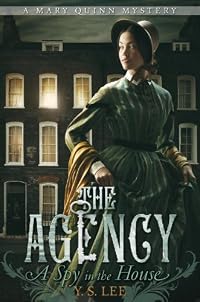
Introducing an exciting new series! Steeped in Victorian atmosphere and intrigue, this diverting mystery trails a feisty heroine as she takes on a precarious secret assignment. Rescued from the gallows in 1850s London, young orphan (and thief) Mary Quinn is surprised to be offered a singular education, instruction in fine manners — and an unusual vocation. Miss Scrimshaw's Academy for Girls is a cover for an all-female investigative unit called The Agency, and at seventeen, Mary is about show more to put her training to the test. Assuming the guise of a lady's companion, she must infiltrate a rich merchant's home in hopes of tracing his missing cargo ships. But the household is full of dangerous deceptions, and there is no one to trust — or is there? Packed with action and suspense, banter and romance, and evoking the gritty backstreets of Victorian London, this breezy mystery debuts a daring young detective who lives by her wits while uncovering secrets — including those of her own past.. show less
Tags
Recommendations

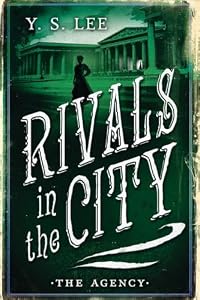
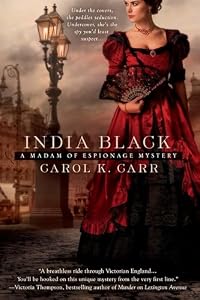
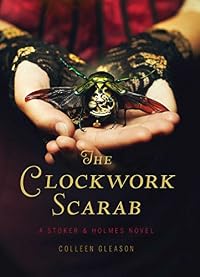
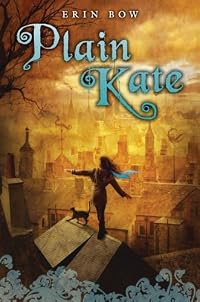

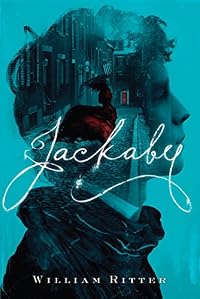

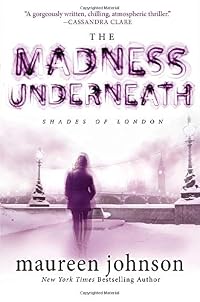
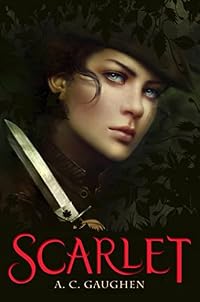
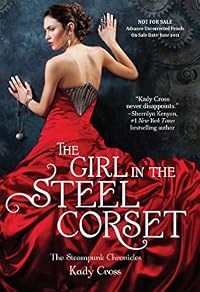
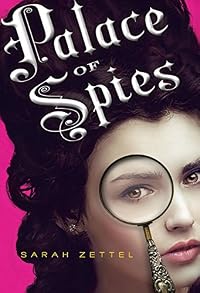
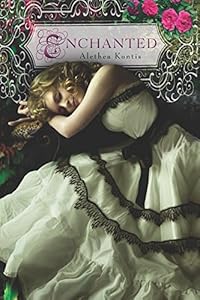

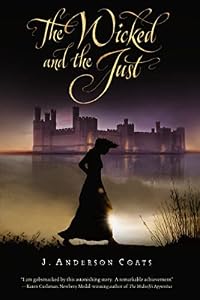
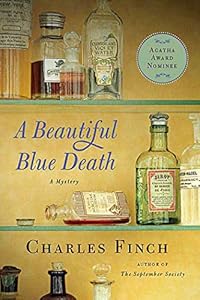
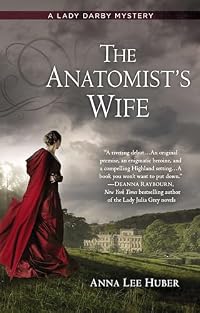

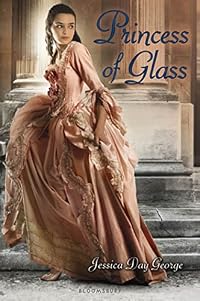
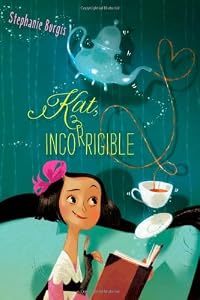
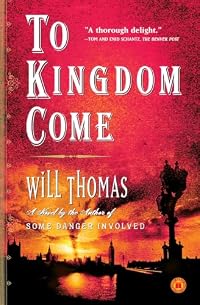
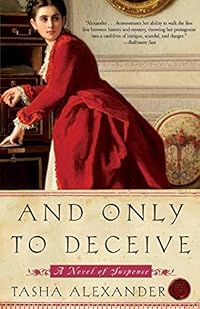
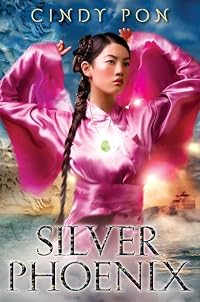
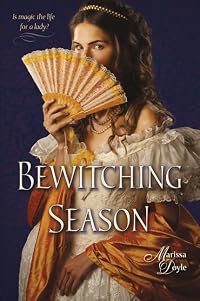
Member Recommendations
Caramellunacy Both stories are Victorian-era mysteries with smart and feisty female protagonists. Pullman's trilogy is definitely the darker of the two series, but Lee's complex and capable protagonist makes The Agency series well worth a read for cozy mystery lovers.
60
radicalrayray Both of these books have a girl trying to find who she is and ends up becoming a spy.
20
kathleen.morrow While Lee doesn't include paranormal elements, the tales are similar in their suspenseful nature, their realistic Victorian setting, and their strong female characters.

Member Reviews
Mary Quinn is an orphan, condemned to hang for stealing. She is rescued by two well-dressed women who train her, first in a normal school for girls and then as a spy. She’s assigned to pose as a companion for a girl named Angelica Thorold and gather evidence on her father, a businessman who is suspected of some kind of illegal something in India. Mary also meets Mr. Thorold’s suspicious business partner Michael Grey, and two of Angelica’s suitors – George and James Easton.
Unfortunately, I didn't care for this book at all. The plot was okay though unoriginal (in fact, the first half was almost the same as An Extraordinary Union, but not as good). Something about the writing style really rubbed me the wrong way. It very frequently show more told the reader that things had happened instead of showing them. For example, Mary is rescued and has a conversation with the heads of the school. Then the plot skips ahead several years to when Mary is done with school and has an identical conversation with the heads of the school about joining the Agency. Then, the plot skips ahead again and she has an identical conversation about going on her first assignment. I can understand if the author did not want to write about Mary’s time at school or her training (though I would much rather read that book), but why not just deal with them in flashbacks instead of awkward time jumps between identical recap conversations? The narration is a tight 1st person that alternates between Mary and Michael. This can be used effectively sometimes but is not here. One of the most interesting events of the story is heard by Michael from Mary, instead of experienced through her eyes. Also, the reader learns a secret about Mary through her POV, when it doesn’t make sense that she would not have been thinking about her secret the whole time. Why not use Michael’s POV for that? It took me a long time to get through the book because I just couldn't sustain interest and kept getting frustrated by annoying writing. I won't be continuing with this series (and maybe I should stop reading so many mysteries, because I have these same problems with a lot of them). I’d rather read something similar but better written, like Philip Pullman’s Sally Lockhart books or Gail Carriger’s Finishing School. show less
Unfortunately, I didn't care for this book at all. The plot was okay though unoriginal (in fact, the first half was almost the same as An Extraordinary Union, but not as good). Something about the writing style really rubbed me the wrong way. It very frequently show more told the reader that things had happened instead of showing them. For example, Mary is rescued and has a conversation with the heads of the school. Then the plot skips ahead several years to when Mary is done with school and has an identical conversation with the heads of the school about joining the Agency. Then, the plot skips ahead again and she has an identical conversation about going on her first assignment. I can understand if the author did not want to write about Mary’s time at school or her training (though I would much rather read that book), but why not just deal with them in flashbacks instead of awkward time jumps between identical recap conversations? The narration is a tight 1st person that alternates between Mary and Michael. This can be used effectively sometimes but is not here. One of the most interesting events of the story is heard by Michael from Mary, instead of experienced through her eyes. Also, the reader learns a secret about Mary through her POV, when it doesn’t make sense that she would not have been thinking about her secret the whole time. Why not use Michael’s POV for that? It took me a long time to get through the book because I just couldn't sustain interest and kept getting frustrated by annoying writing. I won't be continuing with this series (and maybe I should stop reading so many mysteries, because I have these same problems with a lot of them). I’d rather read something similar but better written, like Philip Pullman’s Sally Lockhart books or Gail Carriger’s Finishing School. show less
Saved from the gallows at the age of twelve, Mary Quinn was taken in by Miss Scrimshaw's Academy for Girls where she was educated and given a job as a teacher. At seventeen, Mary wants something more from life and is surprised when her teachers invite her to join the Agency, a secret group of women investigators that work out of the school. Her first assignment is innocuous: serve as companion to Miss Thorold and observe goings on in the house for clues about suspected smuggling. But no mystery is truly innocuous and Mary finds herself in deeper than anyone anticipated.
An excellent Victorian YA mystery novel. Mary is a complex and well-drawn character with an history almost as intriguing as the central mystery itself. Happily, Mary is show more surrounded by supporting characters who are equally interesting and a romantic interest who is lovely. Also quite well done is the evocation of the Victorian period. The novel is full of small but accurate details and set during the Great Stink in London, which adds a rich texture to the background of the narrative. A fun mystery that I race through, I'll be picking up the next two books in the trilogy very soon. show less
An excellent Victorian YA mystery novel. Mary is a complex and well-drawn character with an history almost as intriguing as the central mystery itself. Happily, Mary is show more surrounded by supporting characters who are equally interesting and a romantic interest who is lovely. Also quite well done is the evocation of the Victorian period. The novel is full of small but accurate details and set during the Great Stink in London, which adds a rich texture to the background of the narrative. A fun mystery that I race through, I'll be picking up the next two books in the trilogy very soon. show less
The story opens as 12 year old Mary Quinn is sentenced to death for stealing. Instead, she is rescued and taken to Miss Scrimshaw's Academy for Girls which takes in young girls who would otherwise not have had a chance of being educated.
Five years on, she feels she wants to do more with her life than teach - and so she is introduced to the Agency, which takes on ... ah, delicate ... investigations, and is sent on her first mission; to which end she is engaged as a lady's companion to the daughter of a merchant whose ships have been mysteriously disappearing. Could this be linked to Mary's past, which she has learned to keep hidden? As this is to be a learning experience for her, Mary is instructed to observe only but her curiosity show more compels her to do her own investigating and this lands her in trouble and even danger. And a certain young man keeps getting in the way.
This is a period story but I couldn't pin down the period. I'm used to the manners of the gentlemen and gentlewomen of Jane Austen's novels but this book is set in a merchant's house and Mary learned to survive on the streets so it is acceptable that the manners of the characters are very different and I'm not familiar enough with the times to bring my usual complaint of anachronisms.
It was interesting to see things from a different class perspective from my usual reading and I felt that the narrative flowed reasonably evenly.
January 2021
3 stars show less
Five years on, she feels she wants to do more with her life than teach - and so she is introduced to the Agency, which takes on ... ah, delicate ... investigations, and is sent on her first mission; to which end she is engaged as a lady's companion to the daughter of a merchant whose ships have been mysteriously disappearing. Could this be linked to Mary's past, which she has learned to keep hidden? As this is to be a learning experience for her, Mary is instructed to observe only but her curiosity show more compels her to do her own investigating and this lands her in trouble and even danger. And a certain young man keeps getting in the way.
This is a period story but I couldn't pin down the period. I'm used to the manners of the gentlemen and gentlewomen of Jane Austen's novels but this book is set in a merchant's house and Mary learned to survive on the streets so it is acceptable that the manners of the characters are very different and I'm not familiar enough with the times to bring my usual complaint of anachronisms.
It was interesting to see things from a different class perspective from my usual reading and I felt that the narrative flowed reasonably evenly.
January 2021
3 stars show less
Once a student, orphan Mary Quinn is now a teacher herself at Miss Scrimshaw's Academy for Girls in London, 1858. When one of the head teachers offers her a mysterious post in a spy agency, Mary jumps at the opportunity to take on a role with much excitement potential. Her first assignment is ostensibly tame: to become a paid companion to a Miss Angelica Thorold, a teenager whose wealthy family is suspected of having ties to international smuggling, in hopes that Mary will overhear important business conversations.
I was wholly charmed by this first in a historical mystery series, and have already requested the second book. In a time where even intelligent women are expected to be acquiescent and simpering, Mary is capable, smart and show more spirited in her investigative efforts. show less
I was wholly charmed by this first in a historical mystery series, and have already requested the second book. In a time where even intelligent women are expected to be acquiescent and simpering, Mary is capable, smart and show more spirited in her investigative efforts. show less
If, like me, the Sally Lockhart books by Philip Pullman are amongst your favourites, pick up The Agency #1: A Spy in the House right now, and I do mean RIGHT now. I'm so glad this is the first in a trilogy. So so so so glad.
The Agency focuses on Mary Quinn, who's a seventeen-year-old spy in Victorian London. That alone, pretty damn cool. Add to that that the Agency she works for is kind of my dream NGO, a place where they give young women the education they need to be able to make choices in life other than throwing themselves into marriage and parenthood. It's a strongly feminist organization and for that I say thank you. Let me tell you all the ways this book was amazing:
- Mary Quinn, the main character. She's a wonderful heroine show more you'll want to be friends with. Besides, I can't think of any other Victorian-era book that has as its main protagonist a young woman who's not white. It was very nice to see the author explore how the Other was treated in Victorian London.
- The great sense of the period. You know how Victorian London feels like and smells like. I was absolutely transported into the story. The author did her PhD on the Victorian era and it really shows. It was wonderful, and every detail serves the story, they're not here for embellishment or because the author fetichizes the period.
- The cast of secondary characters. I don't want to spoil here but the female characters especially were really well fleshed-out. I loved Angelica's story & growth.
- The feminist point of view. It's there, nobody shys away from it and it's written so you understand its importance. I thought it was brilliantly brought up. From the existence of the Agency itself to how much Mary believes in real equality and the author showed just how some aspects of misogyny truly haven't changed one bit.
- The romance was believable, and I truly loved the end. I didn't fall for the male interest and I was very pleasantly surprised with the end which I thought was very sensible. You realize the author knows what she's doing - she sometimes does mock stereotypical settings and has the heroine dismiss them as too cliché within the story. I like metatextuality, seemed to me Y.S. Lee was making fun of stories that are a little too conventional and I thought that was brilliant.
This book is a refreshing, exciting read. I had many questions after closing it but I'll keep them to myself for now. What I can do in the meantime is order the second book (The Body at the Tower, which is already out) and stalk the author on her journal and Twitter. I feel like such a fool squeeing alone over this wonderful novel but this is why I value the Internet so much - I already know that lots of people loved this book as much as I did and I can't wait to see what everybody has to say! show less
The Agency focuses on Mary Quinn, who's a seventeen-year-old spy in Victorian London. That alone, pretty damn cool. Add to that that the Agency she works for is kind of my dream NGO, a place where they give young women the education they need to be able to make choices in life other than throwing themselves into marriage and parenthood. It's a strongly feminist organization and for that I say thank you. Let me tell you all the ways this book was amazing:
- Mary Quinn, the main character. She's a wonderful heroine show more you'll want to be friends with. Besides, I can't think of any other Victorian-era book that has as its main protagonist a young woman who's not white. It was very nice to see the author explore how the Other was treated in Victorian London.
- The great sense of the period. You know how Victorian London feels like and smells like. I was absolutely transported into the story. The author did her PhD on the Victorian era and it really shows. It was wonderful, and every detail serves the story, they're not here for embellishment or because the author fetichizes the period.
- The cast of secondary characters. I don't want to spoil here but the female characters especially were really well fleshed-out. I loved Angelica's story & growth.
- The feminist point of view. It's there, nobody shys away from it and it's written so you understand its importance. I thought it was brilliantly brought up. From the existence of the Agency itself to how much Mary believes in real equality and the author showed just how some aspects of misogyny truly haven't changed one bit.
- The romance was believable, and I truly loved the end. I didn't fall for the male interest and I was very pleasantly surprised with the end which I thought was very sensible. You realize the author knows what she's doing - she sometimes does mock stereotypical settings and has the heroine dismiss them as too cliché within the story. I like metatextuality, seemed to me Y.S. Lee was making fun of stories that are a little too conventional and I thought that was brilliant.
This book is a refreshing, exciting read. I had many questions after closing it but I'll keep them to myself for now. What I can do in the meantime is order the second book (The Body at the Tower, which is already out) and stalk the author on her journal and Twitter. I feel like such a fool squeeing alone over this wonderful novel but this is why I value the Internet so much - I already know that lots of people loved this book as much as I did and I can't wait to see what everybody has to say! show less
(spoiler)
It was nice to see someone who isn't chalky white in a historical mystery/romance. This weighs over my 'you were told to stay in the car' frustration as Mary pokes her nose into cracks far beyond the scope of her assignment. But I really enjoyed the romantic side, as Mary and James rub edges off each other.
I'd give this to fans of Sally Lockheart, for sure.
It was nice to see someone who isn't chalky white in a historical mystery/romance. This weighs over my 'you were told to stay in the car' frustration as Mary pokes her nose into cracks far beyond the scope of her assignment. But I really enjoyed the romantic side, as Mary and James rub edges off each other.
I'd give this to fans of Sally Lockheart, for sure.
If, like me, the Sally Lockhart books by Philip Pullman are amongst your favourites, pick up The Agency #1: A Spy in the House right now, and I do mean RIGHT now. I'm so glad this is the first in a trilogy. So so so so glad.
The Agency focuses ...more If, like me, the Sally Lockhart books by Philip Pullman are amongst your favourites, pick up The Agency #1: A Spy in the House right now, and I do mean RIGHT now. I'm so glad this is the first in a trilogy. So so so so glad.
The Agency focuses on Mary Quinn, who's a seventeen-year-old spy in Victorian London. That alone, pretty damn cool. Add to that that the Agency she works for is kind of my dream NGO, a place where they give young women the education they need to be able to make choices show more in life other than throwing themselves into marriage and parenthood. It's a strongly feminist organization and for that I say thank you. Let me tell you all the ways this book was amazing:
- Mary Quinn, the main character. She's a wonderful heroine you'll want to be friends with. Besides, I can't think of any other Victorian-era book that has as its main protagonist a young woman who's not white. It was very nice to see the author explore how the Other was treated in Victorian London.
- The great sense of the period. You know how Victorian London feels like and smells like. I was absolutely transported into the story. The author did her PhD on the Victorian era and it really shows. It was wonderful, and every detail serves the story, they're not here for embellishment or because the author fetichizes the period.
- The cast of secondary characters. I don't want to spoil here but the female characters especially were really well fleshed-out. I loved Angelica's story & growth.
- The feminist point of view. It's there, nobody shys away from it and it's written so you understand its importance. I thought it was brilliantly brought up. From the existence of the Agency itself to how much Mary believes in real equality and the author showed just how some aspects of misogyny truly haven't changed one bit.
- The romance was believable, and I truly loved the end. I didn't fall for the male interest and I was very pleasantly surprised with the end which I thought was very sensible. You realize the author knows what she's doing - she sometimes does mock stereotypical settings and has the heroine dismiss them as too cliché within the story. I like metatextuality, seemed to me Y.S. Lee was making fun of stories that are a little too conventional and I thought that was brilliant.
This book is a refreshing, exciting read. I had many questions after closing it but I'll keep them to myself for now. What I can do in the meantime is order the second book (The Body at the Tower, which is already out) and stalk the author on her journal and Twitter. I feel like such a fool squeeing alone over this wonderful novel but this is why I value the Internet so much - I already know that lots of people loved this book as much as I did and I can't wait to see what everybody has to say! show less
The Agency focuses ...more If, like me, the Sally Lockhart books by Philip Pullman are amongst your favourites, pick up The Agency #1: A Spy in the House right now, and I do mean RIGHT now. I'm so glad this is the first in a trilogy. So so so so glad.
The Agency focuses on Mary Quinn, who's a seventeen-year-old spy in Victorian London. That alone, pretty damn cool. Add to that that the Agency she works for is kind of my dream NGO, a place where they give young women the education they need to be able to make choices show more in life other than throwing themselves into marriage and parenthood. It's a strongly feminist organization and for that I say thank you. Let me tell you all the ways this book was amazing:
- Mary Quinn, the main character. She's a wonderful heroine you'll want to be friends with. Besides, I can't think of any other Victorian-era book that has as its main protagonist a young woman who's not white. It was very nice to see the author explore how the Other was treated in Victorian London.
- The great sense of the period. You know how Victorian London feels like and smells like. I was absolutely transported into the story. The author did her PhD on the Victorian era and it really shows. It was wonderful, and every detail serves the story, they're not here for embellishment or because the author fetichizes the period.
- The cast of secondary characters. I don't want to spoil here but the female characters especially were really well fleshed-out. I loved Angelica's story & growth.
- The feminist point of view. It's there, nobody shys away from it and it's written so you understand its importance. I thought it was brilliantly brought up. From the existence of the Agency itself to how much Mary believes in real equality and the author showed just how some aspects of misogyny truly haven't changed one bit.
- The romance was believable, and I truly loved the end. I didn't fall for the male interest and I was very pleasantly surprised with the end which I thought was very sensible. You realize the author knows what she's doing - she sometimes does mock stereotypical settings and has the heroine dismiss them as too cliché within the story. I like metatextuality, seemed to me Y.S. Lee was making fun of stories that are a little too conventional and I thought that was brilliant.
This book is a refreshing, exciting read. I had many questions after closing it but I'll keep them to myself for now. What I can do in the meantime is order the second book (The Body at the Tower, which is already out) and stalk the author on her journal and Twitter. I feel like such a fool squeeing alone over this wonderful novel but this is why I value the Internet so much - I already know that lots of people loved this book as much as I did and I can't wait to see what everybody has to say! show less
Members
- Recently Added By
Lists

Teen Historical Fiction
29 works; 1 member

United Kingdom and Ireland
37 works; 1 member

Series
86 works; 2 members

Absolute Power
107 works; 1 member

Books discovered on LibraryThing
256 works; 36 members

KayStJ's to-read list
1,616 works; 11 members

CBC's 100 Young Adult Books
100 works; 4 members

Books recommended by Calgary Public Library staff
1,588 works; 4 members
Author Information

11+ Works 2,391 Members
Awards and Honors
Awards
Series

Work Relationships
Is contained in
Common Knowledge
- Canonical title
- A Spy in the House
- Original publication date
- 2010-04-06
- People/Characters
- Mary Quinn; James Easton; George Easton; Henry Thorold; Mrs. Thorold; Angelica Thorold (show all 10); Michael Gray; Anne Treleaven; Felicity Frame; Cassandra Day
- Important places
- London, England, UK
- Important events
- The Great Stink (1858)
- Dedication
- To Nicholas Woolley
- First words
- She should have been listening to the judge.
- Last words
- (Click to show. Warning: May contain spoilers.)She was smiling this time.
- Canonical DDC/MDS
- 813.6
- Canonical LCC
- PZ7.L591173
Classifications
- Genres
- Fiction and Literature, Teen, Young Adult, Historical Fiction
- DDC/MDS
- 813.6 — Literature & rhetoric American literature in English American fiction in English 2000-
- LCC
- PZ7 .L591173 — Language and Literature Fiction and juvenile belles lettres Fiction and juvenile belles lettres Juvenile belles lettres
- BISAC
Statistics
- Members
- 1,184
- Popularity
- 20,968
- Reviews
- 110
- Rating
- (3.74)
- Languages
- 5 — English, French, German, Italian, Spanish
- Media
- Paper, Audiobook, Ebook
- ISBNs
- 28
- ASINs
- 6