On This Page
Description
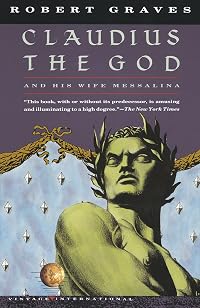
In this sequel to I, Claudius, the story of the Roman Emperor-on which the award-winning BBC TV series was based-continues . . . In I, Claudius, Robert Graves began the story of the limping, stammering young man who is suddenly thrust onto the throne after the death of Caligula. In Claudius the God, Graves continues the story, detailing Claudius's thirteen-year reign and his ultimate downfall. Painting the vivid, tumultuous, and decadent society of ancient Rome with spectacular detail, show more Robert Graves provides a tale that is instructive, compelling, and difficult to put down for both casual readers and students of Roman history. show lessTags
Recommendations













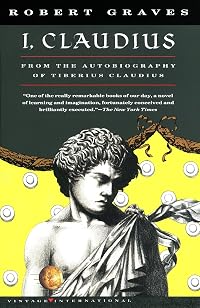



Member Recommendations
Member Reviews
I picked up I Claudius and Claudius the God, because I remembered really liking the BBC Series, which we watched in Latin Class. I approached the first book with some caution, not sure if they would live up to the TV series, after all, these books were written almost 80 years ago. I was not disappointed. They're great. Really great. It is written in a manner that projects a lot of authenticity, yet very pleasant to read.
'I Claudius' deals with Claudius' childhood up until Caligula's assassination, in the form of an autobiography. 'Claudius the God' describes Claudius' life as emperor of Rome until his death.
It's obvious that Graves knows his stuff and that he has done a lot of research. Granted, he does portray some of the wild show more stories that Suetonius and the like wrote about as being true, and most historians will tell you to take this with a pinch of salt. But hey, I remember loving those stories in my Latin classes, the crazier the better. I adored Caligula, he was just awesome. Horse elected senator, war against Neptune, oh man. Good stuff.
So many times while reading these, I came upon facts, or names or whatever and I would have an 'ohhhh yeah!' moment and remember things that I'd been taught years ago. These two books are a must-read for people who are interested in Roman stuff. Graves does tend to go into a lot of detail, so make sure you're a total geek before you start. Myself, nine times out of ten, I was very interested. And there's always epic battles, murder, deceit, banishment and adultery to mix things up.
Personally, I enjoyed the first book a little more than the second one, but that might be because the first one has historical V.I.P.'s such as Caligula and Augustus (who is, by the way, probably a little slower and a little more pussywhipped than the real Augustus was), but they are both still very much recommended. By me. show less
'I Claudius' deals with Claudius' childhood up until Caligula's assassination, in the form of an autobiography. 'Claudius the God' describes Claudius' life as emperor of Rome until his death.
It's obvious that Graves knows his stuff and that he has done a lot of research. Granted, he does portray some of the wild show more stories that Suetonius and the like wrote about as being true, and most historians will tell you to take this with a pinch of salt. But hey, I remember loving those stories in my Latin classes, the crazier the better. I adored Caligula, he was just awesome. Horse elected senator, war against Neptune, oh man. Good stuff.
So many times while reading these, I came upon facts, or names or whatever and I would have an 'ohhhh yeah!' moment and remember things that I'd been taught years ago. These two books are a must-read for people who are interested in Roman stuff. Graves does tend to go into a lot of detail, so make sure you're a total geek before you start. Myself, nine times out of ten, I was very interested. And there's always epic battles, murder, deceit, banishment and adultery to mix things up.
Personally, I enjoyed the first book a little more than the second one, but that might be because the first one has historical V.I.P.'s such as Caligula and Augustus (who is, by the way, probably a little slower and a little more pussywhipped than the real Augustus was), but they are both still very much recommended. By me. show less
Ha! So here's an 'historical novel'... Well, I haven't read it as such. The style is too dry to be enjoyed as fiction, and the content too spurious to be 'historical'. It's not that Robert Graves' book is not enjoyable, far from that! Just that, if you don't have any interest in Roman history (or this particular era) then I quite don't see the point. It reads like Wikipedia entries knitted altogether, to display the worse of every characters portrayed in here! This was first published in 1934, so I'll be lenient and forgiving.
Sure, the cast of characters makes for a gripping read -Augustus, Livia, Caligula etc. Sure too, the familial feuds being also part of a bigger history, some backgrounds plots are obviously engrossing too (e.g. show more the dealing with Germania). Plus, Robert Graves also knows how to inject some nice on-the-side little vignettes (e.g. the debate between Livy and Pollio) which greatly enhances the storyline even if they are not part of it. In the end, we get the gist: a fascinating era as seen through the eyes of Claudius, the man, who, because he had a limp and stammered (if not worse) was considered feebleminded and so shun, makes for a quirky insight Robert Graves exploits to the full.
Thing is, I like my historical fiction based on historical facts. Here it's not the case. It's all based on historical propaganda which, ever since Tacitus and Suetonius, hasn't been kind to these Emperors, Claudius included.
Claudius was no fool. He was just not one to blindly walk the Augustan party line, and, his physical shortcomings obviously were a great pretext to further destroy his reputation. Claudius himself confessed having exaggerated his shortcomings at times, for survival purposes in a dynasty ripe with poisonings! The issue I had here is that, if Robert Graves doesn't take this supposed foolishness at face value (again, here's a quirky insight he exploits to the full) his critical outlook failed him for everything else. In fact, I felt he just reworded Suetonius and else for a modern audience when it comes to the behaviours and deeds of his contemporaries, hence an over-focus on depravity and intrigue. But can such authors be relied upon?
In the end, did I enjoy it? Yes! Was it historically accurate? Nope! Was the writing and flow as enthralling as a novel should be? Even less so! But, because I have a interest in the era, I was nevertheless fascinated. I guess it's enough to be content? show less
Sure, the cast of characters makes for a gripping read -Augustus, Livia, Caligula etc. Sure too, the familial feuds being also part of a bigger history, some backgrounds plots are obviously engrossing too (e.g. show more the dealing with Germania). Plus, Robert Graves also knows how to inject some nice on-the-side little vignettes (e.g. the debate between Livy and Pollio) which greatly enhances the storyline even if they are not part of it. In the end, we get the gist: a fascinating era as seen through the eyes of Claudius, the man, who, because he had a limp and stammered (if not worse) was considered feebleminded and so shun, makes for a quirky insight Robert Graves exploits to the full.
Thing is, I like my historical fiction based on historical facts. Here it's not the case. It's all based on historical propaganda which, ever since Tacitus and Suetonius, hasn't been kind to these Emperors, Claudius included.
Claudius was no fool. He was just not one to blindly walk the Augustan party line, and, his physical shortcomings obviously were a great pretext to further destroy his reputation. Claudius himself confessed having exaggerated his shortcomings at times, for survival purposes in a dynasty ripe with poisonings! The issue I had here is that, if Robert Graves doesn't take this supposed foolishness at face value (again, here's a quirky insight he exploits to the full) his critical outlook failed him for everything else. In fact, I felt he just reworded Suetonius and else for a modern audience when it comes to the behaviours and deeds of his contemporaries, hence an over-focus on depravity and intrigue. But can such authors be relied upon?
In the end, did I enjoy it? Yes! Was it historically accurate? Nope! Was the writing and flow as enthralling as a novel should be? Even less so! But, because I have a interest in the era, I was nevertheless fascinated. I guess it's enough to be content? show less
Claudius continues his autobiography, tracing the dark prophecy of the Caesars to it's conclusion in Nero. He never wanted to be emperor - in fact, he was a staunch republican. However, when fate intervened and an army offered him the choice of ruling or death, he made an unlikely decision. After becoming Roman Emperor, he often planned to return the government to the people, but political matters continued to complicate these plans. Either he was in the middle of a difficult problem, or there seemed to be a number of idiots waiting in line to take over.
Eventually, he becomes resigned to the prophecy which predicted his rule and which also predicts his successor. After his wife, Mesalina, betrays him, he becomes even more apathetic and show more cynical. He has vague hopes that his son will be able to rescue Rome from Nero, but ultimately even these hopes are dashed. I thought the outside accounts of Claudius' death were very interesting. They gave a different perspective about how he might have been viewed by his enemies and contemporaries. A complex, if occasionally dry recounting of an unusual life. show less
Eventually, he becomes resigned to the prophecy which predicted his rule and which also predicts his successor. After his wife, Mesalina, betrays him, he becomes even more apathetic and show more cynical. He has vague hopes that his son will be able to rescue Rome from Nero, but ultimately even these hopes are dashed. I thought the outside accounts of Claudius' death were very interesting. They gave a different perspective about how he might have been viewed by his enemies and contemporaries. A complex, if occasionally dry recounting of an unusual life. show less
One of my favorite books EVER. I simply adore Claudius; and find him lovable and charming. Graves breathes life into characters so historic and legendary, and makes the reader feel as though we are actually living in Ancient Rome. Graves does all this, while simultaneously keeping the integrity of history. It's the book that got me convinced I can read and really love historical fiction as a genre, as much as fiction. I've introduced this book to many friends, as it was introduced to me by a friend. I highly recommend it-- your perception of Roman history will be forever deepened!
I, Claudius and this book are the greatest additions to the ancient histories of Tacitus and Suetonius, at least until we hopefully - someday - discover the lost chapters of Tacitus' history of the early emperors. Wouldn't that be a great day? This is fiction, of course, but presented in similar, matter-of-fact style and filled with the same barrage of murderous intrigue and tyranny. What percentage of this is fact, I am not sure, though I imagine quite a lot of it is. But it's overall "factiness" just adds to the fascination of the story. How did they do it, those crazy Romans?
As sympathetic as Claudius is, he is a product of the barbarity of his age as well, but it's a fascinating barbarity that coexists with complex bureaucracies show more and philosophies untainted by the intervening era of Christianity. Ultimately, it's a tragedy for the uniquely brave Emperor, God or not, especially knowing what was to follow. Great read, though, and very entertaining, informative and bloody soap opera. show less
As sympathetic as Claudius is, he is a product of the barbarity of his age as well, but it's a fascinating barbarity that coexists with complex bureaucracies show more and philosophies untainted by the intervening era of Christianity. Ultimately, it's a tragedy for the uniquely brave Emperor, God or not, especially knowing what was to follow. Great read, though, and very entertaining, informative and bloody soap opera. show less
“Most men—it is my experience—are neither virtuous nor scoundrels, good-hearted nor bad-hearted. They are a little of one thing and a little of the other and nothing for any length of time: ignoble mediocrities.”
Claudius the God is the sequel to I, Claudius, and takes up the story two tears after Claudius was made emperor and after telling the backstory of Claudius' charismatic friend Herod Agrippa, concentrates on the 13 year tenure of Claudius. Claudius survived his murderous predecessors chiefly because he was thought too stupid to be a threat and of as a harmless fool, However, when he becomes Emperor he generally proves himself to be quite adept with his public life, recovering the eagles lost by Varus in the German show more forest, made Ostia a thriving port, wrote a dictionary and conquered Britain.
Claudius's private life though is a mess and portrayed as easily manipulted by his various wives in particular the promiscuous and debauched Messalina's. This gives a certain poignancy to the overall tale. Claudius wants to abdicate and restore the Republic but soon realises that ironically he is the only one that does .The Empire's elite are merely jockeying for position and power whilst the Army and the people themselves seem to prefer a strong autocrat as a leader. So reluctantly he is forced to carry on until in his sixty-fourth year he is seemingly finally murdered.
Without the sheer madness of Caligula of the first novel this one loses some of that humour but that said this novel is a worthy finale to Graves' powerful and original overview of this interesting and barbaric period in history IMHO. A period of history that is still recognisable today. show less
Claudius the God is the sequel to I, Claudius, and takes up the story two tears after Claudius was made emperor and after telling the backstory of Claudius' charismatic friend Herod Agrippa, concentrates on the 13 year tenure of Claudius. Claudius survived his murderous predecessors chiefly because he was thought too stupid to be a threat and of as a harmless fool, However, when he becomes Emperor he generally proves himself to be quite adept with his public life, recovering the eagles lost by Varus in the German show more forest, made Ostia a thriving port, wrote a dictionary and conquered Britain.
Claudius's private life though is a mess and portrayed as easily manipulted by his various wives in particular the promiscuous and debauched Messalina's. This gives a certain poignancy to the overall tale. Claudius wants to abdicate and restore the Republic but soon realises that ironically he is the only one that does .The Empire's elite are merely jockeying for position and power whilst the Army and the people themselves seem to prefer a strong autocrat as a leader. So reluctantly he is forced to carry on until in his sixty-fourth year he is seemingly finally murdered.
Without the sheer madness of Caligula of the first novel this one loses some of that humour but that said this novel is a worthy finale to Graves' powerful and original overview of this interesting and barbaric period in history IMHO. A period of history that is still recognisable today. show less
I have to echo the LibraryThing reviewer who said that if this sequel to I, Claudius is less impressive than the first book, it's because it's narrower in scope. I, Claudius isn't just this faux autobiography, it gave a run through of the members of the Julio-Claudian dynasty prior to Claudius--Livia, Augustus and Germanicus made quite the impression in that first book, which ended with Claudius being raised to Emperor of Rome. The focus in this book is his short reign of little more than a decade. And while the first book allows us to think of Claudius as crafty and only pretending to be an idiot (at least if you've never read Graves' source, Suetonius' Twelve Caesars), that's a lot harder here where he comes across as so, so clueless, show more at least in his personal life.
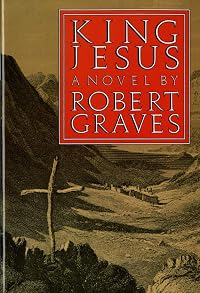
That said, this book is still an engaging read, and among the richest, best written works of historical fiction I've ever read. I've read Graves felt he was slumming it in his Claudius books, but it certainly doesn't come through. The picture he paints of early Christianity and Roman-era Britain is particularly fascinating. I only regret it's so hard to find more of Graves historical fiction in print. I loved his King Jesus, a story of a historical Jesus--married to Mary Magdalene--and published in 1946. Way, way before that travesty of a novel, The Da Vinci Code. But he also wrote other novels about the ancient world, such as Count Belisarius and Hercules, My Shipmate and Homer's Daughter I'd love to read. The Claudius books are his most famous though, and definitely where to start. show less
That said, this book is still an engaging read, and among the richest, best written works of historical fiction I've ever read. I've read Graves felt he was slumming it in his Claudius books, but it certainly doesn't come through. The picture he paints of early Christianity and Roman-era Britain is particularly fascinating. I only regret it's so hard to find more of Graves historical fiction in print. I loved his King Jesus, a story of a historical Jesus--married to Mary Magdalene--and published in 1946. Way, way before that travesty of a novel, The Da Vinci Code. But he also wrote other novels about the ancient world, such as Count Belisarius and Hercules, My Shipmate and Homer's Daughter I'd love to read. The Claudius books are his most famous though, and definitely where to start. show less
Members
- Recently Added By
Published Reviews
Tartamudo, tullido, despreciado por sus sanguinarios parientes (como su sobrino Calígula), Claudio, sin embargo, los sobrevive a todos, acompañado por su lasciva esposa, hasta caer asesinado a manos de Agripina, la madre del emperador Nerón.
added by Pakoniet
Lists

Best Historical Fiction
620 works; 261 members

Best historical fiction set in the ancient world
126 works; 40 members

Historical Fiction
889 works; 91 members

Books Set in Italy
167 works; 19 members

Top Five Books of 2013
1,562 works; 715 members
Best Roman Empire Books
49 works; 18 members

20th Century Literature
1,161 works; 55 members
Folio Society
831 works; 53 members

Five star books
1,755 works; 108 members

Books Read in 2023
5,547 works; 145 members

A Novel Cure
742 works; 23 members

1930s
262 works; 5 members

Books I Own But Haven't Read
144 works; 2 members

Books Set in Rome
98 works; 2 members

Books Read in 2021
5,361 works; 113 members

Books Read in 2018
4,360 works; 110 members

Trinity College Booklist (1951): Class Eight, Classic Civilization
39 works; 3 members

Books Read in 2025
4,091 works; 97 members

In Our Time books
4,934 works; 2 members
Author Information

259+ Works 40,616 Members
Robert Graves (also known as Robert Ranke Graves) was born in 1895 in London and served in World War I. Goodbye to All That: an Autobiography (1929), was published at age thirty three, and gave a gritty portrait of his experiences in the trenches. Graves edited out much of the stark reality of the book when he revised it in 1957. Although his most show more popular works, I, Claudius (1934) and its sequel, Claudius the God and His Wife Messalina (1935), were produced for television by the BBC in 1976 and seen in America on Masterpiece Theater, he was also famous as a poet, producing more than 50 volumes of poetry. Graves was awarded the 1934 James Tait Black Memorial Prize for both I, Claudius and Claudius the God. Also a distinguished academic, Graves was a professor of English in Cairo, Egypt, in 1926, a poetry professor at Oxford in the 1960s, and a visiting lecturer at universities in England and the U.S. He wrote translations of Greek and Latin works, literary criticism, and nonfiction works on many other topics, including mythology and poetry. He lived most of his life in Majorca, Spain, and died after a protracted illness in 1985. (Bowker Author Biography) show less

Robert Graves has a Legacy Library. Legacy libraries are the personal libraries of famous readers, entered by LibraryThing members from the Legacy Libraries group.
Some Editions
Awards and Honors
Series

Belongs to Publisher Series
Work Relationships
Is contained in
Contains
Has the adaptation
Is abridged in
Common Knowledge
- Canonical title
- Claudius the God
- Original title
- I, Claudius
- Alternate titles
- Claudius the God and His Wife Messalina
- Original publication date
- 1934
- People/Characters
- Claudius I, Emperor of Rome; Valeria Messalina (wife of Emperor Claudius I); Nero Claudius Caesar Augustus Germanicus
- Important places
- Rome, Italy; Ancient Rome; Roman Empire; Italy
- Important events
- Roman Empire (27BC | 1453); Reign of Claudius; 1st century
- Related movies
- I, Claudius (1976 | IMDb); I, Claudius (1937 | IMDb)
- Epigraph
- THE TROUBLESOME REIGN OF TIBERIUS CLAUDIUS
CAESAR, EMPEROR OF THE ROMANS
(BORN 10 B.C., DIED A. D. 54),
AS DESCRIBED BY HIMSELF;
ALSO HIS MURDER AT THE HANDS OF THE
NOTORIOUS AGRIPPINA
(MOTHER OF THE EMPEROR... (show all) NERO)
AND HIS SUBSEQUENT DEIFICATION,
AS DESCRIBED BY
OTHERS - First words
- Two years have gone by since I finished writing the long story of how I, Tiberius Claudius Drusus Nero Germanicus, the cripple, the stammerer, the fool of the family, whom none of his ambitious and bloody-minded relatives con... (show all)sidered worth the trouble of executing, poisoning, forcing to suicide, banishing to a desert island or starving to death—which was how they one by one got rid of each other—how I survived them all, even my insane nephew Gaius Caligula, and was one day unexpectedly acclaimed Emperor by the corporals and sergeants of the Palace Guard.
- Last words
- (Click to show. Warning: May contain spoilers.)Write no more now, Tiberius Claudius, God of the Britons, write no more.
- Original language
- English
Classifications
Statistics
- Members
- 4,655
- Popularity
- 3,096
- Reviews
- 49
- Rating
- (4.10)
- Languages
- 18 — Czech, Danish, Dutch, English, Estonian, Finnish, French, Greek, Hebrew, Hungarian, Italian, Latin, Polish, Portuguese, Slovak, Spanish, Swedish, Turkish
- Media
- Paper, Audiobook, Ebook
- ISBNs
- 83
- ASINs
- 97