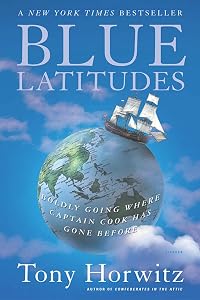
Blue Latitudes: Boldly Going Where Captain Cook Has Gone Before
by Tony Horwitz
On This Page
Description
In an exhilarating tale of historic adventure, the Pulitzer Prize-winning author of Confederates in the Attic retraces the voyages of Captain James Cook, the Yorkshire farm boy who drew the map of the modern world Captain James Cook's three epic journeys in the 18th century were the last great voyages of discovery. His ships sailed 150,000 miles, from the Artic to the Antarctic, from Tasmania to Oregon, from Easter Island to Siberia. When Cook set off for the Pacific in 1768, a third of the show more globe remained blank. By the time he died in Hawaii in 1779, the map of the world was substantially complete. Tony Horwitz vividly recounts Cook's voyages and the exotic scenes the captain encountered: tropical orgies, taboo rituals, cannibal feasts, human sacrifice. He also relives Cook's adventures by following in the captain's wake to places such as Tahiti, Savage Island, and the Great Barrier Reef to discover Cook's embattled legacy in the present day. Signing on as a working crewman aboard a replica of Cook's vessel, Horwitz experiences the thrill and terror of sailing a tall ship. He also explores Cook the man: an impoverished farmboy who broke through the barriers of his class and time to become the greatest navigator in British history. By turns harrowing and hilarious, insightful and entertaining, BLUE LATITUDES brings to life a man whose voyages helped create the 'global village' we know today. show lessTags
Recommendations






















Member Recommendations
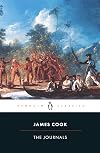
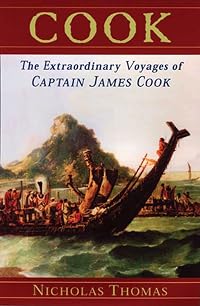
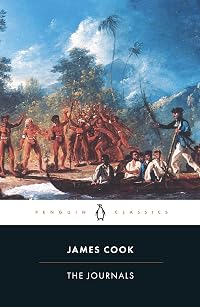
John_Vaughan This was the guide for Blue Latitudes and is mainly in Captain Cook's own words. A remarkable account by a compassionate leader,


teaperson Interesting travels in the South Pacific.

PLReader More details of Captain Cook's first voyage.
11
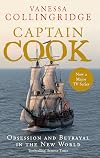
John_Vaughan Another author on a similar quest BUT with outrageous humour!


banjo123 History dosed with humor and an entertaining sidekick.
11
Member Reviews
At time humorous, at times snarky, at times unbearably saddening. Horowitz's typical blend of travelogue with history, he muses of the effect and result of Captain Cook and the results of mixing colonial Europeans powers with the native lifestyle. It is similar to the re-writing of Columbus as the bringer of evil to an otherwise peaceful and good people, but without the harshness of an extreme position. Well written and a quick read that makes you consider the consequences of actions and the ongoing effects that 250 year old events have on people still today.
In Blue Latitudes, Pulitzer winning writer Tony Horowitz describes his adventures following the path of Captain Cook. His achingly funny, yet candid account of his travels will leave you in stitches. Horowitz describes in detail his trip around the world and his encounters with some of the most colorful characters you’ll ever meet!
Horowitz artfully mixes facts with humor as he educates you in the life of Captain Cook. The book switches flawlessly between Cook’s travels and Horowitz’s own. You are able to see both the similarities and the differences between their experiences.
I never thought I could laugh and learn at the same time, but Blue Latitudes proved me wrong! I found myself laughing while actually absorbing information show more about this interesting man. It takes a truly skilled writer to entertain one as much as Horowitz does. I highly recommend this book whether you’re a traveler or not; you can brave the high seas from the safety of your own couch or bring this book along with you as you sail the waters yourself! show less
Horowitz artfully mixes facts with humor as he educates you in the life of Captain Cook. The book switches flawlessly between Cook’s travels and Horowitz’s own. You are able to see both the similarities and the differences between their experiences.
I never thought I could laugh and learn at the same time, but Blue Latitudes proved me wrong! I found myself laughing while actually absorbing information show more about this interesting man. It takes a truly skilled writer to entertain one as much as Horowitz does. I highly recommend this book whether you’re a traveler or not; you can brave the high seas from the safety of your own couch or bring this book along with you as you sail the waters yourself! show less
26. Blue Latitudes : Boldly Going Where Captain Cook Has Gone Before by Tony Horwitz (2002, 452 pages, read May 18-31)
This was my first time reading Tony Horwitz, and also the first book I read on Hawaii for my June trip. Horwitz is along the lines of Bill Bryson in that his book informative, but mostly light and fun. However, whereas Bryson's books have a habit of drowning in trivia, it almost seems Horwitz can't go wrong. He has a charm, he focuses on interesting things, and he keeps the book entertaining throughout.
The book itself is an inspiring look at Captain James Cooke and, especially, at Pacific Ocean. Cooke made first contact in New Zealand, Australia, Hawaii, and on several different islands throughout Pacific Oceania. An show more unusually expert charter, he filled out the map in the Pacific. He is roundly hated as the symbolic end of the native peoples in all these places. Either Cooke, or the mariners who followed his maps, brought the diseases and also opened the way to exploitation and colonization, leading to a wiping out of populations. Cooke the person was, however, was almost beyond reproach. The European mariners were a dark part of humanity, the worst of the worst, only more extreme because of the endless hardships they had to endure at sea. The record is painfully bad. But Cooke is an exception - responsible, knowledgeable, humble, he has a dignity in history...but it only lasts up to that point where he finally lost his cool and his life in Hawaii.
This was very enjoyable despite being a bit long, and despite being a terrible read for Hawaii. It's long because Horwitz covers so much. It's the wrong book for Hawaii as that was James Cooke's last and fatal stop and it doesn't really appear in the book until near the end. But, despite the length, it's light and quick and left me craving more information.
2011
http://www.librarything.com/topic/120136#2829830 show less
This was my first time reading Tony Horwitz, and also the first book I read on Hawaii for my June trip. Horwitz is along the lines of Bill Bryson in that his book informative, but mostly light and fun. However, whereas Bryson's books have a habit of drowning in trivia, it almost seems Horwitz can't go wrong. He has a charm, he focuses on interesting things, and he keeps the book entertaining throughout.
The book itself is an inspiring look at Captain James Cooke and, especially, at Pacific Ocean. Cooke made first contact in New Zealand, Australia, Hawaii, and on several different islands throughout Pacific Oceania. An show more unusually expert charter, he filled out the map in the Pacific. He is roundly hated as the symbolic end of the native peoples in all these places. Either Cooke, or the mariners who followed his maps, brought the diseases and also opened the way to exploitation and colonization, leading to a wiping out of populations. Cooke the person was, however, was almost beyond reproach. The European mariners were a dark part of humanity, the worst of the worst, only more extreme because of the endless hardships they had to endure at sea. The record is painfully bad. But Cooke is an exception - responsible, knowledgeable, humble, he has a dignity in history...but it only lasts up to that point where he finally lost his cool and his life in Hawaii.
This was very enjoyable despite being a bit long, and despite being a terrible read for Hawaii. It's long because Horwitz covers so much. It's the wrong book for Hawaii as that was James Cooke's last and fatal stop and it doesn't really appear in the book until near the end. But, despite the length, it's light and quick and left me craving more information.
2011
http://www.librarything.com/topic/120136#2829830 show less
When I was in school we read about Christopher Columbus, Ferdinand Magellan, Henry Hudson and even Francis Drake, but I don't remember James Cook being mentioned at all. Yet he may have been the greatest sea explorer of all, as Tony Horwitz makes clear in his 2002 book “Blue Latitudes.”
The Pacific Ocean was still largely unknown by Europeans in the 19th century. Sure Europeans like Magellan had been there, sailing across it, but until Captain Cook no European had actually looked around, visited the numerous islands, looked for the Northwest Passage from that side of America or given names to so many geographical features.
Cook's three long voyages took him from near the Arctic Circle to Australia, covering more than 200,000 miles. He show more and his sailors met people from numerous strange cultures, leading in most cases to the eventual spoiling of these cultures. For this reason Cook is controversial throughout the Pacific to this day. There are those who honor him, but mostly there are those who revile him, not so much for the kind of man he was — mostly he was honorable, Horwitz finds — but for the negative consequences of his discoveries.
Horwitz decided to retrace Cook's voyages, traveling to the Aleutians, Australia, Hawaii, Tahiti, New Zealand, Tonga and elsewhere to see how Cook is remembered. His narrative switches back and forth, from Cook's journeys as described by the captain and members of his crew to his own observations centuries later. Roger, a traveling companion more interested in drinking and women than Cook's journeys, adds humor to the narrative.
Roger's interest in drinking and women corresponds with that of Cook's men. They consumed large quantities of alcohol on those voyages, and despite Cook's efforts he was never successful in keeping them away from Pacific women. It didn't help that in these cultures sex was freely given, or if not free was eagerly exchanged for the price of a nail. It's a wonder there were any nails still holding the ship together after leaving places like Tahiti and Hawaii.
It was in Hawaii that Cook met his end. He had been becoming increasingly irrational and erratic on his third voyage, probably the result of an illness. At first he was treated like a god, but gradually that relationship changed. When natives stole a boat one morning, Cook responded violently, resulting in his own death, as well as that of others on both sides.
Explorers, Columbus and Magellan among them, are not as honored as they once were. Cook was never particularly honored even when the others were, but he covered more miles than most of the rest of them put together. Horwitz makes clear that Cook explored the Pacific as no one had ever done before, whatever one thinks of the results of his discoveries. show less
The Pacific Ocean was still largely unknown by Europeans in the 19th century. Sure Europeans like Magellan had been there, sailing across it, but until Captain Cook no European had actually looked around, visited the numerous islands, looked for the Northwest Passage from that side of America or given names to so many geographical features.
Cook's three long voyages took him from near the Arctic Circle to Australia, covering more than 200,000 miles. He show more and his sailors met people from numerous strange cultures, leading in most cases to the eventual spoiling of these cultures. For this reason Cook is controversial throughout the Pacific to this day. There are those who honor him, but mostly there are those who revile him, not so much for the kind of man he was — mostly he was honorable, Horwitz finds — but for the negative consequences of his discoveries.
Horwitz decided to retrace Cook's voyages, traveling to the Aleutians, Australia, Hawaii, Tahiti, New Zealand, Tonga and elsewhere to see how Cook is remembered. His narrative switches back and forth, from Cook's journeys as described by the captain and members of his crew to his own observations centuries later. Roger, a traveling companion more interested in drinking and women than Cook's journeys, adds humor to the narrative.
Roger's interest in drinking and women corresponds with that of Cook's men. They consumed large quantities of alcohol on those voyages, and despite Cook's efforts he was never successful in keeping them away from Pacific women. It didn't help that in these cultures sex was freely given, or if not free was eagerly exchanged for the price of a nail. It's a wonder there were any nails still holding the ship together after leaving places like Tahiti and Hawaii.
It was in Hawaii that Cook met his end. He had been becoming increasingly irrational and erratic on his third voyage, probably the result of an illness. At first he was treated like a god, but gradually that relationship changed. When natives stole a boat one morning, Cook responded violently, resulting in his own death, as well as that of others on both sides.
Explorers, Columbus and Magellan among them, are not as honored as they once were. Cook was never particularly honored even when the others were, but he covered more miles than most of the rest of them put together. Horwitz makes clear that Cook explored the Pacific as no one had ever done before, whatever one thinks of the results of his discoveries. show less
"Cook’s greatest feat . . . was the three epic voyages of discovery he made in his forties—midlife today, closer to the grave in the eighteenth century.
"In 1768, when Cook embarked on the first, roughly a third of the world’s map remained blank, or filled with fantasies: sea monsters, Patagonian giants, imaginary continents. Cook sailed into the void in a small wooden ship and returned, three years later, with charts so accurate that some of them stayed in use until the 1990s.
"On his two later voyages, Cook explored from the Arctic to the Antarctic, from Tasmania to Tierra del Fuego, from the northwest shore of America to the far northeast coast of Siberia. By the time he died, still on the job, Cook had sailed over 200,000 show more miles in the course of his career—roughly equivalent to circling the equator eight times, or voyaging to the moon."
Tony Horowitz’s Blue Latitudes: Boldly Going Where Captain Cook Has Gone Before is an odd, oddly appealing mix of history and somewhat humorous travel writing. Horowitz weaves the story of his own travels along parts of Captain Cook’s routes from his three Pacific voyages with the story of Cook himself. Throughout runs the theme of how the impact of Cook’s contact with islands and people previously unknown to Europe has reverberated throughout the intervening centuries.
Most of my prior knowledge of Cook comes from what I’ve read about Joseph Banks, the wealthy naturalist and botanist (President of the Royal Society for over 40 years), who accompanied Cook on his first journey. Horwitz relied on Banks’s journals, in addition to Cook’s and some of the other crew, for the history in this book.
Horwitz starts his adventures with a physically exhausting week volunteering on a replica of Cook’s ship the Endeavour. Later, he travels with his wife (Geraldine Brooks) and their son to his wife’s native Australia, which he plans to use as a home base for his research and travel. An old (often inebriated) friend, Roger, offers to join him on his journeys. Roger, a keen sailor, provides much of the comic relief throughout the book. On their visit to Matavai Bay, Cook’s landing site in Tahiti, Horwitz and Roger dress in wigs, white stockings and knee breeches, splash in the water, and unfurl a Union Jack, while nearby sunbathers ignore them. This humor, though, is counterpointed with how far removed Tahiti and Bora-Bora are from the paradise described by Cook and Joseph Banks (Horwitz particularly cites the environmental damage in Bora-Bora), and how the native populations were decimated by disease and the introduction of guns and other weaponry into their society. Missionaries in the 19th century completed the destruction by successfully convincing the people to let go of their native customs and folklore, much of which has now been forgotten forever.
Cook’s reputation in the Pacific is primarily negative, particularly among the native population. While in New Zealand, Horwitz learns that a visit by the Endeavour replica four years prior was greeted by death threats for the captain, and refusals by tribal elders to guarantee the ship’s safety. As one activist said, “We wonder at those who would honour the scurvy, the pox, the filth, and the racism that Cook’s arrival brought to this beautiful land.” Monuments to Cook, where they exist, are often vandalized.
In Australia, where Cook’s ship was probably the first contact the Aborigines had had with the outside world in eight thousand years, the European legacy is particularly problematic. A population estimated at the time to number between 300,000 and a million, who merely wanted to be left alone (the first group he encountered ignored the ship, and when most fled upon the ship coming close to land, two men stood their ground and called out to the sailors to “Go away”), was reduced by 1901 to 94,000.
In many places, Horwitz points out, Cook has mostly been eliminated from the history books, and Horwitz struggles with what he sees as an emphasis on trying to find politically correct ways of discussing the “encounters” between the native populations and the Europeans rather than facing head-on the seizure of lands (Cook’s orders were to get the consent of the natives before taking possession of any land, orders he consistently disregarded) and the negative impact on people, environment, and culture.
Horwitz decided not to follow fully in the path of Cook’s second and third voyages like he did the first, because he felt that Antarctica and the Arctic Circle would be too cold and bleak, and wouldn’t give him enough people to talk with. Instead, he decides to try to experience Cook’s sense of newness and uncertainly by selecting the island of Niue, which Cook called “Savage Island”, and traveling there blind, with no knowledge of the country. Later, he visits Tonga, England (where again, it’s hard to find representations of Cook’s legacy, although he does visit a delightful museum created and run by another Cook obsessive), and Alaska, before ending up at the site of Cook’s death in Hawaii.
Horwitz presents the history in an accessible, fascinating way, and his own travels and encounters with people from all walks of life with humor and respect. He raises questions with no easy answers (and perhaps no answers at all) that I know I will continue to spend a long time pondering. show less
"In 1768, when Cook embarked on the first, roughly a third of the world’s map remained blank, or filled with fantasies: sea monsters, Patagonian giants, imaginary continents. Cook sailed into the void in a small wooden ship and returned, three years later, with charts so accurate that some of them stayed in use until the 1990s.
"On his two later voyages, Cook explored from the Arctic to the Antarctic, from Tasmania to Tierra del Fuego, from the northwest shore of America to the far northeast coast of Siberia. By the time he died, still on the job, Cook had sailed over 200,000 show more miles in the course of his career—roughly equivalent to circling the equator eight times, or voyaging to the moon."
Tony Horowitz’s Blue Latitudes: Boldly Going Where Captain Cook Has Gone Before is an odd, oddly appealing mix of history and somewhat humorous travel writing. Horowitz weaves the story of his own travels along parts of Captain Cook’s routes from his three Pacific voyages with the story of Cook himself. Throughout runs the theme of how the impact of Cook’s contact with islands and people previously unknown to Europe has reverberated throughout the intervening centuries.
Most of my prior knowledge of Cook comes from what I’ve read about Joseph Banks, the wealthy naturalist and botanist (President of the Royal Society for over 40 years), who accompanied Cook on his first journey. Horwitz relied on Banks’s journals, in addition to Cook’s and some of the other crew, for the history in this book.
Horwitz starts his adventures with a physically exhausting week volunteering on a replica of Cook’s ship the Endeavour. Later, he travels with his wife (Geraldine Brooks) and their son to his wife’s native Australia, which he plans to use as a home base for his research and travel. An old (often inebriated) friend, Roger, offers to join him on his journeys. Roger, a keen sailor, provides much of the comic relief throughout the book. On their visit to Matavai Bay, Cook’s landing site in Tahiti, Horwitz and Roger dress in wigs, white stockings and knee breeches, splash in the water, and unfurl a Union Jack, while nearby sunbathers ignore them. This humor, though, is counterpointed with how far removed Tahiti and Bora-Bora are from the paradise described by Cook and Joseph Banks (Horwitz particularly cites the environmental damage in Bora-Bora), and how the native populations were decimated by disease and the introduction of guns and other weaponry into their society. Missionaries in the 19th century completed the destruction by successfully convincing the people to let go of their native customs and folklore, much of which has now been forgotten forever.
Cook’s reputation in the Pacific is primarily negative, particularly among the native population. While in New Zealand, Horwitz learns that a visit by the Endeavour replica four years prior was greeted by death threats for the captain, and refusals by tribal elders to guarantee the ship’s safety. As one activist said, “We wonder at those who would honour the scurvy, the pox, the filth, and the racism that Cook’s arrival brought to this beautiful land.” Monuments to Cook, where they exist, are often vandalized.
In Australia, where Cook’s ship was probably the first contact the Aborigines had had with the outside world in eight thousand years, the European legacy is particularly problematic. A population estimated at the time to number between 300,000 and a million, who merely wanted to be left alone (the first group he encountered ignored the ship, and when most fled upon the ship coming close to land, two men stood their ground and called out to the sailors to “Go away”), was reduced by 1901 to 94,000.
In many places, Horwitz points out, Cook has mostly been eliminated from the history books, and Horwitz struggles with what he sees as an emphasis on trying to find politically correct ways of discussing the “encounters” between the native populations and the Europeans rather than facing head-on the seizure of lands (Cook’s orders were to get the consent of the natives before taking possession of any land, orders he consistently disregarded) and the negative impact on people, environment, and culture.
Horwitz decided not to follow fully in the path of Cook’s second and third voyages like he did the first, because he felt that Antarctica and the Arctic Circle would be too cold and bleak, and wouldn’t give him enough people to talk with. Instead, he decides to try to experience Cook’s sense of newness and uncertainly by selecting the island of Niue, which Cook called “Savage Island”, and traveling there blind, with no knowledge of the country. Later, he visits Tonga, England (where again, it’s hard to find representations of Cook’s legacy, although he does visit a delightful museum created and run by another Cook obsessive), and Alaska, before ending up at the site of Cook’s death in Hawaii.
Horwitz presents the history in an accessible, fascinating way, and his own travels and encounters with people from all walks of life with humor and respect. He raises questions with no easy answers (and perhaps no answers at all) that I know I will continue to spend a long time pondering. show less
Say what you will about James Cook, his three trips around the world -- right around the time the American colonies were declaring their independence from Cook's mother country -- had a massive impact on history. More than 200 years after Cook's voyages, including the fateful third trip in which he was killed in the Hawaiian islands, Tony Horwitz sets off to revisit the places that Cook had put on European maps, exploring what impact Cook had on various locales, and trying to build an understanding of who Cook was. Blue Latitudes is a fantastic combination of historical investigation and modern travel journal. Even though this book is over 20 years old, Horwitz's lens is decidedly modern and well-balanced. He's not interested in hero show more worshipping Cook, but neither is he dismissive of everything the man did just because he was a product of his times. Likewise, I feel like Horwitz's descriptions of the places he visits are honest and fair.
Tony Horwitz is like a younger (44 when this book was published), much less bitter Bill Bryson. Beyond the travel literature similarity, both are married to women from other English-speaking countries (Horwitz to the Australian-American novelist Geraldine Brooks) and both invite alcoholic friends to join them on their adventures. Roger, the Yorkshire-born Australian who accompanies Horwitz on much of his trip, is a bit of a hot mess, but definitely more functional than Bryson's infamous companion "Stephen Katz." If you like Bryson (at least at his best), you'll enjoy Horwitz.
This was my first book by this writer, but it won't be my last. Sadly, he passed in 2019, something I didn't realize until after I'd finished reading, but his bibliography contains other history/travel combinations that look really interesting. show less
Tony Horwitz is like a younger (44 when this book was published), much less bitter Bill Bryson. Beyond the travel literature similarity, both are married to women from other English-speaking countries (Horwitz to the Australian-American novelist Geraldine Brooks) and both invite alcoholic friends to join them on their adventures. Roger, the Yorkshire-born Australian who accompanies Horwitz on much of his trip, is a bit of a hot mess, but definitely more functional than Bryson's infamous companion "Stephen Katz." If you like Bryson (at least at his best), you'll enjoy Horwitz.
This was my first book by this writer, but it won't be my last. Sadly, he passed in 2019, something I didn't realize until after I'd finished reading, but his bibliography contains other history/travel combinations that look really interesting. show less
Highly enjoyable for anyone who has an interest in Captain Cook, which I totally do, and I admit it biases me in favor of this book. But I've enjoyed Horowitz's other books, and I think his narrative style - a combination of observation, complaint, and information - would work even for a non-Cook-obsessed person.
Members
- Recently Added By
Published Reviews
Tony Horwitz has done it again. In his earlier, riveting book, "Confederates in the Attic," he journeyed through the South to explore the rich and thorny legacy of the Civil War. With the same keen insight, open- mindedness and laugh-out-loud humor, he undertakes another daunting quest in "Blue Latitudes" -- to travel across the globe in search of the memory of Captain James Cook, the 18th show more century English explorer whose ambition led him, as he famously put it, "not only farther than any other man has been before me,
but as far I think it possible for man to go." show less
but as far I think it possible for man to go." show less
added by John_Vaughan
Lists

Best of Travel Narratives
142 works; 28 members

Best Laugh Out Loud Books
143 works; 49 members

Our Favorite Comfort Reads
334 works; 200 members
Author Information

Anthony Lander Horwitz was born in Washington, D. C. on June 9, 1958. He received a bachelor's degree in history from Brown University and a master's degree from the Columbia University Graduate School of Journalism in 1983. After working as a union organizer in Mississippi, he became a newspaper reporter. He was an education reporter for The Fort show more Wayne News-Sentinel in Indiana from 1983 to 1984 and a general assignment reporter for The Sydney Morning Herald in Australia from 1985 to 1987. He joined The Wall Street Journal in 1990 as a foreign correspondent in Europe and the Middle East. He and his wife Geraldine Brooks won the Overseas Press Club's Hal Boyle Award in 1990 for their coverage of the Persian Gulf war. He returned to the United States in 1993 and was assigned to The Journal's Pittsburgh bureau. He won the 1995 Pulitzer Prize for national reporting for his accounts of working conditions in low-wage jobs. He later wrote for The New Yorker on the Middle East before becoming an author of nonfiction books. His first book, Confederates in the Attic: Dispatches from the Unfinished Civil War, was published in 1998. His other books included Blue Latitudes: Boldly Going Where Captain Cook Has Gone Before, A Voyage Long and Strange: Rediscovering the New World, Midnight Rising: John Brown and the Raid That Sparked the Civil War, and Spying on the South: An Odyssey Across the American Divide. He died on May 27, 2019 at the age of 60. (Bowker Author Biography) show less
Some Editions
Awards and Honors
Awards
Series
Belongs to Publisher Series
Common Knowledge
- Original title
- Blue Latitudes: Boldly Going Where Captain Cook Has Gone Before
- Alternate titles
- Into the Blue: Boldly Going Where Captain Cook Has Gone Before
- Original publication date
- 2002
- People/Characters
- Captain James Cook, RN, FRS; Joseph Banks (botanist); Daniel Solander (botanist); Charles Green (astronomer); Herman Spöring (naturalist); Sydney Parkinson (illustrator) (show all 14); Tupaia (Tahitian priest); Nicholas Young (cabin boy); Eric Deeral (Aboriginal politician); Tobias Furneaux (commander of HMS Adventure); Tāufaʻāhau Tupou IV (king of Tonga); Tony Horwitz (author); Roger Williamson (friend of author); Clifford Thornton (president of Captain Cook Society)
- Important places
- Tahiti, French Polynesia; Papeete, Tahiti, French Polynesia; Huahine, French Polynesia; Bora Bora, French Polynesia; Society Islands, French Polynesia; French Polynesia (show all 35); Poverty Bay, New Zealand; Gisborne, Poverty Bay, New Zealand; New Zealand; Botany Bay, New South Wales, Australia; Sydney, New South Wales, Australia; Kurnell, New South Wales, Australia; Great Barrier Reef, Australia; Hope Islands, Queensland, Australia; Cooktown, Queensland, Australia; Australia; Batavia, Dutch East Indies; Jakarta, Indonesia (as Batavia); Pacific Ocean; Southern Ocean; Niue; Tonga; England, UK; Whitby, North Yorkshire, England, UK; Marton, North Yorkshire, England, UK; Great Ayton, North Yorkshire, England, UK; Staithes, North Yorkshire, England, UK; North Yorkshire, England, UK; London, England, UK; Alaska, USA; Gulf of Alaska, Alaska, USA; Unalaska Island, Alaska, USA; Bering Sea; Hawai'i, USA (called Sandwich Islands by Cook); Kealakekua Bay, Hawai'i, USA
- Important events
- First voyage of James Cook (1768 | 1771); Second voyage of James Cook (1772 | 1775); Third voyage of James Cook (1776 | 1779)
- Epigraph
- Ambition leads me not only farther than any man has been before me, but as far as I think it possible for man to go.----THE JOURNAL OF CAPTAIN JAMES COOK
- Dedication
- For Natty, an adventurer at five
- First words
- Just after dark on February 16, 1779, a kahuna, or holy man, rode a canoe to His Majesty's Sloop Resolution, anchored off the coast of Hawaii.
- Last words
- (Click to show. Warning: May contain spoilers.)But I rejoice in the endeavor.
- Blurbers
- Bryson, Bill; Alexander, Caroline; Philbrick, Nathaniel
- Original language
- English
Classifications
- Genres
- Travel, General Nonfiction, Nonfiction, Biography & Memoir
- DDC/MDS
- 910.92 — History & geography Geography & travel modified standard subdivisions of Geography and travel Explorers & Travelers Geographers, travellers, explorers regardless of country of origin
- LCC
- G420 .C65 .H67 — Geography, Anthropology and Recreation Geography (General) Special voyages and travels
- BISAC
Statistics
- Members
- 1,855
- Popularity
- 11,636
- Reviews
- 48
- Rating
- (3.97)
- Languages
- 9 — Czech, Dutch, English, German, Norwegian (Bokmål), Norwegian, Polish, Portuguese, Spanish
- Media
- Paper, Audiobook, Ebook
- ISBNs
- 24
- ASINs
- 7