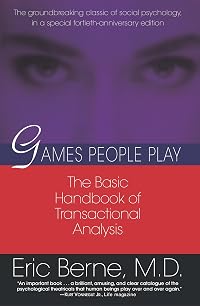
Games People Play: The Psychology of Human Relationships
by Eric Berne
On This Page
Description
Dr. Eric Berne's classic study of the games underlying all social interactions, from power games at the office to competitive games with friends.Tags
Recommendations




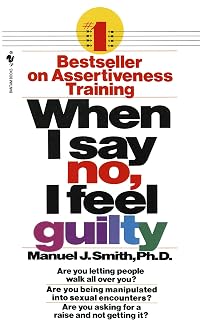
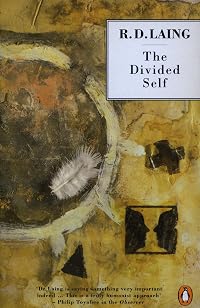


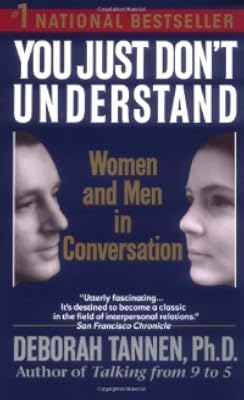

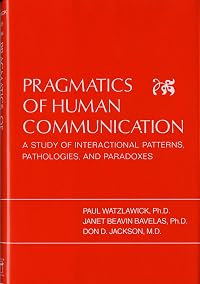












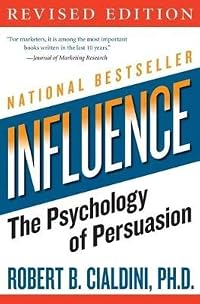
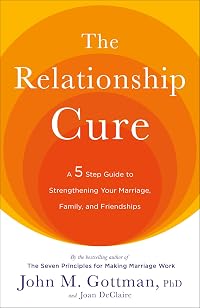
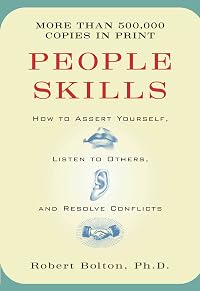

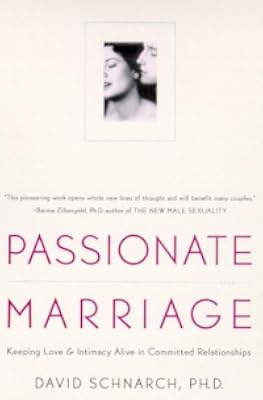



Member Reviews
I first read this book in about 2003. It was suggested to me by a woman with big hair who was making comments about other women with big hair. Bizarre! But I didn't see that game in Berne's work. As I began reading, I was struck by the 1960s tone. It was like watching the scene in Mad Men where Don Draper is discussing Betty's "psychological" problems with her psychiatrist, and the husband has more control over the process than the wife. Issues of American middle-class culture in the '60s emerge from time to time, and I wondered how such a book would fare today! It would be a candidate for the game of "Outrage" no less! But this time, I tried to comprehend the transactional analysis process by writing it down and going over the basis show more premises of games, and the social versus psychological roles of Parent, Adult, and Child, and how transgressions of social and psychological roles can lead to various games and situations. There is an emphasis on the results of group therapy and the therapist's observations of games, and it is clear that one is glimpsing the developmental stages of the profession of psychology (not so much psychiatry) as we know it today. Berne's work is based on his earlier publication, Transactional Analysis in Psychotherapy, and while it is suitable for a well-read general audience, the psychology professional is clearly in mind. I daresay the analyses and types of games have developed significantly since the book was written, but it is rather helpful in recognising different types of "games people play", even if all one can do is identify and then avoid such games. There are elements of Berne's idea of games that resonate with game theory in political science, albeit with less rigour in identifying the inherent biases. Nonetheless, it must be acknowledged that the behavioural revolution in political science was only beginning at this same time, and no doubt Berne was at the forefront of this revolution that continues to influence the social sciences. show less
I'm not sure how I feel about this book. There is some comfort in being handed a template of how to evaluate people's hidden motives, but it seems too amenable to becoming a stereotyping instrument. "Here's the diagnosis; here's how you 'cure' this person". I feel that I'd possibly have a more nuanced understanding if I'd read more of Berne's underlying theory, but this treatment of his concept of Game Analysis is presented as allowing its stand-alone use as a therapeutic tool. I think I'd want more from a transactional analyst than that they'd read this one book.
I also found his attitudes towards gender roles almost excruciatingly archaic, with several implications of victim blaming for rape and domestic violence. Well, I suppose it show more was written in 1964 by a middle-aged white man living in the USA, but still...
I'm studying Rogers' person-centered approach to counselling, so I guess that Berne's diagnostic/directive approach doesn't sit too well with me at this stage of my education. Nevertheless, I found much of interest and did enjoy reading the book, those cringe-making moments aside. (It looks like I do know how I feel about it after all.) show less
I also found his attitudes towards gender roles almost excruciatingly archaic, with several implications of victim blaming for rape and domestic violence. Well, I suppose it show more was written in 1964 by a middle-aged white man living in the USA, but still...
I'm studying Rogers' person-centered approach to counselling, so I guess that Berne's diagnostic/directive approach doesn't sit too well with me at this stage of my education. Nevertheless, I found much of interest and did enjoy reading the book, those cringe-making moments aside. (It looks like I do know how I feel about it after all.) show less
Hey! Even if you only read the introduction of this book it will change the way you meet and greet someone in the street. Read the rest of it and... and you'll begin to see, hear and watch other people (and yourself) playing all these silly, annoying and sometimes amusing games. The great thing about this book is it teaches you how the games start and most important of all how to opt out.
While the concept was new to me and moderately interesting, other factors got in the way. Most notably, the examples in this book are extremely dated. The underlying principles are rooted in Freudian psychology. Anything other than heterosexual orientation is treated as aberrant. Many of the classifications of games presume dated male and female roles within households. The “games” classify relationship patterns and interactions into a series of types that at once seem potentially useful and still simplistic.
“Awareness requires living in the here and now, and not in the elsewhere, the past or the future.”
― Eric Berne, Games People Play
Here's the thing about this book.
I come from a family of Psychologists, social workers, ETC. I have read many books on this subject from human relationships, to dysfunctional people to transactional Analysis and human behavior, maladaptive behavior , personality disorders. I love some of these books, hate others, are in between on most.
This remains one of the few I could not complete.
Not because it is not good. It is. Not because it isn't educational. Believe me it is.
But it is also incredibly complicated. Many real life examples are used which normally I love but for such a short book, there was so much show more information crammed in, I simply could not understand much of it. Vert complicated writing and not in a format I could really follow.
I felt so bad not liking this! It is one of my dad's favorites but then again he is a Doctor (psychologist....although I guess many a Republican would say that doesn't count) but he actually understood my dilemma. The writing was simply to much for me.
I do recommend it . I have not had this issue in my other reads of this genre. This is the only one and I'd been looking forward to reading it. The only reason I gave up was, not because the writing is not good but because it so crammed with facts to the point my brain started to ache. I do feel bad about not finishing t his one as it does offer alot in terms of the negotiating the ins and outs of toxic or unhealthy relationships. Maybe a better fit for others who have an easier time with this type of writing. show less
― Eric Berne, Games People Play
Here's the thing about this book.
I come from a family of Psychologists, social workers, ETC. I have read many books on this subject from human relationships, to dysfunctional people to transactional Analysis and human behavior, maladaptive behavior , personality disorders. I love some of these books, hate others, are in between on most.
This remains one of the few I could not complete.
Not because it is not good. It is. Not because it isn't educational. Believe me it is.
But it is also incredibly complicated. Many real life examples are used which normally I love but for such a short book, there was so much show more information crammed in, I simply could not understand much of it. Vert complicated writing and not in a format I could really follow.
I felt so bad not liking this! It is one of my dad's favorites but then again he is a Doctor (psychologist....although I guess many a Republican would say that doesn't count) but he actually understood my dilemma. The writing was simply to much for me.
I do recommend it . I have not had this issue in my other reads of this genre. This is the only one and I'd been looking forward to reading it. The only reason I gave up was, not because the writing is not good but because it so crammed with facts to the point my brain started to ache. I do feel bad about not finishing t his one as it does offer alot in terms of the negotiating the ins and outs of toxic or unhealthy relationships. Maybe a better fit for others who have an easier time with this type of writing. show less
We don't often think of the reasons why we do so many of the everyday things that we do. As we think of ourselves as individuals with a free, unfettered will and some control over our own lives, it is a little difficult for us to grasp the idea that many of our actions and reactions are governed by deeply ingrained social programming. So many of the things we do we do because we have been explicitly or implicitly taught to do them since birth. What is so fascinating about "The Games People Play" is that it shines a light on this internal programming and gives a glimpse at the complex reasons behind even the most basic exchanges. Why does a person complain about something that cannot be fixed? Why do people ask for help they don't really show more want? Why do people brag? Because they are looking for something from the people around them, some sort of support or comfort for their own ego. They are playing games, games Berne deconstructs rather efficiently. While the language of the social situations might be outdated and near the end the book starts to slip a little into the self-help label that has long been attached to it, there is enough food for thought here to make it worth working through.
(This review originally appeared on zombieunderground.net) show less
(This review originally appeared on zombieunderground.net) show less
I don't know if this is a reliable textbook for day to day human interaction. This might be better retitled "Familiar Film Noir Tropes" or "Perceived and Imagined Slights from Women I've Never Met" or "Interpersonal Dilemmas in the Sunday Funnies." When was the last time you found yourself embroiled in the classic "Now I've Got You, You Son of a Bitch" or "Let's Pull a Fast One on Joey"? Can you solve the riddle of "The Frigid Woman"? This book is mildly amusing but there are too many grievous omissions. What about modern-day relationship quandaries like the "Ambivalence Cha-Cha", the "Passive Aggressive Shuffle", or the "Internet Weenie's Lament"? Domestic dilemmas like "Whose Weed, My Weed", "Religious Roomie Roulette" and "Did you show more Give me Athlete's Foot"? Sexual sport like "Boudoir blame-off" and "24k Butthole"? This book needs a major overhaul. show less
Members
- Recently Added By
Published Reviews
Psychology with wit ... Perhaps should be discussed only by groups confident in their insight and friendship.
added by KayCliff
Lists

Psicología - Clásicos
165 works; 2 members

Books Read in 2015
3,299 works; 129 members

Mind Expanding Books by hackerkid
581 works; 8 members

Publisher's Weekly NON-Fiction list - 1912 - 1975
486 works; 4 members

My List
302 works; 1 member

My Mad Men Reading List
47 works; 1 member
Author Information

26+ Works 4,961 Members
Eric Berne was born Leonard Bernstein on May 10, 1910, in Montreal, Quebec, Canada. Berne earned an M.D. degree in 1935, and practiced psychiatry in New York. By 1943, he had become an U.S. citizen and took the name Eric Berne. After serving in the U.S. Army Medical Corps, he moved to Carmel, California, and in 1946 published his first book The show more Mind in Action. Berne is credited with developing a new approach to group psychotherapy known as Transactional Analysis. His 1964 exploration of human relationships, Games People Play, became popular with the public, but was received with cool skepticism by the professional psychiatric community. Berne went on to write more than a dozen books between 1964 and 1970. Berne died on July 15, 1970, in Monterey, California, having suffered two heart attacks within a few days. (Bowker Author Biography) show less
Awards and Honors
Distinctions
Series
Belongs to Publisher Series
Common Knowledge
- Canonical title*
- A che gioco giochiamo
- Alternate titles
- Games People Play: The Basic Handbook of Transactional Analysis
- Original publication date
- 1964
- Dedication*
- Ai miei pazienti e ai miei studenti che mi hanno inseegnato e mi insegnano ancora molte cose sui giochi e sul significato della vita.
- First words
- This book is primarily designed to be a sequel to my book 'Transactional Analysis in Psychotherapy', but has been planned so that it can be read and understood independently. - Preface
The theory of social intercourse, which has been outlined at some length in 'Transactional Analysis', may be summarised as follows. - Last words
- (Click to show. Warning: May contain spoilers.)This may mean there is no hope for the human race, but there is hope for individual members of it.
- Original language
- English
*Some information comes from Common Knowledge in other languages. Click "Edit" for more information.
Classifications
Statistics
- Members
- 3,440
- Popularity
- 4,880
- Reviews
- 39
- Rating
- (3.57)
- Languages
- 19 — Czech, Danish, Dutch, English, Estonian, Finnish, French, German, Greek, Hungarian, Italian, Lithuanian, Polish, Romanian, Russian, Serbian, Spanish, Swedish, Turkish
- Media
- Paper, Audiobook, Ebook
- ISBNs
- 86
- ASINs
- 60