
Robin Skynner (1922–2000)
Author of Families and How to Survive Them
About the Author
Series
Works by Robin Skynner
One Flesh, Separate Persons: Principles of Family and Marital Psychotherapy (1976) 22 copies, 1 review
Institutes and How to Survive Them: Mental Health Training and Consultation (1990) 5 copies, 1 review
Θεραπεία οἰκογένειας: Ἡ ὁμαδικοαναλυτική προσέγγιση ὡς ἀνοικτό σύστημα (2003) — Author — 2 copies, 1 review
Associated Works
Tagged
Common Knowledge
- Legal name
- Skynner, Augustus Charles Robin
- Other names
- A. C. Skynner
- Birthdate
- 1922-08-16
- Date of death
- 2000-09-24
- Gender
- male
- Education
- University College Hospital, University of London (M.B., B.S.) (1952)
Maudsley Hospital (Dip. Psych. Med.) (1957) - Occupations
- pilot
psychiatrist (child psychiatrist)
therapist (family therapist) - Organizations
- Royal Air Force (WWII)
Queen Elizabeth Hospital for Children
Institute of Group Analysis
Institute for Family Therapy (founder) - Awards and honors
- Fellow of the Royal College of Psychiatry (1976)
- Nationality
- UK
- Birthplace
- Charlestown, Cornwall, England, UK
- Place of death
- Islington, London, England, UK
- Burial location
- Highgate Cemetery, London, England, UK
- Associated Place (for map)
- England, UK
Members
Reviews
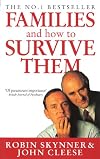
Excellent. Written as conversations between John Cleese (of Fawlty Towers fame) and his family therapist, Robin Skynner. This book looks at psychiatry for the layman, in terms of why some people are happy while others aren't; why some people have repressed emotions, and what happens to them; what can cause people to become 'stuck' in their development from babyhood. I don't agree with every word - the recommendations about strict discipline for children seem over-harsh to me, for instance - show more but much of what's said is revelatory and fascinating. I first read this about twelve years ago, and found it extremely helpful in understanding my sons better. Even now, as an empty-nester, I can see a lot of value in this for self-help, and figuring out how people tick and why some are easier to get along with than others - quite apart from their different personality preferences.
The humour is decidedly 'British', and a non-British friend once told me that she simply didn't get the cartoons, which she even found mildly offensive in places. Take it with a pinch of salt - but if you ever wanted to know why some families get along and others don't, in broad terms, I'd recommend this book highly. show less
The humour is decidedly 'British', and a non-British friend once told me that she simply didn't get the cartoons, which she even found mildly offensive in places. Take it with a pinch of salt - but if you ever wanted to know why some families get along and others don't, in broad terms, I'd recommend this book highly. show less
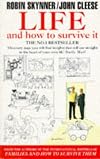
A book that takes some thought, delving into research about what makes the 'healthiest' people, families, organisations and countries. It's written as a conversation between John Cleese and the late Robin Skynner (his therapist) with a few moments of humour. It makes for an enjoyable read but the depth of the concepts isn't always immediately obvious.
The sections on 'religion' were rather revealing, despite some facets not tying in with Christian belief. A surprising emphasis is given to show more Jesus' words, considering that it's basically a secular book.
It's taken me almost a year to re-read it as the dialogue format doesn't lead to skimming or reading a lot at one sitting. But although the concepts were not, this time around, new to me, I thought it well worth revisiting them.
Definitely recommended. show less
The sections on 'religion' were rather revealing, despite some facets not tying in with Christian belief. A surprising emphasis is given to show more Jesus' words, considering that it's basically a secular book.
It's taken me almost a year to re-read it as the dialogue format doesn't lead to skimming or reading a lot at one sitting. But although the concepts were not, this time around, new to me, I thought it well worth revisiting them.
Definitely recommended. show less

This is an easy-to-read introduction to family therapy, presented as a dialogue between psychiatrist Robin Skynner and comedian John Cleese, who had participated in group therapy with Skynner. Skynner’s special interests within the broader field of family therapy seem to have been what leads us to marry the person we do and the characteristics of happy families.
The book is more than forty years old, and more than once, such as in the presentation of the causes of autism, the definition of show more borderline disorder, or the factors shaping sexual identity, I wondered what more recent research might say.
Beyond that, I found myself bored. After ninety or so pages, I skipped ahead to the final chapter, on sex, and found even that couldn’t keep my interest. I guess that, given that Cleese was a co-author, I expected it to be funnier (the cartoons were nice, though). Still, there were parts that I found enlightening and helpful. show less
The book is more than forty years old, and more than once, such as in the presentation of the causes of autism, the definition of show more borderline disorder, or the factors shaping sexual identity, I wondered what more recent research might say.
Beyond that, I found myself bored. After ninety or so pages, I skipped ahead to the final chapter, on sex, and found even that couldn’t keep my interest. I guess that, given that Cleese was a co-author, I expected it to be funnier (the cartoons were nice, though). Still, there were parts that I found enlightening and helpful. show less

Nastavak bestselera „Kako preživeti svoju porodicu“ odgovora na pitanje od cega zavisi da li pojedinci, porodice i organizacije funkcionišu na zdrav i pozitivan nacin. Klizova duhovitost i iskustvo dugogišnjeg pacijenta na psihoterapiji, i Skinerovo neverovatno znanje i duboko razumevanje ljudske prirode, cine ovu knjigu zabavnim, inspirativnim i prosvetljujucim štivom. Ova knjiga je nezaobilazni vodic za preživljavanje životnih uspona i padova – kod kuce ili na poslu, kao clan show more porodice ili drušva. Nadovezujuci se na prethodnu knjigu, Skiner i Kliz šire proucavanje esencijalnih problema izvan porodice, na veze i interakciju s drugima u spoljnom svetu. Izmedu ostalog, knjiga odgovara na pitanja: Zašto ti život pruža sve lekcije koje su ti potrebne, Kako ti tuga može biti od koristi, Zašto je posao suštinski važan za naše psihološko zdravlje, Šta je kriza srednjeg doba itd. Svi mi tražimo zdravije, srecnije živote kojima cemo biti zadovoljniji, ali važno je putovanje a ne destinacija. A Skiner i Kliz su savršeni saputnici. show less
You May Also Like


Associated Authors
Statistics
- Works
- 10
- Also by
- 1
- Members
- 961
- Popularity
- #26,791
- Rating
- 3.6
- Reviews
- 17
- ISBNs
- 64
- Languages
- 15