

Harville Hendrix
Author of Getting the Love You Want: A Guide for Couples
About the Author
Harville Hendrix, Ph.D., has more than thirty-five years of experience as an educator and therapist. He specializes in working with couples in private practice, teaching marital therapy to therapists, and conducting couples workshops across the country. Dr. Hendrix is the co-founder with his wife, show more Helen Lakelly Hunt, and president of the Institute for Imago Relationship Therapy, based in Winter Park, Florida. (Bowker Author Biography) show less
Works by Harville Hendrix
Receiving Love: Transform Your Relationship by Letting Yourself Be Loved (2004) 126 copies, 2 reviews
Couples Companion: Meditations & Exercises for Getting the Love You Want: A Workbook for Couples (1994) 76 copies
Associated Works
The Mummy at the Dining Room Table: Eminent Therapists Reveal Their Most Unusual Cases (2003) — Contributor, some editions — 154 copies, 3 reviews
Tagged
Common Knowledge
- Birthdate
- 1935
- Gender
- male
- Education
- University of Chicago (PhD|Psychology and Theology)
- Occupations
- Clinical Pastoral Counselor
- Organizations
- Imago Relationships International
- Relationships
- Hunt, Helen LaKelly (wife)
- Short biography
- Harville Hendrix is the founder of Imago Relationship Therapy, an approach to couples work that combines his early spiritual-religious training with communications and relationship enhancement features. This unique method was published in a series of books: Getting the Love You Want: a Guide for Couples; Giving the Love that Heals: a Guide for Parents; Keeping the Love You Find: a Guide for Singles and The Couples' Companion which contains a series of exercises and activities for following his program of "conscious marriage."
Hendrix describes himself as a New Yorker who sleeps in New Jersey. He and his wife, Helen LaKelly Hunt, have not only collaborated on their books and the Imago Institute but also produced six children. [from The Mummy at the Dining Room Table, by Jeffrey A. Kottler and Jon Carlson (2004)] - Nationality
- USA
- Places of residence
- New York, USA
New Mexico, USA - Associated Place (for map)
- USA
Members
Reviews
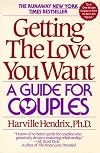
Reading Getting the Love You Want by Harville Hendrix felt like looking at my own relationship through a new lens. The idea that we unconsciously choose partners who reflect our childhood experiences really hit me, it explained so many patterns I’d noticed but never fully understood. I loved the exercises, especially the structured dialogues, because they gave me a way to communicate with my partner that felt safe and meaningful instead of just reactive.
That said, some parts of the book show more felt a bit old-fashioned, and a few of the examples didn’t quite resonate with me. At times, the explanations got a little heavy with theory, and I found myself skimming through to get to the practical bits. But even with that, the core message stuck: relationships are as much about self-understanding as they are about connecting with someone else.
Overall, I walked away feeling more aware of my own patterns and more hopeful about how I could engage in my relationship consciously. It’s not a quick fix or a magic formula, but it’s the kind of book that makes you pause, reflect, and maybe even approach love a little differently, and that’s exactly what I needed. show less
That said, some parts of the book show more felt a bit old-fashioned, and a few of the examples didn’t quite resonate with me. At times, the explanations got a little heavy with theory, and I found myself skimming through to get to the practical bits. But even with that, the core message stuck: relationships are as much about self-understanding as they are about connecting with someone else.
Overall, I walked away feeling more aware of my own patterns and more hopeful about how I could engage in my relationship consciously. It’s not a quick fix or a magic formula, but it’s the kind of book that makes you pause, reflect, and maybe even approach love a little differently, and that’s exactly what I needed. show less
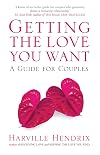
There is no need to be in a miserable marriage full of negativity, anger and frustration to experience marital problems. After all, even healthy, happy marriages do have their habitual issues, ongoing arguments and recurring situations where partners feel at a loggerhead. Funnily enough, such situations are often brought about by the exact personality traits that had attracted us to our soulmate in the first place. Isn't it weird? Well, not according to Dr Harville Hendrix, a pastoral show more counsellor, educator and therapist.
Deeply influenced by psychoanalysis, he actually sees such recurrent marital conflicts as being rooted in personal unmet childhood needs. The first few chapters are therefore dedicated to explaining his theories, since understanding them is a first step towards understanding why such conflicts arise in the first place, and so be better prepared to deal with them.
So, what is it all about?
Well, to him, since infancy and throughout our childhood we are internalising our caretakers and other influential people's traits to such an extent, that those traits later serve as a template to what our ideal partner should be. Put bluntly: his claim is that we are attracted to romantic partner having common features with our parents! More than that, since (again: to him) we all have some sorts of emotional issues rooted in our childhood (eg from helicopter parenting or, on the contrary, neglectful etc.) he affirms that, as adult, we are actually attracted to such people in order to try and resolve these issues. In this logic, here's then where marital conflicts arise: we have an inbuilt image of the ideal partner (our 'imago') based on the personalities of our caretakers, an image which makes us attracted to whose embodying such personalities in order to solve our personal unmet childhood needs, whereas, obviously, our attraction are not going to solve such needs since they also embody the negative traits that had caused them in the first place... Well, is that so?
I don't know. In fact, I don't know what to think of psychoanalysis to start with! I believe it to be a mix of reductionist science and fancy claims built upon (paradoxically) some serious insights, so, unlike the author, I rather not go and rely entirely on Freud to try and explain our emotional drive! Besides, as he is a marriage therapist dealing mainly with dysfunctional couples, I feel his theories might make sense only for people who had dysfunctional upbringing; not to everyone. Indeed, and to be fair, I had such upbringing and his claims did talk to me to some extent... It might therefore contains some hint of truth, but I confess it seemed like too much wild assertions, and so, most flew me by.
More to the point, putting psychoanalysis asides, he then go on to offers advice in order to prevent the worst that can happen once partners finally realise that they don't match each others' unrealistic expectations that is, a power struggle where they battle to try and change each others, more often than not by acting in ways that are counter productive and destructive. Emotional push and pull, tit for tats, criticisms and blaming game, nagging, behaviours that are intentionally or not an escape to the frustration creeping in... This is what he calls 'an unconscious marriage' that is, 'a marriage that includes all the hidden desires and automatic behaviors that are left over from childhood and that inexorably lead couples into conflicts'. Now, again putting asides his emphasis on childhood 'left over' (for he might be right or not on that) haven't we all been there? That part of the book indeed will talk to many - whether you are in a marriage in crisis, reflecting upon past failed relationships, or having been through a divorce and are now striving to rebuild yourself by gaining insight into what went wrong, so as to don't repeat the same mistakes with a new partner.
His solutions? He unfolds a three bullet points way to bring up feelings when on the verge of arguing: mirroring, validation, empathy. To him, such tactics are not only ways to encourage understanding and so prevent arguments to escalate. They are a path towards 'a conscious marriage' that is, one where both lovers embrace the dark sides of their personalities (accepting some issues stem from their own childhood and so are theirs only, not for their soulmate to fix and solve) and, from then on, try and heal through better communication. Well, I don't know why you may look into this book; but I for one was after some help to deal with my interpersonal skills. Fortunately, my wife is amazing enough with people to truly know how to communicate. It's not my case. Mirroring-validation-empathy, if you are like my wife, will sound like plain common sense. If, on the contrary, you are more like me, then here's a great template to bear in mind when bringing up conflictual issues. This book, on that score, helps.
Would it be enough, though? I don't think so. The author seems to think that simply being aware of your unresolved issues, and knowing how to relate them to your partner, will suffice to resolve conflicts. It certainly make for an healthy awareness and may help to defuse the power struggle, but I personally don't see how it can solve the underlying issues which are, bottom line, the cause of the discords! Dr Harville Hendrix, or so I felt, addresses here a few symptoms but not the full illness.
So, what about it all? 'Getting the Love You Want' is spot on when it comes to describe how a negative dynamic can easily set in a marriage, creeping in to such a point that ongoing issues can dangerously trap partners in a frustrating power struggle. His focus in searching in your childhood the reasons why some behaviours can easily trigger you may be relevant, but I think it will be so only if you had a dysfunctional upbringing (I did, and his insight did help me; I give him credit for that) - if not, I think you could do away with the whole psychoanalytical parts. In fact, it's his advices on how to communicate well which will be useful; not only to learn how to express your feelings, but also how to listen to those of your partners. It certainly won't be enough to put a marriage back on track (I, like the author, went through a divorce and am now in my second marriage) but it can surely bring awareness on emotional issues while helping a closer bond. That's big enough a step!
An insightful read, then, but I was expecting more. show less
Deeply influenced by psychoanalysis, he actually sees such recurrent marital conflicts as being rooted in personal unmet childhood needs. The first few chapters are therefore dedicated to explaining his theories, since understanding them is a first step towards understanding why such conflicts arise in the first place, and so be better prepared to deal with them.
So, what is it all about?
Well, to him, since infancy and throughout our childhood we are internalising our caretakers and other influential people's traits to such an extent, that those traits later serve as a template to what our ideal partner should be. Put bluntly: his claim is that we are attracted to romantic partner having common features with our parents! More than that, since (again: to him) we all have some sorts of emotional issues rooted in our childhood (eg from helicopter parenting or, on the contrary, neglectful etc.) he affirms that, as adult, we are actually attracted to such people in order to try and resolve these issues. In this logic, here's then where marital conflicts arise: we have an inbuilt image of the ideal partner (our 'imago') based on the personalities of our caretakers, an image which makes us attracted to whose embodying such personalities in order to solve our personal unmet childhood needs, whereas, obviously, our attraction are not going to solve such needs since they also embody the negative traits that had caused them in the first place... Well, is that so?
I don't know. In fact, I don't know what to think of psychoanalysis to start with! I believe it to be a mix of reductionist science and fancy claims built upon (paradoxically) some serious insights, so, unlike the author, I rather not go and rely entirely on Freud to try and explain our emotional drive! Besides, as he is a marriage therapist dealing mainly with dysfunctional couples, I feel his theories might make sense only for people who had dysfunctional upbringing; not to everyone. Indeed, and to be fair, I had such upbringing and his claims did talk to me to some extent... It might therefore contains some hint of truth, but I confess it seemed like too much wild assertions, and so, most flew me by.
More to the point, putting psychoanalysis asides, he then go on to offers advice in order to prevent the worst that can happen once partners finally realise that they don't match each others' unrealistic expectations that is, a power struggle where they battle to try and change each others, more often than not by acting in ways that are counter productive and destructive. Emotional push and pull, tit for tats, criticisms and blaming game, nagging, behaviours that are intentionally or not an escape to the frustration creeping in... This is what he calls 'an unconscious marriage' that is, 'a marriage that includes all the hidden desires and automatic behaviors that are left over from childhood and that inexorably lead couples into conflicts'. Now, again putting asides his emphasis on childhood 'left over' (for he might be right or not on that) haven't we all been there? That part of the book indeed will talk to many - whether you are in a marriage in crisis, reflecting upon past failed relationships, or having been through a divorce and are now striving to rebuild yourself by gaining insight into what went wrong, so as to don't repeat the same mistakes with a new partner.
His solutions? He unfolds a three bullet points way to bring up feelings when on the verge of arguing: mirroring, validation, empathy. To him, such tactics are not only ways to encourage understanding and so prevent arguments to escalate. They are a path towards 'a conscious marriage' that is, one where both lovers embrace the dark sides of their personalities (accepting some issues stem from their own childhood and so are theirs only, not for their soulmate to fix and solve) and, from then on, try and heal through better communication. Well, I don't know why you may look into this book; but I for one was after some help to deal with my interpersonal skills. Fortunately, my wife is amazing enough with people to truly know how to communicate. It's not my case. Mirroring-validation-empathy, if you are like my wife, will sound like plain common sense. If, on the contrary, you are more like me, then here's a great template to bear in mind when bringing up conflictual issues. This book, on that score, helps.
Would it be enough, though? I don't think so. The author seems to think that simply being aware of your unresolved issues, and knowing how to relate them to your partner, will suffice to resolve conflicts. It certainly make for an healthy awareness and may help to defuse the power struggle, but I personally don't see how it can solve the underlying issues which are, bottom line, the cause of the discords! Dr Harville Hendrix, or so I felt, addresses here a few symptoms but not the full illness.
So, what about it all? 'Getting the Love You Want' is spot on when it comes to describe how a negative dynamic can easily set in a marriage, creeping in to such a point that ongoing issues can dangerously trap partners in a frustrating power struggle. His focus in searching in your childhood the reasons why some behaviours can easily trigger you may be relevant, but I think it will be so only if you had a dysfunctional upbringing (I did, and his insight did help me; I give him credit for that) - if not, I think you could do away with the whole psychoanalytical parts. In fact, it's his advices on how to communicate well which will be useful; not only to learn how to express your feelings, but also how to listen to those of your partners. It certainly won't be enough to put a marriage back on track (I, like the author, went through a divorce and am now in my second marriage) but it can surely bring awareness on emotional issues while helping a closer bond. That's big enough a step!
An insightful read, then, but I was expecting more. show less
Anyone who claims they have read this book and completed all the exercises in their entirety has to be either a flat out liar or an individual with a remarkable threshold for pain.
I started this book in March 2011 and have been struggling to finish it ever since.
That isn't to say that the book isn't a good one. There are actually many, many favorable things about this book.
1. It is flammable (jk...sorta)
2. Hendrix has many interesting things to say about the Imago and why we are attracted show more to people we are. In the first half of the book, he goes into the various stages of human development and explains how all of us, have become "stuck" as it were, in one of the stages. Within our quest to unstuck ourselves, we are constantly attracted to individuals who will help perpetuate that stage of childhood and development in the hopes that this time we can actually overcome it. This is why we fall into patterns of relationships which repeat themselves. According to Hendrix, the relationship is intended to be a vehicle by which one heals their childhood wounds. This is very contrary to the popular idea that an individual needs to be "whole" and all "worked out" in order to be in a healthy relationship. Hendrix also goes into other ways in which people become "stuck" and how they end up psychologically in the relationships they do.
Hendrix's ideas are well written, interesting and very, very deep. I found myself going through the pages with highlighters and pencil and taking notes. Every page a different realization occurred to me and the book, overall inspired me with its ideas and enlightened me.
So, why was it painful? It was the exercises. Almost every chapter, Hendrix devises these tedious "exercises" which were generally long, painful, and incredibly boring and repetitious. I am sure that the exercises were meant to help one achieve self-realization and all that, but there just has to be a better way. I am not opposed to the idea of the exercises per se, but these just seemed drawn out and exhausting and they destroyed the rhythm of the book for me. For instance, the third chapter had an over 100 questionnaire. Do you know how many hours it took for me to do that? Midway through the book, I just kept putting off and putting off the exercises. It was painful and annoying to do them. And then I started skipping them. In the last chapter, unfortunately, you have to utilize all of the exercises and bring them together. Unfortunately, It was at that point that I just gave up on the book without reading about how one actually does overcome their childhood wounds through the relationship :/
After struggling through this book for 9 months, and fighting my way through the ridiculous and boring exercises, I think I deserve to mark it as "read" even though I didn't read and complete every single word. Good luck to anyone who tackles this and a trophy for anyone who actually succeeds. show less
I started this book in March 2011 and have been struggling to finish it ever since.
That isn't to say that the book isn't a good one. There are actually many, many favorable things about this book.
1. It is flammable (jk...sorta)
2. Hendrix has many interesting things to say about the Imago and why we are attracted show more to people we are. In the first half of the book, he goes into the various stages of human development and explains how all of us, have become "stuck" as it were, in one of the stages. Within our quest to unstuck ourselves, we are constantly attracted to individuals who will help perpetuate that stage of childhood and development in the hopes that this time we can actually overcome it. This is why we fall into patterns of relationships which repeat themselves. According to Hendrix, the relationship is intended to be a vehicle by which one heals their childhood wounds. This is very contrary to the popular idea that an individual needs to be "whole" and all "worked out" in order to be in a healthy relationship. Hendrix also goes into other ways in which people become "stuck" and how they end up psychologically in the relationships they do.
Hendrix's ideas are well written, interesting and very, very deep. I found myself going through the pages with highlighters and pencil and taking notes. Every page a different realization occurred to me and the book, overall inspired me with its ideas and enlightened me.
So, why was it painful? It was the exercises. Almost every chapter, Hendrix devises these tedious "exercises" which were generally long, painful, and incredibly boring and repetitious. I am sure that the exercises were meant to help one achieve self-realization and all that, but there just has to be a better way. I am not opposed to the idea of the exercises per se, but these just seemed drawn out and exhausting and they destroyed the rhythm of the book for me. For instance, the third chapter had an over 100 questionnaire. Do you know how many hours it took for me to do that? Midway through the book, I just kept putting off and putting off the exercises. It was painful and annoying to do them. And then I started skipping them. In the last chapter, unfortunately, you have to utilize all of the exercises and bring them together. Unfortunately, It was at that point that I just gave up on the book without reading about how one actually does overcome their childhood wounds through the relationship :/
After struggling through this book for 9 months, and fighting my way through the ridiculous and boring exercises, I think I deserve to mark it as "read" even though I didn't read and complete every single word. Good luck to anyone who tackles this and a trophy for anyone who actually succeeds. show less
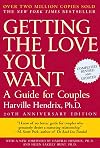
I have some reservations about Hendrix, his endlessly multiplying books, and the Imago Therapy industry that has grown up around them. Having said that - and I will come back to it later - it must be said that there is a great deal of substance to his theories and these books. His basic premise is that there is an unconscious element to romantic attraction. There is no controversy here. What Hendrix has done - based on extensive couple therapy - is to peel back the layers of behavior and show more motivation to get at a workable hypothesis of what is really going on. He notes that people entering into a romantic relationship (or failing to do so) often seem to have a sense that the other party has (or had) the potential to heal or complete something that was damaged or absent in themselves. Hendrix´s particular genius was to realize that this could be true and not true at the same time. True in the sense that the other person is the key to healing or completion; but not true in the sense that they will provide it to you by simply being there or by giving it to you as a gift. Hendrix´s theory is that you might unconsciously select someone whose makeup/personality is perfectly suited to ´pressing all those buttons´ that are linked to issues inside yourself that your unconscious would like you to address. So the job of the other person is to press buttons (and you to press theirs), and the job of each person is to address their own issues. Hendrix´s therapy essentially involves stepping back from seeing the other person as the one with the problems, or the one causing the problem, or the one who is going to (or should) give you the solution to the problem. He suggests that you treat the irritations of a connected life (once that blind romantic stage fades) as pointers (and a motivation) to do work you need to do on yourself. Which involves a lot (a very great many) of exercises that can by very uncomfortable. And like physical exercise it is easy to fail to do it properly and give up. But like physical exercise it is often easier to do it together with other people (not necessarily your partner), and if you persist with it my experience is that you will see at least some benefit.
What don´t I like about Hendrix? He has a conversational style of writing, rather than an academic one. Which is great, but sometimes I feel that it is a rather rambling conversation and I yearn for some dot points. I´d love to see Hendrix say in less than ten thousand (or a hundred thousand) words, ´This is the essentials of what I´m talking about.¨ His analogies are great, his case studies support his arguments, and I have no argument with him expressing his strong Christian faith. It is just that they make reading him an effort, which I find wearying, knowing that the exercises he prescribes will be arduous enough. That said, he has set himself the challenge of trying to get across an abstract idea that is a little counter-intuitive to an audience that have hugely varied experiences, belief systems and appreciation of the workings of the unconscious. Which explains the multiple books, and the effectiveness of the group seminars where facilitators can ´bring people along´ with the theory and exercises.
What else don´t I like? Most of all that Hendrix says this only works in deep romantic (love) relationships. I don´t think he has an issue with same sex relationships, but the books of his I have read (and this one) don´t give them any focus. As a theory it would be more interesting if he had looked also at long term friendships and even our relationship with animals, with inanimate things and ideas, and with work and our position in society. Essentially his theory pins everything on the unconscious, and provides (apparently) useful exercises to satisfy it, but does not wrestle with what is going on in the unconscious - the way it represents the external world and it´s capacity for confusion, self-deception and displacement. And last of all, while the development of his theory is well anchored in real life couples experience, I sometimes miss some explanation or reflection on how his therapy can be effectively introduced to couples: how it leaves them ´on the far side´, and how it relates to the wider family (children, in-laws, etc) and situations where there is real mental illness. But worthwhile? Yes. Read it, put it down, come back to it and think about it. Accept its limitations, take advantage of what it has to offer, don´t expect a silver bullet. Try and be nice to your partner, and to yourself. show less
What don´t I like about Hendrix? He has a conversational style of writing, rather than an academic one. Which is great, but sometimes I feel that it is a rather rambling conversation and I yearn for some dot points. I´d love to see Hendrix say in less than ten thousand (or a hundred thousand) words, ´This is the essentials of what I´m talking about.¨ His analogies are great, his case studies support his arguments, and I have no argument with him expressing his strong Christian faith. It is just that they make reading him an effort, which I find wearying, knowing that the exercises he prescribes will be arduous enough. That said, he has set himself the challenge of trying to get across an abstract idea that is a little counter-intuitive to an audience that have hugely varied experiences, belief systems and appreciation of the workings of the unconscious. Which explains the multiple books, and the effectiveness of the group seminars where facilitators can ´bring people along´ with the theory and exercises.
What else don´t I like? Most of all that Hendrix says this only works in deep romantic (love) relationships. I don´t think he has an issue with same sex relationships, but the books of his I have read (and this one) don´t give them any focus. As a theory it would be more interesting if he had looked also at long term friendships and even our relationship with animals, with inanimate things and ideas, and with work and our position in society. Essentially his theory pins everything on the unconscious, and provides (apparently) useful exercises to satisfy it, but does not wrestle with what is going on in the unconscious - the way it represents the external world and it´s capacity for confusion, self-deception and displacement. And last of all, while the development of his theory is well anchored in real life couples experience, I sometimes miss some explanation or reflection on how his therapy can be effectively introduced to couples: how it leaves them ´on the far side´, and how it relates to the wider family (children, in-laws, etc) and situations where there is real mental illness. But worthwhile? Yes. Read it, put it down, come back to it and think about it. Accept its limitations, take advantage of what it has to offer, don´t expect a silver bullet. Try and be nice to your partner, and to yourself. show less
Lists
Awards

You May Also Like


Associated Authors
Statistics
- Works
- 39
- Also by
- 2
- Members
- 2,525
- Popularity
- #10,162
- Rating
- 3.9
- Reviews
- 20
- ISBNs
- 109
- Languages
- 11