
About the Author
John M. Gottman, Ph.D., is a professor of psychology at the University of Washington
Works by John Gottman
The Seven Principles for Making Marriage Work: A Practical Guide from the Country's Foremost Relationship Expert (1999) — Author — 1,723 copies, 25 reviews
The Seven Principles for Making Marriage Work: A Practical Guide from the Country's Foremost Relationship Expert [Completely Revised and Updated] (2015) 1,002 copies, 5 reviews
Ten Lessons to Transform Your Marriage: America's Love Lab Experts Share Their Strategies for Strengthening Your Relationship (2006) — Author — 261 copies, 7 reviews
And Baby Makes Three: The Six-Step Plan for Preserving Marital Intimacy and Rekindling Romance After Baby Arrives (2007) — Author — 134 copies, 3 reviews
The Man's Guide to Women: Scientifically Proven Secrets from the Love Lab About What Women Really Want (2016) 119 copies, 2 reviews
What Predicts Divorce?: The Relationship Between Marital Processes and Marital Outcomes (1993) 21 copies
The Science of Couples and Family Therapy: Behind the Scenes at the "Love Lab" (2018) — Author — 12 copies
Hjerteforeldre : de fem enkle stegene som bygger barnets selvtillit og hjelper dem å vokse sosialt, emosjonelt og intellektuelt (2017) 6 copies
Det kvinner vil ha, det menn vil ha : den nye forskningen om nøkkelen til lykke hos begge (2017) 6 copies, 1 review
Hemmelighetene bak et lykkelig parforhold : syv nøkler fra verdens fremste samlivsforsker (2016) 3 copies
Hva er det jeg føler? 2 copies
Man’s Guide To Women The 2 copies
Hemmelighetene bak et lykkelig parforhold : syv nøkler fra verdens fremste samlivsforsker (2017) 2 copies
Sedm principů spokojeného manželství : praktický průvodce fungováním dlouhodobých vztahů (2015) 1 copy
The Heart of Parenting: Raising an Emotionally Intelligent Child by John Gottman (1997-02-03) (1656) 1 copy
¿Qué hace que el amor perdure?: Cómo crear confianza y evitar la traición en la pareja (Spanish Edition) (2013) 1 copy
Hjerteforeldre : de fem enkle stegene som bygger barnets selvtillit og hjelper dem å vokse sosialt, emosjonelt og intellektuelt 1 copy, 1 review
Wiser Together 1 copy
Snu deg til meg! : det du gjør i løpet av ett mikrosekund, avgjør hvor relasjonene dine ender opp (2018) 1 copy
A jól működő házasság hét alapelve gyakorlati útmutató az USA első számú párkapcsolati… (2016) 1 copy
Snu deg til meg! : det du gjør i løpet av et mikrosekund, avgjør hvor relasjonene dine ender opp Bind I (2019) 1 copy
Associated Works
What Is Your Dangerous Idea? Today's Leading Thinkers on the Unthinkable (2007) — Contributor — 668 copies, 8 reviews
Tagged
Common Knowledge
Members
Reviews
The Seven Principles for Making Marriage Work: A Practical Guide from the Country's Foremost Relationship Expert by John M. Gottman
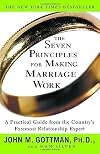
It is, perhaps, fitting, that I gave this book 3 stars, placing it between my rating for Why Marriages Succeed or Fail (2 stars) and And Baby Makes Three (5). Gottman's books tend to get better the more recently they are published. The substance does not change dramatically, but the presentation is refined each time. Thus, if I were to recommend a Gottman book of the ones I have read, I recommend And Baby Makes Three. Despite the focus on becoming parents, most of the content is applicable show more to any romantic relationship, as I noted in my review. And based on the trend, I suspect that 2012's What Makes Love Last? is an even more refined version of the ideas. One question you may ask yourself is: Erika, why do you keep reading Gottman's works if they are all similar in content? Largely, it is because the solid relationship advice Gottman gives is valuable to review every few years.
The key ideas of the book are that relationships are built on a sense of trust and we-ness. Four behaviors are strong indicators that trust is degrading to a harmful point in a relationship: criticism, contempt, defensiveness, and stonewalling. Avoiding criticism and contempt does not mean always agreeing with your partner or keeping your negative feelings inside. Rather, it is about avoiding making your complaints about your spouse's personality rather than about your reaction to their behaviors. It's the difference between, "You're always late" (criticism), "You can't be trusted to do anything, even arrive on time" (contempt), and "When you were late for our dinner out, I was really upset because I had been looking forward to it all week" (complaint). Honest complaints are a necessary part of a relationship. Criticism and contempt damage it.
After laying out how these behaviors tend to destroy a relationship, Gottman and Silver go into seven principles for improving relationships. Although these are presented separately, they reinforce each other. The more you practice some, the easier the others become.
First is enhancing love maps. Having a deep understanding of your partner's present and past, hopes and dreams, makes it easier for you to respond to them in an understanding way. It also helps you respond to them in a more positive manner. You are less likely to fall into a pattern of thinking your spouse is unreliable if you remember all the times they were reliable.
Next is to nurture your sense of fondness and admiration for each other. By taking time to remember and observe the things that attracted you to your partner, you strengthen your relationship and your ability to view them positively. One thing that stuck out in this discussion is that couples who are headed for separation often have trouble remember what it was that attracted them to each other in the first place or what it was they enjoyed about their early days together. Often, couples who have troubles seeing the good in each other now can start to reconnect over their past. If they can no longer do this, that is a very negative sign.
Third is turning toward each other. However the authors' presentation of ideas changes, this is one that is always called out as critical. For a relationship to be strong, the participants need to turn toward each other when one of them makes a bid for affection. This includes being responsive when a partner tries to make repair attempts during conflict. Turning toward each other also matters in the day-to-day nurturing of a relationship, such as being responsive to a partner's need to reconnect at the end of the day.
Partners need to accept each other's influence. Gottman and Silver note that both partners need to do this, but also notes that in US culture (that being the one for which he has data), it tends to be men who are not as open to accepting influence. Accepting influence does not mean giving into your partner, especially when you do not agree. Rather, it means treating them as a partner in decision making and taking their concerns seriously when they express them.
The next two principles are related to problem solving. The authors distinguish between solvable problems and persistent problems. Solvable problems are those that are situational and can be fixed. Persistent problems are those where there are underlying issues that are not specific to the situation at hand, although disagreements over them are often triggered by specific situations. Whether a problem is solvable or persistent depends on the feelings that the participants bring to a disagreement. A disagreement about buying a car can be a situational problem about current finances or a persistent problem about attitudes toward money. Also, situational problems can become persistent problems over time if they are not handled.
Solvable problems can generally solved more productively if you approach disagreement in a productive manner. This book's method includes having a soft startup to a discussion, making repair attempts during the discussion, taking time to sooth yourself and each other during a discussion, and finding compromises.
The authors also stresses becoming tolerant of each other's differences. This is relevant for solvable problems but even more so for persistent problems. Persistent problems will probably never be solved. One partner may like order, another want the freedom to not leave their home a bit messy. One partner may be religious and the other not. One may be a spendthrift and the other thrifty. Couples can successfully live with deep differences like this as long as they come to see these as something that they can live with and even appreciate. Maybe your partner is a spendthrift and you are thrifty, but you can learn to appreciate the generosity that comes with that -- and learn how to compromise and set budgets. Likely, you will never see fully eye-to-eye on persistent issues, but you can learn to be ok with that.
The last principle is that successful couples create shared meaning. They find the areas in their life where they can create a deep inner life that belongs to both of them. This can come in the form of shared values, shared traditions, or even shared life missions. In some ways, this sense of shared meaning is the most fundamental of the principles because with it, the rest become easier. It is also the hardest; without all of the others, creating shared meaning is difficult.
P.S. I have also read, and really enjoyed, The Science of Trust. It is distinctly more academic in tone and thus not quite comparable to Gottman's straight-up relationship advice books.
P.P.S. This was a book I'd gotten on Audible years ago when I had some credits to use up. Because of the focus on questionnaires to analyze a relationship and lists of ideas for how to improve things it was actually a terrible choice for an audio book.
P.P.P.S. The language of this book focuses on marriages and is rather heteronormative. I tend to be rather "eh, it was published in 1999" about that, but others may be more annoyed. show less
The key ideas of the book are that relationships are built on a sense of trust and we-ness. Four behaviors are strong indicators that trust is degrading to a harmful point in a relationship: criticism, contempt, defensiveness, and stonewalling. Avoiding criticism and contempt does not mean always agreeing with your partner or keeping your negative feelings inside. Rather, it is about avoiding making your complaints about your spouse's personality rather than about your reaction to their behaviors. It's the difference between, "You're always late" (criticism), "You can't be trusted to do anything, even arrive on time" (contempt), and "When you were late for our dinner out, I was really upset because I had been looking forward to it all week" (complaint). Honest complaints are a necessary part of a relationship. Criticism and contempt damage it.
After laying out how these behaviors tend to destroy a relationship, Gottman and Silver go into seven principles for improving relationships. Although these are presented separately, they reinforce each other. The more you practice some, the easier the others become.
First is enhancing love maps. Having a deep understanding of your partner's present and past, hopes and dreams, makes it easier for you to respond to them in an understanding way. It also helps you respond to them in a more positive manner. You are less likely to fall into a pattern of thinking your spouse is unreliable if you remember all the times they were reliable.
Next is to nurture your sense of fondness and admiration for each other. By taking time to remember and observe the things that attracted you to your partner, you strengthen your relationship and your ability to view them positively. One thing that stuck out in this discussion is that couples who are headed for separation often have trouble remember what it was that attracted them to each other in the first place or what it was they enjoyed about their early days together. Often, couples who have troubles seeing the good in each other now can start to reconnect over their past. If they can no longer do this, that is a very negative sign.
Third is turning toward each other. However the authors' presentation of ideas changes, this is one that is always called out as critical. For a relationship to be strong, the participants need to turn toward each other when one of them makes a bid for affection. This includes being responsive when a partner tries to make repair attempts during conflict. Turning toward each other also matters in the day-to-day nurturing of a relationship, such as being responsive to a partner's need to reconnect at the end of the day.
Partners need to accept each other's influence. Gottman and Silver note that both partners need to do this, but also notes that in US culture (that being the one for which he has data), it tends to be men who are not as open to accepting influence. Accepting influence does not mean giving into your partner, especially when you do not agree. Rather, it means treating them as a partner in decision making and taking their concerns seriously when they express them.
The next two principles are related to problem solving. The authors distinguish between solvable problems and persistent problems. Solvable problems are those that are situational and can be fixed. Persistent problems are those where there are underlying issues that are not specific to the situation at hand, although disagreements over them are often triggered by specific situations. Whether a problem is solvable or persistent depends on the feelings that the participants bring to a disagreement. A disagreement about buying a car can be a situational problem about current finances or a persistent problem about attitudes toward money. Also, situational problems can become persistent problems over time if they are not handled.
Solvable problems can generally solved more productively if you approach disagreement in a productive manner. This book's method includes having a soft startup to a discussion, making repair attempts during the discussion, taking time to sooth yourself and each other during a discussion, and finding compromises.
The authors also stresses becoming tolerant of each other's differences. This is relevant for solvable problems but even more so for persistent problems. Persistent problems will probably never be solved. One partner may like order, another want the freedom to not leave their home a bit messy. One partner may be religious and the other not. One may be a spendthrift and the other thrifty. Couples can successfully live with deep differences like this as long as they come to see these as something that they can live with and even appreciate. Maybe your partner is a spendthrift and you are thrifty, but you can learn to appreciate the generosity that comes with that -- and learn how to compromise and set budgets. Likely, you will never see fully eye-to-eye on persistent issues, but you can learn to be ok with that.
The last principle is that successful couples create shared meaning. They find the areas in their life where they can create a deep inner life that belongs to both of them. This can come in the form of shared values, shared traditions, or even shared life missions. In some ways, this sense of shared meaning is the most fundamental of the principles because with it, the rest become easier. It is also the hardest; without all of the others, creating shared meaning is difficult.
P.S. I have also read, and really enjoyed, The Science of Trust. It is distinctly more academic in tone and thus not quite comparable to Gottman's straight-up relationship advice books.
P.P.S. This was a book I'd gotten on Audible years ago when I had some credits to use up. Because of the focus on questionnaires to analyze a relationship and lists of ideas for how to improve things it was actually a terrible choice for an audio book.
P.P.P.S. The language of this book focuses on marriages and is rather heteronormative. I tend to be rather "eh, it was published in 1999" about that, but others may be more annoyed. show less
The Seven Principles for Making Marriage Work: A Practical Guide from the Country's Foremost Relationship Expert by John Gottman
The Seven Principles for Making Marriage Work felt surprisingly refreshing to read, mostly because John Gottman doesn’t sugarcoat what makes relationships thrive. Instead of offering vague advice or sweeping declarations about love, he actually explains the small, almost invisible things couples do every day that either strengthen or erode their connection. What stuck with me most was how he emphasizes friendship as the backbone of a lasting relationship. It made me rethink the way I show show more appreciation and how often I overlook the simple gestures that really matter.
While I found the research and real-life observations fascinating, the book can sometimes feel a bit structured, almost like attending a workshop through the pages. Some of the exercises felt practical, but others felt a little too formal for me. Still, I appreciated how Gottman breaks big emotional issues into understandable, manageable pieces. It left me feeling less overwhelmed by the idea of “relationship work” and more encouraged that small changes can make a real difference.
By the time I finished, I felt like I’d gained a more grounded and hopeful outlook on what it means to build a healthy partnership. It’s not about being perfect; it’s about staying curious, respectful, and committed to understanding each other. I’d absolutely recommend this book to anyone who wants a down to earth, research backed guide to building a stronger, more connected relationship. show less
While I found the research and real-life observations fascinating, the book can sometimes feel a bit structured, almost like attending a workshop through the pages. Some of the exercises felt practical, but others felt a little too formal for me. Still, I appreciated how Gottman breaks big emotional issues into understandable, manageable pieces. It left me feeling less overwhelmed by the idea of “relationship work” and more encouraged that small changes can make a real difference.
By the time I finished, I felt like I’d gained a more grounded and hopeful outlook on what it means to build a healthy partnership. It’s not about being perfect; it’s about staying curious, respectful, and committed to understanding each other. I’d absolutely recommend this book to anyone who wants a down to earth, research backed guide to building a stronger, more connected relationship. show less
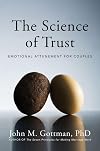
John Gottman is the leading relationship empiricist in the US. He, his wife, and his academic lab have spent decades researching marriage, and using their findings to bolster and examine particular empirical practices while weakening others. Most notably, he can predict with 90% accuracy which newlyweds will divorce within 6 years. The Science of Trust is not a self-help pop psychology book on improving your relationship (he has many others in that vein) so much as a layman's technical show more overview of those forty years of research.
It strikes me that most of this book is applicable to friendships, workplace relationships, politics, and other environments as well as for couples, though of course Gottman wouldn't want to make claims in those other fields. Some of the core insights he covers:
- Bids & reservoirs of trust. Partners come to each other with bids for attention all the time; healthy relationships "turn toward" these bids, rather than ignoring or actively dismissing them; without the bank of trust that turning toward bids for attention builds, the core belief that your partner is a fundamentally good person erodes and small issues become big problems
- Fundamental attribution error. In distressed relationships, people attribute troubling behaviors to their partner's negative traits and rehearse negativity (and miss 50% of the neutral and positive interactions that an observer sees); in happy relationships, people attribute troubling behaviors to their partner's situation and find opportunities to actively reflect on what they love about the partner
- Having conflict successfully. In conflict conversations, the tone set in the first few minutes matters immensely; it's very good for the relationship to maintain a positivity-negativity ratio of at least 5:1, and very bad to escalate the conflict through criticism, defensiveness, contempt or stonewalling; it's a very bad sign if these conversations become zero-sum; repairs that attend to the partner's needs are necessary throughout this conversation, and affective repairs (like empathy, self-disclosure, taking responsibility) work much better than cognitive repairs (like compromise, keeping conversation on track, questions); giving a positive prescription for action when addressing a sore point helps keep everyone on track
- Stress hormones. Once one person becomes physiologically aroused in an argument, there's no point to continuing the discussion -- it's best to take a break, self-soothe, then come back and heal the emotional wounds of the original concern and any bad interactions that followed (revisiting is necessary or the resentments can calcify); chronic alarm leads to being less able to take in information, spending lots of time summarizing yourself in hope the partner will finally "get it" (they won't), reduced creativity, less humor and listening and empathy
- Emotional attunement. Active listening doesn't matter, but it does matter to be attuned to even weak emotions and validate them, recognizing when you have no responsibility for them; being warm but emotionally dismissing is not as pro-social as being emotionally attuned
- Defining & using trust. Trust and trustworthiness are about whose interests you believe your partner will support in an interaction game; after betrayal, it's reasonable to check on current trustworthiness through smaller interactions: is the partner positive and relationship building? negative, critical, derisive, sarcastic?
So, there's a lot of useful information in this book, and it seems especially designed for engineer-style brains to grok what behaviors build and undermine persistent emotional connection. Even so, the fundamental orientation of the book doesn't lay entirely well with me. There are two dimensions to my discomfort:
- Traditionalism. This book is unabashedly monogamist, heterosexist, and generally traditionalist. Gottman argues it is better to be in a relationship that betrays you than to not be in a relationship at all; mentions the applicability of his theories to queer couples but writes with only he-she language and never develops how his findings are influenced by heterosexuality; devalues gay male, kink, and poly community social practices & ethics as sex addiction and disruptive to bonding; assumes porn use involves dishonesty and deception; and fervently ascribes to the idea of expecting the family unit to meet all your needs. These are all cultural expectations quite out of step with my milieu, and I wouldn't have minded their presence if he had actively argued for them rather than assuming their universality.
- Quantitative social science. There isn't much in this book to dispel the stereotype of professional quantitative social scientists as producing undergraduate-term-paper quality quantitative research. Though I thought the formulation of a trust metric was quite clever, the "what drives X" discussions gave me the impression of misused regression models and/or not correcting statistical significance when testing multiple hypotheses, and introducing MATLAB with a citation and a misspelling didn't do much to belie the impression of sometimes falling into being "unconsciously incompetent" within the four stages of competence. That doesn't mean the findings are wrong or even that there necessarily is a lack of competence -- Gottman is well-versed in qualitative practices as well, to be sure -- but it was a disappointment to my hopes that I'd be able to hand this book around confidently.
I'd also have liked it to touch on whether two low-emotion-super-logical people would find this book worthwhile for their relationship. That's a "future work" complaint; the book doesn't hide its position that it makes sense to start by looking for general trends in relationship data, rather than starting with corner cases, and I agree. I just want even more nuance.
Overall, I found this book to have very valuable content (4.5 stars!) but my misgivings are so fundamental and my rating system is so tied to my own affect that I can't bring myself to give it even 4 stars ("Yay, I'm a fan!" cannot quite apply). I'd still recommend The Science of Trust -- with caveats, but firmly -- to anyone quantitatively minded. show less
It strikes me that most of this book is applicable to friendships, workplace relationships, politics, and other environments as well as for couples, though of course Gottman wouldn't want to make claims in those other fields. Some of the core insights he covers:
- Bids & reservoirs of trust. Partners come to each other with bids for attention all the time; healthy relationships "turn toward" these bids, rather than ignoring or actively dismissing them; without the bank of trust that turning toward bids for attention builds, the core belief that your partner is a fundamentally good person erodes and small issues become big problems
- Fundamental attribution error. In distressed relationships, people attribute troubling behaviors to their partner's negative traits and rehearse negativity (and miss 50% of the neutral and positive interactions that an observer sees); in happy relationships, people attribute troubling behaviors to their partner's situation and find opportunities to actively reflect on what they love about the partner
- Having conflict successfully. In conflict conversations, the tone set in the first few minutes matters immensely; it's very good for the relationship to maintain a positivity-negativity ratio of at least 5:1, and very bad to escalate the conflict through criticism, defensiveness, contempt or stonewalling; it's a very bad sign if these conversations become zero-sum; repairs that attend to the partner's needs are necessary throughout this conversation, and affective repairs (like empathy, self-disclosure, taking responsibility) work much better than cognitive repairs (like compromise, keeping conversation on track, questions); giving a positive prescription for action when addressing a sore point helps keep everyone on track
- Stress hormones. Once one person becomes physiologically aroused in an argument, there's no point to continuing the discussion -- it's best to take a break, self-soothe, then come back and heal the emotional wounds of the original concern and any bad interactions that followed (revisiting is necessary or the resentments can calcify); chronic alarm leads to being less able to take in information, spending lots of time summarizing yourself in hope the partner will finally "get it" (they won't), reduced creativity, less humor and listening and empathy
- Emotional attunement. Active listening doesn't matter, but it does matter to be attuned to even weak emotions and validate them, recognizing when you have no responsibility for them; being warm but emotionally dismissing is not as pro-social as being emotionally attuned
- Defining & using trust. Trust and trustworthiness are about whose interests you believe your partner will support in an interaction game; after betrayal, it's reasonable to check on current trustworthiness through smaller interactions: is the partner positive and relationship building? negative, critical, derisive, sarcastic?
So, there's a lot of useful information in this book, and it seems especially designed for engineer-style brains to grok what behaviors build and undermine persistent emotional connection. Even so, the fundamental orientation of the book doesn't lay entirely well with me. There are two dimensions to my discomfort:
- Traditionalism. This book is unabashedly monogamist, heterosexist, and generally traditionalist. Gottman argues it is better to be in a relationship that betrays you than to not be in a relationship at all; mentions the applicability of his theories to queer couples but writes with only he-she language and never develops how his findings are influenced by heterosexuality; devalues gay male, kink, and poly community social practices & ethics as sex addiction and disruptive to bonding; assumes porn use involves dishonesty and deception; and fervently ascribes to the idea of expecting the family unit to meet all your needs. These are all cultural expectations quite out of step with my milieu, and I wouldn't have minded their presence if he had actively argued for them rather than assuming their universality.
- Quantitative social science. There isn't much in this book to dispel the stereotype of professional quantitative social scientists as producing undergraduate-term-paper quality quantitative research. Though I thought the formulation of a trust metric was quite clever, the "what drives X" discussions gave me the impression of misused regression models and/or not correcting statistical significance when testing multiple hypotheses, and introducing MATLAB with a citation and a misspelling didn't do much to belie the impression of sometimes falling into being "unconsciously incompetent" within the four stages of competence. That doesn't mean the findings are wrong or even that there necessarily is a lack of competence -- Gottman is well-versed in qualitative practices as well, to be sure -- but it was a disappointment to my hopes that I'd be able to hand this book around confidently.
I'd also have liked it to touch on whether two low-emotion-super-logical people would find this book worthwhile for their relationship. That's a "future work" complaint; the book doesn't hide its position that it makes sense to start by looking for general trends in relationship data, rather than starting with corner cases, and I agree. I just want even more nuance.
Overall, I found this book to have very valuable content (4.5 stars!) but my misgivings are so fundamental and my rating system is so tied to my own affect that I can't bring myself to give it even 4 stars ("Yay, I'm a fan!" cannot quite apply). I'd still recommend The Science of Trust -- with caveats, but firmly -- to anyone quantitatively minded. show less
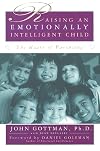
Nope. Nothing to announce. Just feeling the need for some Gottman in my life. And this was good. For those who had read his other works, it may have seemed somewhat repetitive but it was still easy to sort out the chapters you could skim.
The chapters on fathers and divorce were brilliant, especially the one on fathers. It is astounding what backed-up-facts there are on the necessity for father's involvement for the well-being of a child. They are definitely much more than just sperm show more donors.*
* Start the movement. show less
The chapters on fathers and divorce were brilliant, especially the one on fathers. It is astounding what backed-up-facts there are on the necessity for father's involvement for the well-being of a child. They are definitely much more than just sperm show more donors.*
* Start the movement. show less
Lists
You May Also Like


Associated Authors
Statistics
- Works
- 79
- Also by
- 1
- Members
- 6,452
- Popularity
- #3,812
- Rating
- 3.9
- Reviews
- 82
- ISBNs
- 205
- Languages
- 13
- Favorited
- 1