On This Page
Description
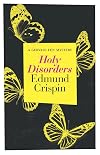
This 1945 classic British mystery from "a master of the whodunnit . . . combines a flawless plot, witty dialogue and a touch of surreal hilarity" (The New York Times Book Review). On holiday in the town of Tolnbridge with his butterfly net in hand, Prof. Gervase Fen, Oxford don of English Literature, is all set for a good frolic when he learns that the cathedral organist has been murdered. With Scotland Yard unable to make sense of the crime, Fen stands ready to step in. Whether he's chasing show more butterflies or catching criminals, it's all the same to this amateur sleuth with a penchant for literary allusions and an uncanny knack for solving the unsolvable: like why a small-town church musician would be mixed up with a local coven of witches-or a spy ring of Nazi sympathizers? Finding the answers provides endless amusement for Fen-and for readers as well-in this golden age English detective novel from Edmund Crispin, "an absolute must for devotees of cultivated crime fiction." -Kirkus Reviews Praise for the mysteries of Edmund Crispin "A marvellous comic sense." -P. D. James, New York Times-bestselling author of the Inspector Adam Dalgliesh series "Master of fast-paced, tongue-in-cheek mystery novels, a blend of John Dickson Carr, Michael Innes, M.R. James, and the Marx Brothers." -Anthony Boucher, author of the Fergus O'Breen series "One of the most literate mystery writers of the twentieth century." -The Boston Globe "Beneath a formidable exterior he had unsuspected depths of frivolity." -Philip Larkin, author of A Girl in Winter "One of the last exponents of the classical English detective story." -The Times (London.) show lessTags
Recommendations


















Member Recommendations

themulhern German spies in a mystery written during WWII. I like Innes's a lot more, though. Crispin's witchcraft sub-plot was unnecessary and is kind of pointlessly nasty.
Member Reviews
Si bien el papel de Gervase Fen es fundamental, el protagonismo de ‘Asesinato en la catedral’ se lo lleva Geoffrey Vintner, organista y compositor, que parece un trasunto de Dr. Watson de segunda. La acción se sitúa en la población de Tolnbridge, donde es citado Vintner urgentemente mediante telegrama por Fen, ya que ha habido un atentado contra la vida de Brooks, el organista de la catedral de dicha ciudad. Y hasta allí que se desplace el bueno de Vintner, con más de una dificultad durante el trayecto.
‘Asesinato en la catedral’ (Holy Disorders, 1946), del escritor británico Edmund Crispin (seudónimo de Bruce Montgomery), nos vuelve a ofrecer otra estupenda aventura del excéntrico Gervase Fen, profesor de literatura de show more Oxford y detective aficionado. Fen a veces se comporta de manera exasperadamente infantil, pero también es ingenioso y erudito, con sus constantes citas a Lewis Carroll. De nuevo Crispin nos ofrece una novela inteligente, donde hace uso de referencias a detectives y a la literatura en general, y no faltan algunos momentos de humor. Los personajes secundarios están muy conseguidos, y es uno de sus puntos fuertes. show less
‘Asesinato en la catedral’ (Holy Disorders, 1946), del escritor británico Edmund Crispin (seudónimo de Bruce Montgomery), nos vuelve a ofrecer otra estupenda aventura del excéntrico Gervase Fen, profesor de literatura de show more Oxford y detective aficionado. Fen a veces se comporta de manera exasperadamente infantil, pero también es ingenioso y erudito, con sus constantes citas a Lewis Carroll. De nuevo Crispin nos ofrece una novela inteligente, donde hace uso de referencias a detectives y a la literatura en general, y no faltan algunos momentos de humor. Los personajes secundarios están muy conseguidos, y es uno de sus puntos fuertes. show less
There have been some rather untoward goings-on in the organ loft of a West Country cathedral, and church-music composer Geoffrey Vintner finds himself playing Watson to the tetchy Professor Gervase Fen's Holmes as they try to disentangle an increasingly complex plot. There's a great deal of silliness, most of it fun but quite irrelevant to the crime, as well as bucketloads of allusions to both serious and light literature. However, it's a bit disconcerting to find that Crispin can't quite make up his mind whether he's writing a lurid thriller or the kind of English detective story that relies on the reader keeping track of the movements of a whole chapter of clergy to the nearest minute and understanding the significance of a 32' organ show more stop: there's nothing really wrong with mixing the two subgenres, you just don't quite expect it... show less
This was a thoroughly enjoyable and entertaining read. I am glad to have read it. Gervase Fen is a gem - Crispin writes Fen perfectly, with every necessary idiosyncrasy, but never too much over-description.
The pseudo-Gothic history of Tolnbridge combined with the overlay of the Nazis in WW2 make this a really ripe setting for all sorts of goings on. Crispin capitalizes on all these things and writes a story with hilarity, good props, red herrings, and seemingly familiar characters.
So many "Easter eggs" and homages and little hints about other books make this a nested joy. For example, the second half of chapter eight, in which a visit is made to Garbin's house is absolutely awesome writing. The stoic straight-facedness of Garbin show more combined with the utter ridiculousness of the props in the setting make this chapter awesome. Highly recommended that readers with wit read this novel - if only for this amusing chapter.
Great vintage mystery. Easy to read, highly enjoyable. show less
The pseudo-Gothic history of Tolnbridge combined with the overlay of the Nazis in WW2 make this a really ripe setting for all sorts of goings on. Crispin capitalizes on all these things and writes a story with hilarity, good props, red herrings, and seemingly familiar characters.
So many "Easter eggs" and homages and little hints about other books make this a nested joy. For example, the second half of chapter eight, in which a visit is made to Garbin's house is absolutely awesome writing. The stoic straight-facedness of Garbin show more combined with the utter ridiculousness of the props in the setting make this chapter awesome. Highly recommended that readers with wit read this novel - if only for this amusing chapter.
Great vintage mystery. Easy to read, highly enjoyable. show less
This sophomore effort by Crispin is actually a bit sophomoric, but still full of cleverness. The action precedes that of "The Case of the Gilded Fly"; Fen mentions that he is looking forward to Robert Warner's play at some point in this book.
Crispin had incorporated a bit of an occult aside in "The Case of the Gilded Fly"; he throws in a whole lot more of the occult in this book, and it is all completely unnecessary.
The criminals are also German spies, who receive their comeuppance, so just the right propaganda for war time. I can't recall a single reference to rationing, but soldiers are very much in evidence in the train stations.
The opening passage describes a trip involving a taxi, a stop at a sports shop, and then a train ride from show more Paddington along the south coast. Parts of this description are wildly humorous, the encounter in the sports equipment shop especially so.
Colin Watson did not write his first novel until the late 50s, but I can see a Crispin influence in Watson's depiction of groups consisting mostly of offensive individuals; Crispin's descriptions of train passengers, etc. were less kind than Michael Innes's, and Watson's descriptions of almost everybody but the few he spared, were unsparing. show less
Crispin had incorporated a bit of an occult aside in "The Case of the Gilded Fly"; he throws in a whole lot more of the occult in this book, and it is all completely unnecessary.
The criminals are also German spies, who receive their comeuppance, so just the right propaganda for war time. I can't recall a single reference to rationing, but soldiers are very much in evidence in the train stations.
The opening passage describes a trip involving a taxi, a stop at a sports shop, and then a train ride from show more Paddington along the south coast. Parts of this description are wildly humorous, the encounter in the sports equipment shop especially so.
Colin Watson did not write his first novel until the late 50s, but I can see a Crispin influence in Watson's depiction of groups consisting mostly of offensive individuals; Crispin's descriptions of train passengers, etc. were less kind than Michael Innes's, and Watson's descriptions of almost everybody but the few he spared, were unsparing. show less
A mystery from 1940, the classic British gold age type with a map of the murder scene and the amateur detective draws up a timetable of everybody's movements and explains the crime to the police. The detective is a quirky Oxford don and this is the first in a series of at least ten.
It's wartime and characters say things like "Mustn't forget to fix the blackout curtains" and mention shortages. Most of the characters are strange or unpleasant or both but the plot is nicely twisted and the writing is top notch. I felt chuffed at recognizing quotations and certainly missed a lot more, and love his habit of saying "Oh my ears and whiskers!" I immediately ordered more Gervase Fen mysteries from Powell's.
It's wartime and characters say things like "Mustn't forget to fix the blackout curtains" and mention shortages. Most of the characters are strange or unpleasant or both but the plot is nicely twisted and the writing is top notch. I felt chuffed at recognizing quotations and certainly missed a lot more, and love his habit of saying "Oh my ears and whiskers!" I immediately ordered more Gervase Fen mysteries from Powell's.
Set in a cathedral town in England during WWII, this is the second Gervase Fen murdery mystery. A church organist is first driven mad then murdered. The choirmaster is also murdered, and there is a dastardly plot that includes a wireless, an ancient haunting, and a modern romance. Fen is his usual eccentric self. The characters are all very well drawn. This is the second book in which a friend of Fen's is drawn into the action. I laughed out loud quite a lot and had to resort to the dictionary quite a lot too.
There is an absolutely hilarious scene where Fen and his friend Geoffrey are interviewing a clergyman who has a pet raven. He is blissfully ignorant of the poem by EA Poe and Fen and Geoffrey get rather hysterical quoting it and show more having Garbin take what they say literally. show less
There is an absolutely hilarious scene where Fen and his friend Geoffrey are interviewing a clergyman who has a pet raven. He is blissfully ignorant of the poem by EA Poe and Fen and Geoffrey get rather hysterical quoting it and show more having Garbin take what they say literally. show less
http://nwhyte.livejournal.com/1387122.html
Gervase Fen is embroiled in a mystery of murder and espionage in a West Country cathedral town in about 1940. The book is not quite successful at keeping a consistency of tone (also Crispin, like his male characters, seems a bit uncertain about women), but there are some glorious set-pieces, in particular the scene where Fen and his friend are trying to interview a clergyman who owns a pet raven and keep quoting Poe at each other. Fun stuff.
Gervase Fen is embroiled in a mystery of murder and espionage in a West Country cathedral town in about 1940. The book is not quite successful at keeping a consistency of tone (also Crispin, like his male characters, seems a bit uncertain about women), but there are some glorious set-pieces, in particular the scene where Fen and his friend are trying to interview a clergyman who owns a pet raven and keep quoting Poe at each other. Fun stuff.
Members
- Recently Added By
Lists

Must Read Detective Stories (Nick Fuller)
278 works; 2 members
Art Bourgeau's Favorites [Mystery Lovers Companion, 1986]
124 works; 2 members
Author Information

54+ Works 7,556 Members
Some Editions
Series

Belongs to Publisher Series
Work Relationships
Common Knowledge
- Canonical title*
- Heiliger Bimbam
- Original title
- Holy Disorders
- Alternate titles*
- Seht das Motiv und nicht die Tat
- Original publication date
- 1946
- People/Characters
- Gervase Fen; Geoffrey Vintner; Canon Spitshuker; Canon Garbin; Henry Fielding; Justinian Peace (brother-in-law of Mr. Butler) (show all 16); Frances Butler (daughter of the Precentor); Dutton (sub-organist of the cathedral); Harry James; John Dallow (Sir, Chancellor of the cathedral); July Savernake (Vicar at Maverley); Mrs. Garbin; Mr. Butler (Precentor of the cathedral | victim); Mr. Brooks (organist of the cathedral | victim); Josephine Butler (daughter of the Precentor); Inspector Garratt (local constabulary)
- Important places
- Tolnbridge, England, UK (fictional); The Whale and Coffin, Tolnbridge, England, UK (fictional pub)
- Epigraph
- Ther saugh I first the derke ymaginyng
Of felonye, and al the compassyng;
The crueel ire, reed as any gleede;
The pykepurs, and eke the pale drede;
The smylere, with the knyfe under the cloke;
The shepne, br... (show all)ennynge with the blake smoke;
The tresoun of the mordrynge in the bedde;
The open werre, with woundes al bibledde...
The nayl y-driven in the shode a-nyght;
The colde deeth, with mouth gapyng upright...
CHAUCER - Dedication
- To my parents
- First words
- As his taxi burrowed its way through the traffic outside Waterloo Station, like an over-zealous bee barging to the front of a dilatory swarm, Geoffrey Vintner re-read the letter and telegram which he had found on his breakfas... (show all)t table that morning.
- Last words
- (Click to show. Warning: May contain spoilers.)And if she was at the cathedral she must - mustn't she? - have seen him die.
*Some information comes from Common Knowledge in other languages. Click "Edit" for more information.
Classifications
Statistics
- Members
- 673
- Popularity
- 42,700
- Reviews
- 20
- Rating
- (3.63)
- Languages
- 6 — English, German, Italian, Japanese, Spanish, Swedish
- Media
- Paper, Audiobook, Ebook
- ISBNs
- 23
- ASINs
- 24