
On This Page
Description
In this, the second novel in P.G. Wodehouse's delightful Jeeves series, the family fumbles through a comedy of errors that is set in motion by a marriage proposal and a downward spiral of miscommunication and crossed wires. This hilarious novel contains many of the most beloved scenes and set pieces from the series. A must-read for Wodehouse fans and lovers of top-notch humor writing..
Tags
Recommendations
















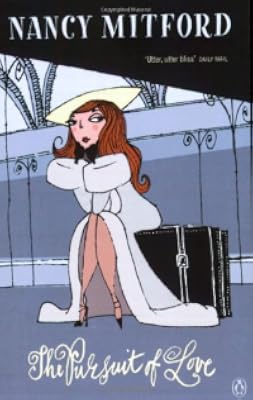

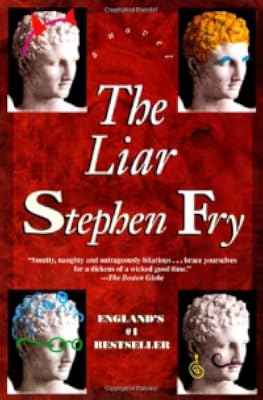


Member Recommendations

Member Reviews
This is the one that features the much lauded scene in which a well juiced Gussie Fink-Nottle presides over the prize-giving at Market Snodsbury Grammar School. It’s in all the anthologies, or so I’m led to believe, and praised to the heavens by the likes of Stephen Fry as a rib-tickler of unparalleled prowess. And the likes of Stephen Fry are by no means misguided. It is, undeniably, a belting set piece in a book positively bursting its bindings with belting set pieces. To be perfectly candid, my own very personal ribs were tickled even more proficiently by Aunt Dahlia’s elegantly vituperative verbal bashings of Bertie, but no matter.
Anyway, it’s a terrific book - an immaculate mess jacket of a book with big brass buttons show more attached - and just the tonic for our treacherous times. Wooster’s attempted usurpation of his natural superior, Jeeves, results in all the convoluted chaos you could hope for. But, as always with Wodehouse, the style’s the thing; his fleet-footed prose defies gravity in every sense. show less
Anyway, it’s a terrific book - an immaculate mess jacket of a book with big brass buttons show more attached - and just the tonic for our treacherous times. Wooster’s attempted usurpation of his natural superior, Jeeves, results in all the convoluted chaos you could hope for. But, as always with Wodehouse, the style’s the thing; his fleet-footed prose defies gravity in every sense. show less
"Thank goodness you've come, Bertie."
"Nothing could have kept me away," I replied, touched. "I felt you needed me."
"Yes."
"Quite."
"Or, rather," she said, "not you, of course, but Jeeves. The minute all this happened, I thought of him. The situation obviously cries out for Jeeves. If ever in the whole history of human affairs there was a moment when that lofty brain was required about the home, this is it."
I think, if I had been standing up, I would have staggered. In fact, I'm pretty sure I would. But it isn't so dashed easy to stagger when you're sitting in an arm-chair. Only my face, therefore, showed how deeply I had been stung by these words.
Bertie Wooster can't quite believe it when his nearest and dearest spurn his help in show more times of crisis, turning to Jeeves for advice instead. Having already had to speak to Jeeves quite firmly over his disapproval of Bertie's new, oh so fashionable at Cannes, white mess jacket with brass buttons, Bertie decides to take over Jeeves' latest cases himself. These involve helping newt-loving recluse Gussie Fink-Nottle pluck up the courage to propose to the equally soppy Madeline Basset, who describes the stars as God's daisy-chains, and healing the rift between Tuppy Glossop and Bertie's cousin Angela, after she breaks off their engagement due to Tuppy's stark refusal to believe that she had an encounter with a shark at Cannes, and his wounding insistence that it must have been a flatfish.
I think that I must have read this book before, a long time ago, as I remembered Bertie's troubles with Madeline Bassett, Gussie's lobe of newts, the school prize-giving, the servants' dance, and the night-time bike ride, but I may also be remembering the story from the old Jeeves and Wooster television series starring Fry and Laurie. Although it contains a lot of the usual Wodehouse tropes, the plot does seem comparatively fresh, possibly because it is only the second Jeeves and Wooster novel. One of the best things about the book is the first-person narration by Bertie. He uses lots of slang, shortens phrases to their initial letters, and scatters half-remembered biblical quotations throughout (after all, he did win a prize for scriptural knowledge at prep school).
This is an amusing and frothy tale in which love conquers all at the end, and Bertie escapes unscathed from an accidental engagement, all thanks to Jeeves of course. It is my favourite Wodehouse so far, and definitely deserves 5 stars. show less
"Nothing could have kept me away," I replied, touched. "I felt you needed me."
"Yes."
"Quite."
"Or, rather," she said, "not you, of course, but Jeeves. The minute all this happened, I thought of him. The situation obviously cries out for Jeeves. If ever in the whole history of human affairs there was a moment when that lofty brain was required about the home, this is it."
I think, if I had been standing up, I would have staggered. In fact, I'm pretty sure I would. But it isn't so dashed easy to stagger when you're sitting in an arm-chair. Only my face, therefore, showed how deeply I had been stung by these words.
Bertie Wooster can't quite believe it when his nearest and dearest spurn his help in show more times of crisis, turning to Jeeves for advice instead. Having already had to speak to Jeeves quite firmly over his disapproval of Bertie's new, oh so fashionable at Cannes, white mess jacket with brass buttons, Bertie decides to take over Jeeves' latest cases himself. These involve helping newt-loving recluse Gussie Fink-Nottle pluck up the courage to propose to the equally soppy Madeline Basset, who describes the stars as God's daisy-chains, and healing the rift between Tuppy Glossop and Bertie's cousin Angela, after she breaks off their engagement due to Tuppy's stark refusal to believe that she had an encounter with a shark at Cannes, and his wounding insistence that it must have been a flatfish.
I think that I must have read this book before, a long time ago, as I remembered Bertie's troubles with Madeline Bassett, Gussie's lobe of newts, the school prize-giving, the servants' dance, and the night-time bike ride, but I may also be remembering the story from the old Jeeves and Wooster television series starring Fry and Laurie. Although it contains a lot of the usual Wodehouse tropes, the plot does seem comparatively fresh, possibly because it is only the second Jeeves and Wooster novel. One of the best things about the book is the first-person narration by Bertie. He uses lots of slang, shortens phrases to their initial letters, and scatters half-remembered biblical quotations throughout (after all, he did win a prize for scriptural knowledge at prep school).
This is an amusing and frothy tale in which love conquers all at the end, and Bertie escapes unscathed from an accidental engagement, all thanks to Jeeves of course. It is my favourite Wodehouse so far, and definitely deserves 5 stars. show less
It's amazing to reflect that what are possibly the two funniest full-length Jeeves novels, Right Ho, Jeeves and Thank you, Jeeves, were both published in the space of a single year, 1934. Right Ho, Jeeves is of course the one where Gussie Fink-Nottle officiates at the prize-giving at Market Snodsbury Grammar School, in one of Wodehouse's most celebrated passages. But we also get a wonderful exchange of telegrams between Bertie and Aunt Dahlia, and Bertie's unforgettable midnight bicycle ride.
Bertie is in fine mid-season form as narrator, with some of his best inappropriate similes: "the face was pale, the eyes gooseberrylike, the ears drooping, and the whole aspect that of a man who has passed through the furnace and been caught in the show more machinery" (Gussie); "She unshipped a sigh that sounded like the wind going out of a rubber duck" (Madeline Bassett regretting that she can never love another); "it sounded as if Carnera had jumped off the top of the Eiffel Tower onto a cucumber frame" (Bertie crunching a piece of apple). But it's unfair to pick out particular passages -- there's linguistic treasure trove on every page. I can't think of any reason not to recommend this book... show less
Bertie is in fine mid-season form as narrator, with some of his best inappropriate similes: "the face was pale, the eyes gooseberrylike, the ears drooping, and the whole aspect that of a man who has passed through the furnace and been caught in the show more machinery" (Gussie); "She unshipped a sigh that sounded like the wind going out of a rubber duck" (Madeline Bassett regretting that she can never love another); "it sounded as if Carnera had jumped off the top of the Eiffel Tower onto a cucumber frame" (Bertie crunching a piece of apple). But it's unfair to pick out particular passages -- there's linguistic treasure trove on every page. I can't think of any reason not to recommend this book... show less
Every so often it's very enjoyable to just lean back and let PG Wodehouse tell me another story about Bertie Wooster, gay boulevardier and carefree man-about-town, and his fish-eating manservant Jeeves. In Right Ho, Jeeves, Bertie must contend with a bossy aunt, a friend who can't quite summon up the courage to tell the girl he loves how he feels and a manservant who disapproves of his new, natty jacket. Wodehouse tells essentially the same story in each of his Wooster and Jeeves books and that is a part of the charm, along with some of the funniest dialogue ever written and main character with a gift for creating outrageous messes, while remaining utterly ignorant of his effect on others. Right Ho, Jeeves was, like every other book in show more the series, an absolute delight. show less
Bertie gets some agency in this book, dismissing Jeeves's schemes in favor of taking matters into his own hands in a series of ploys founded in "human psychology" that at first seem as if they may remedy two engagements and ensure the future of a women's periodical. Of course, things quickly spiral out of Bertie's control. I prefer the snowball-effect plotting of this book to the heave-ho of "The Code of the Woosters", which gets more praise for its rapid-fire pace but lacks a single scene as uproarious as Gussie Fink-Nottle's speech at a boy's school in this volume. Jeeves comes through in the end with a scheme that, in true Wodehouse fashion, bundles together as much suspense as it does comedic payoff as everything comes together in show more the final few lines to tie off the whole narrative in as neat a fashion to which a novelist could aspire. show less
How anyone cannot wholly love the Jeeves and Wooster books is beyond my comprehension.
This is one of the best, in which Bertie tries to out-Jeeves his valet in terms of hatching plans to get everyone out of the usual trouble (matrimony, losing the skills of a chef, presenting prizes at a grammar school, etc.). This one also treats the subject of gestures as a means to gage others' intentions but, like PGW's other books, does so incidentally: the only real "theme" that PGW ever really treated is that we need not think of the world as a wholly miserable place. I smiled the whole time I read this and laughed out loud more than once. It's just about perfect, and anyone who pooh-poohs Plum as "light reading" doesn't get it: that's like show more scorning Brian Wilson because "Wouldn't It Be Nice" isn't the Jupiter Symphony. And be wary of anyone who tries to tell you that these books "say something" about the class system in England or any of the other dull approaches people take in order to ruin their enjoyment of literature. None of PGW's books take place on the planet Earth, which is part of their charm. PGW knew this, and delivered.
If you've never read a Jeeves book, this one is a good starting point. There's no need to read them in the order in which they were published. But you do need to read them, immediately. show less
This is one of the best, in which Bertie tries to out-Jeeves his valet in terms of hatching plans to get everyone out of the usual trouble (matrimony, losing the skills of a chef, presenting prizes at a grammar school, etc.). This one also treats the subject of gestures as a means to gage others' intentions but, like PGW's other books, does so incidentally: the only real "theme" that PGW ever really treated is that we need not think of the world as a wholly miserable place. I smiled the whole time I read this and laughed out loud more than once. It's just about perfect, and anyone who pooh-poohs Plum as "light reading" doesn't get it: that's like show more scorning Brian Wilson because "Wouldn't It Be Nice" isn't the Jupiter Symphony. And be wary of anyone who tries to tell you that these books "say something" about the class system in England or any of the other dull approaches people take in order to ruin their enjoyment of literature. None of PGW's books take place on the planet Earth, which is part of their charm. PGW knew this, and delivered.
If you've never read a Jeeves book, this one is a good starting point. There's no need to read them in the order in which they were published. But you do need to read them, immediately. show less
Lately I've been enjoying Wodehouse's Wooster and Jeeves books on unabridged audiobook, read by the talented Peter Cecil for Audio Editions. I finished Right Ho, Jeeves yesterday and thought it quite good, but not among Wodehouse's greats. This story takes place at the Travers' country home Brinkley Court, where Bertie has repaired to see if he can patch up his cousin Angela's engagement with Tuppy Glossop. Of course there is also another unhappy couple on the premises: the newt-loving, shy Gussie Fink-Nottle and Madeline Bassett (a fearsomely winsome girl whom Bertie calls "the Bassett" — haha!). Many complications and machinations arise, and Bertie is hard-put to it to sort things out. He's determined to try, though; Jeeves has show more gotten enough glory!
Bertie and Jeeves are again at odds over an article of Bertie's wardrobe. This time it's a mess jacket of... ahem... unusual cut and color. You can just hear the pain in Jeeves' voice when he mentions it! Again Bertie is pursued by a woman he can't stand, and again this woman is convinced he loves her devotedly. Wodehouse is very formulaic, but his formulas work, dash it.
It was different to see Bertie take a more aggressive approach with Jeeves, and his jealousy of Jeeves' reputation for brainpower is so funny. Jeeves' revenge is daring and dramatic; just wait till you see what he pulls. Of course the whole mess comes off perfectly once Jeeves puts his bean to the job, despite Bertie's blundering efforts. And even if the rest of the book is blah (which it isn't), Gussie's intoxicated speech at the prize-giving of the Market Snodsbury Grammar School would make the whole thing worth it. Oh, so funny!
I have to note that the audio quality didn't seem quite up to par on this recording. The louder voices such as Gussie and Aunt Dahlia seemed to saturate the microphone and distort slightly. It wasn't terribly intrusive, but I did notice it enough to be distracted occasionally. It's a pity, because Peter Cecil's reading is fantastic. But I was sorely disappointed that I didn't get to hear Anatole speak. It cut out right as the enraged French cook was opening his mouth, and I had to skip two tracks because the CD was damaged. I hope Judgment Day arrives with unusual severity for people who mistreat library CDs...
If you've never listened to Wodehouse on audiobook, you've got a treat coming. It's just another reason that this is a wonderful, splendid, amazing world, full of optimism and sunshine! Or so Gussie would say when under the influence... show less
Bertie and Jeeves are again at odds over an article of Bertie's wardrobe. This time it's a mess jacket of... ahem... unusual cut and color. You can just hear the pain in Jeeves' voice when he mentions it! Again Bertie is pursued by a woman he can't stand, and again this woman is convinced he loves her devotedly. Wodehouse is very formulaic, but his formulas work, dash it.
It was different to see Bertie take a more aggressive approach with Jeeves, and his jealousy of Jeeves' reputation for brainpower is so funny. Jeeves' revenge is daring and dramatic; just wait till you see what he pulls. Of course the whole mess comes off perfectly once Jeeves puts his bean to the job, despite Bertie's blundering efforts. And even if the rest of the book is blah (which it isn't), Gussie's intoxicated speech at the prize-giving of the Market Snodsbury Grammar School would make the whole thing worth it. Oh, so funny!
I have to note that the audio quality didn't seem quite up to par on this recording. The louder voices such as Gussie and Aunt Dahlia seemed to saturate the microphone and distort slightly. It wasn't terribly intrusive, but I did notice it enough to be distracted occasionally. It's a pity, because Peter Cecil's reading is fantastic. But I was sorely disappointed that I didn't get to hear Anatole speak. It cut out right as the enraged French cook was opening his mouth, and I had to skip two tracks because the CD was damaged. I hope Judgment Day arrives with unusual severity for people who mistreat library CDs...
If you've never listened to Wodehouse on audiobook, you've got a treat coming. It's just another reason that this is a wonderful, splendid, amazing world, full of optimism and sunshine! Or so Gussie would say when under the influence... show less
Members
- Recently Added By
Lists

1001 Books You Must Read Before You Die
1,448 works; 1,132 members

20th Century Literature
1,161 works; 54 members

Folio Society
831 works; 53 members

SomethingAwful TBB BOTM
66 works; 2 members

Five star books
1,755 works; 108 members

Books Read in 2020
4,379 works; 123 members

Books Read in 2013
1,630 works; 51 members

Sonlight Books
1,487 works; 25 members

Ambleside Books
459 works; 18 members

books i'd like to reread when i get the chance
8 works; 1 member

Books Read in 2018
4,360 works; 110 members

Comedy of Manners
73 works; 1 member

Books We'd Want on a Desert Island
203 works; 131 members
Books We Love to Reread
688 works; 296 members
Author Information

656+ Works 110,561 Members
P. G. Wodehouse was born in Guildford, United Kingdom on October 15, 1881. After completing school, he spent two years as a banker at the Hong Kong and Shanghai Bank in London and then took a job as a sports reporter and columnist for the Globe newspaper. His first novel, The Pothunters, was published in 1902. He wrote over 100 novels and short show more story collections during his lifetime including A Perfect Uncle, Love Among the Chickens, The Swoop, P. Smith in the City, Meet Mr. Milliner, Doctor Sally, Quick Service, The Old Reliable, Uneasy Money, A Damsel in Distress, Jill the Reckless, The Adventures of Sally, A Pelican at Blandings, The Girl in Blue, and Aunts Aren't Gentlemen. His most famous characters, Bertie Wooster and his manservant, Jeeves, appeared in books such as Much Obliged, Jeeves. He also wrote lyrics for musical comedies and worked as screenwriter in Hollywood in the 1930s. In 1939, he bought a villa in Le Touquet on the coast of France. He remained there when World War II started in 1939. The following year, the Germans appropriated the villa, confiscated property, and arrested him. He was detained in various German camps for almost one year before being released in 1941. He went to Berlin and spoke of his experience in five radio talks to be broadcast to America and England. The talks themselves were completely innocuous, but he was charged with treason in England. He was cleared, but settled permanently in the United States. He became a citizen in 1955. He was made a Knight Commander of the Order of the British Empire in 1975. He died from a heart attack after a long illness on February 14, 1975 at the age of 93. (Bowker Author Biography) show less
Some Editions
Awards and Honors
Series

Belongs to Publisher Series
Compactos Anagrama (17)
BUR: L [Rizzoli] (547)
Work Relationships
Is contained in
Has the adaptation
Is abridged in
Common Knowledge
- Canonical title
- Right Ho, Jeeves
- Original title
- Right Ho, Jeeves
- Alternate titles
- Brinkley Manor; Bravo Jeeves
- Original publication date
- 1934
- People/Characters
- Madeline Bassett; Gussie Fink-Nottle; Tuppy Glossop; Reginald Jeeves; Angela Travers; Dahlia Travers (show all 9); Bertram Wilberforce Wooster; Tom Travers; Anatole
- Important places
- London, England, UK; Brinkley Court, Worcestershire, England, UK; Cannes, Alpes-Maritimes, Provence-Alpes-Côte d'Azur, France
- Related movies
- Jeeves and Wooster (1990 | TV mini-series | IMDb)
- Dedication
- To Raymond Needham, K.C.
With affection and admiration - First words
- “Jeeves,” I said, “may I speak frankly?”
- Quotations
- There is enough sadness in life without having fellows like Gussie Fink-Nottle going about in sea boots.
- Last words
- (Click to show. Warning: May contain spoilers.)“Very good, sir.”
- Blurbers
- Laurie, Hugh
- Original language*
- englanti
- Disambiguation notice
- UK title 'Right Ho, Jeeves',
US title 'Brinkley Manor'
*Some information comes from Common Knowledge in other languages. Click "Edit" for more information.
Classifications
Statistics
- Members
- 4,082
- Popularity
- 3,778
- Reviews
- 104
- Rating
- (4.18)
- Languages
- 15 — Czech, Dutch, English, Estonian, Finnish, French, German, Hungarian, Italian, Latvian, Norwegian (Bokmål), Romanian, Spanish, Swedish, Portuguese (Portugal)
- Media
- Paper, Audiobook, Ebook
- ISBNs
- 207
- UPCs
- 2
- ASINs
- 88