On This Page
Description
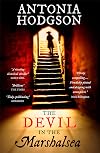
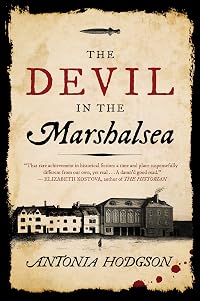
"It's 1727. Tom Hawkins is damned if he's going to follow in his father's footsteps and become a country parson. Not for him a quiet life of prayer and propriety. His preference is for wine, women, and cards. But there's a sense of honor there too, and Tom won't pull family strings to get himself out of debt--not even when faced with the appalling horrors of London's notorious debtors' prison: The Marshalsea Gaol.Within moments of his arrival in the Marshalsea, Hawkins learns there's a show more murderer on the loose, a ghost is haunting the gaol, and that he'll have to scrounge up the money to pay for his food, bed, and drink. He's quick to accept an offer of free room and board from the mysterious Samuel Fleet--only to find out just hours later that it was Fleet's last roommate who turned up dead. Tom's choice is clear: get to the truth of the murder--or be the next to die"-- show lessTags
Recommendations
























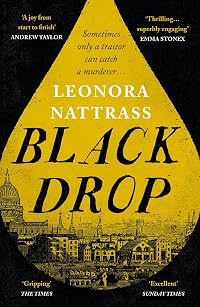
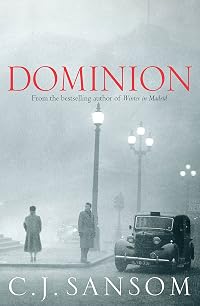
Member Recommendations
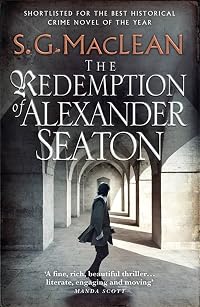
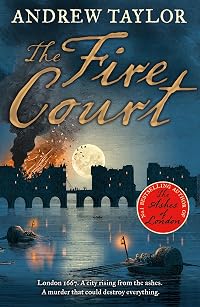
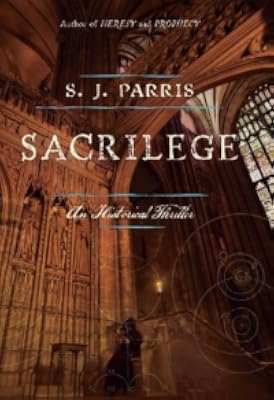
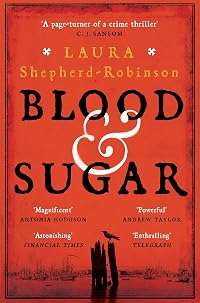
wandering_star Both these books are highly enjoyable historical mysteries.
Member Reviews
Tom Hawkins is the son of an East Anglican cleric, expected to follow his father into the vocation, however Tom has a wild side and whilst studying at Cambridge he indulged in many vices. Denounced by his jealous stepbrother, Tom is cast off by his father and has ended up in London living the life of a rake and a wastrel. Unfortunately Tom is naive and moral which means that he incurs debt to such a level that he is threatened with prison. Gambling all on a final game of cards he wins but is robbed and thrown into the Marshalsea Prison.
The prison is a tough place to be, life hangs by a thread and the inability to pay for rent and board on the 'Masters Side' means almost certain death on the 'Commons Side'. However a murder has taken show more place and Tom is charged with investigating this as the price for freedom. The regime running the Marshalsea is making a lot of money and any official investigation may bring that to an end. Tom struggles to find the truth as he is unsure of who to trust.
The depiction of life in 18th century London is excellent, the Hogarthian nature of life for all classes is shown. A man's future is dependent on money and influence and the wheel of fortune throws individuals down as often as they are thrown up. Many characters in this book are drawn from life and the fictional characters are very believable. The plot is a little odd in the end but the journey to that ending is complex and enjoyable - a gripping little book. show less
The prison is a tough place to be, life hangs by a thread and the inability to pay for rent and board on the 'Masters Side' means almost certain death on the 'Commons Side'. However a murder has taken show more place and Tom is charged with investigating this as the price for freedom. The regime running the Marshalsea is making a lot of money and any official investigation may bring that to an end. Tom struggles to find the truth as he is unsure of who to trust.
The depiction of life in 18th century London is excellent, the Hogarthian nature of life for all classes is shown. A man's future is dependent on money and influence and the wheel of fortune throws individuals down as often as they are thrown up. Many characters in this book are drawn from life and the fictional characters are very believable. The plot is a little odd in the end but the journey to that ending is complex and enjoyable - a gripping little book. show less
Wow! That's the word I will use to describe this book. An unputdownable romp into history and the world of a murderer.
Set in 18th century Georgian London and, more specifically, in a debtor's prison called the Marshalsea, this book took me completely by surprise. While I have been reading some great historical titles of late, I'm afraid I found myself getting into a kind of reading slump. This book has definitely pulled me out. It has been awhile since I've read such an atmospheric book. As I was reading, I was visualizing every scene and action as if I was right there in the middle of the action.
One thing that rings true in the book is that the London of this time was a very dangerous place, inside or outside the Marshalsea. Stumble show more into the wrong side of town and you were lucky to just come away robbed, not murdered. Being on the constant watch for misfortune had to be exhausting. Even more so for our illustrious main character, Tom Hawkins, inside the Marshalsea. Having to find out who murdered a debtor, who just happened to have been his look alike, while rooming with a man who may very well be the killer, Tom is poised on a perilous precipice indeed.
A reader of historical fiction couldn't ask for a more exciting and well-written novel than Hodgson's debut novel. I've heard that this is the first in a planned historical crime series and I really can't wait to read the next one. show less
Set in 18th century Georgian London and, more specifically, in a debtor's prison called the Marshalsea, this book took me completely by surprise. While I have been reading some great historical titles of late, I'm afraid I found myself getting into a kind of reading slump. This book has definitely pulled me out. It has been awhile since I've read such an atmospheric book. As I was reading, I was visualizing every scene and action as if I was right there in the middle of the action.
One thing that rings true in the book is that the London of this time was a very dangerous place, inside or outside the Marshalsea. Stumble show more into the wrong side of town and you were lucky to just come away robbed, not murdered. Being on the constant watch for misfortune had to be exhausting. Even more so for our illustrious main character, Tom Hawkins, inside the Marshalsea. Having to find out who murdered a debtor, who just happened to have been his look alike, while rooming with a man who may very well be the killer, Tom is poised on a perilous precipice indeed.
A reader of historical fiction couldn't ask for a more exciting and well-written novel than Hodgson's debut novel. I've heard that this is the first in a planned historical crime series and I really can't wait to read the next one. show less
Thomas Hawkins is living life on the edge in Georgian London: a gambler and womaniser without steady employment and cut off from his clergyman father, he lost his last pennies on the way home when set upon by cutpurses. With no means to pay off his creditors, he is sent in chains to the Marshalsea, the notorious debtors prison, where he relies on the inhabitants' charity until his best friend offers him a way out: solve the murder of Captain Roberts who died a few months back, and be a free man. But, as Tom discovers to his detriment, there are plenty of secrets to be uncovered in the prison, and someone goes to a lot of effort so theirs won't be revealed ...
The first in a sequence featuring the repentant rake Thomas Hawkins, the novel show more is well written (with prose to savour in places) and brimful with authentic - if exceedingly grim - atmosphere, and peopled with realistic characters; one can positively smell the stench of the gutters and feel the grime on one's skin and clothes. There is an extensive list of characters, and I would have welcomed a dramatis personae in the prelims to keep track of who is who. With five days in the Marshalsea making up the majority of the novel's nearly 400 pages, I felt the action was stretched a little thin at times, and there were occasions where I had the definite impression of treading water, but the rich historical detail and the interest in the characters prevented these sections from becoming boring. And while I remain not entirely convinced by the final revelation(s) and the way the author felt she had to tidy up loose ends, I definitely want to know how Tom's story progresses - the sequel, The Last Confession of Thomas Hawkins, has already been published. show less
The first in a sequence featuring the repentant rake Thomas Hawkins, the novel show more is well written (with prose to savour in places) and brimful with authentic - if exceedingly grim - atmosphere, and peopled with realistic characters; one can positively smell the stench of the gutters and feel the grime on one's skin and clothes. There is an extensive list of characters, and I would have welcomed a dramatis personae in the prelims to keep track of who is who. With five days in the Marshalsea making up the majority of the novel's nearly 400 pages, I felt the action was stretched a little thin at times, and there were occasions where I had the definite impression of treading water, but the rich historical detail and the interest in the characters prevented these sections from becoming boring. And while I remain not entirely convinced by the final revelation(s) and the way the author felt she had to tidy up loose ends, I definitely want to know how Tom's story progresses - the sequel, The Last Confession of Thomas Hawkins, has already been published. show less
If, like me, you have something of a phobia of going to prison then you might want to take care when picking up THE DEVIL IN THE MARSHALSEA. Even though it describes events taking place nearly 300 years ago, its worryingly realistic and brutal depiction of prison life gave me more than one nightmare and I’ve never been quite so glad to be reading rather than experiencing.
It’s jolly good though.
It tells the story of Tom Hawkins: parson’s son, spendthrift, gambler, rake and reluctant amateur sleuth. In 1727 he almost manages to avoid being consigned to the Marshalsea – London’s debtor’s prison – through some successful last minute gambling but is attacked, has his winnings stolen and cannot avoid his fate. Once inside his show more one hope of legitimate escape – and even of avoiding the worst section of the prison where those without influential friends or money are packed like sardines until they die of some horrendous illness – is to discover who murdered Captain Roberts in the prison some days earlier. Captain Roberts’ ghost is said to haunt the prison which is causing unrest amongst the inmates and his wife is still living there while trying to prove her husband didn’t commit suicide which is making things awkward for the institution’s Governor.
The book won the CWA Historical Dagger Award in 2014 and it’s not hard to see why. The countless hours of research are evident, though well-hidden, in hundreds of small and mostly horrific details of sights, sounds and smells that Hodgson evokes. Even without the explanatory afterward it’s clear that this is the best kind of historical fiction, weaving facts and make-believe so that the reader can’t see the boundaries but ‘feels’ the authenticity in every word.
The characterisations too are larger than life. It is impossible not to fall for Tom Hawkins at least a little bit, even though he is a cad at times and makes the worst decision possible in almost every scenario life puts before him. But he is honourable, in his way. And bloody funny. I’ll forgive a lot of foibles if you make me laugh. The people he knows and meets are equally well-drawn and it’s never clear who Tom – or readers – can trust which is quite delicious. His cellmate – Samuel Fleet – for example is almost universally despised and thought by many to be Captain Roberts’ murderer. He plays a cruel trick on Tom that nearly gets him killed. But even so there is something to like about him. There are others too many to do justice to here but many of them have stayed with me long after I finished the book which is always a good sign.
The mystery itself is probably the book’s weakest element, though that doesn’t mean it’s bad. Merely that the other aspects of the book take precedence. At least for me. Perhaps this is in part because stories in which the protagonist is in nearly constant mortal danger are not my favourites. I think heroes of this type have limited scope for growth (which is why I’m not overly keen to read this book’s successor which sees Tom charged with murder and, presumably, having to again free himself from near-certain death). The resolution though is very satisfying and not easily predictable and there are plenty of twists and turns before we get there.
THE DEVIL IN THE MARSHALSEA is not for the feint of heart. Its language is often blue and the horrors it describes are much more unsettling than the average serial killer book’s because they are so much a part of daily life. Honestly I don’t know how anyone came out of such a place as Hodgson’s Marshalsea alive let alone with their sanity in tact. I was sleeping with the lights on just reading about it. But if historical romps and loveable rogues are your kind of thing then I highly recommend you give this one a go. show less
It’s jolly good though.
It tells the story of Tom Hawkins: parson’s son, spendthrift, gambler, rake and reluctant amateur sleuth. In 1727 he almost manages to avoid being consigned to the Marshalsea – London’s debtor’s prison – through some successful last minute gambling but is attacked, has his winnings stolen and cannot avoid his fate. Once inside his show more one hope of legitimate escape – and even of avoiding the worst section of the prison where those without influential friends or money are packed like sardines until they die of some horrendous illness – is to discover who murdered Captain Roberts in the prison some days earlier. Captain Roberts’ ghost is said to haunt the prison which is causing unrest amongst the inmates and his wife is still living there while trying to prove her husband didn’t commit suicide which is making things awkward for the institution’s Governor.
The book won the CWA Historical Dagger Award in 2014 and it’s not hard to see why. The countless hours of research are evident, though well-hidden, in hundreds of small and mostly horrific details of sights, sounds and smells that Hodgson evokes. Even without the explanatory afterward it’s clear that this is the best kind of historical fiction, weaving facts and make-believe so that the reader can’t see the boundaries but ‘feels’ the authenticity in every word.
The characterisations too are larger than life. It is impossible not to fall for Tom Hawkins at least a little bit, even though he is a cad at times and makes the worst decision possible in almost every scenario life puts before him. But he is honourable, in his way. And bloody funny. I’ll forgive a lot of foibles if you make me laugh. The people he knows and meets are equally well-drawn and it’s never clear who Tom – or readers – can trust which is quite delicious. His cellmate – Samuel Fleet – for example is almost universally despised and thought by many to be Captain Roberts’ murderer. He plays a cruel trick on Tom that nearly gets him killed. But even so there is something to like about him. There are others too many to do justice to here but many of them have stayed with me long after I finished the book which is always a good sign.
The mystery itself is probably the book’s weakest element, though that doesn’t mean it’s bad. Merely that the other aspects of the book take precedence. At least for me. Perhaps this is in part because stories in which the protagonist is in nearly constant mortal danger are not my favourites. I think heroes of this type have limited scope for growth (which is why I’m not overly keen to read this book’s successor which sees Tom charged with murder and, presumably, having to again free himself from near-certain death). The resolution though is very satisfying and not easily predictable and there are plenty of twists and turns before we get there.
THE DEVIL IN THE MARSHALSEA is not for the feint of heart. Its language is often blue and the horrors it describes are much more unsettling than the average serial killer book’s because they are so much a part of daily life. Honestly I don’t know how anyone came out of such a place as Hodgson’s Marshalsea alive let alone with their sanity in tact. I was sleeping with the lights on just reading about it. But if historical romps and loveable rogues are your kind of thing then I highly recommend you give this one a go. show less
London, 1727. Tom Hawkins refuses to follow in his father’s footsteps and become a country parson. His preference is for wine, women, and cards. But there’s honor there too, and Tom won’t pull family strings to get himself out of debt—not even when faced with London’s notorious debtors’ prison.
The Marshalsea Gaol is a world of its own, with simple rules: Those with family or friends who can lend them a little money may survive in relative comfort. Those with none will starve in squalor and disease. And those who try to escape will suffer a gruesome fate at the hands of its ruthless governor and his cronies. The trouble is, Tom has never been good at following rules, even simple ones. And the recent grisly murder of a debtor, show more Captain Roberts, has brought further terror to the gaol. While the captain's beautiful widow cries for justice, the finger of suspicion points only one way: do the sly, enigmatic figure of Samuel Fleet.
Some call Fleet a devil, a man to avoid at all costs. But Tom Hawkins is sharing his cell. Soon Tom’s choice is clear: get to the truth of the murder—or be the next to die.
This grim (but hugely enjoyable) tale, set in the bleak Marshalsea prison in 18th Southwark, is a well balanced mix of mystery, suspense, and horror. Impeccably researched and amazingly atmospheric, the horrific underbelly of Georgian London pours off the page so vividly you can smell it. Populated with colourful characters and a serpentine mystery at its heart this is a wonderful debut novel written by a gifted storyteller. show less
The Marshalsea Gaol is a world of its own, with simple rules: Those with family or friends who can lend them a little money may survive in relative comfort. Those with none will starve in squalor and disease. And those who try to escape will suffer a gruesome fate at the hands of its ruthless governor and his cronies. The trouble is, Tom has never been good at following rules, even simple ones. And the recent grisly murder of a debtor, show more Captain Roberts, has brought further terror to the gaol. While the captain's beautiful widow cries for justice, the finger of suspicion points only one way: do the sly, enigmatic figure of Samuel Fleet.
Some call Fleet a devil, a man to avoid at all costs. But Tom Hawkins is sharing his cell. Soon Tom’s choice is clear: get to the truth of the murder—or be the next to die.
This grim (but hugely enjoyable) tale, set in the bleak Marshalsea prison in 18th Southwark, is a well balanced mix of mystery, suspense, and horror. Impeccably researched and amazingly atmospheric, the horrific underbelly of Georgian London pours off the page so vividly you can smell it. Populated with colourful characters and a serpentine mystery at its heart this is a wonderful debut novel written by a gifted storyteller. show less
Surprisingly good, very good, THE DEVIL IN THE MARSHALSEA felt sort of like an old classic, say, a Dickens novel. Except, really, it's more interesting than a Dickens novel, more fun to read.
This is historical fiction about a prison, the Marshalsea, and its system, and its mostly actual inmates and administrators in England in 1727. Narrated by Tom Hawkins, it is the story of his several horror-filled days there.
It actually could be a Dickens story it is so filled with bad guys in authority subjecting the main character to one God-awful circumstance after another. But if you, like me, dislike reading Dickens novels just because of this, that is, because they are such downers, you'll want to try THE DEVIL IN THE MARSHALSEA. Along with show more its multiple horrors is a great mystery; who is the devil in the Marshalsea?
Hawkins is tasked with discovering the answer to this mystery. As he investigates, as he falls into more and more horrors, more and more mysteries are solved, then unsolved. This story contains so many surprises, so many twists and turns, right to the end.
As soon as I finished this book, I got on the Internet to read about the Marshalsea. That's one good sign this is worthwhile historical fiction.
Thank you to bookclubcookbook.com for this book. I enjoyed it so much! I'm not sure I agree with you, though, on your choice of recipe to accompany discussion of THE DEVIL IN THE MARSHALSEA. It sounds too good. Really, no food would go with this book. Prisoners died every day of starvation. show less
This is historical fiction about a prison, the Marshalsea, and its system, and its mostly actual inmates and administrators in England in 1727. Narrated by Tom Hawkins, it is the story of his several horror-filled days there.
It actually could be a Dickens story it is so filled with bad guys in authority subjecting the main character to one God-awful circumstance after another. But if you, like me, dislike reading Dickens novels just because of this, that is, because they are such downers, you'll want to try THE DEVIL IN THE MARSHALSEA. Along with show more its multiple horrors is a great mystery; who is the devil in the Marshalsea?
Hawkins is tasked with discovering the answer to this mystery. As he investigates, as he falls into more and more horrors, more and more mysteries are solved, then unsolved. This story contains so many surprises, so many twists and turns, right to the end.
As soon as I finished this book, I got on the Internet to read about the Marshalsea. That's one good sign this is worthwhile historical fiction.
Thank you to bookclubcookbook.com for this book. I enjoyed it so much! I'm not sure I agree with you, though, on your choice of recipe to accompany discussion of THE DEVIL IN THE MARSHALSEA. It sounds too good. Really, no food would go with this book. Prisoners died every day of starvation. show less
This was chosen as a book group read otherwise I would never have read it, and I would have missed out on a wonderful read. A quote on the cover states that it is dripping with atmosphere and it is definitely that. Tom Hawkins, having found himself in the Marshalsea, a brutal debtors prison in the 1700s, sets about finding out who killed prisoner, Captain Roberts, and if he can do that then he can be free. Tom is an interesting character but Samuel Fleet, his fellow prisoner, was probably my favourite character of all. And the Marshalsea, what an interesting place.
I loved the writing and thought this was a book to savour, a bit like The Miniaturist in that respect. I certainly didn't find it a book to race through, no matter how much I show more was enjoying it. I'm looking forward to reading the next book featuring Thomas Hawkins. show less
I loved the writing and thought this was a book to savour, a bit like The Miniaturist in that respect. I certainly didn't find it a book to race through, no matter how much I show more was enjoying it. I'm looking forward to reading the next book featuring Thomas Hawkins. show less
Members
- Recently Added By
Published Reviews
ThingScore 100
"Impeccably researched and astonishingly atmospheric, with time past evoked so strongly that one can almost smell it, this is a truly spellbinding tale."
added by bookfitz
"Hodgson’s plotting is clever, perhaps even overly intricate, and the local color hair-raising."
added by bookfitz
"Hodgson makes the stench, as well as the despair, almost palpable, besides expertly dropping fair clues."
added by bookfitz
Lists

Best Historical Fiction
620 works; 257 members

Best Historical Crime
44 works; 17 members

Top Five Books of 2015
811 works; 241 members

Crime Writers' Association Daggers
76 works; 4 members

Books Read in 2017
4,249 works; 129 members

Books Read in 2021
5,361 works; 114 members
Author Information

6 Works 1,858 Members
Some Editions
Awards and Honors
Awards
Series

Common Knowledge
- Original title
- The Devil in the Marshalsea
- Original publication date
- 2014
- People/Characters
- Thomas "Tom" Hawkins; Charles Buckley; Moll King; Betty; Benjamin Fletcher; Mr Jakes (show all 33); Joseph Cross; Catherine Roberts; Samuel Fleet; Mary Acton; Gilbert Hand; Benjamin Carter; Sarah Bradshaw; Catherine "Kitty" Sparks; Andrew Woodburn; Jack Carter; William Acton; Madame Migault; Henry Acton; John Grace; Trim; Edward Gilbourne; Mr Chapman; Mr Wills; Mr Jenings; Captain Anderson; Harry Mitchell; Richard "Mack" McDonnell; Mrs McDonnell; James Wilson; Mrs Wilson; Constance Meadows; James Fleet
- Important places
- Marshalsea Prison, Southwark, England, UK; London, England, UK
- Important events
- Coronation of George II
- Epigraph
- Conscience makes ghosts walk, and departed souls appear ... it works upon the imagination with an invincible force, like faith (Daniel Defoe, The Secrets of the Invisible World Disclos'd, 1729)
Arose about four.... (show all) In the Park I saw Half a Dozen Crows in very hoarse conversation together, but not understanding their Language I cou'd not devise what they were upon, but believe they was agreeing how to divide the Corps of those unhappy wretches that Dye so briefly in this Place (John Grano, A Journal of My Life while in the Marshalsea, 1728–9) - Dedication
- For Joanna, Justine and Victoria, with thanks.
- First words
- They came for him at midnight.
- Quotations
- Bullies are just men who don't know they are cowards, of course. (p. 139)
- Last words
- (Click to show. Warning: May contain spoilers.)And then she took my hand and pulled me through the door.
- Publisher's editor
- Nick Sayers
- Blurbers
- Billingham, Mark; Deaver, Jeffery; Kostova, Elizabeth; Taylor, Andrew
- Original language
- English UK
Classifications
Statistics
- Members
- 420
- Popularity
- 73,619
- Reviews
- 20
- Rating
- (3.94)
- Languages
- 5 — English, French, German, Italian, Polish
- Media
- Paper, Audiobook, Ebook
- ISBNs
- 24
- ASINs
- 7