
The Black Tower
by Louis Bayard
On This Page
Description
Having used his mastery of disguise and surveillance to nab some of France's most notorious criminals, early nineteenth-century detective Vidocq teams up with obscure medical student Hector to track down the most challenging adversary of his career, a case with ties to the missing son of Marie Antoinette.Tags
Recommendations


























Member Recommendations
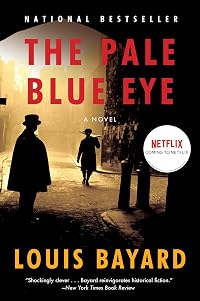
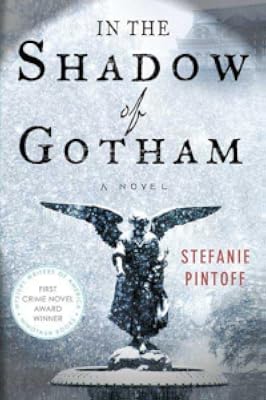
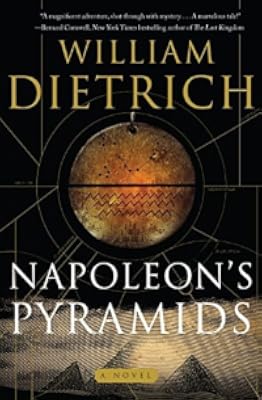
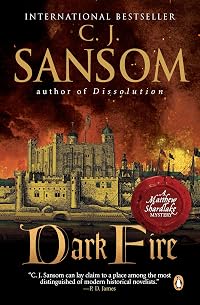
bjappleg8 Both novels use detectives to explore historical mysteries surrounding princes banished to towers and whose fates can never be known for certain.
20

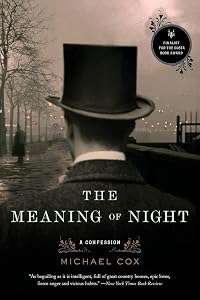
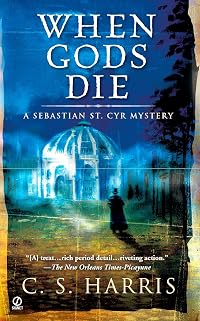
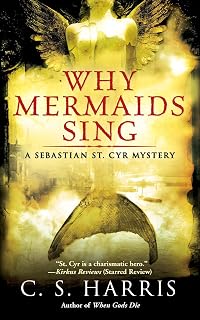
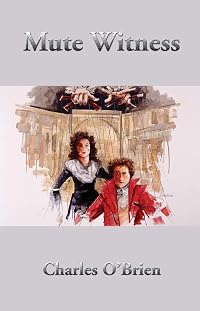
wandering_star Both these books are highly enjoyable historical mysteries.

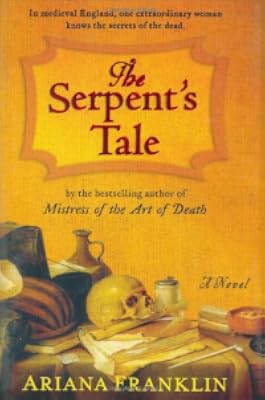
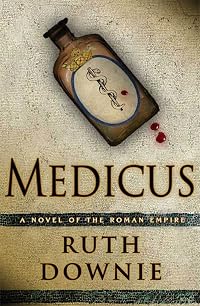
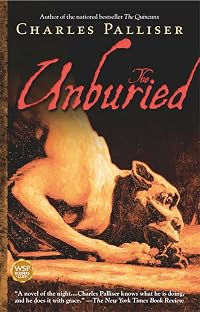
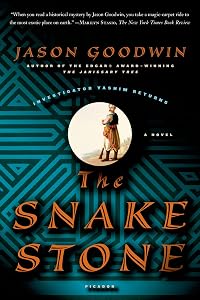
TheoClarke Deborah Cadbury's book was a key reference for Louis Bayard when writing his novel.


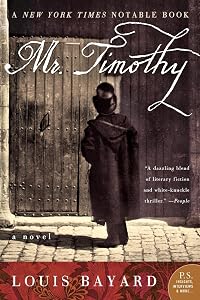
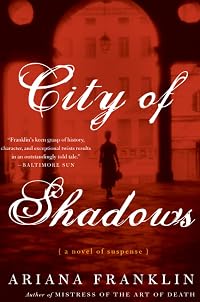
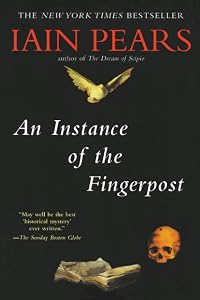
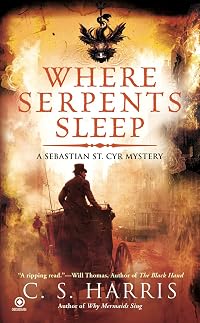
lottpoet Transcription is a different historical time period, but it similarly has an unreliable narrator and the narration also pulls a fast one that relies on the trust of the reader.
Member Reviews
The premise tugged at me because of The Man in the Iron Mask, the whole deal with Richard III and the princes in the tower and all those women who claimed to be Anastasia, Grand Duchess of Russia, and it is a little of all those. The inclusion of Vidocq adds a veneer of hard-boiled detective which is weird for this period (and locale) of history, but strangely it works. It balances the social striving that consumes a lot of the lives of everyone else, Hector included. And poor old Hector is in need of structure and stability, especially once he’s hit with the cyclone that is Vidocq. Oh is he ever the man out of his element. Eventually he gets up to speed though and proves an able “assistant” for the hard-driving Vidocq.
Like any show more good piece of historical fiction, this book blends the real and the unreal so skilfully that it’s hard to distinguish. Hector Carpentier, his family and friends are wholly fictional, but the royal family and Vidocq are not and provide anchors of believability. Then there is Hector’s narration. He’s yanked out of his comfortable self-pity by Vidocq’s driving enthusiasm and persistence and his whole attitude of surrender, first to his circumstances then to the pull of the conspiracy theory. The way he tells the tale has the ring of truth. Most of it is conversational and there are no “as you know, Bob’s” at least none so glaring that I noticed. Luckily I knew enough about the French Revolution and Restoration to understand what was not explicitly explained. This time period really came alive for me in the broad strokes and in the details. The journal reports were especially squirm-inducing.
Why does the Aristocracy persist? Why do people who largely have been abused by it, seek to restore it? Why do most attempts to replace it fail? Why are humans so damned competitive and suspicious? Why do so few of us have deep compassion? Where does Vidocq get his wonderful toys? These are just some of the questions to turn over while you read about the missing would-be King of France. show less
Like any show more good piece of historical fiction, this book blends the real and the unreal so skilfully that it’s hard to distinguish. Hector Carpentier, his family and friends are wholly fictional, but the royal family and Vidocq are not and provide anchors of believability. Then there is Hector’s narration. He’s yanked out of his comfortable self-pity by Vidocq’s driving enthusiasm and persistence and his whole attitude of surrender, first to his circumstances then to the pull of the conspiracy theory. The way he tells the tale has the ring of truth. Most of it is conversational and there are no “as you know, Bob’s” at least none so glaring that I noticed. Luckily I knew enough about the French Revolution and Restoration to understand what was not explicitly explained. This time period really came alive for me in the broad strokes and in the details. The journal reports were especially squirm-inducing.
Why does the Aristocracy persist? Why do people who largely have been abused by it, seek to restore it? Why do most attempts to replace it fail? Why are humans so damned competitive and suspicious? Why do so few of us have deep compassion? Where does Vidocq get his wonderful toys? These are just some of the questions to turn over while you read about the missing would-be King of France. show less
Black Tower - Louis Bayard
audio performance by Simon Vance
4 stars
I'm a man of a certain age--old enough to have been every kind of fool--and I find to my surprise that the only counsel I have to pass on is this: Never let your name be found in a dead man's trousers.
Dr. Hector Carpentier is remembering a strange and significant piece of his past. It involves the mystery of a Bourbon prince, the historical, criminal, criminalist, Eugene Francois Vidoqc, and a murder or two. The story has three time lines. The roots of the mystery take place during the Revolution and involve Hector’s father, who was also a physician. Most of the action takes place in 1818 when the young Hector’s name is found at a crime scene. Hector tells this show more story looking back on the events from a distance of old age. I liked his ironic, self-deprecating voice.
I found the multiple timelines a bit difficult to sort out at first. But, as the action picked up, I was totally immersed in the adventure. Vidocq is a fabulous character whose behavior would be unbelievable were it not based on historical fact. As usual, Simon Vance brought every character to full life. I also had a print edition which had a 19th century map of Paris on the frontispiece, a family tree of the Bourbons, and a helpful timeline of France before and after the Revolution. show less
audio performance by Simon Vance
4 stars
I'm a man of a certain age--old enough to have been every kind of fool--and I find to my surprise that the only counsel I have to pass on is this: Never let your name be found in a dead man's trousers.
Dr. Hector Carpentier is remembering a strange and significant piece of his past. It involves the mystery of a Bourbon prince, the historical, criminal, criminalist, Eugene Francois Vidoqc, and a murder or two. The story has three time lines. The roots of the mystery take place during the Revolution and involve Hector’s father, who was also a physician. Most of the action takes place in 1818 when the young Hector’s name is found at a crime scene. Hector tells this show more story looking back on the events from a distance of old age. I liked his ironic, self-deprecating voice.
I found the multiple timelines a bit difficult to sort out at first. But, as the action picked up, I was totally immersed in the adventure. Vidocq is a fabulous character whose behavior would be unbelievable were it not based on historical fact. As usual, Simon Vance brought every character to full life. I also had a print edition which had a 19th century map of Paris on the frontispiece, a family tree of the Bourbons, and a helpful timeline of France before and after the Revolution. show less
I'm a man of a certain age—old enough to have been every kind of fool—and I find to my surprise that the only counsel I have to pass on is this: Never let your name be found in a dead man's trousers.
So begins the adventure of a lifetime for Hector Carpentier. Why was his name on the dead stranger's person? That's what the great Vidocq of the Sûreté would like to know. Vidocq's suspicions of Carpentier gradually becomes trust. Together the men begin to unravel a mystery with ties to the Revolution that its survivors in Restoration era Paris have tried hard to forget. Could it be possible that the dauphin, Louis XVII, survived his imprisonment in the Temple? Someone certainly thinks he's alive, and they're doing their best to make show more sure he doesn't stay that way.
I had no idea where Bayard was headed with this historical thriller. The story was perfectly paced. I never rushed ahead of the narrative to speculate about what would come next. Bayard found the right balance between suspense and humor and continually surprised me with both. This kind of historical mystery has long been popular with novelists. (Think of all the novels based on the premise that the Grand Duchess Anastasia survived the execution of the Russian Tsar's family.) Bayard's novel has to be among the best of this niche of literature. show less
So begins the adventure of a lifetime for Hector Carpentier. Why was his name on the dead stranger's person? That's what the great Vidocq of the Sûreté would like to know. Vidocq's suspicions of Carpentier gradually becomes trust. Together the men begin to unravel a mystery with ties to the Revolution that its survivors in Restoration era Paris have tried hard to forget. Could it be possible that the dauphin, Louis XVII, survived his imprisonment in the Temple? Someone certainly thinks he's alive, and they're doing their best to make show more sure he doesn't stay that way.
I had no idea where Bayard was headed with this historical thriller. The story was perfectly paced. I never rushed ahead of the narrative to speculate about what would come next. Bayard found the right balance between suspense and humor and continually surprised me with both. This kind of historical mystery has long been popular with novelists. (Think of all the novels based on the premise that the Grand Duchess Anastasia survived the execution of the Russian Tsar's family.) Bayard's novel has to be among the best of this niche of literature. show less
There are few stories more heartbreaking than those of children punished for the crimes of their parents. For the children of deposed royalty, there may not even be a specific crime but just a need to destroy the line of inheritance. The Black Tower by Louis Bayard is based on the "lost dauphin", the young son of King Louis XVI and Marie Antoinette, who supposedly died in the Black Tower at the age of ten after his parents were captured during the Revolution. There were hundreds of impostors later who claimed to be the now grown Louis XVII, actually spirited away before his reported death.
The Black Tower tells the story of a doctor, Hector Carpentier, who attended young Louis-Charles (Louis XVII) in the tower. Some of the story is told show more through the medical journal of Carpentier that details some of the actual purported mistreatments of the young boy. Carpentier's son, also Hector, is approached by a detective, Vidocq, when his name is found in a dead man's possession. It is of course actually his father that the man was looking for but the young doctor-in-training is intrigued and is pulled in to the investigation which leads to the discovery of the possible dauphin. This is a fantastic historical mystery with compelling characters and a real sense of loss. There is a heart-breaking scene between the would-be king and his older sister, the Duchess d'Angouleme.
I would love to know if Bayard plans on featuring Vidocq in another novel. He is a fantastic criminalist because he was once a criminal -- which is a very fascinating idea.
http://webereading.com/2009/03/never-let-your-name-be-found-in-dead.html show less
The Black Tower tells the story of a doctor, Hector Carpentier, who attended young Louis-Charles (Louis XVII) in the tower. Some of the story is told show more through the medical journal of Carpentier that details some of the actual purported mistreatments of the young boy. Carpentier's son, also Hector, is approached by a detective, Vidocq, when his name is found in a dead man's possession. It is of course actually his father that the man was looking for but the young doctor-in-training is intrigued and is pulled in to the investigation which leads to the discovery of the possible dauphin. This is a fantastic historical mystery with compelling characters and a real sense of loss. There is a heart-breaking scene between the would-be king and his older sister, the Duchess d'Angouleme.
I would love to know if Bayard plans on featuring Vidocq in another novel. He is a fantastic criminalist because he was once a criminal -- which is a very fascinating idea.
http://webereading.com/2009/03/never-let-your-name-be-found-in-dead.html show less
The French Revolution-- now a memory. However, memories are restirred in Louis Bayard's The Black Tower, wherein Dr. Hector Carpentier is embroiled in a mystery when he discovers a dead man bearing his name and address. Into the scene comes Inspector Vidocq, and together Carpentier and Vidocq are thrown into a series of events that takes them back to the bloody days of the revolution and the whereabouts of Louis XVII, the boy who would have been king of France.
I thought this book was delicious. I'm not too well-versed in mysteries and most of the mysteries I've read have been your typical British-manor types. So it was entirely refreshing to read a mystery set in France, and historical France at that. Bayard does a good job of show more recreating the era. His setting is impeccably well-researched and atmospheric. A lot of the time mysteries focus solely on the mystery so I appreciated the way Bayard focused on the whole package.
The premise of the mystery is also intriguing. Like Anastasia, another lost royal, the fate of Louis XVII is tantalizingly mysterious. The mystery is clever, twisting and winding in ways one wouldn't necessarily expect it to go. I think Louis Bayard has created a fantastic adventure with Vidocq and The Black Tower. I look forward to reading more. show less
I thought this book was delicious. I'm not too well-versed in mysteries and most of the mysteries I've read have been your typical British-manor types. So it was entirely refreshing to read a mystery set in France, and historical France at that. Bayard does a good job of show more recreating the era. His setting is impeccably well-researched and atmospheric. A lot of the time mysteries focus solely on the mystery so I appreciated the way Bayard focused on the whole package.
The premise of the mystery is also intriguing. Like Anastasia, another lost royal, the fate of Louis XVII is tantalizingly mysterious. The mystery is clever, twisting and winding in ways one wouldn't necessarily expect it to go. I think Louis Bayard has created a fantastic adventure with Vidocq and The Black Tower. I look forward to reading more. show less
 This review was written for LibraryThing Early Reviewers.
This was a fun mystery in the league of The Man in the Iron Mask and the myth of Anastasia where a man found battered and near death in a prison. Could this possibly be Charles, the son of King Louis and Marie Antoinette? Dr. Hector Carpentier (whose father was the doctor of Charles before the Revolution) and Eugene Vidocq (a real person), a policeman who was ahead of his time in criminalistics.
Vidocq was a fascinating person who loved altering his appearance and was maybe the first person to realize that fingerprints could be used to solve a crime.
I loved the period this story took place and the mystery surrounding Charles. That it was narrated by the incomparable Simon Vance made it even more enjoyable. He always sounds like he's show more telling a story, not reading from a book show less
Vidocq was a fascinating person who loved altering his appearance and was maybe the first person to realize that fingerprints could be used to solve a crime.
I loved the period this story took place and the mystery surrounding Charles. That it was narrated by the incomparable Simon Vance made it even more enjoyable. He always sounds like he's show more telling a story, not reading from a book show less
This is a book that grabs you from sentence one and doesn't let go until the end. Louis Bayard has accomplished something rare in historical fiction: using a first person account, he manages to put the reader in a time and place, in this case 19th century Paris, without resorting to long descriptions the narrator wouldn't bother to make. His Paris comes alive organically, with all of its characters -- from the poor living in rat-infested squalor, to the petite bourgeousie, the nobility, and criminals and royalty -- and describes the smells, the monuments, the political climate, the weather and so many other period details so as to make you feel like you are there. That he also writes beautifully and has crafted a story that unfolds show more exquisitely and at a perfect pace makes this a great read and one I will want to return to again and again.
The narrator in question is Hector Carpentier, a doctor of sorts, who has frittered away his family's cash and whose mother has turned their home into a boarding house. He is drafted into helping solve a murder by feared police inspector Vidocq, an actual historical character, and in the process discovers that Louis-Charles (Louis the 17th), the son of Louis XVI and Marie Antoinette, believed killed as a child by revolutionaries under Napoleon, may still be alive.
While the real star of the book is Restoration Paris itself, Vidocq is a close second in all his animal ferocity and uncanny brilliance. Think a French Sherlock Holmes with an edge. The supporting characters are fleshed out beautifully, both men and women, rich and poor, and I'm not describing them because their identity and characters unfold with the twists and turns in the story and are best savored without knowing too much going in. Every time I thought the story had nowhere to go, it went somewhere new, and the characters continued to develop in their complexity and nuance. show less
The narrator in question is Hector Carpentier, a doctor of sorts, who has frittered away his family's cash and whose mother has turned their home into a boarding house. He is drafted into helping solve a murder by feared police inspector Vidocq, an actual historical character, and in the process discovers that Louis-Charles (Louis the 17th), the son of Louis XVI and Marie Antoinette, believed killed as a child by revolutionaries under Napoleon, may still be alive.
While the real star of the book is Restoration Paris itself, Vidocq is a close second in all his animal ferocity and uncanny brilliance. Think a French Sherlock Holmes with an edge. The supporting characters are fleshed out beautifully, both men and women, rich and poor, and I'm not describing them because their identity and characters unfold with the twists and turns in the story and are best savored without knowing too much going in. Every time I thought the story had nowhere to go, it went somewhere new, and the characters continued to develop in their complexity and nuance. show less
Members
- Recently Added By
Lists

Historical Fiction
889 works; 91 members

ALA The Reading List
490 works; 28 members

Books With a Twist
69 works; 46 members

Best Mysteries With a Historical Setting
292 works; 160 members
Author Information

12+ Works 4,377 Members
Awards and Honors
Common Knowledge
- Canonical title
- The Black Tower
- Original publication date
- 2008
- People/Characters
- Eugène François Vidocq; Dr. Hector Carpentier; Louis XVII of France (Louis-Charles, Prince Royal of France and Duke of Normandy)
- Important places
- Paris, France
- Important events
- French Revolution (1789 | 1799)
- Epigraph
- To endure is the first thing that a child ought to learn, and that which he will have the most need to know. -Jean-Jacques Rousseau
- Dedication
- In memory of my dad
- First words
- 1st meeting with the Prisoner: shortly after 1 am Prisoner alone cell. Dinner had not been eaten. Nor breakfast
- Last words
- (Click to show. Warning: May contain spoilers.)Ready for pollinating...
- Blurbers
- Pearl, Matthew; Oates, Joyce Carol
Classifications
Statistics
- Members
- 878
- Popularity
- 31,004
- Reviews
- 48
- Rating
- (3.75)
- Languages
- 6 — Czech, Dutch, English, French, German, Portuguese
- Media
- Paper, Audiobook, Ebook
- ISBNs
- 22
- ASINs
- 6