
The Lost King of France: A True Story of Revolution, Revenge, and DNA
by Deborah Cadbury
On This Page
Description
Royalty, revolution, and scientific mystery---the dramatic true account of the fate of Louis XVII, son of Marie Antoinette, and an extraordinary detective story that spans more than two hundred years. Louis-Charles, Duc de Normandie, enjoyed a charmed early childhood in the gilded palace of Versailles. At the age of four, he became the dauphin, heir to the most powerful throne in Europe. Yet within five years he was to lose everything. Drawn into the horror of the French Revolution, his show more family was incarcerated and their fate thrust into the hands of the revolutionaries who wished to destroy the monarchy. In 1793, when Marie Antoinette was beheaded at the guillotine, she left her adored eight-year-old son imprisoned in the Temple Tower. Far from inheriting a throne, the orphaned boy-king had to endure the hostility and abuse of a nation. Two years later, the revolutionary leaders declared Louis XVII dead. No grave was dug, no monument built to mark his passing. Immediately, rumors spread that the prince had, in fact, escaped from prison and was still alive. Others believed that he had been murdered, his heart cut out and preserved as a relic. As with the tragedies of England's princes in the Tower and the Romanov archduchess Anastasia, countless "brothers" soon approached Louis-Charles's older sister, Marie-Therese, who survived the revolution. They claimed not only the dauphin's name, but also his inheritance. Several "princes" were plausible, but which, if any, was the real heir to the French throne? The Lost King of France is a moving and dramatic tale that interweaves a pivotal moment in France's history with a compelling detective story that involves pretenders to the crown, royalist plots and palace intrigue, bizarre legal battles, and modern science. The quest for the truth continued into the twenty-first century, when, thanks to DNA testing, the strange odyssey of a stolen heart found within the royal tombs brought an exciting conclusion to the two-hundred-year-old mystery of the lost king of France. show lessTags
Recommendations



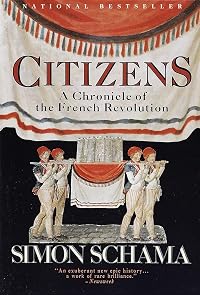

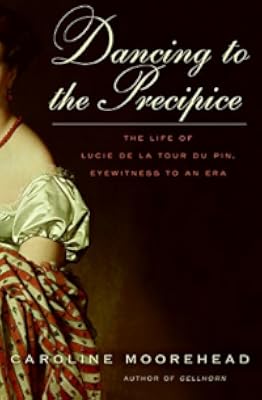



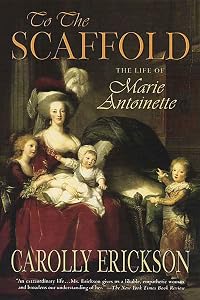





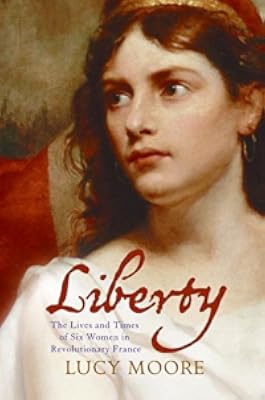





























Member Recommendations
TheoClarke Deborah Cadbury's book was a key reference for Louis Bayard when writing his novel.

Member Reviews
In 2000 was solved one of the greatest and controversial mystery in modern history: it was finally proven that Louis-Charles, the son of Louis XVI and Marie-Antoinette, the heir who would have inherited the throne of France had the country remained a monarchy, DID died in 1795, in the Temple prison, alone and abandoned, with no one to care. He hadn't escaped. There was no child-substitute involved. No royalist plot having succeeded in taking him away. No conspiracy theory. No; nothing. The Dauphin, at barely ten years old, had fallen victim of the Revolution too, like his mum and dad, and leaving only his sister alive. Full stop.
Full stop, but such conclusion wasn't easy to reach! Deborah Cadbury retraces here the adventurous, shocking, show more and rocambolesque odyssey it all was just to close such a case. And gosh! What a riveting read that is!
First, here's a terrible story of child abuse. From the storming of Versailles by rioting women to his death of tuberculosis in a cold damp cell where he was left to rot in solitary confinement, we follow the harrowing biography of a child who, not only must have been terrified of the violence surrounding him, but, also, had then to endure despicable torments at the hands of fanatics revolutionaries.
The author, here, does great. Telling of brutality and unthinkable cruelty melted upon that poor boy must have been, I guess, a slippery task. Indeed, it could have been very easy to wobble in pathos and tear jerking! Yet, if it can be very emotional (child abuse is always stirring…) she sticks to the facts and remains quite balanced. The souvenirs of Hue and Cléry, the valets of the royal family; various accounts of prison guards, doctors, and other politicians who actually met the boy in his cell; the narrative of Marie-Thérese, his older sister, about their emprisonnement; the minutes and reports from the General Council of the Commune... She relies only on first hand testimonies, not royalists propaganda that would be so much en vogue afterward, and so, being thus picky and critical, it all makes for a trustworthy read away from the sensationalism so familiar with such topic!
It is, then, a great insight into the French Revolution. The little prince's fate is indeed put here into perspective, laid against the chaotic political landscape of the time, which allow for a better grasp of why this child was nothing more than a burdening pawn, fatally tied up to shattering events way beyond his control, let alone understanding.
'The appalling treatment of the boy mirrored the growing brutality in the rest of France as the Terror was increasing its grip.'
It is, finally, a great story of scientific triumph; one where genetics will be put at the service of history to end all the wild claims (at times frankly ridiculous!) according to which the boy had escaped, and his descendants, heirs to the throne of France, still alive! The authors here exposes and debunks, at times tongue-in-cheek, the various impostors that tried to pass off as Louis XVII. She recounts also the incredible journey through time of the Dauphin's heart, from the hands of a 18th century doctor who had stolen it during the boy's autopsy up to those of 20th century scientists looking for mtDNA in order to assert its authenticity.
History, adventure, fraud, farce and science... Here's a thrilling page turner leading to, at long last, a conclusive account. Brilliant! show less
Full stop, but such conclusion wasn't easy to reach! Deborah Cadbury retraces here the adventurous, shocking, show more and rocambolesque odyssey it all was just to close such a case. And gosh! What a riveting read that is!
First, here's a terrible story of child abuse. From the storming of Versailles by rioting women to his death of tuberculosis in a cold damp cell where he was left to rot in solitary confinement, we follow the harrowing biography of a child who, not only must have been terrified of the violence surrounding him, but, also, had then to endure despicable torments at the hands of fanatics revolutionaries.
The author, here, does great. Telling of brutality and unthinkable cruelty melted upon that poor boy must have been, I guess, a slippery task. Indeed, it could have been very easy to wobble in pathos and tear jerking! Yet, if it can be very emotional (child abuse is always stirring…) she sticks to the facts and remains quite balanced. The souvenirs of Hue and Cléry, the valets of the royal family; various accounts of prison guards, doctors, and other politicians who actually met the boy in his cell; the narrative of Marie-Thérese, his older sister, about their emprisonnement; the minutes and reports from the General Council of the Commune... She relies only on first hand testimonies, not royalists propaganda that would be so much en vogue afterward, and so, being thus picky and critical, it all makes for a trustworthy read away from the sensationalism so familiar with such topic!
It is, then, a great insight into the French Revolution. The little prince's fate is indeed put here into perspective, laid against the chaotic political landscape of the time, which allow for a better grasp of why this child was nothing more than a burdening pawn, fatally tied up to shattering events way beyond his control, let alone understanding.
'The appalling treatment of the boy mirrored the growing brutality in the rest of France as the Terror was increasing its grip.'
It is, finally, a great story of scientific triumph; one where genetics will be put at the service of history to end all the wild claims (at times frankly ridiculous!) according to which the boy had escaped, and his descendants, heirs to the throne of France, still alive! The authors here exposes and debunks, at times tongue-in-cheek, the various impostors that tried to pass off as Louis XVII. She recounts also the incredible journey through time of the Dauphin's heart, from the hands of a 18th century doctor who had stolen it during the boy's autopsy up to those of 20th century scientists looking for mtDNA in order to assert its authenticity.
History, adventure, fraud, farce and science... Here's a thrilling page turner leading to, at long last, a conclusive account. Brilliant! show less
Author Deborah Cadbury is a science journalist, but The Lost King of France doesn’t have any of the flaws I usually associate with science journalism; no interviews, no attempts to “tell both sides of the story”, no obligatory references to global warming. Instead this is a nice, well-told, straightforward history of the short life and long postmortem adventures of Louis-Charles, second son and third child of Marie Antoinette and Louis XVI. Louis-Charles was seven years old when he and his family were rounded up and imprisoned by the Revolution; eight when his father and mother were guillotined and he became Louis XVII; and ten when he died in a prison cell, mute, verminous, and terrified. Doctor Pellatan, performing the autopsy, show more did something a little odd; while the guards weren’t looking, he extracted the heart, wrapped it in a handkerchief, and put it in his pocket. The body was sewed up and buried in an unmarked grave.
That was in 1795. The first impostor showed up in 1797. However the bumper crop didn’t really come in until after the Napoleonic Wars. Over 100 people eventually claimed to be Louis XVII. There stories were usually similar; they had been smuggled out of captivity by Royalists; either the Royalists smuggled in a sickly deaf-mute to replace them or the Revolutionaries, embarrassed at having lost their prize chess piece, substituted one. They then went into hiding – often in America – until ready to return and claim the throne, or at least the wealth that went with it. Some were quite convincing, supposedly knowing things about Versailles that only a genuine Dauphin would know. The authorities generally let them be; now and then when one became too obstreperous they were put on trial for fraud; in one case a Dauphin in the dock was interrupted by a man who marched into the courtroom and announced “You’re not the Dauphin! I’m the Dauphin!” Not having seen Spartacus, the rest of the courtroom missed the opportunity to jump up and shout “No! I am the Dauphin!”. Mark Twain was amused enough to include “The Duke and the Dauphin” chapter in Huckleberry Finn; some time later Baroness Orczy had the Scarlett Pimpernel rescue the Dauphin and smuggle him off to Holland. One of the strangest Dauphin candidates was Karl Wilhelm Naundorff, a Leipzig clockmaker who couldn’t even speak French. Despite this, he was convincing enough that several members of the nobility who had known the actual Dauphin believed in him (although none of the remaining royal family did). He made his way to France, then England (where he was imprisoned for debt), then Holland, where he became ill and died in 1845. For some unknown reason the Dutch authorities had bought his story – Cadbury suspects they wanted to ruffle French feathers - thus his death certificate read “Charles-Louis de Bourbon, born Versailles 1785”. This allowed Naundorff’s descendants to argue for years that their claim was officially recognized.
The Dauphin’s heart has an equally strange story. As mentioned, it was last seen in the pocket of Dr. Pellatan. He brought it home and put it in a jar of alcohol on a shelf. The alcohol eventually evaporated and the heart dried up; Pellatan kept it in his desk drawer. A student stole it; when he died some years later he made a deathbed confession and the heart was returned to Pellatan. He tried to present it to King Louis XVIII, who turned it down; then to the Dauphin’s sister, who also turned it down (Cadbury doesn’t speculate why; I assume she was getting so tired of fraudulent brothers showing up she didn’t want any part of one). Pellatan took the heart back home; when he was old and ill he persuaded the Archbishop of Paris to accept it – just in time for the Archbishop’s palace to be ransacked in the 1830 Revolution. Dr. Pellatan’s son searched the palace ruins, found the heart, and stashed it away. When he died in 1879 his executor once again attempted to return it to the Bourbon family, who once again declined it. It went through the hands of several Pellatan relatives until Don Carlos de Bourbon, Duke of Madrid, finally agreed to take it off their hands in 1895. It was deposited amidst other family relics in the Chateau de Frohsdorf in Austria, where it rested in peace until 1945 – when it encountered the Red Army and was thought to be lost again. However, it turned out it had been rescued from the advancing Reds at the last minute by Princess Marie-de-Neiges Massimo, from the Spanish Bourbons, who eventually returned it to France in 1975, and it ended up with other French royal remains at St. Denis.
In 2000, it was decided the heart would be a suitable target for DNA testing. Various locks of hair and other bits and pieces from the Hapsburgs and Karl Wilhelm Naundorff were available (since they were doing mitochondrial DNA, only Marie-Antoinette’s side of the family was relevant). The testing was done by two independent labs – neither in France, to avoid charges of bias – and it turned out that yes, within the limits of probability, this was the heart of a son of Marie Antoinette – and Karl Wilhelm Naundorff was not. The Naundorff family hasn’t given up yet, of course, but everybody else is convinced.
A good story, well told. Could maybe use some illustrations, and the index was sparse. show less
That was in 1795. The first impostor showed up in 1797. However the bumper crop didn’t really come in until after the Napoleonic Wars. Over 100 people eventually claimed to be Louis XVII. There stories were usually similar; they had been smuggled out of captivity by Royalists; either the Royalists smuggled in a sickly deaf-mute to replace them or the Revolutionaries, embarrassed at having lost their prize chess piece, substituted one. They then went into hiding – often in America – until ready to return and claim the throne, or at least the wealth that went with it. Some were quite convincing, supposedly knowing things about Versailles that only a genuine Dauphin would know. The authorities generally let them be; now and then when one became too obstreperous they were put on trial for fraud; in one case a Dauphin in the dock was interrupted by a man who marched into the courtroom and announced “You’re not the Dauphin! I’m the Dauphin!” Not having seen Spartacus, the rest of the courtroom missed the opportunity to jump up and shout “No! I am the Dauphin!”. Mark Twain was amused enough to include “The Duke and the Dauphin” chapter in Huckleberry Finn; some time later Baroness Orczy had the Scarlett Pimpernel rescue the Dauphin and smuggle him off to Holland. One of the strangest Dauphin candidates was Karl Wilhelm Naundorff, a Leipzig clockmaker who couldn’t even speak French. Despite this, he was convincing enough that several members of the nobility who had known the actual Dauphin believed in him (although none of the remaining royal family did). He made his way to France, then England (where he was imprisoned for debt), then Holland, where he became ill and died in 1845. For some unknown reason the Dutch authorities had bought his story – Cadbury suspects they wanted to ruffle French feathers - thus his death certificate read “Charles-Louis de Bourbon, born Versailles 1785”. This allowed Naundorff’s descendants to argue for years that their claim was officially recognized.
The Dauphin’s heart has an equally strange story. As mentioned, it was last seen in the pocket of Dr. Pellatan. He brought it home and put it in a jar of alcohol on a shelf. The alcohol eventually evaporated and the heart dried up; Pellatan kept it in his desk drawer. A student stole it; when he died some years later he made a deathbed confession and the heart was returned to Pellatan. He tried to present it to King Louis XVIII, who turned it down; then to the Dauphin’s sister, who also turned it down (Cadbury doesn’t speculate why; I assume she was getting so tired of fraudulent brothers showing up she didn’t want any part of one). Pellatan took the heart back home; when he was old and ill he persuaded the Archbishop of Paris to accept it – just in time for the Archbishop’s palace to be ransacked in the 1830 Revolution. Dr. Pellatan’s son searched the palace ruins, found the heart, and stashed it away. When he died in 1879 his executor once again attempted to return it to the Bourbon family, who once again declined it. It went through the hands of several Pellatan relatives until Don Carlos de Bourbon, Duke of Madrid, finally agreed to take it off their hands in 1895. It was deposited amidst other family relics in the Chateau de Frohsdorf in Austria, where it rested in peace until 1945 – when it encountered the Red Army and was thought to be lost again. However, it turned out it had been rescued from the advancing Reds at the last minute by Princess Marie-de-Neiges Massimo, from the Spanish Bourbons, who eventually returned it to France in 1975, and it ended up with other French royal remains at St. Denis.
In 2000, it was decided the heart would be a suitable target for DNA testing. Various locks of hair and other bits and pieces from the Hapsburgs and Karl Wilhelm Naundorff were available (since they were doing mitochondrial DNA, only Marie-Antoinette’s side of the family was relevant). The testing was done by two independent labs – neither in France, to avoid charges of bias – and it turned out that yes, within the limits of probability, this was the heart of a son of Marie Antoinette – and Karl Wilhelm Naundorff was not. The Naundorff family hasn’t given up yet, of course, but everybody else is convinced.
A good story, well told. Could maybe use some illustrations, and the index was sparse. show less
Before starting this, I suspected to read the usual history of Louis XVI and Marie Antoinette, with the odd reference to their son, the uncrowned Louis XVII. Yet once we pass Louis XVI and Marie Antoinette’s executions – or murders, as I consider them – we have much more focus on their unfortunate son.
The treatment this little boy endured during Revolutionary France was the stuff nightmares are made of. Imagine being nine or ten years old, locked in a small room with no toys, books, or any form of occupation; with no visitors, except for rats attracted to the smell of human waste; imagine living in that room among that human waste for eight months and you have an idea of that little boy’s never-ending horror.
The narrative show more continues after poor Louis XVII’s death. His sister did survive the Reign of Terror, but for the rest of her life she endured the mental torture of men claiming to be her brother – claiming they escaped and that the boy who died was an imposter.
Over 100 pretenders came forward, some of whom were convincing, one in particular. I won’t delve any further here to avoid spoilers, but it makes for fascinating reading.
The DNA angle comes in towards the end of the book. I’m not a lover of forensic science, but the material here is fascinating and easy to follow. The results were revealed to the public several years ago, but I knew nothing of this, so reading about it was highly intriguing.
I’ve read a lot about Louis XVI and Marie Antoinette, and a couple of books on their daughter, but knew virtually nothing about Louis XVII, which made this an engrossing read for me. show less
The treatment this little boy endured during Revolutionary France was the stuff nightmares are made of. Imagine being nine or ten years old, locked in a small room with no toys, books, or any form of occupation; with no visitors, except for rats attracted to the smell of human waste; imagine living in that room among that human waste for eight months and you have an idea of that little boy’s never-ending horror.
The narrative show more continues after poor Louis XVII’s death. His sister did survive the Reign of Terror, but for the rest of her life she endured the mental torture of men claiming to be her brother – claiming they escaped and that the boy who died was an imposter.
Over 100 pretenders came forward, some of whom were convincing, one in particular. I won’t delve any further here to avoid spoilers, but it makes for fascinating reading.
The DNA angle comes in towards the end of the book. I’m not a lover of forensic science, but the material here is fascinating and easy to follow. The results were revealed to the public several years ago, but I knew nothing of this, so reading about it was highly intriguing.
I’ve read a lot about Louis XVI and Marie Antoinette, and a couple of books on their daughter, but knew virtually nothing about Louis XVII, which made this an engrossing read for me. show less
This fascinating and gripping books tells of the short life and fate of the son of King Louis XVI and Marie Antoinette, who after his father's removal from power and execution became in the eyes of royalists King Louis XVII (though he never of course ruled in any sense), until his tragic and degrading death in the Temple Prison aged 10 in 1795. Even more, this is the story of the numerous pretenders who claimed to be him during the first half of the 18th century. There were an astonishing one hundred such claimants, some more plausible than others. Dozens of them wrote letters to their pretended sister Marie Therese, the only surviving member of the young Dauphin's immediate family, cruelly exploiting her misery and grief at the murders show more of all her close family. The most serious and persistent of them was Karl Wilhelm Naundorf, who not only vigorously pursued the claim until his death in 1845, but his descendants were still pursuing it 150 years later. The careful comparison of DNA from Naundorf and from surviving hairs from Marie Antoinette's sisters, and with the shrivelled heart of Louis XVII, finally proved in 1999 beyond reasonable doubt that Naundorf could not have been the Dauphin (the story of the survival of the small heart would make a fascinating thriller in and of itself). This gave some closure to the sad story of the poor boy. Regardless of the rights and wrongs of the French Revolution, the tragic fate of this poor boy, a hapless pawn of all sides, separated from his family and kept in degrading and insanitary darkness, is deeply upsetting. show less
A gift from a fellow LTer this book was sent to me as she knew I was, and remain, a francophile. I am not an avid historian nor am I especially knowledgeable with regards to 18th century France. However this book captivated me and was hard to put down. At times reading rather like a detective story whilst at others social history this was a fascinating account of the life and troubled times of Louis XVI and his family. From the 18th century the reader is led on a journey to the present day when the mystery of the Dauphin or the prince in the tower is to some extent resolved through scientific avenues.
Deborah Cadbury has thoroughly researched this whole story and has compiled copious notes on her sources for each chapter. Yet she writes show more without pretence or academic superiority and so the story is accessible and the reader is drawn into the life and times of the ill fated son of Louis XVI. Once again the reader is witness to man's inhumanity to man as he lays claim to wealth and power - this time that inhumanity is directed at a young boy and his sister amongst others yet the author does not dwell ghoulishly upon these aspects of the period. Rather the reader is left to ponder the violence of the period and reflect upon the motivation that drove men to such barbarous acts. Overall an excellent and highly recommended read. show less
Deborah Cadbury has thoroughly researched this whole story and has compiled copious notes on her sources for each chapter. Yet she writes show more without pretence or academic superiority and so the story is accessible and the reader is drawn into the life and times of the ill fated son of Louis XVI. Once again the reader is witness to man's inhumanity to man as he lays claim to wealth and power - this time that inhumanity is directed at a young boy and his sister amongst others yet the author does not dwell ghoulishly upon these aspects of the period. Rather the reader is left to ponder the violence of the period and reflect upon the motivation that drove men to such barbarous acts. Overall an excellent and highly recommended read. show less
We all know what happened to Louis XVI and Marie Antoinette after the French Revolution. This is the story of their two surviving children, Louis-Charles, the dauphin, and his sister Marie Therese. The children were originally imprisoned with their mother and aunt, but eventually, Louis-Charles and his mother were separated. Only four at the time of their capture, the boy was cruelly abused by his jailers. He was starved, taught to swear, and likely physically and sexually abused. One accusation is that prostitutes were brought in when he was only eight years old in the hopes that he would catch syphilis--all part of the plan to accuse his mother and aunt of sexually abusing him. He was forced to sign a document alleging that this was show more true. That led to the charges on which Marie Antoinette was found guilty of treason and other crimes for which she was sentenced to beheading. After his deposition, Louis-Charles never spoke again.
The details of the torments and torture that this child endured in the name of the Revolution are truly horrific. He suffered both mentally and physically and rarely received any medical care. When he did, the jailers usually ignored the physician's advice. It's not surprising, then, that Louis-Charles faded away and died in prison in 1795, most likely from tuberculosis worsened by his treatment in prison and general lack of care.
For years, people tried to locate his burial site, but every possible grave was either empty or bore remains that were clearly not those of a ten-year old boy. For decades following his death, there were rumors that Louis-Charles had been smuggled out of prison and another child--perhaps a deaf-mute, or one already dead--was brought in to take his place. Cadbury relates the stories of several of the most notable pretenders to the title of Louis XVII. Some were so believable that they even fooled members of the royal family. But in 2000, the rumors were finally put to rest. A sympathetic physician who was present at Louis-Charles autopsy had preserved the boy's heart and passed the relic down through his family. DNA experts were able to determine that this was indeed the heart of Marie Antoinette's son.
Although I don't often listen to audiobooks, I find that I do enjoy history and biographies in that format and listen to them while doing work on my computer. The reader was good, and Cadbury's research was extensive. I had not known much about the children of Louis XVI or even much about Marie Antoinette's life in prison. I recommend this book for anyone interested in the French royal family or post-Revolutionary history. show less
The details of the torments and torture that this child endured in the name of the Revolution are truly horrific. He suffered both mentally and physically and rarely received any medical care. When he did, the jailers usually ignored the physician's advice. It's not surprising, then, that Louis-Charles faded away and died in prison in 1795, most likely from tuberculosis worsened by his treatment in prison and general lack of care.
For years, people tried to locate his burial site, but every possible grave was either empty or bore remains that were clearly not those of a ten-year old boy. For decades following his death, there were rumors that Louis-Charles had been smuggled out of prison and another child--perhaps a deaf-mute, or one already dead--was brought in to take his place. Cadbury relates the stories of several of the most notable pretenders to the title of Louis XVII. Some were so believable that they even fooled members of the royal family. But in 2000, the rumors were finally put to rest. A sympathetic physician who was present at Louis-Charles autopsy had preserved the boy's heart and passed the relic down through his family. DNA experts were able to determine that this was indeed the heart of Marie Antoinette's son.
Although I don't often listen to audiobooks, I find that I do enjoy history and biographies in that format and listen to them while doing work on my computer. The reader was good, and Cadbury's research was extensive. I had not known much about the children of Louis XVI or even much about Marie Antoinette's life in prison. I recommend this book for anyone interested in the French royal family or post-Revolutionary history. show less
I read The Lost King of France: A True Story of Revolution, Revenge, and DNA when it first came out and to this day, I'm still haunted by details of Louis-Charles, Duc de Normandie's tragic life. Never have I read a more compelling, and heart wrenching part of history. It's one of those books you never forget. I had a hard time putting this engrossing account of Louis-Charles mysterious life and death, down. Even though I knew the results of the findings of the DNA in advance, Deborah Cadbury's absorbing investigated work and well documented historical account kept me on the edge of my seat until the very end. This tragic tale of Louis-Charles will stay with me for a long, long time.
Members
- Recently Added By
Lists

True Crime
216 works; 16 members

al.vick-wishlist-history
70 works; 2 members

A High School Trip to France
57 works; 5 members

Stories set in Western Europe
36 works; 1 member
Author Information

15 Works 2,857 Members
Deborah Cadbury is an award-winning TV science producer for the BBC. She is also the author of "The Feminization of Nature". She lives in London. (Bowker Author Biography)
Some Editions
Common Knowledge
- Canonical title
- The Lost King of France: A True Story of Revolution, Revenge, and DNA
- Original title
- The Lost King of France
- Alternate titles
- The Lost King of France: How DNA Solved the Mystery of the Murdered Son of Louis XVI and Marie Antoinette
- Original publication date
- 2002-10-18
- People/Characters
- Louis XVII of France (Louis XVII of France | Louis-Charles, Prince Royal of France and Duke of Normandy); Marie Antoinette; Louis XVI, King of France; Louise-Élisabeth de Croÿ de Tourzel, Marquise de Tourzel (Madame de Tourzel); Marie-Thérèse of France, Duchess of Angoulême; Élisabeth of France (Madame Elisabeth) (show all 11); Jacques-René Hébert; Maximilien de Robespierre; Hanet Cléry; Antoine Simon; Philippe-Jean Pellatan
- Important places
- Versailles, Île-de-France, France; Paris, France; France
- Important events
- French Revolution
- Dedication
- For my mother and Martin
the first readers,
with love - First words*
- From the portrait by Alexandre Kucharski, Louis-Charles, Duc de Normandie looks out confidently on the world with large blue eyes in a sensitive face framed by fair hair; the perfect storybook prince.
- Last words*
- (Click to show. Warning: May contain spoilers.)More than two hundred years have passed since the owner of the heart suffered in silence, paying a high price for the extravagant mistakes of his forebears; but now justice has been done, he has been given a voice, the secrets of his life and death are exposed, and his life, in some small way, is resurrected at last.
- Publisher's editor
- Leo Hollis
- Original language
- English
*Some information comes from Common Knowledge in other languages. Click "Edit" for more information.
Classifications
- Genres
- History, Nonfiction, General Nonfiction, Biography & Memoir
- DDC/MDS
- 944.04 — History & geography History of Europe France and Monaco France Revolution 1789-1804
- LCC
- DC137.3 .C2 — History of Europe, Asia, Africa and Oceania France – Andorra – Monaco History of France Modern, 1515- 1715-1789. 18th century. Louis XV, Louis XVI
- BISAC
Statistics
- Members
- 475
- Popularity
- 64,056
- Reviews
- 13
- Rating
- (4.05)
- Languages
- Czech, Dutch, English, Swedish
- Media
- Paper, Audiobook, Ebook
- ISBNs
- 18
- ASINs
- 5