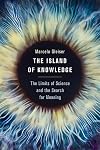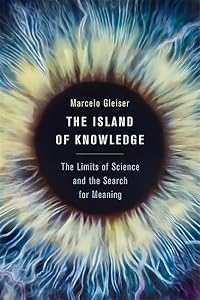
The Island of Knowledge: The Limits of Science and the Search for Meaning
by Marcelo Gleiser
On This Page
Description
"Do all questions have answers? How much can we know about the world? Is there such a thing as an ultimate truth? To be human is to want to know, to understand our origins and the meaning of our lives. In The Island of Knowledge, physicist Marcelo Gleiser traces our search for answers to the most fundamental questions of existence, the origin of the universe, the nature of reality, and the limits of knowledge. In so doing, he reaches a provocative conclusion: science, the main tool we use to show more find answers, is fundamentally limited. As science and its philosophical interpretations advance, we are often faced with the unsettling recognition of how much we don't know. Limits to our knowledge of the world arise both from our tools of exploration and from the nature of physical reality: the speed of light, the uncertainty principle, the second law of thermodynamics, the incompleteness theorem, and our own limitations as an intelligent species. Our view of physical reality depends fundamentally on who we are and on how we interact with the cosmos"-- show lessTags
Recommendations








Member Reviews
Ostensibly and at its best a dive into epistemology and the limits of frontier science, but all too often just another mediocre recap of the history of scientific developments.
If you're interested enough to be pursuing this book you are almost certainly already familiar with the majority of content it's seen fit to recapitulate. A book like The Golem (What You Should Know About Science) though more dated serves the purpose of questioning the limits of science much better by a series of case studies of less well known hypotheses and how they played out in academia; a "how the sausage is made" type insight into the practical problems of knowing.
What seems to be the ultimate point of this book is some epistemological pondering and some show more second rate philosophical arguments about platonic idealism when it comes to the question of scientific models approximating something that's fundamentally real or not (our author thinks not). show less
If you're interested enough to be pursuing this book you are almost certainly already familiar with the majority of content it's seen fit to recapitulate. A book like The Golem (What You Should Know About Science) though more dated serves the purpose of questioning the limits of science much better by a series of case studies of less well known hypotheses and how they played out in academia; a "how the sausage is made" type insight into the practical problems of knowing.
What seems to be the ultimate point of this book is some epistemological pondering and some show more second rate philosophical arguments about platonic idealism when it comes to the question of scientific models approximating something that's fundamentally real or not (our author thinks not). show less
I liked this book a lot. He covers the history of astronomy, physics, and math and shows how our knowledge expands but also the awareness of our ignorance expands, and in fact it looks like there are many questions that may never be scientifically explored because they may be outside the boundaries of what we can ever observe. There were a few chapters about quantum physics that I didn't really "get" but then I have never been able to grasp the quantum world although I've read many explanations targeted at lay people. Other than those chapters I felt like everything made sense to me. Very beautiful and inspiring writing from a scientific but not scientistic viewpoint.
Physicist Gleiser draws upon the history of his subject, especially quantum mechanics, (and a little astronomy, philosophy, chemistry, mathematics, and neuroscience), to make a case for the position that not everything about the universe can be known. He opposes the multiverse concept, the anthropic principle, supernatural "explanations", mathematical platonism (where he badly fails to distinguish between abstraction and supernaturalism), and the idea that conscious machines are possible. Occasionally aggravating but generally very absorbing.
History of physics, what we know and how we know about existence: the world, universe, unknown. Knowledge is invented rather than discovered due to the nature of our brains/consciousness. All we know is a metaphorical island that grows but we can never get off the island. There is no objective truth just our extremely clever brains reverse engineering a working set of rules and laws to explain the world around us. Fascinating stuff. From p 178 “ as Austrian physicist Anton Zeilinger wrote in Dance of the Photons: ‘We have tried for centuries to look deeper and deeper into finding causes and explanations, and suddenly, when we go to the very depths, to the behavior of individual particles of individual quanta, we find that this show more search for a cause comes to an end. There is no cause. In my eyes, this fundamental indeterminateness of the universe has not really been integrated into our worldview yet. ‘“
P. 187 “when it comes to physical reality, there are no final explanations but ever more efficient descriptions “
P. 191 “the Copenhagen Interpretation of quantum mechanics” is some Humeian stuff— don’t axe questions!
P. 197 “Heisenberg wrote, “What we observe is not nature itself but nature exposed to our method of questioning”” show less
P. 187 “when it comes to physical reality, there are no final explanations but ever more efficient descriptions “
P. 191 “the Copenhagen Interpretation of quantum mechanics” is some Humeian stuff— don’t axe questions!
P. 197 “Heisenberg wrote, “What we observe is not nature itself but nature exposed to our method of questioning”” show less
This book was at its best when the author wasn't giving physics lessons. I could have done without all of Part 2 and I think if I had skipped it entirely, it wouldn't have affected my understanding of the much more interesting and readable parts 1 and 3.
4-16-16 ucsd bookstore Readable philosophy of science
Ratings
Members
- Recently Added By
Lists

Top Five Books of 2016
795 works; 228 members
Author Information

36+ Works 1,073 Members
Marcelo Gleiser is Appleton Professor of Natural Philosophy, professor of physics and astronomy, and director of the Institute for Cross-Disciplinary Engagement at Dartmouth College. His many books include The Island of Knowledge: The Limits of Science and the Search for Meaning (2014). He is the 2019 Templeton Prize laureate.
Awards and Honors
Distinctions
Common Knowledge
- First words
- How much can we know of the world?
- Last words
- (Click to show. Warning: May contain spoilers.)This is what we are here for.
Classifications
Statistics
- Members
- 232
- Popularity
- 139,858
- Reviews
- 6
- Rating
- (4.00)
- Languages
- English, Portuguese
- Media
- Paper, Audiobook, Ebook
- ISBNs
- 6
- UPCs
- 1
- ASINs
- 4