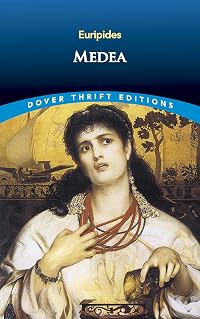
Medea [in Translation]
by Euripides
On This Page
Description
The Medea of Euripides is one of the greatest of all Greek tragedies and arguably the one with the most significance today. A barbarian woman brought to Corinth and there abandoned by her Greek husband, Medea seeks vengeance on Jason and is willing to strike out against his new wife and family-even slaughtering the sons she has born him. At its center is Medea herself, a character who refuses definition: Is she a hero, a witch, a psychopath, a goddess? All that can be said for certain is show more that she is a woman who has loved, has suffered, and will stop at nothing for vengeance. In this stunning translation, poet Charles Martin captures the rhythms of Euripides' original text through contemporary rhyme and meter that speak directly to modern readers. An introduction by classicist and poet A.E. Stallings examines the complex and multifaceted Medea in patriarchal ancient Greece. Perfect in and out of the classroom as well as for theatrical performance, this faithful translation succeeds like no other. show lessTags
Recommendations


























Member Recommendations

Member Reviews
A Fierce Modern Medea (with a Scots inflection)
Review of the Nick Hern Books paperback (2023) adapted from the Ancient Greek original by Euripides (431 BCE).
I'm quoting the above excerpt to give an example of why this is an adaptation rather than a translation of the Euripides original. A sample of the parallel dialogue in a standard translation (Rex Warner in 1944, reprinted in the Dover Thrift Editions series) reads as:
Liz Lochhead makes other significant changes to the text, even though most of it still has parallels in the Euripides play. The King of Athens is dropped as a character (along with his scene) and instead Glauke, the princess of Corinth, is brought in to have her own confrontation with Medea. The most interesting change is to have some of the characters perform their dialogue in a Scots-inflected English, signifying that they are natives of Corinth. Medea and Jason speaking in regular English are outsiders who have taken refuge in Corinth after having escaped into exile.
See photo at https://supercool-nts.transforms.svdcdn.com/production/Productions/Archive/Medea...
Medea confronts Jason while the Chorus looks on. Image sourced from the National Theatre of Scotland.
This was a fierce and modern Medea which is still all the more horrifying for the revenge and maternal filicide murder plot at its heart. Lochhead's Medea is not portrayed as a supernatural sorceress though, but rather as a human being with advanced skills in poisoning. There is no deus ex machina chariot in the sky for her at the end.
I read Liz Lochhead's Medea after reading the retelling of the Medea mythology in Laura Alcoba's Through the Forest (2024). The Lochhead struck me as likely to be the most radical contemporary retelling. When I searched Goodreads, it seemed as if there is a Medea zeitgeist in the offing. There are two recent novelizations: Eilish Quin's Medea (February 13, 2024) and Rosie Hewlett's Medea (March 21, 2024). In Toronto, the Canadian Opera Company will perform Cherubini's opera in May 2024. Who am I to ignore the signs 🤔? Thus, a Medea deep-dive begins.
See the promo photo for the COC production here: https://cdn.agilitycms.com/canadian-opera-company-v2/images/productions/WebAsset...
Other Reviews
Reviews of the National Theatre of Scotland's theatrical performances of Liz Lochhead's Medea can be read at The Guardian and at The Edinburgh Reporter.
Trivia and Links
You can see the trailer for the National Theatre of Scotland theatrical performances at YouTube here. show less
Review of the Nick Hern Books paperback (2023) adapted from the Ancient Greek original by Euripides (431 BCE).
Medea: flesh of my flesh revenge
Jason: I must have been mad was mad for you
I did not know you
I know you now!
Medea: tigress? fury? harpy? witch? she-wolf?
monster? yes I am
for I have torn out your heart and devoured it
Jason: your pain is just as bad as mine
Medea: wrong for I have your pain to comfort me
I'm quoting the above excerpt to give an example of why this is an adaptation rather than a translation of the Euripides original. A sample of the parallel dialogue in a standard translation (Rex Warner in 1944, reprinted in the Dover Thrift Editions series) reads as:
Jason: You feel theshow more
pain yourself. You share in my sorrow.
Medea: Yes, and my grief is gain when you cannot mock it.
Liz Lochhead makes other significant changes to the text, even though most of it still has parallels in the Euripides play. The King of Athens is dropped as a character (along with his scene) and instead Glauke, the princess of Corinth, is brought in to have her own confrontation with Medea. The most interesting change is to have some of the characters perform their dialogue in a Scots-inflected English, signifying that they are natives of Corinth. Medea and Jason speaking in regular English are outsiders who have taken refuge in Corinth after having escaped into exile.
See photo at https://supercool-nts.transforms.svdcdn.com/production/Productions/Archive/Medea...
Medea confronts Jason while the Chorus looks on. Image sourced from the National Theatre of Scotland.
This was a fierce and modern Medea which is still all the more horrifying for the revenge and maternal filicide murder plot at its heart. Lochhead's Medea is not portrayed as a supernatural sorceress though, but rather as a human being with advanced skills in poisoning. There is no deus ex machina chariot in the sky for her at the end.
I read Liz Lochhead's Medea after reading the retelling of the Medea mythology in Laura Alcoba's Through the Forest (2024). The Lochhead struck me as likely to be the most radical contemporary retelling. When I searched Goodreads, it seemed as if there is a Medea zeitgeist in the offing. There are two recent novelizations: Eilish Quin's Medea (February 13, 2024) and Rosie Hewlett's Medea (March 21, 2024). In Toronto, the Canadian Opera Company will perform Cherubini's opera in May 2024. Who am I to ignore the signs 🤔? Thus, a Medea deep-dive begins.
See the promo photo for the COC production here: https://cdn.agilitycms.com/canadian-opera-company-v2/images/productions/WebAsset...
Other Reviews
Reviews of the National Theatre of Scotland's theatrical performances of Liz Lochhead's Medea can be read at The Guardian and at The Edinburgh Reporter.
Trivia and Links
You can see the trailer for the National Theatre of Scotland theatrical performances at YouTube here. show less
Es que yo me acuerdo que Medea decidió que valía la pena sufrir una gran desgracia con tal de que Jason la sufriera igual, y se lo que significa el odio.
En una cultura acostumbrada a achacarle todo a los dioses encontrarse con Medea es un gozo, dado que ella se aleja del misticismo y abraza la culpa, el rencor y el remordimiento, para responsabilizarse por las ofensas que cometió y aquellas que cometieron en su contra.
Es imposible negar que Medea es la representación de un personaje que se deja llevar por sus sentimientos. Ya sea por la pasión hacia Jason o por el odio que despierta el que el deseé abandonarla en pos de un matrimonio más beneficioso, un odio que va más allá de la simple sensación de ser abandonada, sino que a show more eso se suma su condición de mujer, que no tiene el poder para cambiar su situación y queda condenada a la vergüenza, pero es en este punto donde su frustración se transforma en deseo de venganza, no aquella que se suplica a los dioses, sino la que se puede proveer gracias a sus dones de bruja, y cuando el despecho está de por medio, la venganza es una perra.
La historia es bastante entretenida, las reflexiones y arrebatos de Medea son un gozo y sus decisiones prueban que no necesitas de los dioses para complicarte la vida, por ti mismo puedes lograrlo cuando actúas sin pensar.
Con un final muy bueno, una Medea bien construida, personajes secundarios desdibujados dado que su función se limita a dar réplica a nuestra protagonista o ser parte de sus planes y desgracias, y un ritmo excelente, esta obra es un imprescindible para cuando quieres introducirte en la literatura griega dado que es corta y menos teológica que sus contemporáneas. show less
En una cultura acostumbrada a achacarle todo a los dioses encontrarse con Medea es un gozo, dado que ella se aleja del misticismo y abraza la culpa, el rencor y el remordimiento, para responsabilizarse por las ofensas que cometió y aquellas que cometieron en su contra.
Es imposible negar que Medea es la representación de un personaje que se deja llevar por sus sentimientos. Ya sea por la pasión hacia Jason o por el odio que despierta el que el deseé abandonarla en pos de un matrimonio más beneficioso, un odio que va más allá de la simple sensación de ser abandonada, sino que a show more eso se suma su condición de mujer, que no tiene el poder para cambiar su situación y queda condenada a la vergüenza, pero es en este punto donde su frustración se transforma en deseo de venganza, no aquella que se suplica a los dioses, sino la que se puede proveer gracias a sus dones de bruja, y cuando el despecho está de por medio, la venganza es una perra.
La historia es bastante entretenida, las reflexiones y arrebatos de Medea son un gozo y sus decisiones prueban que no necesitas de los dioses para complicarte la vida, por ti mismo puedes lograrlo cuando actúas sin pensar.
Con un final muy bueno, una Medea bien construida, personajes secundarios desdibujados dado que su función se limita a dar réplica a nuestra protagonista o ser parte de sus planes y desgracias, y un ritmo excelente, esta obra es un imprescindible para cuando quieres introducirte en la literatura griega dado que es corta y menos teológica que sus contemporáneas. show less
De sumo, cito lo dicho por el sirviente en la traducción de Antonio Melero Bellido:
No es ésta la primera vez en que constato que la fortuna humana es como una sombra y no temo afirmar que aquellos que parecen sabios y profundos pensadores incurren en las más solemnes tonterías. No hay mortal que sea feliz. La fortuna, en su fluir constante, hace, unas veces, más afortunados a unos y, otras, a otros, pero feliz, nadie lo es.
De aquí deducimos la profunda sensibilidad poética de Eurípides, al dejar que el sirviente al volver de haber presenciado la trágica muerte de Corintio y Creúsa, se debata por las penurias de los hombres, al no entender cómo a veces nos debatimos en trivialidades y vivencias llenas de vanidad, que por show more inútiles, no son capaces (en su opinión) de hacernos describir como seres que alguna vez, pudieron siquiera ser felices.
Lo trágico de esta idea, puede ser incluso más potente que el llanto desconsolado de los hijos de Medea al ser asesinados por su madre, mientras el coro impotente, no puede hacer nada. La sororidad quedó rota, pero qué importa. Los niños, inocentes, mueren sin tener culpa de ser hijos de. Sin embargo, la humanidad, los hombres, esta especie de mamíferos alzados en osadía al papel de dioses según el tiempo y las acciones de las que incurrimos, no podemos sino sentirnos avergonzados y desesperanzados aún más por lo que expone el sirviente, dejando claro, que cualquier razón que pueda dar sentido a nuestra existencia es un claro alivio a la estupidez de preguntas que otros seres nunca van a tener que hacerse. Y podemos pensar, ¿ser feliz? ¿para qué preguntarnos por eso?, es preciso vivir, pero la problemática se advierte ante el desconocimiento absoluto ante lo descontrolado del porvenir. Es por ello, que no sería justo cercar esta posibilidad con ideas estúpidas, pues nadie debería ser tan osado de procurarse juez de su destino, que ante la vastedad poética de Eurípides, nos encierra en un anticlímax donde la injusticia se nutre de un acto cruel salvado por la fantasía y la magia, esto es, aquello que no podemos controlar, desdichados por las muchas tragedias que vivimos a lo largo de nuestras conscientes vidas insertos en este mundo.
Quizá, por eso, la Medea de Eurípides sea tan actual y tan poderosa en su constante lucha por el control de algo que en vez de convertirnos en dioses, nos convierte, muy a nuestro pesar en monstruos. Por lo que pensar en el superhombre de Nietzsche se pueda hacer tan ridículo como trágico, como en aquella película de Hitchcock, donde una soga convino en hacer muy poco favor a un inocente que fue asesinado por simples ideas creadas por nosotros, una (en Medea) la dignidad y la otra, el creernos mejores que nuestra propia naturaleza. show less
No es ésta la primera vez en que constato que la fortuna humana es como una sombra y no temo afirmar que aquellos que parecen sabios y profundos pensadores incurren en las más solemnes tonterías. No hay mortal que sea feliz. La fortuna, en su fluir constante, hace, unas veces, más afortunados a unos y, otras, a otros, pero feliz, nadie lo es.
De aquí deducimos la profunda sensibilidad poética de Eurípides, al dejar que el sirviente al volver de haber presenciado la trágica muerte de Corintio y Creúsa, se debata por las penurias de los hombres, al no entender cómo a veces nos debatimos en trivialidades y vivencias llenas de vanidad, que por show more inútiles, no son capaces (en su opinión) de hacernos describir como seres que alguna vez, pudieron siquiera ser felices.
Lo trágico de esta idea, puede ser incluso más potente que el llanto desconsolado de los hijos de Medea al ser asesinados por su madre, mientras el coro impotente, no puede hacer nada. La sororidad quedó rota, pero qué importa. Los niños, inocentes, mueren sin tener culpa de ser hijos de. Sin embargo, la humanidad, los hombres, esta especie de mamíferos alzados en osadía al papel de dioses según el tiempo y las acciones de las que incurrimos, no podemos sino sentirnos avergonzados y desesperanzados aún más por lo que expone el sirviente, dejando claro, que cualquier razón que pueda dar sentido a nuestra existencia es un claro alivio a la estupidez de preguntas que otros seres nunca van a tener que hacerse. Y podemos pensar, ¿ser feliz? ¿para qué preguntarnos por eso?, es preciso vivir, pero la problemática se advierte ante el desconocimiento absoluto ante lo descontrolado del porvenir. Es por ello, que no sería justo cercar esta posibilidad con ideas estúpidas, pues nadie debería ser tan osado de procurarse juez de su destino, que ante la vastedad poética de Eurípides, nos encierra en un anticlímax donde la injusticia se nutre de un acto cruel salvado por la fantasía y la magia, esto es, aquello que no podemos controlar, desdichados por las muchas tragedias que vivimos a lo largo de nuestras conscientes vidas insertos en este mundo.
Quizá, por eso, la Medea de Eurípides sea tan actual y tan poderosa en su constante lucha por el control de algo que en vez de convertirnos en dioses, nos convierte, muy a nuestro pesar en monstruos. Por lo que pensar en el superhombre de Nietzsche se pueda hacer tan ridículo como trágico, como en aquella película de Hitchcock, donde una soga convino en hacer muy poco favor a un inocente que fue asesinado por simples ideas creadas por nosotros, una (en Medea) la dignidad y la otra, el creernos mejores que nuestra propia naturaleza. show less
This is the oldest play we know of by tragedian Euripides, performed in Athens in 431 BCE. Euripides had already been writing and producing tragedies for over 20 years by then, and it shows: this is of an unprecedentedly high standard, both formally and substantively. The Athenians, however, did not appreciate it: it took third and last place in the festival competition. That, of course, had everything to do with the fact that Euripides presents a “totally deranged” woman here who murders her own children; it would make anyone shudder and swallow hard.
Naturally, that brief description does this magnificent play a disservice. Dismissing it as a dramatically ended contentious divorce, in 431 BCE, also seems to me to detract from the show more intensity and themes of this piece.
For—as has already been described ad nauseam—one cannot ignore the tremendous depth of the Medea character. Yes, she is absolutely a dangerous woman: a sorceress from distant Colchis who, in search of fortune, helps the ambitious Greek Jason, murdering her own younger brother in the process, and subsequently the king of the land Jason hails from. Not an ‘innocent’ woman, certainly not someone to be trifled with.
But then there is also Medea as the woman who is betrayed by her husband. A victim, then, just like so many other women. And strongly contrasting with that remarkably negatively portrayed man, Jason, who treats her with contempt, strings together misogynistic remarks, and is not averse to rhetorical tricks to calm and deceive her. The way Euripides portrays Medea absolutely demonstrates profound empathy with the female condition of his time (and largely of all times).
But there is more. Personally, I find the most fascinating aspect of this play to be the extent to which Euripides has Medea reflect on her own condition, and especially on the maelstrom of emotions that this condition unleashes within her. This recurs time and again and translates into a fluctuating state of mind: from feeling deeply humiliated, from resignation and settling for the situation as it is, from blind rage and vindictiveness, from a moral awareness that what she intends is actually impossible but at the same time an insight that she cannot act otherwise, from seeking an opportunistic way out, and so on. It is phenomenal how all these different Medeas pass in review in this single piece. And result in a vortex that shows her only one radical way out. What a display of psychological insight!
Naturally, this tragedy also offers a glimpse into the historical realities of Athens in the 5th century BCE. More on that in my History account on Goodreads: https://www.goodreads.com/review/show/8584953000.
Disclaimer: As an exception, I give this play a rating, because of its qualities and ever-relevant message. show less
Naturally, that brief description does this magnificent play a disservice. Dismissing it as a dramatically ended contentious divorce, in 431 BCE, also seems to me to detract from the show more intensity and themes of this piece.
For—as has already been described ad nauseam—one cannot ignore the tremendous depth of the Medea character. Yes, she is absolutely a dangerous woman: a sorceress from distant Colchis who, in search of fortune, helps the ambitious Greek Jason, murdering her own younger brother in the process, and subsequently the king of the land Jason hails from. Not an ‘innocent’ woman, certainly not someone to be trifled with.
But then there is also Medea as the woman who is betrayed by her husband. A victim, then, just like so many other women. And strongly contrasting with that remarkably negatively portrayed man, Jason, who treats her with contempt, strings together misogynistic remarks, and is not averse to rhetorical tricks to calm and deceive her. The way Euripides portrays Medea absolutely demonstrates profound empathy with the female condition of his time (and largely of all times).
But there is more. Personally, I find the most fascinating aspect of this play to be the extent to which Euripides has Medea reflect on her own condition, and especially on the maelstrom of emotions that this condition unleashes within her. This recurs time and again and translates into a fluctuating state of mind: from feeling deeply humiliated, from resignation and settling for the situation as it is, from blind rage and vindictiveness, from a moral awareness that what she intends is actually impossible but at the same time an insight that she cannot act otherwise, from seeking an opportunistic way out, and so on. It is phenomenal how all these different Medeas pass in review in this single piece. And result in a vortex that shows her only one radical way out. What a display of psychological insight!
Naturally, this tragedy also offers a glimpse into the historical realities of Athens in the 5th century BCE. More on that in my History account on Goodreads: https://www.goodreads.com/review/show/8584953000.
Disclaimer: As an exception, I give this play a rating, because of its qualities and ever-relevant message. show less
I bought this book and read it just before seeing the play in London last week (starring the amazing Sophie Okonedo). Reading it and then seeing it made it absolutely clear to me why a play written almost 2,500 years ago is still being performed — and still shocking audiences. This is the ultimate revenge fantasy, a play about women and men, about racism and immigration, about power and corruption. The violence, which takes place largely off-stage, is horrific. This play will give you nightmares. Highly recommended.
Stronger than lover's love is lover's hate. Incurable, in each, the wounds they make."
― Euripides
Euripides" revenge drama retells the myth of Medea, who, smitten by Jason of Argonaut fame, gives up everything, family and country, to help him capture the Golden Fleece. She even kills her brother. She does all this in exchange for the promise of marriage.
After ten years and two sons, Jason decides to leave her for a more advantageous marriage to a royal princess. Then, in a rage, she orchestrates the death of the princess and, inadvertently, her father, the King. Finally, Medea realizes that her children may pay the price for her deeds and decides to kill them herself rather than leave the act to individuals who may enact revenge more show more cruelly. This action, she surmises, will devastate the unfaithful Jason.
From the view of tragedy and play structure, this is an excellent drama. However, I found both protagonists unsympathetic, which hampered my ability to empathize and enjoy the audio production.
Differing Interpretations
I read the play as part of a course on Greek Tragedy and was surprised to learn that Medea did NOT murder her children in the original myth. Instead, according to the lecturer, Euripides added this action for dramatic effect. So I researched and found that contemporary retellings (Stephan Fry and Gustav Schwab) use Euripides as their only source. However, Robert Graves tells a different tale. He says that the Corinthians, enraged by the Princess's and King's deaths, stoned the children to death. Graves states:
'Mislead by the dramatist Euripides, whom the Corinthians bribed with fifteen talents of gold to absolve them of the guilt; many pretend that Medea killed two of her own children." (p.558). show less
― Euripides
Euripides" revenge drama retells the myth of Medea, who, smitten by Jason of Argonaut fame, gives up everything, family and country, to help him capture the Golden Fleece. She even kills her brother. She does all this in exchange for the promise of marriage.
After ten years and two sons, Jason decides to leave her for a more advantageous marriage to a royal princess. Then, in a rage, she orchestrates the death of the princess and, inadvertently, her father, the King. Finally, Medea realizes that her children may pay the price for her deeds and decides to kill them herself rather than leave the act to individuals who may enact revenge more show more cruelly. This action, she surmises, will devastate the unfaithful Jason.
From the view of tragedy and play structure, this is an excellent drama. However, I found both protagonists unsympathetic, which hampered my ability to empathize and enjoy the audio production.
Differing Interpretations
I read the play as part of a course on Greek Tragedy and was surprised to learn that Medea did NOT murder her children in the original myth. Instead, according to the lecturer, Euripides added this action for dramatic effect. So I researched and found that contemporary retellings (Stephan Fry and Gustav Schwab) use Euripides as their only source. However, Robert Graves tells a different tale. He says that the Corinthians, enraged by the Princess's and King's deaths, stoned the children to death. Graves states:
'Mislead by the dramatist Euripides, whom the Corinthians bribed with fifteen talents of gold to absolve them of the guilt; many pretend that Medea killed two of her own children." (p.558). show less
This is rather though provoking. Medea has history here, we come in at the end of her story, this is set in just a few hours. But it would make little to no sense without understanding how she came to be in Corinth and why Jason, her husband in all but the legal sense, feels that he can up and marry someone else. Medea, unsurprisingly, doesn't see it that way. The play is dominated by her, with her presence on stage for the majority of the play. She faces Jason, Creon (the king of Corinth) and Aegeus (King of Athens) and manages to shock the first 2 severely.
When the play opens, Jason's marriage to Creon's daughter (who, I think, goes unnamed throughout, which is interesting) has been planned and Creon banishes Medea, for fear that she show more may do him or his daughter harm. He allows her one day to leave - and calls himself a fool for allowing her the time - how right he is proven.
I struggle to see how the chorus fit in here, if they were ladies of Corinth, would they really have stood by when Medea expands on her plot against the bride and her father? It feels unlikely, so I'm uncertain of who they are. In the play they serve as a foil to the action, taking the news and digesting it as we do the same, casting it into a different light or reviewing it.
Medea leaves the stage under her own agency, relying on her lineage as the daughter of the son of the Sun, but she does so under her own agency. She leaves Corinth in a very different state than it was a few hours earlier. I can;t say that I understand her, or her actions, but she does feel real, which is a thing when this was written 2.5 thousand years ago.
I wonder what this is like staged... show less
When the play opens, Jason's marriage to Creon's daughter (who, I think, goes unnamed throughout, which is interesting) has been planned and Creon banishes Medea, for fear that she show more may do him or his daughter harm. He allows her one day to leave - and calls himself a fool for allowing her the time - how right he is proven.
I struggle to see how the chorus fit in here, if they were ladies of Corinth, would they really have stood by when Medea expands on her plot against the bride and her father? It feels unlikely, so I'm uncertain of who they are. In the play they serve as a foil to the action, taking the news and digesting it as we do the same, casting it into a different light or reviewing it.
Medea leaves the stage under her own agency, relying on her lineage as the daughter of the son of the Sun, but she does so under her own agency. She leaves Corinth in a very different state than it was a few hours earlier. I can;t say that I understand her, or her actions, but she does feel real, which is a thing when this was written 2.5 thousand years ago.
I wonder what this is like staged... show less
Members
- Recently Added By
Lists

Favourite Books
1,819 works; 316 members

Greatest Books, allegedly
484 works; 9 members

A Reading List
100 works; 3 members

Books Read in 2022
5,226 works; 115 members

Best Feminist Literature
188 works; 26 members

How to Read a Book's Recommended Reading List
309 works; 10 members

Fiction: Classics, Literary, Short Stories
85 works; 1 member

Well-Educated Mind
150 works; 3 members

Mustich's 1000 Books to Read Before You Die: A Life Changing List
1,001 works; 19 members

Books Read in 2018
4,360 works; 110 members
New Lifetime Reading Plan by Fadiman and Major
225 works; 5 members

My Play Collection
769 works; 3 members

My Favorite Plays
25 works; 1 member

Books Read in 2025
3 works; 1 member

.
396 works; 1 member
euripides ranked
23 works; 1 member

bound
100 works; 1 member
The Well-Educated Mind Reading Challenge
75 works; 7 members

Books Read in 2017
4,249 works; 129 members
Plays I Like
230 works; 31 members

100 Books to Read in a Lifetime (That Are Older Than 200 Years)
415 works; 174 members

Books You Read During High School (For School)
301 works; 53 members

Best of World Literature
435 works; 52 members
The 100 Best Books of All Time by Norwegian Book Club (World Library)
104 works; 23 members

Female Protagonist
1,056 works; 57 members
The Top Ten: Writers Pick Their Favorite Books
240 works; 31 members

Best Revenge Stories
69 works; 9 members

Great Books Favorites
71 works; 6 members

1001 Books You Must Read Before You Die
1,448 works; 1,134 members

Heloise & Abelard
22 works; 1 member

Favourite Greek Books
97 works; 1 member
Blue Pyramid 1,276 Best Books of All Time
1,248 works; 32 members

Novels featuring Mothers
64 works; 8 members

Harold Bloom - The Western Canon: A. The Theocratic Age
97 works; 13 members
Overdue Podcast
806 works; 9 members

100 Most Recommended Works
100 works; 11 members

Anti-heroines in fiction
59 works; 9 members

Lectuurlijst
63 works; 1 member
Author Information

Euripides was born in Attica, Greece probably in 480 B.C. He was the youngest of the three principal fifth-century tragic poets. In his youth he cultivated gymnastic pursuits and studied philosophy and rhetoric. Soon after he received recognition for a play that he had written, Euripides left Athens for the court of Archelaus, king of Macedonia. show more Fragments of about fifty-five plays survive. Among his best-known plays are Alcestis, Medea and Philoctetes, Electra, Iphigenia in Tauris, The Trojan Women, and Iphigenia in Aulis Iphigenia. He died in Athens in 406 B.C. (Bowker Author Biography) show less
Some Editions
Awards and Honors
Awards
Notable Lists
Series
Belongs to Publisher Series
Work Relationships
Is contained in
5 Plays: Bacchae / Heracles / Children of Heracles / Phoenician Women / Suppliant Women by Euripides
Great Books of The Western World: Aeschylus, Sophocles, Euripides, Aristophanes by Robert Maynard Hutchins (indirect)
10 Plays: Alcestis / Andromache / Children of Heracles / Helen / Hippolytus / Ion / Medea / Rhesus / Suppliant Women / Trojan Women by Euripides
11 Plays: Alcestis / Andromache / Children of Heracles / Electra / Hecuba / Helen / Heracles / Hippolytus / Medea / Suppliant Women / Trojan Women by Euripide
9 Plays: Cyclops / Ion / Iphigenia in Aulis / Iphigenia in Tauris / Medea / Orestes / Phoenician Women / Suppliant Women / Trojan Women by Euripides
Is retold in
Has the adaptation
Inspired
Common Knowledge
- Canonical title
- Medea [in Translation]
- Original title
- Μήδεια
- Original publication date
- 431 B.C.E.
- People/Characters
- Medea; Jason [Argonaut]; Creon; Aegeus; Glauce; Aeëtes (show all 7); Absyrtus
- Important places
- Corinth, Greece; Argos, Greece
- Related movies
- Medea (1969 | IMDb); Medea (1988 | IMDb); Medea (2005 | IMDb)
- First words
- If only they had never gone! If the Argo's hull
Never had winged out through the gray-blue Clashing Rocks
And on towards Colchis!
How I wish the Argo never had reached the land
Of Colchis, skimming through the blue Symplegades,
Not ever had fallen in the glades of Pelion
The smitten fir-tree to furnish oars for the hands
Of heroes wh... (show all)o in Pelias' name attempted
The Golden Fleece! - Last words
- (Click to show. Warning: May contain spoilers.)And so it happens in this story.
- Original language
- Ancient Greek
- Disambiguation notice
- This is Euripides' play Medea in modern translation only. Please do not combine with the edition of the play in the Classical Greek text.
Classifications
- Genre
- Fiction and Literature
- DDC/MDS
- 882.01 — Literature & rhetoric Classical & modern Greek literatures Classical Greek dramatic poetry and drama standard subdivisions; collections; history, description, critical appraisal; Specific periods Ancient period to ca. 499
- LCC
- PA3975 .M4 .W34 — Language and Literature Greek language and literature. Latin language and literature Greek literature Individual authors Euripedes
- BISAC
Statistics
- Members
- 3,431
- Popularity
- 4,889
- Reviews
- 68
- Rating
- (3.82)
- Languages
- 22 — Catalan, Czech, Danish, Dutch, English, Finnish, French, German, Greek (Ancient), Greek, Italian, Korean, Latin, Norwegian (Bokmål), Polish, Portuguese, Russian, Serbian, Spanish, Swedish, Turkish, Welsh
- Media
- Paper, Audiobook, Ebook
- ISBNs
- 194
- UPCs
- 2
- ASINs
- 41