On This Page
Description
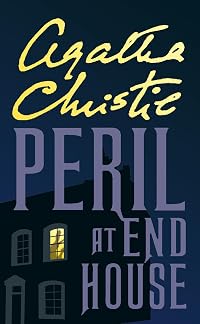
In the Agatha Christie classic Peril at End House, a young woman who has recently survived a series of very close calls appears to be the target of a dedicated killer--and it's up to Hercule Poirot to save her life. On holiday on the Cornish Riviera, Hercule Poirot is alarmed to hear pretty Nick Buckley describe her recent "accidental brushes with death." First, on a treacherous Cornish hillside, the brakes on her car failed. Then, on a coastal path, a falling boulder missed her by inches. show more Later, an oil painting fell and almost crushed her in bed. So when Poirot finds a bullet hole in Nick's sun hat, he decides that this girl needs his help. Can he find the would-be killer before he hits his target? show lessTags
Recommendations

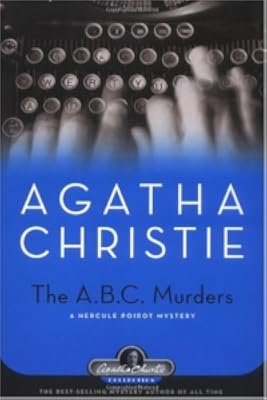
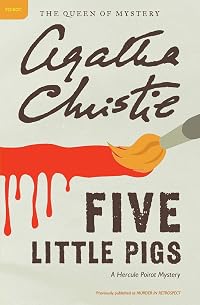
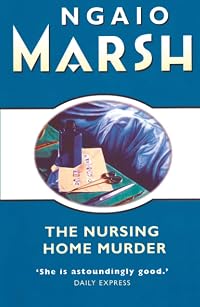
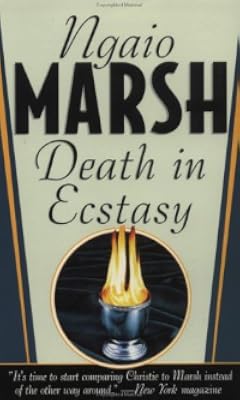













Member Recommendations
anonymous user The twists involved in both stories are kind of parallel.
20

zakaryae check this book :
https://www.greywish.com/3MBnB6x0dXDuINx9AyQ8dtFjXN_DXU4k1XhOKd_NInZmWBMyN4yfY7hJUdZthRBM_lILcwjMat6tvKSe4xf4qA~~
Member Reviews
The sparkle of Dame Agatha's writing and the verve of her plotting in her absolute peak years, the 1930s, is a sheer joy to read. Poirot and Hastings, on their way to Cornwall's fleshpots, meet Miss Nick Buckley. She is a lovely local landowner, a bit short of the ready (to borrow Sir Plum's locution for Bertie Wooster) but possessed of a glorious ramshackle seaside house. She inveigles Poirot and Hastings into her world to help her deal with mysterious attempts on her life. Since she has no money, no prospects of getting any, and a mortgaged house, who's trying to kill her and why?
The plot hinges on a shared family name, a unique coincidence that could not be foreseen, and a cold and calculating soul looking out for Number One. Nothing show more is quite as simple as the surface suggests; the threads of the subplots do gum up the works a bit; but in the end, there is a happy resolution and ma'at is maintained. No one profits from their crimes. No one suffers injustice. There is a single example of the Old Boy's Network in action, and that wasn't quite so nice. But it's the chain of coincidence that bugs me the most. It's clearly intentional, and I suppose you could argue that the coincidences are seized upon by the ruthless killer as a further example of astute quick thinking in service of one's own survival. Maybe a bit like The Usual Suspects with Our Kind of People.
Still. Not quite the top drawer, Dame Agatha. show less
The plot hinges on a shared family name, a unique coincidence that could not be foreseen, and a cold and calculating soul looking out for Number One. Nothing show more is quite as simple as the surface suggests; the threads of the subplots do gum up the works a bit; but in the end, there is a happy resolution and ma'at is maintained. No one profits from their crimes. No one suffers injustice. There is a single example of the Old Boy's Network in action, and that wasn't quite so nice. But it's the chain of coincidence that bugs me the most. It's clearly intentional, and I suppose you could argue that the coincidences are seized upon by the ruthless killer as a further example of astute quick thinking in service of one's own survival. Maybe a bit like The Usual Suspects with Our Kind of People.
Still. Not quite the top drawer, Dame Agatha. show less
Summary: “Nick” Buckley has several “accidents” which Poirot believes are attempts on her life by someone in her inner circle.
Poirot and his old friend Captain Hastings are united for a stay at a Cornish resort. During an encounter with a young actress, Magdala “Nick” Buckley, something buzzes past them that they take for a wasp–until Poirot spots a hole in Buckley’s hat and a bullet on the ground. Then she confides that this is the latest in a string of “accidents.” Poirot suspects there is more to them than that. And his investigation confirms his fears, though Nick seems determined to defy death. Poirot believes someone in her inner circle is trying to kill her. In typical Poirot fashion, he takes on the mission show more of defending the lady and finding the murderer.
The inner circle are gathered around End House, the property Nick has inherited and struggles to maintain–a house with a questionable history. Charles Vyse is the lawyer cousin who arranged a mortgage for her to keep the house. She is hosting several friends. Her closest is Freddie Rice, a wife in an abusive marriage and closet cocaine user. Jim Lazarus, an art dealer is in love with Freddie. He also offered to buy a painting from Nick well above market value. Captain Challenger is a military officer with affections for Nick that she has indulged but not returned. Mr. and Mrs. Croft are transplanted Aussies renting a nearby lodge. They encouraged Nick to make a will before surgery six months earlier. They mailed it but Charles claims it was never received. Finally, there is Ellen, the housekeeper, who closely watches all the goings on at End House.
Poirot suggests Nick have the company of a trusted friend. Nick invites her cousin Maggie, a minister’s daughter. Shortly after her arrival, Maggie hosts a garden party. At one point, Maggie borrows a scarlet wrap of Nick’s. Masked by fireworks, gunshots take her life. Meanwhile, Nick had absented herself to take a phone call.
Next morning, Poirot notes the story of the death of a wealthy airman, Michael Seton. He surmises that Nick was his secret fiancée and stood to inherit the flyer’s wealth. So, for her safety, Poirot arranges her seclusion in a sanitarium with no visitors allowed. Yet somehow a box of chocolates laced with cocaine gets to her and she nearly dies from an overdose. The card said they were from Poirot.
Motive, and the contents of the missing will from Nick are on his mind. Freddie seems a prime suspect, having sent chocolates. And she is a cocaine addict. But Poirot is not so sure. So he stages a gathering at End House after Nick’s will turns up. The “official” word is that Nick died from the overdose. There will be a reading of the will. Poirot then suggests a seance, with Hastings as medium. And here, Nick stages her ultimate performance, triggering all sorts of mayhem and the exposure of the murderer.
To sum up, I thought this one of Christie’s near greats. The ingenious plot leaves you guessing and scratching your head and asking at the end, “why didn’t I see that?”. But we’re not the only ones, as you will see. show less
Poirot and his old friend Captain Hastings are united for a stay at a Cornish resort. During an encounter with a young actress, Magdala “Nick” Buckley, something buzzes past them that they take for a wasp–until Poirot spots a hole in Buckley’s hat and a bullet on the ground. Then she confides that this is the latest in a string of “accidents.” Poirot suspects there is more to them than that. And his investigation confirms his fears, though Nick seems determined to defy death. Poirot believes someone in her inner circle is trying to kill her. In typical Poirot fashion, he takes on the mission show more of defending the lady and finding the murderer.
The inner circle are gathered around End House, the property Nick has inherited and struggles to maintain–a house with a questionable history. Charles Vyse is the lawyer cousin who arranged a mortgage for her to keep the house. She is hosting several friends. Her closest is Freddie Rice, a wife in an abusive marriage and closet cocaine user. Jim Lazarus, an art dealer is in love with Freddie. He also offered to buy a painting from Nick well above market value. Captain Challenger is a military officer with affections for Nick that she has indulged but not returned. Mr. and Mrs. Croft are transplanted Aussies renting a nearby lodge. They encouraged Nick to make a will before surgery six months earlier. They mailed it but Charles claims it was never received. Finally, there is Ellen, the housekeeper, who closely watches all the goings on at End House.
Poirot suggests Nick have the company of a trusted friend. Nick invites her cousin Maggie, a minister’s daughter. Shortly after her arrival, Maggie hosts a garden party. At one point, Maggie borrows a scarlet wrap of Nick’s. Masked by fireworks, gunshots take her life. Meanwhile, Nick had absented herself to take a phone call.
Next morning, Poirot notes the story of the death of a wealthy airman, Michael Seton. He surmises that Nick was his secret fiancée and stood to inherit the flyer’s wealth. So, for her safety, Poirot arranges her seclusion in a sanitarium with no visitors allowed. Yet somehow a box of chocolates laced with cocaine gets to her and she nearly dies from an overdose. The card said they were from Poirot.
Motive, and the contents of the missing will from Nick are on his mind. Freddie seems a prime suspect, having sent chocolates. And she is a cocaine addict. But Poirot is not so sure. So he stages a gathering at End House after Nick’s will turns up. The “official” word is that Nick died from the overdose. There will be a reading of the will. Poirot then suggests a seance, with Hastings as medium. And here, Nick stages her ultimate performance, triggering all sorts of mayhem and the exposure of the murderer.
To sum up, I thought this one of Christie’s near greats. The ingenious plot leaves you guessing and scratching your head and asking at the end, “why didn’t I see that?”. But we’re not the only ones, as you will see. show less
I thoroughly enjoyed Peril At End House by Agatha Christie. This story features Hercule Poirot and his long suffering friend, Hastings, as they get involved with a young woman whose life has been threatened on numerous occasions. Things take a serious turn when, in a case of mistaken identity, the young lady’s cousin is shot dead. Poirot in his egotistic, bombastic manner puts all the pieces together and solves the mystery.
What struck me as most interesting is the reference Hastings makes to a failed case of Poirot’s. A case involving a box of chocolates. In fact, whenever Hastings wants to warn Poirot that he is getting too high-handed, he just has to say the words “Chocolate Box” to draw him in. I wonder if this is show more Christie’s tongue-in-cheek reference to Anthony Berkeley’s book, The Case of the Poisoned Chocolates, which was published just two years before Peril at End House.
While Peril At End House isn’t the finest of Christie’s mysteries, it was an entertaining read. Technically this was a re-read as I had originally enjoyed the book in the 1970’s but I literally had no memory of the story. I enjoyed revisiting her fussy, little detective and the rest of the inventive characters she has peopled this book with and I freely admit that she totally baffled me again. show less
What struck me as most interesting is the reference Hastings makes to a failed case of Poirot’s. A case involving a box of chocolates. In fact, whenever Hastings wants to warn Poirot that he is getting too high-handed, he just has to say the words “Chocolate Box” to draw him in. I wonder if this is show more Christie’s tongue-in-cheek reference to Anthony Berkeley’s book, The Case of the Poisoned Chocolates, which was published just two years before Peril at End House.
While Peril At End House isn’t the finest of Christie’s mysteries, it was an entertaining read. Technically this was a re-read as I had originally enjoyed the book in the 1970’s but I literally had no memory of the story. I enjoyed revisiting her fussy, little detective and the rest of the inventive characters she has peopled this book with and I freely admit that she totally baffled me again. show less
Hercule Poirot (really, really retired this time) and his old friend Arthur Hastings take a vacation in the fictional Cornish beach town of St. Loo, where they meet a cast of characters straight out of an F. Scott Fitzgerald novel. OF COURSE I LOVE THIS ONE!!!!
"Monsieur Poirot is--er--was--a great detective," I explained.
"Ah! my friend," cried Poirot. "Is that all you can find to say? Mais dis donc! Say then to Mademoiselle that I am a detective unique, unsurpassed, the greatest that ever lived!"
"That is now unnecessary," I said coldly, "You have told her yourself."
"Ah! yes, but it is more agreeable to have been able to preserve the modesty. One should not sing one's own praises."
"One should not keep a dog and have to bark oneself," show more agreed Nick with mock sympathy. "Who is the dog, by the way? Dr. Watson, I presume."
"My name is Hastings," I said coldly.
"Battle of 1066," said Nick. "Who said I wasn't educated? Well, this is all too, too marvelous! Do you think someone really wants to do away with me? It would be thrilling. But of course that sort of thing doesn't really happen. Only in books. I suspect Monsieur Poirot is like a surgeon who's invented an operation or a doctor who's found an obscure disease and wants everyone to have it."
Nick (real name Magdala Buckley) is a modern girl: "Too many cocktails, too many cigarettes--all that sort of thing." (She reminds me of Jordan from [b:The Great Gatsby|4671|The Great Gatsby|F. Scott Fitzgerald|https://i.gr-assets.com/images/S/compressed.photo.goodreads.com/books/1490528560l/4671._SY75_.jpg|245494] and her best friend is a languid Daisy type.) After several apparent attempts on her life, Poirot steps in to prevent the next attempt from being successful. But who wants Nick dead, and why? Her best friend or her rich boyfriend? Her lawyer cousin? The maid, the butler, or their creepy kid? The overly friendly Australian tenants?
Solution: It was Nick all along, faking attempts on her own life to cover the murder of her cousin Maggie (also named Magdala Buckley), who was secretly engaged to a missing aviator. When the aviator was found dead, having inherited a fortune from his uncle and left it to his fiancée Magdala Buckley, Nick needed to bump off Maggie so she could inherit the money to save her beloved house. I love that Dame Christie threw in the scamming faux Aussies who made a forgery of Nick's will, trying to inherit the fortune when they thoughts she was dead (Poirot's little drama).
Overall, a very fun little period mystery. I want more like this! show less
"Monsieur Poirot is--er--was--a great detective," I explained.
"Ah! my friend," cried Poirot. "Is that all you can find to say? Mais dis donc! Say then to Mademoiselle that I am a detective unique, unsurpassed, the greatest that ever lived!"
"That is now unnecessary," I said coldly, "You have told her yourself."
"Ah! yes, but it is more agreeable to have been able to preserve the modesty. One should not sing one's own praises."
"One should not keep a dog and have to bark oneself," show more agreed Nick with mock sympathy. "Who is the dog, by the way? Dr. Watson, I presume."
"My name is Hastings," I said coldly.
"Battle of 1066," said Nick. "Who said I wasn't educated? Well, this is all too, too marvelous! Do you think someone really wants to do away with me? It would be thrilling. But of course that sort of thing doesn't really happen. Only in books. I suspect Monsieur Poirot is like a surgeon who's invented an operation or a doctor who's found an obscure disease and wants everyone to have it."
Nick (real name Magdala Buckley) is a modern girl: "Too many cocktails, too many cigarettes--all that sort of thing." (She reminds me of Jordan from [b:The Great Gatsby|4671|The Great Gatsby|F. Scott Fitzgerald|https://i.gr-assets.com/images/S/compressed.photo.goodreads.com/books/1490528560l/4671._SY75_.jpg|245494] and her best friend is a languid Daisy type.) After several apparent attempts on her life, Poirot steps in to prevent the next attempt from being successful. But who wants Nick dead, and why? Her best friend or her rich boyfriend? Her lawyer cousin? The maid, the butler, or their creepy kid? The overly friendly Australian tenants?
Solution:
Overall, a very fun little period mystery. I want more like this! show less
https://fromtheheartofeurope.eu/peril-at-end-house-by-agatha-christie/
This is the seventh Poirot novel, written and set in 1932, with Poirot and his friend, Hastings the narrator, becoming entangled with a naïve socialite who lives in a decaying seaside mansion. She appears to be the target of a series of assassination attempts, and after someone else is killed apparently in mistake for her, things get very serious. Lots of good plot here, with some red herrings and some totally fair clues, and Christie turns the tables on the reader very neatly at the end. Not especially memorable perhaps, but classic Christie.
There are a couple of less good bits. A random bloke turns up at the end, starts shooting at people, and is bundled away while show more Poirot explains that he had nothing to do with the actual plot. There’s casual anti-semitism about another minor character. The ending sees natural justice rather than state justice meted out. But again, this is classic Christie, warts and all. show less
This is the seventh Poirot novel, written and set in 1932, with Poirot and his friend, Hastings the narrator, becoming entangled with a naïve socialite who lives in a decaying seaside mansion. She appears to be the target of a series of assassination attempts, and after someone else is killed apparently in mistake for her, things get very serious. Lots of good plot here, with some red herrings and some totally fair clues, and Christie turns the tables on the reader very neatly at the end. Not especially memorable perhaps, but classic Christie.
There are a couple of less good bits. A random bloke turns up at the end, starts shooting at people, and is bundled away while show more Poirot explains that he had nothing to do with the actual plot. There’s casual anti-semitism about another minor character. The ending sees natural justice rather than state justice meted out. But again, this is classic Christie, warts and all. show less
A blithe and snappy Christie in a classic configuration: Poirot and Hastings take a holiday on the Cornish coast and become involved with a young socialite, Mademoiselle "Nick," who has survived multiple murder attempts. Poirot takes it upon himself to protect her from further misfortune but (somewhat uncharacteristically) fails to be vigilant during a loud fireworks display, allowing someone else to be shot in the young woman's place. With the killer still at large and frustrated by his mistake, Poirot focuses his efforts to keep Nick from an untimely end that could come from any corner.
This is Christie by the numbers, at a point in her career (1932) when she could really first be said to have patterns and tropes emerging in her work. show more It's probably around this point that Christie starts considering phasing Captain Hastings out - he'll be gone from the novels in another five years - and Japp is already relegated to little more than an extended cameo. Still, this is very much the Poirot of the popular perception, fussy and a bit exaggerated, without the "Papa Poirot" speeches or tangents into Catholicism that occasionally show up in the earlier books. As such, Peril at End House is probably a strong candidate for the first "regular" Poirot novel - even coming, as it does, seventh in the series, and well after the runaway success of The Murder of Roger Ackroyd. It's a strong formula, and if it seems a little familiar in retrospect, that doesn't stop it being entertaining. The book practically glides along: it's incredibly "readable."
Christie will stick to the same basic framework and tone for the Poirot mysteries for almost another decade, an unusually prolific period in her career; there are no less than fourteen Poirot novels between this one and Five Little Pigs in 1942, with several of them regarded as classics. It's only after the war - and Christie's own fears of being killed in the Blitz, which led to the writing and ferreting away of Curtain - that the stories start to take a far darker turn. This is, effectively, the Poirot everyone remembers, and the Poirot everyone wants to revisit. It's like your favorite childhood candy: nothing terribly substantial but full of nostalgia and pleasant memories. There are far worse ways to spend a couple of afternoons poolside than with Hercule Poirot, his friend Hastings, and the mysterious goings-on at End House. show less
This is Christie by the numbers, at a point in her career (1932) when she could really first be said to have patterns and tropes emerging in her work. show more It's probably around this point that Christie starts considering phasing Captain Hastings out - he'll be gone from the novels in another five years - and Japp is already relegated to little more than an extended cameo. Still, this is very much the Poirot of the popular perception, fussy and a bit exaggerated, without the "Papa Poirot" speeches or tangents into Catholicism that occasionally show up in the earlier books. As such, Peril at End House is probably a strong candidate for the first "regular" Poirot novel - even coming, as it does, seventh in the series, and well after the runaway success of The Murder of Roger Ackroyd. It's a strong formula, and if it seems a little familiar in retrospect, that doesn't stop it being entertaining. The book practically glides along: it's incredibly "readable."
Christie will stick to the same basic framework and tone for the Poirot mysteries for almost another decade, an unusually prolific period in her career; there are no less than fourteen Poirot novels between this one and Five Little Pigs in 1942, with several of them regarded as classics. It's only after the war - and Christie's own fears of being killed in the Blitz, which led to the writing and ferreting away of Curtain - that the stories start to take a far darker turn. This is, effectively, the Poirot everyone remembers, and the Poirot everyone wants to revisit. It's like your favorite childhood candy: nothing terribly substantial but full of nostalgia and pleasant memories. There are far worse ways to spend a couple of afternoons poolside than with Hercule Poirot, his friend Hastings, and the mysterious goings-on at End House. show less
Poirot and Hastings are enjoying a week's holiday at the Cornish coast and Poirot (in his usual humble fashion and, as it turns out, somewhat prematurely) proclaims that the passive life suits him admirably and that there's nothing better than to sit in the sun, secure in the knowledge that he stepped from the pedestal at the zenith of his fame. Right on cue he meets a young lady who tells him that only this week she has already had three narrow escapes from death this week; realising the seriousness of the situation, Poirot is determined to prevent a murder, but already two nights later he and Hastings come across the body of a young woman at End House ...
This was a fun and easy read with a slightly different angle, in that Poirot is show more actually trying to prevent a murder – but of course readers know that Agatha Christie sets him up for failure in this attempt as there would be no story without a crime being committed. For all the clues that the author puts in his way, I thought that Poirot would have been able to solve the mystery a lot sooner, but I guess his little grey cells were taking a holiday too, and it's probably more interesting this way.
In some ways the novel appears very dated as there are a few rather questionable statements relating to women and Jews (it first appeared in 1931). show less
This was a fun and easy read with a slightly different angle, in that Poirot is show more actually trying to prevent a murder – but of course readers know that Agatha Christie sets him up for failure in this attempt as there would be no story without a crime being committed. For all the clues that the author puts in his way, I thought that Poirot would have been able to solve the mystery a lot sooner, but I guess his little grey cells were taking a holiday too, and it's probably more interesting this way.
In some ways the novel appears very dated as there are a few rather questionable statements relating to women and Jews (it first appeared in 1931). show less
Members
- Recently Added By
Lists

British Mystery
469 works; 14 members

Crime and Mysteries to Read
746 works; 31 members

Agatha Christie Poirot
43 works; 2 members

Vacation Books
2 works; 1 member

Chronological 2017
30 works; 1 member

Books About Murder
313 works; 7 members

Books mentioned in Julian Symons’ Bloody Murder
438 works; 6 members

Detective Stories
343 works; 5 members

1930s
262 works; 5 members

Books Read in 2024
4,727 works; 128 members

TBR
77 works; 1 member

Books Read in 2025
4,129 works; 98 members

Agatha Christie Chronology
93 works; 1 member

Books Read in 2026
1,971 works; 66 members
Author Information

2,158+ Works 441,041 Members
One of the most successful and beloved writer of mystery stories, Agatha Mary Clarissa Christie was born in 1890 in Torquay, County Devon, England. She wrote her first novel, The Mysterious Affair at Styles, in 1920, launching a literary career that spanned decades. In her lifetime, she authored 79 crime novels and a short story collection, 19 show more plays, and six novels written under the name of Mary Westmacott. Her books have sold over a billion copies in the English language with another billion in 44 foreign languages. Some of her most famous titles include Murder on the Orient Express, Mystery of the Blue Train, And Then There Were None, 13 at Dinner and The Sittaford Mystery. Noted for clever and surprising twists of plot, many of Christie's mysteries feature two unconventional fictional detectives named Hercule Poirot and Miss Jane Marple. Poirot, in particular, plays the hero of many of her works, including the classic, The Murder of Roger Ackroyd (1926), and Curtain (1975), one of her last works in which the famed detective dies. Over the years, her travels took her to the Middle East where she met noted English archaeologist Sir Max Mallowan. They married in 1930. Christie accompanied Mallowan on annual expeditions to Iraq and Syria, which served as material for Murder in Mesopotamia (1930), Death on the Nile (1937), and Appointment with Death (1938). Christie's credits also include the plays, The Mousetrap and Witness for the Prosecution (1953; film 1957). Christie received the New York Drama Critics' Circle Award for 1954-1955 for Witness. She was also named Dame Commander of the Order of the British Empire in 1971. Christie died in 1976. (Bowker Author Biography) show less
Some Editions
Series

Belongs to Publisher Series
Riksin sarja (5)
Selecciones de Biblioteca Oro (libro 154)
Colecção Vampiro (37)
Fontana (513)
Penguin Books (688)
SaPo (165)
Goldmann (43954)
Work Relationships
Is contained in
Five Complete Novels of Murder and Detection: And Then There Were None / Peril at End House / The Murder at Hazelmoor / Easy to Kill / Evil Under the Sun by Agatha Christie
Agatha Christie Crime Collection: The Body in the Library, Hercule Poirot's Christmas, Peril at End House by Agatha Christie
The Mysterious Affair at Styles / Peril at End House / The A.B.C. Murders / One, Two Buckle My Shoe by Agatha Christie
Has the adaptation
Common Knowledge
- Canonical title
- Peril at End House
- Original title
- Peril at End House
- Original publication date
- 1932-02-01
- People/Characters
- Hercule Poirot; Arthur Hastings (Captain); James Japp (Inspector); Weston (Colonel); Nick Buckley; George Challenger (Commander) (show all 13); Ellen; Jim Lazarus; Charles Vyse; Millie Croft; Bert Croft; Frederica Rice; Maggie Buckley
- Important places
- Cornwall, England, UK
- Related movies
- Zagadka Endkhauza (1989 | IMDb); "Les petits meurtres d'Agatha Christie" La maison du péril (2009 | IMDb); Peril at End House (1990 | IMDb)
- Dedication
- To
Eden Philpotts
To whom I shall always be grateful for his
friendship and the encouragement he gave me many years ago. - First words
- No seaside town in the south of England is, I think, as attractive as St. Loo.
- Quotations
- 'In an old house,' he said, 'there is sometimes an atmosphere of evil.'
'That's it, sir,' said Ellen, eagerly. 'Evil. Bad thoughts and bad deeds too. It's like dry rot in a house, sir, you can't get it out. It's a sort... (show all) of feeling in the air. I always knew something bad would happen in this house, someday.' - Last words
- (Click to show. Warning: May contain spoilers.)"Now I know everything," he said happily.
- Original language
- English
Classifications
Statistics
- Members
- 4,902
- Popularity
- 2,871
- Reviews
- 98
- Rating
- (3.73)
- Languages
- 29 — Catalan, Chinese, Czech, Danish, Dutch, English, Estonian, Finnish, French, German, Greek, Hungarian, Indonesian, Italian, Japanese, Lithuanian, Norwegian (Bokmål), Norwegian, Polish, Portuguese, Romanian, Serbian, Croatian, Slovenian, Spanish, Swedish, Tamil, Turkish, Vietnamese
- Media
- Paper, Audiobook, Ebook
- ISBNs
- 197
- UPCs
- 2
- ASINs
- 92