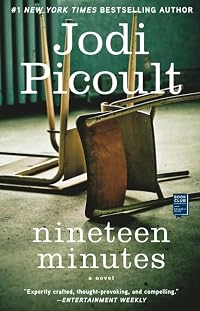
Nineteen Minutes
by Jodi Picoult
On This Page
Description
"In Sterling, New Hampshire, 17-year-old high school student Peter Houghton has endured years of verbal and physical abuse at the hands of classmates. His best friend, Josie Cormier, succumbed to peer pressure and now hangs out with the popular crowd that often instigates the harassment. One final incident of bullying sends Peter over the edge and leads him to commit an act of violence that forever changes the lives of Sterling's residents. Even those who were not inside the school that show more morning find their lives in an upheaval, including Alex Cormier. The superior court judge assigned to the Houghton case, Alex - whose daughter, Josie, witnessed the events that unfolded - must decide whether or not to step down. She's torn between presiding over the biggest case of her career and knowing that doing so will cause an even wider chasm in her relationship with her emotionally fragile daughter. Josie, meanwhile, claims she can't remember what happened in the last fatal minutes of Peter's rampage. Or can she? And Peter's parents, Lacy and Lewis Houghton, ceaselessly examine the past to see what they might have said or done to compel their son to such extremes. Rich with psychological and social insight, Nineteen Minutes is a riveting, poignant, and thought-provoking novel that has at its center a haunting question. Do we ever really know someone?"--From source other than the Library of Congress. show lessTags
Recommendations

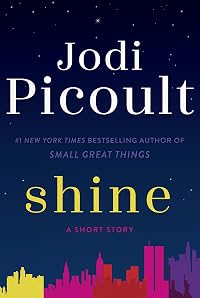
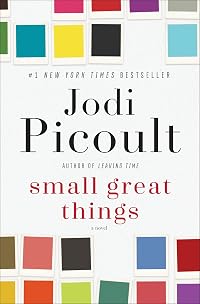
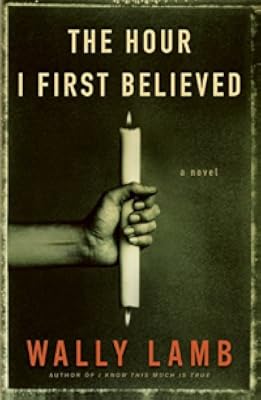
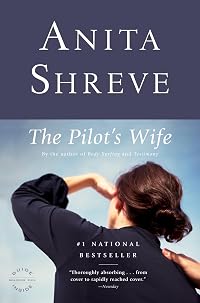







Member Recommendations
BookshelfMonstrosity Both of these novels are about school shootings and the alienated teenage boys responsible for them. 'We need to talk about Kevin' depicts the complex relationships within the shooter's family, whereas 'Nineteen minutes' focuses on the larger community affected by the event.
Also recommended by bnbookgirl
82


by anonymous user

Member Reviews
Likely one of the most difficult books I've ever read, equally one of the most important books. For anyone who has ever raised a child, been part of a community, or lived in a society, the fear of you or someone you know and love being involved in some type of mass violent event in today's world is a reality. Conversely, so is the thought that it may be someone you know, even if a few degrees separated, who committed the acts.
We do not, nor can we ever know where someone's breaking point is and all the goodness brought to that person, all the appeals of love and understanding, may not be enough. We all think it couldn't or wouldn't be our child who could commit such a heinous act as a mass shooting, but what if...?
What if it were your show more child who was bullied to the point of breaking? What if a never-ending drip of "soft" violence (a push, a shove, a spitball, a noogy, a trip, an upturned lunch tray, a word "fag," "homo," "dyke," "fatty," "stinky," a mass email of humiliation were sent to an entire school) occurred to a child continuously until they suffered post-traumatic stress to the point of withdrawal, living in their own world (computers, gaming, anywhere to escape the meanness of the "cool kids"), until one day they snapped -- could you see that happening? I can.
This book hurt me deep in places I have tried to forget, didn't know other people knew, and was shocked to read about. I have been that broken child and have seen my children go through brutal punishment to be accepted, and sometimes worse, not accepted. I have seen my baby's soft, loving eyes turn hard, black, hateful at the hands of bullies. This is real.
Does it mean all bullied children will become murderers or that this is an acceptable reason to murder - let's not be naive. The point: This is out there. This is happening. We cannot just ban the book because it speaks graphically of violence and think that will make the violence or the events leading up to it go away. On the contrary. We should all read this book. Feel those feelings. Empathize with the pain, the hurt, the life that the least of these feel. No one is above being bullied.
God help us if we keep turning away from reality and not holding initiators of bullying accountable. Read the book. Then go sit and reflect. We must and we can do better.
Remember, young bullies turn into old ones and they run the world. show less
We do not, nor can we ever know where someone's breaking point is and all the goodness brought to that person, all the appeals of love and understanding, may not be enough. We all think it couldn't or wouldn't be our child who could commit such a heinous act as a mass shooting, but what if...?
What if it were your show more child who was bullied to the point of breaking? What if a never-ending drip of "soft" violence (a push, a shove, a spitball, a noogy, a trip, an upturned lunch tray, a word "fag," "homo," "dyke," "fatty," "stinky," a mass email of humiliation were sent to an entire school) occurred to a child continuously until they suffered post-traumatic stress to the point of withdrawal, living in their own world (computers, gaming, anywhere to escape the meanness of the "cool kids"), until one day they snapped -- could you see that happening? I can.
This book hurt me deep in places I have tried to forget, didn't know other people knew, and was shocked to read about. I have been that broken child and have seen my children go through brutal punishment to be accepted, and sometimes worse, not accepted. I have seen my baby's soft, loving eyes turn hard, black, hateful at the hands of bullies. This is real.
Does it mean all bullied children will become murderers or that this is an acceptable reason to murder - let's not be naive. The point: This is out there. This is happening. We cannot just ban the book because it speaks graphically of violence and think that will make the violence or the events leading up to it go away. On the contrary. We should all read this book. Feel those feelings. Empathize with the pain, the hurt, the life that the least of these feel. No one is above being bullied.
God help us if we keep turning away from reality and not holding initiators of bullying accountable. Read the book. Then go sit and reflect. We must and we can do better.
Remember, young bullies turn into old ones and they run the world. show less
Jodi Picoult writes intelligently, exposing hot-button issues in her many best selling novels. I have read several of her books, and am rarely disappointed. Nineteen Minutes was no exception.
This is a novel which takes on the shocking and horrifying issue of school shootings. Sterling High School, located in rural New Hampshire, becomes the focus of the network news when Peter Houghton opens fire on his fellow students, killing 10 and injuring 19. The central question is: Why? Written in a non-linear style …starting with the day of the shootings, then jumping backwards in time to when the main characters were only children or young mothers…Picoult attempts to explain the unexplainable by gradually uncovering the past.
The characters show more who people the pages of Nineteen Minutes include Josie Cormier (a teenager who straddles the social strata between the “cool” kids and the “outcasts”), Alex Cormier (Josie’s mother, the newly appointed superior court judge of Grafton County), Lacy Hougton (a mid-wife who is devastated to discover it is her son who has committed such a terrible crime), Lewis Houghton (Peter’s father who hides behind math equations in his attempt to discover the formula for happiness), Patrick Ducharme (the detective who is the first to enter the school as the shootings take place), Jordan McAfee (the young, idealistic defense attorney), and the popular kids who become targets for the rage of a bullied teen. Picoult writes from these multiple points of view while developing characters with depth and complexity.
Nineteen Minutes is not just about a school shooting. Picoult explores other themes…such as the idea of identity. Do we ever really know the people closest to us? How do we know what is authentic and who wears a mask hiding their motivations?
'If you spent you life concentrating on what everyone else thought of you, would you forget who you really were? What if the face you showed the world turned out to be a mask…with nothing beneath it?' -From Nineteen Minutes, page 83-
The gun control debate is handled fairly - showing both sides of a controversial and unsettled issue in our society.
'A gun was nothing, really, without a person behind it.' -From Nineteen Minutes, page 89-
But, the theme which resonates the strongest in Nineteen Minutes is that of expectations - those for ourselves as well as those entertained by parents for children and children for parents - and how those expectations shape our lives. Is it fair to judge someone? Should we expect the world to accept us as we are, and if not, is it ever okay to strike back?
Picoult has written a book which is chilling, yet tender…it is a book hard to put down and yet difficult to read.
Highly recommended show less
This is a novel which takes on the shocking and horrifying issue of school shootings. Sterling High School, located in rural New Hampshire, becomes the focus of the network news when Peter Houghton opens fire on his fellow students, killing 10 and injuring 19. The central question is: Why? Written in a non-linear style …starting with the day of the shootings, then jumping backwards in time to when the main characters were only children or young mothers…Picoult attempts to explain the unexplainable by gradually uncovering the past.
The characters show more who people the pages of Nineteen Minutes include Josie Cormier (a teenager who straddles the social strata between the “cool” kids and the “outcasts”), Alex Cormier (Josie’s mother, the newly appointed superior court judge of Grafton County), Lacy Hougton (a mid-wife who is devastated to discover it is her son who has committed such a terrible crime), Lewis Houghton (Peter’s father who hides behind math equations in his attempt to discover the formula for happiness), Patrick Ducharme (the detective who is the first to enter the school as the shootings take place), Jordan McAfee (the young, idealistic defense attorney), and the popular kids who become targets for the rage of a bullied teen. Picoult writes from these multiple points of view while developing characters with depth and complexity.
Nineteen Minutes is not just about a school shooting. Picoult explores other themes…such as the idea of identity. Do we ever really know the people closest to us? How do we know what is authentic and who wears a mask hiding their motivations?
'If you spent you life concentrating on what everyone else thought of you, would you forget who you really were? What if the face you showed the world turned out to be a mask…with nothing beneath it?' -From Nineteen Minutes, page 83-
The gun control debate is handled fairly - showing both sides of a controversial and unsettled issue in our society.
'A gun was nothing, really, without a person behind it.' -From Nineteen Minutes, page 89-
But, the theme which resonates the strongest in Nineteen Minutes is that of expectations - those for ourselves as well as those entertained by parents for children and children for parents - and how those expectations shape our lives. Is it fair to judge someone? Should we expect the world to accept us as we are, and if not, is it ever okay to strike back?
Picoult has written a book which is chilling, yet tender…it is a book hard to put down and yet difficult to read.
Highly recommended show less
This is the third Jodi Picoult book I have read and I was not disappointed. I love the way Jodi writes in first person, jumping from character to character and from past to present. This can be confusing for those unused to her style, but life is rarely linear and the different perspectives enhance our understanding of the story, allowing us to empathise with different characters and preventing us from pre-judging behaviour.
Nineteen Minutes is an emotional look at the lead up and aftermath of a columbine-style school shooting. Picoult, however, has her shooter survive, allowing us to explore the effect of this event on the lives of the shooter and his family as well as those of the victims. It is often easy to lay blame when such a show more tragedy occurs, so easy to forget that the shooters family are as much victims as anyone else.
I found this book very scary. We cannot protect our children from being bullied, and we cannot always know what they are thinking or feeling. It is frightening to think that our children could have been any one of the characters in this book - the bullies, picking on those more sensitive than themselves; the girl pretending to be someone she is not, in order to fit in; the shooter himself - and we would be none the wiser.
I definitely recommend this book to parents, teens and anyone who finds themselves quick to judge on the basis of a news story alone... show less
Nineteen Minutes is an emotional look at the lead up and aftermath of a columbine-style school shooting. Picoult, however, has her shooter survive, allowing us to explore the effect of this event on the lives of the shooter and his family as well as those of the victims. It is often easy to lay blame when such a show more tragedy occurs, so easy to forget that the shooters family are as much victims as anyone else.
I found this book very scary. We cannot protect our children from being bullied, and we cannot always know what they are thinking or feeling. It is frightening to think that our children could have been any one of the characters in this book - the bullies, picking on those more sensitive than themselves; the girl pretending to be someone she is not, in order to fit in; the shooter himself - and we would be none the wiser.
I definitely recommend this book to parents, teens and anyone who finds themselves quick to judge on the basis of a news story alone... show less
After reading the first chapter of Picoult’s Nineteen Minutes, I was completely captivated and engrossed in the book and found it impossible to put down. However, that pretty much lasted to about half way.
The story follows Peter Houghton who after years of being bullied and harassed, comes to school one morning where he shoots his tormenters and others in nineteen minutes. The book starts with the shooting and then delves into the events leading up to and following the tragic incident.
I really enjoyed exploring this controversial and complex issue of being pushed to the limit. At first I despised Peter for what he did but as I continued reading from different perspectives, particularly Peter’s, I discovered that the situation is show more not as black and white as it may seem. Let me tell you, in no way do I commend Peter for what he did but it was interesting exploring a person’s reaction when they’re backed into a corner and enough is enough.
Nineteen minutes certainly left an impression on me as it had an uncanny ability to take me on such an emotional rollercoaster where I didn’t know who to blame or be mad at or who to feel sorry for or sympathise with. Then we reach the half way mark. I’ve come to realise that this is a pattern in Picoult’s work but the plot tends to become too dramatic and unrealistic. We get a romance, a pregnancy and an eye rolling twist thrown at us that just left me feeling annoyed and shaking my head. Perhaps Jodi should take the advice of the following words – less is more.
I applaud Jodi Picoult on taking on such a thought provoking subject matter however am disappointed by the unnecessary drama and character stereotypes that tainted the overall subject. show less
The story follows Peter Houghton who after years of being bullied and harassed, comes to school one morning where he shoots his tormenters and others in nineteen minutes. The book starts with the shooting and then delves into the events leading up to and following the tragic incident.
I really enjoyed exploring this controversial and complex issue of being pushed to the limit. At first I despised Peter for what he did but as I continued reading from different perspectives, particularly Peter’s, I discovered that the situation is show more not as black and white as it may seem. Let me tell you, in no way do I commend Peter for what he did but it was interesting exploring a person’s reaction when they’re backed into a corner and enough is enough.
Nineteen minutes certainly left an impression on me as it had an uncanny ability to take me on such an emotional rollercoaster where I didn’t know who to blame or be mad at or who to feel sorry for or sympathise with. Then we reach the half way mark. I’ve come to realise that this is a pattern in Picoult’s work but the plot tends to become too dramatic and unrealistic. We get a romance, a pregnancy and an eye rolling twist thrown at us that just left me feeling annoyed and shaking my head. Perhaps Jodi should take the advice of the following words – less is more.
I applaud Jodi Picoult on taking on such a thought provoking subject matter however am disappointed by the unnecessary drama and character stereotypes that tainted the overall subject. show less
A small New Hampshire town is shocked when a bullied teen opens fire on his school, killing or injuring many of his classmates. Picoult then goes backward and forward in time to show the many ramifications of this act as well as to look back to what lead up to this moment. The book changes perspectives many times, allowing us to get in the minds of the shooter, his parents, his lawyer, his childhood friend, and the judge on the case, to name a few. This was definitely a highlight of the book -- getting to see so many points of views and, by doing so, having a richer feel for the various characters and situations.
The book is very much grounded in the current events of when it was written, which makes some of it seem a little bit dated show more already, but also gives it a mostly realistic tone. In addition to talking about the big issue of gun violence, the book manages to explore a lot of other deep themes, including but not limited to parent-child relationships, friendships, athlete-hero worship, bullying, and domestic violence.
Picoult's writing is solidly good. It is neither as fantastic as some people would have you believe, nor is it as hackneyed as others would say. This book, despite its length, read fairly quickly and kept you wanting to know what will happen next, even though much of what happens next is in the past. My big gripe with it is simply its predictableness. If you think a character is going to date another character, it happens. If you think that the legal proceedings are going to happen such and such a way, they will. And so forth. Even the "big reveal" can be seen from a mile away. In fact, since I went into the book knowing that Picoult is a big one for throwing in twist endings, I suspected this reveal from basically the first chapter.
Still, this was a decent read that I would recommend to those who are comfortable tackling fiction dealing with difficult - but important - issues. show less
The book is very much grounded in the current events of when it was written, which makes some of it seem a little bit dated show more already, but also gives it a mostly realistic tone. In addition to talking about the big issue of gun violence, the book manages to explore a lot of other deep themes, including but not limited to parent-child relationships, friendships, athlete-hero worship, bullying, and domestic violence.
Picoult's writing is solidly good. It is neither as fantastic as some people would have you believe, nor is it as hackneyed as others would say. This book, despite its length, read fairly quickly and kept you wanting to know what will happen next, even though much of what happens next is in the past. My big gripe with it is simply its predictableness. If you think a character is going to date another character, it happens. If you think that the legal proceedings are going to happen such and such a way, they will. And so forth. Even the "big reveal" can be seen from a mile away. In fact, since I went into the book knowing that Picoult is a big one for throwing in twist endings, I suspected this reveal from basically the first chapter.
Still, this was a decent read that I would recommend to those who are comfortable tackling fiction dealing with difficult - but important - issues. show less
Sterling is a small town where nothing significant or noteworthy ever happens. Well, until one fateful morning. After setting up an explosion in the car park, 17 year old Peter Houghton walks into his high school, opening fire at his classmates and teachers. The titular nineteen minutes is all it takes for him to take 10 lives, and wound several others. And that is only the surface of the damage his actions caused.
Sterling, like any other small town whose complacency has been shattered to smithereens, starts asking themselves why this happened. Through the parents of the victims, the parents of the injured, the shooter themselves, through law enforcement, readers see answers to this question unfurl.
Nineteen Minutes attempts to look at show more what possibly creates a mass shooter. The book weaves themes of bullying, homophobia, peer pressure, parental neglect, inadequacies of the education system etc to tell its tale. However, in doing so, there are also some very problematic areas the book crosses into.
Although what sets the tone of the book is a mass shooting, a school shooting at that, the book says nay a word about gun violence. There is no excusing or condoning Peter Houghton's actions, despite his trauma. All of the bullying and neglect he faced created a broken teenager. But gun culture created a mass shooter.
So for the author to use the issue of battered-wife-syndrome in relation to Peter and the bullying he faced was just tone deaf. There's very a very vast and very evident gulf between an abused wife killing her husband-cum-oppressor, and a 17 year old boy walking into his school unleashing terror on everyone in sight. As a reader of colour, there's also the very evident question of who gets this benefit of doubt. That benefit of doubt is not fairness, it is governed by privileges of race, gender and class.
This is not to say that Nineteen Minutes is not a compelling read. It hits all your emotions. But a key takeaway gets buried in the plot- neglect is not benign. This is particularly relevant in the case of Josie Cormier and her story arc.
This book provoked a lot of thoughts for me, but I have to acknowledge the fact that it comes at the benefit of never having been a victim of gun violence, or knowing anybody who was a victim of gun violence. show less
Sterling, like any other small town whose complacency has been shattered to smithereens, starts asking themselves why this happened. Through the parents of the victims, the parents of the injured, the shooter themselves, through law enforcement, readers see answers to this question unfurl.
Nineteen Minutes attempts to look at show more what possibly creates a mass shooter. The book weaves themes of bullying, homophobia, peer pressure, parental neglect, inadequacies of the education system etc to tell its tale. However, in doing so, there are also some very problematic areas the book crosses into.
Although what sets the tone of the book is a mass shooting, a school shooting at that, the book says nay a word about gun violence. There is no excusing or condoning Peter Houghton's actions, despite his trauma. All of the bullying and neglect he faced created a broken teenager. But gun culture created a mass shooter.
So for the author to use the issue of battered-wife-syndrome in relation to Peter and the bullying he faced was just tone deaf. There's very a very vast and very evident gulf between an abused wife killing her husband-cum-oppressor, and a 17 year old boy walking into his school unleashing terror on everyone in sight. As a reader of colour, there's also the very evident question of who gets this benefit of doubt. That benefit of doubt is not fairness, it is governed by privileges of race, gender and class.
This is not to say that Nineteen Minutes is not a compelling read. It hits all your emotions. But a key takeaway gets buried in the plot- neglect is not benign. This is particularly relevant in the case of Josie Cormier and her story arc.
This book provoked a lot of thoughts for me, but I have to acknowledge the fact that it comes at the benefit of never having been a victim of gun violence, or knowing anybody who was a victim of gun violence. show less
I think I'm going to have to track down more Jodi Picoult books- this is the second I've read and I've really enjoyed both. I guessed the ending about halfway through, but that kept me up all night so I could finish it to see if I was right. As an outcast myself (seriously, I was quite possibly the least popular girl in my school), I wondered if it was exaggerated or if things were worse for boys or if my school wasn't as bad or if I just didn't notice how awful it was. I thought that the bullying should have been acknowledged by the community more. Drew was the only one who was even made to account for what he'd done. Matt was a bully and abusive and controlling, and Josie's actions were understandable - I think a case could have been show more made to get her off. show less
Members
- Recently Added By
Lists

Top Five Books of 2013
1,562 works; 721 members

Best School Stories
219 works; 22 members

Best Revenge Stories
69 works; 9 members
Female Author
1,234 works; 67 members

Banned or Challenged Books
400 works; 41 members

Best Friendship Stories
205 works; 16 members

New England Books
101 works; 10 members

Adult Books for YA Readers
194 works; 6 members

Five star books
1,767 works; 110 members

I Can't Finish This Book
189 works; 22 members

Books Read in 2007
326 works; 8 members

Books With Numbers in the Title
308 works; 13 members

Books Set in Small Towns and Villages
278 works; 16 members
Books About Murder
313 works; 7 members

Books set in high school
89 works; 7 members

Books about Gun Violence
54 works; 1 member

Books Tagged Abuse
152 works; 4 members

KayStJ's to-read list
1,616 works; 11 members

Bullies
44 works; 2 members

Florida's Book Bans and Challenges
311 works; 4 members

Virginia Banned Books 2023
68 works; 3 members
Author Information

116+ Works 146,717 Members
Jodi Picoult was born in Nesconset, New York on May 19, 1966. She received a degree in creative writing from Princeton University in 1987 and a master's degree in education from Harvard University. She published two short stories in Seventeen magazine while still in college. Immediately after graduation, she landed a variety of jobs, ranging from show more editing textbooks to teaching eighth-grade English. Her first book, Songs of the Humpback Whale, was published in 1992. Her other works include Picture Perfect, Mercy, The Pact, Salem Falls, The Tenth Circle, Nineteen Minutes, Change of Heart, Handle with Care, House Rules, Sing You Home, Lone Wolf, Leaving Time, and Small Great Things. My Sister's Keeper was made into a movie starring Cameron Diaz. She received the New England Bookseller Award for fiction in 2003. She also wrote five issues of the Wonder Woman comic book series for DC Comics. She writes young adult novels with her daughter Samantha van Leer including Between the Lines and Off the Page. (Bowker Author Biography) show less
Some Editions
Awards and Honors
Series
Belongs to Publisher Series
Piper (5398)
Work Relationships
Is contained in
Common Knowledge
- Canonical title
- Nineteen Minutes
- Original title
- Nineteen Minutes
- Original publication date
- 2007-03-06
- People/Characters
- Patrick DuCharme; Jordan McAfee; Alex Cormier; Josephine Cormier; Peter Houghton; Matt Royston (show all 50); Lacy Houghton; Drew Girard; Diana Leven; Lewis Houghton; Selena McAfee; Courtney Ignatio; John Eberhard; Sam McAfee; Derek Markowitz; Joey Houghton; Maddie Shaw; Dr. King Wah; Haley Weaver; Brady Pryce; Logan Rourke; Ed McCabe; Judge Wagner; Emma Alexis; Michael Beach; Zoe Patterson; Dusty Spears; Justin Friedman; Thomas McAfee; Guenther Frankenstein; Natalie Zlenko; Nina Frost; Eleanor; Mr. Weatherhall; Angela Phlug; Liz; Mr. Cargrew; Whit Hobart; Arthur McAllister; Ervin Peabody; Joan McCabe; Yvette Harvey; Curtis Uppergate; Eddie Odenkirk; Tara Frost; Whit Obermeyer; Topher McPhee; Grace Murtaugh; Kaitlyn Harvey; Noah Thomas
- Important places
- Sterling, New Hampshire, USA; New Hampshire, USA
- Epigraph
- PART ONE: "If we don't change the direction we are headed, we will end up where we are going".
Chinese Proverb - Dedication
- For Emily Bestler, the finest editor and fiercest champion a girl could ask for, who makes sure I put my best foot forward, every time. Thanks for your keen eye, your cheerleading, and most of all, your friendship.
- First words
- In nineteen minutes, you can mow the front lawn, color your hair, watch a third of a hockey game. In nineteen minutes, you can bake scones or get a tooth filled by a dentist; you can fold laundry for a family of five. Ninet... (show all)een minutes is how long it took the Tennessee Titans to sell out of tickets to the play-offs. It's the length of a sitcom, minus the commercials. It's the driving distance from the Vermont border to the town of Sterling New Hampshire. In nineteen minutes you can order a pizza and get it delivered. You can read a story to a child or have your oil changed. You can walk a mile. You can sew a hem. In nineteen minutes, you can stop the world or just jump off it. In nineteen minutes, you can get revenge.
- Last words
- (Click to show. Warning: May contain spoilers.)They crossed the lobby and threshold of the front door, retracing the steps they'd taken.
Classifications
Statistics
- Members
- 11,949
- Popularity
- 735
- Reviews
- 377
- Rating
- (3.96)
- Languages
- 15 — Chinese, Dutch, English, Estonian, Finnish, French, German, Hungarian, Italian, Latvian, Lithuanian, Polish, Portuguese, Spanish, Swedish
- Media
- Paper, Audiobook, Ebook
- ISBNs
- 88
- ASINs
- 26