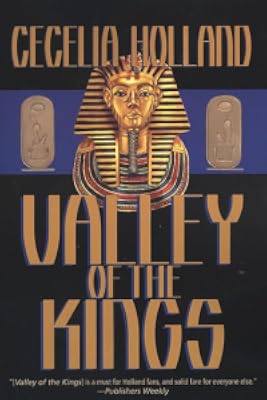
Valley of the Kings
by Cecelia Holland
On This Page
Description
An enthralling fictional account of Howard Carter's famous search for the tomb of King Tut and the mystery behind the tragic death and disappearance of ancient Egypt's child ruler In ancient times, a boy king occupied the throne in a troubled desert land. His name was Tutankhamun. Both his reign and his life were shockingly brief, and his burial place was unknown--mysteries that would intrigue the inquisitive for centuries to come. An English archaeologist irresistibly drawn to Egypt and show more her secrets, Howard Carter arrives in the Middle East in the second decade of the twentieth century to uncover the hidden final resting place of the tragic child pharaoh. But from the outset his search is plagued by misfortune and obstruction--a corrupt and unbending Egyptian bureaucracy, a British lord and patron more interested in profit than in knowledge, and Carter's own inability to connect with his fellow human beings. Still, he will not be deterred from his obsessive hunt for the answer to one of the most astonishing puzzles in the history of the world. In her magnificent novel Valley of the Kings, Cecelia Holland has created two worlds, brilliantly re-creating Egypt in the 1920s and in the time of Tutankhamun. A stunning tale of determination and discovery, brimming with color, mystery, and life, it confirms her standing as one of the true masters of historical fiction. show lessTags
Recommendations


















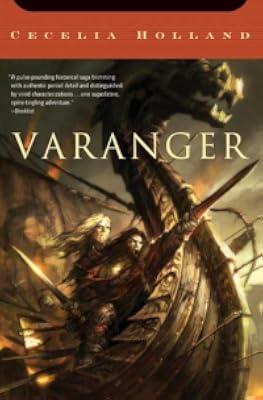
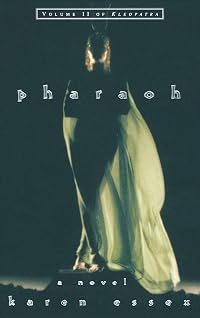
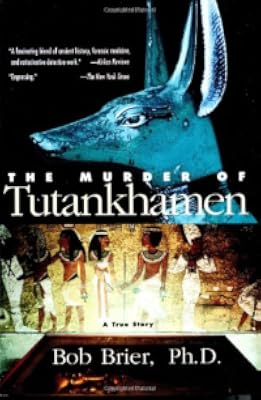
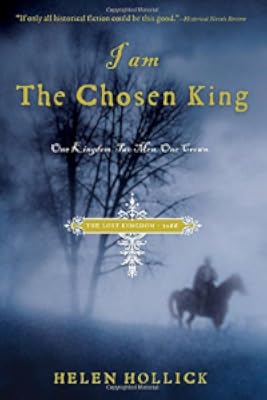
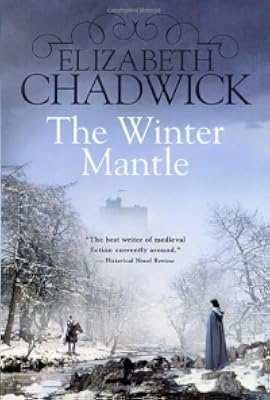
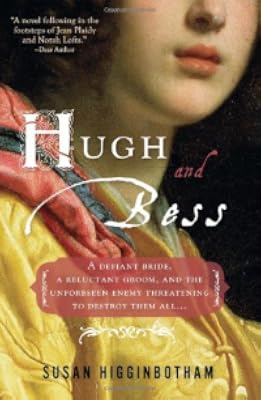

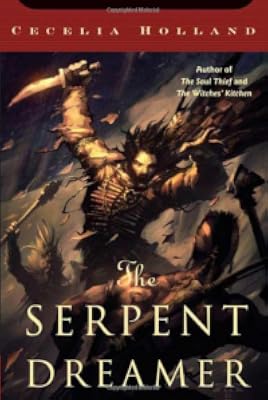
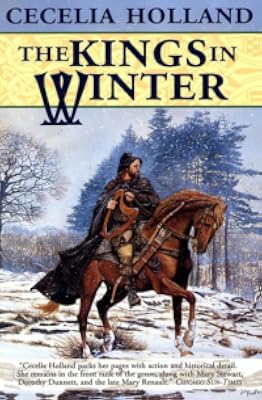
Member Recommendations
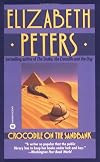
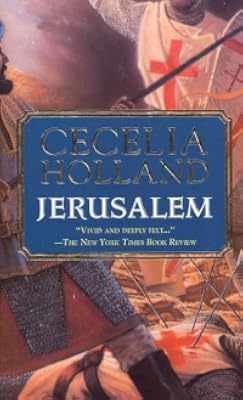
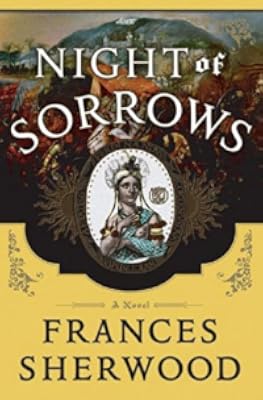
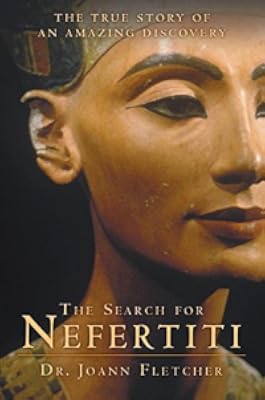
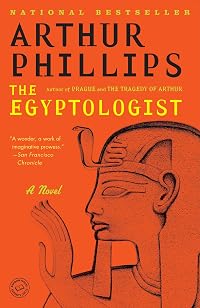
themulhern The books are very different in tone. The shared theme is archaeology and Akhenaten.
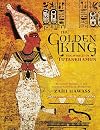
themulhern One is a novel, one is a serious work of popular archaeology. They have the same overall structure, although Holland puts her ancient Egyptian part last and Hawas puts his first.
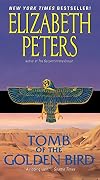
themulhern The discovery of Tutankhamun's tomb from two very different perspectives.
Member Reviews
I found Valley of the Kings by Cecelia Holland to be a rather odd combination of two stories. Originally published in 1977 under a pseudonym the novel is divided into two distinct parts. The first part, and in my opinion, the better part is the story of Howard Carter, the Englishman who discovered King Tut’s tomb in 1922. The second half of the book travels back in time to ancient Egypt under the rule of Tut.
I was fascinated to read about Howard Carter, his relationship with Lord Carnavron, and the devious way he had to circumvent the British bureaucrats and officials in order to dig where he wanted. Many of the archaeologists of that time were much more interested in treasure hunting than in learning the history and culture of show more ancient Egypt and although Carter was rather stiff and self-righteous, he was definitely not in it for the treasure. When the story abruptly changed and jumped back in time, I was disappointed as I wanted to learn more about Carter and how the tomb was excavated. The second story takes us back in time and is set during King Tut’s reign. I found this overdone and rather silly and in the end I was left wishing the author had simply written about Howard Carter.
Cecelia Holland is the author of many very good historical novels, unfortunately this isn’t one of them. show less
I was fascinated to read about Howard Carter, his relationship with Lord Carnavron, and the devious way he had to circumvent the British bureaucrats and officials in order to dig where he wanted. Many of the archaeologists of that time were much more interested in treasure hunting than in learning the history and culture of show more ancient Egypt and although Carter was rather stiff and self-righteous, he was definitely not in it for the treasure. When the story abruptly changed and jumped back in time, I was disappointed as I wanted to learn more about Carter and how the tomb was excavated. The second story takes us back in time and is set during King Tut’s reign. I found this overdone and rather silly and in the end I was left wishing the author had simply written about Howard Carter.
Cecelia Holland is the author of many very good historical novels, unfortunately this isn’t one of them. show less
Short book with an unusually ambitious structure. There are two narratives, Howard Carter's search for and eventual discovery of Tutankhamun's tomb and the story of how the clues and the tomb ended up where they were.
Though written in Cecilia Holland's usual manner (a manner which you either like or don't, I happen to like it quite a bit), it is also a species of meta-fiction. The archaeologist, although meticulous and dedicated, is partly correct, but also sometimes wildly wrong in his interpretation of the sculpture and artifacts. He acknowledges he might be wrong, but he can only justify himself by being correct. This is self-aware fiction, if the archaeologist does not get it right, how can the novelist and really, why should they? show more We only really know ourselves.
Alas, I didn't quite grasp the overall workings of the plot. On the other hand, it is neat to follow up the incidents during Tutankhamun's reign and burial which led to the artifacts and tomb being found as they were. A most imaginative reconstruction. show less
Though written in Cecilia Holland's usual manner (a manner which you either like or don't, I happen to like it quite a bit), it is also a species of meta-fiction. The archaeologist, although meticulous and dedicated, is partly correct, but also sometimes wildly wrong in his interpretation of the sculpture and artifacts. He acknowledges he might be wrong, but he can only justify himself by being correct. This is self-aware fiction, if the archaeologist does not get it right, how can the novelist and really, why should they? show more We only really know ourselves.
Alas, I didn't quite grasp the overall workings of the plot. On the other hand, it is neat to follow up the incidents during Tutankhamun's reign and burial which led to the artifacts and tomb being found as they were. A most imaginative reconstruction. show less
I was surprised at how much I enjoyed this book. It's historical fiction with a twist. Howard Carter's first-person narrative of his search for Tutankhamun's tomb alternates with a story of life in ancient Egypt during Tutankhamun's reign. Although well researched, in general, I noticed some factual errors, especially in the ancient Egypt saga. I'm not sure, however, how much this has to do with what was known at the time this book was written (1977), versus what we know or believe to be true now. But countering this criticism is the fact it's a novel written for reading enjoyment, not a textbook. "Valley of the Kings" is an interesting, engaging book.
(A side note, the copy I have states the author is Elizabeth Eliot Carter, which is a show more pseudenym for Cecilia Holland, who is the stated author of other editions.) show less
(A side note, the copy I have states the author is Elizabeth Eliot Carter, which is a show more pseudenym for Cecilia Holland, who is the stated author of other editions.) show less
A more straightforward story than her other novels and easier to read than some. The 1922 section is fairly exciting in places, though the ancient Egyptian characters never come across as real to me.
An excellent book. I would recommended if you are visiting Luxor as it brings the scenes into life.
Ratings
Members
- Recently Added By
Author Information

52+ Works 3,335 Members
Born in Henderson, Nevada, Cecelia Holland was educated at Pennsylvania State University and Connecticut College, where she received her B.A. degree. She has served as a visiting professor of English at Connecticut College since 1979. Holland's historical novels have received broad critical acclaim. According to one critic, she "proves that there show more can be more to historical thrillers than swordplay and seduction." (Time) Among her novels is City of God (1979), which is set in Rome during the period of the Borgia family. Told from the point of view of Nicolas, a secretary to the Florentine ambassador to Rome, this novel brings to life the period of the Renaissance, including the political intrigue that characterized Rome at the time. Other works include Until the Sun Falls (1969), a story of the ancient Mongols and their empire, The Firedrake (1966), her first published novel, Great Maria (1974), The Bear Flag (1990), and Pacific Street (1991). Holland is very adept at capturing the period she writes about, including the clothing, furnishings, and customs of the time. One critic has noted that Holland "is never guilty of the fatuity which plagues most historical fiction: she never nudges the reader into agreeing that folks way back then were really just like you and me, only they bathed less often." (Bowker Author Biography) show less
Common Knowledge
- Canonical title
- Valley of the Kings
- Original title
- Valley of the Kings
- Original publication date
- 1977
- People/Characters
- Tutankhamun; Ankhesenamun; Howard Carter; Lady Evelyn Herbert; George Herbert, 5th Earl of Carnarvon; Sennahet (show all 10); Hapure; Meryat; Nefertiti; Ahmed
- Important places
- Africa; Egypt; Tutankhamun's tomb, Valley of the Kings, Egypt; Valley of the Kings, Egypt
- Important events
- Interbellum (1918 | 1939); Discovery of Tutankhamun's tomb (1922)
- Dedication
- This book is dedicated to Marion Harvey, for reasons that she alone knows.
- First words
- My name is Howard Carter and I am English; I am an Egyptologist.
- Quotations
- "Howard", she said, "what does it all mean to you? The tomb. Why is it so important?"
"It's the greatest find ever made in Egypt", I said.
"Yes, I know, but why was it necessary that you find it?"
I shifted my back a... (show all)gainst the leather seat. My ankles were already stiff from driving. "Someone had to."
"Why?"
"Don't be foolish, Evelyn. Ignorance is not bliss. Or don't you believe in the pursuit of knowledge for its own sake?"
"Knowledge", she said, in a dreamy voice, "is an elusive quantity. How can we know anything about the past? Especially a past as remote as pharaonic Egypt?"
"There's evidence. The tomb is evidence. The more such we uncover, the more we know."
"The more we think we know."
"Evelyn, what are you driving at?"
"Well, it seems to me that the only reality about any time in history is the sort that never leaves a trace. I mean the way people felt about their lives."
She was making me angry. She was trying to tell me everything I did was for nothing. I said loudly, "Rubbish".
She was still. In the rearview mirror I could see her watching me.
"The trained mind can infer something of people's attitudes from the evidence", I said. "We piece together this idea and that one-"
"The trained mind interprets", she said. "In the end one can interpret only by reference to one's own experience. It's a circle, Howard, isn't it? You may look into the past, but it's only a mirror, it can show you only yourself."
I drove on a long while down the empty road before I could even try to answer. Finally all I could say was, "If I accept that, dear, I'm pitching out my whole life."
"Why?", she said passionately. "Is it so useless to understand yourself?"
"You're being melodramatic, Evelyn, calm yourself down."
"Oh, I'm sorry."
She did not sound sorry; she sounded sarcastic. We did not speak for several hours after that. - Last words
- (Click to show. Warning: May contain spoilers.)He laughed again, fingering his priceless gold.
- Disambiguation notice
- Originally published under the pen name of Elizabeth Eliot Carter.
Classifications
Statistics
- Members
- 114
- Popularity
- 281,287
- Reviews
- 5
- Rating
- (2.91)
- Languages
- English, German, Spanish
- Media
- Paper, Ebook
- ISBNs
- 10
- ASINs
- 2