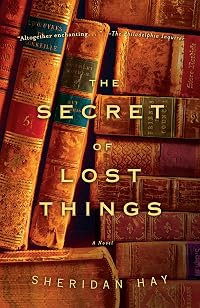
The Secret of Lost Things
by Sheridan Hay
On This Page
Description
Coming to New York from Tasmania at the age of eighteen, Rosemary takes a job at a used and rare bookstore run by the gruff Mr. Pike and his idiosyncratic staff and becomes caught up in the search for a long-lost Melville manuscript.Tags
Recommendations
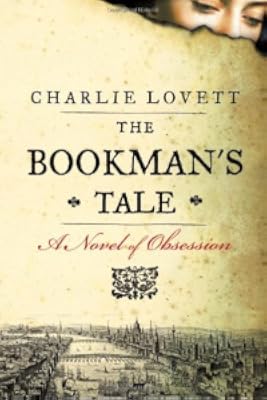
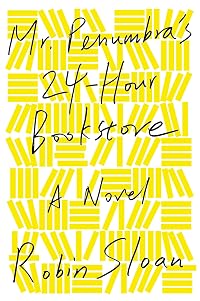

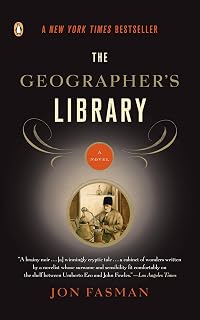
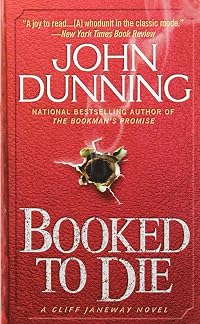


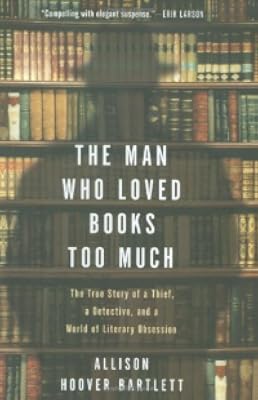
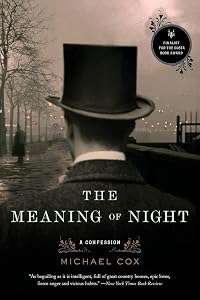
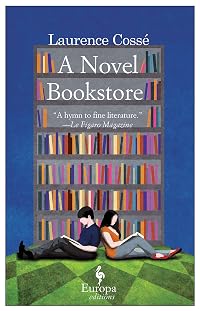
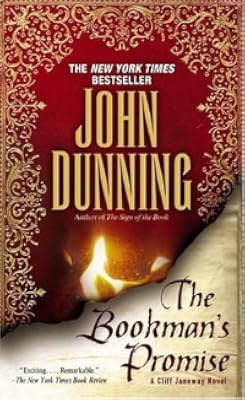


Member Recommendations

y2pk Young woman on a quest; literary subplots.
Member Reviews
One small quibble... One doesn't write "Tasmania" on the customs form. One writes, TAS and the postal code and then AUSTRALIA. Despite Tasmania's cultural independence, they are still part of Australia. Just as when mailing things Hawaii gets reduced to HI.
The review:
Sometimes a book will just click with a reader. Everything (or almost everything) will fall into place and just be a shared experience between the author, the fictional characters and the reader. The Secret of Lost Things by Sheridan Hay was one of those books for me.
Rosemary born on Anzac Day and therefore named for the herb often worn on lapels in Australia. Until her eighteenth birthday her home is her mother's hat shop in Tasmania. When her mother dies she is sent by a show more bookseller friend to New York with her mother's ashes in a box of Huon pine, one of the most pungent pine scents I have ever smelled; it seems to permeate the entire island.
In that first chapter I was drawn back to my own experience as an exchange student in Tasmania at the age of 17. I can picture the very first place I visited on my own, a used book shop in Ulverstone to buy Nova by Samuel R. Delany for $5.20. I was just as naive and confused by Tasmanian culture (which is a blend of mainland Australian and British ex-pat cultures) as Rosemary is in New York. I can remember being overwhelmed by homesickness at the aroma of the Huon pines (which aren't really pines but smell enough like them to confuse a jet-lagged nose) growing at the Don college.
Then there is Rosemary's time in New York where she works at a place called The Arcade (and apparently inspired by the author's time working at the Strand). Although I haven't worked in a bookstore (would love to someday) I have worked in a university library and in my father's antique shop both which attract people similar to the characters in The Secret of Lost Things.
The final point where I clicked with Rosemary was with her involvement in the search for Melville's lost novel, Isle of the Cross (1853). While I'm no Melville scholar, I am a bit of a fan of his and Hawthorne's books and was vaguely aware of their odd friendship.
Had all those different pieces in my life not been in place I probably would have been more troubled by the novel's flaws. The wacky characters are sometimes too two-dimensional, Rosemary stays naive too long, her obsession with Oscar is just as creepy as Geist's obsession with her is. Yes, those flaws are there but the connection I felt with the book was so strong I don't care about any of them. show less
The review:
Sometimes a book will just click with a reader. Everything (or almost everything) will fall into place and just be a shared experience between the author, the fictional characters and the reader. The Secret of Lost Things by Sheridan Hay was one of those books for me.
Rosemary born on Anzac Day and therefore named for the herb often worn on lapels in Australia. Until her eighteenth birthday her home is her mother's hat shop in Tasmania. When her mother dies she is sent by a show more bookseller friend to New York with her mother's ashes in a box of Huon pine, one of the most pungent pine scents I have ever smelled; it seems to permeate the entire island.
In that first chapter I was drawn back to my own experience as an exchange student in Tasmania at the age of 17. I can picture the very first place I visited on my own, a used book shop in Ulverstone to buy Nova by Samuel R. Delany for $5.20. I was just as naive and confused by Tasmanian culture (which is a blend of mainland Australian and British ex-pat cultures) as Rosemary is in New York. I can remember being overwhelmed by homesickness at the aroma of the Huon pines (which aren't really pines but smell enough like them to confuse a jet-lagged nose) growing at the Don college.
Then there is Rosemary's time in New York where she works at a place called The Arcade (and apparently inspired by the author's time working at the Strand). Although I haven't worked in a bookstore (would love to someday) I have worked in a university library and in my father's antique shop both which attract people similar to the characters in The Secret of Lost Things.
The final point where I clicked with Rosemary was with her involvement in the search for Melville's lost novel, Isle of the Cross (1853). While I'm no Melville scholar, I am a bit of a fan of his and Hawthorne's books and was vaguely aware of their odd friendship.
Had all those different pieces in my life not been in place I probably would have been more troubled by the novel's flaws. The wacky characters are sometimes too two-dimensional, Rosemary stays naive too long, her obsession with Oscar is just as creepy as Geist's obsession with her is. Yes, those flaws are there but the connection I felt with the book was so strong I don't care about any of them. show less
Rosemary Savage is only 18 when she leaves Tasmania to find a new life for herself in New York City. Still grieving for her mother who passed shortly before she left, Rosemary has a difficult time adjusting to life in the big city, where nobody knows her and she is completely on her own. After a couple of weeks living in a temporary women's apartment house, Rosemary finds a job in an extremely popular though unusual used bookstore, where she is the only female employee, apart from a transgendered cashier named Pearl. As Rosemary is a floater, she helps out in all of the sections and works with a number of odd characters. Though Rosemary develops a secret crush on a celebate employee, Oscar, the floor manager develops a crush on show more Rosemary, and entwines her into a situation where she must work for him. As Rosemary becomes more settled and starts to make friends outside of the bookstore, she finds herself in a complicated set of alliances between different people involving the possibility of a lost Melville manuscript. Rosemary is young and confused about whom she should trust when she uses her resourcefulness to research Melville's history and fully understands what might be at stake.
I thought this was a very charming novel with an interesting immigrant storyline taking place in a mysterious dusty bookstore. It was infused with the love of books, learning, and the history of literature. Really, a fantastic setting for a great novel. I thoroughly enjoyed it and I hope the author decides to write more! show less
I thought this was a very charming novel with an interesting immigrant storyline taking place in a mysterious dusty bookstore. It was infused with the love of books, learning, and the history of literature. Really, a fantastic setting for a great novel. I thoroughly enjoyed it and I hope the author decides to write more! show less
Rosemary has lived all of her eighteen years in a small town in Tasmania. When her mother dies, a family friend sends her off to New York armed with three hundred dollars and her mother's ashes in a small pine box. Rosemary finds a job in an enormous used and rare bookstore where the employees are about as colorful as you could hope to find in the NYC of 1980. Rosemary learns to negotiate relationships, although the man she decides to fall in love with is about as unsuitable as possible.
There is a mystery, too. A manuscript, presumed lost, by Herman Melville is hinted at and she, as well as a few others at the bookstore, begin searching for clues to its nature. This book is beautifully written, in a slightly old-fashioned way, show more reminiscent of The Thirteenth Tale. Rosemary is naive, in the way of a sheltered eighteen-year-old, but she isn't stupid. The book explores Melville's friendship with Nathaniel Hawthorne and how his career as a writer ended with the publication of Moby Dick. The parts about Melville are eloquent and have me eager to dig into Moby Dick. show less
There is a mystery, too. A manuscript, presumed lost, by Herman Melville is hinted at and she, as well as a few others at the bookstore, begin searching for clues to its nature. This book is beautifully written, in a slightly old-fashioned way, show more reminiscent of The Thirteenth Tale. Rosemary is naive, in the way of a sheltered eighteen-year-old, but she isn't stupid. The book explores Melville's friendship with Nathaniel Hawthorne and how his career as a writer ended with the publication of Moby Dick. The parts about Melville are eloquent and have me eager to dig into Moby Dick. show less
There's a somewhat recent phrase bandied about the movie review world concerning the Manic Pixie Dream Girl. According to a definition from Wikipedia, this character is a "bubbly, shallow cinematic creature that exists solely in the fevered imaginations of sensitive writer-directors to teach broodingly soulful young men to embrace life and its infinite mysteries and adventures." Well, I think there should be a character type that would cover almost all the primary characters in this work. I’ll call the collection of individuals found in this book a Moronic Unbelievable Menagerie of Morons. I wanted to like this book; I really did. However, there were far too many scenes where I wanted to rip the remaining hair out of my head. If I show more were a fly on one of the Arcade’s walls, I would have flown posthaste into a window or solemnly perched upon Walter Geist's exposed light bulb and found succor in death. In the end, I want no Rosemary for remembrance. I’ve had enough of the Moronic Unbelievable Menagerie of Morons. show less
After the death of her mother, the young Rosemary comes to New York City from Tasmania and gets a job at a famed used book store, one that is filled with a family of peculiar characters: a Dickensian owner, an albino manager, a black transsexual, a distant intellectual and collector of information, two coarse ruffians, and a fat homosexual in charge of the art and photography section. Along with a detailed and accurate depiction of the kinds of intricate relationships that develop in a worksite, the story is full of coincidences and intertwinings that feel mostly natural and real. The plot revolves around a Herman Melville lost manuscript, the protagonist’s desire to learn and belong and be not lost, and the movement of the two are show more craftily paralleled as the story advances. The writing is lovely, distinctive, both broad and intimate, and is peppered with literary references and quotes. Universal wisdom comes frequently (the story is narrated in hindsight) on the qualities of loss and the meaning of suffering. Rosemary is immature, yet fully realized, her emotions vivid and stirring. Nuanced and delicate writing that successfully gathers many oddities gathered together: Tasmania, albinism, and the mystery of the lost novel. show less
I fell in love with the language and writing style of Sheridan Hay in the beginning of this book. By the time I got to Part 3, I was ready to change the title to "The Secret of Lost Interest". Despite the writing style, the development of the main character was really annoying to me. The entire cast of characters in the book are more caricature than character, but Rosemary "for remembrance" was naive, and facile. The arc of the story is about a lost manuscript of Herman Melville's with the theme of loss scattered through out the book. There is a bit of a moral at the end: Things are never lost when you hold them inside your memory.
I really wanted to like this book, but I ended up not liking the main character and her naive motivations.
I really wanted to like this book, but I ended up not liking the main character and her naive motivations.
This was actually quite decent, but I'm feeling very stingy with my stars lately. Blame all the bad fiction I've been reading. I liked all the quirky characters populating the novel and, of course, loved the fiction about fiction angle. The writing was better than decent, but the plot was a bit slow in showing itself. Still no desire to read Moby Dick.
Members
- Recently Added By
Published Reviews
ThingScore 50
Hay's debut has all the elements of a literary thriller, but they don't quite come together.
added by cattriona
When Hay leaves the 19th century and bounds back to the weird world of the bookstore, she’s a lyrical, exciting writer. Rosemary is an unspoiled innocent, a quality that attracts the others, and it’s partly because of her that the novel, while so literary in its aspirations, isn’t pretentious.
added by y2pk
Lists

novels in or about bookshops (or libraries)
59 works; 21 members

Best books about books
209 works; 105 members

To Read - Literature / Fiction
26 works; 1 member

Books Read in 2007
326 works; 8 members

First Novels
373 works; 17 members
Author Information

1 Work 1,420 Members
Some Editions
Awards and Honors
Awards
Common Knowledge
- Canonical title
- The Secret of Lost Things
- Original title
- The Secret of Lost Things: A Novel
- Original publication date
- 2007
- People/Characters
- Rosemary Savage; Esther Chapman; George Pike; Walter Geist; Oscar Jarno; Arthur Pick (show all 11); Robert Mitchell; Pearl Baird; Lillian La Paco; Samuel Metcalf; Herman Melville
- Important places
- New York, New York, USA; Tasmania, Australia; Arcade Bookstore (fictional place)
- Epigraph
- ". . . for experience, the only true knowledge . . ."
-- Herman Melville
The Confidence Man - Dedication
- For Michael, my own tempest
- First words
- I was born before this story starts, before I dreamed of such a place as the Arcade, before I imagined men like Walter Geist existed outside of fables, outside of fairy tales.
- Quotations
- I was a small sultana, my treasure counted in the currency of trifles.
For her part, Chaps was too well read to be considered entirely proper. Books had made her unreasonably independent.
I knew books to be objects that loved to cluster and form disordered piles, but here books seemed robbed of their zany capacity to fall about, to conspire. In the library, books behaved themselves. - Last words
- (Click to show. Warning: May contain spoilers.)It was what I'd been given. It was mine to keep.
- Blurbers
- Doyle, Roddy; Cooley, Martha; O'Faolain, Nuala; Delbanco, Nicholas; Birkerts, Sven; Kohler, Sheila
Classifications
Statistics
- Members
- 1,420
- Popularity
- 16,629
- Reviews
- 56
- Rating
- (3.27)
- Languages
- 6 — Chinese, Dutch, English, German, Portuguese, Spanish
- Media
- Paper, Audiobook, Ebook
- ISBNs
- 21
- ASINs
- 4