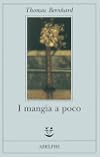
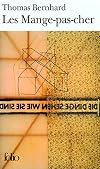
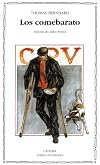
The Cheap-Eaters
by Thomas Bernhard
On This Page
Description
The cheap-eaters have been eating at the Vienna Public Kitchen for years, and true to their name, always the cheapest meals. They become the focus of Koller's scientific attention when he deviates one day from his usual path through the park, leading him to come upon the cheap-eaters and to realize that they must be the focal piece of his years-long, unwritten study of physiognomy. The narrator, a former school friend of Koller's, tells of his relationship with Koller in a single unbroken show more paragraph that is both dizzying and absorbing. In Koller, the narrator observes a gradually ever-growing and utterly exclusive interest in thought... We can get close to such a person, but if we come into contact with him we will be repelled. show lessTags
Recommendations















Member Reviews
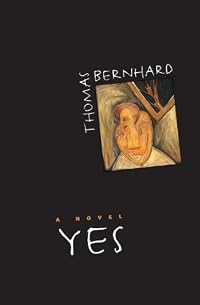
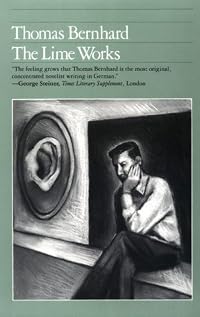
In this short novel, a monomaniacal 'scientist' more or less deliberately alienates himself from society in order to focus on his work. This summary should sound familiar to regular readers of Bernhard's fiction. In this case, the man known as Koller has lost a leg to a dog bite for which he received compensation enough to live on, thus allowing him to fully immerse himself in developing his theory of physiognomy. Central to this theory is his experience of regular dining at a low cost restaurant known as the Vienna Public Kitchen (VPK) with a group of men he refers to as 'the cheap-eaters', so-called for their cheap dining habits. As with other Bernhard novels, the 'anti-hero' of sorts, Koller, has an occasional companion (in this show more case, the narrator) who looks up to him for no clear reason. There is an element of the grotesque to their relationship, which wavers between one-sided admiration and mutual disdain, with a frequently occupied middle ground of mere tolerance from both sides. Koller does not appear to need other humans for personal purposes, but does in fact require their presence for his work. Some of Bernhard's favorite themes find their voice in Koller, as he rails against formal education, parents, and authority in general, as well as provincialism and anti-intellectualism (the latter being a central theme in most of Bernhard's work). This novel bears a strong resemblance to both Yes and The Lime Works, and from a personal standpoint I'd place it between those two books, with Yes being my favorite of the three. show less
vi sfido! TUTTI! Leggetelo!
Se lo troverete adorabile, come l'ho trovato io, avrete il dubbio onore di potere essere annoverati tra i miei amici.
Ma vi avverto. Di tutti quelli che hanno già fatto l'esperimento tre non l'hanno portato a termine, due mi hanno detto "... e pensare che ti ho sempre considerato una persona sana di mente", uno mi ha tolto il saluto e cambia marciapiede quando mi vede in lontantanza, uno, mia madre, si domanda dove ha sbagliato con la sua educazione...
Se lo troverete adorabile, come l'ho trovato io, avrete il dubbio onore di potere essere annoverati tra i miei amici.
Ma vi avverto. Di tutti quelli che hanno già fatto l'esperimento tre non l'hanno portato a termine, due mi hanno detto "... e pensare che ti ho sempre considerato una persona sana di mente", uno mi ha tolto il saluto e cambia marciapiede quando mi vede in lontantanza, uno, mia madre, si domanda dove ha sbagliato con la sua educazione...
In Koller, il personaggio centrale del romanzo, ritroviamo la figura già presente in opere precedenti, per esempio Roithamer e il narratore di "Sì", e cioè l'uomo di intelletto, lo studioso (di scienze), che porta all'estremo le sue inclinazioni fino a confinare con la follia.
Per un altro verso invece "I mangia a poco" segna un'importante novità nella poetica di Bernhard, come la sto capendo leggendo i suoi romanzi in rigoroso ordine cronologico, ed è l'intoduzione dell'aspetto comico-grottesco di fianco all'aspetto tragico. Se a teatro il lato comico può essere accentuato dalla scelta recitativa degli attori e del regista, e comunque la recitazione teatrale conferisce spesso un tono comico alle vicende narrate, nel romanzo "I show more mangia a poco" l'atmosfera cupissima presente in "Perturbamento" o "Correzione" cede il passo a un resoconto che suscita a volte il sorriso - sempre amaro e cattivo, come è naturale. show less
Per un altro verso invece "I mangia a poco" segna un'importante novità nella poetica di Bernhard, come la sto capendo leggendo i suoi romanzi in rigoroso ordine cronologico, ed è l'intoduzione dell'aspetto comico-grottesco di fianco all'aspetto tragico. Se a teatro il lato comico può essere accentuato dalla scelta recitativa degli attori e del regista, e comunque la recitazione teatrale conferisce spesso un tono comico alle vicende narrate, nel romanzo "I show more mangia a poco" l'atmosfera cupissima presente in "Perturbamento" o "Correzione" cede il passo a un resoconto che suscita a volte il sorriso - sempre amaro e cattivo, come è naturale. show less
Oct 10, 2013 (Edited)Italian
Es una obra caracterizada por la destrucció. de la vida del protagonista, del texto y de la estética tradicional.
Apr 15, 2014Spanish
Ratings
Members
- Recently Added By
Author Information

282+ Works 16,359 Members
Thomas Bernhard was born to Austrian parents in Holland and reared by his mother in the vicinity of Salzburg. His temperament and erratic health created difficulties for him as he grew up in a society governed by National Socialists. Bernhard found the alpine landscapes of his native Austria far more harsh than lyrical. The isolation of the show more characters in his novels is only slightly mitigated by friendship, generally only between men, and never by love. Yet many readers feel this lack of sentimentality gives Bernhard's work an epic power. (Bowker Author Biography) show less
Series
Belongs to Publisher Series
Neue Folge (6)
edition suhrkamp (1006)
Work Relationships
Common Knowledge
- Canonical title
- The Cheap-Eaters
- Original title
- Die Billigesser
- Original publication date
- 1980-02-01; 2005-06-02 (France) (France)
- Important places*
- Vienne, Autriche
- Original language*
- Allemand
*Some information comes from Common Knowledge in other languages. Click "Edit" for more information.
Classifications
- Genres
- Fiction and Literature, General Fiction
- DDC/MDS
- 833.914 — Literature & rhetoric German & related literatures German fiction 1900- 1900-1990 1945-1990
- LCC
- PT2662 .E7 .B513 — Language and Literature German, Dutch and Scandinavian literatures German literature Individual authors or works 1961-2000
- BISAC
Statistics
- Members
- 180
- Popularity
- 178,072
- Reviews
- 4
- Rating
- (3.76)
- Languages
- 10 — Czech, Dutch, English, Finnish, French, German, Greek, Italian, Norwegian (Bokmål), Spanish
- Media
- Paper, Ebook
- ISBNs
- 17
- ASINs
- 2