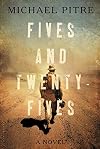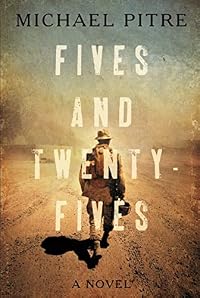
Fives and Twenty-Fives
by Michael Pitre
On This Page
Description
"It's the rule--always watch your fives and twenty-fives. When a convoy halts to investigate a possible roadside bomb, stay in the vehicle and scan five meters in every direction. A bomb inside five meters cuts through the armor, killing everyone in the truck. Once clear, get out and sweep twenty-five meters. A bomb inside twenty-five meters kills the dismounted scouts investigating the road ahead. Fives and twenty-fives mark the measure of a marine's life in the road repair platoon. show more Dispatched to fill potholes on the highways of Iraq, the platoon works to assure safe passage for citizens and military personnel. Their mission lacks the glory of the infantry, but in a war where every pothole contains a hidden bomb, road repair brings its own danger. Lieutenant Donavan leads the platoon, painfully aware of his shortcomings and isolated by his rank. Doc Pleasant, the medic, joined for opportunity, but finds his pride undone as he watches friends die. And there's Kateb, known to the Americans as Dodge, an Iraqi interpreter whose love of American culture--from hip-hop to the dog-eared copy of Huck Finn he carries--is matched only by his disdain for what Americans are doing to his country. Returning home, they exchange one set of decisions and repercussions for another, struggling to find a place in a world that no longer knows them. A debut both transcendent and rooted in the flesh, Fives and Twenty-Fives is a deeply necessary novel"-- show lessTags
Recommendations








Member Reviews
This is an unsentimental and gripping tale of a platoon of US soldiers who searched and cleared IED bombs on roadways in Iraq so that military troops could move through. The story is told in first-person by several characters in the platoon. It is set in 2006 when they have been back in their civilian lives for a year. Much of the story is told in flashbacks.
I do not like war stories, yet this book gripped me and didn't let go. I deem it a realistic portrayal of what often happens to kids who enlist in the military because they have NO idea what they're getting into. The book is painful to read, but I found it bearable perhaps of the lack sentiment, and I'm glad I read it. I recommend this book highly.
I do not like war stories, yet this book gripped me and didn't let go. I deem it a realistic portrayal of what often happens to kids who enlist in the military because they have NO idea what they're getting into. The book is painful to read, but I found it bearable perhaps of the lack sentiment, and I'm glad I read it. I recommend this book highly.
We’ve just passed the centenary of the start of World War I, which has inspired a wealth of articles, books, and commemorations. I wonder, though, whether any of us are capable of really understanding that war on an individual, visceral level. It’s the need for this sort of understanding—for a full recognition of what it is we are asking our youth to do when we send them to war—that inspires the best war literature. For World War I, All Quiet on the Western Front and Johnny Got His Gun are examples of books that accomplish this. This year the young adult novel Stay Where You Are and Then Leave has accomplished something similar, focusing on the son of one of the soldiers engaged in that war.
The conflict in Iraq (Operation show more Enduring Freedom—in retrospect, that name can be read as hubris or a distressingly nihilistic sort of humor) doesn’t yet have a “classic” literature in the sense that World War I does, but that literature is emerging. Michael Pitre’s Fives and Twenty-Fives is a striking example of that literature, and it certainly deserves long-term recognition as a classic.
Fives and Twenty-Fives focuses on the lives of three characters, depicting these through a series of first-person narratives interwoven with “official” documents that also address these characters’ experiences. These characters are all part of an engineering team responsible for filling potholes in occupied areas—but filling potholes doesn’t just mean filling potholes. Each of these potholes also houses an IED (improvised explosive device) that must be disarmed before the roadwork can begin. In addition, many of these potholes are part of a larger attempt to immobilize U.S. forces, rendering them vulnerable to attacks in addition to the IEDs. As one character puts it, this work is “an endless game of three-card monte with the enemy triggermen, for whom killing bomb-disposal technicians [is] a top priority.”
Donovan, a young lieutenant responsible for leading one of these road crews, is hindered (as well as embarrassed) by his lack of military experience. Doc Pleasant, the medic for that crew, faces the impossible task of trying to return bodies to wholeness after explosions and fire fights have torn them to pieces. “Dodge,” their Iraqi interpreter (pseudonyms were assigned those working in this role to prevent reprisals against their families), loves heavy metal music and, before the war broke out, was writing a thesis on Huckleberry Finn. Initially, it’s a bit difficult sorting out this tri-fold narrative, but the narrators’ voices are distinct enough that this problem is resolved as the book progresses.
I found the character of Dodge striking because of both the particular difficulty of the work he’s asked to do and because the simple fact of who he is complicates a great many assumptions readers are apt to have about Iraqis. Early on, an American trainer succinctly describes Dodge’s responsibilities: “Those guys over at Engineer Support shoot up a lot of cars by accident. You’ll go and apologize for them.” Dodge is also expected to deliver the compensatory money given after the killing or maiming of Iraqi civilians. His knowledge of Iraqi politics is nuanced; he recognizes the internal divisions left over from the Saddam era that make any sense of national unity an impossibility. He’s also able to debate the merits of Metallica and speaks a startlingly colloquial English..
As one might expect, Fives and Twenty-Fives makes for a brutal sort of reading, which is precisely why this such a valuable book. Writing cannot begin to replicate combat experience, but truly fine writing can at least give readers a glimpse at the vast desolation and destructiveness of combat, a sense of standing at the edge of an unseeable chasm of almost infinite width and depth.
In the afterword, Pitre acknowledges “all those Iraqis who risked everything for a chance at a free society, and a life at peace” as well as “[a] generation of Marines [who] will grow old wishing we’d done better for you.” For the sake of these two groups and for the sake of our individual and national spirits, this book deserves to be widely read. show less
The conflict in Iraq (Operation show more Enduring Freedom—in retrospect, that name can be read as hubris or a distressingly nihilistic sort of humor) doesn’t yet have a “classic” literature in the sense that World War I does, but that literature is emerging. Michael Pitre’s Fives and Twenty-Fives is a striking example of that literature, and it certainly deserves long-term recognition as a classic.
Fives and Twenty-Fives focuses on the lives of three characters, depicting these through a series of first-person narratives interwoven with “official” documents that also address these characters’ experiences. These characters are all part of an engineering team responsible for filling potholes in occupied areas—but filling potholes doesn’t just mean filling potholes. Each of these potholes also houses an IED (improvised explosive device) that must be disarmed before the roadwork can begin. In addition, many of these potholes are part of a larger attempt to immobilize U.S. forces, rendering them vulnerable to attacks in addition to the IEDs. As one character puts it, this work is “an endless game of three-card monte with the enemy triggermen, for whom killing bomb-disposal technicians [is] a top priority.”
Donovan, a young lieutenant responsible for leading one of these road crews, is hindered (as well as embarrassed) by his lack of military experience. Doc Pleasant, the medic for that crew, faces the impossible task of trying to return bodies to wholeness after explosions and fire fights have torn them to pieces. “Dodge,” their Iraqi interpreter (pseudonyms were assigned those working in this role to prevent reprisals against their families), loves heavy metal music and, before the war broke out, was writing a thesis on Huckleberry Finn. Initially, it’s a bit difficult sorting out this tri-fold narrative, but the narrators’ voices are distinct enough that this problem is resolved as the book progresses.
I found the character of Dodge striking because of both the particular difficulty of the work he’s asked to do and because the simple fact of who he is complicates a great many assumptions readers are apt to have about Iraqis. Early on, an American trainer succinctly describes Dodge’s responsibilities: “Those guys over at Engineer Support shoot up a lot of cars by accident. You’ll go and apologize for them.” Dodge is also expected to deliver the compensatory money given after the killing or maiming of Iraqi civilians. His knowledge of Iraqi politics is nuanced; he recognizes the internal divisions left over from the Saddam era that make any sense of national unity an impossibility. He’s also able to debate the merits of Metallica and speaks a startlingly colloquial English..
As one might expect, Fives and Twenty-Fives makes for a brutal sort of reading, which is precisely why this such a valuable book. Writing cannot begin to replicate combat experience, but truly fine writing can at least give readers a glimpse at the vast desolation and destructiveness of combat, a sense of standing at the edge of an unseeable chasm of almost infinite width and depth.
In the afterword, Pitre acknowledges “all those Iraqis who risked everything for a chance at a free society, and a life at peace” as well as “[a] generation of Marines [who] will grow old wishing we’d done better for you.” For the sake of these two groups and for the sake of our individual and national spirits, this book deserves to be widely read. show less
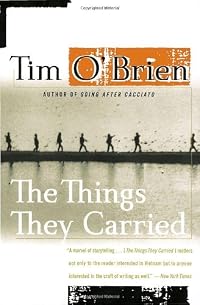
This book is destined to become the quintessential novel about the Iraq war, in much the same way as Tim O’Brien’s “The Things They Carried” has become the go-to book about the Viet Nam war experience. Each character is unique and brings with him stories which create real time experiences for the reader. The tale travels between the past and the present and tells the story of who they were when they entered the service and who they became when they departed. The reader will experience an array of emotions with the characters, they will do what they do, feel their reactions to their assignments, sometimes lacking reason or responsibility, touch their fear, their horror, their anger, their frustrations, their courage, their show more confusion, their successes and failures. The anecdotal tales and the conversations between characters will bring them to life and bring home the story of the Iraq war, and even other wars, where friends and family become enemies of each other, dedicated to opposite sides and causes, no longer able to communicate with each other as they once did, no longer sharing the same common goals. This war, however, is different, in its own way, and these are not infantrymen, but each and every one of them is damaged in some way by their service.
Michael Pitre, served two terms in Iraq and his book seems to be written from the experience of his conscience. It is told from the point of view of three characters: Lieutenant Pete Donovan, a graduate of Officer Candidate School, Kateb al-Hariri, an interpreter from a well-to-do family in league with Saddam Hussein, and Hospitalman Lester Pleasant, a natural born medic, looking for opportunity outside the small town life of his childhood.
Pete Donovan is the Lieutenant in charge of a platoon charged with the responsibility of filling potholes, following the rule of fives and twenty-fives when checking them for IED’s, securing the surrounding area to protect his soldiers and soldiers advancing toward them while they fill in the potholes to prevent them from being used again. The most important part of the job is to do it quickly because sitting in one place too long makes them all sitting ducks. Missing one will make the oncoming soldiers unwitting victims of the explosions. It was difficult to know exactly who was the enemy. They lurked quietly on roadsides, looked innocent, pretended ignorance, and yet they sneaked in at night and planted bombs under curbstones, in potholes, in cracks in the road, under trash, anyplace a bomb-like weapon could hide. Sometimes the explosion was the precursor of an ambush so they had to be very careful and attentive at all times. Although it does not sound like they were involved in ongoing battles, they were indeed involved in action and a form of combat. It is in the area of fives and twenty-fives that their lives were often lost. It was a harrowing endeavor to clear the area. Donovan is deeply effected by the hypocrisy and irresponsibility of those in charge, by their haphazard decisions which do not take safety into consideration at all, but simply are moved by the politics of war.
Lester Pleasant is the medic in charge of taking care of the injured. He was born to the job, does it well and enjoys helping the soldiers to survive. When he witnesses the horrific, nightmarish injuries to men he could do nothing for, his life is forever changed. His job enables him to abuse drugs and he uses them to escape from the nightmares that often visit his sleep.
Kateb al-Hariri, the Arab spokesperson, the terp known as Dodge, was a student working on his thesis on Huckleberry Finn and poignant quotes from the book introduce each chapter. His family worked for Saddam Hussein. He enjoys American music and literature. He wants to help the Americans, but this means he also betrays his own family and friends. In turn, the Americans reward his bravery by betraying him and his service and failing to help him leave a country that only has enemies against him now. He finds himself an exile in Tunisia, at the end of the book, and he is somewhat of a freedom fighter, once again, only this time he is the English spokesperson for self-styled, young, freedom fighters there. They believe they are also fighting what they see as an unfair despotic government.
The heroes and the villains often view themselves in warped mirrors. The hero views a villain in his glass, unable to accept the praise, and the villain views himself as a savior, eagerly accepting undeserved honor.
I believe that Pitre has brought home the war experience for the reader so they can view the soldiers and their interactions, the brave and the damaged, the injured and the dead and understand the failures that have often resulted from inept handling of strategy and deployment of soldiers to specific areas in a war zone, understand and perhaps bring about positive change to correct and prevent additional, unnecessary, perspective catastrophes.
Besides the main characters, there are several minor ones who play important roles. One is the female Sergeant Michelle Gomez, a little larger than life. Another is Major Leighton who thoughtlessly, perhaps, sends the men on missions that are not well thought out but is charged with doing it and then with rewarding or punishing them according to a book or rules that should probably be abandoned. Another is Corporal Zahn who sustains a head injury and is basically treated without proper medical care or assessment. Then there is the beloved Gunny Stout, a man whose bravery and casual disregard for regulations placed him in even greater danger. Each of the characters had a different approach and perspective on the war that affected their behavior. They were all young and, perhaps, a little naïve and idealistic, at first. This soon changed as they learned to master their job, their environment and their lives., but to a man and woman, after Iraq, there was no real returning to the life they once had, they had been forever altered, forever changed and could not go back.
The horrors of war, the emotions of the fellow soldiers, the enemies coldness, the mistrust and the fear are so palpable that the reader will be upset more often than not, and yet, this story must be told. Each side believes they are fighting for the just cause. Who decides who is right? Who decides the winner? Does might make right?
The soldiers are not machines, they breathe, feel, move about and are effected in many ways by what they experience, and we who sit in our ivory towers ignoring them are making a mistake and not learning from history. We allow them to be sent out on missions that are not well planned, with equipment that is inferior to what they require and without regard to their safety while in service or their healthy return to life outside the military. They return with so much baggage, it is hard for them to let go and live a normal life without some help and guidance. Their scars need time to heal and not all are visible. If nothing else, this novel points out the absolute futility of war. It is never ending in one form or another but it takes on a life of its own. There are always different sides, different opinions, and different despots willing to take over and rule. So long as human beings fail at diplomacy, fail to live with, come to terms with, understand and tolerate different cultures, religions, and races, conflict will continue to exist and lives will continue to be lost in the fog of war. show less
Michael Pitre, served two terms in Iraq and his book seems to be written from the experience of his conscience. It is told from the point of view of three characters: Lieutenant Pete Donovan, a graduate of Officer Candidate School, Kateb al-Hariri, an interpreter from a well-to-do family in league with Saddam Hussein, and Hospitalman Lester Pleasant, a natural born medic, looking for opportunity outside the small town life of his childhood.
Pete Donovan is the Lieutenant in charge of a platoon charged with the responsibility of filling potholes, following the rule of fives and twenty-fives when checking them for IED’s, securing the surrounding area to protect his soldiers and soldiers advancing toward them while they fill in the potholes to prevent them from being used again. The most important part of the job is to do it quickly because sitting in one place too long makes them all sitting ducks. Missing one will make the oncoming soldiers unwitting victims of the explosions. It was difficult to know exactly who was the enemy. They lurked quietly on roadsides, looked innocent, pretended ignorance, and yet they sneaked in at night and planted bombs under curbstones, in potholes, in cracks in the road, under trash, anyplace a bomb-like weapon could hide. Sometimes the explosion was the precursor of an ambush so they had to be very careful and attentive at all times. Although it does not sound like they were involved in ongoing battles, they were indeed involved in action and a form of combat. It is in the area of fives and twenty-fives that their lives were often lost. It was a harrowing endeavor to clear the area. Donovan is deeply effected by the hypocrisy and irresponsibility of those in charge, by their haphazard decisions which do not take safety into consideration at all, but simply are moved by the politics of war.
Lester Pleasant is the medic in charge of taking care of the injured. He was born to the job, does it well and enjoys helping the soldiers to survive. When he witnesses the horrific, nightmarish injuries to men he could do nothing for, his life is forever changed. His job enables him to abuse drugs and he uses them to escape from the nightmares that often visit his sleep.
Kateb al-Hariri, the Arab spokesperson, the terp known as Dodge, was a student working on his thesis on Huckleberry Finn and poignant quotes from the book introduce each chapter. His family worked for Saddam Hussein. He enjoys American music and literature. He wants to help the Americans, but this means he also betrays his own family and friends. In turn, the Americans reward his bravery by betraying him and his service and failing to help him leave a country that only has enemies against him now. He finds himself an exile in Tunisia, at the end of the book, and he is somewhat of a freedom fighter, once again, only this time he is the English spokesperson for self-styled, young, freedom fighters there. They believe they are also fighting what they see as an unfair despotic government.
The heroes and the villains often view themselves in warped mirrors. The hero views a villain in his glass, unable to accept the praise, and the villain views himself as a savior, eagerly accepting undeserved honor.
I believe that Pitre has brought home the war experience for the reader so they can view the soldiers and their interactions, the brave and the damaged, the injured and the dead and understand the failures that have often resulted from inept handling of strategy and deployment of soldiers to specific areas in a war zone, understand and perhaps bring about positive change to correct and prevent additional, unnecessary, perspective catastrophes.
Besides the main characters, there are several minor ones who play important roles. One is the female Sergeant Michelle Gomez, a little larger than life. Another is Major Leighton who thoughtlessly, perhaps, sends the men on missions that are not well thought out but is charged with doing it and then with rewarding or punishing them according to a book or rules that should probably be abandoned. Another is Corporal Zahn who sustains a head injury and is basically treated without proper medical care or assessment. Then there is the beloved Gunny Stout, a man whose bravery and casual disregard for regulations placed him in even greater danger. Each of the characters had a different approach and perspective on the war that affected their behavior. They were all young and, perhaps, a little naïve and idealistic, at first. This soon changed as they learned to master their job, their environment and their lives., but to a man and woman, after Iraq, there was no real returning to the life they once had, they had been forever altered, forever changed and could not go back.
The horrors of war, the emotions of the fellow soldiers, the enemies coldness, the mistrust and the fear are so palpable that the reader will be upset more often than not, and yet, this story must be told. Each side believes they are fighting for the just cause. Who decides who is right? Who decides the winner? Does might make right?
The soldiers are not machines, they breathe, feel, move about and are effected in many ways by what they experience, and we who sit in our ivory towers ignoring them are making a mistake and not learning from history. We allow them to be sent out on missions that are not well planned, with equipment that is inferior to what they require and without regard to their safety while in service or their healthy return to life outside the military. They return with so much baggage, it is hard for them to let go and live a normal life without some help and guidance. Their scars need time to heal and not all are visible. If nothing else, this novel points out the absolute futility of war. It is never ending in one form or another but it takes on a life of its own. There are always different sides, different opinions, and different despots willing to take over and rule. So long as human beings fail at diplomacy, fail to live with, come to terms with, understand and tolerate different cultures, religions, and races, conflict will continue to exist and lives will continue to be lost in the fog of war. show less
There are so many World War II and Vietnam era novels, but relatively few from the recent wars in the Middle East focused on the soldiers who fought them. Pitre is himself a veteran of those conflicts, and brings an instant credibility to his story. The narrative is told from the perspectives of a translator, a combat medic, and a platoon lieutenant, covering one tour where much of the platoon is killed in several different firefights. It shifts in time between the three main character's lives after they separate from the military and what happened during the deployment. It's a sold story with good, credible writing.
3 bones!!!
3 bones!!!
I was fortunate enough to get an early copy of this book from NetGalley. I have never been in the military but this felt like a very honest look at being in a war zone and trying to get back to some kind of normal life after your deployment is complete. The story is told from the point of view of three different characters that served in the same company--a lieutenant, a medic and an Iraqi translator. Each chapter focuses on one character and starts with the present time and then flashes back to their time in Iraq. The characters felt so real and the descriptions of the landscape in Iraq were fantastic. I was waiting to see one overarching plot line but there wasn't one--and I wasn't disappointed by this. It was a glimpse into the lives show more of these three men and how they dealt with the war in Iraq and its aftermath on their ability to cope with the memories and events that occurred. I would highly recommend this book, even if you aren't a big military book reader. It isn't preachy or depressing, but felt very real and honest. show less
This is a look back at the experiences a number of men had during the Iraq war while they are trying to adjust to life after the war when they are home. Insightful and disturbing.
Ratings
Members
- Recently Added By
Published Reviews
ThingScore 100
Mr. Pitre makes us care about all these soldiers and their efforts to navigate the war (and for those lucky enough to survive, the postwar, too), but it is Dodge, caught between his past as the son of a former Saddam Hussein official and his new commitment to his American colleagues, who implants himself most forcefully in the reader’s mind.
added by ozzer
Lists

Stories of War and Revolution
143 works; 54 members

Most Disturbing Books
124 works; 27 members

Dublin Literary Award Longlist 2016
148 works; 4 members

Best of GWOT
7 works; 1 member
Author Information

3 Works 214 Members
Awards and Honors
Awards
Distinctions
Common Knowledge
- Important events
- Iraq War
Classifications
Statistics
- Members
- 211
- Popularity
- 154,218
- Reviews
- 6
- Rating
- (4.26)
- Languages
- English
- Media
- Paper, Ebook
- ISBNs
- 10
- ASINs
- 1