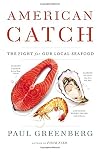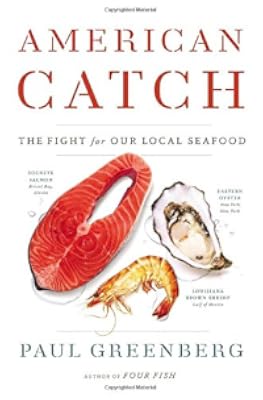
American Catch: The Fight for Our Local Seafood
by Paul Greenberg
On This Page
Description
Author Paul Greenberg uncovers the tragic unraveling of the nation's seafood supply--telling the surprising story of why Americans stopped eating from their own waters. In 2005, the United States imported nearly twice as much seafood as twenty years earlier. Bizarrely, during that same period, our seafood exports quadrupled. Greenberg examines New York oysters, Gulf shrimp, and Alaskan salmon to reveal how this came to be. Following the trail of environmental desecration, Greenberg comes to show more view the New York City oyster as a reminder of what is lost when local waters are not valued as a food source. A different kind of catastrophe threatens the Gulf of Mexico: Asian-farmed shrimp have flooded the American market. Finally, a proposed mining project could undermine the spawning grounds of the biggest wild sockeye salmon run left in the world. In his search to discover why this precious resource isn't better protected, Greenberg finds the great majority of Alaskan salmon is exported. Sockeye salmon is one of the most nutritionally dense animal proteins on the planet, yet Americans are shipping it abroad. But despite the challenges, hope abounds: many are working to break the current destructive patterns of consumption and return American catch to American tables.--From publisher description. show lessTags
Recommendations







Member Reviews
I wondered why so much of the seafood I see in local markets comes from overseas when the US has the largest commercial fishing territory and one of the best fishing fleets in the world. Thanks to Mr. Greenberg's well-researched book, I now know the answer and it is both terrifying and maddening. I read an average of 2 food-related books and 4 food-related periodicals monthly and I've never heard of Community Supported Fisheries (CSFs)--like a CSA except instead of kale and squash you get salmon and trout--but I'll be joining one as soon as I can locate it. Skip that shrimp dinner date night out and read this book with your sweetie instead.
"All that the sea asks of us is that we be wise in our harvest, recognize the limits of its bounty, and protect the places where seafood wealth is born. In return the sea will feed us and make us smarter, healthier, and more resilient."
What makes for great nonfiction writing, in my opinion, is passion. Greenberg is a hands-on researcher and environmental advocate, but he's also a fisherman. His texts ring with authenticity and true appreciation for his subject matter, making him one of my favorite environmental/nature nonfiction writers. Greenberg's writing is engaging and fluid, his research thorough without dragging. Additionally, he introduces me to spectacular new words like "nadir", "milquetoast", and show more "Pollyanna".
American Catch is divided into three primary segments, which cover the current state of and rehabilitation efforts of the oyster beds along the New York coastline, the Louisiana shrimp industry and, finally, the sockeye salmon of Alaska and its respective fishing enterprise. In particular, Greenberg is interested in the potential role revitalized oyster beds could play in a human/ocean symbiotic relationship and environmentally responsible future of coastal living, the impact of overseas shrimp farming and oil spills on the local industry, and the potential of the Pebble Mine in Bristol Bay to singlehandedly destroy the most productive and self sufficient remaining wild salmon run in the U.S.
"Whether we choose to embrace the ocean or not, it is coming to embrace us, faster than many of us can believe."
Oysters are one of my favorite sea creatures, both from a culinary and ecological standpoint. Unassuming in appearance and nature, they are little powerhouses of the sea, filtering gallon after gallon of water, providing ideal habitats for other ocean dwellers, and protecting our coastlines from natural disasters and rising sea levels. I particularly enjoyed Greenberg's brief but intriguing segment on oysters as coastal architecture/infrastructure ("oyster-tecture"), which envisions the idea of shaping oysterbeds into a natural combatant against rising tides and environmental disasters such as hurricanes. While only a third of the meat of Greenberg's second text devoted to the state of the fishing industry is focused on wild oysters and oyster farming in the Northeast, it was the strongest portion of the read for me, an unabashed oyster enthusiast.
Also of great interest in this particular narrative is what lies at the root of the problem. While oil spills and mining and poor sewage systems of course are a major factor in the rather abysmal state of our waterways, the major culprit of a struggling once core industry is the American consumer. Specifically, the reality of American seafood consumption. The average American consumer hates the taste and smell of fish and wants to be able to serve it on the dinner table with as little direct contact with the fishiness of seafood as possible. Therefore, the most healthful, environmentally responsible of our seafood is shipped abroad in favor of farmed flavorless and odourless fish, such as the bland suburban favorite tilapia. These foreign aquaculture varieties flood the American markets despite minimal inspection and lack many of the vital nutrients that has people turning towards seafood in the first place. A disheartening and rather disturbing affair.
Despite the potential for 300 pages of doom and gloom regarding the current state of our waters, Greenberg does an impeccable job of presenting the facts with clarity, but also enough positivity to show that hope still exists and that with enough dedication and elbow grease, change is possible. This is a conscious approach he addresses in American Catch, as he outlines not only his desire to present readers with a positive narrative but his own infallible hope for the future of American waterways and their inhabitants. An informative, absorbing read; rich with storytelling. show less
What makes for great nonfiction writing, in my opinion, is passion. Greenberg is a hands-on researcher and environmental advocate, but he's also a fisherman. His texts ring with authenticity and true appreciation for his subject matter, making him one of my favorite environmental/nature nonfiction writers. Greenberg's writing is engaging and fluid, his research thorough without dragging. Additionally, he introduces me to spectacular new words like "nadir", "milquetoast", and show more "Pollyanna".
American Catch is divided into three primary segments, which cover the current state of and rehabilitation efforts of the oyster beds along the New York coastline, the Louisiana shrimp industry and, finally, the sockeye salmon of Alaska and its respective fishing enterprise. In particular, Greenberg is interested in the potential role revitalized oyster beds could play in a human/ocean symbiotic relationship and environmentally responsible future of coastal living, the impact of overseas shrimp farming and oil spills on the local industry, and the potential of the Pebble Mine in Bristol Bay to singlehandedly destroy the most productive and self sufficient remaining wild salmon run in the U.S.
"Whether we choose to embrace the ocean or not, it is coming to embrace us, faster than many of us can believe."
Oysters are one of my favorite sea creatures, both from a culinary and ecological standpoint. Unassuming in appearance and nature, they are little powerhouses of the sea, filtering gallon after gallon of water, providing ideal habitats for other ocean dwellers, and protecting our coastlines from natural disasters and rising sea levels. I particularly enjoyed Greenberg's brief but intriguing segment on oysters as coastal architecture/infrastructure ("oyster-tecture"), which envisions the idea of shaping oysterbeds into a natural combatant against rising tides and environmental disasters such as hurricanes. While only a third of the meat of Greenberg's second text devoted to the state of the fishing industry is focused on wild oysters and oyster farming in the Northeast, it was the strongest portion of the read for me, an unabashed oyster enthusiast.
Also of great interest in this particular narrative is what lies at the root of the problem. While oil spills and mining and poor sewage systems of course are a major factor in the rather abysmal state of our waterways, the major culprit of a struggling once core industry is the American consumer. Specifically, the reality of American seafood consumption. The average American consumer hates the taste and smell of fish and wants to be able to serve it on the dinner table with as little direct contact with the fishiness of seafood as possible. Therefore, the most healthful, environmentally responsible of our seafood is shipped abroad in favor of farmed flavorless and odourless fish, such as the bland suburban favorite tilapia. These foreign aquaculture varieties flood the American markets despite minimal inspection and lack many of the vital nutrients that has people turning towards seafood in the first place. A disheartening and rather disturbing affair.
Despite the potential for 300 pages of doom and gloom regarding the current state of our waters, Greenberg does an impeccable job of presenting the facts with clarity, but also enough positivity to show that hope still exists and that with enough dedication and elbow grease, change is possible. This is a conscious approach he addresses in American Catch, as he outlines not only his desire to present readers with a positive narrative but his own infallible hope for the future of American waterways and their inhabitants. An informative, absorbing read; rich with storytelling. show less
A clarion call to mend our nation’s relationship with its oceans
Paul Greenberg's "American Catch: the Fight for Our Local Seafood" is an entertaining, and compelling natural history and social commentary on the history and current state of seafood consumption and fisheries in the United States. It’s the story of America’s century-long “self-inflicted destruction” of its domestic seafood production followed by “a reckless and giddy outsourcing to Asia.” The author tackles the tale by focusing on three iconic American local seafoods: Eastern Oysters, Gulf shrimp, and Alaska salmon. “Each fishery is representative of a specific American seafood era, and together they offer a view into the mistakes of our past, the show more complication of our present, and the hopes for our future.”
The book is packed with fascinating technical, scientific, social and historical details, but at no time was it overwhelming. In fact, just the opposite: once I started the book, I didn’t want to put it down. As far as nonfiction goes, this book was pretty much a page-tuner. I finished it comfortably in one afternoon even though I’d planned to read it more slowly over several days.
The author's writing is easy-going and personal. Reading the book felt like sitting down with a brilliant, enthusiastic buddy and listening to him tell you about the subject that commands his greatest passion. It’s full of delightful stories based on the fascinating and colorful people who Greenberg interviewed and observed during the course of researching this book. Much of the scientific and technical information is passed on to the reader through this pleasant true-to-life storytelling. His stories unfold naturally and often contain humor and wit. There is a comfortable balance between stories and factual discussions. The later contain detailed facts, thoughtful philosophical, ethical, and personal reflections, and heartfelt recommendations.
This book should appeal to a wide audience of readers with diverse backgrounds and motivations. I am not a fisherman and have no connection to the fishing industry. My interest in the topic derives entirely from my love of eating fish and my concern about the future of our oceans.
This book has a great deal to recommend it. I sincerely hope it succeeds. American citizens and policy makers need to understand that the fish we eat and the local environments they hail from are fragile and in need of help. As a country, we need to mend our relationship with our own coastal waters and rebuild our formerly impressive American seafood economy. show less
Paul Greenberg's "American Catch: the Fight for Our Local Seafood" is an entertaining, and compelling natural history and social commentary on the history and current state of seafood consumption and fisheries in the United States. It’s the story of America’s century-long “self-inflicted destruction” of its domestic seafood production followed by “a reckless and giddy outsourcing to Asia.” The author tackles the tale by focusing on three iconic American local seafoods: Eastern Oysters, Gulf shrimp, and Alaska salmon. “Each fishery is representative of a specific American seafood era, and together they offer a view into the mistakes of our past, the show more complication of our present, and the hopes for our future.”
The book is packed with fascinating technical, scientific, social and historical details, but at no time was it overwhelming. In fact, just the opposite: once I started the book, I didn’t want to put it down. As far as nonfiction goes, this book was pretty much a page-tuner. I finished it comfortably in one afternoon even though I’d planned to read it more slowly over several days.
The author's writing is easy-going and personal. Reading the book felt like sitting down with a brilliant, enthusiastic buddy and listening to him tell you about the subject that commands his greatest passion. It’s full of delightful stories based on the fascinating and colorful people who Greenberg interviewed and observed during the course of researching this book. Much of the scientific and technical information is passed on to the reader through this pleasant true-to-life storytelling. His stories unfold naturally and often contain humor and wit. There is a comfortable balance between stories and factual discussions. The later contain detailed facts, thoughtful philosophical, ethical, and personal reflections, and heartfelt recommendations.
This book should appeal to a wide audience of readers with diverse backgrounds and motivations. I am not a fisherman and have no connection to the fishing industry. My interest in the topic derives entirely from my love of eating fish and my concern about the future of our oceans.
This book has a great deal to recommend it. I sincerely hope it succeeds. American citizens and policy makers need to understand that the fish we eat and the local environments they hail from are fragile and in need of help. As a country, we need to mend our relationship with our own coastal waters and rebuild our formerly impressive American seafood economy. show less
This is a very important book with messages for everyone interested in local food, the quality of our environment, and the quality and quantity of our food sources. Although I felt I was knowledgeable and careful in buying/eating seafood, this book was full of surprising and scary facts. Great narrative non-fiction writing. It would be a good book club selection.
This is a very important book with messages that need to be heard by everyone interested in local food, the quality of our environment, and the quality and quantity of our food sources. Although I felt I was knowledgeable and careful in buying/eating seafood, this book was full of surprising and scary facts. Great narrative non-fiction writing. It would be a good book club selection. SRH
Excellent review of how we are squandering our seafood resources. Important reading for any concerned citizen. I highly recommend this book. I will change my habits based on the information presented. It has encouraged me to do additional research. I "read" the audio version.
Ratings
Members
- Recently Added By
Author Information

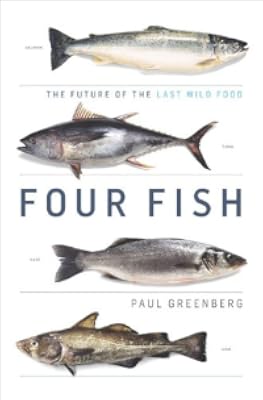
Paul Greenberg is an author and essayist. In 2002 he wrote a novel Leaving Katya - which is about the destruction of a Russian American marriage and became a Barnes and Noble Great New Writers selection. Starting in 2005 he has been writing for The N.Y. Times Magazine Book Reviews and Opinion sections. His specialty is writing on fish, show more agriculture, and the future of our oceans. His article on Chilean Sea Bass received the International Association of Culinary Professionals Bert Greene Award for excellence in food writing. He has also been a guest commentator on public radio programs such as All things Considered and the Leonard Lopate Show. He wrote Four Fish: The Future of the Last Wild Food. (Bowker Author Biography) show less
Awards and Honors
Awards
Common Knowledge
- Important places
- USA
- Original language
- English
Classifications
- Genres
- Economics, Nonfiction, Science & Nature, General Nonfiction, Food & Cooking
- DDC/MDS
- 333.95 — Society, government, & culture Economics Economics of land and energy Other natural resources Biofuel, biodiversity, wildlife refuges
- LCC
- SH221 .G74 — Agriculture Aquaculture. Fisheries. Angling Aquaculture. Fisheries. Angling Fisheries By region or country
- BISAC
Statistics
- Members
- 128
- Popularity
- 255,996
- Reviews
- 6
- Rating
- (4.00)
- Languages
- English
- Media
- Paper, Audiobook, Ebook
- ISBNs
- 7
- ASINs
- 2