
On This Page
Description
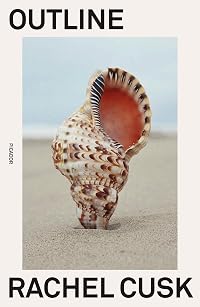
"Rachel Cusk's Outline is a novel in ten conversations. Spare and stark, it follows a novelist teaching a course in creative writing during an oppressively hot summer in Athens. She leads her students in storytelling exercises. She meets other visiting writers for dinners and discourse. She goes swimming with an elderly Greek bachelor. The people she encounters speak, volubly, about themselves: their fantasies, anxieties, pet theories, regrets, and longings. And through these disclosures, a show more portrait of the narrator is drawn by contrast, a portrait of a woman learning to face a great loss. Outline is Cusk's finest work yet, and one of the most startling, brilliant, original novels of recent years."-- show lessTags
Recommendations



Member Reviews
Outline by Rachel Cusk is a novel that rejects a conventional narrative structure, presenting instead a series of conversations experienced by Faye, a British writer traveling to Athens to teach a summer writing course. Rather than revealing directly much of herself, Faye becomes a conduit for the stories of others: a wealthy Greek businessman recounts the history of his several failed marriages, colleagues debate the nature of art and teaching while searching for meaning in personal relationships, and students disclose their private struggles and pet-related traumas. Through these layered dialogues, fragments of Faye’s own life—her recent divorce, her strained connections with her children, her struggles to find a sense of show more self—emerge only tangentially from the narratives swirling around her. Thus, the book unfolds less as a plot-driven story than as a mosaic of voices, each providing its own “outline” of the human condition.
I found Outline to be a stimulating and thought-provoking reading experience, if not one that was always comfortable or altogether enjoyable. The author’s writing is spare and elegant, and her stylistic choice to eschew usual character and plot development in telling a compelling story was a fascinating thing to witness. By the end of book, the reader does get a clear picture of the fractured and lonely world that Faye finds herself inhabiting, even if very few details of her personal history are ever revealed. (In fact, as the narrator of the story, we do not even learn her name until the last few pages of the novel!) While some readers will find this approach to storytelling to be invigorating, I imagine others will find the absence of a traditional narrative arc to be confusing and even, perhaps, off-putting. Still, this is an original work that pushes the boundaries of how stories can be rendered, which alone makes it a book worth recommending to any reader willing to accept that challenge. show less
I found Outline to be a stimulating and thought-provoking reading experience, if not one that was always comfortable or altogether enjoyable. The author’s writing is spare and elegant, and her stylistic choice to eschew usual character and plot development in telling a compelling story was a fascinating thing to witness. By the end of book, the reader does get a clear picture of the fractured and lonely world that Faye finds herself inhabiting, even if very few details of her personal history are ever revealed. (In fact, as the narrator of the story, we do not even learn her name until the last few pages of the novel!) While some readers will find this approach to storytelling to be invigorating, I imagine others will find the absence of a traditional narrative arc to be confusing and even, perhaps, off-putting. Still, this is an original work that pushes the boundaries of how stories can be rendered, which alone makes it a book worth recommending to any reader willing to accept that challenge. show less
In Rachel Cusk’s episodic novel, Outline, a British writer named Faye has been hired to teach a short-term course in creative writing at a school in Athens. We meet her on the plane to Greece, where she has been engaged in conversation with her seatmate, a Greek gentleman much older than her. During the flight, they share their personal histories, both of which include failed marriages and divorce. It is a probing, deeply confessional conversation, with the participants at pains to explain why their marriages fell apart. It is also a conversation which compels them to reflect upon decisions they’ve made and view the impact of those decisions from the perspective of their interlocutor. The novel proceeds through its ten chapters in show more this manner, with Faye walking the streets of Athens, going to bars and restaurants, engaged in lengthy conversation with a variety of characters—other teachers, an old friend, the Greek gentleman again, a famous novelist, a famous poet, her students—all of whom use their time in the spotlight to question and probe and speak loquaciously and revealingly about their lives and loves, their needs, their desires, their regrets, their place in the world, and what it means to be male or female, as the case may be. And along the way, through these encounters, the outline of Faye's story is gradually filled in. It will be evident early on that in Outline Rachel Cusk is not striving for the kind of narrative momentum or continuity, or even coherence, that we are taught in writing classes a novel must possess in order to keep the reader turning the pages. In fact, Outline is a novel that deliberately subverts that principle, and is instead built around what could be regarded as a series of random—or, perhaps, selected—encounters. The common factor throughout is Faye. Everything we see and hear is filtered through her consciousness: coloured by her personal experience, her needs, desires, responsibilities and life pressures. Her coolly analytic, cerebral, non-judgmental, sometimes ironic observations about life, marriage, the city she’s visiting, the people in whose company she finds herself, are relentlessly fascinating and endow the book with the forward thrust of a thriller. In the end, Outline seems to suggest that the act of constructing an identity to present to the world is largely futile because other people will determine who we are when they interpret the things we say and do. show less
This unusual novel by Rachel Cusk raised several questions as I read it. What does it mean to be a writer? Why and how do you listen to your surroundings? Does that listening mean participation in the lives of those around you? There are undoubtedly more questions to pursue, but these are certainly central to the story told about a writer who, on her way to teach a writing seminar in Greece, meets several people with whom she has conversations. The conversations gradually tell us more about her as they do about the people whom she meets. We are able to consider the unawareness that our seeming ignorance leads us into. The narrator comments:
“Sometimes it has seemed to me that life is a series of punishments for such moments of show more unawareness, that one forges one's own destiny by what one doesn't notice or feel compassion for; that what you don't know and don't make the effort to understand will become the very thing you are forced into knowledge of.”
Consideration of the questions that this book raised for me suggested a way to "make the effort to understand" the world within and without the story.
We learn about many things including her dreams and her epiphanies or realizations about herself. One conversation with a Greek man, Paniotis, yields the following:
"I realised that my little dream of a publishing house was destined to remain just that, a fantasy, and in fact what that realisation caused me to feel was not so much disappointment at the situation as astonishment at the fantasy itself." (p 95)
Learning about herself she is able to teach other writers at the seminar and we are able to learn something about ourselves--perhaps.
This is not a novel driven by plot. Nonetheless the simple elegance of the writing and the fascinating conversations--sometimes seeming like short stories embedded within the larger novel--make this a rewarding book to read and reread. I found it a different but welcome addition to my reading life. show less
“Sometimes it has seemed to me that life is a series of punishments for such moments of show more unawareness, that one forges one's own destiny by what one doesn't notice or feel compassion for; that what you don't know and don't make the effort to understand will become the very thing you are forced into knowledge of.”
Consideration of the questions that this book raised for me suggested a way to "make the effort to understand" the world within and without the story.
We learn about many things including her dreams and her epiphanies or realizations about herself. One conversation with a Greek man, Paniotis, yields the following:
"I realised that my little dream of a publishing house was destined to remain just that, a fantasy, and in fact what that realisation caused me to feel was not so much disappointment at the situation as astonishment at the fantasy itself." (p 95)
Learning about herself she is able to teach other writers at the seminar and we are able to learn something about ourselves--perhaps.
This is not a novel driven by plot. Nonetheless the simple elegance of the writing and the fascinating conversations--sometimes seeming like short stories embedded within the larger novel--make this a rewarding book to read and reread. I found it a different but welcome addition to my reading life. show less
I thought this was a phenomenal book and one that has left a lasting and important impression on me. Of course, I'll need to revisit. There are just too many delicate phrases, too many layers of metaphor. I found myself wanting to jot down lines every few paragraphs. This is a novel which left me feeling, ironically, solicitous about its array of characters. Each one is almost not okay, but probably fine, in a way that gave me a persistent touch of anxiety.
There is an icy tone in the narration but I don't think this sort "pictures at an exhibition" type of work would be more effective any other way. You need that cold distance to feel the discomfort that comes with seeing a person's psyche so clinically splayed.
There is an icy tone in the narration but I don't think this sort "pictures at an exhibition" type of work would be more effective any other way. You need that cold distance to feel the discomfort that comes with seeing a person's psyche so clinically splayed.
A British author travels to Athens to teach a week-long writing workshop. She recounts what happens on her trip, including a boating excursion, dinner conversations, and her students’ contributions to the workshop. There is little plot. The protagonist becomes the foil by which the other people – friends, traveling companions, colleagues, students, and strangers – reveal themselves. We see them lie and then try to recover. We hear them discuss some fairly deep subjects on a wide variety of topics about their lives.
The author has a way of describing a single event in almost microscopic detail. It reads like a series of short stories, tied together by the trip to Greece. I wondered where this book was headed, and finally decided it show more provides an “outline” of the protagonist. She never self-reveals, but we get a feeling for her character through her responses to others. I particularly appreciated the writing tips embedded within the stories. Readers of experimental literature will likely enjoy it. show less
The author has a way of describing a single event in almost microscopic detail. It reads like a series of short stories, tied together by the trip to Greece. I wondered where this book was headed, and finally decided it show more provides an “outline” of the protagonist. She never self-reveals, but we get a feeling for her character through her responses to others. I particularly appreciated the writing tips embedded within the stories. Readers of experimental literature will likely enjoy it. show less
I found this novel to be beautifully written, but at the end unsatisfying. The writing is a real pleasure: sharp, precise, and rich with insights large and small about the way people act and feel. But for me at least, the material did not live up to the quality of the writing, because it did not draw me in to someone else's life. The narrator presents herself in outline only -- "a shape, an outline, with all the detail filled in around it while the shape itself remained blank. Yet this shape, even while its content remained unknown, gave her for the first time since the incident a sense of who she now was". This does give the reader lots of interesting stories about other people -- "all the detail filled in around it". But for this show more reader at least, neither the blank nor the stories of other people's lives were compelling enough to draw me in.
Caveat lector: the fact that I couldn't get into this novel, of course, may say a lot more about me than about the novel. One reviewer compared the writing to that of Virginia Woolf; to me shame, I have never been able to "get into" Ms. Woolf's books, except for "Orlando". Those who love Ms. Woolf and other writers of similar rarefaction may well love "Outline". Those who love "Middlemarch" probably won't. show less
Caveat lector: the fact that I couldn't get into this novel, of course, may say a lot more about me than about the novel. One reviewer compared the writing to that of Virginia Woolf; to me shame, I have never been able to "get into" Ms. Woolf's books, except for "Orlando". Those who love Ms. Woolf and other writers of similar rarefaction may well love "Outline". Those who love "Middlemarch" probably won't. show less
The main character of Rachel Cusk’s novel, Outline, identifies the Agora as her favourite site in Athens. This ancient market place of goods and ideas quietly symbolizes the narrator’s role as a conduit for those around her to speak. From her neighbour on her flight to Athens where she will be teaching a writing workshop, to her students, to her writing colleagues, Cusk’s narrator seems preternaturally open to letting her interlocutors take the lead. She is not shy about providing frank criticisms (though not of her students), but for the most part she just lets people speak. And thus we get a series of narratives told by others or reported by Cusk’s narrator. These stories or proto-stories are typically reports of some incident show more in the life of the speaker (they do not originate as “fiction”). Some of these are brief and some are lengthy. Many involve accounts of the dissolution of a marriage. Many involve trauma in some form. Most touch on forms of love, a kind of symposium if you will. Through these narrations, Cusk’s narrator’s time in Athens is measured out. Indeed we know more about her through the kinds of stories people tell her than through any other means. And although she too sometimes speaks publicly — one of the ancient purposes of the Agora — she is usually brusque, providing little more than a summary of her own life situation.
I was mesmerized from the start. This is thoroughly excellent writing akin to the stylized semi-autobiographical prose of Sebald or Lerner. It challenges the reader to forego the novelistic norms which we rely upon and to reconsider what a novel is and what it can achieve. For me, that is perhaps the highest achievement for any novel.
Certainly recommended. show less
I was mesmerized from the start. This is thoroughly excellent writing akin to the stylized semi-autobiographical prose of Sebald or Lerner. It challenges the reader to forego the novelistic norms which we rely upon and to reconsider what a novel is and what it can achieve. For me, that is perhaps the highest achievement for any novel.
Certainly recommended. show less
Members
- Recently Added By
Published Reviews
ThingScore 92
Cusk uses unostentatious but immaculately chosen language to convey graspable ideas about marriage, divorce and personal identity that have no less an impact for being so.
The novel is structured around a series of encounters between a rotating cast of characters.. The dust jacket calls Outline “a novel in ten conversations,” but that feels slightly inaccurate given that Kaye often acts show more more like a confessor than a participant. In fact, despite narrating in the first person, she reveals virtually nothing about herself. (Cusk has been more voluble about her own life: her eleven books include three memoirs, one of which created a kerfuffle overseas for its unromantic views about motherhood.)..Cusk is Canadian by birth but grew up in the UK, where she still lives (she has the accent to prove it). That’s a technicality, however, that shouldn’t stop us from trying to lay claim to some part of this beautiful, desolate novel. show less
The novel is structured around a series of encounters between a rotating cast of characters.. The dust jacket calls Outline “a novel in ten conversations,” but that feels slightly inaccurate given that Kaye often acts show more more like a confessor than a participant. In fact, despite narrating in the first person, she reveals virtually nothing about herself. (Cusk has been more voluble about her own life: her eleven books include three memoirs, one of which created a kerfuffle overseas for its unromantic views about motherhood.)..Cusk is Canadian by birth but grew up in the UK, where she still lives (she has the accent to prove it). That’s a technicality, however, that shouldn’t stop us from trying to lay claim to some part of this beautiful, desolate novel. show less
added by vancouverdeb
Rachel Cusk is better known in England than in America; her sharply satirical books about the tolls of family life play better across the Atlantic than here in our often puritanical culture, with its bias towards domesticity..Whereas Cusk's earlier books examined self-definition in the context of marriage and family, her latest ventures outside the home, intriguingly exploring the way people show more measure themselves in relation to other people's stories. Outline marks an impressive deepening of Cusk's work, and a bold step toward integrating her fiction and nonfiction. There's nothing empty or sketchy about it. show less
added by vancouverdeb
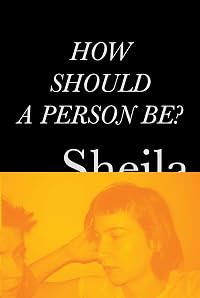
In this respect, Outline belongs to a strain of literature that runs from the Romantics, through Virginia Woolf, to the memoiristic novels of contemporaries such as Sheila Heti and Karl Ove Knausgaard. It's the hardest kind of fiction to bring off, always running the risk of narcissism and banality, but when it works, it feels paradoxically more miraculous than its artifice-dependent cousins. show more To my mind Outline succeeds powerfully. Among other things, it gets a great variety of human beings down on to the page with both immediacy and depth; an elemental pleasure that makes the book as gripping to read as a thriller..... I can't say that bothered me, but no doubt it will keep some readers from responding to the book as enthusiastically as I did. It didn't make the Man Booker longlist, for instance. But on the other hand it was serialised in its entirety by the Paris Review, a rare distinction, and a richly deserved tribute to what strikes me as a stellar accomplishment. show less
added by vancouverdeb
Lists

Your favorite books from the 2015 Baileys Women's Prize for Fiction
20 works; 13 members

The Guardian's 100 best books of the 21st century
100 works; 21 members

Baileys Women's Prize for Fiction Winners and Shortlisted Books
61 works; 11 members

Vulture's 100 Best Books of the 21st Century (So Far)
98 works; 9 members

Folio Prize 2015 Longlist
79 works; 2 members

Elena Ferrante's 40 favourite books by female authors
40 works; 10 members

Dublin Literary Award Longlist 2016
148 works; 4 members

Books Read in 2015
3,299 works; 129 members

Contemporary Fiction
109 works; 7 members

NYT: Notable Books of 2015 (Fiction & Poetry)
20 works; 1 member

Morphy Pick!
24 works; 1 member

Global Reads: Books Set in Western Europe
186 works; 10 members
LitHub's Best Novels of the Decade 2010-2019
39 works; 1 member

Books recommended by Calgary Public Library staff
1,588 works; 4 members
NYT 100 best books of 21st C
100 works; 31 members

Best Books of the 2010s
20 works; 1 member

.
184 works; 1 member

contemporary literary fiction list to check out
47 works; 1 member
Author Information

30+ Works 9,040 Members
Rachel Cusk was born on Feb 8, 1967 in Canada. She spent much of her childhood in Los Angeles and finished her education at St Mary's Convent, Cambridge. her education at St Mary's Convent, Cambridge. In 2003, Rachel Cusk was nominated by Granta magazine as one of 20 'Best of Young British Novelists'. That year she published The Lucky Ones (2003), show more her fourth novel, which was shortlisted for the Whitbread Novel Award. Since then she has published four more novels; her latest is Outline (2014). She has also written several non-fiction books. A Life's Work: On Becoming a Mother (2001) is a personal exploration of motherhood. The Last Supper: A Summer in Italy (2009) is a memoir about time in southern Italy. In 2015 she made the Baileys Women's Prize for Fiction shortlist with her title Outline. (Bowker Author Biography) show less
Some Editions
Awards and Honors
Awards
Distinctions
Series

Belongs to Publisher Series
Aldina (20)
Work Relationships
Is contained in
Common Knowledge
- Canonical title
- Outline
- Original title
- Outline
- Original publication date
- 2014
- People/Characters
- Faye
- Important places
- Athens, Greece
- First words
- Before the flight I was invited to lunch at a London club with a billionaire I'd been promised had liberal credentials.
- Quotations
- among other things a marriage is a system of belief, a story, and though it manifests itself in things that are real enough, the impulse that drives it is ultimately mysterious
your failures keep returning to you, while your successes are something you always have to convince yourself of - Blurbers
- Mead, Rebecca; Lasdun, James; Myerson, Julie; Elmhirst, Sophie; Scholes, Lucy; Kellaway, Kate (show all 8); Harman, Claire; Eugenides, Jeffrey
- Canonical DDC/MDS
- 823.914
- Canonical LCC
- PR6053.U825
Classifications
Statistics
- Members
- 2,525
- Popularity
- 7,567
- Reviews
- 127
- Rating
- (3.66)
- Languages
- 14 — Danish, Dutch, English, Finnish, French, German, Greek, Hungarian, Italian, Norwegian, Spanish, Swedish, Turkish, Portuguese (Portugal)
- Media
- Paper, Audiobook, Ebook
- ISBNs
- 51
- UPCs
- 1
- ASINs
- 18