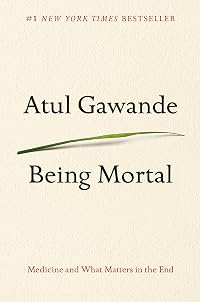
Being Mortal: Medicine and What Matters in the End
by Atul Gawande
On This Page
Description
Medicine has triumphed in modern times, transforming birth, injury, and infectious disease from harrowing to manageable. But in the inevitable condition of aging and death, the goals of medicine seem too frequently to run counter to the interest of the human spirit. Nursing homes, preoccupied with safety, pin patients into railed beds and wheelchairs. Hospitals isolate the dying, checking for vital signs long after the goals of cure have become moot. Doctors, committed to extending life, show more continue to carry out devastating procedures that in the end extend suffering. Gawande, a practicing surgeon, addresses his profession's ultimate limitation, arguing that quality of life is the desired goal for patients and families. Gawande offers examples of freer, more socially fulfilling models for assisting the infirm and dependent elderly, and he explores the varieties of hospice care to demonstrate that a person's last weeks or months may be rich and dignified. show lessTags
Recommendations




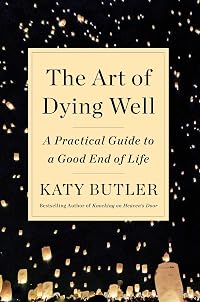
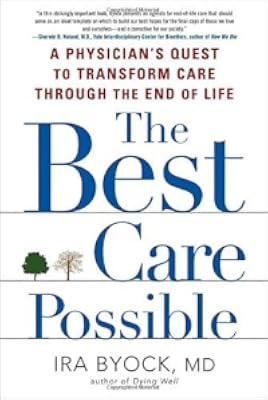
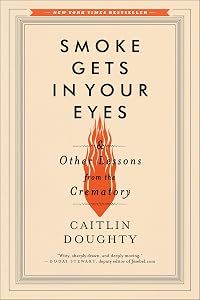
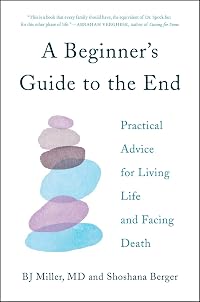





Member Recommendations
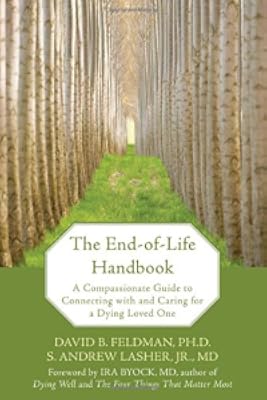
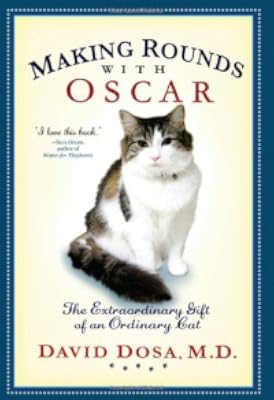
BookshelfMonstrosity Written by experienced and dedicated physicians, these compelling books question American health care's emphasis on management and technique to the detriment of human relationships between doctors and patients, especially when the patient's mortality is an important consideration.
20
teelgee Memoir by a death doula; "Making an authentic life by getting real about the end."
Member Reviews
Very powerful and touching read. It made me reassess everything. As a nurse for over 30 years, and an ICU nurse for more than 15 years, everything Gawande writes rings true. With elderly, frail parents and being on the other side of 50, there's not a lot of time to get it right. Of course, 'right' is different for everyone. But you sure as hell don't want to get it wrong, if you get a chance. And there are better ways to spend those final months than painful, protracted dying in an ICU. Gawande makes this very clear. It's about asking the hard questions while you still have time.
This may be one of the most important and enlightening books I've ever read. With the huge population of Baby Boomers now between 51 and 69, and my own Generation X barreling toward AARP eligibility age, there is no time to spare for us as a society to come to terms with our mortality and to get creative about dealing with aging, physical decline, and death in ways that respect our desire to live our lives meaningfully. Only by acknowledging our near-universal terror of spending our waning years living a medical nightmare can we make choices that prevent that from happening. In Being Mortal Atul Gawande spends time with so many fascinating people (nursing home doctors, assisted living pioneers, palliative care specialists and hospice show more providers) who are at the forefront of challenging accepted ideas of how aging and terminally ill people must be treated. He also slows down and questions his own ways of being a doctor to spend time listening to patients and senior citizens so that he might really understand their goals for their remaining time on earth. Finally, his own father's shocking decline from vital, energetic, tennis-playing, Rotarian urologist to struggling cancer patient lends a personal angle that brings his message home. Although reading Being Mortal can be a rough and emotional ride (a few of his terminal patients are not old at all!), Dr. Gawande is ultimately hopeful, and his research and the influence his book has had already may go a long way towards reversing the trend towards over-medicalized end-of-life care that has been the norm for too many decades. I sure hope so! show less
Dr. Atul Gawande’s Being Mortal tackles many of the elder care issues my wife and I have been dealing with for close to a decade. Each of us has been the primary caretaker of our elderly parents (only our fathers survive at this point) for that long now, and just when we think we have seen it all, something new catches us by surprise. I only wish that we had come across a book like Being Mortal ten years ago rather than having to learn the hard way much of what the Gawande has to say in it about aging and death.
Life is all about the choices we make. And the choices we make as we approach the end of our lives – or the choices we help loved ones make as they approach the end of their lives – are every bit as important as any we have show more ever made. Faced with the choice between prolonging our lives for a few months at the cost of losing the quality of our remaining time or living more comfortably and autonomously for what time we otherwise have left, what do we do? The right choice is never as obvious as one might hope it would be. Gawande suggests that quality over a slightly extended length of time is the wiser choice, difficult as that choice may be to make when the time comes.
So why do we face such a dilemma in the first place? Gawande blames much of the problem on the medical profession. Most doctors, he says, are so reluctant ever to give up on a patient that, despite the additional agony involved in further treatment, they will try one hopeless procedure or drug after another until that patient finally dies. They effectively destroy the remaining lives of their patients by failing to disclose the inevitable result to them: they are going to die soon and it cannot be avoided. Gawande argues that, rather than something for the doctor to decide, this ultimate choice must be placed in the hands of the patient. Medical problems that cannot be fixed even at great physical and mental cost to the patient must be managed rather than fixed. And it is up to the doctor to recognize when that point has been reached so that he can help his patient make the right choice.
My personal experience and observation, as verified by Dr. Gawande in Being Mortal, tells me that dying in the U.S. has become a big business. For the most part, our elderly no longer die at home; they more often die in some hospital or nursing home with a nurse or two around to record the event. It is all very impersonal and routine these days. But Gawande is not ready to give up on his profession. The growing trend toward the use of home hospice services and the efforts of some medical schools to train their students more fully gives him hope. His greatest fear is that so few medical students are choosing to specialize in geriatric medicine that the elderly will suffer unnecessarily for a long time to come.
Being Mortal is an excellent resource for anyone faced with life’s inevitable choices – the hardest choices any of us are ever likely to have to make. show less
Life is all about the choices we make. And the choices we make as we approach the end of our lives – or the choices we help loved ones make as they approach the end of their lives – are every bit as important as any we have show more ever made. Faced with the choice between prolonging our lives for a few months at the cost of losing the quality of our remaining time or living more comfortably and autonomously for what time we otherwise have left, what do we do? The right choice is never as obvious as one might hope it would be. Gawande suggests that quality over a slightly extended length of time is the wiser choice, difficult as that choice may be to make when the time comes.
So why do we face such a dilemma in the first place? Gawande blames much of the problem on the medical profession. Most doctors, he says, are so reluctant ever to give up on a patient that, despite the additional agony involved in further treatment, they will try one hopeless procedure or drug after another until that patient finally dies. They effectively destroy the remaining lives of their patients by failing to disclose the inevitable result to them: they are going to die soon and it cannot be avoided. Gawande argues that, rather than something for the doctor to decide, this ultimate choice must be placed in the hands of the patient. Medical problems that cannot be fixed even at great physical and mental cost to the patient must be managed rather than fixed. And it is up to the doctor to recognize when that point has been reached so that he can help his patient make the right choice.
My personal experience and observation, as verified by Dr. Gawande in Being Mortal, tells me that dying in the U.S. has become a big business. For the most part, our elderly no longer die at home; they more often die in some hospital or nursing home with a nurse or two around to record the event. It is all very impersonal and routine these days. But Gawande is not ready to give up on his profession. The growing trend toward the use of home hospice services and the efforts of some medical schools to train their students more fully gives him hope. His greatest fear is that so few medical students are choosing to specialize in geriatric medicine that the elderly will suffer unnecessarily for a long time to come.
Being Mortal is an excellent resource for anyone faced with life’s inevitable choices – the hardest choices any of us are ever likely to have to make. show less
I learned a lot about dying during my time working in Hospice. I saw families so overcome with grief that I wasn't sure how they could go on. But, I also saw relief in some families, realizing the pain, suffering, and constant caregiving was behind them. Death is a personal experience that every person handles differently and that experience for both the patient and caregiver can depend on their faith, their life experiences, their family or lack of family support, and also how the medical profession has communicated with them about the reality of death and the process ahead of them. Atul Gawande, a well-known surgeon, and son of a well-known surgeon chronicles the many aging patients he has examined, as well as his father's declining show more health. He also examines the many ways our lives are extended to due medicines not available even ten years ago.
After seeing multiple reviews raving about this book and calling it a must-read for anyone with aging parents, I decided to pick it up. Reading BEING MORTAL was an eye-opening and convicting look into medicine and what lies ahead for each of us in our life-extending world of medical care. Whether you are reading this as a member of the aging population or as a child of aging parents, this book will make you stop and question how you want to direct medical care for your future and those of your family.
Some of the fascinating information in the book was related to the history of nursing homes. The level of care has changed astronomically since the very first facilities opened. In 1983, it took an aging mother and a daughter studying gerontology to come up with the idea that many of us see today, a "living center with assistance" for the elderly. This concept of assisted living began the idea of no one ever feeling like they were institutionalized. Thousands of people have been able to live independently for years because of the creation of this nursing home concept.
Most of us don't want to think about the years ahead of us where we will no longer be able to live independently. We ignore our parent's shaking hands or unsteady gait because having the conversation is too overwhelming. It's easy to take a few tasks off their hands to allow them to keep getting by. But, frankly, most of the time, many are unprepared for the idea of needing help and our parents refuse most offers of assistance until it's usually too late to do anything about it.
In many cases, those in the medical field are looking so closely at the ailments and how to fix them rather than focus on how we can maintain a quality of life. Usually trying to fix the multiple ailments makes matters worse for the patient. Ultimately, medical professionals must decide "which mistake they fear most - the mistake of prolonging suffering or the mistake of shortening valued life." page 244.
I know too well how the word “dying” or “death” is avoided by doctors and families alike. Gawande believes if we were allowed to live while dying, and being honest about how we want those days to look, the medical care should reflect those desires, even if it goes against our internal need to “save them”.
Ultimately, Gawande hopes that sharing his knowledge with others and creating a conversation about "death" and "dying", will allow the medical professionals to be more comfortable in having those conversations. The patient is then allowed to write their own life story. As the aging patient, we can have the freedom to shape our final years based on what is important to us and if our body betrays us, then we have laid out the course of treatment that fits best with our needs and desires.
This isn’t a happy read, as death marks many of his patient’s stories. But, it will offer you a chance to reflect on what is truly important to you in the rest of your life. Whether you leave this Earth without any notice or after struggling through an illness, Gawande wants to be sure you have made choices, shared them with those you love, and lived each day to its fullest potential. show less
After seeing multiple reviews raving about this book and calling it a must-read for anyone with aging parents, I decided to pick it up. Reading BEING MORTAL was an eye-opening and convicting look into medicine and what lies ahead for each of us in our life-extending world of medical care. Whether you are reading this as a member of the aging population or as a child of aging parents, this book will make you stop and question how you want to direct medical care for your future and those of your family.
Some of the fascinating information in the book was related to the history of nursing homes. The level of care has changed astronomically since the very first facilities opened. In 1983, it took an aging mother and a daughter studying gerontology to come up with the idea that many of us see today, a "living center with assistance" for the elderly. This concept of assisted living began the idea of no one ever feeling like they were institutionalized. Thousands of people have been able to live independently for years because of the creation of this nursing home concept.
Most of us don't want to think about the years ahead of us where we will no longer be able to live independently. We ignore our parent's shaking hands or unsteady gait because having the conversation is too overwhelming. It's easy to take a few tasks off their hands to allow them to keep getting by. But, frankly, most of the time, many are unprepared for the idea of needing help and our parents refuse most offers of assistance until it's usually too late to do anything about it.
In many cases, those in the medical field are looking so closely at the ailments and how to fix them rather than focus on how we can maintain a quality of life. Usually trying to fix the multiple ailments makes matters worse for the patient. Ultimately, medical professionals must decide "which mistake they fear most - the mistake of prolonging suffering or the mistake of shortening valued life." page 244.
I know too well how the word “dying” or “death” is avoided by doctors and families alike. Gawande believes if we were allowed to live while dying, and being honest about how we want those days to look, the medical care should reflect those desires, even if it goes against our internal need to “save them”.
Ultimately, Gawande hopes that sharing his knowledge with others and creating a conversation about "death" and "dying", will allow the medical professionals to be more comfortable in having those conversations. The patient is then allowed to write their own life story. As the aging patient, we can have the freedom to shape our final years based on what is important to us and if our body betrays us, then we have laid out the course of treatment that fits best with our needs and desires.
This isn’t a happy read, as death marks many of his patient’s stories. But, it will offer you a chance to reflect on what is truly important to you in the rest of your life. Whether you leave this Earth without any notice or after struggling through an illness, Gawande wants to be sure you have made choices, shared them with those you love, and lived each day to its fullest potential. show less
There is a long phase in the first parts of our lives where, if we are lucky enough to have avoided critical disease or injury, we are blithely unaware of the effects of aging and of the inevitability of death. It seems so far ahead in the future as to be imaginary. Like imagining what a trillion dollars is like. You know that is a real thing, but still…it seems impossible to know what it really is.
The other day I said to my teenage daughter, “Just imagine, in only forty years from now you will be standing in the kitchen with your partner and asking the same questions I’m asking now, like “When can we retire and go do what we really want?” “ She snorted. “Forty years? That’s ages from now!” And I’m saying, “no, show more forty years isn’t long at all! You will be planning your retirement!”
She doesn’t really believe it.
I sort of wish I had that back again. Those days of childhood, adolescence, young adulthood, where we never gave a thought to retirement, to aging, to death. Later on in life, we end up sometimes dwelling too much on those things, as if to make up for our inattention earlier. Nowadays, I sometimes feel hyper-aware of the universality of disease, the effects of aging, and shuffling off the mortal coil. It is unavoidable - I stare at it through the microscope daily as a pathologist. I often wonder which of those diseases that we hand out like playing cards will be the one dealt to me.
“There’s no escaping the tragedy of life., which is that we are all aging from the day we are born… This experiment of making mortality a medical experience is just decades old. And the evidence is it is failing.”
“Our reluctance to honestly examine the experience of aging and dying has increased the harm we inflict on people and denied them the basic comforts they most need.”
The chapters of the book follow the course of our lives, and are richly illustrated with examples from Gawande’s own family and from his medical practice. Their stories are woven through the book, providing compelling and touching portraits.
They are us.
We are independent beings who are increasingly living longer and living independently longer.
But ‘Things Fall Apart.’ “The culprit is just the accumulated crumbling of one’s bodily systems while medicine carries out its maintenance measures and patch jobs"
“Human beings fail the way all complex systems fail: randomly and gradually…as the defects in a complex system increase, the time comes when just one more defect is enough to impair the whole, resulting in the condition known as frailty. It happens to power plants, cars, and large organizations. And it happens to us: eventually, one too many joints are damaged, one too many arteries calcify. There are no more backups. We wear down until we can’t wear down anymore.”
So gradually, as the losses accumulate, we become Dependent. We need increasing amounts of Assistance, often in the form of retirement or nursing homes. These tend to provide an institutionalized life — that is not a good life, it’s just as good as can be got in the circumstances. But that robs us of our autonomy and our ability to make choices and to shape the story of our life in the world. “Whatever the limits and travails we face, we want to retain the autonomy—the freedom—to be the authors of our lives. This is the very marrow of being human” New models of care are evolving though, so people like 94 year old Lou are “…still able to live in a way that made him feel that he still had a place in this world.” I found this chapter particularly encouraging.
The chapters on Letting Go and Hard Conversations are thoughtful, valuable discussions not only for clinical physicians, nurses and other members of the health care team, but also for anyone — patient, family, friend — who has reached that place where the end of life is in sight. “Technological society has forgotten what scholars call the “dying role” and its importance to people as life approaches its end. People want to share memories, pass on wisdoms and keepsakes, settle relationships, establish their legacies, make peace with God, and ensure that those who are left behind will be okay. They want to end their stories on their own terms.”
Finally, Courage. “At least two kinds of courage are required in aging and sickness. The first is the courage to confront the reality of mortality—the courage to seek out the truth of what is to be feared and what is to be hoped.” We need the courage to act on the truth we find. One has to decide whether one’s fears or one’s hopes are what should matter most.
This was a profoundly enriching book. It should be required reading for all health care professionals who work with seriously ill patients, and for those who work with the aged, and for those who run our health care systems, and for those who have aging/ill parents/relatives, and for those who are embarking on those final passages, and in some ways especially for those who haven’t yet reached those phases, so that they will be better prepared.
It is intelligent, rational, touching, and warmly profound.
It is a classic. show less
The other day I said to my teenage daughter, “Just imagine, in only forty years from now you will be standing in the kitchen with your partner and asking the same questions I’m asking now, like “When can we retire and go do what we really want?” “ She snorted. “Forty years? That’s ages from now!” And I’m saying, “no, show more forty years isn’t long at all! You will be planning your retirement!”
She doesn’t really believe it.
I sort of wish I had that back again. Those days of childhood, adolescence, young adulthood, where we never gave a thought to retirement, to aging, to death. Later on in life, we end up sometimes dwelling too much on those things, as if to make up for our inattention earlier. Nowadays, I sometimes feel hyper-aware of the universality of disease, the effects of aging, and shuffling off the mortal coil. It is unavoidable - I stare at it through the microscope daily as a pathologist. I often wonder which of those diseases that we hand out like playing cards will be the one dealt to me.
“There’s no escaping the tragedy of life., which is that we are all aging from the day we are born… This experiment of making mortality a medical experience is just decades old. And the evidence is it is failing.”
“Our reluctance to honestly examine the experience of aging and dying has increased the harm we inflict on people and denied them the basic comforts they most need.”
The chapters of the book follow the course of our lives, and are richly illustrated with examples from Gawande’s own family and from his medical practice. Their stories are woven through the book, providing compelling and touching portraits.
They are us.
We are independent beings who are increasingly living longer and living independently longer.
But ‘Things Fall Apart.’ “The culprit is just the accumulated crumbling of one’s bodily systems while medicine carries out its maintenance measures and patch jobs"
“Human beings fail the way all complex systems fail: randomly and gradually…as the defects in a complex system increase, the time comes when just one more defect is enough to impair the whole, resulting in the condition known as frailty. It happens to power plants, cars, and large organizations. And it happens to us: eventually, one too many joints are damaged, one too many arteries calcify. There are no more backups. We wear down until we can’t wear down anymore.”
So gradually, as the losses accumulate, we become Dependent. We need increasing amounts of Assistance, often in the form of retirement or nursing homes. These tend to provide an institutionalized life — that is not a good life, it’s just as good as can be got in the circumstances. But that robs us of our autonomy and our ability to make choices and to shape the story of our life in the world. “Whatever the limits and travails we face, we want to retain the autonomy—the freedom—to be the authors of our lives. This is the very marrow of being human” New models of care are evolving though, so people like 94 year old Lou are “…still able to live in a way that made him feel that he still had a place in this world.” I found this chapter particularly encouraging.
The chapters on Letting Go and Hard Conversations are thoughtful, valuable discussions not only for clinical physicians, nurses and other members of the health care team, but also for anyone — patient, family, friend — who has reached that place where the end of life is in sight. “Technological society has forgotten what scholars call the “dying role” and its importance to people as life approaches its end. People want to share memories, pass on wisdoms and keepsakes, settle relationships, establish their legacies, make peace with God, and ensure that those who are left behind will be okay. They want to end their stories on their own terms.”
Finally, Courage. “At least two kinds of courage are required in aging and sickness. The first is the courage to confront the reality of mortality—the courage to seek out the truth of what is to be feared and what is to be hoped.” We need the courage to act on the truth we find. One has to decide whether one’s fears or one’s hopes are what should matter most.
This was a profoundly enriching book. It should be required reading for all health care professionals who work with seriously ill patients, and for those who work with the aged, and for those who run our health care systems, and for those who have aging/ill parents/relatives, and for those who are embarking on those final passages, and in some ways especially for those who haven’t yet reached those phases, so that they will be better prepared.
It is intelligent, rational, touching, and warmly profound.
It is a classic. show less
This compact book piercingly first explores modern models of aging. Dr Gawande ostensibly reviews the development of nursing homes as an extension of hospitals and assisted living communities as a response to the abject failure of institutionalized medicine to assist the elderly and progressively frail, but in so doing, he delves into the what gives life meaning when time becomes limited and ability wanes and also discusses how our loyalties and individualism interact with our needs for food, safety, and shelter throughout our lifespans.
Then pushes into modern concepts of dying and of the importance of "authoring our own story" up to the end of our lives and the importance of talking about living well, especially near the end of life, show more rather than about "dying well." This section of the book is emotionally charged and will likely provoke a range of reactions. He discusses some of the medical literature demonstrating that treatments and interventions directed at "curing" one specific disease in an already debilitated patient may shorten, rather than prolonging, life in addition to the more widely recognized side effects and adverse effects on quality of life associated with "aggressive" chemotherapies and surgeries. These concepts do not extrapolate well to all situations and everyone's death, even from similar disease, is unique, so that the challenge of talking about and planning a good life in the face of impending but still uncertain death is enormous. Every physician and indeed every loved one of a dying patient knows this, but as Gawande points out, we only die once, which doesn't allow for practice.
Our training in medical school currently presents two models of the patient-physician relationship, one older paternalistic model ("The physician knows best") and one newer retail model ("The consumer is always right"). A third way, suggested in the later chapters, of an interpretive patient-physician relationship may more realistically meet the challenge. Several stories of patients and his own family members (grandparents and, poignantly, his father) illustrate and humanize the narrative.
More depth in the patient-physician relationship would have been appreciated. Also the argument for death on its own time because of the importance of the "dying time," the phase of life where many of us consolidate some of our lives' lessons into wisdom for future generations, either as legacy planning or more intimate one-on-one "farewells", also seems to deserve more attention.
Throughout, what I thought of most was how perfectly this book responds to the first aphorism of Hippocrates: "Life is short, and Art long; the crisis fleeting; experience perilous, and decision difficult." show less
Then pushes into modern concepts of dying and of the importance of "authoring our own story" up to the end of our lives and the importance of talking about living well, especially near the end of life, show more rather than about "dying well." This section of the book is emotionally charged and will likely provoke a range of reactions. He discusses some of the medical literature demonstrating that treatments and interventions directed at "curing" one specific disease in an already debilitated patient may shorten, rather than prolonging, life in addition to the more widely recognized side effects and adverse effects on quality of life associated with "aggressive" chemotherapies and surgeries. These concepts do not extrapolate well to all situations and everyone's death, even from similar disease, is unique, so that the challenge of talking about and planning a good life in the face of impending but still uncertain death is enormous. Every physician and indeed every loved one of a dying patient knows this, but as Gawande points out, we only die once, which doesn't allow for practice.
Our training in medical school currently presents two models of the patient-physician relationship, one older paternalistic model ("The physician knows best") and one newer retail model ("The consumer is always right"). A third way, suggested in the later chapters, of an interpretive patient-physician relationship may more realistically meet the challenge. Several stories of patients and his own family members (grandparents and, poignantly, his father) illustrate and humanize the narrative.
More depth in the patient-physician relationship would have been appreciated. Also the argument for death on its own time because of the importance of the "dying time," the phase of life where many of us consolidate some of our lives' lessons into wisdom for future generations, either as legacy planning or more intimate one-on-one "farewells", also seems to deserve more attention.
Throughout, what I thought of most was how perfectly this book responds to the first aphorism of Hippocrates: "Life is short, and Art long; the crisis fleeting; experience perilous, and decision difficult." show less
 This review was written for LibraryThing Early Reviewers.
Disclosure: I received a review copy via LibraryThing Early Readers.
I really wanted to read Being Mortal after reading an excerpt several months ago in The New Yorker. The chapter is called "Letting Go," and the piece followed a young mother diagnosed with cancer making end-of-life care decisions. The book as a whole is a combination of policy discussion and narratives, and overall it's very affecting stuff.
Gawande starts the book with some history of medicine and elder care options (he's part sociologist, part gerontologist, part surgeon, part son throughout the book). As a book about things that people find difficult to talk about, this book is invaluable. As a manifesto about reforming nursing homes and assisted living centers, it's show more very effective.
As tough as the subject of this book is, it was a very good: the writing is not dry. And because he uses stories about his own family members as well as some stories of his patients, Gawande is constantly providing context to his points about how to lead a meaningful life while you are dying.
Highly recommended. show less
I really wanted to read Being Mortal after reading an excerpt several months ago in The New Yorker. The chapter is called "Letting Go," and the piece followed a young mother diagnosed with cancer making end-of-life care decisions. The book as a whole is a combination of policy discussion and narratives, and overall it's very affecting stuff.
Gawande starts the book with some history of medicine and elder care options (he's part sociologist, part gerontologist, part surgeon, part son throughout the book). As a book about things that people find difficult to talk about, this book is invaluable. As a manifesto about reforming nursing homes and assisted living centers, it's show more very effective.
As tough as the subject of this book is, it was a very good: the writing is not dry. And because he uses stories about his own family members as well as some stories of his patients, Gawande is constantly providing context to his points about how to lead a meaningful life while you are dying.
Highly recommended. show less
This review was written for LibraryThing Early Reviewers.Members
- Recently Added By
Published Reviews
ThingScore 100
His new book, “Being Mortal,” is a personal meditation on how we can better live with age-related frailty, serious illness and approaching death.
It is also a call for a change in the philosophy of health care. Gawande writes that members of the medical profession, himself included, have been wrong about what their job is. Rather than ensuring health and survival, it is “to enable show more well-being.” show less
It is also a call for a change in the philosophy of health care. Gawande writes that members of the medical profession, himself included, have been wrong about what their job is. Rather than ensuring health and survival, it is “to enable show more well-being.” show less
added by melmore
Lists

Recommend the 20 best books you've read in the last five years
2,168 works; 604 members

Top Five Books of 2015
811 works; 241 members

Non-Fiction Worth Reading
1,025 works; 264 members

Books recommended by Barack Obama
295 works; 29 members

Top Five Books of 2014
1,064 works; 398 members

Top Five Books of 2020
982 works; 350 members

Top Five Books of 2018
802 works; 264 members

Books for helping to cope with serious illness/dying
19 works; 2 members

Read-alike - From here to eternity by Caitlin doughty
8 works; 1 member

Obama Reads
181 works; 3 members

Read in 2016
107 works; 7 members

Books We Love to Reread
695 works; 298 members

.
184 works; 1 member

public health, illness, dying
11 works; 1 member
Books That Changed Our Perspective
423 works; 168 members

Top Five Books of 2024
795 works; 264 members

2024 Reading List
49 works; 1 member
Books That Made Us Cry
278 works; 145 members

Best Audiobooks
240 works; 114 members

Books Read in 2016
4,666 works; 199 members

Totally Biased List of Tookie’s Favorite Books
10 works; 1 member

Books That Made Me Cry
199 works; 105 members

Books Read in 2019
4,052 works; 110 members

Books Read in 2017
4,249 works; 130 members

Recommendations by Tim Keller
50 works; 2 members
Author Information

12+ Works 17,102 Members
Atul Gawande is a surgical resident in Boston and staff writer on medicine and science for The New Yorker. A former Rhodes scholar, he received his M.D. from Harvard Medical School. He lives with his wife and three children in Newton, Massachusetts. (Publisher Fact Sheets) Atul Gawande is a surgeon at Brigham and Women's Hospital in Boston, a show more staff writer for The New Yorker, and a professor at Harvard Medical School and the Harvard School of Public Health. He is also the Executive Director of Ariadne Labs and chairman of Lifebox, a nonprofit organization making surgery safer globally. He has written several books including Complications, Better, The Checklist Manifesto, and Being Mortal: Medicine and What Matters in the End. He has won the Lewis Thomas Prize for Writing about Science and two National Magazine Awards. He will be appearing at the 2015 Auckland Writers Festival in New Zealand. He won the prize for Adult Non-fiction in the Indies Choice Book Awards 2015 with Being Mortal: Medicine and What Matters in the End. (Bowker Author Biography) show less
Some Editions
Awards and Honors
Awards
Distinctions
Common Knowledge
- Canonical title
- Being Mortal: Medicine and What Matters in the End
- Original title
- Being Mortal: Medicine and What Matters in the End
- Alternate titles
- Being Mortal: Illness, Medicine, and What Matters in the End
- Original publication date
- 2014-10-07
- People/Characters
- Keren Brown Wilson; Dr. Atul Gawande; Jewel Douglass; Lou Sanders; Sara Monopoli; Alice Hobson (show all 8); Felix Silverstone; Dr. Paul Marcoux
- Related movies
- Being Mortal (2015 | IMDb)
- Epigraph
- I see it now—this world is swiftly passing.
—the warrior Karna, in the Mahabharata
They come to rest at any kerb:
All streets in time are visited.
—Philip Larkin, "Ambulances" - Dedication
- To Sara Bershtel
- First words
- I learned about a lot of things in medical school, but mortality wasn't one of them.
- Quotations
- Modern scientific capability has profoundly altered the course of human life. People live longer and better than at any other time in history. But scientific advances have turned the processes of aging and dying into medical ... (show all)experiences, matters to be managed by health care professionals. And we in the medical profession have proved alarmingly unprepared for it.
In other words, our decision making in medicine has failed so spectacularly that we have reached the point of actively inflicting harm on patients rather than confronting the subject of mortality. If end-of-life discussions w... (show all)ere an experimental drug, the FDA would approve it.
The simple view is that medicine exists to fight death and disease, and that is, of course, its most basic task. Death is the enemy. But the enemy has superior forces. Eventually, it wins. And in a war that you cannot win, yo... (show all)u don't want a general who fights to the point of total annihilation. You don't want Custer. You want Robert E. Lee, someone who knows how to fight for territory that can be won and how to surrender it when it can't, someone who understands that the damage is greatest if all you do is battle to the bitter end.
… our driving motivations in life, instead of remaining constant, change hugely over time and in ways that don’t quite fit Maslow’s classic hierarchy. In young adulthood, people seek a life of growth and self-fulfillmen... (show all)t, just as Maslow suggested. Growing up involves opening outward. We search out new experiences, wider social connections, and ways of putting our stamp on the world. When people reach the latter part of adulthood, however, their priorities change markedly. Most reduce the amount of time they spend pursuing achievement and social networks. They narrow in. Given the choice, young people prefer meeting new people to spending time with, say, a sibling; old people prefer the opposite. Studies find that as people grow older they interact with fewer people and concentrate more on spending time with family and established friends. They focus on being rather than doing and on the present more than the future.
Life is choices, and they are relentless. No sooner have you made one choice than another is upon you.
What were her biggest fears and concerns? What goals were most important to her? What trade-offs was she willing to make, and what ones was she not?
When our time is limited and we are uncertain about how best to serve our priorities, we are forced to deal with the fact that both the experiencing self and the remembering self matter. We do not want to endure long pain an... (show all)d short pleasure. Yet certain pleasures can make enduring suffering worthwhile. The peaks are important, and so is the ending. - Last words
- (Click to show. Warning: May contain spoilers.)No more breaths came.
- Blurbers
- Gladwell, Malcolm; Sacks, Oliver; Boo, Katherine
- Original language
- English
- Canonical LCC
- R726.8 G39
Classifications
- Genres
- General Nonfiction, Nonfiction, Science & Nature, Biography & Memoir
- DDC/MDS
- 362.17 — Society, government, & culture Social problems and social services Social Welfare People with physical illnesses Specific services
- LCC
- R726.8 .G39 — Medicine Medicine (General) Medical philosophy. Medical ethics
- BISAC
Statistics
- Members
- 6,622
- Popularity
- 1,836
- Reviews
- 316
- Rating
- (4.46)
- Languages
- 15 — Danish, Dutch, English, Estonian, French, German, Hungarian, Italian, Korean, Portuguese, Russian, Spanish, Swedish, Turkish, Chinese, traditional
- Media
- Paper, Audiobook, Ebook
- ISBNs
- 48
- UPCs
- 2
- ASINs
- 10
