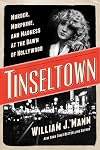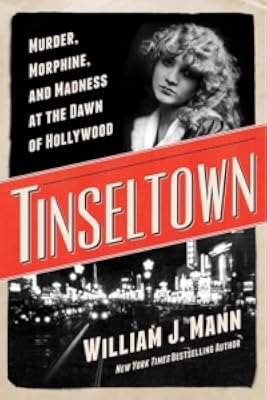
Tinseltown: Murder, Morphine, and Madness at the Dawn of Hollywood
by William J. Mann
On This Page
Description
New York Times Bestseller - Edgar Award winner for Best Fact Crime The Day of the Locust meets The Devil in the White City and Midnight in the Garden of Good and Evil in this juicy, untold Hollywood story: an addictive true tale of ambition, scandal, intrigue, murder, and the creation of the modern film industry. By 1920, the movies had suddenly become America's new favorite pastime, and one of the nation's largest industries. Never before had a medium possessed such power to influence. Yet show more Hollywood's glittering ascendency was threatened by a string of headline-grabbing tragedies-including the murder of William Desmond Taylor, the popular president of the Motion Picture Directors Association, a legendary crime that has remained unsolved until now. In a fiendishly involving narrative, bestselling Hollywood chronicler William J. Mann draws on a rich host of sources, including recently released FBI files, to unpack the story of the enigmatic Taylor and the diverse cast that surrounded him-including three beautiful, ambitious actresses; a grasping stage mother; a devoted valet; and a gang of two-bit thugs, any of whom might have fired the fatal bullet. And overseeing this entire landscape of intrigue was Adolph Zukor, the brilliant and ruthless founder of Paramount, locked in a struggle for control of the industry and desperate to conceal the truth about the crime. Along the way, Mann brings to life Los Angeles in the Roaring Twenties: a sparkling yet schizophrenic town filled with party girls, drug dealers, religious zealots, newly-minted legends and starlets already past their prime-a dangerous place where the powerful could still run afoul of the desperate. A true story recreated with the suspense of a novel, Tinseltown is the work of a storyteller at the peak of his powers-and the solution to a crime that has stumped detectives and historians for nearly a century. show lessTags
Recommendations















Member Reviews
This is a fantastic, gripping, brilliant true crime book.
What I noticed about Tinseltown right from the start is that it reads like a novel. It felt like I had picked up a whodunit, and was completely sucked in. Mann has this great writing style that is so easy and fun to read.
This is also an absolutely fascinating story, one that has remained unsolved for decades. Mann tells the true tale of William Desmond Taylor, a director and actor in the Roaring Twenties, whose murder remains a mystery to this day. Books have been written, webzines have been crafted, and conspiracy theories have been spun, but Mann has what he believes to finally be the true solution.
And Mann backs his solution up with lots and lots of impeccable research. He show more paints a living, breathing picture of Hollywood in the 1920s, from the movies, to the people who strove to not only create them, but to create their own destinies as famous and beloved stars. Mann focuses on three of these female stars and their personal and professional struggles, but also weaves in so many other important Hollywood figures of that time, and makes them all come alive for readers.
This is a wide-reaching book of non-fiction. Mann manages to not only discuss and attempt to solve a murder, but writes of all the scandals, backstage dealings, and politics that surrounded and enfolded Hollywood at that time.
This is a book I would definitely recommend. It's one that will be joining my other true crime favorites on my bookshelves. show less
What I noticed about Tinseltown right from the start is that it reads like a novel. It felt like I had picked up a whodunit, and was completely sucked in. Mann has this great writing style that is so easy and fun to read.
This is also an absolutely fascinating story, one that has remained unsolved for decades. Mann tells the true tale of William Desmond Taylor, a director and actor in the Roaring Twenties, whose murder remains a mystery to this day. Books have been written, webzines have been crafted, and conspiracy theories have been spun, but Mann has what he believes to finally be the true solution.
And Mann backs his solution up with lots and lots of impeccable research. He show more paints a living, breathing picture of Hollywood in the 1920s, from the movies, to the people who strove to not only create them, but to create their own destinies as famous and beloved stars. Mann focuses on three of these female stars and their personal and professional struggles, but also weaves in so many other important Hollywood figures of that time, and makes them all come alive for readers.
This is a wide-reaching book of non-fiction. Mann manages to not only discuss and attempt to solve a murder, but writes of all the scandals, backstage dealings, and politics that surrounded and enfolded Hollywood at that time.
This is a book I would definitely recommend. It's one that will be joining my other true crime favorites on my bookshelves. show less
Yet another literary exploration (the fourth, I gather) of the notorious, still-unsolved 1922 murder of Hollywood producer William Desmond Taylor, proving that you can't keep a good unsolved murder down! Can't compare this reconsideration to the other three as I haven't read any of the others (except to share that each of them posits a different murderer), but this appears to be a tolerably well-researched and highly readable work of historical re-creation with a dash of true crime thrown in to keep things interesting.
In other words, come for the murder mystery, stay for the intriguing overview of the emergence of the film industry in the U.S. Definitely enjoyed learning more about early Hollywood: the business models, the scandals, show more the stars, the lifestyles, the symbiotic relationship between stars & studios, the studio bosses, the emerging feud between Hollywood and Progressive Era reformers intent on "cleaning up" Hollywood's perceived sordid excesses, etc. Taylor's many "secrets" (bisexuality, blackmail, a war against drug dealers preying on Paramount stars) provide an ideal trellis, allowing the story to branch off in all sorts of intriguing directions. By focusing on the mystery's major players - to include starlet Mabel Normand, Taylor's best friend; nymphet Mary Minten Miles, Taylor's devoted but unrequited admirer; aspiring, morally flexible actress Gibby Gibson, desperate for fame; and Adolf Zukor, head of Paramount Studio, determined to protect the industry and his own monopolistic ambitions at almost any cost - Mann is able to justify a deeper exploration of the whole 1920s Hollywood milieu than a simple history of the period might do.
Mann's writing is brisk, biased (he's definitely vested in pushing his solution, not above twisting facts to fit his proposition and downplaying facts that don't), and heavy on cliff-hangers, which I might otherwise ding but in this case feels like a homage to the breathlessly melodramatic films that Hollywood was churning out at this time. Though Mann includes extensive footnotes and appendixes, this is definitely intended as entertainment, not investigative journalism. His proposed solution has some holes, yes, but it's plausible, and after so many years it's impossible to know which evidence to trust.
Fans of the true crime genre are likely to find this a bit slow, wordy, and overstuffed. Despite the title, there's not a whole lot of sordid and even less horror. It definitely doesn't deliver the thrills of modern day true-crime podcasts or cable TV reinactments. But that's actually what I liked about the book - the opportunity to "glimpse behind the curtain" and learn more about a fascinating time, not just a fascinating crime, in America's history. show less
In other words, come for the murder mystery, stay for the intriguing overview of the emergence of the film industry in the U.S. Definitely enjoyed learning more about early Hollywood: the business models, the scandals, show more the stars, the lifestyles, the symbiotic relationship between stars & studios, the studio bosses, the emerging feud between Hollywood and Progressive Era reformers intent on "cleaning up" Hollywood's perceived sordid excesses, etc. Taylor's many "secrets" (bisexuality, blackmail, a war against drug dealers preying on Paramount stars) provide an ideal trellis, allowing the story to branch off in all sorts of intriguing directions. By focusing on the mystery's major players - to include starlet Mabel Normand, Taylor's best friend; nymphet Mary Minten Miles, Taylor's devoted but unrequited admirer; aspiring, morally flexible actress Gibby Gibson, desperate for fame; and Adolf Zukor, head of Paramount Studio, determined to protect the industry and his own monopolistic ambitions at almost any cost - Mann is able to justify a deeper exploration of the whole 1920s Hollywood milieu than a simple history of the period might do.
Mann's writing is brisk, biased (he's definitely vested in pushing his solution, not above twisting facts to fit his proposition and downplaying facts that don't), and heavy on cliff-hangers, which I might otherwise ding but in this case feels like a homage to the breathlessly melodramatic films that Hollywood was churning out at this time. Though Mann includes extensive footnotes and appendixes, this is definitely intended as entertainment, not investigative journalism. His proposed solution has some holes, yes, but it's plausible, and after so many years it's impossible to know which evidence to trust.
Fans of the true crime genre are likely to find this a bit slow, wordy, and overstuffed. Despite the title, there's not a whole lot of sordid and even less horror. It definitely doesn't deliver the thrills of modern day true-crime podcasts or cable TV reinactments. But that's actually what I liked about the book - the opportunity to "glimpse behind the curtain" and learn more about a fascinating time, not just a fascinating crime, in America's history. show less
The good news here is that Mann has clearly done a ton of research and knows his topic. I read this despite not being very interested in William Desmond Taylor's murder because I wanted to learn about early Hollywood, and this book very much does provide that.
The bad news is that Mann is a florid, purple writer and he repeats himself a LOT. Also, he can't let go of a topic he finds fascinating simply because it's not all that related to, you know, the murder of William Desmond Taylor. As I read this book, I was mentally outlining in it, and I do see the story he's trying to tell and I have a good sense of what he'd need to cut to focus on it, but he didn't do that. (I can hear him saying, "But it's all related!" Yes, William, in the show more sense that it's all generally about either the industry or Los Angeles, but that's not enough.) As a result, this is a 500-page book that should have been about 350 pages long, and the pacing is 100% broken.
And it's a pity, because, again, Mann does know his stuff. (Towards the end, though, you learn that a lot of what he knows, he knows because of the prior work of what we might politely term "internet enthusiasts," because apparently a lot of people still REALLY care about Taylor's murder.) I might pick up another of his books, maybe; I can deal with his writing style when he's telling me things I really want to know. show less
The bad news is that Mann is a florid, purple writer and he repeats himself a LOT. Also, he can't let go of a topic he finds fascinating simply because it's not all that related to, you know, the murder of William Desmond Taylor. As I read this book, I was mentally outlining in it, and I do see the story he's trying to tell and I have a good sense of what he'd need to cut to focus on it, but he didn't do that. (I can hear him saying, "But it's all related!" Yes, William, in the show more sense that it's all generally about either the industry or Los Angeles, but that's not enough.) As a result, this is a 500-page book that should have been about 350 pages long, and the pacing is 100% broken.
And it's a pity, because, again, Mann does know his stuff. (Towards the end, though, you learn that a lot of what he knows, he knows because of the prior work of what we might politely term "internet enthusiasts," because apparently a lot of people still REALLY care about Taylor's murder.) I might pick up another of his books, maybe; I can deal with his writing style when he's telling me things I really want to know. show less
In February 1922, director William Desmond Taylor was murdered in his home. Hollywood already suffered beneath a barrage of calls for censorship in the aftermath of the Fatty Arbuckle case, and Taylor's murder--followed by a frenzy of tabloid muckraking about the sex lives of Taylor and everyone around him--only exacerbated the woes of the fledgling industry. Despite the press attention on the crime, though, no one was ever prosecuted. Various theories emerged then and over the decades since. Author William J. Mann presents the Taylor case, explaining the circumstances around the suspects and convincingly argues who is truly guilty of the sensational crime.
And wow, does it make for an enthralling read. This is a nonfiction book full of show more passion and energy. It truly reads like a novel. Mann laced fantastic details throughout. He goes beyond the actual murder to explore the lives of three women in satellite around Taylor as well as film czar Will Hays and media mogul Adolph Zukor. I've been reading a lot of books set in this era of Hollywood, and this is one of my absolute favorites. Not only did I thoroughly enjoy the read, but I culled tons of notes to help me in my own writing. show less
And wow, does it make for an enthralling read. This is a nonfiction book full of show more passion and energy. It truly reads like a novel. Mann laced fantastic details throughout. He goes beyond the actual murder to explore the lives of three women in satellite around Taylor as well as film czar Will Hays and media mogul Adolph Zukor. I've been reading a lot of books set in this era of Hollywood, and this is one of my absolute favorites. Not only did I thoroughly enjoy the read, but I culled tons of notes to help me in my own writing. show less
William Desmond Taylor was a leading film director of the silent era, with almost 60 films to his credit. He was murdered on February 1, 1922, shot in his home, a crime that remains officially unsolved. Mann lays out the events leading up to the murder, follows its aftermath, and offers his theory as to who committed the murder.
There were a wide range of suspects to choose from, and attention was focused at various times on three young actresses, each resorting to a variety of desperate measures -- some less legal than others -- to keep her career alive, and each with a host of unsavory friends, family members, and criminal associates.
The murder came at a bad time for Hollywood, which was still reeling from a variety of scandals, most show more notably the ongoing series of trials in the Roscoe "Fatty" Arbuckle case. "Hollywood" had become shorthand among the nation's conservative activists for moral depravity. (The "Moms for Liberty" have always been with us in one form or another.)
The largest of the studios in the young film industry was Famous Players-Lasky, run by Adolph Zukor. Given the size of the studio, it's not surprising that a lot of the scandals involved Famous Players actors and directors, and each new scandal only made Zukor more desperate to hush up the bad news for fear that it would lead the "church ladies" of the era to push for official censorship of the industry. Eventually, that fear led Zukor and his colleagues in the industry to offer Will Hays a position as a sort of internal watchdog; if the industry had to be regulated, went the logic, better that it should be regulated by someone they might have at least some control over.
The Zukor/Hays/studio machinations half of the story was the most interesting part of the book. The actual murder was just a sad, seamy story of desperate, pathetic people struggling to survive in an industry that finds them disposable. And Mann's narration of the events surrounding the murder mixes titillation -- "ooh, look -- sex! drugs! murrrrrrrder!" -- with Puritanical scolding -- "aren't you the naughty one for being so titillated by this horrible tragedy!". That's not an unusual combination in true crime. Mann's style reminded me so much of a typical Dateline NBC story that it was hard to get the voice of Dateline's Keith Morrison out of my head as I read.
To be sure, it's extremely readable. Mann knows how to tell a story, and he keeps his large cast of characters from becoming overwhelming. As he jumps from one bit of the story to another, I was never at a loss to remember who each person was; even the low-level guys who could easily blur into Thug 1, Thug 2, Thug 3... maintain their individual identities.
As for Mann's proposed solution to the murder, it's certainly plausible, but I don't find Mann's evidence nearly as conclusive as he claims it to be.
I am not a big true crime reader, and probably wouldn't have picked this up were it not for the category challenges. But even though I found the smirky titillation offputting, I did enjoy the Hollywood history part of the book, and I admired the skill which which Mann lays out a complex narrative. show less
There were a wide range of suspects to choose from, and attention was focused at various times on three young actresses, each resorting to a variety of desperate measures -- some less legal than others -- to keep her career alive, and each with a host of unsavory friends, family members, and criminal associates.
The murder came at a bad time for Hollywood, which was still reeling from a variety of scandals, most show more notably the ongoing series of trials in the Roscoe "Fatty" Arbuckle case. "Hollywood" had become shorthand among the nation's conservative activists for moral depravity. (The "Moms for Liberty" have always been with us in one form or another.)
The largest of the studios in the young film industry was Famous Players-Lasky, run by Adolph Zukor. Given the size of the studio, it's not surprising that a lot of the scandals involved Famous Players actors and directors, and each new scandal only made Zukor more desperate to hush up the bad news for fear that it would lead the "church ladies" of the era to push for official censorship of the industry. Eventually, that fear led Zukor and his colleagues in the industry to offer Will Hays a position as a sort of internal watchdog; if the industry had to be regulated, went the logic, better that it should be regulated by someone they might have at least some control over.
The Zukor/Hays/studio machinations half of the story was the most interesting part of the book. The actual murder was just a sad, seamy story of desperate, pathetic people struggling to survive in an industry that finds them disposable. And Mann's narration of the events surrounding the murder mixes titillation -- "ooh, look -- sex! drugs! murrrrrrrder!" -- with Puritanical scolding -- "aren't you the naughty one for being so titillated by this horrible tragedy!". That's not an unusual combination in true crime. Mann's style reminded me so much of a typical Dateline NBC story that it was hard to get the voice of Dateline's Keith Morrison out of my head as I read.
To be sure, it's extremely readable. Mann knows how to tell a story, and he keeps his large cast of characters from becoming overwhelming. As he jumps from one bit of the story to another, I was never at a loss to remember who each person was; even the low-level guys who could easily blur into Thug 1, Thug 2, Thug 3... maintain their individual identities.
As for Mann's proposed solution to the murder, it's certainly plausible, but I don't find Mann's evidence nearly as conclusive as he claims it to be.
I am not a big true crime reader, and probably wouldn't have picked this up were it not for the category challenges. But even though I found the smirky titillation offputting, I did enjoy the Hollywood history part of the book, and I admired the skill which which Mann lays out a complex narrative. show less
Very into this one. The murder of a Hollywood executive is really just the excuse to examine the VERY INTERESTING LIVES of three late 1910s-early 1920s actresses: Mabel Normand, Mary Miles Minter, and Margaret "Gibbie" Gibson. The stories of these three women occasionally cross one another, but really the only thing they have in common are varied relationships (none sexual) with the murdered executive. Mabel, at the height of her fame, struggles with drug addiction and a fear of the press turning on her. Mary, on the precipice of superstardom, feuds with her momager and dreams of running away. And Gibbie, desperate for a second chance to debut as a film actress, moves from scheme to scheme. This would make a super movie, or miniseries. show more And now I want to read lots more about all three women. show less
Readers of true crime books may be a fit frustrated with William Mann's book, Tinseltown: Murder, Morphine, and Madness at the Dawn of Hollywood, for while the book is supposed to be about the murder of William Desmond Taylor, the popular president of the Motion Picture Directors Association, the book is really about the craziness of Hollywood life during the early 1920s in the era of the silent film. Wow -- and I thought the antics of Charlie Sheen were crazy. While some may find the history that is relayed in this book a little overwhelming -- I found the book fascinating. A great read about the history of early Hollywood and a fine introduction to many early players of the Hollywood scene.
Members
- Recently Added By
Lists

Edgar Award
418 works; 15 members
Author Information

22+ Works 2,938 Members
William J. Mann is an American novelist, biographer, and Hollywood historian best known for his studies of Hollywood and the American film industry, especially his 2006 biography of Katharine Hepburn, Kate: The Woman Who Was Hepburn. Kate was named one of the 100 Notable Books of 2006 by the New York Times. Mann was born in Connecticut and show more received his Master's degree at Wesleyan University. His first novel, The Men From the Boys, was published by Dutton in 1997. His other biographies include How to Be a Movie Star: Elizabeth Taylor in Hollywood, and 2014's New York Times bestseller: Hello Gorgeous: Becoming Barbra Streisand. (Bowker Author Biography) show less
Awards and Honors
Awards
Distinctions
Common Knowledge
- Original publication date
- 2014-10-14
- People/Characters
- William Desmond Taylor; Mabel Normand; Mary Miles Minter; Margaret "Gibby" Gibson; Charlotte Shelby; Margaret Shelby (show all 26); Don Osborn; Blackie Madsen; Rose Putnam; John Bushnell; Adolph Zukor; Jesse Lasky; Marcus Loew; Charles Eyton; Will Hays; Roscoe "Fatty" Arbuckle; Olive Thomas; Wallace Reid; Henry Peavey; Thomas Woolwine; Asa Keyes; Buron Fitts; Edward Sands; Faith McLean; Detective Ed King; Edward Fitzgerald Snyder (see Edward Sands)
- Important places
- Los Angeles, California, USA; Hollywood, Los Angeles, California, USA; New York, New York, USA; Famous Players-Lasky Studio
- Epigraph
- There's something wrong at Hollywood
The cause, O let us seek!
There's something wrong at Hollywood
No scandal yet this week.
—Louisville (Ky) Times, February 22, 1922 - Dedication
- For my father, William H. Mann, 1925–2013
- Original language
- English
- Canonical DDC/MDS
- 364.15230979494
- Canonical LCC
- HV6534.L7
Classifications
- Genres
- Nonfiction, General Nonfiction, History
- DDC/MDS
- 364.15230979494 — Society, government, & culture Social problems and social services Crime Criminal offenses Offenses against the person Homicide Murder History, geographic treatment, biography North America
- LCC
- HV6534 .L7 — Social sciences Social pathology. Social and public welfare. Criminology Social pathology. Social and public welfare. Criminology Crimes and offenses
- BISAC
Statistics
- Members
- 452
- Popularity
- 67,496
- Reviews
- 21
- Rating
- (3.63)
- Languages
- English
- Media
- Paper, Audiobook, Ebook
- ISBNs
- 8
- UPCs
- 1
- ASINs
- 4