Levels of the Game
by John McPhee
On This Page
Description
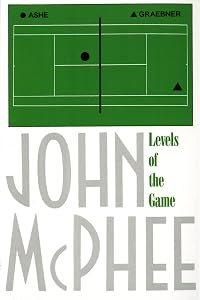
This account of a tennis match played by Arthur Ashe against Clark Graebner at Forest Hills in 1968 begins with the ball rising into the air for the initial serve and ends with the final point. McPhee provides a brilliant, stroke-by-stroke description while examining the backgrounds and attitudes which have molded the players' games.Tags
Recommendations































Member Recommendations

Member Reviews
In probably less time than the match took, you can relive the Men's Semi-final of the 1968 US Open. Interspersed with the play-by-play account is the backstory of Arthur Ashe and Clark Graebner. They grew up in very different environments but with a similar love of the game. Ashe's biography was most interesting to me. He was cerebral and curious, and yet knew how to keep himself focused when it mattered most. McPhee's writing is masterful, such that this book seems to put a lifetime into a short story.
In 1968, the U.S. Open Championship was first opened to amateur players. They weren't expected to do very well against the players on the pro tour, but both Arthur Ashe and Clark Graebner made it to the semifinals. This is the story of that game. McPhee starts right off with the first serve, moving cinematically for a close shot of several points, then backing out to focus on the perspective of someone in the player's box or watching the match on television, or maybe taking a panoramic shot of the background of one of the players and how they started playing tennis, and moving in again for a closeup of a game or two.
The book, published in 1969, is a little dated in the description of the "modern" game of tennis, and by comments made by show more some of the players, like "he plays like that because he's white" or "because he's black", or he has a "Latin temperament." McPhee was definitely at his best describing moments in the match: a tense point, a solid ace, and the reaction of players and fans. A worthwhile read that left a smile on my face in the end. show less
The book, published in 1969, is a little dated in the description of the "modern" game of tennis, and by comments made by show more some of the players, like "he plays like that because he's white" or "because he's black", or he has a "Latin temperament." McPhee was definitely at his best describing moments in the match: a tense point, a solid ace, and the reaction of players and fans. A worthwhile read that left a smile on my face in the end. show less
Miglior libro sul tennis mai scritto, dice Gianni Clerici. Come non concordare? Splendidamente scritto, legge a un tempo la bellezza del tennis e un preciso momento storico dell'America. Tutto ciò è riferito alla prima parte del libro, Livelli di gioco. Ma anche la seconda, sul "giardiniere di Wimbledon" è allo stesso livello. Parzialmente riuscito il saggio di Codignola inserito tra i due testi di McPhee.
This early John McPhee book works on many levels, as an account of a match between two young tennis stars, Arthur Ashe and Clark Graebner; as profiles of each man at the start of their careers; as an examination of race and sport in America at the end of the 1960s. I wish there were less tennis jargon in the accounts of the match between Ashe and Graebner but that's a quibble. I was surprised by how meaningful this book still is.
McPhee on tennis. To be fair, some of it reads exactly like the chatter of an informed television commentator, and it is mostly forgettable. But McPhee brings it together as a dual character study.
> Ashe and Graebner play tennis with an efficiency that is thought by some to diminish tennis itself. Modern power tennis—the so-called Big Game (overwhelming serves followed by savage attacks at the net)—has now had many years in which to evolve, and Ashe and Graebner are among the ultimate refinements of it in the United States.
> Graebner’s angry look seems to say that he believes it was Carole who served the double fault. She absorbs this, by grace and by agreement. “I tell him to look over at me when he gets mad, because I would show more rather have him get mad at me than at anyone else—or at himself,” … Ashe is thinking, “Graebner just looked at his wife.” And behind Arthur’s impassive face—behind the enigmatic glasses, the lifted chin, the first-mate-on-the-bridge look—there seems to be a smile. Progress against Graebner in any given match, many players believe, can be measured directly by the number of times Graebner has looked at his wife.
> After this game, new balls will be coming in—all the more reason for Ashe to try to break Graebner now. Tennis balls are used for nine games (warmup counts for two), and over that span they get fluffier and fluffier. When they are new and the nap is flat, wind resistance is minimal and they come through fast and heavy. Newies, or freshies, as the tennis players call them, are a considerable advantage to the server—something like a supply of bullets. show less
> Ashe and Graebner play tennis with an efficiency that is thought by some to diminish tennis itself. Modern power tennis—the so-called Big Game (overwhelming serves followed by savage attacks at the net)—has now had many years in which to evolve, and Ashe and Graebner are among the ultimate refinements of it in the United States.
> Graebner’s angry look seems to say that he believes it was Carole who served the double fault. She absorbs this, by grace and by agreement. “I tell him to look over at me when he gets mad, because I would show more rather have him get mad at me than at anyone else—or at himself,” … Ashe is thinking, “Graebner just looked at his wife.” And behind Arthur’s impassive face—behind the enigmatic glasses, the lifted chin, the first-mate-on-the-bridge look—there seems to be a smile. Progress against Graebner in any given match, many players believe, can be measured directly by the number of times Graebner has looked at his wife.
> After this game, new balls will be coming in—all the more reason for Ashe to try to break Graebner now. Tennis balls are used for nine games (warmup counts for two), and over that span they get fluffier and fluffier. When they are new and the nap is flat, wind resistance is minimal and they come through fast and heavy. Newies, or freshies, as the tennis players call them, are a considerable advantage to the server—something like a supply of bullets. show less
This is a short book about Arthur Ashe, Clark Graebner, and modern tennis as of 1968. It describes the semi-final match of the US Open that they played & uses that as a framework to tell their stories. It is well-written and interesting. It is certainly dated, both for tennis and for cultural mores and political thinking. It is very much current events reporting, of its time.
Ratings
Members
- Recently Added By
Lists

Sports Illustrated's The Top 100 Sports Books of All Time
51 works; 7 members

Books about sports
65 works; 3 members

Read These Too
458 works; 9 members
Author Information

59+ Works 21,095 Members
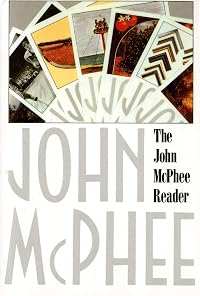
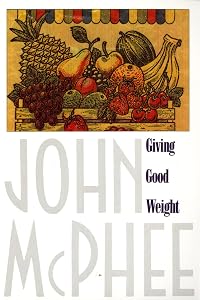
McPhee was born in Princeton, New Jersey, and educated at Princeton University and Cambridge University. His writing career began at Time magazine and led to his long association with the New Yorker, where he has been a staff writer since 1965. That same year he published his first book, A Sense of Where You Are, with FSG, and soon followed with show more The Headmaster (1966), Oranges (1967), The Pine Barrens (1968), A Roomful of Hovings and Other Profiles (collection, 1969), The Crofter and the Laird (1969), Levels of the Game (1970), Encounters with the Archdruid (1972), The Deltoid Pumpkin Seed (1973), The Curve of Binding Energy (1974), Pieces of the Frame (collection, 1975), and The Survival of the Bark Canoe (1975). Both Encounters with the Archdruid and The Curve of Binding Energy were nominated for National Book Awards in the category of science Since 1977, the year in which McPhee received the Award in Literature from the American Academy of Arts and Letters and The John McPhee Reader and the bestselling Coming into the Country appeared in print, Farrar, Straus and Giroux has published Giving Good Weight (collection, 1979), Basin and Range (1981), In Suspect Terrain (1983), La Place de la Concorde Suisse (1984), Table of Contents (collection, 1985), Rising from the Plains (1986), Heirs of General Practice (in a paperback edition, 1986), The Control of Nature (1989), Looking for a Ship (1990), Assembling California (1993), The Ransom of Russian Art (1994), The Second John McPhee Reader (1996), and Irons in the Fire (1997). Annals of the Former World was published in 1998 and was awarded the Pulitzer Prize in 1999. McPhee has taught at Princeton as Ferris Professor since 1975. (Bowker Author Biography) show less
Common Knowledge
- Original publication date
- 1969
- People/Characters
- Arthur Ashe; Clark Graebner
- Important places
- Flushing Meadows, Queens, New York, New York, USA
- Dedication
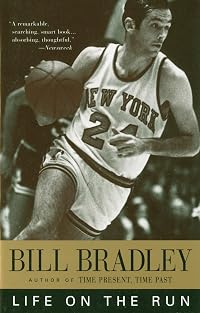
- For Bill Bradley
- First words
- Arthur Ashe, his feet apart, his knees slightly bent, lifts a tennis ball into the air.
- Original language
- English
Classifications
- Genres
- Sports and Leisure, Nonfiction, General Nonfiction, Biography & Memoir
- DDC/MDS
- 796.3420922 — Arts & recreation Recreation, sports, and performing arts Athletic and outdoor sports and games Ball sports Racquet sports Tennis Tennis Biography And History
- LCC
- GV994 .A7 .M3 — Geography, Anthropology and Recreation Recreation. Leisure Recreation. Leisure Sports Ball games: Baseball, football, golf, etc.
- BISAC
Statistics
- Members
- 403
- Popularity
- 76,804
- Reviews
- 6
- Rating
- (4.11)
- Languages
- English, Italian, Spanish
- Media
- Paper, Audiobook, Ebook
- ISBNs
- 11
- ASINs
- 6