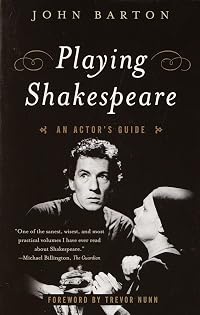
Playing Shakespeare {book to accompany video}
by John Barton (Contributor), Royal Shakespeare Company
On This Page
Description
Playing Shakespeare is the premier guide to understanding and appreciating the mastery of the world's greatest playwright. Together with Royal Shakespeare Company actors-among them Patrick Stewart, Judi Dench, Ian McKellen, Ben Kingsley, and David Suchet-John Barton demonstrates how to adapt Elizabethan theater for the modern stage. The director begins by explicating Shakespeare's verse and prose, speeches and soliloquies, and naturalistic and heightened language to discover the essence of show more his characters. In the second section, Barton and the actors explore nuance in Shakespearean theater, from evoking irony and ambiguity and striking the delicate balance of passion and profound intellectual thought, to finding new approaches to playing Shakespeare's most controversial creation, Shylock, from The Merchant of Venice. A practical and essential guide, Playing Shakespeare will stand for years as the authoritative favorite among actors, scholars, teachers, and students. show lessTags
Recommendations



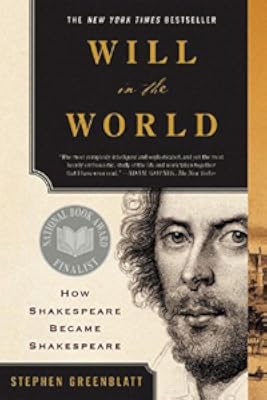




Member Reviews
A marvelous book, although in truth primarily a transcription of a far more vital television series.
John Barton was, along with his theatrical partner Peter Hall, one of the foremost forces in defining how the mid-to-late 20th century understood and interpreted Shakespeare on the stage. Barton and Hall's development of the Royal Shakespeare Company set a new pace, a new vision, a new bar for actors to climb in their pursuit of understanding of the Bard. Alongside radical directors like Peter Brook and the dense political reworkings of Michael Bogdanov, Barton and Hall gave us the modern view of Shakespeare on the stage, through their landmark productions and their work with almost all of the great actors of my grandparents' generation. show more (Indeed, their work was so profound that many people these days take it to be "the" way of doing Shakespeare, forgetting both that previous generations' performance styles would be quite odd to our eyes, and that the current generation's desire to revitalise and decolonise Shakespeare on the page and on the stage is an equally valid approach.)
In 1979, Barton and some of his RSC actors staged two hourlong television specials examining the way actors approach Shakespeare. In 1982, ITV took this to another level by commissioning a full series. If you have any interest in this subject whatsoever, Playing Shakespeare is well worth seeking out. In a seemingly casual format, surrounded by eager students in the round, Barton sits in his tan-coloured cardigan and engages with a host of RSC actors, every one of them impressive. Household names abound (Dench, Stewart, Suchet, Kingsley, McKellen, Ashcroft) as well as luminaries of the stage, from Richard Pasco and the endlessly wondrous Jane Lapotaire to Michael Williams and the retired-too-soon Mike Gwilym.
Each episode tackles a concept, such as speaking the verse, bringing out the contradictions in the text, or character interpretation, as when David Suchet and Patrick Stewart (both of whom had played Shylock in a Barton production) spend an entire episode examining the key scenes in The Merchant of Venice. Most memorable is an episode devoted entirely to a single short scene from Twelfth Night, with the actors and Barton walking us through a rehearsal. Barton and co actually filmed a huge amount of material that didn't make it to air. The book consists of transcriptions of each episode (edited for clarity and form) as well as three chapters of "new" material from the unaired segments. (A weighty discussion between Barton and McKellen on performing contemporary Shakespeare seems an especial loss to the series.)
Although it aired before I was born, Playing Shakespeare conjures up a rich nostalgia in me. For an era when a mainstream television network felt it worthy to screen a series of Shakespearean acting insights for a non-specialist audience. When arts programming had a place in the schedule, and (some) members of the public felt it worthwhile to reach outside of their sphere for a moment of cultural enlightenment. It's also just a thoroughly charming and engaging series, and I highly recommend viewing it.
But as insights into the performance of Shakespeare, the book is also still valid forty years on. show less
John Barton was, along with his theatrical partner Peter Hall, one of the foremost forces in defining how the mid-to-late 20th century understood and interpreted Shakespeare on the stage. Barton and Hall's development of the Royal Shakespeare Company set a new pace, a new vision, a new bar for actors to climb in their pursuit of understanding of the Bard. Alongside radical directors like Peter Brook and the dense political reworkings of Michael Bogdanov, Barton and Hall gave us the modern view of Shakespeare on the stage, through their landmark productions and their work with almost all of the great actors of my grandparents' generation. show more (Indeed, their work was so profound that many people these days take it to be "the" way of doing Shakespeare, forgetting both that previous generations' performance styles would be quite odd to our eyes, and that the current generation's desire to revitalise and decolonise Shakespeare on the page and on the stage is an equally valid approach.)
In 1979, Barton and some of his RSC actors staged two hourlong television specials examining the way actors approach Shakespeare. In 1982, ITV took this to another level by commissioning a full series. If you have any interest in this subject whatsoever, Playing Shakespeare is well worth seeking out. In a seemingly casual format, surrounded by eager students in the round, Barton sits in his tan-coloured cardigan and engages with a host of RSC actors, every one of them impressive. Household names abound (Dench, Stewart, Suchet, Kingsley, McKellen, Ashcroft) as well as luminaries of the stage, from Richard Pasco and the endlessly wondrous Jane Lapotaire to Michael Williams and the retired-too-soon Mike Gwilym.
Each episode tackles a concept, such as speaking the verse, bringing out the contradictions in the text, or character interpretation, as when David Suchet and Patrick Stewart (both of whom had played Shylock in a Barton production) spend an entire episode examining the key scenes in The Merchant of Venice. Most memorable is an episode devoted entirely to a single short scene from Twelfth Night, with the actors and Barton walking us through a rehearsal. Barton and co actually filmed a huge amount of material that didn't make it to air. The book consists of transcriptions of each episode (edited for clarity and form) as well as three chapters of "new" material from the unaired segments. (A weighty discussion between Barton and McKellen on performing contemporary Shakespeare seems an especial loss to the series.)
Although it aired before I was born, Playing Shakespeare conjures up a rich nostalgia in me. For an era when a mainstream television network felt it worthy to screen a series of Shakespearean acting insights for a non-specialist audience. When arts programming had a place in the schedule, and (some) members of the public felt it worthwhile to reach outside of their sphere for a moment of cultural enlightenment. It's also just a thoroughly charming and engaging series, and I highly recommend viewing it.
But as insights into the performance of Shakespeare, the book is also still valid forty years on. show less
as good as any book on WS that you will ever read. barton and his company of excellent actors, incl. joan lapotaire, and richard pasco, are scintillating.
,
,
5 stars are not enough
Ratings
Members
- Recently Added By
Lists

Suggested Reading for Stage Managers
42 works; 1 member
Author Information

John Bernard Adie Barton was born in London, England on November 26, 1928. He was educated at Eton College and at King's College, Cambridge, where he directed numerous student productions and, after graduating, became a fellow and lay dean. When Peter Hall founded the Royal Shakespeare Company in 1961, he asked Barton to help him get the troupe show more off the ground. Barton would go on to direct more than 50 productions there. As a director and in the classes and workshops he taught, Barton was known for helping actors find the meaning in Shakespeare's lines. He was also a writer and adapter. In 1963, he condensed Shakespeare's three Henry VI plays and Richard III and staged them under the title The Wars of the Roses. He created The Hollow Crown, which premiered at the Royal Shakespeare Company in 1961 and then had a run on Broadway in 1963. He also created The Greeks, a nine-hour production spread over three evenings that adapted 10 plays by Euripides, Aeschylus, Sophocles and Homer to tell the story of the Trojan War. He died on January 18, 2018 at the age of 89. (Bowker Author Biography) show less

168+ Works 1,004 Members
Work Relationships
Is a supplement to
Common Knowledge
- Canonical title
- Playing Shakespeare {book to accompany video}
- Original publication date
- 1984
- Original language
- English
- Canonical DDC/MDS
- 792.02801
- Disambiguation notice
- 0307773914 | 9780307773913 Kindle
0385720858 | 9780385720854 2001 paperback Anchor
0413547809 | 9780413547804 1984 paperback Methuen
0413547906 | 9780413547903 1984 paperback Methuen
0713687738 | 9780713687736 200... (show all)9 paperback Methuen
1417711140 | 9781417711147 2001 hardcover Tandem
John Barton has been with the Royal Shakespeare Company since 1960 directing 26 of Shakespeare's plays for them. In the first half of the book, Barton attempts an objective analysis of how Shakespeare's text actually works, examining the use of verse and prose, set speeches and soliloquies, language and character. In the second half he concentrates on the more subjective areas such as irony and ambiguity, passion and coolness. The book springs from a nine-part London Weekend Television series, in which these various topics were investigated in front of the cameras by Barton and a group of well-known Shakespearean actors including Peggy Ashcroft, Tony Church, Sinead Cusack, Judi Dench, Susan Fleetwood, Mike Gwilym, Sheila Hancock, Lisa Harrow, Alan Howard, Ben Kingsley, Jane Lapotaire, Barbara Leigh-Hunt, Ian McKellen, Richard Pasco, Michael Pennington, Roger Rees, Norman Rodway, Donald Sinden, Patrick Stewart, David Suchet and Michael Williams. Useful for actors and scholars, this book will also aid teachers and students working on Shakespeare's plays in the classroom.
Classifications
- Genres
- Poetry, Nonfiction, Literature Studies and Criticism
- DDC/MDS
- 792.02801 — Arts & recreation Recreation, sports, and performing arts Stage presentations modified standard subdivisions Techniques, procedures, apparatus, equipment, materials, miscellany Acting and Performance modified standard subdivisions Philosophy and theory
- LCC
- PR3091 .B37 — Language and Literature English English Literature English renaissance (1500-1640)
- BISAC
Statistics
- Members
- 381
- Popularity
- 82,357
- Reviews
- 3
- Rating
- (4.23)
- Languages
- English
- Media
- Paper, Ebook
- ISBNs
- 9
- UPCs
- 1
- ASINs
- 3