On This Page
Description
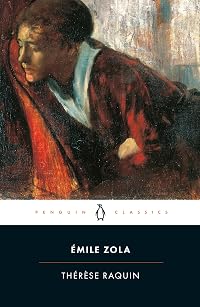
The story of a girl trapped in an unhappy marriage to her first cousin so captivated the French writer Emile Zola that he explored it in multiple works, producing both a novel and a play based on the same core set of characters. The protagonist, Camille, becomes desperate and takes matters into her own hands, committing what may be the perfect crime in order to build a new life for herself. Will she get away with it, or will her paralyzing guilt give her away?Tags
Recommendations























Member Recommendations


Member Reviews
Therese Raquin is Madame Bovary on steroids. The young Zola was impressed by Bovary, and its influence is clear throughout Raquin - but he ratchets every aspect of the story up, for better and...well, really for worse; this isn't as good as Bovary.
Mainly that's because Zola is no match at all for Flaubert psychologically. Bovary is as trenchant a view inside the human brain as I've read outside Tolstoy; laser-focused and brilliant. Zola, by contrast, is muddling about with some almost Medieval notions of sanguine (that means optimistic) vs. nervous temperaments. It's all a mess, and unfortunately Zola hammers the shit out of it, and it all feels sophomoric.
On the other hand, once you get past the psychological mumbo-jumbo, it's a show more fiercely intense book - straining at its sleeves with dread and tension. You thought Bovary had some unlikable characters? You ain't seen nothin'. Raquin's two leads are despicable, irredeemable cesspools of humanity.
Zola is a visual writer. Manet's Olympia, above, isn't crucial to the story, but my footnotes pointed it out several times and I was glad I went and found it, so as a public service, here it is. Note the cat on the right.
More importantly, he describes the alleys of mid-19th century Paris in wonderful sludgy detail, particularly the oozing Seine.
Raquin is shockingly gruesome, especially for its time but even now. Edgar Allen Poe sought consciously to shock his audience, because he thought it would bring him attention: "But whether [the horrific shit] of which I speak are, or are not in bad taste is little to the purpose. To be appreciated you must be read, and these things are invariably sought after with avidity." (Edgar Allan Poe to Thomas W. White — April 30, 1835) The same strategy is at play here. (And it's clear from a shoutout to Poe's obsession with being buried alive that Zola's aware of this lesson.) In the last half of the book, the horror ratchets up to a Grand Guignol level:Therese invites a beating to her stomach in order to miscarry; a cat is murdered; and most of all, there's the awful spectacle of Mme. Raquin, paralyzed (Noirtier-style!) and forced to watch her two surrogate children confess savagely to her biological son's murder night after night.
I know some perfectly smart readers who just choose not to handle books about terrible people. Those friends of mine don't like Madame Bovary. (Or Wuthering Heights, for another example.) If you're one of those people, holy shit, do not read this book. But if you like what's in the shadows...here are the things that ooze in them. show less
Mainly that's because Zola is no match at all for Flaubert psychologically. Bovary is as trenchant a view inside the human brain as I've read outside Tolstoy; laser-focused and brilliant. Zola, by contrast, is muddling about with some almost Medieval notions of sanguine (that means optimistic) vs. nervous temperaments. It's all a mess, and unfortunately Zola hammers the shit out of it, and it all feels sophomoric.
On the other hand, once you get past the psychological mumbo-jumbo, it's a show more fiercely intense book - straining at its sleeves with dread and tension. You thought Bovary had some unlikable characters? You ain't seen nothin'. Raquin's two leads are despicable, irredeemable cesspools of humanity.
Zola is a visual writer. Manet's Olympia, above, isn't crucial to the story, but my footnotes pointed it out several times and I was glad I went and found it, so as a public service, here it is. Note the cat on the right.
More importantly, he describes the alleys of mid-19th century Paris in wonderful sludgy detail, particularly the oozing Seine.
Raquin is shockingly gruesome, especially for its time but even now. Edgar Allen Poe sought consciously to shock his audience, because he thought it would bring him attention: "But whether [the horrific shit] of which I speak are, or are not in bad taste is little to the purpose. To be appreciated you must be read, and these things are invariably sought after with avidity." (Edgar Allan Poe to Thomas W. White — April 30, 1835) The same strategy is at play here. (And it's clear from a shoutout to Poe's obsession with being buried alive that Zola's aware of this lesson.) In the last half of the book, the horror ratchets up to a Grand Guignol level:
I know some perfectly smart readers who just choose not to handle books about terrible people. Those friends of mine don't like Madame Bovary. (Or Wuthering Heights, for another example.) If you're one of those people, holy shit, do not read this book. But if you like what's in the shadows...here are the things that ooze in them. show less
Thérèse Raquin had a rough reception when it was first published. Vile, putrid, immoral, pornographic, a cesspit, were just some of the descriptors from the critics. What caused such an uproar? Zola explained his motivation
Thérèse is the first of these individuals. show more Quiet and docile on the surface, she was brought up by her aunt together with her sickly cousin, Camille. Forced to look after Camille when they were children, and even sleep in the same bed with him, she was completely repulsed. The trio moved to Paris when Camille was old enough to find a job. Madame Raquin opened a haberdashery store in the dismal Passage du Pont-Neuf, a place without light or air. She and Thérèse ran it, sharing one bedroom, and Camille went off to work daily, returning to an evening in the dining room between his bedroom and that of the two women.
Thérèse and Camille married, sinking the new bride further into despondency as she moved to her new room across the hall. Life seemed devoid of any future until one day Camille brought home an old acquaintance from their village. Laurent, “tall, strong, and fresh faced”, astonished her in contrast to Camille, with his “weak and puny body”.
Here we have three temperaments colliding: the nervous disposition of Thérèse, the sanguine Laurent, and the lymphatic Camille. Such theories were already outmoded at the time Zola wrote the book, but Andrew Rothwell in his detailed introduction, says Zola felt he could make literary descriptions of these character types.
Thérèse needed only to encounter a full blooded man of the earth like Laurent for all her suppressed energy to erupt. Inevitably she and Laurent had an affair, right under the noses of the unsuspecting Madame Raquin and Camille. A chance remark by a visiting guest one evening convinced them that they should be able to do away with Camille in a murder disguised as an accident, so that they would never be caught. They could live freely with their passion for the rest of their lives.
These actions from the basis of the book. Zola explores their lack of guilt, the animal nature of their deed, committed just like an animal which kills another for food. Their only fear was that of being caught. Camille, however, would not rest. His spirit haunted them in all their doings, initially appearing only in the evenings, and then without cease. How to dispel this ghost became their sole concern, each in their own way.
Temperaments shift back and forth. As the personalities change, there are cataclsymic shifts in their relationship. Everything is made worse by the claustrophobic living conditions surrounding them. How this all plays out is the heart of the novel.
What are readers to make of such amoral characters, with whom they are unlikely to engage? Whatever they decide, it may ultimately be the sort of hell bent for leather race to the bitter end, to discover the dénouement that keeps them going.
This was Zola’s third novel, written before he started on his Rougon Macquart cycle. While it bears the marks of an early novel, the seed for his exploration of nature and nurture is clearly there, making it well worth reading to those who read him in depth. show less
I chose to portray individuals existing under the sovereign dominion of their nerves and their blood, devoid of free will and drawn into every act of their lives by the inescapable promptings of their flesh. {…} I set out to trace, step by step, the hidden workings of the passions, the urges of instinct, and the derangements of the brain which follow on from a nervous crisis. {…} There is a total absence of soul, as I will readily admit, for such was my intention.
Thérèse is the first of these individuals. show more Quiet and docile on the surface, she was brought up by her aunt together with her sickly cousin, Camille. Forced to look after Camille when they were children, and even sleep in the same bed with him, she was completely repulsed. The trio moved to Paris when Camille was old enough to find a job. Madame Raquin opened a haberdashery store in the dismal Passage du Pont-Neuf, a place without light or air. She and Thérèse ran it, sharing one bedroom, and Camille went off to work daily, returning to an evening in the dining room between his bedroom and that of the two women.
Thérèse and Camille married, sinking the new bride further into despondency as she moved to her new room across the hall. Life seemed devoid of any future until one day Camille brought home an old acquaintance from their village. Laurent, “tall, strong, and fresh faced”, astonished her in contrast to Camille, with his “weak and puny body”.
Here we have three temperaments colliding: the nervous disposition of Thérèse, the sanguine Laurent, and the lymphatic Camille. Such theories were already outmoded at the time Zola wrote the book, but Andrew Rothwell in his detailed introduction, says Zola felt he could make literary descriptions of these character types.
Thérèse needed only to encounter a full blooded man of the earth like Laurent for all her suppressed energy to erupt. Inevitably she and Laurent had an affair, right under the noses of the unsuspecting Madame Raquin and Camille. A chance remark by a visiting guest one evening convinced them that they should be able to do away with Camille in a murder disguised as an accident, so that they would never be caught. They could live freely with their passion for the rest of their lives.
These actions from the basis of the book. Zola explores their lack of guilt, the animal nature of their deed, committed just like an animal which kills another for food. Their only fear was that of being caught. Camille, however, would not rest. His spirit haunted them in all their doings, initially appearing only in the evenings, and then without cease. How to dispel this ghost became their sole concern, each in their own way.
Temperaments shift back and forth. As the personalities change, there are cataclsymic shifts in their relationship. Everything is made worse by the claustrophobic living conditions surrounding them. How this all plays out is the heart of the novel.
What are readers to make of such amoral characters, with whom they are unlikely to engage? Whatever they decide, it may ultimately be the sort of hell bent for leather race to the bitter end, to discover the dénouement that keeps them going.
This was Zola’s third novel, written before he started on his Rougon Macquart cycle. While it bears the marks of an early novel, the seed for his exploration of nature and nurture is clearly there, making it well worth reading to those who read him in depth. show less
This was my first experience of reading Zola, but it certainly won't be my last. This novel was an absolute page-turner. Written in 1867, Zola's character experiment with personality types—melancholic, sanguine, phlegmatic and choleric—and his bleak descriptions of dirty, dark, smelly, nineteenth-century Paris totally fascinated me. The story gripped me throughout, even though it started out bleak and was never destined to end well. I found it a fascinating study of what happens to unhappy people who overstep the bounds in their search for personal gratification. A time-worn tale made fresh and horrible. As a bonus, I bought this when I visited Shakespeare and Company in Paris last week, so the cobble stones and little alleyways show more were fresh in my mind as I was reading. show less
Therese Raquin lives with her mother-in-law and cousin, who is also her husband, in a haberdashery shop in a dingy Paris arcade. Every day, she sits quietly with her mother-in-law while her husband leaves to go to work. Apparently meek and accepting of her small life, she is, in fact, seething with anger and passion.
Once a week, a group of friends and colleagues descend on the apartment to have dinner and play cards. There, Therese meets Laurent – an imperfect, but available lover.
The two conspire to murder her husband, without realizing that the act will drive them both into madness.
Despite this only being an English translation Zola's writing is still sublime and compelling, full of black macabre poetry, so much so that I could show more hardly put this book down. The intricate development of each of the characters, from Laurent and Thérèse to Camille and Madame Raquin, as well as the vivid portrayal of 19th century middle class Paris, was exquisite. Zola, takes his readers down into the murky depths of the human soul in this exploration of adultery, murder, betrayal and revenge.
When this novel was first published in 1868 it was considered scandalous, much to Zola's annoyance, which helped it gain immediate notoriety and success but now some 150+ years later it has become one the most widely read 19th century French literature and rightly deserves it's place on that list. show less
Once a week, a group of friends and colleagues descend on the apartment to have dinner and play cards. There, Therese meets Laurent – an imperfect, but available lover.
The two conspire to murder her husband, without realizing that the act will drive them both into madness.
Despite this only being an English translation Zola's writing is still sublime and compelling, full of black macabre poetry, so much so that I could show more hardly put this book down. The intricate development of each of the characters, from Laurent and Thérèse to Camille and Madame Raquin, as well as the vivid portrayal of 19th century middle class Paris, was exquisite. Zola, takes his readers down into the murky depths of the human soul in this exploration of adultery, murder, betrayal and revenge.
When this novel was first published in 1868 it was considered scandalous, much to Zola's annoyance, which helped it gain immediate notoriety and success but now some 150+ years later it has become one the most widely read 19th century French literature and rightly deserves it's place on that list. show less
If you think serious depravity is a theme confined to 20th century literature or later, you need to read Therese Raquin. This book paints a brutal and unrelenting story of two amoral people who will even fake the appearance of guilt and remorse. At first I was put off by the repetition. In the beginning it was the grungy arcade, shop and claustrophobic rooms where Therese and family spend most of their lives. Then it was the description of that life and what led to present circumstances. Each section of forward progress is really over-the-top and repetitive, but once Zola is done and moves beyond, it’s pretty much left in the past. Which is good because the sheer emotional turmoil is enough to cope with from one time frame to the show more next.
It’s that emotional turmoil that had me at the breaking point for believability. No, I’ve never been a murderer or an adulteress, so I don’t know what that kind of guilt can do to a person, but it seemed like drama for drama’s sake. Either in the narrative style, or in the intent and motivations of the characters. Whichever it was, it felt alien, like it did in Crime and Punishment. All the murderers in these tales have many a justification for their crimes ahead of time. Their victims deserve to be killed. The killers have the right to do away with their victims because justice is on their side. But after the killing is done, all fall prey to their own twisted psyches which feed on escalating guilt if not exactly remorse.
For Therese and Laurent, they wait so long to engineer their eventual marriage, that any passion they manufactured for each other (out of propinquity and ennui) is gone; burned out by the act of violence they committed and has gone unpunished and undetected. Camille’s death was and will forever be an accident to the world and what is more natural than to bring Camille’s widow and best friend together in a union to honor the drowned man. By the time they connive their way into their legitimate relationship, all they have left is fear, guilt, self-pity, and hatred for each other. Zola describes it well in one short sentence - “Waiting had extinguished the flame that had formerly fired them.”
Some say that Therese is portrayed as a more base creature than Laurent and is the victim of the writer’s misogyny and chauvinism, but I didn’t feel it was unbalanced. Laurent is described as not caring if he hurt Camille or his mother. He’s brutish, lazy and delusional about his right to live a completely idle life on the money Therese will inherit from Madame Raquin. His “love” for Therese is brought on by the fact that he cannot have her, not from anything genuine. I found the use of the word sweehearts to describe what they are to each other to be the height of irony and I don’t know whether to attribute it to Zola or the translation. Either way it is the perfect antithesis of their true nature.
As bad as Laurent is, Therese is a perfect match for him. She manipulates Laurent to violence and uses this to engineer some sort of pardon in her own mind. She abases herself before Madame Raquin and though the old woman is beyond speech, determines that she does in fact forgive Therese for killing her son. With these ideas twisting in her brain, she attempts to live a life outside of her household and tries on loose living and drink for a while. So does Laurent. It doesn’t work to relieve them of their hallucinations of the dead man and they are inexorably drawn back together in a spiral of increasing violence and hate.
The gothic heights of perverted morality and atmosphere are pretty thick toward the end and the Poe vibe is even stronger. Their impending madness is always in the forefront of the narrative and it doesn’t take much to see where this will end up. With Madame Raquin’s paralysis a la Noirtier being the absolute capper on the whole situation, the tension escalates to the inevitable conclusion which, really, is the only way it could end and it satisfies. Therese and Laurent deserved each other and were true to their natures to the bitter end. show less
It’s that emotional turmoil that had me at the breaking point for believability. No, I’ve never been a murderer or an adulteress, so I don’t know what that kind of guilt can do to a person, but it seemed like drama for drama’s sake. Either in the narrative style, or in the intent and motivations of the characters. Whichever it was, it felt alien, like it did in Crime and Punishment. All the murderers in these tales have many a justification for their crimes ahead of time. Their victims deserve to be killed. The killers have the right to do away with their victims because justice is on their side. But after the killing is done, all fall prey to their own twisted psyches which feed on escalating guilt if not exactly remorse.
For Therese and Laurent, they wait so long to engineer their eventual marriage, that any passion they manufactured for each other (out of propinquity and ennui) is gone; burned out by the act of violence they committed and has gone unpunished and undetected. Camille’s death was and will forever be an accident to the world and what is more natural than to bring Camille’s widow and best friend together in a union to honor the drowned man. By the time they connive their way into their legitimate relationship, all they have left is fear, guilt, self-pity, and hatred for each other. Zola describes it well in one short sentence - “Waiting had extinguished the flame that had formerly fired them.”
Some say that Therese is portrayed as a more base creature than Laurent and is the victim of the writer’s misogyny and chauvinism, but I didn’t feel it was unbalanced. Laurent is described as not caring if he hurt Camille or his mother. He’s brutish, lazy and delusional about his right to live a completely idle life on the money Therese will inherit from Madame Raquin. His “love” for Therese is brought on by the fact that he cannot have her, not from anything genuine. I found the use of the word sweehearts to describe what they are to each other to be the height of irony and I don’t know whether to attribute it to Zola or the translation. Either way it is the perfect antithesis of their true nature.
As bad as Laurent is, Therese is a perfect match for him. She manipulates Laurent to violence and uses this to engineer some sort of pardon in her own mind. She abases herself before Madame Raquin and though the old woman is beyond speech, determines that she does in fact forgive Therese for killing her son. With these ideas twisting in her brain, she attempts to live a life outside of her household and tries on loose living and drink for a while. So does Laurent. It doesn’t work to relieve them of their hallucinations of the dead man and they are inexorably drawn back together in a spiral of increasing violence and hate.
The gothic heights of perverted morality and atmosphere are pretty thick toward the end and the Poe vibe is even stronger. Their impending madness is always in the forefront of the narrative and it doesn’t take much to see where this will end up. With Madame Raquin’s paralysis a la Noirtier being the absolute capper on the whole situation, the tension escalates to the inevitable conclusion which, really, is the only way it could end and it satisfies. Therese and Laurent deserved each other and were true to their natures to the bitter end. show less
Thérèse Raquin swims in a vast ocean of guilt and sorrow. Initially trapped in a loveless and boring marriage arranged and planned for Madame Raquin’s interest, Thérèse an orphan, without a taste of independence as a mind of her own, not so much their consideration for her own opinion, rebel in the most repugnant of ways. What starts off as small doses of freedom and pleasure becomes a gnawing hunger for an unrepentant and reckless solution. And as this slips easily in that small, tight interstice between murder and ardour its most appalling and perverse plot device is not with the offense committed but the inflicted psychological torture that heightens page after page. It traps in a cellar of nausea. Complicity becomes ugly show more resistance.
Zola’s acerbic and riveting prose where the plot is seamlessly ingrained is certain to shock and horrify to this day. However, as some twists and turns can be infeasible and absurd they mildly take away the pounding suspense and excruciating punishment of a passionate love turned hatred. It also includes some of the medical, often in psychology, beliefs at that time which are both interesting and ridiculous (hysteria as the only malady of women, anyone?) A novel easily not for the faint-hearted; short and scalding. show less
Zola’s acerbic and riveting prose where the plot is seamlessly ingrained is certain to shock and horrify to this day. However, as some twists and turns can be infeasible and absurd they mildly take away the pounding suspense and excruciating punishment of a passionate love turned hatred. It also includes some of the medical, often in psychology, beliefs at that time which are both interesting and ridiculous (hysteria as the only malady of women, anyone?) A novel easily not for the faint-hearted; short and scalding. show less
This book is not enjoyable to read. On the other hand, its descriptive language is detailed and effectively and viscerally immersed me in the novel’s world of obsession, murder, guilt, and domestic violence. I am gratified to now have it among my literary experiences. Kate Winslet’s narration is terrific.
Members
- Recently Added By
Published Reviews
sebbene i francesi vogliano fare i primi della classe in letteratura, arte, filosofia, poesia, non saranno mai in grado di realizzare questo utopico sogno.
perchè la falsità li forgia dalla notte dei tempi
perchè la falsità li forgia dalla notte dei tempi
added by sshnn
Lists

The Guardian's 1000 Novels Everyone Must Read
1,005 works; 552 members

Best of French Literature
138 works; 27 members

Philip Ward's Lifetime Reading Plan
592 works; 22 members
Female Protagonist
1,056 works; 57 members

Favourite 19th century fiction
257 works; 62 members

French Books
102 works; 15 members

Western World's Greatest Books - Project Gutenberg
295 works; 15 members

Best Revenge Stories
69 works; 9 members

Books Read in 2014
2,344 works; 89 members
Love Triangles in Literature
108 works; 15 members

1,001 BYMRBYD Concensus
723 works; 27 members

Short and Sweet
246 works; 24 members

A Novel Cure
742 works; 23 members

Vote - Bookmarque's Teetering TBR Tower
33 works; 8 members

Overdue Podcast
808 works; 9 members
Paris, City of Lights
103 works; 17 members
Literature About Adultery
69 works; 10 members

Anti-heroines in fiction
59 works; 9 members

naturalism / realism
5 works; 1 member

psychological
14 works; 1 member

DigitalDreamDoor top 300
300 works; 4 members

Favorite French Fiction
209 works; 91 members
Author Information

706+ Works 35,974 Members
Zola was the spokesperson for the naturalist novel in France and the leader of a school that championed the infusion of literature with new scientific theories of human development drawn from Charles Darwin (see Vol. 5) and various social philosophers. The theoretical claims for such an approach, which are considered simplistic today, were show more outlined by Zola in his Le Roman Experimental (The Experimental Novel, 1880). He was the author of the series of 20 novels called The Rougon-Macquart, in which he attempted to trace scientifically the effects of heredity through five generations of the Rougon and Macquart families. Three of the outstanding volumes are L'Assommoir (1877), a study of alcoholism and the working class; Nana (1880), a story of a prostitute who is a femme fatale; and Germinal (1885), a study of a strike at a coal mine. All gave scope to Zola's gift for portraying crowds in turmoil. Today Zola's novels have been appreciated by critics for their epic scope and their visionary and mythical qualities. He continues to be immensely popular with French readers. His newspaper article "J'Accuse," written in defense of Alfred Dreyfus, launched Zola into the public limelight and made him the political conscience of his country. (Bowker Author Biography) show less
Some Editions
Awards and Honors
Notable Lists
Series

Belongs to Publisher Series
Mirmanda (5)
Work Relationships
Is contained in
Has the adaptation
Is abridged in
Has as a student's study guide
Common Knowledge
- Canonical title
- Thérèse Raquin; Therese Raquin
- Original title
- Thérèse Raquin
- Alternate titles*
- Teresa Raquin
- Original publication date
- 1867
- People/Characters
- Thérèse Raquin; Laurent; Camille; Madame Raquin; Michaud; Olivier (show all 8); Grivet; Suzanne
- Important places
- Paris, Île-de-France, France; Rue Mazarine, Paris, France; Seine River, France; Rue de Seine, Paris, France; Arcade of the Pont Neuf, Paris, France; Vernon, Eure, Normandy, France
- Related movies
- Thérèse Raquin (1928 | IMDb); Thérèse Raquin (1953 | IMDb); Thérèse Raquin (1980 | IMDb); Bakjwi (2009 | IMDb); In Secret (2013 | IMDb)
- First words
- At the end of the Rue Guenegaud, coming from the quays, you find the Arcade of the Pont Neuf, a sort of narrow, dark corridor running from the Rue Mazarine to the Rue de Seine.
- Last words
- (Click to show. Warning: May contain spoilers.)And for nearly twelve hours, in fact until the following day at about noon, Madame Raquin, rigid and mute, contemplated them at her feet, overwhelming them with her heavy gaze, and unable to sufficiently gorge her eyes with the hideous sight.
- Original language
- French
*Some information comes from Common Knowledge in other languages. Click "Edit" for more information.
Classifications
Statistics
- Members
- 3,633
- Popularity
- 4,497
- Reviews
- 87
- Rating
- (3.77)
- Languages
- 20 — Catalan, Czech, Danish, Dutch, English, Estonian, French, German, Greek, Indonesian, Italian, Latvian, Norwegian (Bokmål), Portuguese, Russian, Serbian, Spanish, Swedish, Turkish, Urdu
- Media
- Paper, Audiobook, Ebook
- ISBNs
- 299
- ASINs
- 70