
Adam Thorpe
Author of Ulverton
About the Author
Works by Adam Thorpe
Associated Works
These Our Monsters: The English Heritage Collection of Short Stories (2019) — Contributor — 26 copies, 1 review
Tagged
Common Knowledge
- Birthdate
- 1956-12-05
- Gender
- male
- Occupations
- poet
novelist
playwright - Nationality
- UK
- Birthplace
- Paris, France
- Associated Place (for map)
- Paris, France
Members
Reviews
Hodd by Adam Thorpe
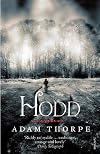
I have made a habit of picking up Thorpe’s novels when I see them in charity shops and I’m not entirely sure why. True, Ulverton was very good indeed – an English village’s history described through a variety of narrative forms – but the collection Shifts was, to be honest, a bit dull. But I have three or four of his books, and I grabbed this one to read over Christmas. Which I did. I knew it was about Robin Hood, a legendary figure I feel somewhat protective toward, given that I show more was born in Mansfield, which was once within the precincts of Sherwood Forest (in fact, there’s a plaque in Mansfield which declares the “dead centre” of Sherwood Forest was once at that spot). On the other hand, I’m well aware that Robin Hood is as real an historical figure as Jesus Christ. And, much as I love the 1938 Technicolor movie The Adventures of Robin Hood, starring Errol Flynn in the title role, I know it has as much connection to real actual history as the Bible does – ie, none. Hodd is fiction, and clearly presented as fiction… but it’s also yet another version of Robin Hood. In this case, he’s a heretic who lives in the woods north of Doncaster, and his story is told as a manuscript, found by a British officer in a bombed-out church in Belgium during WWII, written by a ninety-year-old monk who was once “Much the Miller’s son” in Hodd’s band. It’s very cleverly done. There are footnotes by the officer who translated the manuscript, which explain some of the lesser known facts about mediaeval life (and also feature some editorial comments by him). The plot will come as no surprise to those who know the Hood legend, even if it’s only from the Flynn movie, and while Thorpe’s recasting of Hood as Hodd doesn’t seem to asdd all that much to the story, the way the story is presented definitely does. It put Thorpe back in my, so to speak, good books. Hodd is a clever and convincing historical palimpsest of a novel, and it’s a joy to see how well it is put together. Recommended. show less
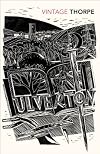
I wish I could say that I loved this book, because I found the subject really appealing (kind of a psychogeography of an imaginary south English village, told using a variety of documents and first person accounts). It is really well written and quite varied in its story lines, though there are some repeating elements and themes. It stretches from the mid-seventeenth century to the late 1980s, with a great callback to the first chapter in the final pages, with the appearance of a character show more named "Adam Thorpe, local author & performer."
However, I made the mistake of reading this on an airplane (long transatlantic flight) and I think jet lag, tiredness, and overhearing the banal conversations of other passengers really interrupted my enjoyment and understanding of the book. Even under the best conditions I think it would have been difficult to understand chapter 9 ("Stitches," 1887), but I admit to having literally NO conception of what that section was about. I usually get rid of books after I read them unless I absolutely love them, but I think this is one I'll keep around to reread at a time when I can give it more focused attention. show less
However, I made the mistake of reading this on an airplane (long transatlantic flight) and I think jet lag, tiredness, and overhearing the banal conversations of other passengers really interrupted my enjoyment and understanding of the book. Even under the best conditions I think it would have been difficult to understand chapter 9 ("Stitches," 1887), but I admit to having literally NO conception of what that section was about. I usually get rid of books after I read them unless I absolutely love them, but I think this is one I'll keep around to reread at a time when I can give it more focused attention. show less

92/2020. This book couldn't be closer to having been written for me. Like the author, I too have a long-lasting love affair with Silbury Hill that began in my teens, although my home Downs were elsewhere and so were my supplementary spiralling mounds. However, if you're interested in the history and landscape of Silbury and the surrounding Avebury complex, and you don't mind those subjects being related to you partly through the medium of Adam Thorpe's personal memoir then you too might find show more this neatly written and beautifully illustrated book is for you (albeit maybe more of a 4/5 for a more general reader rather than my personal 5/5).
Ultimately, your relationship with an enigma such as Silbury Hill is what you bring to it as a passing tourist, a practising artist, a professional archaeologist, a hopeful neopagan, or whatever you choose, because the enigma never answers no matter what you call it. show less
Ultimately, your relationship with an enigma such as Silbury Hill is what you bring to it as a passing tourist, a practising artist, a professional archaeologist, a hopeful neopagan, or whatever you choose, because the enigma never answers no matter what you call it. show less
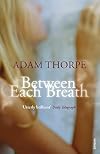
Very surprised to see how few people have read this book. Adam Thorpe burst onto the literary scene with Ulverton, a structurally tricky and bravura novel which gained plaudits all over the place. This is very different - a very readable book that could be picked up with advantage by the Richard and Judy book club, but also very beautifully written - we can see Thorpe's other 'day job' as a poet in his lyrical descriptive passages and the way he describes the creative process of the lead show more character, Jack, a modern classical composer. The book situates creativity as a profession, and Jack between his David Lodge like white working class origins and his Hampstead life as the husband of a stunning eco warrier awash with inherited wealth. Family, loss, deception, children - and their absence - all shape the narrative, as the consequences of Jack's affair with Estonian beauty and bad violinist Kaja reach across six years and bind together the beginning and end of the book. Between each breath centres around the idea of 'home' and of belonging, finding a place and people that are right - 'I very much like what I see stretching out in front of me. It was always there too, I just didn't realise it. It just needed a turn of the head.' - but at the same time shows us how fragile, like a tray of eggs, this can be. A thought provoking book, simple to read, difficult to pigeon hole. show less
Lists
Awards


You May Also Like


Associated Authors
Statistics
- Works
- 26
- Also by
- 7
- Members
- 1,287
- Popularity
- #19,915
- Rating
- 3.7
- Reviews
- 32
- ISBNs
- 90
- Languages
- 6
- Favorited
- 4