On This Page
Description
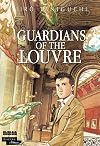
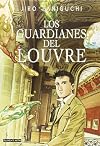
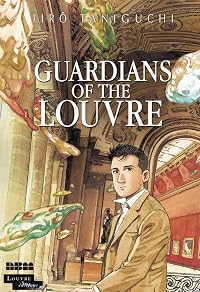
Acclaimed manga artist Jiro Taniguchi provides the latest entry in the Louvre collection of graphic novels. After a group trip to Europe, a Japanese artist stops in Paris alone, intent on visiting the museums of the capital. But, bedridden in his hotel room with fever, he faces the absolute solitude of one suffering in a foreign land, deprived of any immediate or familiar recourse. When the fever breaks somewhat, he sets out on his visit and promptly gets lost in the crowded halls of the show more Louvre. Very soon, he discovers many unsuspected facets to this world in a museum in a journey oscillating between feverish hallucination and reality, actually able to speak with famous painters from various periods of history, led to crossroads between human and personal history by... the Guardians of the Louvre. show lessTags
Recommendations
































Member Recommendations



Member Reviews
A Japanese mangaka falls ill after a comic convention but still tries to carry through with his plans to tour the Louvre on his own. In a fever dream (or is it something more?) he interacts with the artwork and dead artists represented in the museum.
Despite having to wade through the dream garbage, I was fascinated by the connections, influences and exchange of ideas that Taniguchi revealed between French and Japanese artists. There is also a much-too-short section on the efforts the French people undertook to protect the treasures of the Louvre from the invading Nazi forces during World War II. These true guardians should have been the focus of the whole book.
Despite having to wade through the dream garbage, I was fascinated by the connections, influences and exchange of ideas that Taniguchi revealed between French and Japanese artists. There is also a much-too-short section on the efforts the French people undertook to protect the treasures of the Louvre from the invading Nazi forces during World War II. These true guardians should have been the focus of the whole book.
Jiro Taniguchi was France's favorite manga creator, and this bande dessinée co-published with the Louvre was one of his final works. The quasi-autobiographical fantasy has as its narrator a manga artist who has come to Europe from Tokyo for a comics festival in Barcelona and goes afterwards to visit Paris. With the story set in 2013, the unnamed artist appears much younger than Taniguchi's age 65 in that year. The implied background also features the artist character's wife's death in an accident more than three years earlier.
In any case, the paneled pages lead the artist and the reader in tours of the Louvre, mixed with visions of the history of art, where Taniguchi uses figures like Asai Chu, Jean-Baptiste Camille Corot, and Antonio show more Fontanesi to illustrate the dialogue between European and Japanese art painting. The spirit of the statue of the Winged Victory of Samothrace serves as a psychopomp, and she eventually narrates the story of the preservation of the Louvre collection against anticipated Nazi pillaging in World War II.
The five days in Paris include one side trip to Auvers, which may just be a dream, since it includes a face-to-face conversation with Vincent Van Gogh. The book concludes with a final chapter that gives personal closure to the protagonist and affirms his discovered faith in the imaginal "guardians" of the Louvre.
The English edition I read is in BD folio format, with the painted illustrations printed in full color on glossy paper. It is bound and laid out right-to-left, manga style. There is a two-page appendix with encyclopedia-style articles on a few of the artists (and the writer Tokutomi Roka) who appear in the story. show less
In any case, the paneled pages lead the artist and the reader in tours of the Louvre, mixed with visions of the history of art, where Taniguchi uses figures like Asai Chu, Jean-Baptiste Camille Corot, and Antonio show more Fontanesi to illustrate the dialogue between European and Japanese art painting. The spirit of the statue of the Winged Victory of Samothrace serves as a psychopomp, and she eventually narrates the story of the preservation of the Louvre collection against anticipated Nazi pillaging in World War II.
The five days in Paris include one side trip to Auvers, which may just be a dream, since it includes a face-to-face conversation with Vincent Van Gogh. The book concludes with a final chapter that gives personal closure to the protagonist and affirms his discovered faith in the imaginal "guardians" of the Louvre.
The English edition I read is in BD folio format, with the painted illustrations printed in full color on glossy paper. It is bound and laid out right-to-left, manga style. There is a two-page appendix with encyclopedia-style articles on a few of the artists (and the writer Tokutomi Roka) who appear in the story. show less
Ghosts in the Gallery
Review of the NBM Publishing hardcover edition (2016) translated by Kumar Sivasubramanian from the original Japanese 千年の翼、百年の夢 (Millennium Wings, Centennial Dreams) (2015*)
In Guardians of the Louvre a young Japanese manga artist is on a trip to Europe to attend a comics convention. After the convention he plans to spend time in the museums of Paris, but instead falls sick with a fever in his hotel room. Apparently recovered, (you begin to wonder if perhaps the rest of the book isn't a fever dream) he does go to The Louvre but discouraged by the crowds he wanders off alone. He then encounters a vision of the restored Winged Victory of Samothrace, who identifies herself as a Guardian of the Louvre. show more Communing with the Guardians allows the man to encounter various artists and personalities associated with the museum and its history. In the end he meets someone from his own past.
See image at https://irenebrination.typepad.com/.a/6a00e55290e7c4883301b7c8724f28970b-800wi
A sample page from Guardians of the Louvre. Image sourced from a review at Irenebrination.
On the whole the story here was not very dramatic, until we hear about the World War II project to save the Louvre's most precious works from Nazi looting and destruction. Previously the encounters with the spirits of artists such as Jean-Baptiste-Camille Corot (1796-1875) and Vincent Van Gogh (1853-1890) were quite uneventful.
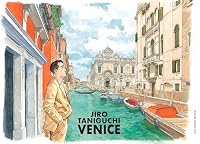
The artwork, as always with Taniguchi, is beautiful of course. The museum interiors though do not provide for quite the same expansive beauty as his city vistas in another late commissioned work [book:Venice|34679287] (2014).
The book, even in this English translation, is presented in Japanese manga format, so that you read the pages from back to front and the panels from right to left.
Trivia and Link
* As the book was a commission by the Louvre, the French language edition was actually published first as Les Gardiens du Louvre (2014). show less
Review of the NBM Publishing hardcover edition (2016) translated by Kumar Sivasubramanian from the original Japanese 千年の翼、百年の夢 (Millennium Wings, Centennial Dreams) (2015*)
In Guardians of the Louvre a young Japanese manga artist is on a trip to Europe to attend a comics convention. After the convention he plans to spend time in the museums of Paris, but instead falls sick with a fever in his hotel room. Apparently recovered, (you begin to wonder if perhaps the rest of the book isn't a fever dream) he does go to The Louvre but discouraged by the crowds he wanders off alone. He then encounters a vision of the restored Winged Victory of Samothrace, who identifies herself as a Guardian of the Louvre. show more Communing with the Guardians allows the man to encounter various artists and personalities associated with the museum and its history. In the end he meets someone from his own past.
See image at https://irenebrination.typepad.com/.a/6a00e55290e7c4883301b7c8724f28970b-800wi
A sample page from Guardians of the Louvre. Image sourced from a review at Irenebrination.
On the whole the story here was not very dramatic, until we hear about the World War II project to save the Louvre's most precious works from Nazi looting and destruction. Previously the encounters with the spirits of artists such as Jean-Baptiste-Camille Corot (1796-1875) and Vincent Van Gogh (1853-1890) were quite uneventful.
The artwork, as always with Taniguchi, is beautiful of course. The museum interiors though do not provide for quite the same expansive beauty as his city vistas in another late commissioned work [book:Venice|34679287] (2014).
The book, even in this English translation, is presented in Japanese manga format, so that you read the pages from back to front and the panels from right to left.
Trivia and Link
* As the book was a commission by the Louvre, the French language edition was actually published first as Les Gardiens du Louvre (2014). show less
Opera meno riuscita di altre, dove Taniguchi sembra più orientato a offrire fantastiche rappresentazioni del Louvre e delle sue opere che di aggiungere il suo tocco umano e delicato. Il risultato è un po' freddo, artefatto.
This one is mainly for art history lovers only or those who would like to look at the lovely illustrations. If you’re not in one of those two groups, you might get bored.
A young man recovering from the fever is hazy and dizzy in Paris. While he powers through to go on a fateful museum tour, he meets some his painting idols. turns out he’s dealing with grief. He promised his wife to take her to Louvre, but she ended up dying before time
[rating from personal enjoyment, not content]
A young man recovering from the fever is hazy and dizzy in Paris. While he powers through to go on a fateful museum tour, he meets some his painting idols.
[rating from personal enjoyment, not content]
A parte do esvaziamento do museu, pela chegada dos nazistas, é de cortar o coração.
... il
Louvre...
... e' un
labirinto
onirico...
... che
esiste
al confine
tra sogno
e realta'.
Il pittore
ha il
compito...
di
riprodurre
la bellezza
che
trascende
la natura.
Meravigliosi e
sconfinati campi
fittamente coltivati...
... e in mezzo
ai prati...
... una placida
foresta...
... un rivolo
d'acqua che scorre
tranquillo...
... non e' forse su questa
terra che noi siamo
giunti?
Louvre...
... e' un
labirinto
onirico...
... che
esiste
al confine
tra sogno
e realta'.
Il pittore
ha il
compito...
di
riprodurre
la bellezza
che
trascende
la natura.
Meravigliosi e
sconfinati campi
fittamente coltivati...
... e in mezzo
ai prati...
... una placida
foresta...
... un rivolo
d'acqua che scorre
tranquillo...
... non e' forse su questa
terra che noi siamo
giunti?
Members
- Recently Added By
Lists

Graphic Novels
94 works; 6 members

Pipoca & Nanquim
138 works; 2 members
Author Information

134+ Works 4,724 Members
Jiro Taniguchi was born in Tottori, Japan on August 14, 1947. The manga artist had his first cartoon published in 1970. His works included The Times of Botchan, A Distant Neighbourhood, and The Walking Man. In 2011, the French government awarded him the Knight of the Order of Arts and Letters. He died on February 11, 2017 at the age of 69. (Bowker show more Author Biography) show less
Series

Belongs to Publisher Series
Colecção Novela Gráfica (Série IV) (01)
Common Knowledge
- People/Characters
- Winged Victory of Samothrace; Jean-Baptiste Camille Corot; Roka Tokutomi; Chu Asai; Antonio Fontanesi; Natsume Sōseki (show all 12); Vincent van Gogh; Charles-François Daubigny; Antoine de Saint-Exupéry; Jacques Jaujard; Pierre Schommer; Keiko
- Important places
- Louvre Museum, Paris, France; Tokyo, Japan; Takanodai Gallery, Ueno district, Tokyo, Japan; Auvers-sur-Oise, Île-de-France, France; Chauvigny, Nouvelle-Aquitaine, France
- Important events
- World War II; Meiji era
- First words
- May, 2013
It was my third time in Paris. - Last words
- (Click to show. Warning: May contain spoilers.)This wondrous maze...this palace of the Louvre, is inhabited by guardians.
- Original language
- Japanese
Classifications
- Genre
- Graphic Novels & Comics
- DDC/MDS
- 741.5952 — Arts & recreation Drawing & decorative arts Drawing Comic books, graphic novels, fotonovelas, cartoons, caricatures, comic strips History, geographic treatment, biography Asian Japanese
- LCC
- PN6747 .L53 .T365 — Language and Literature Literature (General) Literature (General) Collections of general literature Comic books, strips, etc.
- BISAC
Statistics
- Members
- 145
- Popularity
- 225,939
- Reviews
- 11
- Rating
- (3.50)
- Languages
- 8 — Dutch, English, French, German, Italian, Japanese, Portuguese (Portugal), Spanish
- Media
- Paper, Ebook
- ISBNs
- 17
- ASINs
- 3