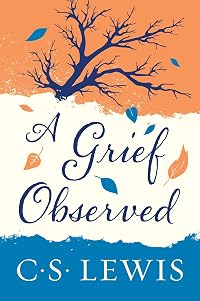
A Grief Observed
by C. S. Lewis
On This Page
Description
Written after his wife's tragic death as a way of surviving the "mad midnight moments," A Grief Observed is C. S. Lewis' honest reflection on the fundamental issues of life, death, and faith in the midst of loss. This work contains his concise, genuine reflections on that period: "Nothing will shake a man-or at any rate a man like me-out of his merely verbal thinking and his merely notional beliefs. He has to be knocked silly before he comes to his senses. Only torture will bring out the show more truth. Only under torture does he discover it himself." This is a beautiful and unflinchingly honest record of how even a stalwart believer can lose all sense of meaning in the universe, and how he can gradually regain his bearings. show lessTags
Recommendations






Member Recommendations


Member Reviews
After sharing our lives for 50 years, my wife Judi and I were separated by her death. That was several years ago. You never get over it. I haven't, anyway. Someone suggested this book. It's only 76 pages long, so why not read it.
C. S. Lewis was a theological scholar and teacher at Oxford University, and later at Cambridge University. Likely best known for his Chronicles of Narnia series. He was married rather late in life to a divorcee named Helen Joy Gresham, who was at the moment dying of cancer. That passed, and Jack (Lewis's nickname) and H. (his private notation for her) enjoyed a life together.
In his introduction, Douglas Gresham, Lewis's stepson, explained:
I must admit that most of Lewis's text flowed over and around me without effect. Until page 61.
Oh my. That's how I feel. Thank you, Jack. show less
C. S. Lewis was a theological scholar and teacher at Oxford University, and later at Cambridge University. Likely best known for his Chronicles of Narnia series. He was married rather late in life to a divorcee named Helen Joy Gresham, who was at the moment dying of cancer. That passed, and Jack (Lewis's nickname) and H. (his private notation for her) enjoyed a life together.
In his introduction, Douglas Gresham, Lewis's stepson, explained:
It almost seems cruel that her death was delayed long enough for him toshow more
grow to love her so completely that she filled his life as the greatest gift God had ever given him, and then she died and left him alone in a place that her presence in his life had created for him.
I must admit that most of Lewis's text flowed over and around me without effect. Until page 61.
Did you ever know, dear, how much you took away with you when you left? You have stripped me even of my past, even of the things we never shared. I was wrong to say the stump was recovering from the pain of the amputation. I was deceived because it has so many ways to hurt me that I discover them only one by one.
Oh my. That's how I feel. Thank you, Jack. show less
Summary: Lewis's reflections after he lost his wife, Joy, that explores the different seasons of grief and his honest wrestling with what it means to believe in God when facing profound loss.
"No one ever told me that grief felt so like fear. I am not afraid, but the sensation is like being afraid. The same fluttering in the stomach, the same restlessness, the yawning. I keep on swallowing.
At other times it feels like being mildly drunk, or concussed. There is a sort of invisible blanket between the world and me. I find it hard to take in what anyone says. Or perhaps, hard to want the others to be about me. I dread the moments when the house is empty. If only they would talk to one another and not to me."
These are the first words of show more this extended reflection on the experience of grief by C. S. Lewis after he lost his wife Joy to cancer. It is not a theological treatise but an unvarnished account of the devastating experience of loss Lewis faced. During his life, he published this under a pseudonym (N. W. Clerk), only permitting it to be published over his name after his death.
So much of the book is like these opening words, simple description of the experience, and seasons of grief, the loss of energy, the moments of brightness followed by gloom, the remembering, the ache for one with whom he had been so intimate. He wrestles with the question of why, so late in life, he was granted to taste the joy of love with an intellectual equal, only to have her snatched away so quickly.
He speaks of how little comfort he finds in his faith at these times:
"Talk to me about the truth of religion and I'll listen gladly. Talk to me about the duty of religion and I'll listen submissively. But don't come talking to me about the consolations of religion or I shall suspect that you don't understand."
In fact he struggles at times in not believing evil of God and admits it. Certainly he struggles with the concept of the goodness of God. At one point he comments, "What do people mean when they say, 'I am not afraid of God because I know He is good'? Have they never been to a dentist?"
He struggles with memories, and the question of how memories distort the character of the beloved. He speculates about the afterlife, but without but confesses that while he believes in the resurrection, it is something he does not understand. He also comments that between Lazarus and Stephen, Lazarus was the greater martyr, who had to die twice.
This is not a book to explain the inexplicable. Not even Lewis could do that. Rather, he simply gives word to his own grief, and perhaps that of others and the impossibility of just "getting over it." We see someone facing the grief every widow or widower faces of being parted with one you've shared life and love with--whether for just a few years, or nearly 70 like my father. It is never easy, and the amazing thing is to watch Lewis lean into believing when one does not see, when all seems dark--with humility, with faltering steps, and with honesty that does not sugar coat death and loss.
This is a book we all need, whether to give words to our grief, or to listen, and maybe have a notion, of what our friends or loved ones struggle with in their grief. Read, reflect, and learn. So much in such a slim volume. show less
"No one ever told me that grief felt so like fear. I am not afraid, but the sensation is like being afraid. The same fluttering in the stomach, the same restlessness, the yawning. I keep on swallowing.
At other times it feels like being mildly drunk, or concussed. There is a sort of invisible blanket between the world and me. I find it hard to take in what anyone says. Or perhaps, hard to want the others to be about me. I dread the moments when the house is empty. If only they would talk to one another and not to me."
These are the first words of show more this extended reflection on the experience of grief by C. S. Lewis after he lost his wife Joy to cancer. It is not a theological treatise but an unvarnished account of the devastating experience of loss Lewis faced. During his life, he published this under a pseudonym (N. W. Clerk), only permitting it to be published over his name after his death.
So much of the book is like these opening words, simple description of the experience, and seasons of grief, the loss of energy, the moments of brightness followed by gloom, the remembering, the ache for one with whom he had been so intimate. He wrestles with the question of why, so late in life, he was granted to taste the joy of love with an intellectual equal, only to have her snatched away so quickly.
He speaks of how little comfort he finds in his faith at these times:
"Talk to me about the truth of religion and I'll listen gladly. Talk to me about the duty of religion and I'll listen submissively. But don't come talking to me about the consolations of religion or I shall suspect that you don't understand."
In fact he struggles at times in not believing evil of God and admits it. Certainly he struggles with the concept of the goodness of God. At one point he comments, "What do people mean when they say, 'I am not afraid of God because I know He is good'? Have they never been to a dentist?"
He struggles with memories, and the question of how memories distort the character of the beloved. He speculates about the afterlife, but without but confesses that while he believes in the resurrection, it is something he does not understand. He also comments that between Lazarus and Stephen, Lazarus was the greater martyr, who had to die twice.
This is not a book to explain the inexplicable. Not even Lewis could do that. Rather, he simply gives word to his own grief, and perhaps that of others and the impossibility of just "getting over it." We see someone facing the grief every widow or widower faces of being parted with one you've shared life and love with--whether for just a few years, or nearly 70 like my father. It is never easy, and the amazing thing is to watch Lewis lean into believing when one does not see, when all seems dark--with humility, with faltering steps, and with honesty that does not sugar coat death and loss.
This is a book we all need, whether to give words to our grief, or to listen, and maybe have a notion, of what our friends or loved ones struggle with in their grief. Read, reflect, and learn. So much in such a slim volume. show less
When I read great thinkers like C.S. Lewis, I often find myself saying "Yes! Yes! That's EXACTLY what I was thinking! I just had no idea how to say it!" This journal of his experience of grief was one of those moments for me. His was maybe a bit stronger of a loss, for he wrote this regarding the grief he experienced from losing his wife and soul mate. I recently lost my father. So, while my grief and loss was not quite a strong, he still hit on several points I think a lot of us go through when we lose someone close to us. The things people say to you, in their hope of comforting you, but they have no idea if they are true or not. How you go through several phases of grief, you question your faith, you question the meaning of show more everything, and you stop finding joy in the things you used to. Nothing anyone ever says to you makes it better. But, you work through the phases and hopefully come to peace at the end.
I cannot recommend this book enough to those who have experienced grief on this level. Your grief is not C.S. Lewis' grief. But, hopefully after reading it, you will see we all share similar experiences show less
I cannot recommend this book enough to those who have experienced grief on this level. Your grief is not C.S. Lewis' grief. But, hopefully after reading it, you will see we all share similar experiences show less
Years ago, one of my college professors told me that the only thing permanent in life is impermanence. Paradoxically, she also claimed that the residual effects of grief could never be expunged from our minds. At the time, I rejected these ideas, but as I grow older, it becomes clearer to me that grief has a way with us like the seasons do. It's an ebb and flow. A tsunami of feelings may threaten to drown us some days, and on others, the sun and the wind give us strength and mental acuity. Doubtlessly, we all wish that our pain would go away for good. In time, the pain tends to fade, but is never quite done clutching onto our souls.
In this short account of Lewis's, he doesn't have any solutions to offer, but he does offer us a raw show more account of grief that, in turn, offers us an experienced understanding during our own rock bottom times (and beyond). He records his doubts, his anger, his hopes, his fears, his questions. He stares at pain and pens what he sees, then shields his eyes and writes some more. And then, he reflects. He seeks to unravel his own behaviors, and to understand the mind's internalization of a lost loved one. For instance, in chapter 2, Lewis writes:
"But it is my own mind that selects and groups [the details of H.]. Already, less than a month after her death, I can feel the slow, insidious beginning of a process that will make the H. I think of into a more and more imaginary woman. I shall put in nothing fictitious (or I hope I shan’t). But won’t the composition inevitably become more and more my own? The reality is no longer there to check me, to pull me up short, as the real H. so often did, so unexpectedly, by being so thoroughly herself and not me."
It is perhaps an even sadder thought to think, that not only is someone that we loved no longer here with us, but that our memory of them will now be transformed into a form more imaginary than real. In regard to family members that have died, I sometimes find myself thinking, This is what they would have wanted for me. They wouldn't want me to be sad like this. But how could I know such a thing for sure? Who's to say that my grandfather wouldn't feel grateful if I still felt sad about his untimely death? Our changed memories of loved ones, then, seem in part an effort to cope; to romanticize the dead's wishes in order to bolster our spirits. Whether this is a good or bad thing, I don't know. If it helps us cope, is it harmful to entertain such thoughts?
Lewis also questions his beliefs about God, about Heaven, and that which he has always taken for granted about the afterlife. We all know that we live temporary lives, and yet, when we're with others that we grow attached to, we wish that our connections would never become severed in the future. Death is something that comes suddenly, even if we know of its arrival in our lives beforehand. Like Lewis, I am a Christian, and have found myself doubting God during the worst times of my life. I often wonder if my bitterness, like my grief, will remain distilled within me. Perhaps that's the way it will always be, and there's nothing I can do about it.
Well, Lewis doesn't have all the answers, and neither do I. Still, I think that everyone who has gone through any type of grief will find this book to be helpful. Even if you don't share Lewis's Christian beliefs, you're bound to find some common ground with him that'll help you understand more about your grief and the lifelong process of grieving. The only work that I knew Lewis for was Narnia, and that was a long time ago, so it's nice to see the other side of his writing with such a somber subject.
"They say ‘The coward dies many times’; so does the beloved. Didn’t the eagle find a fresh liver to tear in Prometheus every time it dined?"
*2024 edit: I think it's pertinent to mention that I no longer consider myself a Christian, but I still agree with much of what I said in this review. show less
In this short account of Lewis's, he doesn't have any solutions to offer, but he does offer us a raw show more account of grief that, in turn, offers us an experienced understanding during our own rock bottom times (and beyond). He records his doubts, his anger, his hopes, his fears, his questions. He stares at pain and pens what he sees, then shields his eyes and writes some more. And then, he reflects. He seeks to unravel his own behaviors, and to understand the mind's internalization of a lost loved one. For instance, in chapter 2, Lewis writes:
"But it is my own mind that selects and groups [the details of H.]. Already, less than a month after her death, I can feel the slow, insidious beginning of a process that will make the H. I think of into a more and more imaginary woman. I shall put in nothing fictitious (or I hope I shan’t). But won’t the composition inevitably become more and more my own? The reality is no longer there to check me, to pull me up short, as the real H. so often did, so unexpectedly, by being so thoroughly herself and not me."
It is perhaps an even sadder thought to think, that not only is someone that we loved no longer here with us, but that our memory of them will now be transformed into a form more imaginary than real. In regard to family members that have died, I sometimes find myself thinking, This is what they would have wanted for me. They wouldn't want me to be sad like this. But how could I know such a thing for sure? Who's to say that my grandfather wouldn't feel grateful if I still felt sad about his untimely death? Our changed memories of loved ones, then, seem in part an effort to cope; to romanticize the dead's wishes in order to bolster our spirits. Whether this is a good or bad thing, I don't know. If it helps us cope, is it harmful to entertain such thoughts?
Lewis also questions his beliefs about God, about Heaven, and that which he has always taken for granted about the afterlife. We all know that we live temporary lives, and yet, when we're with others that we grow attached to, we wish that our connections would never become severed in the future. Death is something that comes suddenly, even if we know of its arrival in our lives beforehand. Like Lewis, I am a Christian, and have found myself doubting God during the worst times of my life. I often wonder if my bitterness, like my grief, will remain distilled within me. Perhaps that's the way it will always be, and there's nothing I can do about it.
Well, Lewis doesn't have all the answers, and neither do I. Still, I think that everyone who has gone through any type of grief will find this book to be helpful. Even if you don't share Lewis's Christian beliefs, you're bound to find some common ground with him that'll help you understand more about your grief and the lifelong process of grieving. The only work that I knew Lewis for was Narnia, and that was a long time ago, so it's nice to see the other side of his writing with such a somber subject.
"They say ‘The coward dies many times’; so does the beloved. Didn’t the eagle find a fresh liver to tear in Prometheus every time it dined?"
*2024 edit: I think it's pertinent to mention that I no longer consider myself a Christian, but I still agree with much of what I said in this review. show less
This week, my family went through a health scare with my grandmother. The idea that she wasn't going to make it was strong, and for me, suffocating. I couldn't focus on the audiobook I was listening to, and had to DNF it. Still not sure if that was because of the book itself or what I was dealing with.
I wanted to find something on grief, something that could get me to focus, and since that was the path my thoughts kept leading me down, I chose this. I read a bit of the Narnia Chronicles when I was kid, but only know vague details about C.S. Lewis- mostly that a lot of his work is fairly religious. If you read my reviews, you know I'm not one for religious writing, especially when it gets preachy and strict. I'm not sure what exactly show more drew me to this one other than it was short, about grief, and written by a beloved author. My grandmother is very religious though, so perhaps that's a part of it.
The narration shined. I recognized Ralph Cosham immediately from his voicework on the video game Oblivion. His voice is iconic in that game, and it was a joy to listen to him narrate Lewis' work. I think he paired perfectly with Lewis' eloquent writing style. Truly may have changed the way I would have felt about this book, and I honestly considered giving it 5 stars, but I knew that was probably not fair to the work itself. I even looked to see if Cosham narrated any other nonfiction that was available on Libby, and while I've never held much interest in WWII beyond what is necessary for us all to learn (Never Forget), my next listen is Inferno: The World At War, 1939-1945 by Max Hastings, simply because Cosham is the narrator. I'm actually excited for it!
[Update- I have since started The World At War and while Cosham is just as pleasant as ever, he suited A Grief Observed so perfectly that I'm inclined to believe I really did enjoy it for more than just the voice work.]
Onto the book itself. I was pleasantly surprised! There were parts, especially in the beginning, where the religious talk grated on my nerves, but the longer I listened, the more I came to enjoy Lewis' ideas. He didn't convert me or anything, far from it, but he presents his faith not only in a skeptical way as the death of his wife had him questioning the Christian God, but he also is not preaching to the reader. In fact, these writings were not originally intended for publishing but later when he'd read over his grief stricken notes, he felt they may be of help to others. I don't think he was wrong to feel that way. I really admired the way he spoke about his wife, through the lens of grief. How he had forgotten what she looked like but that pictures didn't do justice to her memory. The way we know a loved ones face intimately, in all the different shadows and emotions, but a picture can only capture one flat second of it. How he didn't recognize his wife in her photos, but he would see her in the faces of people out in public. This just really stuck with me out of everything, and felt so true to what grieving and losing someone can really be like. I think this is why grief can really tip someone's life upside down- you grapple with your memories of the person and as they fade, you find no solace in photographs, because really, a person is not a memory or a picture. Once they're gone, none of that will actually make you feel better or less alone.
I really adored how he spoke of his wife, it's so obvious how much he loved her and admired her. He truly found an equal in her. He didn't say a single thing that could be taken as poor to her memory. He loved her so much, and that love made me swell with happiness. His love for her outdoes the sadness he felt, and I hope he recognized that when he read through these notes later in life.
I'd give more of his religious work a listen if it strikes my fancy. If C.S. Lewis takes this type of approach with all of it, I see no challenge in checking it out. show less
I wanted to find something on grief, something that could get me to focus, and since that was the path my thoughts kept leading me down, I chose this. I read a bit of the Narnia Chronicles when I was kid, but only know vague details about C.S. Lewis- mostly that a lot of his work is fairly religious. If you read my reviews, you know I'm not one for religious writing, especially when it gets preachy and strict. I'm not sure what exactly show more drew me to this one other than it was short, about grief, and written by a beloved author. My grandmother is very religious though, so perhaps that's a part of it.
The narration shined. I recognized Ralph Cosham immediately from his voicework on the video game Oblivion. His voice is iconic in that game, and it was a joy to listen to him narrate Lewis' work. I think he paired perfectly with Lewis' eloquent writing style. Truly may have changed the way I would have felt about this book, and I honestly considered giving it 5 stars, but I knew that was probably not fair to the work itself. I even looked to see if Cosham narrated any other nonfiction that was available on Libby, and while I've never held much interest in WWII beyond what is necessary for us all to learn (Never Forget), my next listen is Inferno: The World At War, 1939-1945 by Max Hastings, simply because Cosham is the narrator. I'm actually excited for it!
[Update- I have since started The World At War and while Cosham is just as pleasant as ever, he suited A Grief Observed so perfectly that I'm inclined to believe I really did enjoy it for more than just the voice work.]
Onto the book itself. I was pleasantly surprised! There were parts, especially in the beginning, where the religious talk grated on my nerves, but the longer I listened, the more I came to enjoy Lewis' ideas. He didn't convert me or anything, far from it, but he presents his faith not only in a skeptical way as the death of his wife had him questioning the Christian God, but he also is not preaching to the reader. In fact, these writings were not originally intended for publishing but later when he'd read over his grief stricken notes, he felt they may be of help to others. I don't think he was wrong to feel that way. I really admired the way he spoke about his wife, through the lens of grief. How he had forgotten what she looked like but that pictures didn't do justice to her memory. The way we know a loved ones face intimately, in all the different shadows and emotions, but a picture can only capture one flat second of it. How he didn't recognize his wife in her photos, but he would see her in the faces of people out in public. This just really stuck with me out of everything, and felt so true to what grieving and losing someone can really be like. I think this is why grief can really tip someone's life upside down- you grapple with your memories of the person and as they fade, you find no solace in photographs, because really, a person is not a memory or a picture. Once they're gone, none of that will actually make you feel better or less alone.
I really adored how he spoke of his wife, it's so obvious how much he loved her and admired her. He truly found an equal in her. He didn't say a single thing that could be taken as poor to her memory. He loved her so much, and that love made me swell with happiness. His love for her outdoes the sadness he felt, and I hope he recognized that when he read through these notes later in life.
I'd give more of his religious work a listen if it strikes my fancy. If C.S. Lewis takes this type of approach with all of it, I see no challenge in checking it out. show less
Yes, our theologies differ, yet I have always greatly respected C.S. Lewis in his willingness to tackle the great questions (not necessarily in search of "answers") and the fearlessness with which he reflects on his own thoughts, actions, and judgments. This keen insight is just one example of many that pop up in this brief and intense reflection on the experience of grief.
...don't we often make this mistake as regards people who are still alive--who are with us in the same room? Talking and acting not to the man himself but to the picture...we've made of him in our own minds? And he has to depart from it pretty widely before we even notice the fact. In real life--that's one way it differs from novels--his words and acts are, if we show more observe closely, hardly ever quite "in character," that is, in what we call his character. There's always a card in his hand we didn't know about. show less
...don't we often make this mistake as regards people who are still alive--who are with us in the same room? Talking and acting not to the man himself but to the picture...we've made of him in our own minds? And he has to depart from it pretty widely before we even notice the fact. In real life--that's one way it differs from novels--his words and acts are, if we show more observe closely, hardly ever quite "in character," that is, in what we call his character. There's always a card in his hand we didn't know about. show less
A Grief Observed was the first book that I was able to read after my beloved cat of 19 years passed away. I knew that it wouldn't be exactly applicable to my situation, but I was looking for a story of grief from a Christian's point of view.
Some sections of the memoir worked very well for me, while others (particularly Chapter 2, when C.S. Lewis has lost his faith) do not. I found Chapter 3, where a great healing is taking place, to be the most helpful as I also learn how to heal. The evolution of Lewis' grief is what I think most people will find useful in this book, as it may give other readers hope that we will come out of the depths eventually.
The honesty of this memoir impresses me. It shows such bravery for this Christian man to show more display his loss of faith so openly to the reader. If nothing else, A Grief Observed showed me quite clearly that I did not lose my faith during the time of my own grieving. That did give me a significant amount of comfort.
The version that I read has a lovely and honest introduction by Madeline L'Engle. show less
Some sections of the memoir worked very well for me, while others (particularly Chapter 2, when C.S. Lewis has lost his faith) do not. I found Chapter 3, where a great healing is taking place, to be the most helpful as I also learn how to heal. The evolution of Lewis' grief is what I think most people will find useful in this book, as it may give other readers hope that we will come out of the depths eventually.
The honesty of this memoir impresses me. It shows such bravery for this Christian man to show more display his loss of faith so openly to the reader. If nothing else, A Grief Observed showed me quite clearly that I did not lose my faith during the time of my own grieving. That did give me a significant amount of comfort.
The version that I read has a lovely and honest introduction by Madeline L'Engle. show less
Members
- Recently Added By
Lists

501 Must-Read Books
529 works; 72 members

Church Times 100 Best Christian Books
106 works; 26 members

Christianity Books You've Read
179 works; 19 members

Grief, Loss, Bereavement & Spiritual Care
13 works; 1 member

Fake Top 100 Nonfiction
79 works; 3 members

CXB Books read in 2025
16 works; 1 member

Grief
15 works; 1 member

2024-2025 Ezra Klein Guest Recommendations
213 works; 6 members

Las mejores obras literarias leídas en 2023 -- Excelentes (R. D.)
21 works; 1 member

Christian Classics (Old and Modern)
53 works; 3 members

Mustich's 1000 Books to Read Before You Die: A Life Changing List
1,001 works; 20 members

1960s
281 works; 16 members

1960s, Best books published therein
254 works; 22 members

Books I've Read More Than Once
602 works; 49 members

Deathreads
78 works; 2 members

Books Read in 2019
4,052 works; 110 members

Authors from Ireland
17 works; 1 member

Blue Pyramid 1,276 Best Books of All Time
1,248 works; 32 members

Slightly Foxed 2
21 works; 1 member
Author Information

545+ Works 525,536 Members
C. S. (Clive Staples) Lewis, "Jack" to his intimates, was born on November 29, 1898 in Belfast, Ireland. His mother died when he was 10 years old and his lawyer father allowed Lewis and his brother Warren extensive freedom. The pair were extremely close and they took full advantage of this freedom, learning on their own and frequently enjoying show more games of make-believe. These early activities led to Lewis's lifelong attraction to fantasy and mythology, often reflected in his writing. He enjoyed writing about, and reading, literature of the past, publishing such works as the award-winning The Allegory of Love (1936), about the period of history known as the Middle Ages. Although at one time Lewis considered himself an atheist, he soon became fascinated with religion. He is probably best known for his books for young adults, such as his Chronicles of Narnia series. This fantasy series, as well as such works as The Screwtape Letters (a collection of letters written by the devil), is typical of the author's interest in mixing religion and mythology, evident in both his fictional works and nonfiction articles. Lewis served with the Somerset Light Infantry in World War I; for nearly 30 years he served as Fellow and tutor of Magdalen College at Oxford University. Later, he became Professor of Medieval and Renaissance English at Cambridge University. C.S. Lewis married late in life, in 1957, and his wife, writer Joy Davidman, died of cancer in 1960. He remained at Cambridge until his death on November 22, 1963. (Bowker Author Biography) show less
Some Editions
Awards and Honors
Series
Belongs to Publisher Series
Work Relationships
Is contained in
The Complete Works: Fantasy & Sci-Fi Novels, Religious Studies, Poetry & Autobiography: Enriched edition. The Chronicles of Narnia, The Space Trilogy, The Screwtape Letters by C. S. Lewis (indirect)
The Four Loves / Surprised by Joy / A Grief Observed / The Screwtape Letters / The Great Divorce / Mere Christianity by C. S. Lewis
Biographical Works: Surprised by Joy; A Grief Observed; All My Road Before Me; Letters to an American Lady; Letters (4 Volumes) by C. S. Lewis
The C. S. Lewis Signature Classics: An Anthology of 8 C. S. Lewis Titles: Mere Christianity, The Screwtape Letters, Miracles, The Great Divorce, The ... The Abolition of Man, and The Four Loves by C. S. Lewis
Has as a reference guide/companion
Common Knowledge
- Canonical title
- A Grief Observed
- Original title
- A Grief Observed
- Alternate titles
- 卿卿如晤. English
- Original publication date
- 1961
- People/Characters
- C. S. Lewis; Joy Davidman
- First words
- No one ever told me that grief felt so like fear.
[Foreword] When a A Grief Observed was first published under the pseudonym of N. W. Clerk it was given me by a friend, and I read it with great interest and considerable distance.
[Introduction] A Grief Observed is not an ordinary book. - Quotations
- Did you ever know, how much you took away with you when you left?
Sorrow, however, turns out to be not a state but a process. It needs not a map but a history and if I don't stop writing that history at some quite arbitrary point, there's no reason why I should ever stop. There is something... (show all) new to be chronicled every day.
It’s not true that I’m always thinking of it… but the times when I’m not are perhaps my worst. For them, though I have forgotten the reason, there is a spread over everything, a vague sense of wrongness, of something ... (show all)amiss… What’s wrong with the world to make it so flat, shabby, worn-out looking: then I remember.
Up till this I always had too little time. Now there is nothing but time. Almost pure time. Empty successiveness.
What do people mean when they say, `I am not afraid of God because I know He is good?' Have they never even been to a dentist? - Last words
- (Click to show. Warning: May contain spoilers.)How wicked it would be, if we could, to call the dead back! She said not to me but to the chaplain, 'I am at peace with God.' She smiled, but not at me. Poi si torno all' eterna fontana.
(Click to show. Warning: May contain spoilers.)[Foreword] Reading A Grief Observed is to share not only in C. S. Lewis's grief but in his understanding of love, and that is richness indeed.
(Click to show. Warning: May contain spoilers.)[Introduction] For further reading, I recommend Jack: G. C. Lewis and His Times by George Sayer (Harper & Row, 1988; Crossway Books) as the best available biography of C. S. Lewis; Lyle Dorsett's biography of my mother, And God came In (Macmillan, 1983); and also, somewhat immodestly perhaps, for an inside viewpoint f our family life, my own book, Lenten Lands (Macmillan, 1988; HarperSanFrancisco 1994). - Original language
- English
- Disambiguation notice
- Originally published under the pseudonym N. W. Clerk.
Classifications
- Genres
- Religion & Spirituality, Nonfiction, Biography & Memoir, General Nonfiction
- DDC/MDS
- 242.4 — Religion Christian practice & observance Devotional literature Devotions for Difficult Times
- LCC
- BV4905.2 .L4 — Philosophy, Psychology and Religion Practical Theology Practical Theology Practical religion. The Christian life Works of consolation and cheer
- BISAC
Statistics
- Members
- 10,088
- Popularity
- 986
- Reviews
- 110
- Rating
- (4.16)
- Languages
- 20 — Catalan, Chinese, Czech, Danish, Dutch, English, Finnish, German, Greek, Hungarian, Italian, Japanese, Korean, Norwegian (Bokmål), Farsi/Persian, Polish, Spanish, Swedish, Portuguese (Portugal), Portuguese (Brazil)
- Media
- Paper, Audiobook, Ebook
- ISBNs
- 90
- UPCs
- 2
- ASINs
- 68