On This Page
Description
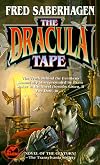
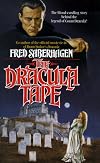
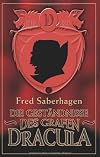
The never-before-told story behind the legend of Count Dracula The story of the Count's greatest love, Mina Harker, and the bloodthirsty vampire hunters whose cruel pursuit drove the master of the night to actions ever more ruthless. The Count Dracula sets the record straight....Tags
Recommendations



















Member Reviews
First in what would be a series of nine books offering an alternative history of Dracula, 'The Dracula Tape' (1975) is a witty detournement of Bram Stoker's novel that tells the story of his Dracula from the point of view of the Count. And a very subversive version it is too.
To explain the title, Dracula appears in the snow-bound car of Harker's descendants in 1960s Devon and tapes the true account of the events of the 1890s 'for the record'. The context is only explained in the epilogue and so no spoilers here.
The Count proves a resourceful but often hapless character trying to find a way to integrate with the modern world but constantly facing (except in the instance of Mina Harker) the inherent stupidity and fear of humanity. His show more aristocratic code comes up against a dim Anglo-American middle class.
Van Helsing is a malignant and murderous old fraud who drags the 'boys' into futile adventures. Jonathan Harker a paranoid and not-too-bright representative of that middle class. Renfield simply an irritating murderous sociopath with no serious connection to the Count.
Saberhagen mirrors Stoker's text, not afraid to quote lengthy passages on occasion so that we see them through a new light - that of the Count trying to do the right thing in the face of accident, strange coincidence and ignorance. Wolves and gypsies are the good guys here.
Occasionally (especially towards the end), Saberhagen slyly points out flaws in Stoker's plotting and sometimes manages them with some highly inventive story-telling that does not contravene the ur-text. 'Dracula' is notoriously full of holes and the author has fun filling some of them.
The result is not so much 'horror' as 'humour' with many places where the reader is going to find himself (or herself) having a wry smile (it helps to know the original text to get the best of the irony but the book survives ignorance) and even one or two laugh out loud moments at the human farce.
The author does not try to explain away Dracula's supernatural aspects however. He maintains the lore, stripping it only of the superstitious aspects. Dracula (as species) becomes just a little more plausible. It turns out that he is still a Christian of an unexcitable sort.
Van Helsing's comical strewing of consecrated hosts and garlic is presented as just so much flummery hiding his ultimately murderous purpose in driving stakes into an equally sentient if different species. The infamous baby incident turns out to be a suckling pig.
Part of the pleasure lies in Saberhagen's subversion of the gender dynamics. The Count turns out to be both more ancient and yet more modern in his relationships with women. Mina Harker, intelligent, tough, questioning and resourceful, responds accordingly.
The 'boys' are patronising and (placing Renfield to one side as a potential serial killer of exceptionally vicious tastes) Van Helsing is the cause of the murder (in effect) of Lucy Westenra. He seems to have his beady eye on doing in Mina at the first excuse.
The three female vampires (the Count's 'old flames') are just vexing minxes with less loyalty to him than his gypsies but they don't deserve their fate. Otherwise it is the women who excite our sympathy and some of this becomes reflected in sympathy for Dracula just trying to do his best in a bad world.
And this is the crux of the matter - as in Stoker, the Count is the 'other' but, where feared in late imperial Britain, in 1970s America he has become a subject for liberal understanding. He is the immigrant trying to find a better life and facing prejudice.
Saberhagen also has a nice easy and popular prose style. Its easy read (wholly appropriate for such a story) allows us to appreciate some fine characterisation and literary satire that never slips into pastiche. I might move on to Dracula's adventure with Holmes (Book 2) one day. show less
To explain the title, Dracula appears in the snow-bound car of Harker's descendants in 1960s Devon and tapes the true account of the events of the 1890s 'for the record'. The context is only explained in the epilogue and so no spoilers here.
The Count proves a resourceful but often hapless character trying to find a way to integrate with the modern world but constantly facing (except in the instance of Mina Harker) the inherent stupidity and fear of humanity. His show more aristocratic code comes up against a dim Anglo-American middle class.
Van Helsing is a malignant and murderous old fraud who drags the 'boys' into futile adventures. Jonathan Harker a paranoid and not-too-bright representative of that middle class. Renfield simply an irritating murderous sociopath with no serious connection to the Count.
Saberhagen mirrors Stoker's text, not afraid to quote lengthy passages on occasion so that we see them through a new light - that of the Count trying to do the right thing in the face of accident, strange coincidence and ignorance. Wolves and gypsies are the good guys here.
Occasionally (especially towards the end), Saberhagen slyly points out flaws in Stoker's plotting and sometimes manages them with some highly inventive story-telling that does not contravene the ur-text. 'Dracula' is notoriously full of holes and the author has fun filling some of them.
The result is not so much 'horror' as 'humour' with many places where the reader is going to find himself (or herself) having a wry smile (it helps to know the original text to get the best of the irony but the book survives ignorance) and even one or two laugh out loud moments at the human farce.
The author does not try to explain away Dracula's supernatural aspects however. He maintains the lore, stripping it only of the superstitious aspects. Dracula (as species) becomes just a little more plausible. It turns out that he is still a Christian of an unexcitable sort.
Van Helsing's comical strewing of consecrated hosts and garlic is presented as just so much flummery hiding his ultimately murderous purpose in driving stakes into an equally sentient if different species. The infamous baby incident turns out to be a suckling pig.
Part of the pleasure lies in Saberhagen's subversion of the gender dynamics. The Count turns out to be both more ancient and yet more modern in his relationships with women. Mina Harker, intelligent, tough, questioning and resourceful, responds accordingly.
The 'boys' are patronising and (placing Renfield to one side as a potential serial killer of exceptionally vicious tastes) Van Helsing is the cause of the murder (in effect) of Lucy Westenra. He seems to have his beady eye on doing in Mina at the first excuse.
The three female vampires (the Count's 'old flames') are just vexing minxes with less loyalty to him than his gypsies but they don't deserve their fate. Otherwise it is the women who excite our sympathy and some of this becomes reflected in sympathy for Dracula just trying to do his best in a bad world.
And this is the crux of the matter - as in Stoker, the Count is the 'other' but, where feared in late imperial Britain, in 1970s America he has become a subject for liberal understanding. He is the immigrant trying to find a better life and facing prejudice.
Saberhagen also has a nice easy and popular prose style. Its easy read (wholly appropriate for such a story) allows us to appreciate some fine characterisation and literary satire that never slips into pastiche. I might move on to Dracula's adventure with Holmes (Book 2) one day. show less
I'm wavering between 3 & 4 stars on this one....
As I'm a Dracula fan, I quite enjoyed this twist on Stoker's Dracula tale, told from the viewpoint of Dracula himself. There are fairly big portions that are quotes from Stoker's work, followed by a differing response in Dracula's voice. Any weak points in Stoker's work have been fully exploited here in presenting Dracula's view. Of course, Dracula saves a special dislike for Van Helsing; Dracula considers him both a quack & a religious nut. Some of Dracula's descriptions of Van Helsing had me rofl, such as...
and
This is a fun October read, especially if you are team Dracula. show less
As I'm a Dracula fan, I quite enjoyed this twist on Stoker's Dracula tale, told from the viewpoint of Dracula himself. There are fairly big portions that are quotes from Stoker's work, followed by a differing response in Dracula's voice. Any weak points in Stoker's work have been fully exploited here in presenting Dracula's view. Of course, Dracula saves a special dislike for Van Helsing; Dracula considers him both a quack & a religious nut. Some of Dracula's descriptions of Van Helsing had me rofl, such as...
"...the old maestro of obfuscation..."
and
"The vision of Van Helsing as a vampire is one before which my imagination balks; this is doubtless only a shortcoming on my part; he may haveshow more
been well fitted for the role, since as we have seen he had already the power, by means of speech, to cast his victims into a stupor."
This is a fun October read, especially if you are team Dracula. show less
The Dracula Tapes tells the story of Bram Stoker's Dracula but from the point of view of Vlad Dracula himself.
Although I did like this book it's hard to explain why I just liked it and why I didn't love it. It's well written and everything "fits" with Dracula. The only thing I didn't like so much was that Vlad often refers to one of his habits, only to tell the reader that he will explain fully later on in the book. When he does come back to it it is often explained very shortly.
What I do like is that Saberhagen didn't try to redeem Dracula. Many vampires in books now are nice and misunderstood. In this book Vlad is what he is, he drinks blood and occasionally kills somebody. He is less of a monster Van Helsing makes him out to be (he show more doesn't murder everybody and he usually drinks animal blood instead of human blood) but he isn't that much of a likeable character. The lack of really likeable character in this book might be why I liked instead of loved it.
The Dracula Tapes is the first part of a series and I want to read the other books, but I'm not rushing out to get them immediately.
I like books that give a different point of view of another, wellknown, book. Another good example is Jean Rhys' Wide Sargasso Sea, which tells the story of mr. Rochester's crazy wife in the attic in Jane Eyre. show less
Although I did like this book it's hard to explain why I just liked it and why I didn't love it. It's well written and everything "fits" with Dracula. The only thing I didn't like so much was that Vlad often refers to one of his habits, only to tell the reader that he will explain fully later on in the book. When he does come back to it it is often explained very shortly.
What I do like is that Saberhagen didn't try to redeem Dracula. Many vampires in books now are nice and misunderstood. In this book Vlad is what he is, he drinks blood and occasionally kills somebody. He is less of a monster Van Helsing makes him out to be (he show more doesn't murder everybody and he usually drinks animal blood instead of human blood) but he isn't that much of a likeable character. The lack of really likeable character in this book might be why I liked instead of loved it.
The Dracula Tapes is the first part of a series and I want to read the other books, but I'm not rushing out to get them immediately.
I like books that give a different point of view of another, wellknown, book. Another good example is Jean Rhys' Wide Sargasso Sea, which tells the story of mr. Rochester's crazy wife in the attic in Jane Eyre. show less
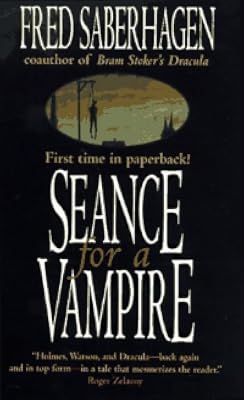
Saberhagen really knows the source text and is true to the original story, although he does add a few scenes that suit his purpose. I was anxious to read this one after enjoying Seance for a Vampire, in which Drac meets Holmes and Watson. In that book Drac was a formidable ally, full of swagger and charisma. In The Dracula Tape not so much. He came off to me as, dare I say it, a whiner--complaining that he got blamed for this or that or trying to make himself seem to be the good guy in the story. He is one of the great villains of all time but seems very uncomfortable with the role. I really wanted the strong, swaggering, formidable Count (of the original or of Saberhagen's Seance for a Vampire) back and didn't recognize the guy in this show more book. I will keep reading, but this isn't my favorite of the series. show less
A very funny mix of classic story revision (the story of Dracula from the vampire's viewpoint) and literary criticism (e.g. just how DID Mr. Harker understand perfectly words spoken by a Romanian gypsy from dozens of yards away?) Whether you liked the original or hated it, you'll probably like this book.
The best of Saberhagen's Dracula series, IMO.
Poor Vlad, he's so misunderstood. That Stoker guy got it all wrong. So Vlad corners two of Mina Harker's descendants in a car during a snowstorm, and tells them HIS side of the story. Best of all, his soliloquy is captured on tape!
Poor Vlad, he's so misunderstood. That Stoker guy got it all wrong. So Vlad corners two of Mina Harker's descendants in a car during a snowstorm, and tells them HIS side of the story. Best of all, his soliloquy is captured on tape!
In 1970s America, Dracula tells tale to descendants of Mina and Jonathan Harker. This book is from the cassette recordings made of that story.
The driven, near-homicidal Dr. Van Helsing and his band of mislead heroes against the VERY maligned Count and his true love.
Romance, adventure, tragedy, and someone finally explaining the ending of Stoker's novel, which just never made sense.
The driven, near-homicidal Dr. Van Helsing and his band of mislead heroes against the VERY maligned Count and his true love.
Romance, adventure, tragedy, and someone finally explaining the ending of Stoker's novel, which just never made sense.
Members
- Recently Added By
Lists

KayStJ's to-read list
1,616 works; 11 members

Stories Inspired by Other Fiction
127 works; 24 members

Jones & Newman: Best Horror Books Further Recommended Reading
577 works; 4 members

Horror Then & Now
44 works; 4 members
Kate & Cheyanne's Horror Extravaganza
144 works; 6 members

Books We Love to Reread
688 works; 297 members
Best Vampire & Werewolf Fiction
221 works; 146 members

BlackDog's Complete Paperbacks From Hell List
639 works; 3 members
Author Information

Author Fred Saberhagen was born in Chicago, Illinois on May 18, 1930. Before writing full time, he served in the Air Force, worked as an electronics technician, and wrote and edited for the Encyclopaedia Britannica. His first novel, The Golden People, was published in 1964. He has written science fiction, fantasy, alternate history, and historical show more fantasy. The novel Berserker was published in 1967 and became the first book in his popular Berserker series. His company, Berserker Works, Ltd., has produced several computer games based on his characters. He died on June 29, 2007. (Bowker Author Biography) show less
Some Editions
Series

Work Relationships
Is a retelling of
Common Knowledge
- Canonical title
- The Dracula Tape
- Original publication date
- 1975
- People/Characters
- Dracula (Vlad Dracula | Vampire); Jonathan Harker; Mina Murray (Wilhelmina Murray, Mina Harker); Lucy Westenra; Abraham Van Helsing; John Seward (show all 9); Arthur Holmwood; Quincey Morris; R. M. Renfield
- Important places
- Transylvania, Romania; London, England, UK
Classifications
Statistics
- Members
- 608
- Popularity
- 48,181
- Reviews
- 19
- Rating
- (3.56)
- Languages
- English, French, German
- Media
- Paper, Audiobook, Ebook
- ISBNs
- 13
- ASINs
- 9