On This Page
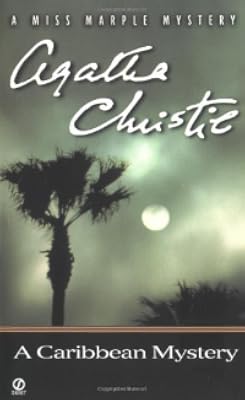
Description
As Miss Marple sat basking in the Caribbean sunshine, she felt mildly discontented with life. True, the warmth eased her rheumatism, but here in paradise nothing ever happened. Eventually, her interest was aroused by an old soldier's yarn about a murderer he had known. Infuriatingly, just as he was about to show her a snapshot of this acquaintance, the Major was suddenly interrupted. A diversion that was to prove fatal.Tags
Recommendations






























Member Reviews
'A Caribbean Mystery‘ deviates from the normal pattern of Jane Marple mysteries. She has left her small English village behind. Scotland Yard is not involved, nor is there really a police investigation into the death that Jane suspects was murder. Jane, courtesy of her rich nephew, is spending some weeks at a small resort hotel on a Caribbean island. The hotel, which is a collection of bungalows by the sea, is run by a young English couple who have recently bought the place. The guests are all monied white people who are mostly strangers to each other and who know nothing of Jane Marple's reputation for solving murders.
This context allows Jane Marple to assume her camouflage as a quiet old lady who listens well and knits incessantly show more as she observes the people around her with a clinical accuracy that is nothing like intimacy. The other guests include two pleasure-seeking thirty-something couples, a vicar and his unmarried sister, a retired military man who thinks he’s a raconteur but is actually a bore and a very rich, very rude, very old man and his small staff.
I always enjoy spending time with Jane Marple. I like her self-awareness and her quiet but relentless analysis of the behaviour and relationships of the people around her. The mystery in this novel was a little thin and I felt Christie came close to cheating on the way information was presented but I didn’t care because the characters, including Jane, were so engaging.
Jane's observations on the invisibility of old women made me smile, as did her reflections on how the young people in 1964 seem to believe that their generation invented sex and infidelity whereas they simply talked about it more than had been the case when Jane was young. I enjoyed learning that the young Jane Marple had once almost married a man but was glad that things hadn't worked out because, while he was viewed by her parents as a suitable match, Jane eventually came to realise he was very dull.
The plot revolves around the death, apparently from natural causes, of a guest who had been telling Jane and anyone else who would listen to his rambling, repetitive, clearly embroidered tales, about a murderer he'd once met. Jane believes that the guest was murdered to keep him silent and so starts to reassess the people around her.
In the world, as Jane sees it, it's clear that men tend to wrap themselves in self-serving fantasies that become the stories they tell themselves and others about who they are, while women compromise with reality and mostly stay silent about the things that they don't like but can't change.
One of the things I liked most about the book was the chemistry between Jane and the grumpy millionaire whom everyone else is slightly afraid of. He is the only one who sees through Jane's camouflage and recognises her for the insightful woman that she is. She, in turn, sees past his abrasive bluntness and sees a man close to death who knows what he wants and expects to get it but who is still capable of being quietly kind. I enjoyed watching the two of them forge an alliance to solve the murder. show less
This context allows Jane Marple to assume her camouflage as a quiet old lady who listens well and knits incessantly show more as she observes the people around her with a clinical accuracy that is nothing like intimacy. The other guests include two pleasure-seeking thirty-something couples, a vicar and his unmarried sister, a retired military man who thinks he’s a raconteur but is actually a bore and a very rich, very rude, very old man and his small staff.
I always enjoy spending time with Jane Marple. I like her self-awareness and her quiet but relentless analysis of the behaviour and relationships of the people around her. The mystery in this novel was a little thin and I felt Christie came close to cheating on the way information was presented but I didn’t care because the characters, including Jane, were so engaging.
Jane's observations on the invisibility of old women made me smile, as did her reflections on how the young people in 1964 seem to believe that their generation invented sex and infidelity whereas they simply talked about it more than had been the case when Jane was young. I enjoyed learning that the young Jane Marple had once almost married a man but was glad that things hadn't worked out because, while he was viewed by her parents as a suitable match, Jane eventually came to realise he was very dull.
The plot revolves around the death, apparently from natural causes, of a guest who had been telling Jane and anyone else who would listen to his rambling, repetitive, clearly embroidered tales, about a murderer he'd once met. Jane believes that the guest was murdered to keep him silent and so starts to reassess the people around her.
In the world, as Jane sees it, it's clear that men tend to wrap themselves in self-serving fantasies that become the stories they tell themselves and others about who they are, while women compromise with reality and mostly stay silent about the things that they don't like but can't change.
One of the things I liked most about the book was the chemistry between Jane and the grumpy millionaire whom everyone else is slightly afraid of. He is the only one who sees through Jane's camouflage and recognises her for the insightful woman that she is. She, in turn, sees past his abrasive bluntness and sees a man close to death who knows what he wants and expects to get it but who is still capable of being quietly kind. I enjoyed watching the two of them forge an alliance to solve the murder. show less
Even on vacation in the Caribbean, Miss Marple can’t escape murder. If only she hadn’t been drowsy and half listening to the Major when he told a tale of a murderer he once met and offered to show her a photo. Now the Major is dead, and Miss Marple must try to mentally reconstruct the circumstances surrounding their conversation. Exactly what did he say, and who did he see that alarmed him so?
I love this Miss Marple mystery because Miss Marple is very much present throughout the book. In some of the earlier Miss Marple mysteries, Miss Marple is almost a secondary character, making only brief appearances. I’ve read or listened to this one more than once, and I’ve seen the TV adaptation, so I remembered the murderer’s identity show more and motive. That meant that I could focus on the technical details and marvel at Christie’s skill at hiding clues in plain sight. show less
I love this Miss Marple mystery because Miss Marple is very much present throughout the book. In some of the earlier Miss Marple mysteries, Miss Marple is almost a secondary character, making only brief appearances. I’ve read or listened to this one more than once, and I’ve seen the TV adaptation, so I remembered the murderer’s identity show more and motive. That meant that I could focus on the technical details and marvel at Christie’s skill at hiding clues in plain sight. show less
Miss Marple's nephew has kindly sent her to the Caribbean for a comfortable stay at resort. While Miss Marple isn't quite sure how she feels about the unvarying weather (how is one to start a conversation without the English weather to rely upon as a topic?), when one of the the other guests is found dead Miss Marple finds that her ability to understand personalities and motives works no matter where she is.
Regardless of where she is, spending time with Miss Marple is a reliably enjoyable experience. Even as she gets older and the definition of what's socially acceptable changes, she remains so sharp and never truly adrift. There are a couple moments of racism towards the locals, which are uncomfortable for a modern reader, but show more otherwise the novel holds up really well. A solid outing for the series. show less
Regardless of where she is, spending time with Miss Marple is a reliably enjoyable experience. Even as she gets older and the definition of what's socially acceptable changes, she remains so sharp and never truly adrift. There are a couple moments of racism towards the locals, which are uncomfortable for a modern reader, but show more otherwise the novel holds up really well. A solid outing for the series. show less
Ahhh, Miss Marple, the perfect antidote after one (or two) too many Poirot short stories. This was a good one, including a very lovely and relaxing vacation locale, much gossip among the fellow vacationers, a bittersweet ending (which I had to Google separately because my Kindle apparently cannot translate from Latin) Oh, Mr Rafiel! , and, as always, some of the best side characters ever. Here's an example, and this wasn't even a main side character:
"Señora de Caspearo opened her eyes and murmured: 'How ugly are old men! Oh how they are ugly! They should all be put to death at forty, or perhaps thirty-five would be better. Yes?'"
"Señora de Caspearo opened her eyes and murmured: 'How ugly are old men! Oh how they are ugly! They should all be put to death at forty, or perhaps thirty-five would be better. Yes?'"
Agatha Christie-ket legfeljebb akkor illik szerintem újraolvasni, amikor már nem emlékszünk, ki a gyilkos. Ez a könyv - ami emlékeim szerint kedvenc Miss Marple történetem volt, részben a filmnek köszönhetően - ennek a kritériumnak megfelelt. (Amúgy nyilván szintúgy a Szent Imre nefrológiai osztály könyvespolcának éke.) Ennek a szabálynak az a nem kalkulált előnye is megvan, hogy amikor az embernek menet közben mégis eszébe jut, ki a hunyó, egy pillanatra okosabbnak hiheti magát, mint a komplett nyomozóhatóság, Miss Marple-lel együtt.
Amúgy én a törékeny, ravasz kis Misst jobban kedvelem, mint Poirot-t. Az ugye itthon is általános, hogy idősebb falusi hölgyekbe komplett térfigyelő rendszert show more építenek be, de Miss Marple-be ezen felül egy high-tech elemző-értekelő szoftvert is telepítettek, ami úgy működik, hogy a hölgy szenzorosan érzékel holmi rejtélyt, mire az algoritmus futni kezd: a külső szemlélő ebből annyit érzékel, hogy Miss Marple többet fecseg és kötöget - de valójában nyomoz. Maga a nyomozás is szerintem tetszetős, a pletykák és híresztelések világában mozgunk, és ebből hangulatos kis pszichosztori kerekedik ki. De az hiszem, amiért én anno beleszerettem a történetbe, az (Marple személyén túl) a helyszín, maga az Antillák világa, meg a fények, amelyek mind a könyvet, mind a filmet teleragyogták. Azért is választottam ezt a címet, hátha ebből a ragyogásból most is háramlik majd rám pici, mert megérdemlem - és úgy is lett. show less
Amúgy én a törékeny, ravasz kis Misst jobban kedvelem, mint Poirot-t. Az ugye itthon is általános, hogy idősebb falusi hölgyekbe komplett térfigyelő rendszert show more építenek be, de Miss Marple-be ezen felül egy high-tech elemző-értekelő szoftvert is telepítettek, ami úgy működik, hogy a hölgy szenzorosan érzékel holmi rejtélyt, mire az algoritmus futni kezd: a külső szemlélő ebből annyit érzékel, hogy Miss Marple többet fecseg és kötöget - de valójában nyomoz. Maga a nyomozás is szerintem tetszetős, a pletykák és híresztelések világában mozgunk, és ebből hangulatos kis pszichosztori kerekedik ki. De az hiszem, amiért én anno beleszerettem a történetbe, az (Marple személyén túl) a helyszín, maga az Antillák világa, meg a fények, amelyek mind a könyvet, mind a filmet teleragyogták. Azért is választottam ezt a címet, hátha ebből a ragyogásból most is háramlik majd rám pici, mert megérdemlem - és úgy is lett. show less
It's a hot, sultry summer in Arizona, and we eagerly watch the skies for hints of gathering monsoon clouds. This felt like the perfect atmosphere to pick up a mystery, and on a whim, I decided to revisit one of my stand-by favorites: Agatha Christie. It's been several years since I last read a Christie mystery, but she was the first adult mystery writer that I discovered, the one that made me fall in love with the genre, and I will always have a fond, nostalgic spot in my memories for her work. Fortunately, I did not read even close to all of her books when I was younger, which means I can dive back in and read new Christie stories as the mood demands.
Did A Caribbean Mystery live up to my expectations? It did! I had a lot of fun reading show more this, and polished it off in a couple of days. The mystery centers around Miss Marple, one of Christie's main sleuths, an elderly lady who enjoys knitting, gossiping, and destroying evil. Miss Marple describes herself, in this novel, as being no detective or investigator, but simply a person who is able to draw parallels between the new people she meets and people from her past, and from these comparisons she can make clever conclusions about character and motive. While she may not view herself as a detective, her sleuthing skills are indisputable as she finds herself embroiled in another murder mystery, this time while she is vacationing in the West Indies.
The story opens with Miss Marple on the beach, soaking up the tropical sun and rather regretting the kindness of her nephew that resulted in her trip to the Caribbean island in the first place. Miss Marple has discovered that she much prefers the variety of English storms and inclement weather to the constant sunshine, and that she would rather be gathering the local gossip than listening to boring accounts from other tourists sharing her hotel. In fact, she is pondering these ideas as she listens to one of these dull accounts, delivered by Major Palgrave, a retired general who has a habit of droning on about his old exploits in repetitive detail. He finally piques her interest when he reveals that he has actually met a murderer. Before he can show her the picture proof of his story, they're interrupted by the return of two couples who engage the Major in a new conversation. Miss Marple puts the story off as another boastful story. Just days later, though, the Major is dead, and although it is supposedly a chronic illness that led to his death, Miss Marple has her doubts. She begins to investigate through her usual method of striking up conversations that seem like idle gossip but are really pointed little searches for clues. As she does, more bodies turn up, confirming her theory that a murderer is among them.
This is a classic Christie set-up: a closed environment, this time a hotel in the tropics, a cast of characters with plenty of secrets, blackmail, lies that must be uncovered before the real murderer is revealed, and the clever detective that everyone underestimates until she shows her hand. I haven't read many Marple mysteries, as Poirot was always my favorite, but this was a thoroughly enjoyable read. Christie is a product of older times, and some of the biases and prejudices of her class and race pop up in her stories (consider the attitude all the characters have for the native residents in this story), but her handling of clues and suspects is far from old-fashioned. Even after all these years, her mysteries remain top-class, and this is certainly a solid example of her craft. show less
Did A Caribbean Mystery live up to my expectations? It did! I had a lot of fun reading show more this, and polished it off in a couple of days. The mystery centers around Miss Marple, one of Christie's main sleuths, an elderly lady who enjoys knitting, gossiping, and destroying evil. Miss Marple describes herself, in this novel, as being no detective or investigator, but simply a person who is able to draw parallels between the new people she meets and people from her past, and from these comparisons she can make clever conclusions about character and motive. While she may not view herself as a detective, her sleuthing skills are indisputable as she finds herself embroiled in another murder mystery, this time while she is vacationing in the West Indies.
The story opens with Miss Marple on the beach, soaking up the tropical sun and rather regretting the kindness of her nephew that resulted in her trip to the Caribbean island in the first place. Miss Marple has discovered that she much prefers the variety of English storms and inclement weather to the constant sunshine, and that she would rather be gathering the local gossip than listening to boring accounts from other tourists sharing her hotel. In fact, she is pondering these ideas as she listens to one of these dull accounts, delivered by Major Palgrave, a retired general who has a habit of droning on about his old exploits in repetitive detail. He finally piques her interest when he reveals that he has actually met a murderer. Before he can show her the picture proof of his story, they're interrupted by the return of two couples who engage the Major in a new conversation. Miss Marple puts the story off as another boastful story. Just days later, though, the Major is dead, and although it is supposedly a chronic illness that led to his death, Miss Marple has her doubts. She begins to investigate through her usual method of striking up conversations that seem like idle gossip but are really pointed little searches for clues. As she does, more bodies turn up, confirming her theory that a murderer is among them.
This is a classic Christie set-up: a closed environment, this time a hotel in the tropics, a cast of characters with plenty of secrets, blackmail, lies that must be uncovered before the real murderer is revealed, and the clever detective that everyone underestimates until she shows her hand. I haven't read many Marple mysteries, as Poirot was always my favorite, but this was a thoroughly enjoyable read. Christie is a product of older times, and some of the biases and prejudices of her class and race pop up in her stories (consider the attitude all the characters have for the native residents in this story), but her handling of clues and suspects is far from old-fashioned. Even after all these years, her mysteries remain top-class, and this is certainly a solid example of her craft. show less
I'm not normally a Miss Marple fan, but I really liked this one. Normally Miss Marple is too passive a detective for my liking, but she really showed spunk in this one. They mystery was decent and interesting and I really liked the background characters. Emilia Fox did a great job narrating this audiobook. I'm going to have to pay attention to the narrators for Miss Marple books. I'd listen to another one narrated by her because I think she gives life to Miss Marple.
Members
- Recently Added By
Lists

Best of British Literature
226 works; 41 members

Crime and Mysteries to Read
746 works; 31 members

British Mystery
469 works; 14 members

Agatha Christie Miss Marple
12 works; 1 member

Books About Murder
313 works; 7 members

Detective Stories
343 works; 5 members

Favorite Books from the 1960s
34 works; 3 members

Books Set in the Caribbean
18 works; 5 members

Books Set on Islands
190 works; 24 members

Latin America
45 works; 6 members

Books Read in 2010
631 works; 11 members
Favorite Caribbean Books
60 works; 28 members

Books Read in 2023
5,547 works; 145 members

TBR
77 works; 1 member

Agatha Christie Chronology
93 works; 1 member
Author Information

2,159+ Works 440,953 Members
One of the most successful and beloved writer of mystery stories, Agatha Mary Clarissa Christie was born in 1890 in Torquay, County Devon, England. She wrote her first novel, The Mysterious Affair at Styles, in 1920, launching a literary career that spanned decades. In her lifetime, she authored 79 crime novels and a short story collection, 19 show more plays, and six novels written under the name of Mary Westmacott. Her books have sold over a billion copies in the English language with another billion in 44 foreign languages. Some of her most famous titles include Murder on the Orient Express, Mystery of the Blue Train, And Then There Were None, 13 at Dinner and The Sittaford Mystery. Noted for clever and surprising twists of plot, many of Christie's mysteries feature two unconventional fictional detectives named Hercule Poirot and Miss Jane Marple. Poirot, in particular, plays the hero of many of her works, including the classic, The Murder of Roger Ackroyd (1926), and Curtain (1975), one of her last works in which the famed detective dies. Over the years, her travels took her to the Middle East where she met noted English archaeologist Sir Max Mallowan. They married in 1930. Christie accompanied Mallowan on annual expeditions to Iraq and Syria, which served as material for Murder in Mesopotamia (1930), Death on the Nile (1937), and Appointment with Death (1938). Christie's credits also include the plays, The Mousetrap and Witness for the Prosecution (1953; film 1957). Christie received the New York Drama Critics' Circle Award for 1954-1955 for Witness. She was also named Dame Commander of the Order of the British Empire in 1971. Christie died in 1976. (Bowker Author Biography) show less
Some Editions
Series

Belongs to Publisher Series
Work Relationships
Is contained in
Five Complete Miss Marple Novels: The Body in the Library, A Caribbean Mystery, The Mirror Crack'd, Nemesis, What Mrs. McGillicuddy Saw! by Agatha Christie
Sleeping Murder, Postmark Murder, The ABC Murders, Murder On The orient Express, And Then There Were None by Agatha Christie (indirect)
Box Set: The Best of Miss Marple - The Mirror Crack'd, Nemesis, Murder With Mirrors, A Caribbean Mystery by Agatha Christie
The Best of Miss Marple: A Caribbean Mystery, Sleeping Murder, 4:50 From Paddington, At Bertram's Hotel by Agatha Christie
Common Knowledge
- Canonical title
- A Caribbean Mystery
- Original title
- A Caribbean Mystery
- Original publication date
- 1964
- People/Characters
- Jane Marple; Tim Kendall; Molly Kendall; Jason Rafiel; Greg Dyson; Lucky Dyson (show all 14); Colonel Hillingdon; Evelyn Hillingdon; Esther Walters (Mr. Rafiel's secretary); Canon Prescott; Miss Prescott; Major Palgrave; Arthur Jackson; Signora de Caspiaro
- Important places
- Caribbean Region; St. Honoré
- Related movies
- A Caribbean Mystery (1983 | IMDb); A Caribbean Mystery (1989 | IMDb)
- Dedication
- To my old friend John Cruikshank Rose with happy memories of my visit to the West Indies
- First words
- "Take all this business about Kenya," said Major Palgrave.
- Last words
- (Click to show. Warning: May contain spoilers.)Then she walked across the tarmac and got into the plane.
- Blurbers
- James, P.D.; Attenborough, Richard
- Original language
- English
- Disambiguation notice
- This is the main work for A Caribbean Mystery by Agatha Christie. It should not be combined with any adaptation, abridgement, etc.
Classifications
Statistics
- Members
- 4,275
- Popularity
- 3,542
- Reviews
- 95
- Rating
- (3.62)
- Languages
- 23 — Catalan, Chinese, Czech, Danish, Dutch, English, Estonian, Finnish, French, German, Hungarian, Italian, Japanese, Norwegian (Bokmål), Norwegian, Polish, Portuguese, Russian, Croatian, Spanish, Swedish, Turkish, Ukrainian
- Media
- Paper, Audiobook, Ebook
- ISBNs
- 185
- UPCs
- 5
- ASINs
- 80